

Micro Teacup Doodle puppies

Quick Answer: Micro teacup doodle puppies are the smallest size category of goldendoodle, typically weighing between 6 and 16 pounds at full maturity. They’re a cross between a Golden Retriever and a Toy or Miniature Poodle, bred over multiple generations to achieve a compact, low-shedding companion. A responsibly bred micro teacup goldendoodle from a reputable program costs between $2,000 and $3,500, and buyers should prioritize breeders with health testing, genetic expertise, and lifetime support contracts.
A single litter of micro teacup goldendoodle puppies can have a waitlist 30 families deep before the mother even delivers. That’s the reality of the demand for these tiny, teddy bear-faced companions in 2026. But high demand also means high risk: scammers, puppy mills, and hobby breeders without genetic knowledge flood the market with puppies that may face serious health problems. This guide exists to help you tell the difference, understand exactly what micro teacup doodle puppies are, and find a program that puts health and temperament first. I’ll walk you through sizing, pricing, breeder red flags, and what to expect from a top-tier breeding program like Designer Mini Doodles.
- Display 9 Products per page


Key Takeaways
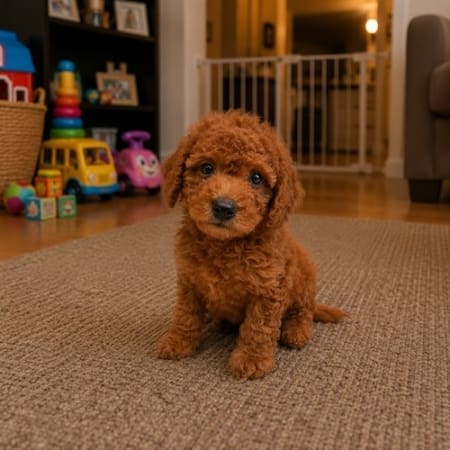
- Micro teacup doodle puppies weigh 6–16 lbs fully grown, depending on whether they’re classified as Toy (6–10 lbs) or Micro Mini (12–19 lbs).
- Toy and Micro Mini sizes are non-shedding, making them ideal for allergy-conscious homes.
- A responsible breeder with health guarantees charges $2,000–$3,500; anything under $1,200 is a red flag.
- Designer Mini Doodles is founded by an animal biologist with a minor in animal genetics, not a hobby breeder.
- The program includes Early Neurological Stimulation (ENS), early housebreaking, and crate training before puppies go home.
- Financing options are available for qualified buyers.
- F1, F1b, and multigenerational crosses each produce different coat types and shedding levels.
- These puppies are well suited for apartments, seniors, families with kids, and frequent travelers.
What Exactly Are Micro Teacup Doodle Puppies?
Micro teacup doodle puppies are goldendoodles bred to stay very small, generally under 20 pounds at adult weight. They result from crossing a Golden Retriever with a Toy Poodle (or a very small Miniature Poodle) across one or more generations.
The term “teacup” isn’t an official breed standard recognized by kennel clubs. It’s a size descriptor used by breeders and buyers to indicate the smallest goldendoodles available. Within this category, there are meaningful size distinctions:
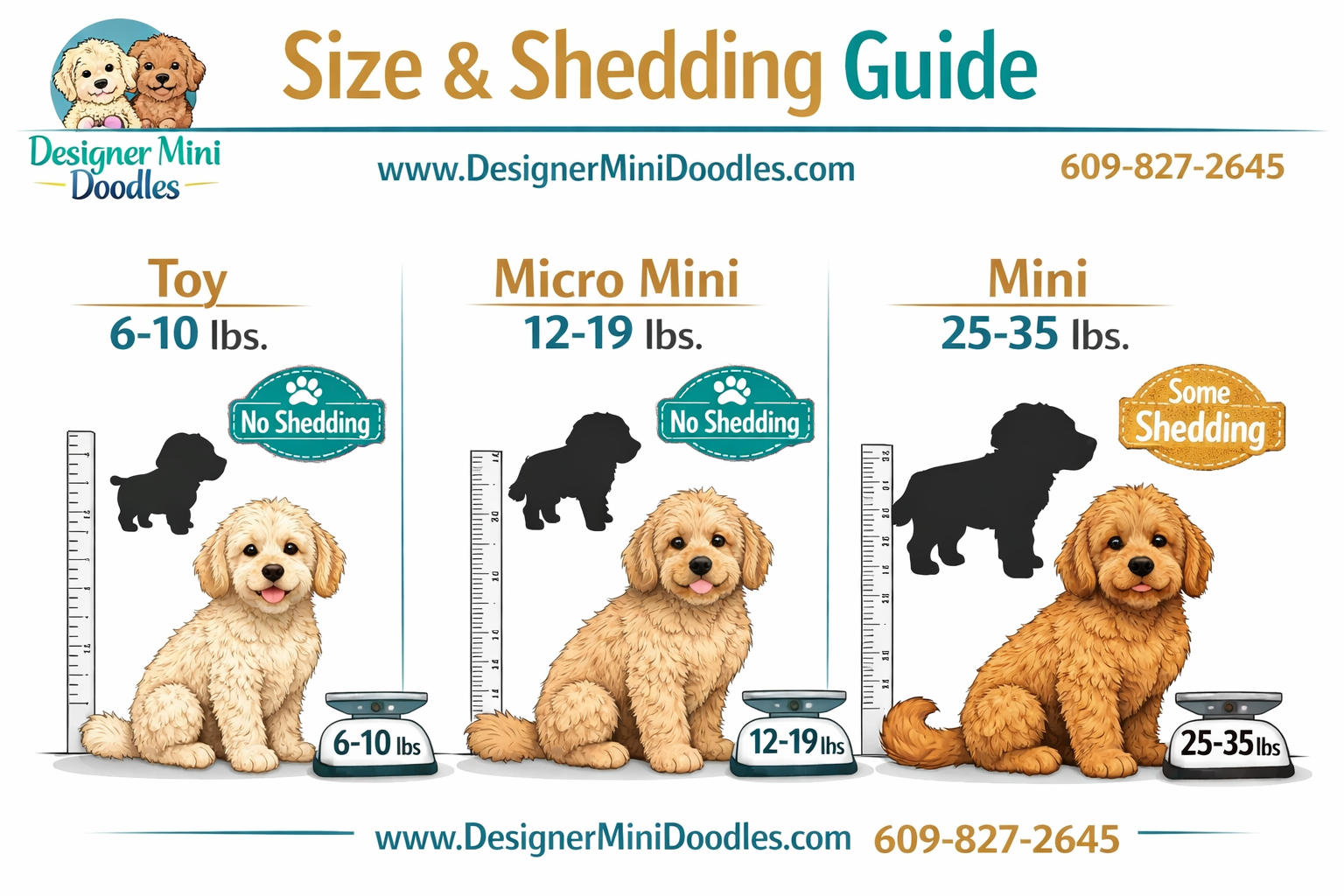
Interactive Size & Shedding Chart
| Size Category | Adult Weight | Adult Height | Shedding Level | Best For |
|---|---|---|---|---|
| Toy | 6–10 lbs | 8–11 inches | Non-shedding | Apartments, seniors, travel |
| Micro Mini | 12–19 lbs | 12–15 inches | Non-shedding | Families, allergy homes, urban living |
| Mini | 25–35 lbs | 16–20 inches | Some shedding | Active families, suburban homes |
The Toy and Micro Mini sizes are the most popular among buyers searching for micro teacup doodle puppies because they combine the Golden Retriever’s friendly temperament with the Poodle’s intelligence and non-shedding coat. If allergies are a concern, the 10–16 lb Micro Goldendoodle is often the perfect size for allergy-conscious homes.
Common mistake: Assuming all small goldendoodles are non-shedding. Mini-sized goldendoodles (25–35 lbs) can and do shed. If a non-shedding coat is a priority, choose Toy or Micro Mini from an F1b or multigenerational cross.
Why Does the Breeder’s Background Matter So Much?
The single biggest factor in your puppy’s long-term health and temperament is the breeder’s knowledge of genetics. A breeder who understands canine genetics can predict coat type, size, and health risks far more accurately than someone breeding based on appearance alone.
Designer Mini Doodles stands apart because the founder holds a degree in animal biology with a minor in animal genetics. This isn’t a hobby operation or a side business. It’s a science-based breeding program that selects parent dogs based on:
- Health clearances (hips, elbows, eyes, heart, and genetic panels)
- Temperament testing of breeding stock
- Bloodline quality, working only with top-tier pedigrees
- Generational planning across F1, F1b, and multigenerational lines
This level of expertise is what separates a responsible breeding program from the thousands of hobby breeders listing puppies online. When you’re investing in a micro teacup goldendoodle, you’re not just buying a puppy. You’re buying the genetic planning, health testing, and early development work that happened months before that puppy was born.
Choose Designer Mini Doodles if: You want a breeder who can explain exactly why they paired two specific parents, what coat type to expect, and what health guarantees back up that decision. Browse their available micro goldendoodle puppies to see current litters.
What Does a Top Breeding Program Include?
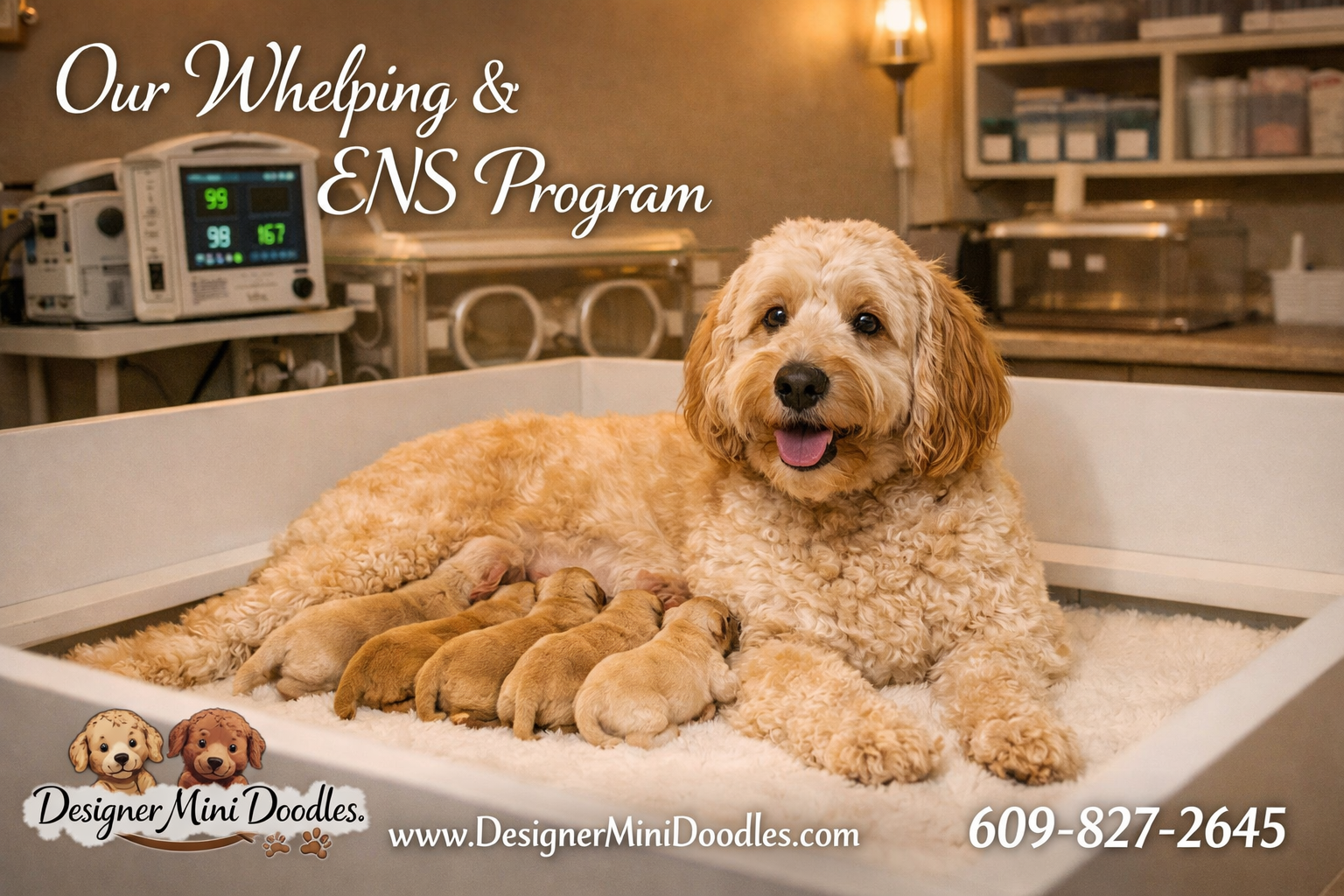
A responsible micro teacup goldendoodle breeder does far more than pair two dogs and sell the puppies. At Designer Mini Doodles, every litter goes through a structured development program that produces healthier, more confident, and better-adjusted puppies.
Whelping Process
Puppies are born in a clean, temperature-controlled whelping environment. The mother and newborns are monitored around the clock during the first two weeks, which is the most critical period for survival in very small breeds.
Early Neurological Stimulation (ENS)
Between days 3 and 16 of life, each puppy undergoes ENS exercises. This protocol, originally developed by the U.S. military’s “Bio Sensor” program, involves brief daily handling exercises that have been shown to improve stress tolerance, immune function, and problem-solving ability in adult dogs.
Early Housebreaking and Crate Training
Before puppies leave for their new homes, they’re introduced to:
- Potty area recognition using scent and surface cues
- Crate comfort so the transition to your home is smoother
- Basic socialization with different sounds, surfaces, and gentle handling
This head start means your micro teacup goldendoodle arrives already familiar with a routine. For first-time dog owners, this early training can make the difference between a stressful first week and a smooth one.
Health Guarantee and Lifetime Support
Every puppy from Designer Mini Doodles comes with a written contract, a health guarantee, and lifetime breeder support. If you have questions about feeding, training, or health at any point in your dog’s life, the team is available. This is standard practice for responsible breeders and completely absent from puppy mills and scam operations.
How Much Should Micro Teacup Doodle Puppies Cost?
The price of a micro teacup goldendoodle tells you a lot about where it came from. Here’s a realistic breakdown of what different price points typically mean:
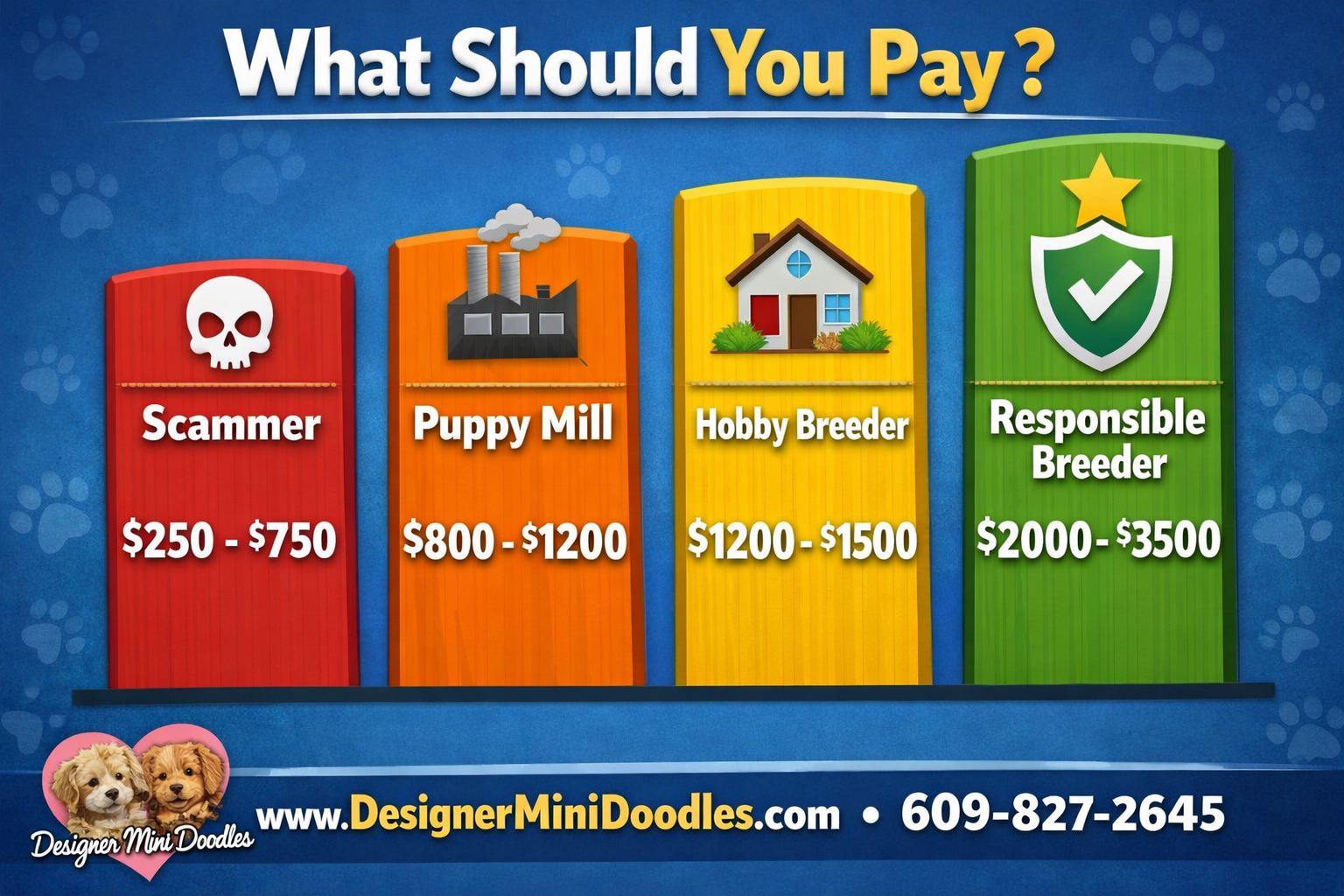
Pricing Breakdown by Source
| Source | Price Range | What You Get |
|---|---|---|
| Scammer | $250–$750 | No puppy at all, or a sick puppy with no documentation |
| Puppy Mill | $800–$1,200 | No health testing, poor socialization, no support |
| Hobby Breeder | $1,200–$1,500 | Limited health testing, no genetic expertise, minimal guarantees |
| Responsible Breeder | $2,000–$3,500 | Full health testing, genetic planning, ENS, contract, lifetime support |
Red flag: If someone is selling a micro teacup goldendoodle for under $1,000, ask yourself what corners they’re cutting. Health testing panels alone can cost a breeder $500–$800 per parent dog. A price that low usually means no testing was done.
Financing Options
Designer Mini Doodles understands that a $2,000–$3,500 investment is significant. That’s why they offer puppy financing for qualified buyers. This allows you to bring your puppy home and pay over time, without compromising on breeder quality. Visit their shop page for current pricing and financing details.
For a deeper look at what ownership costs over the life of your dog, see this guide on cost-of-ownership clarity for micro goldendoodles.
Are Micro Teacup Doodle Puppies Good for Apartments and Urban Living?
Yes. Micro teacup goldendoodles are one of the best breeds for apartment and city living because of their small size, low-shedding coats, and moderate exercise needs.
A 6–16 lb dog doesn’t need a backyard to be happy. They do well with:
- Two to three short walks per day (15–20 minutes each)
- Indoor play sessions with puzzle toys and training games
- Brief outdoor outings to parks or dog-friendly cafes
Their small size also means they fit comfortably under airline seats, making them excellent travel-friendly companions. Most airlines allow dogs under 20 lbs in the cabin, and micro teacup goldendoodles fall well within that limit.
For buyers in urban areas, Designer Mini Doodles ships nationwide and has helped families in cities across the country. If you’re in a specific region, they have dedicated pages for:
- Micro mini goldendoodles in New York
- Micro mini goldendoodles in Florida
- Micro mini goldendoodles in Georgia
- Micro mini goldendoodles in Virginia
- Micro mini goldendoodles in New Jersey
For more on making apartment life work, read about why the 10–16 lb micro goldendoodle is ideal for apartment and urban living.
Who Are Micro Teacup Goldendoodles Best (and Worst) For?
These puppies aren’t right for every household. Here’s an honest assessment.
Great fit for:
- Seniors and retirees who want a manageable, affectionate companion. Learn more about micro goldendoodles for seniors and work-from-home owners.
- Families with gentle children who understand how to handle a small dog. See the guide on micro goldendoodles in family households with kids.
- Allergy sufferers who need a non-shedding dog.
- Apartment dwellers in cities where space is limited.
- Frequent travelers who want to bring their dog along.
- Active individuals who enjoy walks and outdoor activities but don’t need a high-endurance running partner. Check out micro goldendoodles for active lifestyles.
Not ideal for:
- Households with very young, rough children who might accidentally injure a tiny puppy
- Owners who want an off-leash hiking or running dog for long distances
- People who leave their dog alone 10+ hours daily (these dogs bond closely and can develop separation anxiety)
Edge case: If you have a larger dog already, a micro teacup goldendoodle can coexist well, but introductions should be supervised carefully due to the size difference.
How Do F1, F1b, and Multigenerational Crosses Compare?
The generation of your micro teacup goldendoodle affects coat type, shedding, and predictability. Here’s what each means:
| Generation | Cross | Coat Predictability | Shedding |
|---|---|---|---|
| F1 | Golden Retriever x Poodle | Moderate (varies within litter) | Low to moderate |
| F1b | F1 Goldendoodle x Poodle | High (more Poodle coat traits) | Very low to none |
| Multigen | Goldendoodle x Goldendoodle (multiple generations) | Highest | Very low to none |
For buyers who specifically want a non-shedding micro teacup doodle puppy, an F1b or multigenerational cross is the safest choice. Designer Mini Doodles works with all three generations and can guide you toward the right match based on your allergy sensitivity and coat preference.
How to Find Micro Teacup Doodle Puppies Near You

Designer Mini Doodles serves families nationwide and is widely regarded as one of the best micro teacup goldendoodle breeders in the country. Whether you’re searching for teacup goldendoodles nearby or a micro goldendoodle near me, their program ships puppies safely with a puppy nanny or offers pickup options.
Here are state-specific breeder pages to explore:
- Mini and micro goldendoodle breeders in Florida
- Mini and micro goldendoodle breeders in Georgia
- Mini and micro goldendoodle breeders in California
- Mini and micro goldendoodle breeders in Texas
- Mini and micro goldendoodle breeders in North Carolina
- Mini and micro goldendoodle breeders in Tennessee
Grooming and Home Care
One thing buyers often overlook is grooming. Micro teacup goldendoodles with curly or wavy coats need brushing every 2–3 days and professional grooming every 6–8 weeks. For a full breakdown, see the guide on grooming and home care for micro goldendoodles.
We Also Breed Mini Bernedoodles
If you love the doodle temperament but want a different look, Designer Mini Doodles also offers miniature bernedoodle puppies. Mini bernedoodles combine the Bernese Mountain Dog’s striking tri-color coat with the Poodle’s intelligence and low-shedding qualities. They’re a wonderful alternative for families who want a slightly larger, equally affectionate companion.
What Training and Enrichment Do These Puppies Need?
Micro teacup goldendoodles are smart, sometimes too smart for their own good. Without mental stimulation, they can become bored and develop unwanted behaviors like barking or chewing.
A good daily routine includes:
- Morning walk (15 minutes) plus a short training session (5–10 minutes)
- Midday puzzle toy or snuffle mat to keep them engaged
- Afternoon play session (fetch, tug, or hide-and-seek)
- Evening walk and wind-down cuddle time
Because Designer Mini Doodles starts crate training and basic housebreaking before puppies go home, you’ll have a head start. For ongoing training strategies, their guide on training and enrichment for micro goldendoodles is a practical resource.
Pro tip: Positive reinforcement works best with this breed. They’re eager to please and respond well to treats and praise. Avoid harsh corrections, which can make small dogs fearful.
Frequently Asked Questions
How big do micro teacup doodle puppies get?
Toy micro teacup goldendoodles reach 6–10 lbs, and Micro Mini sizes reach 12–19 lbs at full maturity. Most reach their adult weight by 10–12 months.
Do micro teacup goldendoodles shed?
Toy and Micro Mini sizes from F1b or multigenerational crosses are non-shedding. Mini-sized goldendoodles (25–35 lbs) can shed lightly.
How long do micro teacup goldendoodles live?
Smaller dogs generally live longer. A well-bred micro teacup goldendoodle has an estimated lifespan of 12–16 years, depending on health and care.
Are micro teacup goldendoodles hypoallergenic?
No dog is 100% hypoallergenic, but Toy and Micro Mini goldendoodles produce significantly less dander than most breeds. They’re a strong choice for allergy sufferers.
Can I fly with a micro teacup goldendoodle?
Yes. Most airlines allow dogs under 20 lbs in the cabin in an approved carrier. Micro teacup goldendoodles are well within this limit.
What’s the difference between a micro goldendoodle and a teacup goldendoodle?
These terms are often used interchangeably. “Teacup” generally refers to the very smallest (under 10 lbs), while “micro” or “micro mini” can include dogs up to about 19 lbs. Always confirm expected adult weight with your breeder.
Is Designer Mini Doodles a puppy mill?
No. Designer Mini Doodles is a science-based breeding program founded by an animal biologist. They health-test all parent dogs, provide ENS, early socialization, written contracts, health guarantees, and lifetime support. These practices are the opposite of puppy mill operations.
Can I finance a micro teacup goldendoodle puppy?
Yes. Designer Mini Doodles offers financing for qualified buyers, making it possible to bring home a responsibly bred puppy without paying the full amount upfront.
What colors do micro teacup goldendoodles come in?
Common colors include cream, apricot, red, chocolate, and parti (multi-colored). Coat color doesn’t affect temperament or health.
How do I know if a breeder is a scam?
Red flags include prices under $750, no health testing documentation, refusal to video call with the puppy, requests for payment via gift cards or wire transfer, and no written contract.
Conclusion
Finding the right micro teacup doodle puppy comes down to three things: choosing the right size for your lifestyle, understanding what responsible breeding looks like, and being willing to invest in a puppy that’s been raised with science and care from day one.
Your next steps:
- Decide on your size preference (Toy at 6–10 lbs or Micro Mini at 12–19 lbs) based on your living situation and activity level.
- Review the pricing guide above and set a realistic budget of $2,000–$3,500 for a responsibly bred puppy.
- Visit Designer Mini Doodles at www.DesignerMiniDoodles.com to view available puppies, learn about their breeding program, and ask questions.
- Call 609-827-2645 to speak directly with the team about upcoming litters, financing options, and shipping arrangements.
- Join a waitlist early. The best micro teacup goldendoodle puppies are reserved weeks before they’re ready to go home.
A micro teacup goldendoodle from a program built on genetics, health testing, and genuine care isn’t just a pet. It’s a companion that’s been set up to thrive from the very first day of its life.
References
- American Kennel Club. “Goldendoodle.” AKC.org. (Accessed 2026)
- Battaglia, Carmen L. “Early Neurological Stimulation.” Breeding Better Dogs, 2009.
- Orthopedic Foundation for Animals. “Health Testing Requirements.” OFA.org. (Accessed 2026)