
Teacup Goldendoodle Size
Last updated: April 21, 2026
Teacup Goldendoodle puppies
A teacup goldendoodle typically weighs between 5 and 10 pounds and stands 8 to 12 inches tall at the shoulder when fully grown. These are the smallest classification of goldendoodle, created by crossing a toy or teacup poodle with a small golden retriever or a mini goldendoodle. The teacup goldendoodle size makes them one of the most portable, apartment-friendly doodle options available in 2026, but finding a healthy one requires choosing a breeder who prioritizes genetics and health testing over simply producing the smallest possible dog.
- Display 9 Products per page




Key Takeaways
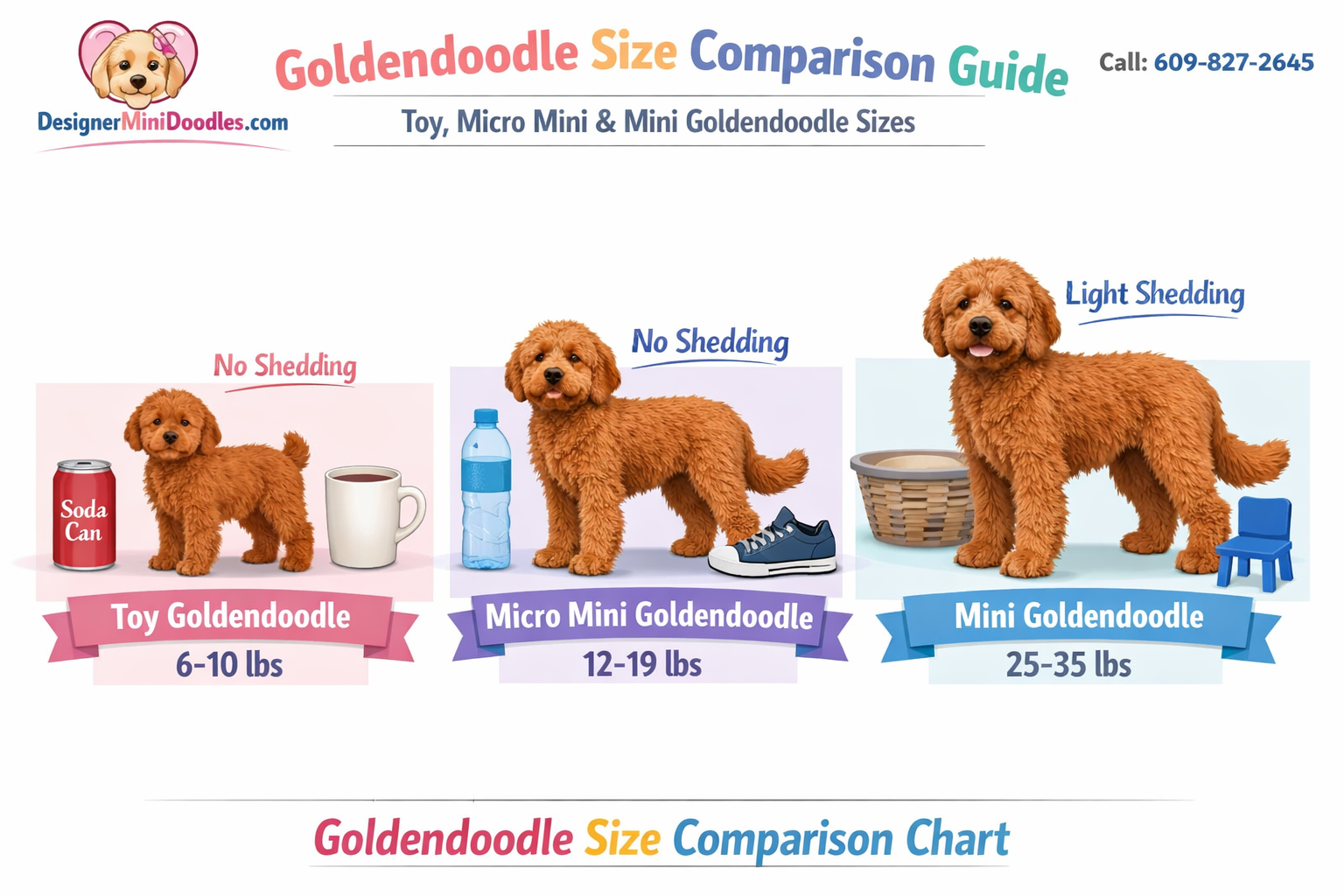
- Teacup goldendoodles weigh 5–10 lbs fully grown, while micro minis reach 12–19 lbs and minis reach 25–35 lbs
- Height at the shoulder ranges from 8 to 12 inches for a true teacup goldendoodle
- Toy and micro mini sizes do not shed, making them ideal for allergy-conscious homes
- Most teacup goldendoodles reach full size by 7–11 months of age
- Reputable breeders charge $2,000–$3,500 for health-tested teacup goldendoodle puppies with contracts and lifetime support
- Generation matters: F1, F1b, and multigenerational crosses produce different coat types and size predictability
- A breeder’s education and health testing protocol is the single biggest factor in getting a healthy teacup-sized puppy
- Financing options are available through quality breeders like Designer Mini Doodles
- Teacup goldendoodles are not recognized by AKC as a separate breed; size classifications come from breeders
A five-pound puppy that fits inside a handbag sounds like a social media fantasy, but teacup goldendoodles are real, they’re healthy when bred correctly, and demand for them has surged across the United States. The catch? The term “teacup” isn’t standardized, so the teacup goldendoodle size you see advertised by one breeder might be completely different from another. That confusion costs buyers thousands of dollars and, worse, leads to heartbreak when puppies grow far larger than expected or arrive with preventable health problems.
I’ve spent years studying how the best breeding programs produce genuinely small, healthy goldendoodles. This guide breaks down exactly what teacup goldendoodle size means, how it compares to other doodle sizes, what drives the price differences, and how to find a breeder whose program is built on science rather than guesswork.
How Big Is a Teacup Goldendoodle? Exact Size Breakdown
A true teacup goldendoodle weighs 5 to 10 pounds and stands 8 to 12 inches at the shoulder when fully grown. That’s roughly the size of a small chihuahua or a toy poodle.
But here’s where it gets confusing: breeders use different labels. Some call a 10-pound dog a “teacup,” while others call it a “toy goldendoodle.” To cut through the noise, here’s how the most common size categories break down:
Goldendoodle Size Classification Chart
| Size Category | Adult Weight | Adult Height | Shedding | Best For |
|---|---|---|---|---|
| Teacup / Toy | 5–10 lbs | 8–12 inches | No shedding | Apartments, seniors, travel |
| Micro Mini | 12–19 lbs | 12–15 inches | No shedding | Urban living, families, active lifestyles |
| Mini | 25–35 lbs | 15–18 inches | Light shedding | Families with kids, suburban homes |
| Medium | 36–50 lbs | 18–21 inches | Moderate shedding | Active families, larger homes |
| Standard | 50–90 lbs | 21–26 inches | Moderate to heavy | Large properties, very active owners |
The key detail many buyers miss: toy and micro mini goldendoodles typically do not shed, while mini-sized and larger goldendoodles do shed to varying degrees. This is because smaller doodles usually carry a higher percentage of poodle genetics, which produces that low-to-no-shedding coat.
If you’re specifically shopping for a non-shedding companion, the 10–16 lb micro goldendoodle is a popular sweet spot that combines portability with a hypoallergenic coat.
Common mistake: Assuming “teacup” and “micro mini” mean the same thing. A teacup goldendoodle is smaller (5–10 lbs) than a micro mini (12–19 lbs). Always ask the breeder for the projected adult weight range based on the parents’ sizes.
What Determines Teacup Goldendoodle Size?
Three factors control how big a teacup goldendoodle will get: parent size, generation, and genetics.
Parent size is the most obvious predictor. When a toy poodle (4–6 lbs) is crossed with a very small golden retriever or a mini goldendoodle, the offspring will be smaller than a standard goldendoodle cross. Responsible breeders carefully select parent dogs that consistently produce puppies in the teacup range.

Generation refers to the breeding cross:
- F1: Golden retriever × poodle (first generation). Size is less predictable.
- F1b: F1 goldendoodle × poodle (backcross). Smaller and more consistent coat.
- Multigenerational: Two goldendoodles bred together across multiple generations. Most predictable size and coat.
For teacup goldendoodle size specifically, F1b and multigenerational crosses produce the most reliable results because breeders can select for size consistency over multiple generations.
Genetics goes deeper than just parent size. This is where the breeder’s expertise matters enormously. At Designer Mini Doodles, the founder holds a degree in animal biology with a minor in animal genetics. That academic foundation separates a science-based breeding program from hobby breeders who are essentially guessing at outcomes. Understanding recessive genes, growth curves, and health markers allows a trained breeder to predict adult size with far greater accuracy.
Growth Timeline for Teacup Goldendoodles
- 8 weeks: 1.5–3 lbs (when puppies typically go home)
- 4 months: 3–5 lbs
- 6 months: 4–7 lbs (about 75% of adult weight)
- 9–11 months: 5–10 lbs (full adult size reached)
Most teacup goldendoodles reach their full adult size between 7 and 11 months. Larger doodle varieties can keep growing until 12–16 months.
How Much Does a Teacup Goldendoodle Cost? (And Why Price Matters)
A healthy, well-bred teacup goldendoodle from a responsible breeder costs between $2,000 and $3,500 in 2026. That price reflects health testing, genetic screening, proper whelping protocols, early socialization, and a health guarantee backed by a written contract.
Here’s why you should be deeply skeptical of bargain prices:
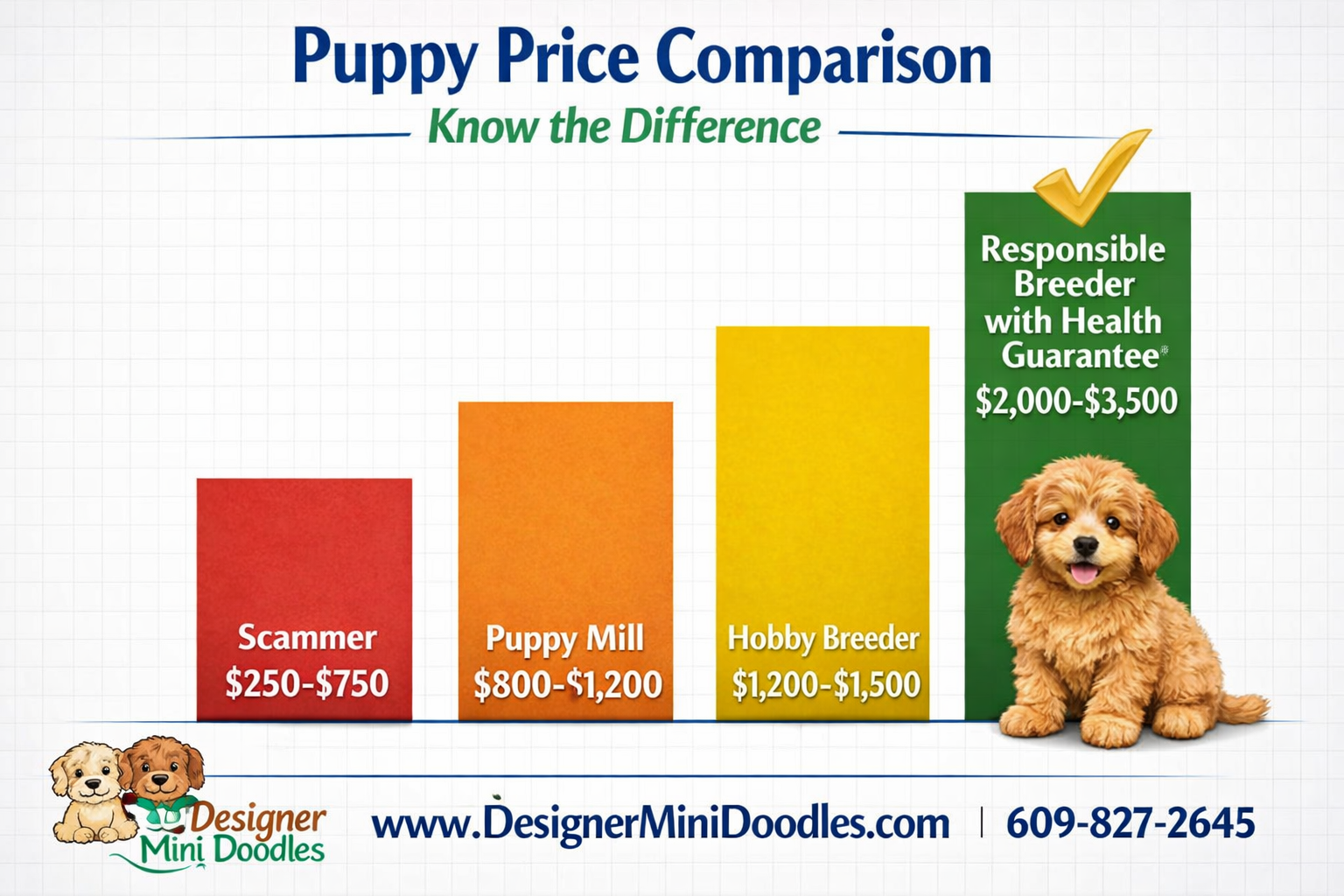
Goldendoodle Price Reality Check
| Seller Type | Price Range | What You’re Actually Getting |
|---|---|---|
| Scammer | $250–$750 | No puppy at all, or a sick/misrepresented dog |
| Puppy Mill | $800–$1,200 | No health testing, poor conditions, no support |
| Hobby Breeder | $1,200–$1,500 | Limited testing, no formal genetics knowledge |
| Responsible Breeder | $2,000–$3,500 | Health guarantee, contract, lifetime support, genetic testing |
A $500 “teacup goldendoodle” advertised online is almost certainly a scam or a puppy mill dog. These puppies often arrive with parvovirus, genetic disorders, or turn out to be a completely different breed mix. The initial savings evaporate quickly when veterinary bills start piling up.
Designer Mini Doodles offers financing options for buyers who want a responsibly bred puppy but need flexible payment terms. This makes it possible to invest in a healthy puppy without compromising on breeder quality. For a full breakdown of what ownership costs look like, check out their cost-of-ownership guide for micro goldendoodles.
Decision rule: If a breeder can’t show you health testing results for both parent dogs, provide a written contract with a health guarantee, and offer lifetime support, the price doesn’t matter. Walk away.
Is a Teacup Goldendoodle Size Right for Your Lifestyle?
The teacup goldendoodle size works exceptionally well for specific living situations, but it’s not the right fit for everyone. Here’s an honest assessment.

Choose a teacup goldendoodle if you:
- Live in an apartment or condo. Their small size means they don’t need a yard to burn off energy. A daily walk and indoor play sessions are enough. Learn more about micro goldendoodles for apartment and urban living.
- Travel frequently. Most airlines allow dogs under 20 lbs in-cabin. A teacup goldendoodle fits comfortably in an airline-approved carrier. See our guide on travel-friendly micro goldendoodle companions.
- Are a senior or work from home. Their low exercise needs and affectionate temperament make them ideal companions for seniors and remote workers.
- Have allergies. Teacup goldendoodles carry heavy poodle genetics and typically produce little to no dander.
- Are a first-time dog owner. Their trainability and manageable size make the learning curve gentler. Here’s a guide for first-time owners considering a micro goldendoodle.
Think twice about a teacup goldendoodle if you:
- Have very young children (under 4). Tiny dogs can be accidentally injured by toddlers. A micro mini (12–19 lbs) or mini may be a sturdier choice for families with small kids.
- Want an intense hiking or running partner. Teacup goldendoodles enjoy walks and play, but their tiny legs aren’t built for 10-mile trail runs. If you’re very active, a micro mini for active lifestyles might suit you better.
- Leave your dog alone for 8+ hours daily. Teacup goldendoodles bond closely with their owners and can develop separation anxiety if left alone too long.
What Makes Designer Mini Doodles Different From Other Breeders?
Not all teacup goldendoodle breeders are equal, and the difference comes down to education, process, and commitment.
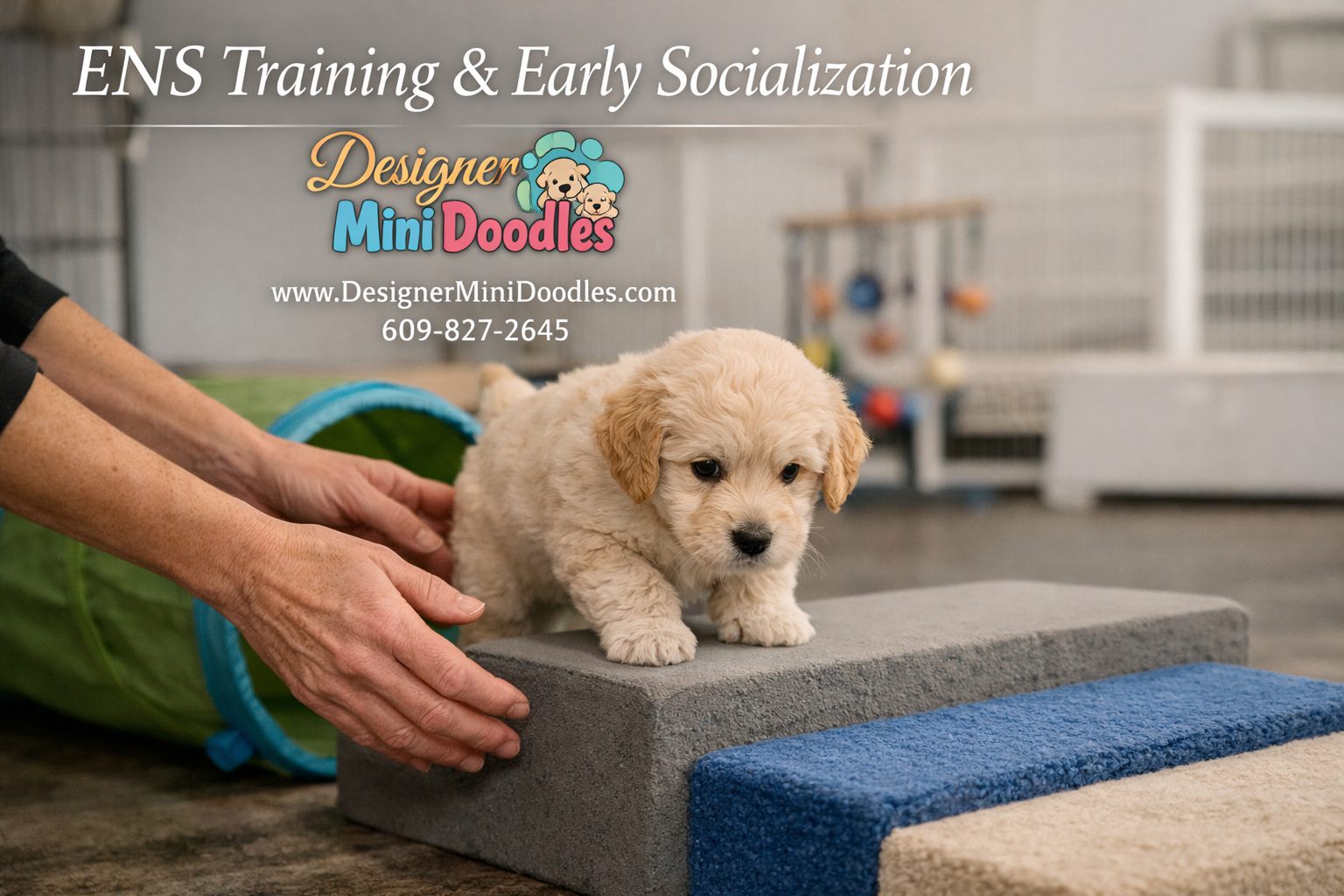
Designer Mini Doodles stands apart because the program was founded by an animal biologist by degree with a minor in animal genetics. That’s not a weekend certification or a YouTube education. It’s a formal academic background in the science of breeding healthy animals. This expertise shows up in every aspect of the program:
Breeding and Whelping Process
- Health-tested bloodlines only. Every parent dog undergoes comprehensive genetic screening before entering the breeding program. This eliminates common issues like hip dysplasia, progressive retinal atrophy, and von Willebrand disease.
- Professional whelping protocols. Puppies are born in a controlled, clean environment with veterinary oversight. The whelping process is monitored around the clock.
- Early Neurological Stimulation (ENS). Between days 3 and 16, puppies undergo the Bio Sensor/Super Dog program. This military-developed protocol involves brief daily exercises that improve stress tolerance, immune function, and cardiovascular health.
- Early housebreaking and crate training. Puppies begin potty training and crate introduction before they go home, giving new owners a significant head start.
- Socialization from birth. Puppies are exposed to household sounds, different surfaces, gentle handling, and age-appropriate enrichment activities throughout their first weeks.
What You Get With Every Puppy
- Written health guarantee and contract
- Lifetime breeder support (not just 30 days)
- Vaccination and deworming records
- Microchipping
- Puppy starter kit with food, training materials, and care instructions
- Financing options for qualified buyers
Designer Mini Doodles specializes in F1, F1b, and multigenerational mini and micro teacup goldendoodle puppies, working exclusively with top-quality bloodlines. Their focus on health, temperament, and genetic predictability makes them one of the most trusted micro teacup goldendoodle breeders in the country.
If you’re searching for teacup goldendoodles nearby or a micro goldendoodle near me, Designer Mini Doodles ships nationwide and works with families across every state.
Also Breeding Mini Bernedoodles
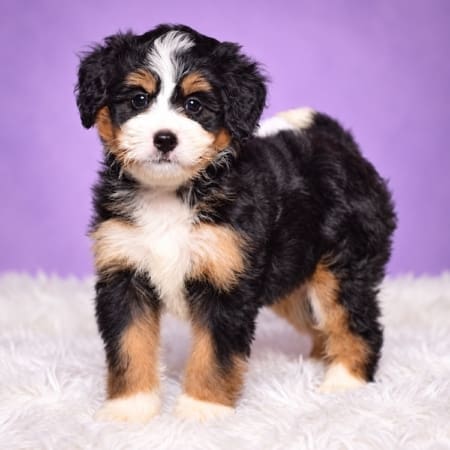
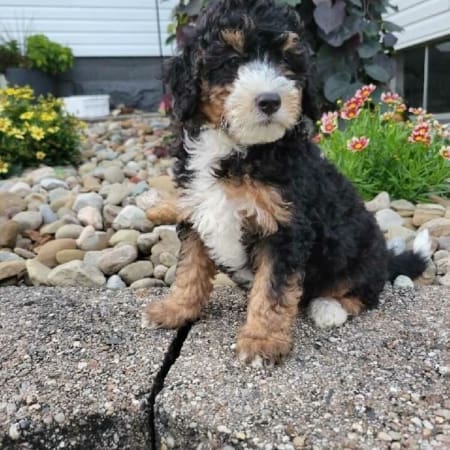
In addition to goldendoodles, Designer Mini Doodles also breeds miniature bernedoodle puppies. Mini bernedoodles combine the bernese mountain dog’s gentle, loyal temperament with the poodle’s intelligence and low-shedding coat. If you love the doodle personality but want the striking tri-color look, a mini bernedoodle is worth exploring.
Teacup Goldendoodle Size Compared to Other Small Doodles
Understanding how teacup goldendoodle size stacks up against similar breeds helps you make a more informed decision.
| Breed | Adult Weight | Adult Height | Coat Type | Temperament |
|---|---|---|---|---|
| Teacup Goldendoodle | 5–10 lbs | 8–12 in | Wavy to curly, non-shedding | Friendly, affectionate, smart |
| Toy Goldendoodle | 6–10 lbs | 9–12 in | Wavy to curly, non-shedding | Playful, social, eager to please |
| Micro Mini Goldendoodle | 12–19 lbs | 12–15 in | Curly, non-shedding | Balanced energy, adaptable |
| Teacup Poodle | 2–5 lbs | 6–9 in | Curly, non-shedding | Intelligent, sometimes anxious |
| Toy Cavapoo | 7–13 lbs | 9–12 in | Wavy, low-shedding | Gentle, calm, affectionate |
The teacup goldendoodle and toy goldendoodle overlap significantly in size. The main difference is that “teacup” generally refers to the very smallest end of the toy range. If you want a bit more sturdiness without going full mini, the micro mini toy goldendoodle at 12–19 lbs is an excellent middle ground.
For those interested in the poodle side of the family, Designer Mini Doodles also raises teacup and toy poodles for urban living with the same health-first approach.
Common Health Considerations for Teacup Goldendoodle Size
Tiny dogs can be healthy dogs, but only when bred responsibly. Here are the health topics every teacup goldendoodle buyer should understand:
- Hypoglycemia (low blood sugar). Very small puppies can experience blood sugar drops, especially during the first few months. Frequent small meals and monitoring prevent this.
- Luxating patella. A condition where the kneecap slips out of place. Health-tested parents significantly reduce this risk.
- Dental crowding. Small jaws mean teeth can crowd together. Regular dental care starting early is essential.
- Fragile bones. Teacup-sized dogs are more susceptible to fractures from falls or rough handling. Supervised play and soft landing surfaces help.
- Heart murmurs. Some very small dogs develop heart murmurs. A reputable breeder screens for cardiac issues in parent dogs.
The single most effective way to avoid these problems is choosing a breeder who health-tests parent dogs and understands the genetics behind producing healthy small dogs. Programs led by someone with formal training in animal biology and genetics, like Designer Mini Doodles, are specifically designed to minimize these risks.
For detailed guidance on grooming and home care for micro goldendoodles, including dental care routines, check out our dedicated guide.
FAQ: Teacup Goldendoodle Size Questions Answered
How big does a teacup goldendoodle get?
A fully grown teacup goldendoodle weighs 5–10 pounds and stands 8–12 inches tall at the shoulder. They typically reach full size by 9–11 months of age.
Is a teacup goldendoodle the same as a toy goldendoodle?
They’re very similar and the terms are often used interchangeably. “Teacup” usually refers to the smallest end of the toy range (under 8 lbs), while “toy” can include dogs up to 10 lbs. There’s no official breed standard distinguishing the two.
Do teacup goldendoodles shed?
No. Teacup goldendoodles carry a high percentage of poodle genetics and are considered non-shedding. They still require regular brushing and grooming to prevent matting.
How long do teacup goldendoodles live?
Teacup goldendoodles from healthy bloodlines typically live 12–16 years. Smaller dogs generally live longer than larger dogs, and good breeding practices extend lifespan further.
Are teacup goldendoodles good with kids?
They’re wonderful with older children who understand gentle handling. For families with toddlers or very young kids, a slightly larger micro mini (12–19 lbs) is often a safer choice because it’s sturdier.
Can you fly with a teacup goldendoodle?
Yes. Most airlines allow dogs under 20 lbs in the cabin in an approved carrier. A teacup goldendoodle at 5–10 lbs fits easily under the seat.
How much exercise does a teacup goldendoodle need?
About 20–30 minutes of daily activity, split between walks and indoor play. They’re energetic but tire faster than larger doodles due to their small size.
What’s the difference between a teacup goldendoodle and a micro mini goldendoodle?
Size. A teacup goldendoodle weighs 5–10 lbs, while a micro mini weighs 12–19 lbs. Both are non-shedding and share similar temperaments.
How much does a teacup goldendoodle cost?
Expect to pay $2,000–$3,500 from a responsible breeder who provides health testing, a written contract, and lifetime support. Prices below $1,200 are red flags for scams or puppy mills.
Do teacup goldendoodles have health problems?
When bred responsibly with health-tested parents, teacup goldendoodles are generally healthy dogs. Potential concerns include hypoglycemia in puppyhood, dental crowding, and luxating patella, all of which are minimized through proper breeding and care.
What generation is best for a teacup goldendoodle?
F1b and multigenerational crosses produce the most predictable teacup goldendoodle size and coat type. These generations allow breeders to select for consistent small size across multiple litters.
Can I finance a teacup goldendoodle puppy?
Yes. Breeders like Designer Mini Doodles offer financing options so you can invest in a health-tested puppy with manageable payments.
Conclusion
The teacup goldendoodle size, at 5–10 pounds and 8–12 inches tall, offers everything people love about goldendoodles in the most compact package possible. They’re non-shedding, highly trainable, travel-friendly, and perfectly suited for apartments, seniors, and first-time owners.
But getting a healthy teacup goldendoodle depends almost entirely on the breeder you choose. Here are your actionable next steps:
- Define your ideal size range. Decide whether you want a true teacup (5–10 lbs), micro mini (12–19 lbs), or mini (25–35 lbs) based on your lifestyle.
- Verify breeder credentials. Look for formal education in animal science or genetics, comprehensive health testing, and a written health guarantee.
- Ask about the parents. Request photos, health clearances, and adult weights of both parent dogs.
- Budget realistically. Plan for $2,000–$3,500 for the puppy, and ask about financing if needed.
- Contact Designer Mini Doodles. As a program led by an animal biologist specializing in genetics, health, and temperament, they produce some of the best micro teacup goldendoodle puppies in the country. Call 609-827-2645 or visit www.DesignerMiniDoodles.com to see available puppies and learn about their training and enrichment program.
A well-bred teacup goldendoodle isn’t just a tiny dog. It’s a companion built on science, care, and generations of intentional breeding. Choose wisely, and you’ll have a healthy, happy friend for the next 12–16 years.
References
- American Kennel Club. “Goldendoodle Dog Breed Information.” AKC, 2024. https://www.akc.org
- Goldendoodle Association of North America. “Goldendoodle Size Standards.” GANA, 2023. https://www.goldendoodleassociation.com
- Orthopedic Foundation for Animals. “Health Testing for Breeding Dogs.” OFA, 2024. https://www.ofa.org