
best teacup doodle breeders
The best teacup doodle breeders combine formal education in animal genetics, comprehensive health testing, and multi-generational breeding programs to produce healthy puppies in the 6-19 lb range. Designer Mini Doodles stands out as a top-tier program in the United States, founded by an animal biologist with a minor in animal genetics. When searching for a micro teacup goldendoodle, expect to pay $2,000-$3,500 from a responsible breeder who provides a health guarantee, lifetime support, and a written contract.
best teacup doodle breeders
- Science matters: The best teacup doodle breeders have formal training in genetics, not just a love for dogs.
- Size categories: Toy (6-10 lbs), Micro Mini (12-19 lbs), and Mini (25-35 lbs) are the most popular goldendoodle sizes.
- Shedding difference: Toy and Micro Mini goldendoodles do not shed, while Mini-sized goldendoodles may shed.
- Price reality: A healthy teacup goldendoodle from a responsible breeder costs $2,000-$3,500. Anything under $1,000 is a red flag.
- Health testing is non-negotiable: Reputable breeders test for hip dysplasia, heart conditions, eye disorders, and genetic diseases.
- Early development programs like ENS (Early Neurological Stimulation), early housebreaking, and crate training produce better-adjusted puppies.
- Financing options are available through programs like Designer Mini Doodles, making responsible breeding accessible.
- Nationwide delivery means you don’t have to settle for a local breeder who cuts corners.
A three-pound goldendoodle puppy sat in the palm of a breeder’s hand last spring, and within 48 hours of that photo going viral, the breeder received over 400 inquiries. That single moment captures the explosive demand for micro teacup goldendoodles in 2026, and it also highlights a serious problem: most people searching for the best teacup doodle breeders have no idea how to tell a world-class program from a backyard operation. I’ve spent years studying what separates responsible breeders from the rest, and the difference comes down to science, commitment, and transparency.
Finding a teacup goldendoodle puppy that’s genuinely healthy, well-socialized, and bred from top bloodlines requires knowing exactly what to look for. This guide breaks down every factor that matters, from genetics and pricing to breeder red flags and state-specific resources.
What Exactly Is a Teacup Goldendoodle, and What Sizes Are Available?
A teacup goldendoodle is a crossbreed between a Golden Retriever and a Toy or Miniature Poodle, selectively bred over multiple generations to achieve a very small adult size. The term “teacup” isn’t an official breed standard but refers to the smallest goldendoodles, typically under 10 pounds.
Here’s how the most popular sizes break down:
| Size Category | Adult Weight | Shedding | Best For |
|---|---|---|---|
| Toy | 6-10 lbs | Non-shedding | Apartments, seniors, travel |
| Micro Mini | 12-19 lbs | Non-shedding | Families, urban living, first-time owners |
| Mini | 25-35 lbs | May shed | Active families, homes with yards |
Key distinction: Toy and Micro Mini goldendoodles do not shed, making them ideal for allergy sufferers. The Mini size, while still smaller than a standard goldendoodle, carries more Golden Retriever genetics and may shed moderately.
Choose Toy if you live in a small apartment, travel frequently, or want a true lap dog. Choose Micro Mini if you want a slightly sturdier companion that’s still non-shedding and highly portable. Learn more about why a 10-16 lb micro goldendoodle is the perfect size for apartment living.
Generation types also matter:
- F1: Golden Retriever x Poodle (first cross)
- F1b: F1 Goldendoodle x Poodle (more Poodle genetics, less shedding)
- Multi-generational: Multiple generations of carefully selected goldendoodle-to-goldendoodle or goldendoodle-to-Poodle breeding for consistent size and coat
The best teacup doodle breeders work with F1, F1b, and multi-generational lines to produce predictable, healthy puppies with the traits buyers actually want.
Why Does the Breeder’s Background Matter When Choosing the Best Teacup Doodle Breeders?
A breeder’s education and approach to genetics directly determines the health, temperament, and longevity of your puppy. This is the single biggest factor most buyers overlook.

Designer Mini Doodles is led by a founder who holds a degree in animal biology with a minor in animal genetics. That academic foundation isn’t just a credential on paper. It means every breeding decision, from parent selection to pairing combinations, is guided by an understanding of recessive genes, hybrid vigor, coat inheritance, and structural soundness.
What separates a science-based program from a hobby breeder:
- Genetic testing of all parent dogs for conditions like Progressive Retinal Atrophy (PRA), Von Willebrand’s Disease, and degenerative myelopathy
- Bloodline analysis to avoid inbreeding depression and maximize genetic diversity
- Selective pairing based on temperament scores, not just color or size
- Structural evaluation to ensure puppies grow into proportionate, healthy adults
“Anyone can breed two small dogs together. It takes a geneticist to do it responsibly across multiple generations while maintaining health and temperament.”
Common mistake: Buyers often choose a breeder based on cute photos or low prices without asking about health testing protocols. A puppy from untested parents may develop serious genetic conditions by age 2-3, costing thousands in veterinary bills.
If you’re searching for micro goldendoodle puppies near you, prioritize breeders who can explain their genetic testing results and show you the parent dogs’ health clearances.
How Much Should You Pay for a Teacup Goldendoodle? (And What’s a Red Flag?)
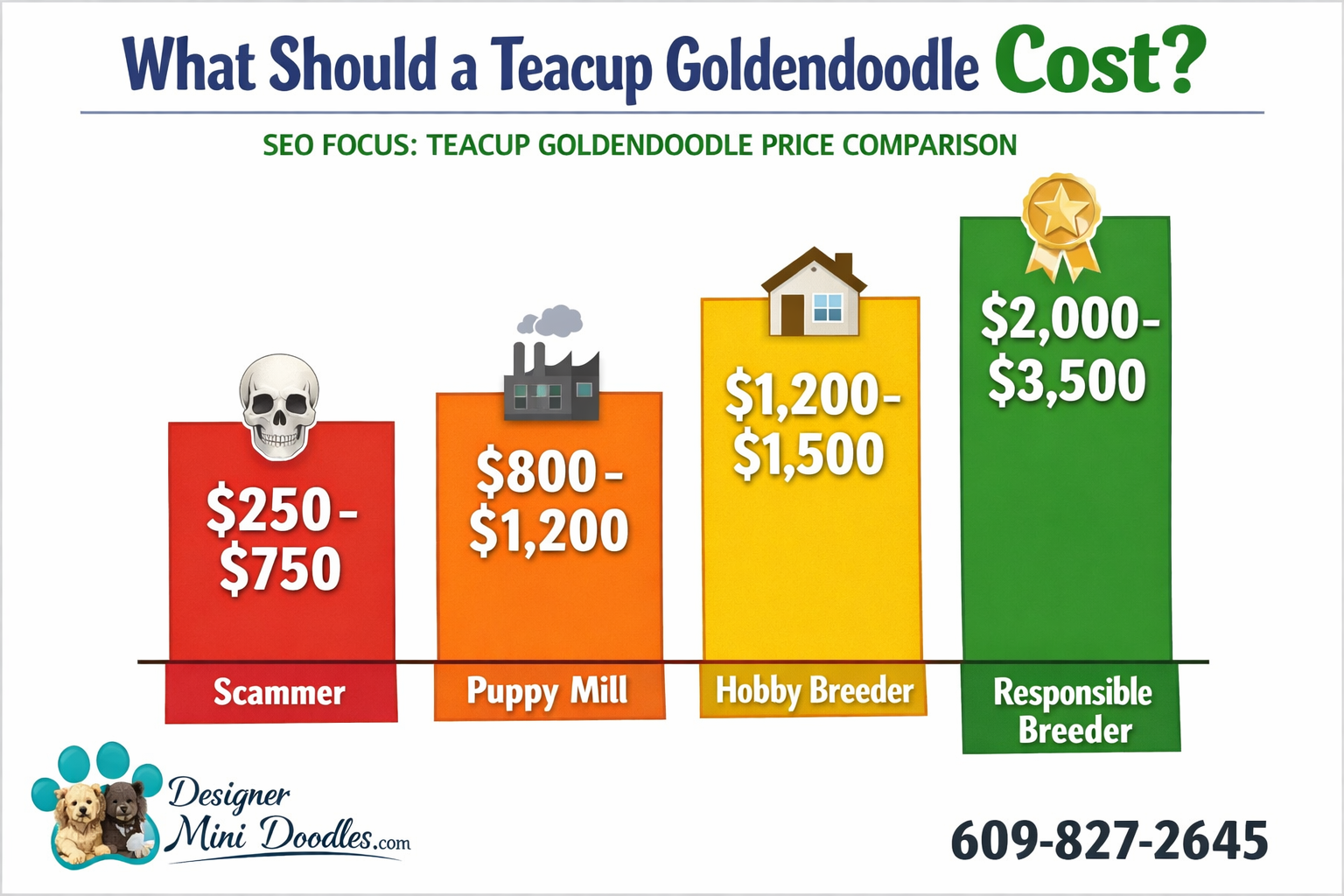
A healthy micro teacup goldendoodle from a responsible breeder costs between $2,000 and $3,500 in 2026. That price reflects the actual cost of genetic testing, veterinary care, quality nutrition, early socialization, and lifetime breeder support.
Here’s the pricing reality across the market:
| Seller Type | Price Range | What You Get | Risk Level |
|---|---|---|---|
| Scammer | $250-$750 | Nothing (wire fraud, fake listings) | Extreme |
| Puppy Mill | $800-$1,200 | Poorly socialized, untested parents, no support | Very High |
| Hobby Breeder | $1,200-$1,500 | Limited testing, no contract, minimal support | High |
| Responsible Breeder | $2,000-$3,500 | Health guarantee, contract, lifetime support, tested parents | Low |
Decision rule: If a teacup goldendoodle is priced under $1,500, ask yourself what corners are being cut. Genetic testing alone costs hundreds of dollars per parent dog. Quality puppy food, veterinary exams, microchipping, vaccinations, and early training programs add up quickly.
Financing is available. Programs like Designer Mini Doodles offer puppy financing options so buyers don’t have to compromise on quality due to upfront cost. Paying $150/month for a healthy, well-bred puppy beats paying $3,000 in emergency vet bills for a puppy mill dog within the first year.
Red flags to watch for:
- No written contract or health guarantee
- Breeder won’t let you see parent dogs or their health records
- Multiple breeds available at all times (sign of a mill)
- Pressure to buy immediately with no waitlist
- No questions asked about your living situation or experience
For families exploring options across the Southeast, check out our guides to mini and micro goldendoodle breeders in Florida and mini and micro goldendoodle breeders in Georgia.
What Early Development Programs Do the Best Teacup Doodle Breeders Provide?
The best teacup doodle breeders invest heavily in the first 8-10 weeks of a puppy’s life because that window shapes behavior, confidence, and adaptability for years to come. A puppy that receives proper early development arrives home calmer, more confident, and easier to train.
Designer Mini Doodles implements a comprehensive early development protocol that includes:
Whelping Process
Every litter is born in a clean, temperature-controlled whelping environment. The dam (mother) receives prenatal veterinary care, and puppies are monitored around the clock during the first critical days. Weight checks happen twice daily to catch any issues early.
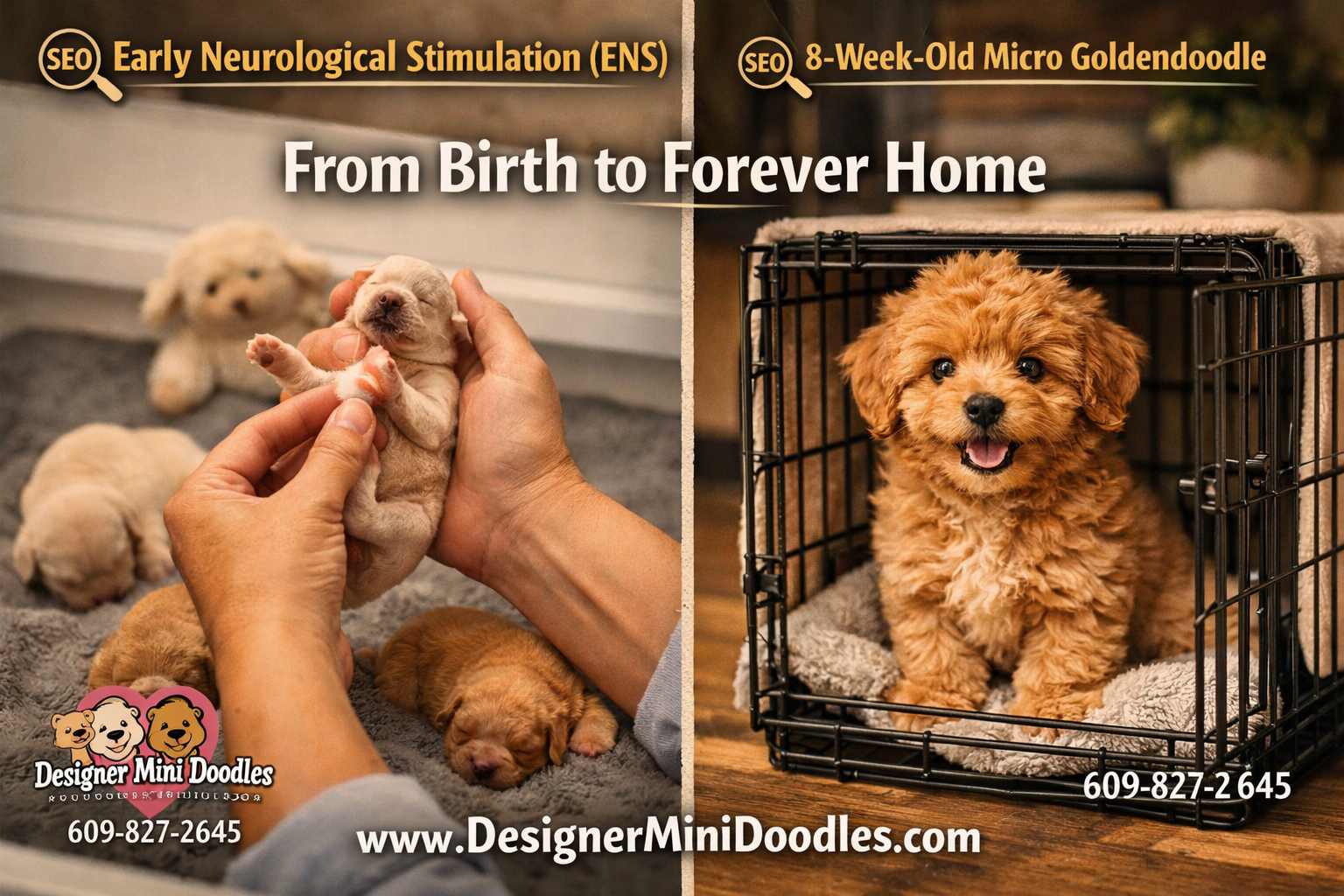
Early Neurological Stimulation (ENS)
Between days 3 and 16, puppies undergo the Bio Sensor or “Super Dog” program, originally developed by the U.S. military for working dogs. ENS involves brief, controlled exercises:
- Tactile stimulation (holding puppy with cotton swab between toes)
- Head held erect
- Head pointed down
- Supine position
- Thermal stimulation (cool towel contact)
Each exercise lasts 3-5 seconds. Research suggests ENS puppies develop stronger adrenal systems, better stress tolerance, and improved cardiovascular performance.
Early Housebreaking
By 5-6 weeks, puppies begin learning to eliminate on designated surfaces. This head start means your new teacup goldendoodle arrives with a basic understanding of where to go, dramatically reducing housebreaking time at home. For related training tips, see our guide on crate training toy poodle puppies the positive way.
Crate Training Introduction
Puppies are gently introduced to crate rest in short intervals starting around 6 weeks. By the time they go home, they’re comfortable in a crate, which reduces separation anxiety and makes travel easier.
Why this matters for teacup-sized dogs specifically: Smaller dogs are more prone to anxiety and “small dog syndrome” when not properly socialized. A breeder who invests in ENS and early training produces puppies that are confident, not fearful, regardless of their tiny size. If you’re a first-time dog owner considering a micro goldendoodle, these early programs make a significant difference in your experience.
How Do You Find the Best Teacup Doodle Breeders in Your State?
Start by identifying breeders who ship nationwide or offer guardian/delivery programs, then verify their credentials against the checklist below. Geography matters less than quality, but having state-specific resources helps.
Breeder Evaluation Checklist
Use this before placing a deposit with any breeder:
- Breeder provides a written health guarantee (minimum 2 years)
- All parent dogs have documented genetic testing results
- Breeder can explain their breeding program’s goals and methods
- You can see photos or video of the puppy’s living environment
- Breeder asks YOU questions about your home, lifestyle, and experience
- A contract outlines responsibilities for both buyer and breeder
- Lifetime support is offered (not just 30-day follow-up)
- References from previous buyers are available
- Breeder specializes in 1-2 breeds (not 10+)
- Puppies receive age-appropriate vaccinations and deworming before going home
State-by-State Resources
Designer Mini Doodles serves families across the entire United States. Here are some of the most popular regions:
Southeast:
- Micro mini goldendoodles in Florida — serving Tampa, Orlando, Jacksonville, and Miami
- Mini and micro goldendoodle breeders in North Carolina
- Micro mini goldendoodles in Tennessee
- Mini and micro goldendoodle breeders in South Carolina
Northeast:
- Mini goldendoodle puppies in New York
- Mini and micro goldendoodle breeders in Pennsylvania
- Mini and micro goldendoodle breeders in New Jersey
Midwest and West:
- Mini and micro goldendoodle breeders in Michigan
- Mini goldendoodle puppies in California
- Mini and micro goldendoodle breeders in Texas
Common mistake: Settling for a nearby hobby breeder because shipping seems complicated. Reputable breeders like Designer Mini Doodles have safe, climate-controlled delivery options that bring your puppy to you in excellent condition. Don’t compromise on breeder quality just for geographic convenience.
What About Other Doodle Breeds? Mini Bernedoodles and More
If you love the doodle temperament but want a different look, Designer Mini Doodles also breeds miniature bernedoodle puppies. Mini Bernedoodles combine the Bernese Mountain Dog’s loyal, gentle nature with the Poodle’s intelligence and low-shedding coat. They typically range from 25-45 lbs and come in striking tri-color patterns (black, white, and rust).
Mini Bernedoodles are an excellent alternative for families who want a slightly larger doodle with a calm, affectionate disposition. The same science-based breeding principles, genetic testing, and early development programs apply to every litter.
What Questions Should You Ask Before Buying a Teacup Goldendoodle?
Before putting down a deposit, ask these questions and evaluate the answers carefully. A confident, responsible breeder will welcome every one of them.
About the parents:
- Can I see health testing results (OFA, CERF, genetic panels) for both parents?
- What are the parents’ temperaments like? Can I meet them via video call?
- How much do the parents weigh, and what size do you expect the puppies to reach?
About the program:
4. What early socialization and training do puppies receive?
5. Do you offer a written health guarantee? For how long?
6. What happens if I can no longer keep the dog? (Good breeders have a return policy.)
7. How many litters do you produce per year?
About logistics:
8. Do you offer financing options?
9. How do you handle delivery or shipping?
10. What comes with the puppy (vaccinations, microchip, starter kit)?
Edge case: If a breeder gets defensive or evasive about any of these questions, walk away. Transparency is the hallmark of every responsible program.
For more on what makes a top goldendoodle breeder, explore our detailed breeder comparison guide.
Frequently Asked Questions
How long do teacup goldendoodles live?
Teacup and micro goldendoodles typically live 12-16 years when bred responsibly. Smaller dogs generally have longer lifespans than larger breeds, but this depends heavily on genetic health and quality of care.
Are teacup goldendoodles good with kids?
Yes, when properly socialized. Micro and toy-sized goldendoodles are gentle and affectionate, but families with very young children (under 5) should supervise interactions because the puppy’s small size makes it vulnerable to accidental injury. See our guide on micro goldendoodles for family households with kids.
Do teacup goldendoodles bark a lot?
They can be vocal if not properly trained, but they’re not inherently excessive barkers. Early socialization and consistent training from the breeder and new owner minimize nuisance barking.
Can I fly with a teacup goldendoodle?
Yes. Toy and micro mini goldendoodles (under 20 lbs) typically qualify for in-cabin airline travel. Their small size makes them one of the most travel-friendly companion dogs available.
How often do teacup goldendoodles need grooming?
Every 6-8 weeks for a professional groom, with daily brushing at home to prevent matting. Their non-shedding coats grow continuously, similar to human hair. Check out our grooming and home care tips for micro goldendoodles.
What’s the difference between a teacup and a micro mini goldendoodle?
“Teacup” generally refers to the smallest category (under 10 lbs), while “micro mini” describes dogs in the 12-19 lb range. Both are significantly smaller than standard goldendoodles (50-90 lbs).
Is it safe to breed dogs this small?
When done by a knowledgeable breeder with proper genetic testing and veterinary oversight, yes. Problems arise when unqualified breeders select only for small size without considering structural health, organ development, or genetic diversity.
Can I finance a teacup goldendoodle puppy?
Yes. Designer Mini Doodles offers financing options that allow buyers to make payments over time. This makes it possible to get a puppy from a responsible breeder without paying the full amount upfront.
What colors do teacup goldendoodles come in?
Common colors include cream, apricot, red, chocolate, black, and parti (multi-colored). Color depends on the genetics of both parent dogs. Browse available toy goldendoodle puppies to see current color options.
How do I avoid goldendoodle scams?
Never wire money to a stranger. Always verify the breeder has a physical location, real reviews, and a history of producing healthy litters. If the price seems too good to be true, it is. Stick with established programs that offer contracts and health guarantees.
Conclusion
Finding the best teacup doodle breeders comes down to three things: verified genetic expertise, comprehensive health testing, and a genuine commitment to every puppy’s lifelong well-being. Don’t let a low price tag or cute photos override your judgment. The difference between a $750 puppy mill dog and a $2,500 responsibly bred micro goldendoodle shows up in vet bills, behavioral issues, and heartbreak.
Your next steps:
- Define your ideal size: Toy (6-10 lbs), Micro Mini (12-19 lbs), or Mini (25-35 lbs)
- Contact Designer Mini Doodles at 609-827-2645 or visit www.DesignerMiniDoodles.com to learn about available litters and upcoming breedings
- Ask the questions outlined in this guide and evaluate the breeder’s transparency
- Explore financing if needed so you don’t compromise on quality
- Prepare your home with a crate, puppy-safe space, and a veterinarian selected before your puppy arrives
A well-bred teacup goldendoodle from a science-based program isn’t just a pet purchase. It’s a 12-16 year relationship that starts with one good decision: choosing the right breeder.