
Mini Bernedoodle Shedding
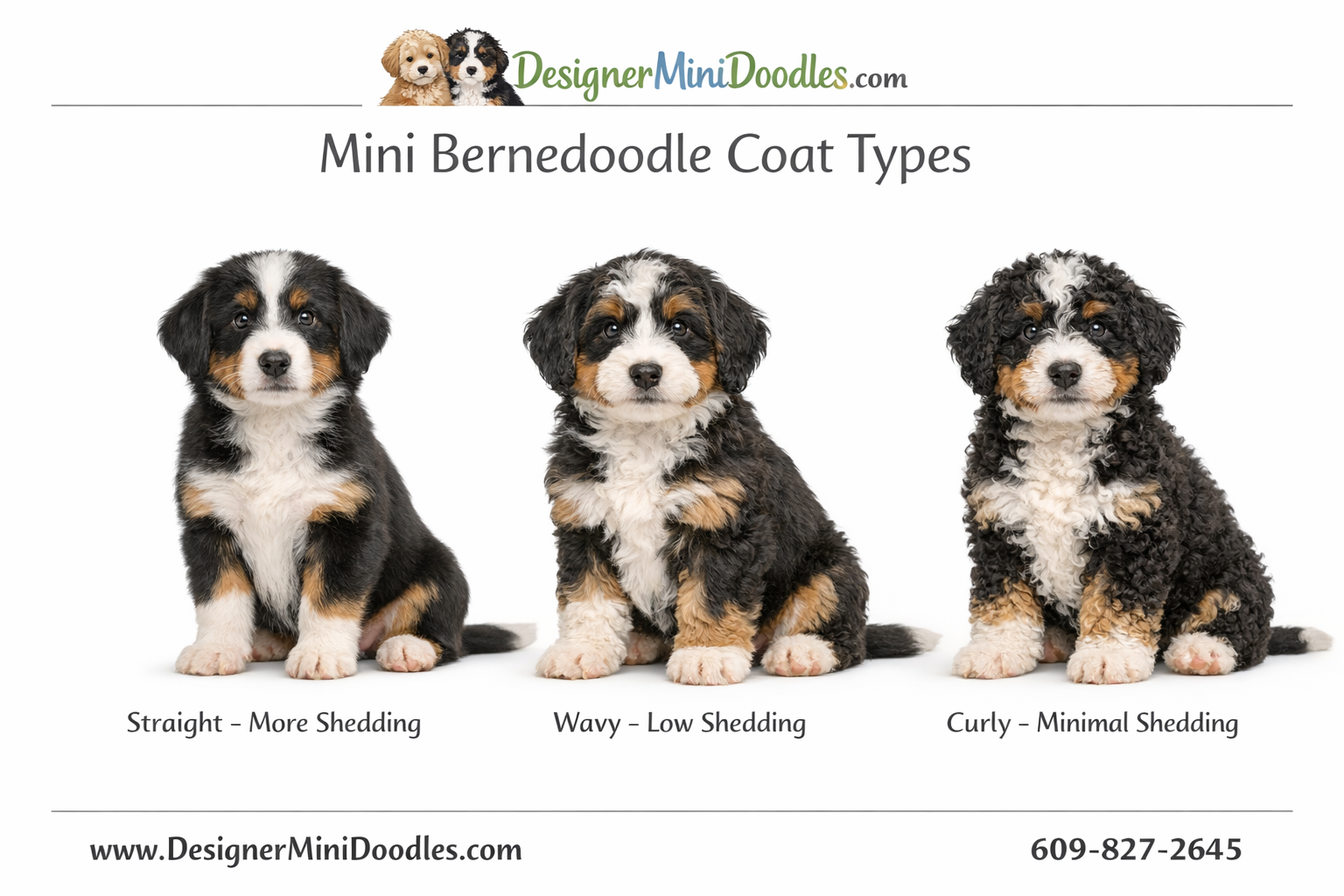
According to the Asthma and Allergy Foundation of America, roughly three in ten people in the United States have allergic reactions to cats and dogs—and pet dander attached to shed fur is the number-one trigger. That single statistic is why mini bernedoodle shedding ranks among the top questions I hear from prospective puppy buyers every single week. The good news? Mini bernedoodles are specifically bred to shed far less than their Bernese Mountain Dog parent, making them one of the most popular choices for families who want a fluffy, affectionate companion without tumbleweeds of fur rolling across the hardwood.
But “low-shedding” doesn’t mean “no-shedding,” and the amount of hair your mini bernedoodle leaves behind depends on genetics, coat type, generation, grooming habits, and even diet. In this guide, I’ll break down everything you need to know about mini bernedoodle shedding so you can make a confident, informed decision before bringing a puppy home.
At Designer Mini Doodles, we’ve spent over fifteen years perfecting the miniature bernedoodle. Our founder—an animal biologist by degree from Stockton University in South Jersey—built this program around health, structure, temperament, intelligence, and trainability. That scientific background means every breeding decision we make is rooted in genetics, including the coat genetics that directly affect shedding. If you’re ready to explore our available litters, browse our mini bernedoodle puppies page.
Key Takeaways 📋
- Coat type is the biggest predictor of mini bernedoodle shedding—curly coats shed the least, straight coats shed the most, and wavy coats fall in between.
- Generation matters. F1B and F1BB mini bernedoodles carry more Poodle genetics, resulting in significantly less shedding than F1 crosses.
- No dog is 100% hypoallergenic, but a well-bred mini bernedoodle from health-tested parents can be an excellent fit for mild-to-moderate allergy sufferers.
- Grooming is non-negotiable. Even low-shedding coats require regular brushing to prevent matting and keep loose hair contained.
- Diet and health play supporting roles—omega fatty acids, proper nutrition, and parasite prevention all influence coat quality and shedding levels.
Why Mini Bernedoodle Shedding Is Different From Other Breeds
To understand mini bernedoodle shedding, you first need to understand the two parent breeds and what each contributes to the mix.
The Bernese Mountain Dog Side
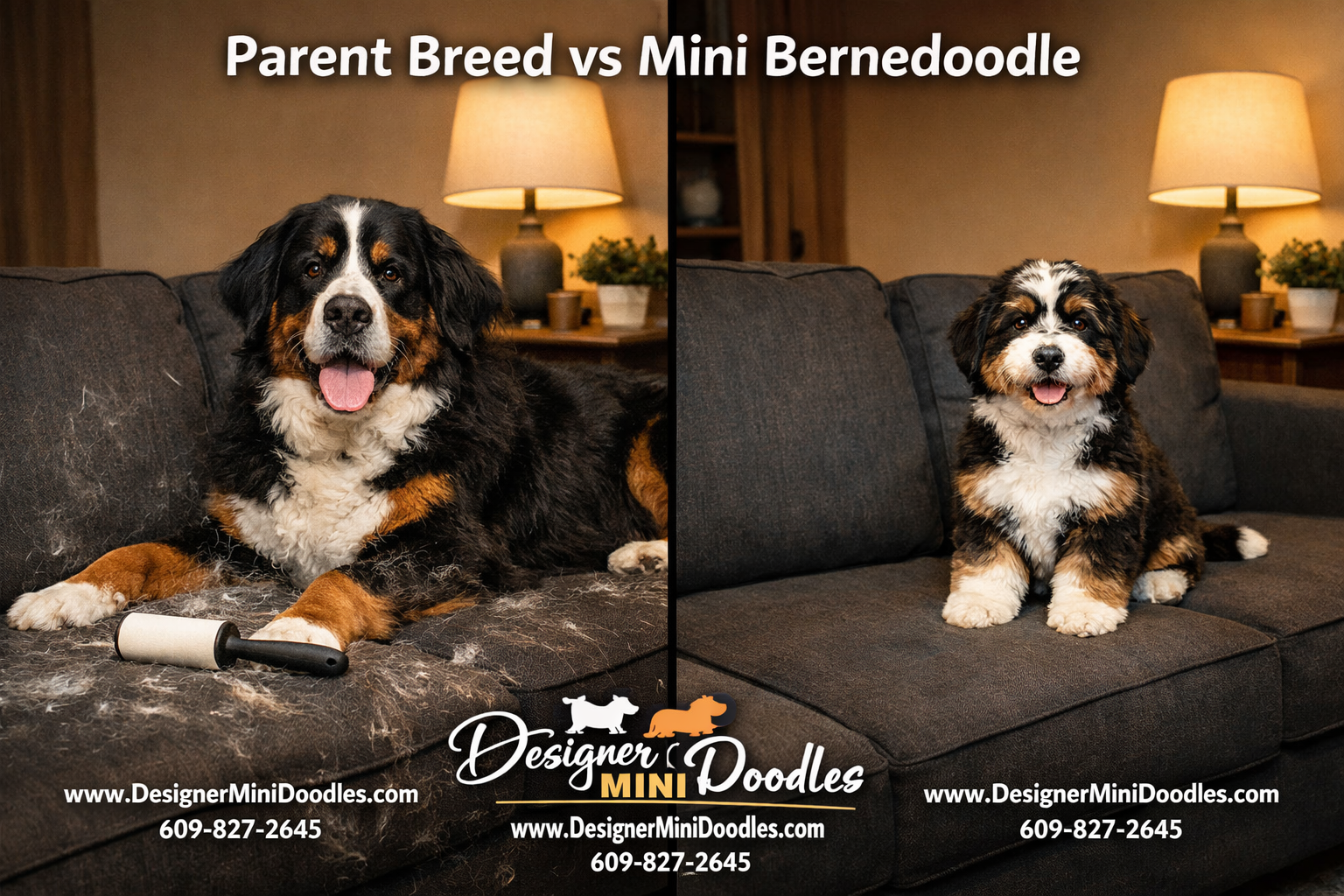
Bernese Mountain Dogs have a thick, double-layered coat designed to survive Swiss alpine winters. They shed heavily year-round and “blow” their undercoat twice a year during seasonal changes. If you’ve ever visited a home with a Berner, you know—fur is everywhere.
The Poodle Side
Poodles sit at the opposite end of the spectrum. Their tight, curly coat grows continuously (like human hair) and sheds minimally. Loose hairs get trapped within the curls instead of falling onto your furniture. This is the trait breeders aim to pass along to doodle puppies.
The Mini Bernedoodle Result
When you cross these two breeds, the offspring inherit a blend of coat genetics. Some puppies lean more toward the Poodle coat, others toward the Bernese coat, and many land somewhere in the middle. The key variables are:
| Factor | Low Shedding | Moderate Shedding | Higher Shedding |
|---|---|---|---|
| Coat Texture | Curly | Wavy | Straight |
| Generation | F1BB, F2BB | F1B, F2B | F1, F2 |
| Furnishings Gene | Two copies (F/F) | One copy (F/IC) | No copies (IC/IC) |
| Undercoat | Absent or minimal | Light undercoat | Dense undercoat |
💡 Pro Tip: The “furnishings” gene (also called the RSPO2 gene) is what gives doodles their signature bearded, shaggy look. Dogs with two copies of this gene shed the least. Reputable breeders like Designer Mini Doodles test for this gene before pairing parents.
This is exactly why our founder’s background in animal biology matters. At Designer Mini Doodles—widely recognized as a leading mini bernedoodle breeder—we use genetic coat testing to predict shedding levels before puppies are ever born. That scientific approach is what sets our program apart and why families across Florida, Georgia, New Jersey, Tennessee, South Carolina, North Carolina, Louisiana, and Alabama trust us with their puppy search.
- Display 9 Products per page

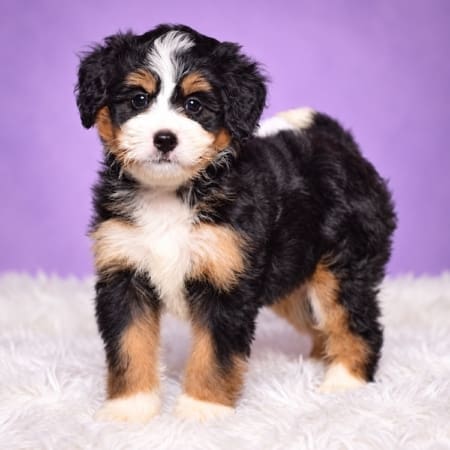
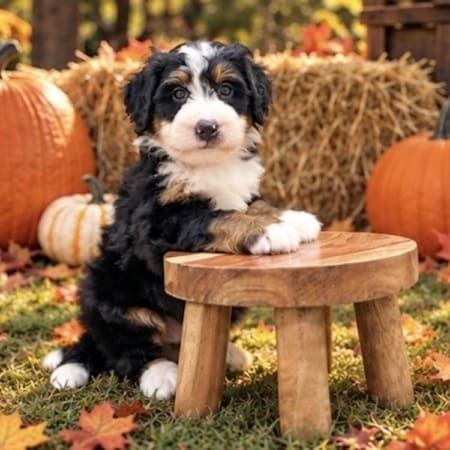
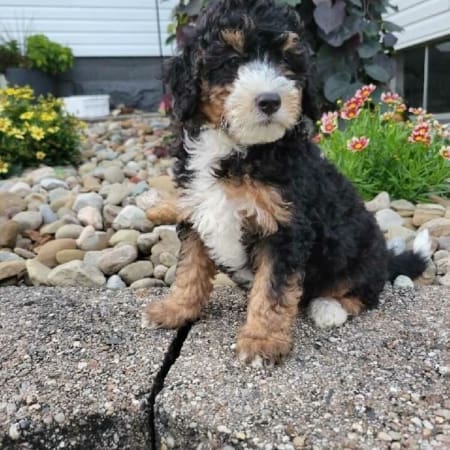


Mini Bernedoodle Shedding by Coat Type and Generation
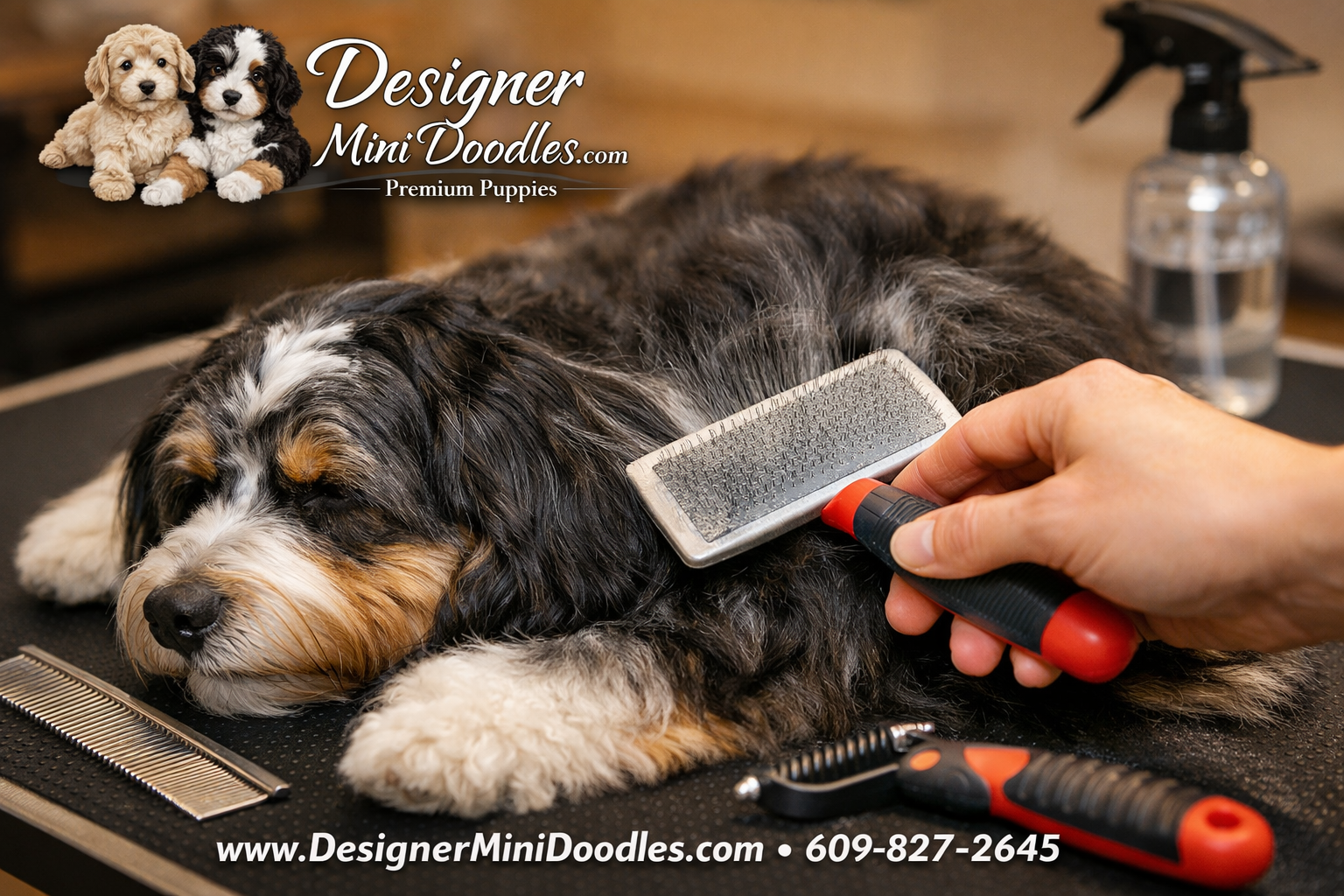
Not all mini bernedoodles shed the same amount. Let me walk you through the three main coat types and how each generation affects what you can expect.
Curly Coat 🐩
A curly-coated mini bernedoodle most closely resembles the Poodle parent. These dogs shed the least of any coat type. Loose hairs get caught in the tight curls, which means almost nothing ends up on your clothes or couch. The trade-off? Curly coats mat quickly and require brushing every 1–2 days plus professional grooming every 6–8 weeks.
Best for: Allergy sufferers, people who want minimal shedding, and owners willing to commit to regular grooming.
Wavy (Fleece) Coat 🌊
The wavy coat—sometimes called a “fleece” coat—is the most common and most sought-after. It offers a beautiful balance: low to minimal shedding with a softer, more relaxed texture that’s slightly easier to maintain than a full curl. Most wavy-coated mini bernedoodles shed so little that owners rarely notice loose hair around the house.
Best for: Families wanting the classic “teddy bear” look with manageable shedding.
Straight Coat
A straight coat leans toward the Bernese Mountain Dog side. These dogs will shed noticeably more than their curly or wavy siblings. They may also develop an undercoat that “blows” seasonally. Straight-coated mini bernedoodles are less common in well-planned breeding programs because breeders specifically select for furnishings and curl.
Best for: Owners who don’t mind some shedding and prefer a lower-maintenance grooming routine.
How Generation Affects Mini Bernedoodle Shedding
| Generation | Cross | Poodle % (approx.) | Expected Shedding |
|---|---|---|---|
| F1 | Bernese × Poodle | 50% | Low to moderate |
| F1B | F1 Bernedoodle × Poodle | 75% | Low |
| F1BB | F1B Bernedoodle × Poodle | 87.5% | Very low to none |
| F2 | F1 × F1 | 50% | Variable |
| F2B | F2 × Poodle | 62.5% | Low |
As you can see, the more Poodle in the mix, the less shedding you’ll deal with. This is why F1B and F1BB mini bernedoodles are the most popular choices for allergy-conscious families.
When you’re searching for mini bernedoodle breeders in Jacksonville, Florida, or mini bernedoodle puppies in Atlanta, Georgia, always ask about the generation and coat type of available litters. A knowledgeable breeder will be transparent about what to expect. Learn more about what our mini bernedoodle puppies grow into as adults so you can plan ahead.
Grooming Strategies to Control Mini Bernedoodle Shedding
Even the lowest-shedding mini bernedoodle needs consistent grooming. Here’s my recommended routine to keep shedding under control and your pup’s coat healthy.
Daily and Weekly Brushing 🪮
- Curly coats: Brush every 1–2 days with a slicker brush, then follow with a steel greyhound comb to catch tangles near the skin.
- Wavy coats: Brush 3–4 times per week minimum. Focus on friction areas—behind the ears, under the collar, armpits, and the back of the legs.
- Straight coats: Brush 2–3 times per week. Use a deshedding tool during seasonal coat changes (spring and fall).
Bathing Schedule 🛁
Bathe your mini bernedoodle every 4–6 weeks using a gentle, moisturizing dog shampoo. Over-bathing strips natural oils, which can actually increase shedding by drying out the skin and causing flaking.
Professional Grooming
Schedule professional grooming every 6–8 weeks. A groomer will:
- Trim the coat to a manageable length
- Remove any mats or tangles you may have missed
- Clean ears and trim nails
- Assess skin health
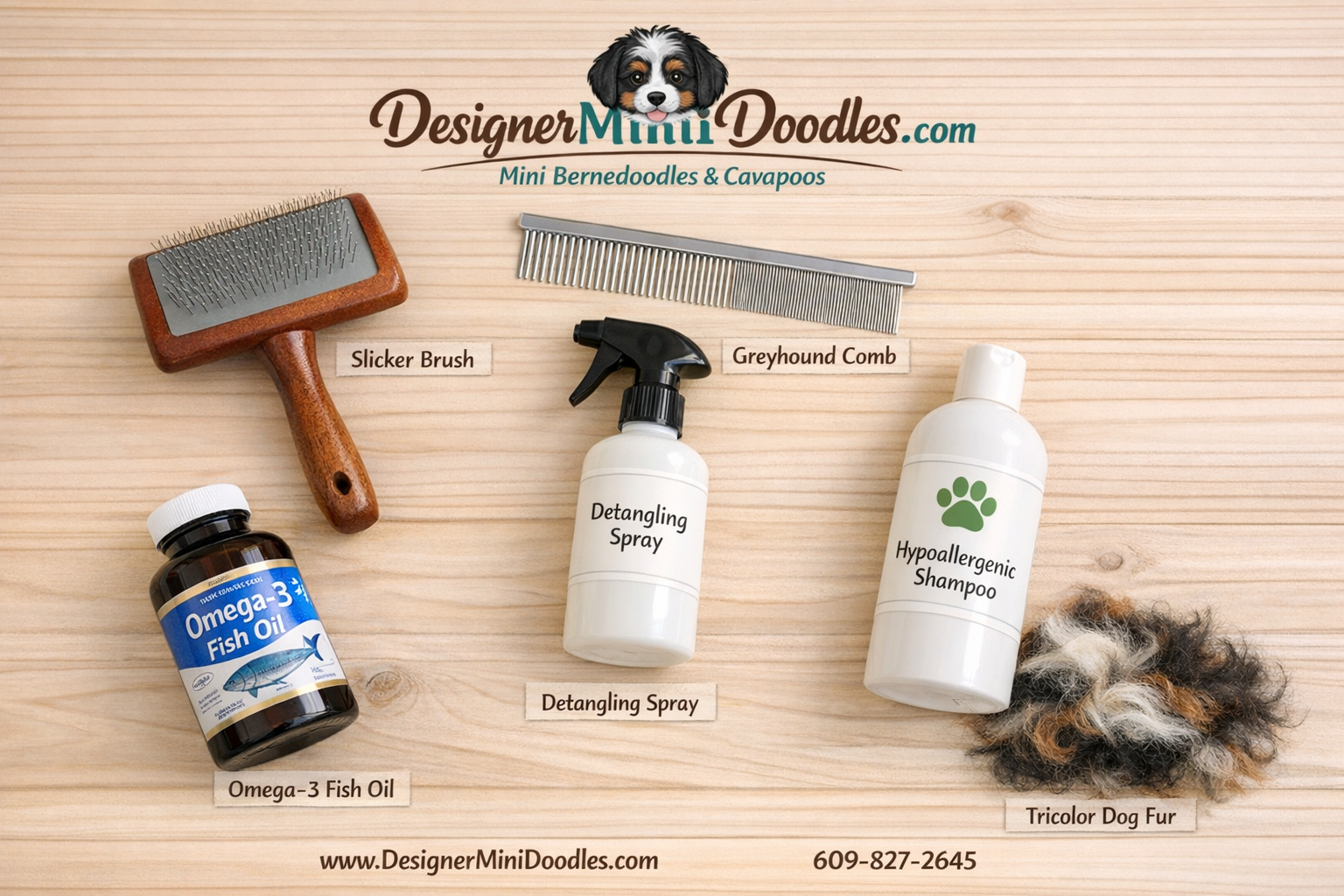
Essential Grooming Tools
| Tool | Purpose | Coat Type |
|---|---|---|
| Slicker brush | Removes tangles, loose hair | All types |
| Steel greyhound comb | Detects hidden mats | Curly & wavy |
| Deshedding rake | Removes loose undercoat | Straight & wavy |
| Detangling spray | Eases brushing, reduces breakage | All types |
| High-velocity dryer | Blows out loose fur after baths | All types |
“The single best thing you can do to manage mini bernedoodle shedding is brush consistently. Five minutes a day prevents hours of vacuuming later.”
Starting grooming habits early is essential. If you’re bringing home a new puppy, our guide on training a mini bernedoodle puppy includes tips on getting your pup comfortable with brushing from day one.
Diet, Health, and Other Factors That Affect Mini Bernedoodle Shedding
Coat genetics set the baseline, but several other factors can push shedding higher or lower than expected.
Nutrition and Supplements 🥩
A high-quality diet rich in protein and omega-3 and omega-6 fatty acids supports a strong, healthy coat. Dogs fed cheap, filler-heavy kibble often develop dry, brittle fur that sheds more. Consider:
- Salmon oil or fish oil supplements (rich in EPA and DHA)
- Foods with real meat as the first ingredient
- Avoiding corn, wheat, and soy fillers that can trigger skin irritation
Allergies and Skin Conditions
If your mini bernedoodle suddenly starts shedding more than usual, it could signal:
- Environmental allergies (pollen, dust mites, mold)
- Food sensitivities (chicken, beef, grains)
- Flea allergy dermatitis
- Bacterial or fungal skin infections
A vet visit is warranted any time you notice excessive hair loss, bald patches, redness, or persistent scratching.
Stress and Hormonal Changes
Dogs can shed more during:
- Stressful transitions (moving, new family members, boarding)
- Hormonal shifts (heat cycles in unspayed females, post-pregnancy)
- Seasonal changes (even low-shedding dogs may shed slightly more in spring)
Parasite Prevention
Fleas, ticks, and mites cause itching and scratching that leads to hair loss. Keeping your mini bernedoodle on a year-round parasite prevention program is essential for coat health.
This is another area where working with an experienced breeder pays off. At Designer Mini Doodles, our breeding program prioritizes health testing—including skin and coat health—so puppies start life with the strongest possible foundation. Families looking for mini bernedoodle breeders in Nashville, Tennessee, or mini bernedoodle puppies in Charlotte, North Carolina, can count on our health-first approach.
Are Mini Bernedoodles Hypoallergenic? What Allergy Sufferers Need to Know

Let’s address the elephant in the room: no dog breed is truly 100% hypoallergenic. The proteins that trigger allergic reactions (primarily Can f 1) are found in dog saliva, urine, and skin cells—not just fur. However, low-shedding dogs like mini bernedoodles spread significantly less dander around the home because loose hair (which carries dander) stays trapped in the coat instead of floating through the air.
What This Means for You
- Mild allergy sufferers often do very well with F1B or F1BB mini bernedoodles that have curly or wavy coats.
- Moderate allergy sufferers should spend time with the specific puppy before committing. Many breeders allow meet-and-greet visits for this reason.
- Severe allergy sufferers should consult an allergist before getting any dog, regardless of breed.
Steps to Reduce Allergens at Home 🏠
- Brush your dog outside to keep loose hair and dander out of the house
- Use HEPA air purifiers in rooms where the dog spends the most time
- Wash dog bedding weekly in hot water
- Bathe your dog regularly (every 4–6 weeks) to remove accumulated dander
- Designate dog-free zones (like the bedroom) if allergies flare up
- Vacuum with a HEPA-filter vacuum at least twice a week
Why Breeder Selection Matters for Allergy Families
Not all mini bernedoodles are created equal when it comes to shedding and allergen production. A puppy from a breeder who doesn’t test for coat genetics could end up with a straight, shedding coat—even if both parents look curly. This is why choosing a knowledgeable, science-driven breeder is so important.
Designer Mini Doodles has been the leader in quality mini doodle puppies for sale for over a decade and a half. Our owner’s passion for creating the perfect miniature bernedoodle puppy led him to build a program where every parent is genetically tested for coat type, furnishings, and shedding propensity. Whether you’re searching for mini bernedoodle puppies in Savannah, Georgia, or mini bernedoodle breeders in Hoboken, New Jersey, our nationwide shipping and nanny delivery service means you can access top-quality puppies no matter where you live.
We serve families across the Southeast and beyond, including:
- 🌴 Florida — Jacksonville, Miami, Tampa, Orlando
- 🍑 Georgia — Atlanta, Savannah, Augusta
- 🏖️ South Carolina — Charleston, Greenville, Columbia
- 🏔️ North Carolina — Charlotte, Raleigh, Asheville
- 🎵 Tennessee — Nashville, Memphis, Knoxville
- 🎷 Louisiana — New Orleans, Baton Rouge
- 🌺 Alabama — Birmingham, Huntsville, Mobile
- 🏖️ New Jersey — across the entire Garden State
Frequently Asked Questions About Mini Bernedoodle Shedding
Q: Do mini bernedoodles shed more as puppies or adults?
A: Mini bernedoodle puppies go through a “coat transition” between 6–12 months of age, where they lose their puppy coat and grow their adult coat. During this period, you may notice slightly more shedding than usual. Once the adult coat comes in, shedding typically decreases—especially in curly and wavy-coated dogs.
Q: Will my mini bernedoodle shed more in summer?
A: Low-shedding mini bernedoodles (curly and wavy coats) typically don’t experience dramatic seasonal shedding. Straight-coated dogs may shed a bit more in spring and fall. Keeping up with grooming during these times helps enormously.
Q: Can I shave my mini bernedoodle to reduce shedding?
A: Shaving is generally not recommended. A mini bernedoodle’s coat provides insulation from both heat and cold. Shaving can also change the coat texture permanently. Instead, keep the coat trimmed to a manageable length (1–2 inches) through regular professional grooming.
Q: How do I know which coat type my puppy will have?
A: A reputable breeder can often predict coat type based on parent genetics and genetic testing. By 6–8 weeks of age, you can usually see whether a puppy’s coat is trending curly, wavy, or straight. At Designer Mini Doodles, we help match families with the right puppy based on their shedding and allergy needs.
Q: Do mini bernedoodles smell more if they don’t shed?
A: Not necessarily. Low-shedding coats can trap oils and dirt, which may cause odor if grooming is neglected. Regular bathing and brushing prevent this entirely.
For more on getting your new puppy settled at home, check out our guide on housebreaking a mini bernedoodle puppy.
Conclusion: Making the Right Choice for Your Family
Mini bernedoodle shedding is manageable, predictable, and—with the right breeder and grooming routine—barely noticeable in your daily life. Here’s your action plan:
- Choose the right generation. F1B and F1BB mini bernedoodles offer the lowest shedding for allergy-conscious families.
- Ask about coat genetics. Work with a breeder who tests for the furnishings gene and can predict coat type.
- Commit to grooming. Budget time for brushing 3–5 times per week and professional grooming every 6–8 weeks.
- Feed a high-quality diet. Omega fatty acids and real protein support a healthy, low-shedding coat.
- Spend time with the puppy first if allergies are a concern.
At Designer Mini Doodles, our founder’s degree in animal biology from Stockton University and his fifteen-plus years of breeding experience mean that every mini bernedoodle puppy we produce is bred with coat quality, health, and temperament at the forefront. We’re proud to serve families searching for mini bernedoodle breeders in Atlanta, Georgia, mini bernedoodle puppies in Nashville, Tennessee, and everywhere in between.
Ready to find your perfect low-shedding companion? Explore our available mini bernedoodle puppies today and take the first step toward welcoming a healthy, happy, barely-shedding best friend into your home. 🐾
References
- Asthma and Allergy Foundation of America. (2024). Pet Allergy: Are You Allergic to Dogs or Cats? https://aafa.org/allergies/types-of-allergies/pet-dog-cat-allergies/
- Cadieu, E., Neff, M. W., Quignon, P., et al. (2009). Coat Variation in the Domestic Dog Is Governed by Variants in Three Genes. Science, 326(5949), 150–153.
- American Kennel Club. (2023). Bernese Mountain Dog Breed Information. https://www.akc.org/dog-breeds/bernese-mountain-dog/
- Nicholas, F. W. (2011). Introduction to Veterinary Genetics (3rd ed.). Wiley-Blackwell.
- Vredegoor, D. W., Willemse, T., Chapman, M. D., et al. (2012). Can f 1 levels in hair and homes of different dog breeds: Lack of evidence to describe any dog breed as hypoallergenic. Journal of Allergy and Clinical Immunology, 130(4), 904–909.