
Mini Bernedoodle Puppies Saint Petersburg
Quick Answer: Mini Bernedoodle puppies in Saint Petersburg, Florida typically cost between $3,000 and $5,500 from reputable breeders in 2026. These compact designer dogs, a cross between a Bernese Mountain Dog and a Miniature Poodle, weigh 25 to 49 pounds fully grown and are well-suited to Florida’s climate when properly cared for. Saint Petersburg buyers can work with top-tier breeding programs that ship puppies safely anywhere in the state through professional nanny delivery services.
Mini Bernedoodle Puppies Saint Petersburg
- Mini Bernedoodles are a cross between a Bernese Mountain Dog and a Miniature Poodle, bred specifically for a smaller, more manageable size.
- Expect to pay $3,000 to $5,500 for a health-tested mini Bernedoodle puppy in the Saint Petersburg and broader Florida market.
- These dogs typically reach 18 to 22 inches tall and 25 to 49 pounds at full maturity.
- Mini Bernedoodles are excellent family dogs, known for being gentle with children and compatible with other pets when properly socialized.
- Low-to-moderate shedding makes them a reasonable choice for allergy-conscious households, though no dog is truly hypoallergenic.
- Common health concerns include hip dysplasia, eye conditions, and Von Willebrand’s disease, all of which responsible breeders screen for.
- Their moderate size and adaptable energy level make them suitable for apartments and condos common in Saint Petersburg.
- A reputable breeder will provide health guarantees, genetic testing results, and ongoing support after you bring your puppy home.
- Professional nanny delivery services can safely transport your puppy to Saint Petersburg from breeders located elsewhere in the U.S.
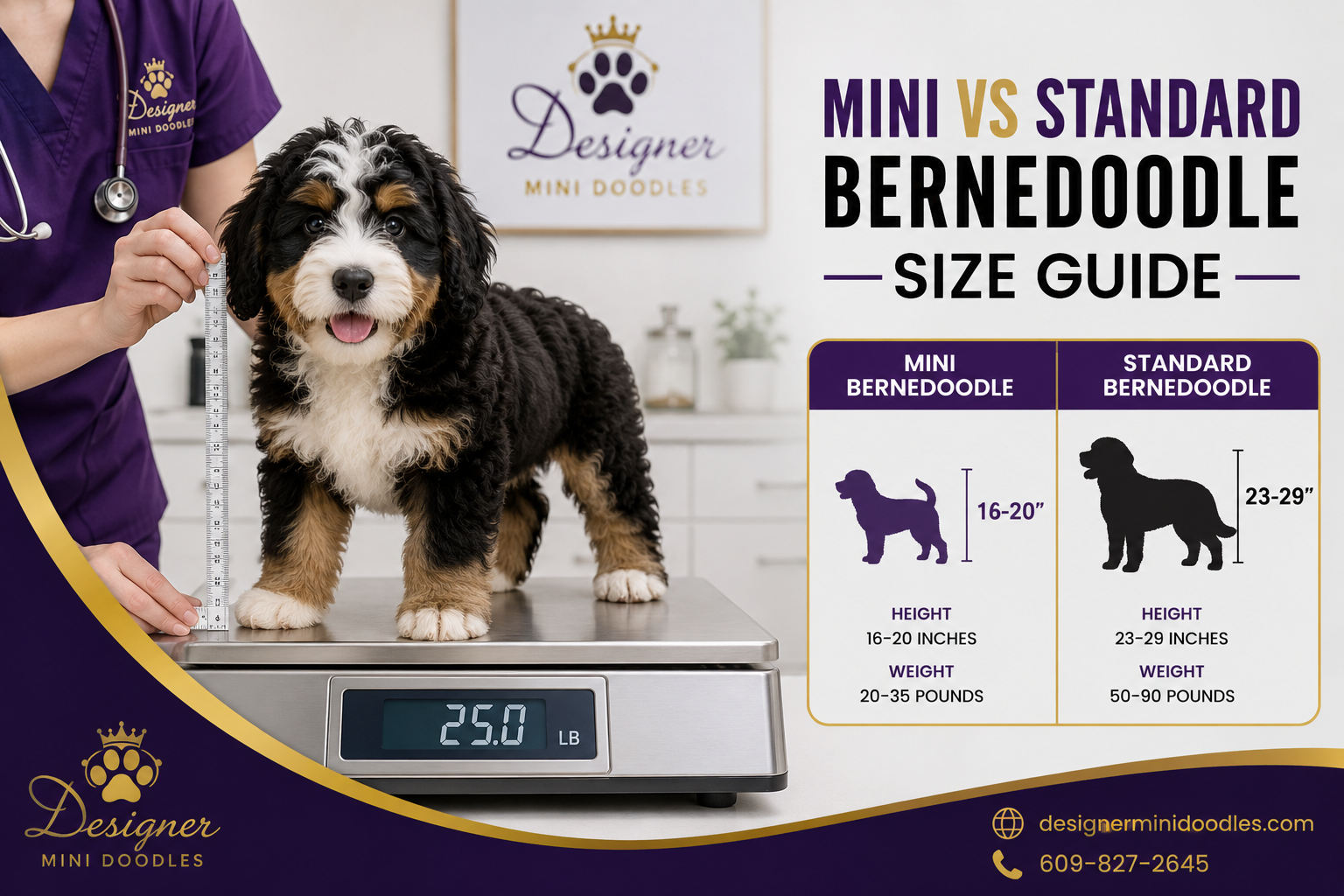
What Exactly Is a Mini Bernedoodle?
A mini Bernedoodle is a designer crossbreed created by pairing a Bernese Mountain Dog with a Miniature Poodle. The goal is to capture the Bernese Mountain Dog’s loyal, affectionate temperament in a smaller package while adding the Poodle’s intelligence and low-shedding coat.
First-generation (F1) mini Bernedoodles have one purebred Bernese parent and one purebred Miniature Poodle parent. Multi-generational crosses (F1b, F2, etc.) involve breeding a mini Bernedoodle back to a Poodle, which tends to produce curlier, lower-shedding coats. Here’s a quick breakdown:
| Generation | Cross | Typical Coat | Shedding Level |
|---|---|---|---|
| F1 | Bernese x Mini Poodle | Wavy to curly | Low to moderate |
| F1b | F1 Mini Bernedoodle x Mini Poodle | Curly | Very low |
| F2 | F1 x F1 Mini Bernedoodle | Variable | Variable |
| F2b | F2 x Mini Poodle | Curly | Very low |
The tri-color pattern (black, white, and rust) is the most sought-after coat, though mini Bernedoodles also come in bi-color, sable, phantom, and merle patterns. Their teddy bear appearance and friendly disposition have made them one of the most popular designer breeds in Florida and across the country.
If you’re exploring other compact doodle breeds, our guide to mini Bernedoodle breeding from top U.S. programs covers how the best breeders select parent dogs for health and temperament.
How Big Do Mini Bernedoodles Get When Fully Grown?
Mini Bernedoodles typically reach 18 to 22 inches at the shoulder and weigh between 25 and 49 pounds when fully grown. Most reach their adult height by 12 months but continue filling out until about 18 months of age.
Several factors influence final size:
- Parent size: A smaller Miniature Poodle parent generally produces smaller offspring.
- Generation: F1b puppies bred back to a Miniature Poodle tend to be on the smaller end.
- Sex: Males are usually 2 to 5 pounds heavier than females.
- Nutrition and health: Overfeeding during growth can push a puppy past its healthy weight range.
Common mistake: Many buyers confuse “mini” with “micro” or “toy.” A mini Bernedoodle is a medium-sized dog. If you want something under 20 pounds, you’d need a micro or toy-sized Bernedoodle, which involves Toy Poodle parentage and comes with different considerations.
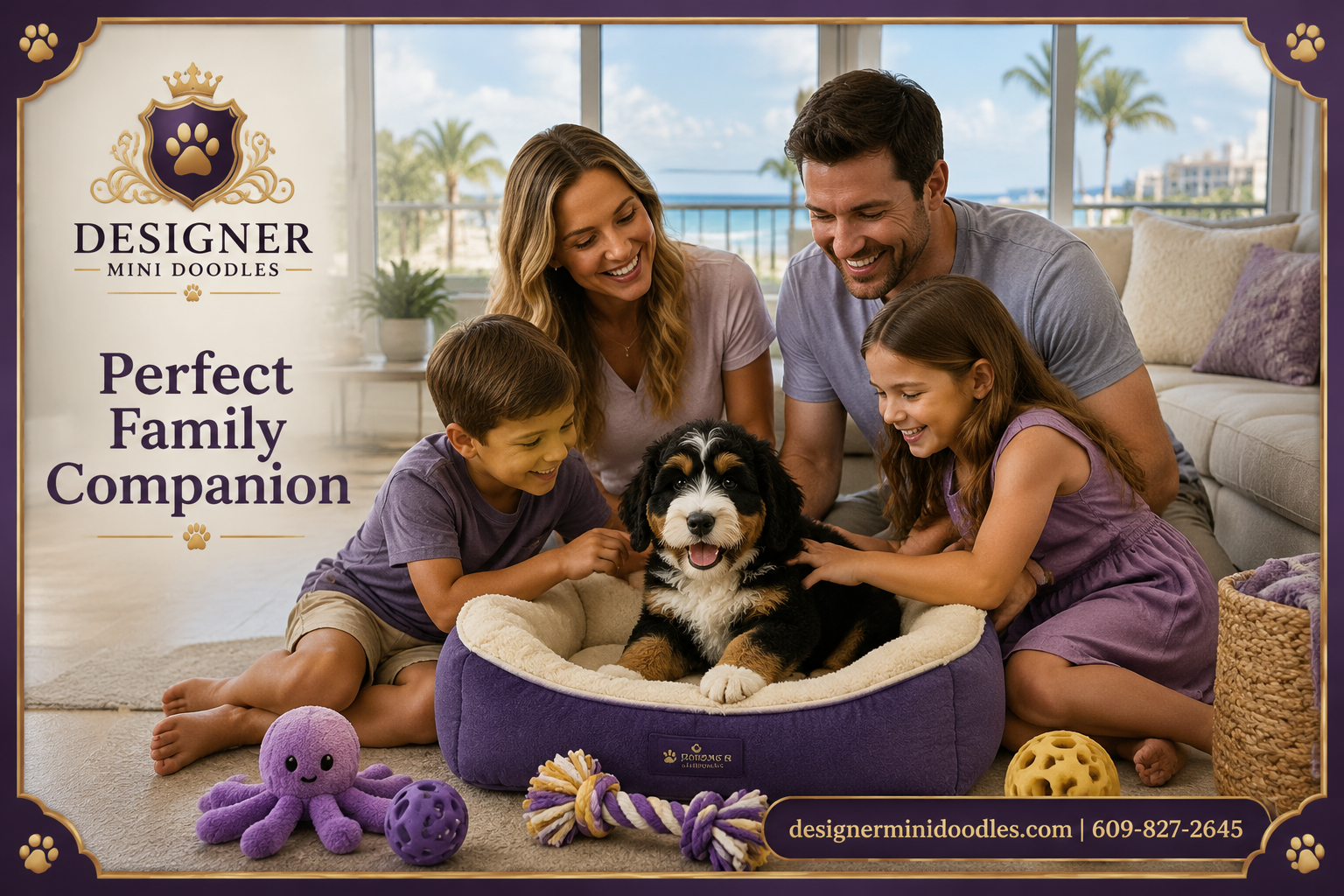
Mini Bernedoodle vs Standard Bernedoodle: Key Differences
The primary difference is size. Standard Bernedoodles weigh 70 to 90 pounds and stand 23 to 29 inches tall, while minis stay under 50 pounds and 22 inches. But the differences go beyond the scale.
| Feature | Mini Bernedoodle | Standard Bernedoodle |
|---|---|---|
| Weight | 25-49 lbs | 70-90 lbs |
| Height | 18-22 inches | 23-29 inches |
| Lifespan | 12-15 years | 10-12 years |
| Space needed | Apartment-friendly | Needs a yard |
| Exercise | 30-60 min/day | 60-90 min/day |
| Food cost | ~$50-80/month | ~$80-130/month |
| Grooming cost | ~$60-90/session | ~$80-120/session |
Choose a mini if: You live in a condo or apartment, want lower overall care costs, or prefer a dog you can comfortably lift and transport. Choose a standard if you have a large yard and want a bigger hiking or outdoor companion.
Mini Bernedoodles also tend to live longer than standards, partly because smaller dogs generally have longer lifespans and partly because the Miniature Poodle parent contributes longevity genetics.
How Much Do Mini Bernedoodles Cost in Saint Petersburg?
Mini Bernedoodle puppies in Saint Petersburg and the Tampa Bay area generally range from $3,000 to $5,500 in 2026. Price depends on the breeder’s reputation, the puppy’s coat color and pattern, generation, and the extent of health testing performed on the parents.
Here’s what drives the price range:
- Tri-color puppies (the classic Bernese pattern) command the highest prices, often $4,500 to $5,500.
- F1b generation puppies with curlier, lower-shedding coats are typically priced higher than F1s.
- Health-tested parents add cost to the breeder but protect you from expensive veterinary bills later.
- Breeder location: Breeders outside Florida who offer nanny delivery to Saint Petersburg may charge a $300 to $500 travel fee.
Budget beyond the purchase price. First-year costs including vaccinations, spay/neuter, supplies, and food typically add $1,500 to $2,500 on top of the puppy price.
Browse mini Bernedoodle puppies for sale from health-tested parents with documented genetic screening.
Are Mini Bernedoodles Good With Kids and Other Pets?
Yes, mini Bernedoodles are widely regarded as one of the best family-friendly designer breeds. They inherit the Bernese Mountain Dog’s gentle, patient nature and the Poodle’s eagerness to please, making them naturally good with children of all ages.
Key traits that make them family-friendly:
- Patient temperament: They tolerate the unpredictable movements and noise of young children better than many breeds.
- Playful energy: They match the energy level of active kids without being hyperactive or overwhelming.
- Soft mouth: Both parent breeds are known for gentle mouths, reducing the risk of accidental nipping during play.
With other pets, mini Bernedoodles generally do well when introduced properly. They don’t have a strong prey drive, so they typically coexist peacefully with cats and smaller dogs. Early socialization is still important, especially if you’re bringing a puppy into a home with an established pet.
Edge case: If you have very small pets like rabbits or guinea pigs, always supervise interactions. Even gentle dogs can accidentally injure tiny animals during play.
For tips on raising doodle breeds alongside other animals, check out our guide on raising puppies with other pets.
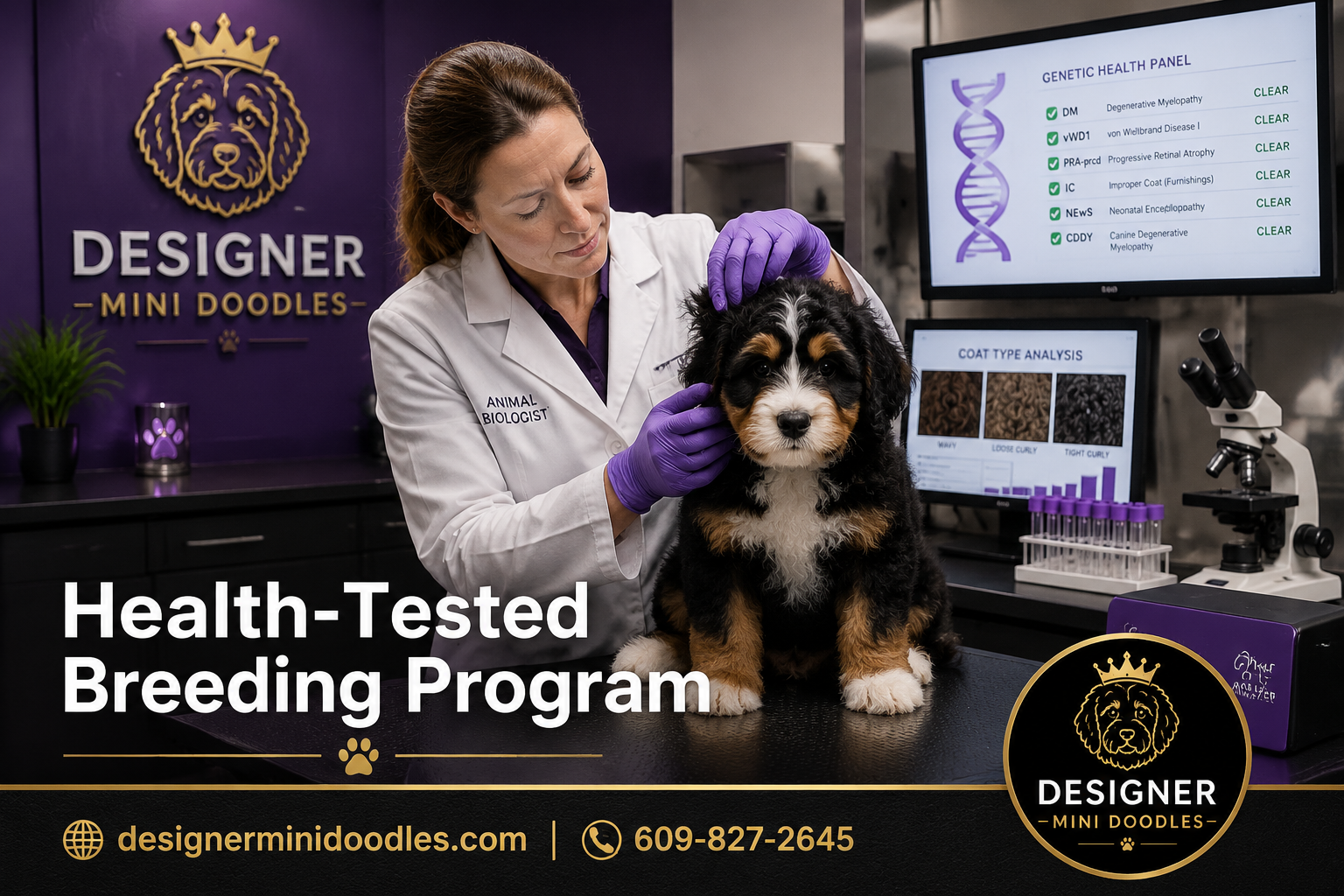
Are Mini Bernedoodles Good for Apartments?
Mini Bernedoodles are one of the better medium-sized breeds for apartment living, and they’re a strong fit for the condos and apartments common throughout Saint Petersburg. Their moderate exercise needs (30 to 60 minutes daily) can be met with walks, dog park visits, and indoor play.
What makes them apartment-suitable:
- Size: At 25 to 49 pounds, they’re large enough to be sturdy but small enough for limited floor space.
- Noise level: They’re not excessive barkers, though they will alert you to someone at the door.
- Adaptability: They adjust their energy to their environment, meaning they can be calm indoors if exercised properly.
Choose a mini Bernedoodle for apartment life if you commit to daily walks and mental stimulation. Without adequate exercise, any dog will develop destructive habits in a small space.
Saint Petersburg’s many dog-friendly parks, including Fort De Soto Park and Crescent Lake Park, give apartment-dwelling mini Bernedoodle owners plenty of outdoor options. The city’s mild winters also mean year-round outdoor exercise is feasible, though summer heat requires early morning or evening walks.
For more on small-breed apartment living, see our article on black toy poodle puppies for city and apartment life.
Do Mini Bernedoodles Shed a Lot?
Mini Bernedoodles are low-to-moderate shedders, with the amount depending heavily on their coat type and generation. F1b and multi-generational mini Bernedoodles with curlier coats shed the least, while F1 dogs with wavier coats may shed lightly.
Important clarification: No dog breed is 100% hypoallergenic. Mini Bernedoodles produce less dander than many breeds, which is what triggers most allergies, but sensitive individuals should spend time with the breed before committing.
Grooming requirements by coat type:
- Curly coat: Minimal shedding, but requires brushing every 1 to 2 days to prevent matting. Professional grooming every 6 to 8 weeks.
- Wavy coat: Light shedding, brushing 2 to 3 times per week. Professional grooming every 8 to 10 weeks.
- Straight coat (rare in minis): Moderate shedding, less grooming needed but more hair on your furniture.
Florida’s humidity can make curly coats more prone to matting, so Saint Petersburg owners should stay on top of brushing, especially after beach trips or rainy walks. Our grooming tips guide covers techniques that apply to all doodle coat types.
What Health Issues Do Mini Bernedoodles Have?
Mini Bernedoodles benefit from hybrid vigor, meaning they’re generally healthier than either purebred parent. However, they can still inherit conditions common to Bernese Mountain Dogs and Poodles.
Conditions to be aware of:
- Hip and elbow dysplasia: Joint malformation that can cause pain and mobility issues. Both parents should have OFA (Orthopedic Foundation for Animals) evaluations.
- Progressive retinal atrophy (PRA): A degenerative eye condition. DNA testing of parents can identify carriers.
- Von Willebrand’s disease: A blood clotting disorder. Genetic testing eliminates this risk when both parents test clear.
- Sebaceous adenitis: A skin condition more common in Poodles. Look for breeders who screen for this.
- Heart conditions: Some Bernese Mountain Dogs carry genes for subvalvular aortic stenosis. Cardiac evaluations of parents reduce risk.
The single most important thing you can do to avoid health problems is buy from a breeder who performs comprehensive genetic testing. At Designer Mini Doodles, a real animal biologist is on site to oversee health screening protocols, ensuring every breeding pair is tested for known genetic conditions before producing a litter.
A well-bred mini Bernedoodle from health-tested parents has an expected lifespan of 12 to 15 years.

What Should I Know Before Buying a Mini Bernedoodle Puppy?
Buying a mini Bernedoodle is a 12 to 15 year commitment that requires honest self-assessment. Before you start contacting breeders, work through this checklist:
Pre-purchase checklist:
- Budget realistically. Beyond the $3,000 to $5,500 purchase price, budget $1,500 to $2,500 for first-year expenses and $1,000 to $1,500 annually after that.
- Assess your schedule. Mini Bernedoodle puppies need frequent potty breaks, socialization outings, and training sessions during the first 6 months.
- Check your housing rules. If you rent in Saint Petersburg, confirm your landlord allows dogs and check for breed or weight restrictions.
- Plan for grooming. Professional grooming every 6 to 10 weeks is non-negotiable for this breed. Factor in $60 to $90 per session.
- Find a vet first. Establish a relationship with a veterinarian in Saint Petersburg before your puppy arrives so you can schedule a wellness check within the first week.
- Prepare your home. Puppy-proof your living space, purchase a crate, and stock up on age-appropriate food.
Common mistake: Choosing a puppy based solely on coat color or pattern. Temperament, health testing, and breeder reputation matter far more for long-term satisfaction.
Our training guide for mini Bernedoodle puppies covers what to expect during the first weeks and months at home.
Common Training Challenges With Mini Bernedoodles
Mini Bernedoodles are intelligent and eager to please, which generally makes them trainable. However, their Bernese Mountain Dog heritage can introduce a stubborn streak that catches first-time owners off guard.
Top training challenges and solutions:
- Stubbornness during adolescence (6-12 months): Your previously obedient puppy may start ignoring commands. Stay consistent, use positive reinforcement, and avoid punishment-based methods.
- Separation anxiety: Mini Bernedoodles bond deeply with their families and can develop anxiety when left alone. Crate training and gradual alone-time conditioning from puppyhood are essential.
- Mouthy play: Puppies explore with their mouths. Redirect biting to appropriate chew toys immediately and consistently.
- Leash pulling: Their moderate energy and curiosity can lead to pulling. Start leash training early using a front-clip harness.
- Housetraining in Florida heat: Saint Petersburg’s summer heat may make puppies reluctant to go outside. Establish a consistent schedule with early morning and late evening potty breaks.
Decision rule: If you’re a first-time dog owner, consider enrolling in a puppy kindergarten class within the first month. Group classes provide socialization and professional guidance simultaneously.
How to Find a Reputable Mini Bernedoodle Breeder in Saint Petersburg
Finding a trustworthy breeder is the most consequential decision in the entire puppy-buying process. A reputable breeder protects you from heartbreak, unexpected veterinary bills, and temperament problems.
Green flags to look for:
- Provides OFA or PennHIP certifications for hip and elbow evaluations on both parents
- Shares genetic testing results (Embark or Paw Print Genetics panels) for breed-specific conditions
- Offers a written health guarantee of at least 2 years
- Welcomes questions and is transparent about their breeding program
- Raises puppies in a home environment with early socialization
- Has a real animal biologist or veterinary professional involved in their program
- Can provide references from previous puppy buyers
Red flags that should stop you immediately:
- Multiple breeds available at all times (puppy mill indicator)
- No health testing documentation
- Unwillingness to let you meet the parents or see the facility
- Pressure to buy quickly or put down a deposit before asking questions
- Prices significantly below market rate ($1,500 or less for a “mini Bernedoodle”)
Designer Mini Doodles operates a breeding program with an animal biologist on site who oversees genetic testing, health protocols, and puppy development from birth. Their program is considered among the best in the country for producing healthy, well-socialized mini Bernedoodle puppies.
Where Can I Adopt a Mini Bernedoodle Puppy Near Saint Petersburg?
Adopting a mini Bernedoodle from a rescue is possible but uncommon. Because these are designer dogs with high demand, they rarely end up in shelters. When they do, they’re typically adults rather than puppies.
Options for Saint Petersburg residents:
- Local rescues: Check Poodle and doodle-specific rescues in Florida, such as Florida Poodle Rescue and IDOG Rescue. Adoption fees typically range from $300 to $600.
- Breed-specific rehoming groups: Facebook groups and online forums sometimes list mini Bernedoodles being rehomed by owners who can no longer care for them.
- Reputable breeders with nanny delivery: If no local breeders meet your standards, top breeding programs offer professional nanny services that safely transport puppies anywhere in the U.S., including directly to Saint Petersburg.
Designer Mini Doodles provides a nationwide nanny delivery service, so even though their facility isn’t in Saint Petersburg, your puppy can be hand-delivered to your door by a trained pet transport professional. This eliminates the stress of cargo shipping and ensures your puppy arrives safely and comfortably.
For those also considering other breeds, Designer French Bulldogs offers frenchies for sale with the same commitment to health testing and professional delivery.
How Much Does a Mini Bernedoodle Puppy Cost in Florida?
Across Florida, mini Bernedoodle puppies range from $3,000 to $5,500, with Saint Petersburg, Tampa, and Miami markets falling at the higher end due to demand. Rural areas of Florida may see slightly lower prices, but be cautious of significantly discounted puppies, as low prices often correlate with inadequate health testing.
Florida-specific cost factors:
- Climate considerations: Breeders who health-test for heat tolerance and skin conditions may charge more but produce puppies better suited to Florida’s climate.
- Delivery fees: If purchasing from an out-of-state breeder, nanny delivery to Florida typically adds $300 to $500.
- Pet deposits: Many Saint Petersburg apartments require a $200 to $500 pet deposit, which is a one-time cost to factor in.
For those exploring doodle options across Florida, our guide to micro mini Goldendoodles in Florida provides additional pricing context for similar breeds in the state.
Frequently Asked Questions
How long do mini Bernedoodles live?
Mini Bernedoodles have an average lifespan of 12 to 15 years when purchased from health-tested parents and maintained with proper veterinary care, nutrition, and exercise.
Are mini Bernedoodles hypoallergenic?
No dog is truly hypoallergenic. However, F1b and multi-generational mini Bernedoodles with curly coats produce significantly less dander than most breeds, making them a better choice for people with mild allergies.
How much exercise does a mini Bernedoodle need daily?
Plan for 30 to 60 minutes of daily exercise, which can include walks, fetch, swimming, or dog park visits. Puppies need shorter, more frequent play sessions rather than long walks.
Can mini Bernedoodles handle Florida’s heat?
Yes, with precautions. Avoid outdoor exercise during peak heat hours (10 AM to 4 PM in summer), provide constant access to fresh water, and never leave them in a parked car. Their Poodle heritage gives them a lighter coat than purebred Bernese Mountain Dogs.
When should I spay or neuter my mini Bernedoodle?
Most veterinarians recommend waiting until 12 to 18 months for medium-sized breeds to allow proper growth plate closure. Discuss timing with your vet based on your specific puppy’s development.
Do mini Bernedoodles bark a lot?
They’re moderate barkers. They’ll alert you to visitors or unusual sounds but aren’t typically nuisance barkers. Early training can minimize excessive barking.
How often do mini Bernedoodles need grooming?
Professional grooming every 6 to 10 weeks, with at-home brushing every 1 to 3 days depending on coat type. Curly coats need the most frequent brushing.
What’s the best food for a mini Bernedoodle puppy?
A high-quality puppy food formulated for medium-sized breeds with real meat as the first ingredient. Avoid grain-free diets unless your vet specifically recommends one, as the FDA has investigated a potential link between grain-free diets and heart disease in dogs.
Can I get a mini Bernedoodle shipped to Saint Petersburg?
Yes. Reputable breeders like Designer Mini Doodles offer professional nanny delivery services that hand-deliver puppies to Saint Petersburg and anywhere else in the U.S.
At what age can I bring a mini Bernedoodle puppy home?
Responsible breeders release puppies at 8 to 10 weeks of age. Puppies taken from their litter too early (before 8 weeks) may develop behavioral and socialization problems.
Are mini Bernedoodles easy to potty train?
They’re moderately easy to potty train thanks to their intelligence. Most mini Bernedoodles are reliably housetrained by 4 to 6 months with consistent crate training and a regular schedule.
Conclusion
Finding the right mini Bernedoodle puppy in Saint Petersburg comes down to three things: choosing a reputable breeder with documented health testing, preparing your home and budget realistically, and committing to the training and grooming these dogs need to thrive.
Your next steps:
- Set your budget at $4,500 to $7,500 total for the first year (purchase price plus supplies, vet visits, and training).
- Research breeders using the green and red flag lists above. Prioritize programs with on-site animal biologists and comprehensive genetic testing.
- Browse available puppies from mini Bernedoodles for sale at Designer Mini Doodles, where every puppy comes from health-tested parents.
- Prepare your Saint Petersburg home with a crate, puppy-safe space, and a vet appointment scheduled for the first week.
- Ask about nanny delivery if your chosen breeder is outside the Tampa Bay area, so your puppy arrives safely and stress-free.
Mini Bernedoodle puppies in Saint Petersburg are in high demand for good reason. They’re the right size for Florida living, gentle enough for families, and smart enough to train easily. Take your time, do your homework, and you’ll find a companion that brings joy for the next 12 to 15 years.
- Display 9 Products per page




References
- Orthopedic Foundation for Animals (OFA). “CHIC Program Requirements.” OFA, 2024. https://ofa.org
- American Kennel Club. “Bernese Mountain Dog Breed Information.” AKC, 2024. https://www.akc.org/dog-breeds/bernese-mountain-dog/
- U.S. Food and Drug Administration. “FDA Investigation into Potential Link Between Certain Diets and Canine Dilated Cardiomyopathy.” FDA, 2019. https://www.fda.gov/animal-veterinary/outbreaks-and-advisories/fda-investigation-potential-link-between-certain-diets-and-canine-dilated-cardiomyopathy