

mini bernedoodle full grown size
A well-bred mini bernedoodle rarely tips the scale past 50 pounds, yet buyers routinely bring home puppies expecting a 25-pound lap dog and end up with a 60-pound couch-hogger. That gap between expectation and adult reality is the single most common regret reported by first-time doodle owners. Understanding mini bernedoodle full grown size before you sign a deposit isn’t optional; it’s the difference between a lifelong match and a heartbreaking rehoming.
This guide breaks down the exact height and weight ranges, the science of how F1, F1B, and F2 generations affect adult dimensions, and how a reputable breeding program predicts finished size with meaningful accuracy. Whether you’re eyeing a Tiny, Mini, or Medium bernedoodle, you’ll leave with the numbers, timelines, and red flags you need.

Key Takeaways
- Adult mini bernedoodles typically weigh 25-49 pounds and stand 18-22 inches at the shoulder, though tiny variants can finish under 25 pounds.
- Full adult size is usually reached between 12 and 18 months, with most weight gain happening in the first 8 months.
- Parent size, generation (F1, F1B, F2), and the poodle parent’s weight are the three biggest predictors of adult dimensions.
- Reputable breeders can forecast full-grown size within 3-5 pounds using pedigree data, growth charts, and paw-to-body ratios.
- Beware of “teacup” or “micro” claims under 15 pounds, those are marketing terms, not breed standards, and often signal poor breeding practices.
What Is a Mini Bernedoodle?
A mini bernedoodle is a hybrid between a Bernese Mountain Dog and a Miniature Poodle. The cross was developed to preserve the affectionate, gentle temperament of the Bernese in a smaller, lower-shedding, longer-lived package. Standard Bernese Mountain Dogs weigh 70-115 pounds and live only 7-10 years, the mini version cuts the size roughly in half while extending the lifespan to 12-17 years.
Because this is a designer crossbreed rather than a purebred, adult size varies more than you’d see with, say, a Labrador. The good news: with responsible breeding and pedigree transparency, that variance becomes highly predictable.
At Designer Mini Doodles, our program is directed by a trained animal biologist, and every breeding pair is selected from top-tier mini bernedoodle bloodlines. That genetic consistency is why our families rarely see size surprises.
The Three Size Categories
Within the “mini” umbrella, breeders generally recognize three subcategories:
| Category | Adult Weight | Adult Height (shoulder) | Poodle Parent Used |
|---|---|---|---|
| Tiny / Micro Mini | 10-24 lbs | 12-17 inches | Toy Poodle |
| Standard Mini | 25-49 lbs | 18-22 inches | Miniature Poodle |
| Medium (Moyen) | 50-70 lbs | 22-27 inches | Small Standard Poodle |
The “standard mini” range is where most reputable breeders concentrate, because it balances the Bernese temperament with a genuinely apartment-friendly footprint.
Mini Bernedoodle Full Grown Size: Height and Weight by Generation
Generation labels (F1, F1B, F2, etc.) describe the genetic makeup of the cross. They directly influence coat type, shedding, and, critically, adult size.
F1 Mini Bernedoodle (50% Bernese, 50% Mini Poodle)
This is the first-generation cross: a purebred Bernese Mountain Dog bred to a purebred Miniature Poodle. Because the parents come from such different size classes, F1 puppies often show the widest size spread within a single litter.
- Adult weight range: 30-55 pounds
- Adult height: 18-22 inches
- Coat: Wavy, often mildly shedding
F1B Mini Bernedoodle (25% Bernese, 75% Mini Poodle)
An F1B is an F1 mini bernedoodle bred back to a Miniature Poodle. The extra poodle influence produces a smaller, curlier, more hypoallergenic dog with less size variability.
- Adult weight range: 25-45 pounds
- Adult height: 17-21 inches
- Coat: Curly, low-shedding, best for allergy-conscious homes
F2 and Multigenerational Bernedoodles
F2 (two F1 parents) and F2B pups can trend slightly smaller or larger depending on grandparents. Multigenerational lines from experienced breeders offer the tightest size predictability because breeding stock has been selected across generations for consistent adult dimensions.
For a deeper look at how the parent breeds shape final size, see the comparison of toy poodles, Bernese mountain dogs, and mini bernedoodles.
“Size at eight weeks tells you almost nothing. Pedigree data across three generations tells you almost everything.”, a common maxim among accredited doodle breeders.
Growth Timeline: When Does a Mini Bernedoodle Reach Full Size?
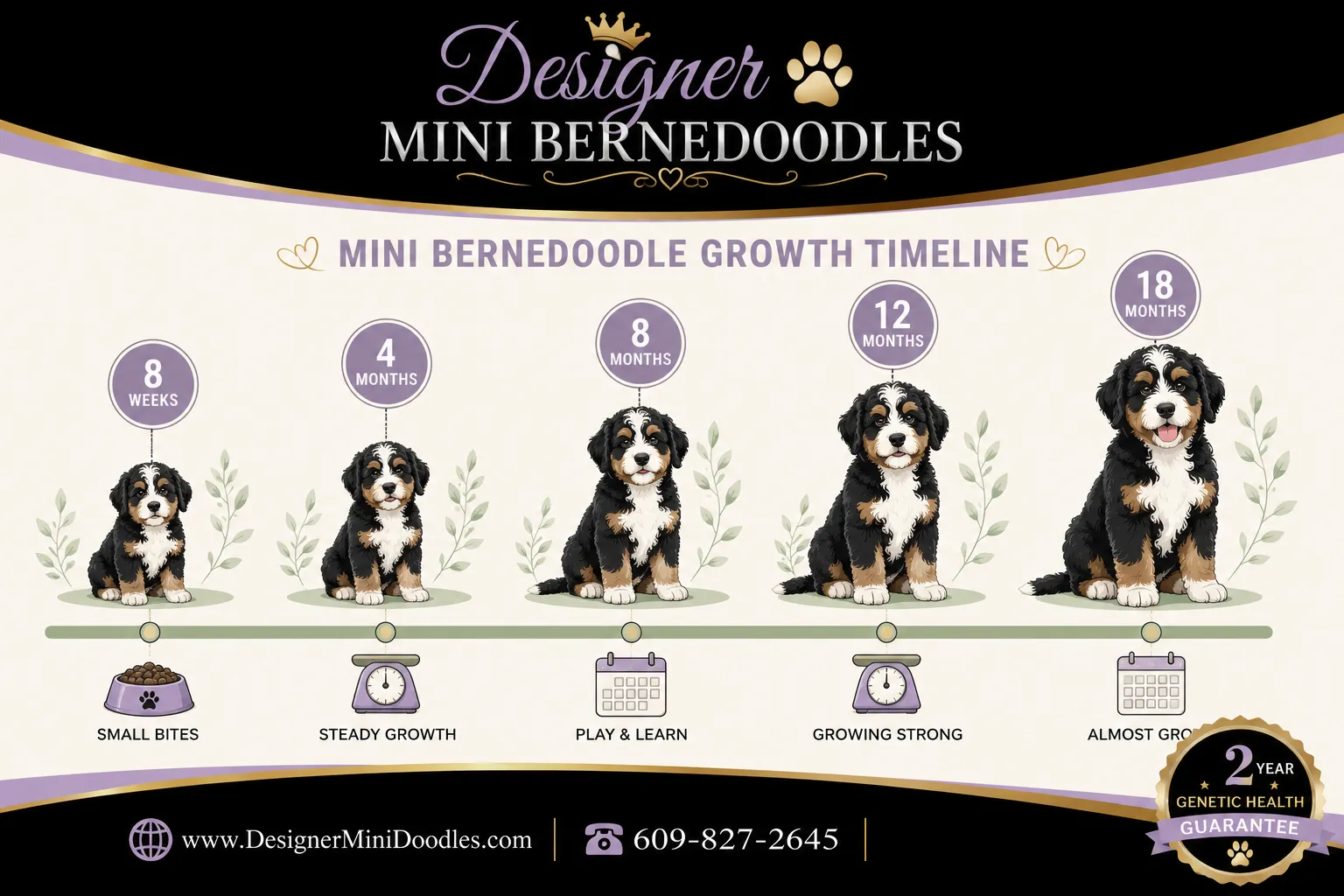
Mini bernedoodles are considered fully grown between 12 and 18 months of age. Smaller lines finish sooner; larger mediums may still be filling out at 20 months.
Month-by-Month Growth Milestones
8 weeks (go-home age): 4-8 pounds. Puppies leaving our program at this age have already been through Early Neurological Stimulation (ENS) from days 3-16 and initial housebreaking and crate exposure.
4 months: Typically 15-25 pounds. This is the “leggy teenager” stage where puppies look tall and gangly.
6 months: 25-35 pounds. The pup has usually reached 65-75% of adult weight.
8 months: 30-40 pounds. Height is largely finalized; the remaining growth is chest depth and muscle mass.
12 months: 35-45 pounds. Most standard minis are at adult weight, though some fill out for another 4-6 months.
18 months: Fully mature, both in body and (finally) in emotional maturity.
The 4-Month Doubling Rule
A useful, though imperfect, estimate: weight at 4 months, multiplied by two, roughly approximates adult weight for mini bernedoodles. A 20-pound 4-month-old typically finishes near 40 pounds. This rule works better for standard minis than for tinies or mediums.
What Determines Adult Size?
Five factors drive where any individual puppy lands on the size spectrum.
1. Parent Size (The Biggest Factor)
Both dam and sire matter, but the poodle parent typically has an outsized influence on final dimensions because Bernese are so much larger. A 12-pound Miniature Poodle stud will consistently produce smaller offspring than a 22-pound Miniature Poodle stud, even when bred to the same Bernese dam.
2. Generation
As covered above, F1B and later-generation pups skew smaller and more consistent.
3. Gender
Males typically finish 3-7 pounds heavier and half an inch to an inch taller than females from the same litter.
4. Nutrition During Growth
Overfeeding a large-breed-mix puppy accelerates skeletal growth and can produce joint problems. Reputable breeders provide feeding guidelines calibrated to reach genetic potential without pushing beyond it.
5. Spay/Neuter Timing
Dogs altered before growth plates close (typically 12-18 months for this size class) may grow slightly taller and leaner than they would have otherwise. Discuss timing with your veterinarian.
Choosing the Right Size for Your Home
The full-grown size question isn’t just curiosity, it dictates whether your dog will thrive in your specific living situation.

Apartment and Urban Dwellers
A 25-35 pound mini bernedoodle fits comfortably in most apartments and rides easily in elevators. Insights from our guide on why smaller doodles suit apartment and urban living translate directly here.
Families with Young Children
The 35-49 pound range is often ideal for families. Big enough to handle enthusiastic toddler affection without injury, small enough to control on leash.
Seniors and First-Time Owners
Tiny and lower-end standard minis (20-30 pounds) are gentler on hips, easier to lift into a car, and lower on daily food and vet costs.
Active Households
Any mini bernedoodle can hike, swim, and run, but the 40-50 pound range holds up best to long trail days and high-impact play.
Mini Bernedoodle Pricing: What Adult Size Reliability Really Costs
Size predictability is a direct function of breeding quality. Here’s how the market breaks down.
| Seller Type | Typical Price | What You Actually Get |
|---|---|---|
| Scammers / puppy flippers | $500,$1,000 | No health testing, misrepresented age or breed, frequent scams |
| Backyard / puppy mill | $1,000,$1,500 | Poor genetics, size unpredictable, common health issues |
| Hobby breeder | $2,500,$3,000 | Basic health checks, limited pedigree data |
| Accredited program | $3,000,$5,000 | Full genetic health guarantee, ENS, early housebreaking and crate training, verified bloodlines, accurate size prediction |
The $3,000,$5,000 tier isn’t a luxury markup, it reflects the cost of DNA panels, OFA hip and elbow certifications, proper whelping care, ENS protocols, and the years of pedigree curation required to predict adult size accurately.




The Designer Doodles Difference

Designer Mini Doodles is directed by a trained animal biologist, which shapes every protocol in our program. When families search for “mini bernedoodle puppies near me,” they’re often surprised to learn how much genuine science separates an accredited program from a backyard operation.
Bloodlines: Every dam and sire we breed traces to top mini bernedoodle bloodlines with verified size history across three or more generations. This is the foundation of accurate size prediction.
Early Neurological Stimulation (ENS): From days 3 through 16, each puppy receives daily ENS sessions, brief, gentle stress exposures scientifically shown to improve cardiovascular capacity, stress tolerance, and problem-solving as adults.
Environmental exposure: Our puppies grow up inside a busy home. They hear vacuums, dishwashers, children, other dogs, doorbells, and everyday clatter. By eight weeks, sudden noises don’t rattle them.
Early housebreaking and crate training: We begin housebreaking work at six weeks. Litter box or pad training transitions into outdoor cues, and puppies experience short, positive crate sessions before they ever leave for a new home. See our detailed guide on housebreaking a mini bernedoodle puppy.
Health guarantee: Every puppy leaves with a written genetic health guarantee, the kind of assurance that separates the best mini bernedoodle breeders in the USA from casual sellers.
For families also interested in our sister program, we offer premier French bulldog studs under the same biologist-led standards. You can also find our location and reviews via Mini Bernedoodles on Google Maps.
Common Questions About Mini Bernedoodle Full Grown Size
How big do mini bernedoodles get?
Standard mini bernedoodles reach 25-49 pounds and 18-22 inches at the shoulder. Tiny variants finish under 25 pounds; medium bernedoodles can reach 50-70 pounds.
Do mini bernedoodles shed?
F1B and multigenerational mini bernedoodles typically shed very little and are considered low-allergen. F1 pups may shed lightly, especially those with wavier coats. No dog is 100% hypoallergenic, but this cross comes close.
What is the lifespan of a mini bernedoodle?
12-17 years, significantly longer than the 7-10 year lifespan of a purebred Bernese Mountain Dog. Hybrid vigor and the Miniature Poodle’s genetics both contribute.
How do I crate train my mini bernedoodle?
Start with short, positive sessions, 5 to 10 minutes with a chew toy or frozen Kong. Never use the crate as punishment. Gradually extend duration, and always ensure a potty break before crating. Our mini bernedoodle training guide covers the full protocol.
How does Designer Doodles work on housebreaking at six weeks?
Puppies at six weeks are developmentally ready to distinguish “sleep areas” from “elimination areas.” We use a structured pen setup with the sleep zone at one end and a designated potty surface at the other. Puppies naturally gravitate away from their bed to eliminate, and we reinforce the pattern with immediate positive marker feedback. By eight weeks, most of our puppies transition seamlessly to outdoor cues in their new homes.
Are mini bernedoodles good with kids?
Yes, the Bernese temperament is famously gentle, and the Miniature Poodle contributes intelligence and playfulness. Adult size in the 30-45 pound range is generally ideal for families with young children.
Can I tell full-grown size from the puppy?
Not reliably at eight weeks. However, pedigree data, parent size, paw size relative to body, and the 4-month weight rule together give accredited breeders a 3-5 pound prediction accuracy.
Red Flags: What Not to Believe About Size
- “Teacup” or “micro” claims under 10 pounds. Not achievable in this breed without unhealthy breeding practices.
- Guaranteed exact adult weight. No honest breeder guarantees within one pound. A 3-5 pound range is realistic.
- No parent weights disclosed. If a breeder can’t or won’t share the weight of both dam and sire, walk away.
- Prices under $1,500. With rare exceptions, this signals corner-cutting on health testing, socialization, or genetics.
Conclusion: Making the Right Size Choice
Mini bernedoodle full grown size typically lands between 25 and 49 pounds, but “typically” is doing heavy lifting in that sentence. The specific weight your dog reaches depends on parent size, generation, gender, nutrition, and breeder selection. The single most important thing you can do is buy from a program that provides multigenerational pedigree transparency and honest size predictions.
Your next steps:
- Decide your size target. Under 30 pounds, 30-45, or 45+? Match this to your home, family, and lifestyle.
- Request parent weights and pedigree data from any breeder you consider. Compare across three generations if possible.
- Ask about ENS, early housebreaking, and health guarantees. These separate professional programs from casual sellers.
- Visit or video-tour the breeding facility. Puppies raised in a home environment adapt faster than kennel-raised pups.
- Budget honestly. A $3,000,$5,000 investment in an accredited puppy is dwarfed by 15 years of vet bills you’ll avoid.
A mini bernedoodle that finishes right on target for your home will be a companion for well over a decade. Choose the breeder, not just the puppy.