

teacup goldendoodle breeders
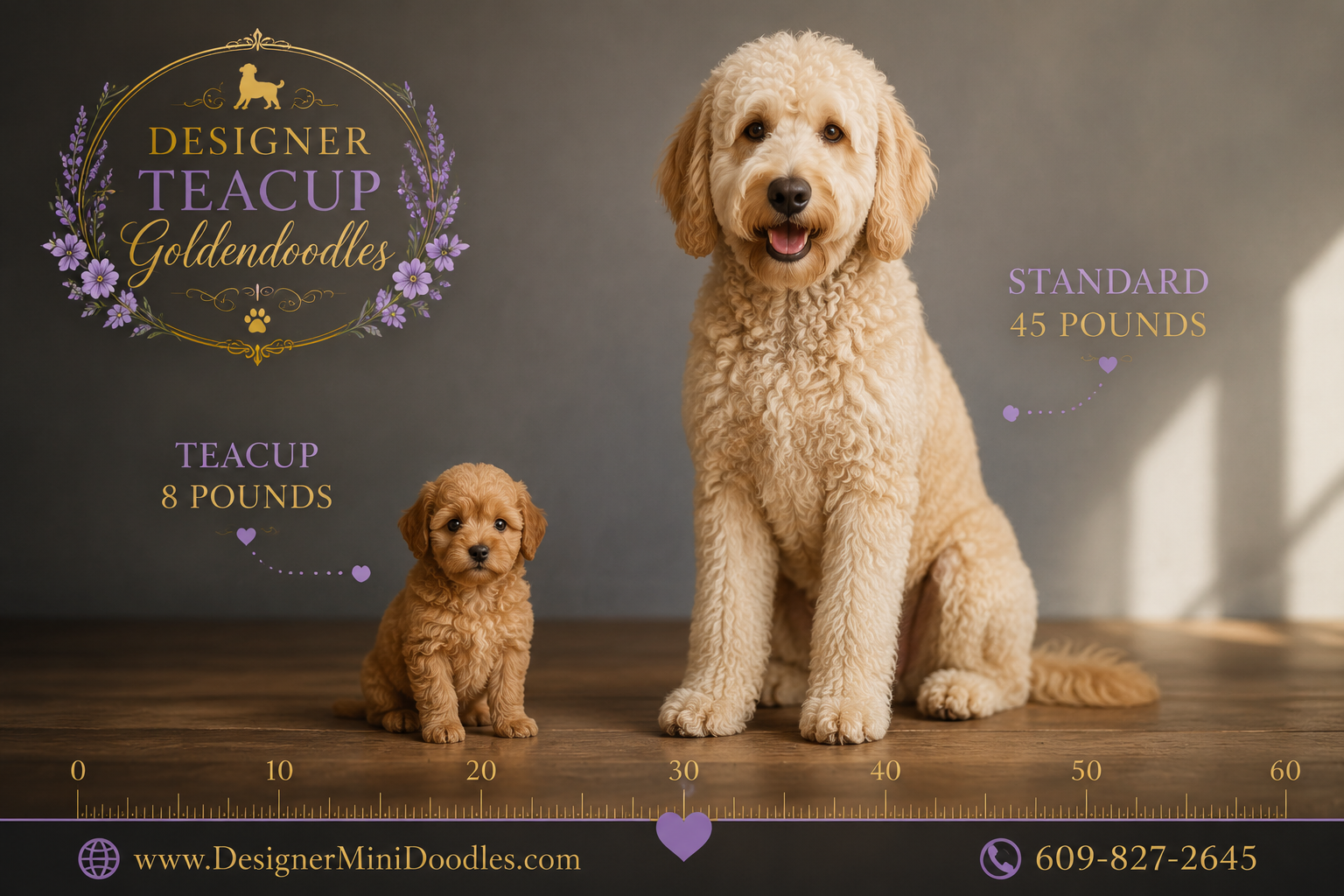
A “teacup” goldendoodle isn’t an official size recognized by the AKC or the Goldendoodle Association of North America, it’s a marketing term breeders use for the smallest dogs in a litter, typically 7 to 14 pounds fully grown. That single fact reshapes how you should shop, what you should pay, and which teacup goldendoodle breeders deserve your deposit.
teacup goldendoodle breeders
Teacup goldendoodles are the smallest goldendoodles, usually produced by breeding a mini goldendoodle to a toy poodle, and they typically weigh 7-14 pounds. Expect to pay $2,500-$4,500 from a reputable, health-testing breeder. Anything under $1,500 is almost always a scam, backyard breeder, or puppy mill. The best teacup goldendoodle breeders health-test both parents, use Early Neurological Stimulation (ENS), and start crate and potty training before the puppy goes home.
teacup goldendoodle breeders
- “Teacup” is not an official size, it’s a marketing label for goldendoodles under roughly 15 lbs.
- Adult weight range: 7-14 lbs, standing 9-14 inches at the shoulder.
- Expected lifespan: 12-15 years with responsible breeding; shorter if bred from unhealthy stock.
- Realistic price: $2,500-$4,500 for a health-guaranteed puppy from an accredited breeder.
- Red flags: No health testing, prices under $1,500, no video calls, pressure to wire money.
- Ethics matter: Extreme downsizing can cause health problems, so breeder selection is critical.
- They’re not for everyone, fragile bones, separation anxiety risk, and grooming needs make them a poor fit for some homes.
- Designer Doodles is run by a working animal biologist and is widely considered among the best teacup goldendoodle breeders in the USA.
What Is a Teacup Goldendoodle and How Big Do They Get?
A teacup goldendoodle is a very small goldendoodle, generally weighing between 7 and 14 pounds as an adult and standing 9-14 inches tall at the shoulder. They’re produced by crossing a mini goldendoodle (F1b or multigen) with a toy poodle to shrink the size while keeping the golden retriever’s temperament and the poodle’s low-shedding coat.
Typical adult profile:
- Weight: 7-14 lbs
- Height: 9-14 inches
- Coat: wavy or curly, low-shedding, often cream, apricot, red, or parti
- Temperament: affectionate, social, moderately energetic, highly trainable
Because “teacup” isn’t a recognized size, expect real variation. A puppy advertised as teacup can mature closer to 16-18 lbs, which is why an experienced breeder’s size predictions matter more than the label.
Teacup Goldendoodle vs Standard Goldendoodle: Size Difference
The main difference is roughly 40+ pounds. A standard goldendoodle usually weighs 50-90 lbs and stands 20-24 inches tall, while a teacup weighs 7-14 lbs and stands under 14 inches. Micro and mini goldendoodles sit in between.
| Size Category | Adult Weight | Adult Height | Typical Cross |
|---|---|---|---|
| Standard | 50-90 lbs | 20-24 in | Golden Retriever x Standard Poodle |
| Medium | 35-50 lbs | 17-20 in | F1b variations |
| Mini | 20-35 lbs | 14-17 in | Golden Retriever x Mini Poodle |
| Micro / Petite | 15-25 lbs | 12-15 in | Mini Goldendoodle x Toy Poodle |
| Teacup | 7-14 lbs | 9-14 in | Mini Goldendoodle x Toy Poodle (smallest) |
Choose a teacup if you live in an apartment, travel often, or want a lap-sized dog. Choose a standard or mini if you have young kids under 6, an active outdoor lifestyle, or want a more physically sturdy dog.
How Much Does a Teacup Goldendoodle Puppy Cost?
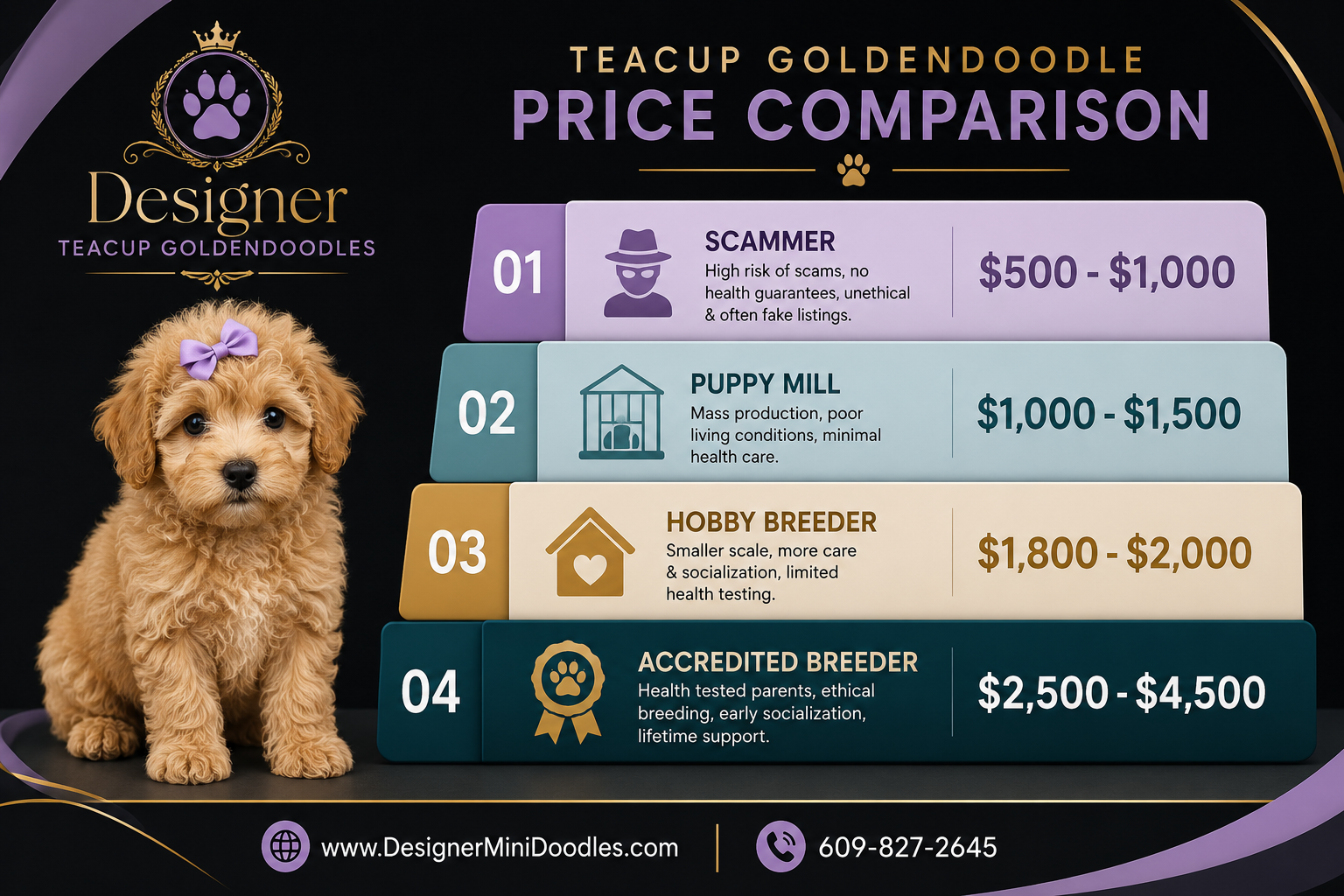
A well-bred teacup goldendoodle puppy costs $2,500 to $4,500 in 2026. Price reflects health testing, genetics, breeder experience, coat color, and how small the adult size is projected to be. Rare colors (like true red or parti) and the smallest projected sizes sit at the top of that range.
Teacup Goldendoodle Puppy Price Comparison (Different Breeders)
If a price looks too good, it almost certainly is. The cheapest puppy is rarely the least expensive dog to own once vet bills arrive.
Teacup Goldendoodle Breeders Near Me: Finding Local Options
The best way to find teacup goldendoodle breeders near you is to search by state, verify credentials in writing, then visit or video-tour the facility before paying a deposit. Most reputable breeders ship or drive puppies nationwide, so “near me” doesn’t have to mean same-city.
Browse trusted state-by-state directories for Designer Doodles’ teacup goldendoodle and mini goldendoodle programs:
- Texas breeders
- California breeders
- Florida breeders
- New York breeders
- Georgia breeders
- North Carolina breeders
- Pennsylvania breeders
- Ohio breeders
You can also view current available teacup goldendoodle puppies through the Designer Doodles Google Maps listing.
- Display 9 Products per page







How to Find a Reputable Teacup Goldendoodle Breeder
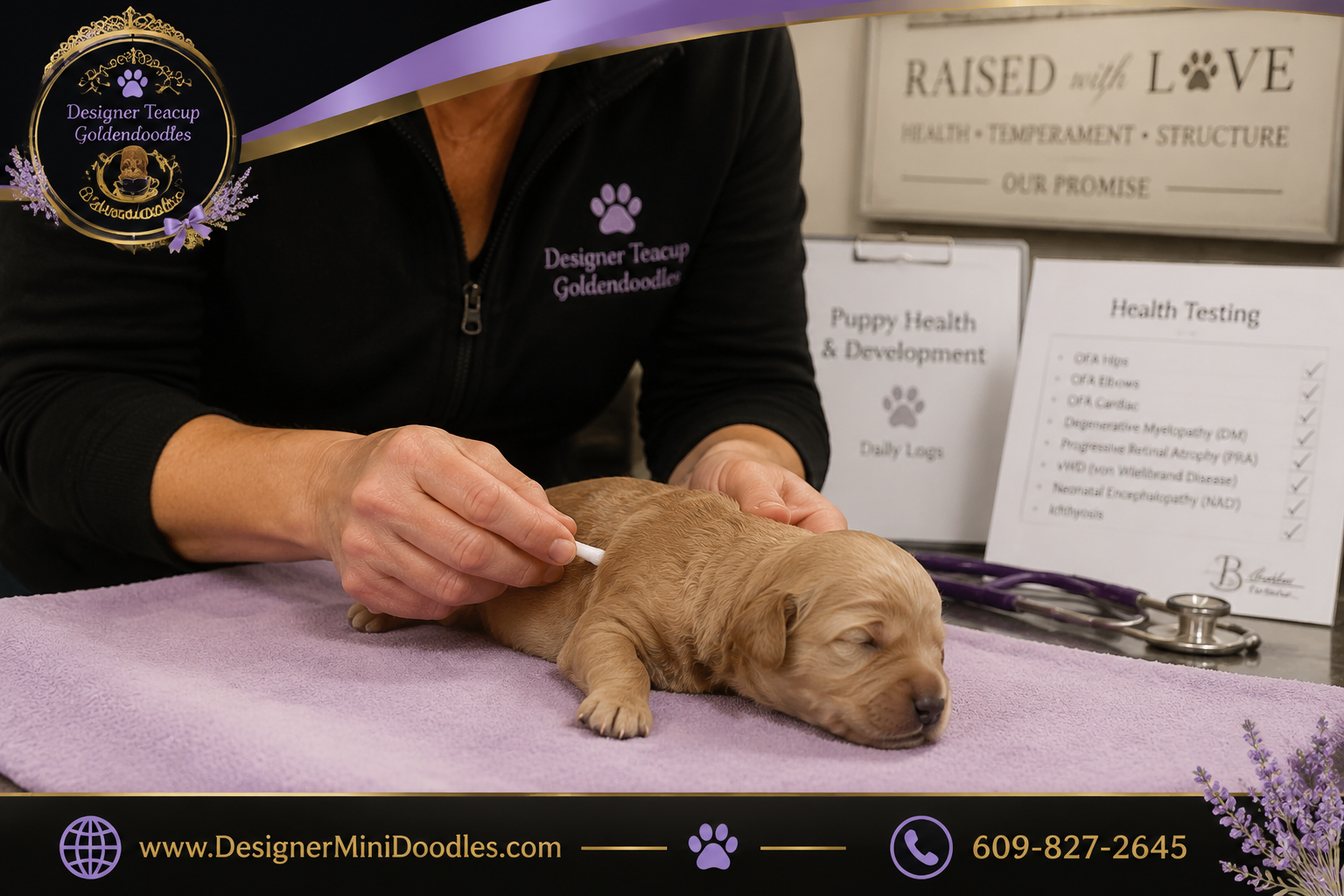
A reputable breeder proves health, ethics, and puppy preparation in writing. They welcome questions, share testing results without being asked, and offer a written health guarantee. If a seller resists any of these, walk away.
Non-negotiable questions to ask:
- Can I see OFA or PennHIP hip/elbow results for both parents?
- What genetic panel (Embark, Paw Print) has each parent completed?
- Are the parents cleared for PRA, DM, vWD, and Ich?
- Do you use ENS (Early Neurological Stimulation) from days 3-16?
- What socialization protocol do you follow (Puppy Culture, Avidog)?
- Can I video-tour your whelping area and meet the mother?
- What does your health guarantee cover, and for how long?
Why Designer Doodles Stands Out
Designer Doodles is run by a practicing animal biologist, and every breeding dog is selected from top-tested bloodlines with verified genetics. Their teacup goldendoodle puppies are:
- Raised in-home with full exposure to children, other pets, and household noise
- Started on ENS from day 3 to build stress resilience and better cardiovascular function
- Well-started on crate training and potty training before pickup
- Sent home with a written genetic health guarantee
That combination, biology-based breeding decisions, ENS, and real early training, is why owners consistently rank Designer Doodles among the best teacup goldendoodle breeders in the USA.
Teacup Goldendoodle Breeders Reviews and Red Flags to Avoid
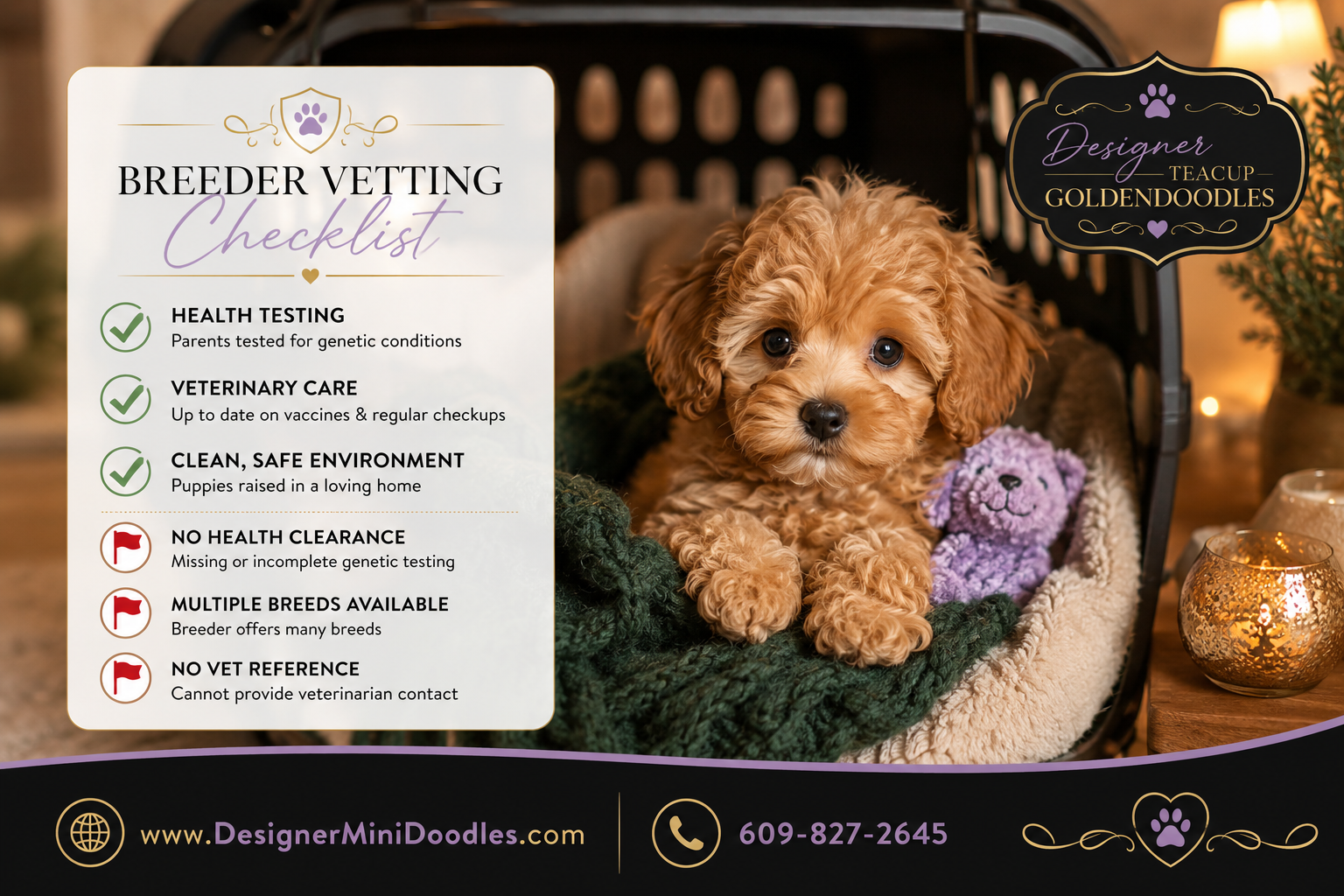
The most reliable reviews come from independent sources: Google Business Profile reviews, breed-specific Facebook groups, and testimonials with real photos and full names. Avoid breeders whose only reviews live on their own website.
Red flags that should end the conversation:
- Prices under $1,500 with “shipping included”
- Refuses video calls or facility tours
- Won’t share health testing paperwork
- Multiple breeds and constant availability of every size
- Pressure tactics: “someone else wants this puppy today”
- Payment only via wire, Zelle, gift cards, or crypto
- No written contract or health guarantee
- Stock photos or reverse-image-searchable puppy pictures
Green flags:
- Waitlist (real breeders rarely have puppies “available now”)
- Detailed application process, they vet you, too
- References from past buyers you can actually contact
- Take-back clause if you can’t keep the dog
Are Teacup Goldendoodles Healthy, or Do They Have Problems?
Teacup goldendoodles can be healthy when both parents are properly health-tested and neither is a runt bred to another runt. Poorly bred teacups face higher risks of orthopedic problems, hypoglycemia, patellar luxation, and dental issues because extreme downsizing stresses the body.
Common health considerations:
- Patellar luxation (kneecap slipping)
- Hypoglycemia in very small puppies under 4 months
- Dental crowding and early tooth loss
- Tracheal collapse in the smallest individuals
- Legg-Calvé-Perthes disease (hip)
- Hereditary conditions from parents: PRA, DM, vWD, GR-PRA1, prcd-PRA
This is exactly why the parents’ genetic testing is non-negotiable. An accredited breeder screens against every condition on the panel before pairing dogs.
Teacup Goldendoodle Lifespan and Common Health Issues
The typical teacup goldendoodle lifespan is 12-15 years. Small dogs generally live longer than large dogs, but only when bred responsibly. Lifespan drops sharply for dogs from puppy mills or breeders who prioritize size over structure.
To maximize lifespan:
- Feed a high-quality small-breed diet
- Keep dental care on schedule (small dogs are prone to periodontal disease)
- Maintain a lean body weight, obesity destroys tiny joints
- Annual bloodwork after age 7
- Consider pet insurance for small breeds early, before conditions appear
Is a Teacup Goldendoodle Right for Me or My Family?
A teacup goldendoodle is a great fit for adults, seniors, apartment dwellers, and families with older children who can handle a small dog gently. They’re a poor fit for homes with toddlers, rough play, or long daily absences.
Choose a teacup goldendoodle if:
- You live in an apartment or small home
- You work from home or can bring your dog with you
- You want a lap dog that’s still smart and trainable
- You have older kids (8+) who understand fragile pets
- You travel and want a cabin-friendly companion
Choose a different size if:
- You have kids under 6
- You want a hiking, running, or outdoor sports partner
- You’re gone 9+ hours daily with no midday break
- You prefer a lower-maintenance coat
For families with young kids, consider a slightly larger option instead, a 10-16 lb micro goldendoodle is sturdier while still small.
Teacup Goldendoodle Grooming and Care Requirements
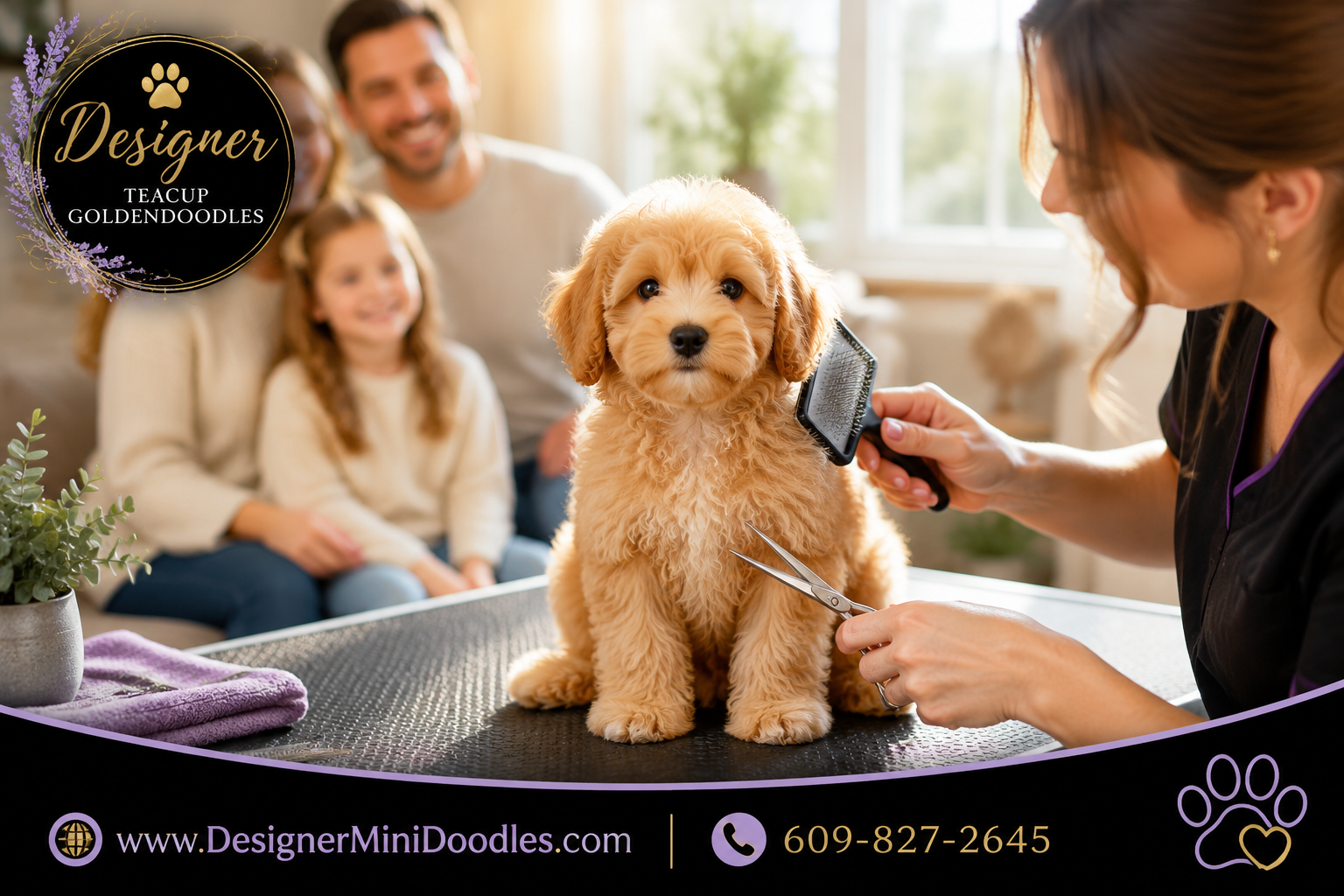
Teacup goldendoodles need brushing 3-4 times per week and a professional groom every 6-8 weeks to prevent matting. Their coats are low-shedding but high-maintenance, especially during the puppy-to-adult coat transition around 8-12 months.
Care essentials:
- Brushing: slicker brush + metal comb, 3-4x weekly
- Grooming: full groom every 6-8 weeks ($60-$100)
- Bathing: every 3-4 weeks with a mild dog shampoo
- Ear cleaning: weekly (curly coats trap moisture)
- Dental: brush 2-3x per week, professional cleaning yearly
- Exercise: 20-40 minutes daily, split into short sessions
- Diet: small-breed kibble with measured portions
Teacup Goldendoodle vs Toy Poodle: Which Is Better?
Neither is objectively better, the right choice depends on temperament preference. A toy poodle is sharper, more independent, and often quieter. A teacup goldendoodle is softer, goofier, and more openly affectionate.
| Trait | Teacup Goldendoodle | Toy Poodle |
|---|---|---|
| Size | 7-14 lbs | 4-9 lbs |
| Energy | Moderate | Moderate-high |
| Trainability | Very high | Very high |
| Personality | Warm, silly, social | Sharp, elegant, loyal |
| Coat | Wavy/curly | Curly |
| Best for | Families, first-time owners | Adults, singles, seniors |
If you’re drawn to poodles specifically, explore teacup and toy poodles for urban living.
Can Teacup Goldendoodles Be Left Alone During the Day?
Teacup goldendoodles tolerate 3-5 hours alone once fully potty-trained, but they’re prone to separation anxiety and should not be left alone for a full 8-9 hour workday without a midday break. They’re bred to be companions.
If you work long hours, plan for:
- Doggy daycare 2-3 days per week
- A midday walker or drop-in visit
- A calm second dog for company (only if you can afford both)
- Puzzle feeders and enrichment toys to prevent boredom
Common mistake: Owners assume a small dog needs less companionship. The opposite is true, smaller dogs bond harder and struggle more with isolation.
Teacup Goldendoodle Breeding Ethics and Why They’re Controversial
Teacup breeding is controversial because achieving extreme small size can require breeding runts, underweight dogs, or dogs with genetic dwarfism. Done irresponsibly, it produces fragile puppies with lifelong health problems.
Ethical teacup breeding looks like:
- Pairing a healthy small mini goldendoodle with a healthy toy poodle (never two runts)
- Full OFA and genetic clearance on both parents
- Females bred no more than every other heat, retired by age 5-6
- Puppies stay with mom until 8-10 weeks
- No breeding dogs under 15 lbs female / 10 lbs male
Unethical teacup breeding looks like:
- Runt-to-runt pairings
- Females bred back-to-back
- Puppies sold at 6 weeks or younger
- Dwarfism sold as “teacup”
Your job as a buyer is to reward ethical programs and starve the unethical ones. Every unresearched purchase funds another litter of sick puppies. If a French Bulldog is more your style instead, consider AKC Frenchies for sale from an ethics-first program.
FAQ
Do teacup goldendoodles bark a lot?
Moderately. They’re alert and will bark at doorbells and strangers, but they’re not chronic barkers when properly socialized and exercised.
Are teacup goldendoodles hypoallergenic?
No dog is truly hypoallergenic, but low-shedding teacup goldendoodles produce less dander than most breeds and are tolerated by many people with mild allergies.
How long can a teacup goldendoodle puppy hold its bladder?
Roughly one hour per month of age, up to 6-8 hours max as an adult. An 8-week puppy needs a potty break every 2 hours.
What’s the difference between micro and teacup goldendoodles?
Micro goldendoodles are typically 15-25 lbs; teacups are 7-14 lbs. Micros are sturdier and generally healthier.
Can teacup goldendoodles fly in the airline cabin?
Yes, they easily fit under the seat in an approved carrier, making them one of the most travel-friendly doodles.
How early can I bring my teacup goldendoodle home?
Never before 8 weeks, and 10 weeks is safer for very small puppies to stabilize blood sugar and body weight.
Do teacup goldendoodles get along with cats?
Usually yes, especially when raised with cats from puppyhood.
Are teacup goldendoodles good for first-time owners?
Yes, if the owner is home often and comfortable with a fragile dog. First-time owners with young kids should size up.
How do I know a breeder’s ENS program is real?
Ask for photos or short video clips of the 5-day ENS exercises being performed. Real breeders document it.
What’s the best age to start crate training?
Start at 8 weeks, ideally continuing what the breeder already began.
Conclusion: Your Next Steps
A teacup goldendoodle can be a wonderful 12-15 year companion, but only if you buy from a breeder who treats health, ethics, and early development as non-negotiable. Skip the $800 Craigslist listings and the $1,200 “farm” puppies, those savings evaporate with the first emergency vet bill.
Do this next:
- Set a realistic budget of $2,500-$4,500.
- Shortlist 2-3 breeders and request health testing paperwork in writing.
- Ask specifically about ENS, socialization protocol, and early crate/potty training.
- Book a video call and meet the mother.
- Get on a waitlist rather than chasing “available now” puppies.
- Review the Designer Doodles teacup goldendoodle program to benchmark what a top-tier operation should look like.
Choose the program, not just the puppy. The right breeder gives you a decade-plus of health, personality, and joy in a very small package.