
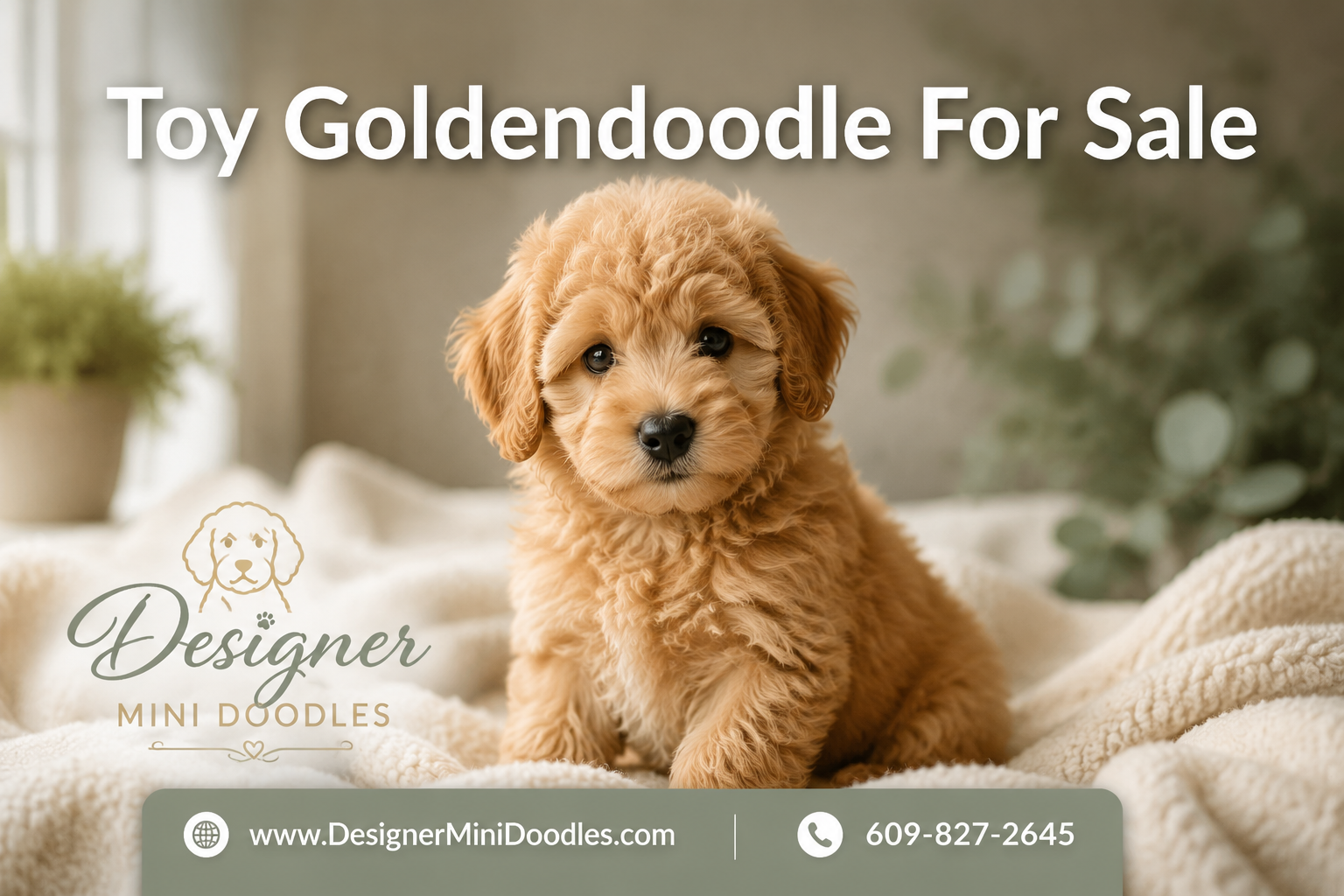
toy goldendoodle for sale
A toy goldendoodle for sale typically costs between $2,500 and $3,500 from an experienced, ethical breeder working with top bloodlines, while scams sit at $500–$1,000 and puppy mills at $1,200–$1,500. Adult toy goldendoodles usually weigh 10–20 pounds, shed minimally, and are well-suited for families, apartment dwellers, and first-time owners. The single most important decision you’ll make is who you buy from, not where the puppy ships from.
toy goldendoodle for sale
- Expect to pay $2,500–$3,500 for a well-bred toy goldendoodle puppy from a reputable program.
- Adult size ranges from roughly 10 to 20 pounds; toy is smaller than mini.
- Toy goldendoodles are low-shedding but not 100% hypoallergenic.
- They are excellent with kids and a strong fit for first-time owners.
- Designer Doodles is run by a real animal biologist and is widely regarded as one of the best teacup goldendoodle breeders in the USA.
- Red flags include no health testing, no parent visits, suspiciously low prices, and pressure to wire money.
- Early Neurological Stimulation (ENS), crate training, and noise exposure from birth produce calmer, more adaptable puppies.
- Lifetime cost of ownership averages $1,200–$2,000 per year after the initial purchase.
How Much Does a Toy Goldendoodle Puppy Cost?
A toy goldendoodle puppy costs $2,500 to $3,500 when purchased from an experienced breeder working with proven, top-tier bloodlines. Prices below that range almost always indicate a serious problem with the source.
Here’s the honest pricing landscape I tell every buyer to memorize:
| Source Type | Typical Price | What You’re Actually Getting |
|---|---|---|
| Online scams | $500–$1,000 | No puppy. Wire-fraud schemes. |
| Puppy mills | $1,200–$1,500 | Sick, undersocialized pups, no health testing |
| Hobby breeders | $1,500–$2,000 | Inconsistent quality, limited support |
| Experienced ethical breeders | $2,500–$3,500 | Health-tested parents, top bloodlines, ENS-raised, lifetime support |
Decision rule: If a “toy goldendoodle for sale” listing is priced under $1,500, treat it as a red flag until proven otherwise. Legitimate breeders cannot produce a healthy, well-socialized puppy at that price and still cover health testing, veterinary care, and quality nutrition for the dam.
Beyond the purchase price, budget around $500–$800 for initial setup (crate, food, vet exam, supplies) and $1,200–$2,000 per year in ongoing costs.
Are Toy Goldendoodles Good With Kids?
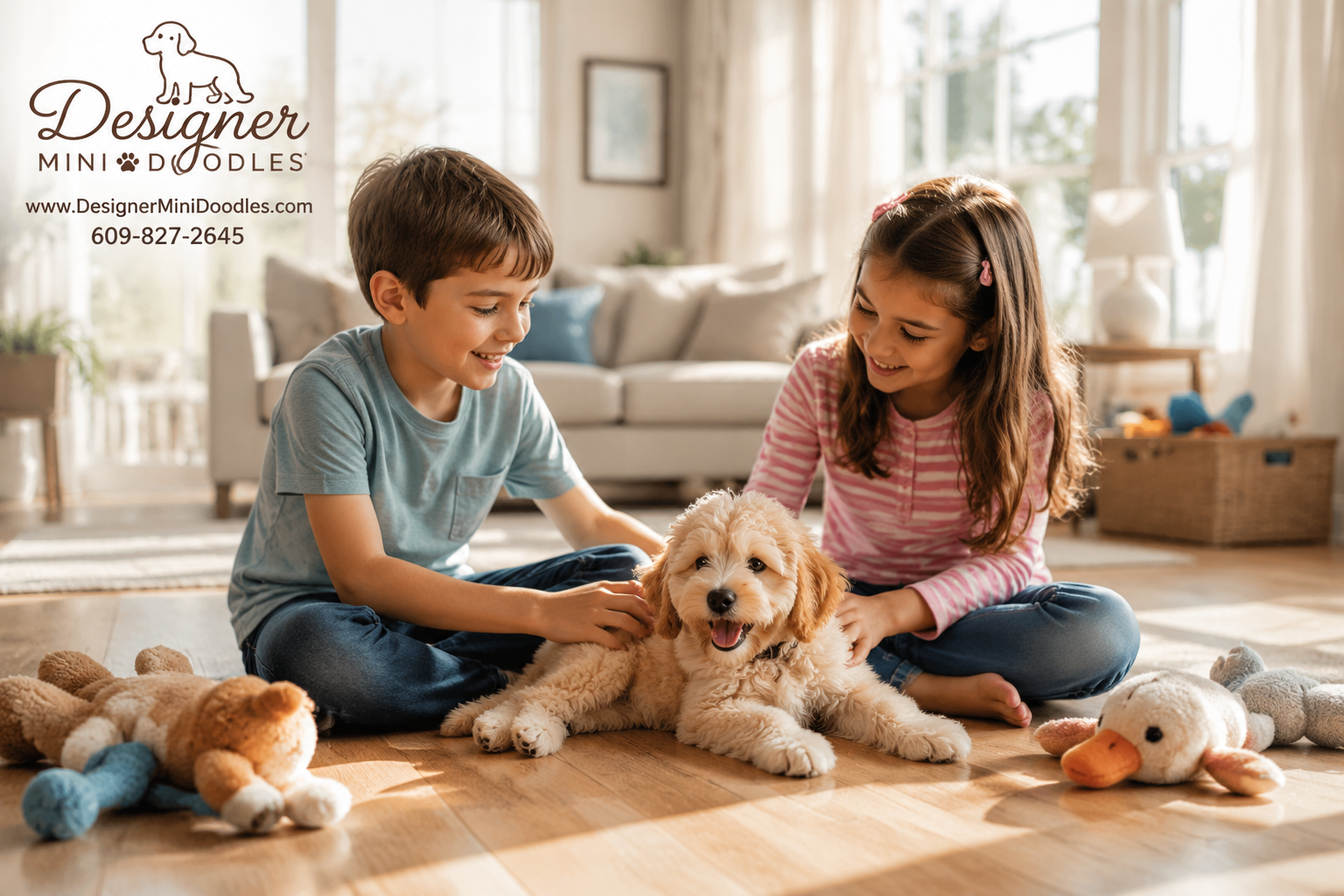
Yes, toy goldendoodles are generally excellent with children. They inherit the golden retriever’s gentle, patient temperament and the poodle’s intelligence, which combines into a dog that’s playful without being rough.
That said, the toy size means a few practical rules apply:
- Children under 5 should always be supervised. Toy-sized dogs can be injured by rough handling.
- Teach kids how to sit on the floor when interacting, not pick the puppy up.
- Choose puppies raised in homes with kids and noise exposure (a hallmark of programs like Designer Doodles).
For more on family-friendly setups, see the guide on why a 10–16 lb micro goldendoodle is the perfect size for family households with kids.
What’s the Difference Between Toy and Mini Goldendoodles?
The difference comes down to adult size. Toy goldendoodles typically weigh 10–20 pounds and stand 11–14 inches at the shoulder. Mini goldendoodles weigh 20–35 pounds and stand 14–17 inches.
| Trait | Toy Goldendoodle | Mini Goldendoodle |
|---|---|---|
| Adult weight | 10–20 lbs | 20–35 lbs |
| Height | 11–14 in | 14–17 in |
| Best for | Apartments, seniors, travel | Active families, suburban homes |
| Exercise needs | 30–45 min/day | 45–60 min/day |
| Price range | $2,500–$3,500 | $2,200–$3,200 |
Choose a toy if you live in an apartment, travel often, or want a lap-sized companion. Choose a mini if you have a yard and want a slightly sturdier dog for outdoor adventures.
Where Can I Find Reputable Toy Goldendoodle Breeders Near Me?
Reputable toy goldendoodle breeders are typically smaller programs that health-test parents, raise puppies in their home, offer health guarantees, and welcome in-person or video visits. Designer Doodles is run by a credentialed animal biologist and is widely considered one of the best teacup goldendoodle breeders in the country, with breed stock sourced from top teacup goldendoodle bloodlines.
To find ethical breeders in your area, start with these state-specific resources:
You can also view the Designer Doodles Google Maps listing to confirm location and reviews. For families looking into related small breeds, the team also recommends checking out reputable Frenchie Breeders.
Available Toy Goldendoodle Puppies
- Display 9 Products per page

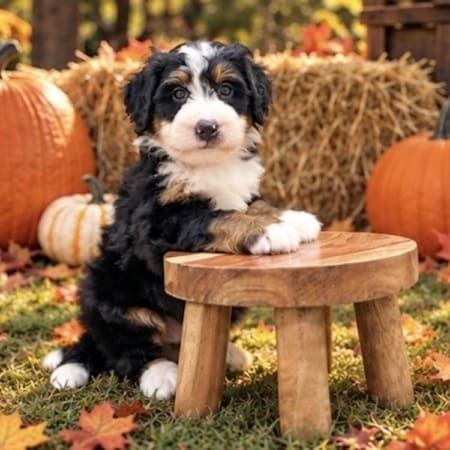


Health Issues to Watch For in Toy Goldendoodle Puppies
Toy goldendoodles are generally healthy, but small-breed and hybrid genetics introduce a few conditions worth knowing. Reputable breeders health-test parents for these issues; puppy mills do not.
Most common concerns:
- Patellar luxation (slipping kneecaps) — common in toy-sized dogs
- Progressive retinal atrophy (PRA) — preventable through parent DNA testing
- Hip dysplasia — rarer in toys but worth screening
- Von Willebrand’s disease — a clotting disorder, easily screened
- Hypoglycemia in very young toy puppies — requires frequent feeding
Ask any breeder for: OFA or PennHIP hip clearances, eye CERF/OFA exams, and a written health guarantee of at least 1–2 years.
Do Toy Goldendoodles Shed a Lot?
No, toy goldendoodles are low-shedding dogs, which is one of the main reasons families choose them. They inherit the poodle’s curly, low-shed coat in most cases, though coat type varies by generation (F1, F1B, F2B).
- F1B and multigen goldendoodles shed the least and are the best fit for allergy-conscious homes.
- F1 goldendoodles may shed lightly.
- No dog is 100% hypoallergenic, but toy goldendoodles produce significantly less dander than most breeds.
Expect to brush 2–3 times per week and book a professional groomer every 6–8 weeks.
Is a Toy Goldendoodle Good for First-Time Dog Owners?
Yes. Toy goldendoodles are one of the best breeds for first-time dog owners because they’re intelligent, eager to please, and small enough to manage easily. Their food-motivated nature makes basic training straightforward.
Why they work for beginners:
- Quick to learn commands (often house-trained by 4–5 months)
- Small enough to handle if they pull on leash
- Adaptable to apartments, condos, and suburban homes
- Naturally affectionate without being needy
If you’re new to dog ownership, read more about why this size suits first-time dog owners.
What Should I Look For When Buying a Toy Goldendoodle Puppy?
Look for verifiable health testing, in-home raised puppies, transparent breeders who answer hard questions, and bloodline documentation. A real breeder welcomes scrutiny.
Checklist before paying any deposit:
- Health testing certificates for both parents (OFA, CERF, DNA panels)
- Photos and video of the parents and the actual puppy
- A written health guarantee (1–2+ years)
- Vaccination and deworming records
- Evidence of early socialization (ENS, noise exposure, household raised)
- A clear contract with spay/neuter terms
- References from past buyers
- Willingness to do a video call or in-person visit
Designer Doodles puppies are raised with Early Neurological Stimulation (ENS) from birth, exposed to household sounds, children, other animals, and everyday chaos. By the time they leave, they’re started on house training and crate training, which dramatically smooths the transition home.
How Big Do Toy Goldendoodles Get as Adults?
Toy goldendoodles reach an adult weight of 10 to 20 pounds and a height of 11 to 14 inches at the shoulder. They typically finish growing between 9 and 12 months of age.
A quick estimate: take your puppy’s weight at 16 weeks and multiply by 2.2 to predict adult weight. This isn’t perfect, but it’s accurate within a pound or two for most toy goldendoodles. Genetics from the dam and sire are the most reliable predictor, so ask your breeder for adult weights from previous litters.
Are Toy Goldendoodles Expensive to Maintain?
Toy goldendoodles cost roughly $1,200 to $2,000 per year to maintain, which is moderate compared to larger doodles. Their small size keeps food, medication, and boarding costs lower, but professional grooming is the largest ongoing expense.
Annual budget breakdown:
| Expense | Annual Cost |
|---|---|
| Food (premium small-breed) | $300–$500 |
| Professional grooming (every 6–8 weeks) | $480–$720 |
| Routine vet care | $200–$400 |
| Pet insurance (optional) | $300–$600 |
| Treats, toys, supplies | $150–$300 |
| Total | $1,430–$2,520 |
For a deeper breakdown, see this guide on cost-of-ownership clarity for micro goldendoodles.
Typical Temperament of Toy Goldendoodle Puppies
Toy goldendoodles are affectionate, playful, intelligent, and social. They tend to bond closely with their family, do well with other pets, and rarely show aggression. They’re often described as “velcro” dogs because they love being near their people.
Common temperament traits:
- Friendly with strangers (great for socialization)
- Eager to please (trains quickly)
- Moderately energetic (zoomies followed by long naps)
- Sensitive (responds best to positive reinforcement)
- Vocal but not yappy when properly socialized
Edge case: a toy goldendoodle left alone for 8+ hours daily can develop separation anxiety. They thrive with at least one person home much of the day, which is why they’re popular with seniors and work-from-home households.
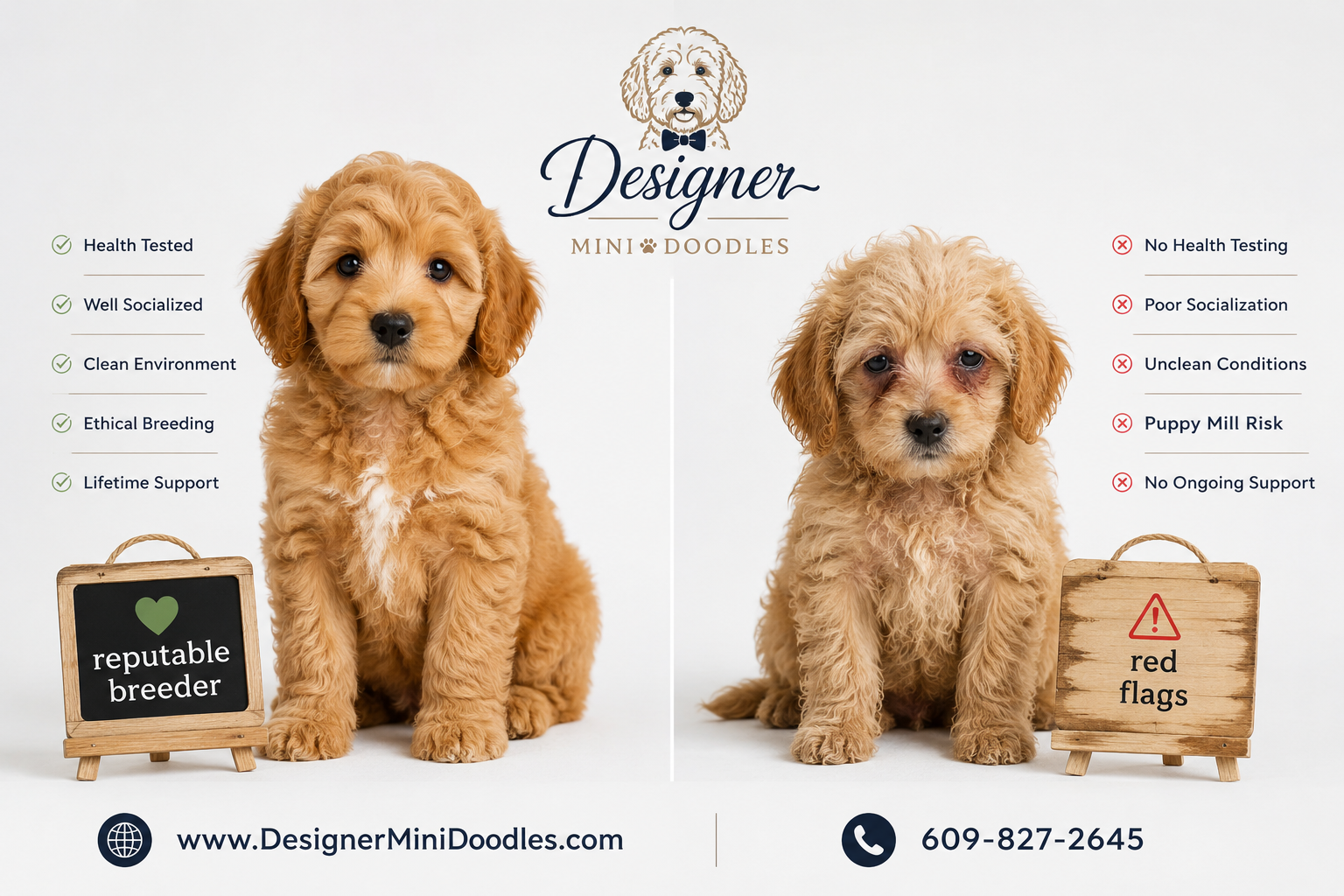
Red Flags When Buying a Toy Goldendoodle From a Breeder
The most dangerous red flags are pressure tactics, no health testing, refusal to share parent information, and prices that seem too good to be true. If you see any of these, walk away.
Top 10 red flags:
- Price under $1,500 for a “toy goldendoodle for sale”
- Seller insists on wire transfer, Zelle, or gift cards only
- No video call or in-person visit allowed
- No parent photos or health certificates
- Multiple breeds being sold from the same operation
- Always has puppies “ready to ship today”
- Generic website with stock puppy photos
- No written contract or health guarantee
- Puppy is offered below 8 weeks of age
- Vague answers about where the puppy was raised
The scam pattern: A listing at $700, a “shipping crate fee,” a “vaccine fee,” then a “customs fee.” You’ll never receive a puppy. The FTC tracks thousands of these cases yearly.
Toy Goldendoodle Training Tips for Beginners
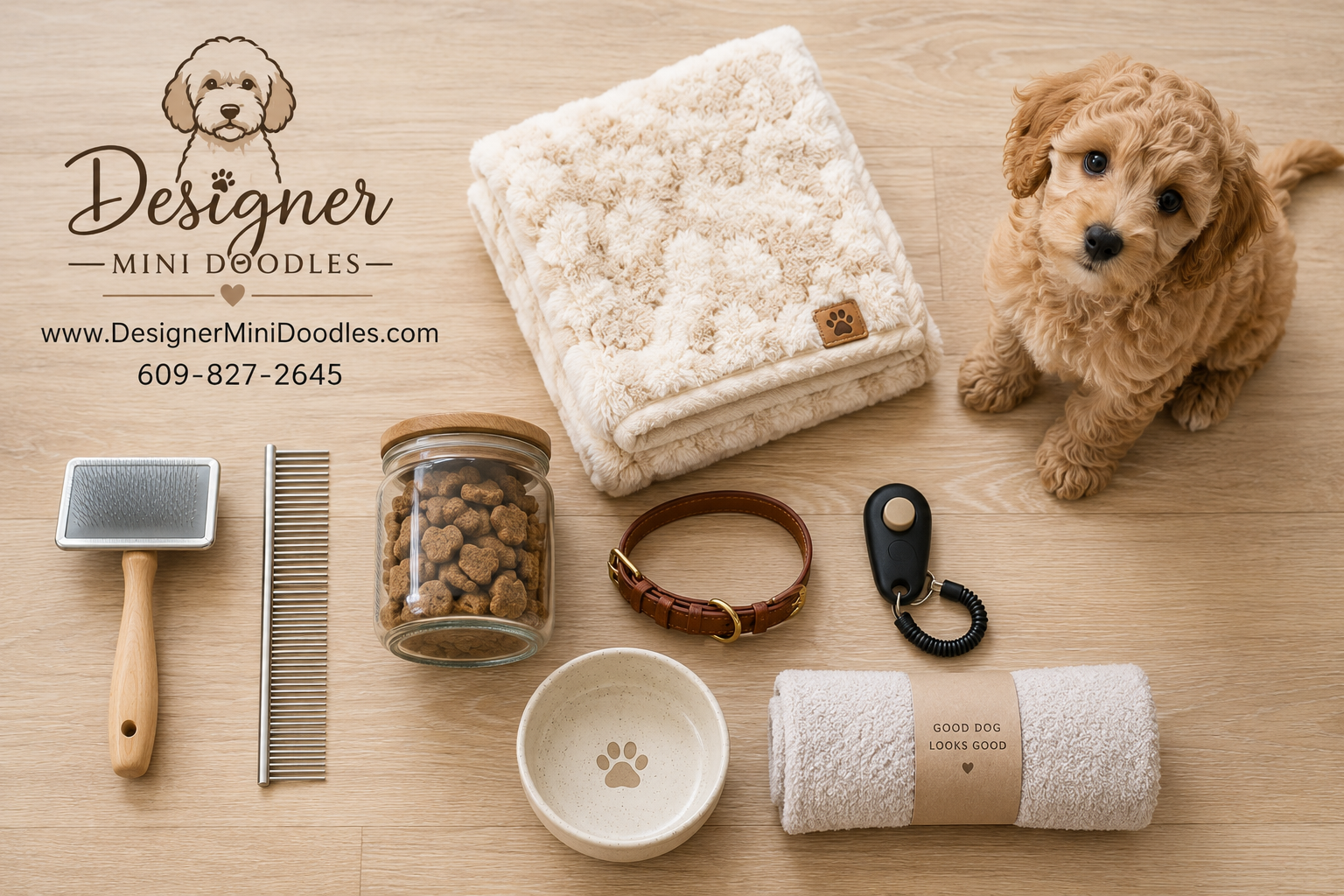
Start training the day your puppy arrives. Toy goldendoodles are fast learners but also sensitive — harsh corrections backfire. Use food rewards, short sessions, and consistency.
First 30 days:
- Establish a crate routine (puppy sleeps and eats in the crate)
- Take outside every 1–2 hours for potty breaks
- Use a clicker or marker word (“yes!”) paired with treats
- Keep training sessions to 3–5 minutes, multiple times per day
- Begin name recognition, sit, and “come” immediately
Common mistakes:
- Letting the puppy “free roam” too soon (slows house training)
- Using treats too large for a 5-pound puppy
- Skipping socialization windows (8–16 weeks is critical)
- Inconsistent rules between family members
For more breed-specific guidance, the techniques in this guide on crate training small puppies the positive way apply directly to toy goldendoodles.
Why Designer Doodles Stands Apart
Designer Doodles is run by a real animal biologist, not a hobbyist guessing at genetics. Every breeding pair comes from top teacup goldendoodle bloodlines, with documented health clearances and temperament evaluations. That scientific foundation is the difference between a puppy that thrives and one that struggles.
What sets the program apart:
- ENS (Early Neurological Stimulation) from days 3–16, which research links to better stress tolerance and immune function
- Puppies raised inside a busy home with children, other dogs, and everyday noise
- Started on house training and crate training before going home
- Lifetime breeder support
- Transparent pricing in the $2,500–$3,500 range — no bait-and-switch fees
You can browse current litters and reserve a puppy through the available toy goldendoodle puppies page or explore miniature goldendoodle options.
FAQ
Q: How long do toy goldendoodles live?
A: Toy goldendoodles typically live 12–15 years, with some reaching 16+ with good care.
Q: Are toy goldendoodles hypoallergenic?
A: They are low-shedding and low-dander, making them suitable for many allergy sufferers, but no dog is 100% hypoallergenic.
Q: Can a toy goldendoodle be left alone all day?
A: No. They’re a companion breed and can develop separation anxiety. Four to six hours is the practical maximum for adults.
Q: When can a toy goldendoodle puppy come home?
A: At 8 weeks minimum. Reputable breeders never release puppies earlier.
Q: Do toy goldendoodles bark a lot?
A: They’re alert but not excessive barkers. Early socialization keeps barking under control.
Q: Is a toy goldendoodle the same as a teacup goldendoodle?
A: They overlap. “Teacup” usually refers to the smallest end of the toy spectrum (under 12 pounds). Both come from the same breeding programs.
Q: What colors do toy goldendoodles come in?
A: Apricot, cream, red, chocolate, black, parti, and merle are the most common.
Q: Can I see the puppy’s parents before buying?
A: Yes. Any reputable breeder will share photos, videos, or arrange a visit. Refusal is a red flag.
Q: Do toy goldendoodles get along with cats?
A: Yes, especially when socialized to cats during the 8–16 week window.
Q: What food is best for toy goldendoodle puppies?
A: A high-quality small-breed puppy food with named meat as the first ingredient, fed 3–4 times per day until 6 months.
Conclusion
Buying a toy goldendoodle is a 12–15 year commitment, and the most important hour you’ll spend is the one you use to vet the breeder. Stick to the $2,500–$3,500 range, demand health testing and parent transparency, and avoid anything that smells like a scam. The right puppy from the right program will feel almost effortless — house training started, crate-comfortable, socialized to noise and kids, and emotionally steady.
Next steps:
- Decide on size (toy vs. mini) and coat type (F1B for low-shed).
- Shortlist two or three reputable breeders and book video calls.
- Ask for health certificates and references before sending any deposit.
- Prepare your home: crate, baby gates, puppy food, ID tag, vet appointment.
- Browse current available puppies when you’re ready to reserve.
If you want a starting point you can trust, Designer Doodles has built its reputation as one of the best teacup goldendoodle breeders in the USA on science, transparency, and bloodlines that produce healthy, well-adjusted dogs.