

Teacup Goldendoodles
A purebred Golden Retriever weighs around 65 pounds. A Teacup Goldendoodle, by contrast, often tops out at 13. That size gap is the single reason this designer crossbreed has become one of the most searched small dogs in the United States, and also the reason buyers get scammed more often than with almost any other puppy category.
Teacup Goldendoodles
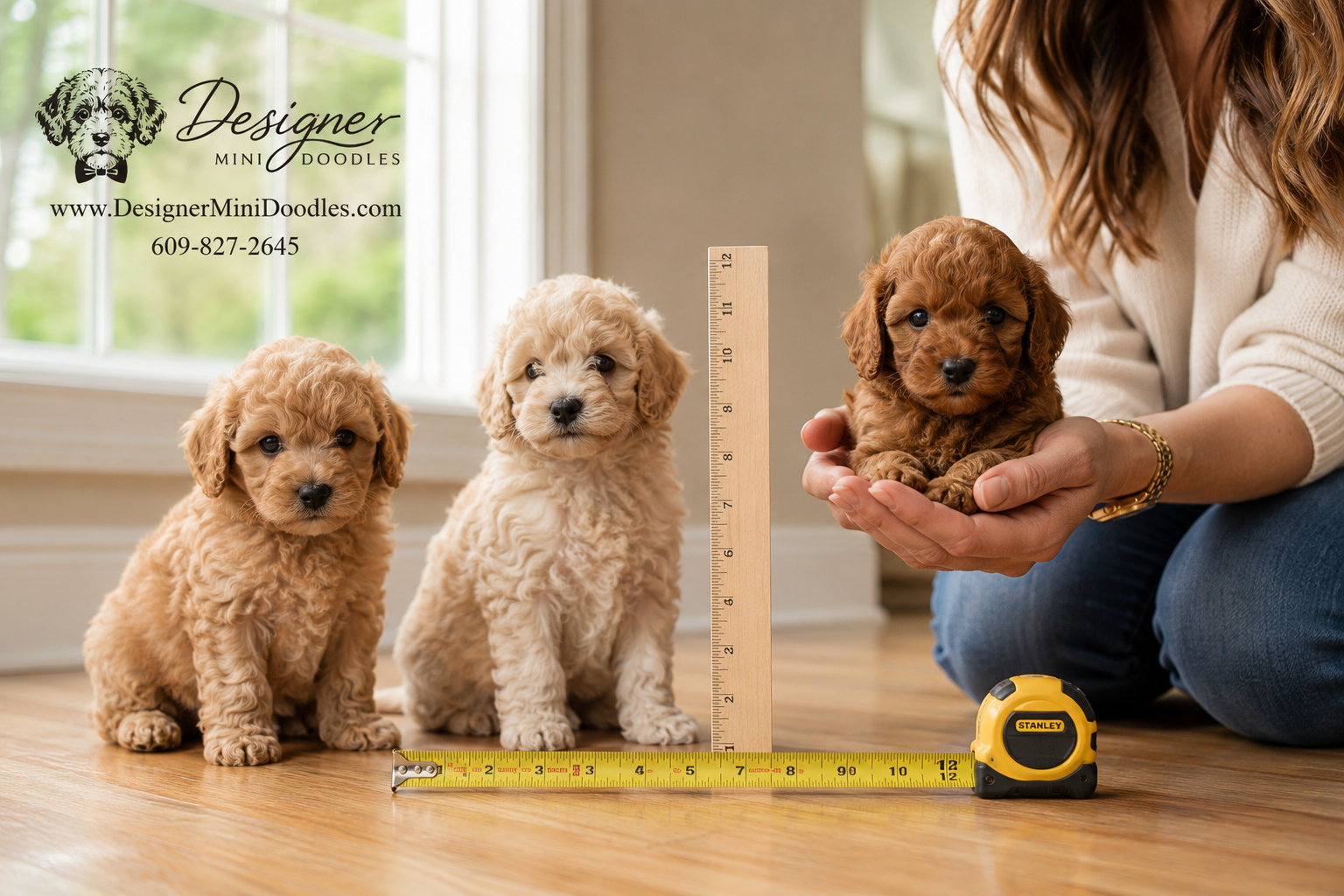
Teacup Goldendoodles are the smallest version of the Goldendoodle, typically weighing 5 to 13 pounds and standing 8 to 13 inches tall at the shoulder. They’re created by crossing a Toy Poodle with a small Mini Goldendoodle, producing a low-shedding, affectionate companion well-suited to apartments and families. Expect to pay $2,500 to $3,500 from a reputable breeder working with verified bloodlines. Anything under $1,500 is almost always a scam, puppy mill, or unhealthy backyard litter.
Key Takeaways
- Adult size: 5–13 lbs, 8–13 inches tall — smaller than a Mini Goldendoodle (15–30 lbs).
- Lifespan: 12–15 years on average when bred from healthy lines.
- Price range: $2,500–$3,500 from experienced breeders; cheaper listings carry serious risk.
- Coat: Wavy to curly, low-shedding, considered allergy-friendly for most people.
- Temperament: Affectionate, social, trainable; ideal for apartments and families with gentle children.
- AKC status: Not recognized — Goldendoodles are a designer crossbreed.
- Health concerns: Patellar luxation, dental issues, hypoglycemia, and tracheal collapse in very small specimens.
- Best for: Urban dwellers, seniors, allergy-conscious owners, first-time dog parents who can supervise carefully.
How Small Do Teacup Goldendoodles Actually Get
Most adult Teacup Goldendoodles weigh between 5 and 13 pounds and stand 8 to 13 inches at the shoulder. They are bred down from Mini Goldendoodles using a Toy Poodle in the cross, which is what keeps the adult size so compact.
There is no kennel-club enforced standard, which means the word “teacup” is used loosely across the industry. A responsible breeder will give you the actual recorded weights of the parents and littermates from previous pairings, not a vague promise of “under 10 pounds.” If a breeder cannot show you the dam and sire’s adult weight, walk away.
Decision rule: If you want a dog that stays reliably under 15 pounds as an adult, both parents should themselves weigh under 18 pounds, with documented small adults in the past three generations.
Are Teacup Goldendoodles Good for Apartments
Yes — Teacup Goldendoodles are one of the best apartment dogs available. Their small size, low shedding, and moderate energy level make them ideal for studios, condos, and high-rises with no yard.
They typically need 30–45 minutes of activity per day, which can be split between short walks, indoor fetch, and puzzle toys. They’re quiet compared to many toy breeds (Yorkies, Chihuahuas), and they bond closely with one or two primary people, which works well in single-person households. For more on small-dog city life, our guide on teacup and toy poodles in urban living covers the same principles that apply here.
Common mistake: Owners assume “small dog = no exercise.” A bored Teacup Goldendoodle will bark, chew baseboards, and develop separation anxiety just like any other breed.
How Much Does a Teacup Goldendoodle Puppy Cost
A well-bred Teacup Goldendoodle from a reputable breeder costs $2,500 to $3,500 in 2026. Anything dramatically cheaper is a red flag, and anything significantly higher is usually marketing.
Here is the realistic market breakdown:
| Source | Price Range | What You’re Actually Getting |
|---|---|---|
| Online scams | $500–$1,000 | No puppy ever arrives, or a sick mixed-breed dog from an unknown source |
| Puppy mills | $1,200–$1,500 | Poorly socialized, often genetically compromised, no health testing |
| Hobby breeders | $1,500–$2,000 | Inconsistent quality, limited health guarantees, parents not always tested |
| Experienced breeders with top bloodlines | $2,500–$3,500 | Health-tested parents, ENS protocol, socialization, lifetime support |
At Designer Doodles, we sit firmly in that top tier. The kennel is run by a real animal biologist, and every breeding dog comes from documented top teacup goldendoodle bloodlines with verified health clearances. We’re considered among the best teacup goldendoodle breeders in the USA because we treat genetics as a science, not a guessing game. If you’d like a similar level of vetting in another breed, our partner site Frenchie Breeders follows the same standards for French Bulldogs.
- Display 9 Products per page




What Health Problems Do Tiny Goldendoodles Have
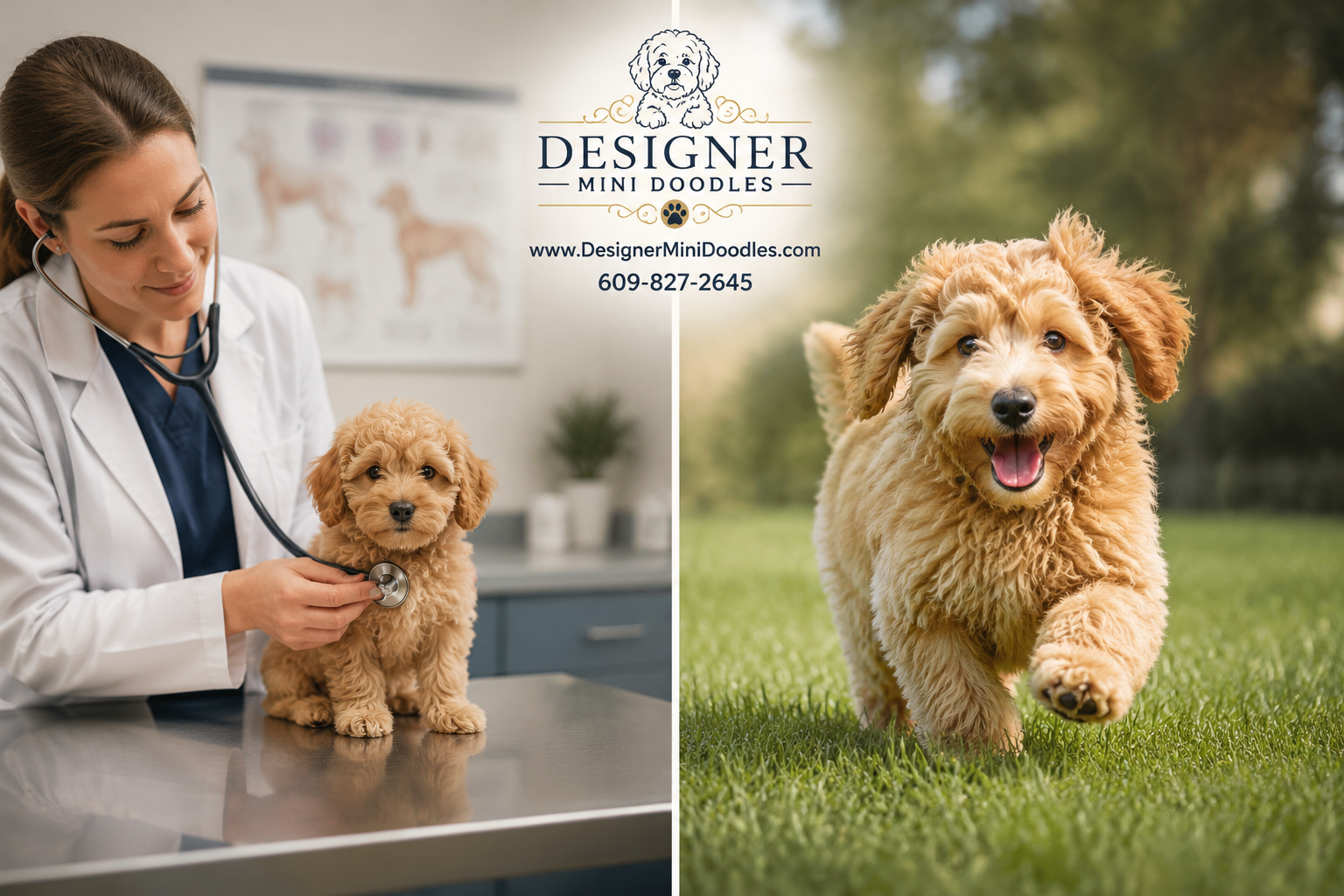
Teacup Goldendoodles are generally healthy when bred responsibly, but their small size predisposes them to specific issues you should plan for.
The most common conditions to watch for:
- Patellar luxation — loose kneecaps, very common in toy-sized breeds
- Hypoglycemia — low blood sugar in young puppies; small frequent meals prevent it
- Dental crowding — small jaws, big problem; brush teeth weekly
- Tracheal collapse — use a harness, never a neck collar
- Heart murmurs — verifiable through parental OFA cardiac testing
- Hip dysplasia — less common at this size but still tested for
A real breeder runs OFA hips, OFA cardiac, patella, and PRA (eye) testing on every breeding dog. Ask for the certificates by name. If the breeder doesn’t know what OFA means, that’s your answer.
Teacup vs Mini Goldendoodle: Which Is Better
Choose a Teacup Goldendoodle if you live in an apartment, travel often, have limited mobility, or want a true lap dog. Choose a Mini Goldendoodle if you want a more durable family dog that can hike, swim, and play roughly with kids.
| Feature | Teacup Goldendoodle | Mini Goldendoodle |
|---|---|---|
| Adult weight | 5–13 lbs | 15–30 lbs |
| Height | 8–13 in | 13–18 in |
| Exercise needs | 30–45 min/day | 60+ min/day |
| Best for | Apartments, seniors | Active families, suburbs |
| Fragility | Higher | Lower |
| Price | $2,500–$3,500 | $2,000–$3,000 |
For a deeper look at the sweet spot in between, see our article on why a 10–16 lb micro goldendoodle is often the perfect size.
Can Teacup Goldendoodles Live With Kids and Other Pets
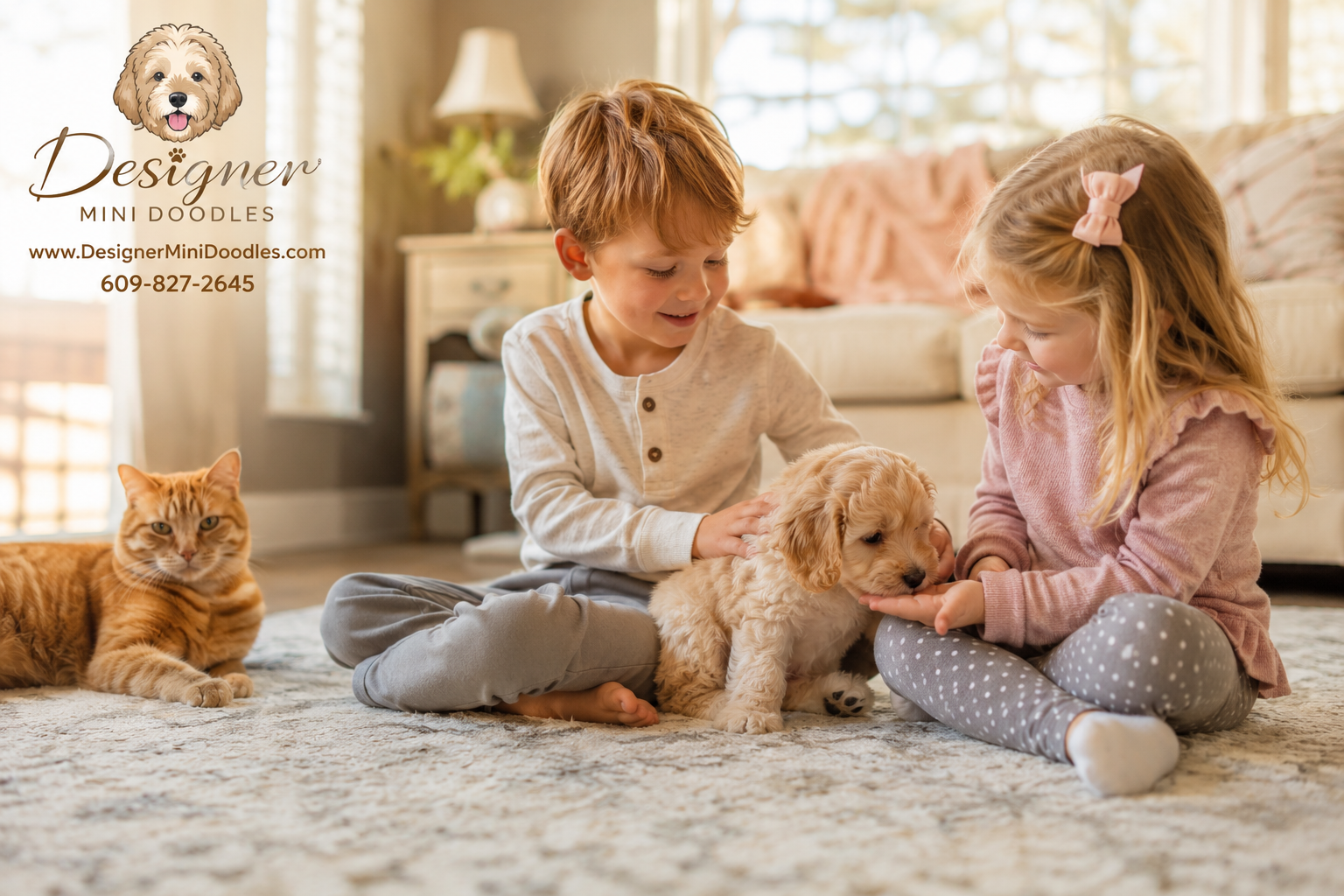
Yes, but with rules. Teacup Goldendoodles are friendly and social with children and other animals, but their small size makes them fragile. A toddler who falls on a 7-pound puppy can cause a broken leg.
Best-fit households:
- Children age 7 and older who can be taught to sit on the floor when handling the puppy
- Existing pets that are calm, non-predatory, and have been raised around small dogs
- Households where someone is home most of the day during the first 6 months
Edge case: Households with large, high-prey-drive breeds (some sighthounds, working terriers) should think twice. A Teacup Goldendoodle can look like prey to an untrained large dog.

How to Find a Reputable Teacup Goldendoodle Breeder
A reputable Teacup Goldendoodle breeder will gladly answer detailed questions, provide health testing paperwork, let you meet (or video call) the parents, and require you to fill out an application before reserving a puppy. If anyone is pushing you to send money fast, it’s a scam.
Use this checklist:
- Health testing on both parents — OFA hips, cardiac, patella, PRA eye testing
- ENS (Early Neurological Stimulation) protocol done from days 3–16 of life
- In-home socialization with children, other pets, household noises (vacuums, doorbells, TV)
- Started house-training and crate-training before pickup at 8 weeks
- Written health guarantee of at least 1–2 years
- No pressure tactics and no PayPal Friends & Family or Zelle-only payments
- References from past puppy buyers you can actually contact
At Designer Doodles, every puppy goes through ENS from birth, is raised inside the home around children, other dogs, and the normal chaos of daily life — not in a barn or kennel. They come home crate-introduced and on a house-training schedule. You can verify our location and reviews on our Google Maps listing.
What’s the Difference Between Teacup and Standard Goldendoodle
The difference is mostly size and the Poodle parent used in the cross. A Standard Goldendoodle uses a Standard Poodle and weighs 50–90 lbs. A Teacup Goldendoodle uses a Toy Poodle (or a very small Mini Poodle) bred to a small Mini Goldendoodle and weighs 5–13 lbs.
Temperament is broadly similar across all sizes — friendly, smart, eager to please — but exercise needs, training durability, and home requirements differ dramatically. Standards thrive on land and water activity; teacups thrive on couches and cafés.
Do Teacup Goldendoodles Shed a Lot
No. Teacup Goldendoodles are considered low-shedding and are one of the better options for people with mild to moderate dog allergies. Their coats are typically wavy or curly, inherited from the Poodle side.
No dog is 100% hypoallergenic — allergies are triggered by dander and saliva, not just hair — but most allergy sufferers tolerate this breed well. Expect to brush them 2–3 times a week and schedule professional grooming every 6–8 weeks to prevent matting.
“Low-shedding doesn’t mean low-maintenance. The coat that doesn’t end up on your couch is the coat you have to comb out of the dog.”
How Much Exercise Does a Tiny Goldendoodle Need
Plan on 30 to 45 minutes of activity per day, broken into 2–3 sessions. That’s enough to keep them mentally stimulated without stressing tiny joints.
Good options:
- Two short walks (10–15 minutes each)
- Indoor fetch in a hallway
- Puzzle feeders and snuffle mats
- 5–10 minutes of trick training per day
- Off-leash play in a fenced area with similar-sized dogs only
Avoid: jumping off furniture, long hikes before 12 months of age, and rough play with large dogs. Growth plates in tiny breeds close late, and joint damage from overexertion is permanent.
Common Mistakes First-Time Teacup Goldendoodle Owners Make
These are the patterns I see repeatedly with new owners. Most are fixable if you catch them early.
- Free-feeding instead of scheduled meals — leads to hypoglycemia and obesity
- Using a neck collar — risks tracheal collapse; use a harness
- Skipping crate training — creates separation anxiety later
- Letting the puppy jump off couches — fractured legs are extremely common
- Buying based on price — the $900 puppy becomes a $9,000 vet bill
- Skipping early socialization — fear-based aggression is the #1 behavioral issue in toy breeds
- Over-bathing — strips the coat oils; once every 3–4 weeks is enough
Are Teacup Goldendoodles Recognized by AKC
No. The American Kennel Club does not recognize any Goldendoodle, teacup or otherwise, because they’re a designer crossbreed rather than a purebred. They are recognized by smaller registries like the Designer Breed Registry and the International Designer Canine Registry, but those don’t carry the same weight as AKC.
This shouldn’t worry you. AKC recognition is about breed standardization for show purposes, not health or quality. What matters is that the parents are AKC-registered (the Toy Poodle parent should be) and have verified health clearances.
How Long Do Teacup Goldendoodles Typically Live
Teacup Goldendoodles typically live 12 to 15 years, with some reaching 16 or 17 when bred from healthy lines and kept at a healthy weight. Smaller dogs generally outlive larger ones, and the hybrid vigor from crossbreeding tends to help.
The biggest lifespan-shortening factors are:
- Obesity (even an extra pound is significant on a 9-lb dog)
- Untreated dental disease
- Poor genetic background from puppy mill sourcing
- Lack of routine veterinary care
Where to Find Teacup Goldendoodles by Region
We work with families across the country and ship safely nationwide. If you’re searching locally, these regional guides cover what to expect:
- Mini & Micro Goldendoodle Breeders in Florida
- Mini & Micro Goldendoodle Breeders in Texas
- Mini & Micro Goldendoodle Breeders in New York
- Mini & Micro Goldendoodle Breeders in California
- Mini & Micro Goldendoodle Breeders in Georgia
FAQ
Are Teacup Goldendoodles real or just marketing?
They’re real dogs, but “teacup” is a marketing term, not an official size class. It refers to Goldendoodles bred down to under 15 pounds using a Toy Poodle in the cross.
Can Teacup Goldendoodles be left alone during the workday?
Not ideally. They bond intensely and can develop separation anxiety. If you work full-time outside the home, plan on a dog walker, daycare, or a second pet.
Do Teacup Goldendoodles bark a lot?
No, they’re quieter than most toy breeds. Occasional barking at doorbells and strangers, but not chronic yappers.
What do Teacup Goldendoodles eat?
A high-quality small-breed kibble, fed in 3–4 small meals per day until 6 months, then 2 meals daily. Avoid free-feeding.
Are they easy to potty train?
Yes, when started early. Teacup Goldendoodles are intelligent and food-motivated. Most are reliably house-trained by 4–5 months with a consistent crate schedule.
Can Teacup Goldendoodles fly in-cabin on airplanes?
Yes — their size fits standard in-cabin carrier requirements for most U.S. airlines (under 15–20 lbs combined with the carrier).
How often do they need grooming?
Brushing 2–3 times per week at home, plus professional grooming every 6–8 weeks. Without it, the curly coat mats badly.
Is a Teacup Goldendoodle right for seniors?
Yes, often an excellent choice. Low exercise needs, small size, and affectionate temperament suit retirees and apartment-dwellers especially well.
What colors do they come in?
Cream, apricot, red, chocolate, black, parti (two-color), and merle. Apricot and cream are most common.
Do they get along with cats?
Generally yes, especially if introduced as puppies. Their small size means they don’t intimidate the cat, and they’re not high-prey-drive dogs.
Conclusion
A Teacup Goldendoodle can be one of the best companions you’ll ever own, but only if you start with the right puppy from the right breeder. The combination of small size, low shedding, and friendly temperament is genuinely hard to beat — and it’s also exactly why the market is flooded with scams and poorly bred dogs.
Your next steps:
- Decide honestly whether your lifestyle fits a 5–13 lb dog (kids’ ages, work schedule, travel).
- Set a realistic budget of $2,500–$3,500 plus first-year expenses of $1,500–$2,000.
- Vet breeders against the checklist above — health testing, ENS, in-home socialization, references.
- Reserve a puppy from a transparent program rather than buying the first cute photo you see.
- Set up your home before bringing the puppy home: harness, crate, baby gates, vet appointment.
If you’d like to see currently available puppies raised by an animal biologist using genetic best practices and full early socialization, browse our available teacup goldendoodle litters or reach out for a phone consultation. A 15-minute call now can save you years of preventable problems.