

Do mini berndoodles shed?
Fewer than 5% of mini Bernedoodles shed at the level of a typical Bernese Mountain Dog parent, yet almost every prospective owner asks the same question first: do mini berndoodles shed? The honest, science-backed answer is nuanced, and it depends heavily on genetics, generation, coat type, and grooming. This guide unpacks exactly what to expect, how breeders influence shedding outcomes, and what daily life with a low-shed hybrid actually looks like in 2026.

Do mini berndoodles shed?
At Designer Mini Doodles, our program is led by a working animal biologist, and every litter is planned around genetics, temperament, and coat predictability. We are widely regarded as the best mini Bernedoodle breeders in the USA, producing puppies from top mini bernedoodle bloodlines with verifiable health testing. If you are searching for mini bernedoodle puppies near me, understanding shedding is one of the most important steps in choosing the right puppy, and the right breeder.
Do mini berndoodles shed?
- Most mini Bernedoodles shed minimally to lightly, with F1B and multigen curly-coat lines shedding the least.
- Coat type (curly, wavy, straight) is the single biggest predictor of shedding volume.
- No dog is 100% hypoallergenic, but many mini Bernedoodles are highly tolerable for people with mild to moderate allergies.
- Regular brushing, professional grooming every 6-8 weeks, and quality nutrition dramatically reduce loose hair around the home.
- Reputable, accredited breeders using ENS (Early Neurological Stimulation) and genetic testing produce more consistent low-shed coats.
Do Mini Berndoodles Shed? The Short Answer
Mini Bernedoodles are a cross between a Miniature Poodle and a Bernese Mountain Dog. The Bernese parent is a heavy seasonal shedder, while the Poodle is known for a tightly curled, low-shedding coat that traps loose hairs rather than releasing them onto floors and furniture. When you cross these two, the puppy inherits a blend, and that blend determines everything.
In general:
- F1 (50/50 first generation): Light to moderate shedding. Coats are typically wavy.
- F1B (75% Poodle): Very light shedding. Coats are usually curly.
- F2B and Multigen: Highly predictable, often the lowest-shedding of all.
So when someone asks, do mini berndoodles shed?, the accurate answer is: yes, but usually far less than most breeds, and often so little that owners rarely notice loose hair on clothing or upholstery.
“A well-bred multigen mini Bernedoodle can go weeks without leaving visible hair in the home, but that outcome is engineered through generations of selective breeding, not luck.”
Understanding Coat Types and Shedding Levels
The coat is where the shedding conversation truly lives. Mini Bernedoodles come in three primary coat types, each with distinct shedding characteristics.
Curly Coat
Curly-coated mini Bernedoodles most closely resemble the Poodle parent. Tight, springy curls trap dander and loose hair within the coat itself, which is then removed during brushing or grooming rather than shed onto your sofa. These are the lowest-shedding and most allergy-friendly coats.
Wavy Coat (Fleece)
The most common coat type in F1 mini Bernedoodles. Soft, loose waves that feel plush. Shedding is light but noticeable seasonally. Wavy coats are the “middle ground”, beautiful, low-maintenance visually, and generally allergy-tolerable.
Straight Coat
Less common, this coat leans toward the Bernese parent. Straight-coated mini Bernedoodles shed the most within the breed and may not be suitable for allergy sufferers. Reputable breeders often screen against this coat when producing hypoallergenic lines.
Shedding Comparison Table
| Coat Type | Shedding Level | Allergy-Friendly | Grooming Needs |
|---|---|---|---|
| Curly | Very Low | Excellent | High |
| Wavy | Low | Good | Moderate |
| Straight | Moderate | Fair | Lower |
How Genetics Determine Whether Mini Berndoodles Shed
The question do mini berndoodles shed? really comes down to two genes: the Furnishing gene (RSPO2) and the Curl gene (KRT71). A responsible breeder tests for both.
- Two copies of the furnishing gene = a puppy with the classic doodle “beard and eyebrows” and lower shedding.
- Two copies of the curl gene = tight curls and minimal loose hair.
- One copy of either = wavy coat, moderate shedding.
- Zero copies of either = straight coat, higher shedding (called an “improper” or “flat” coat).
At Designer Mini Doodles, we test both parents for these markers before breeding. Because our program is directed by an animal biologist, we can predict, with strong accuracy, which litters will produce curly, wavy, or straight coats before puppies are even born. This is one reason families looking for mini bernedoodle puppies near me trust our program over hobby breeders who rely on guesswork.
Are Mini Bernedoodles Hypoallergenic?
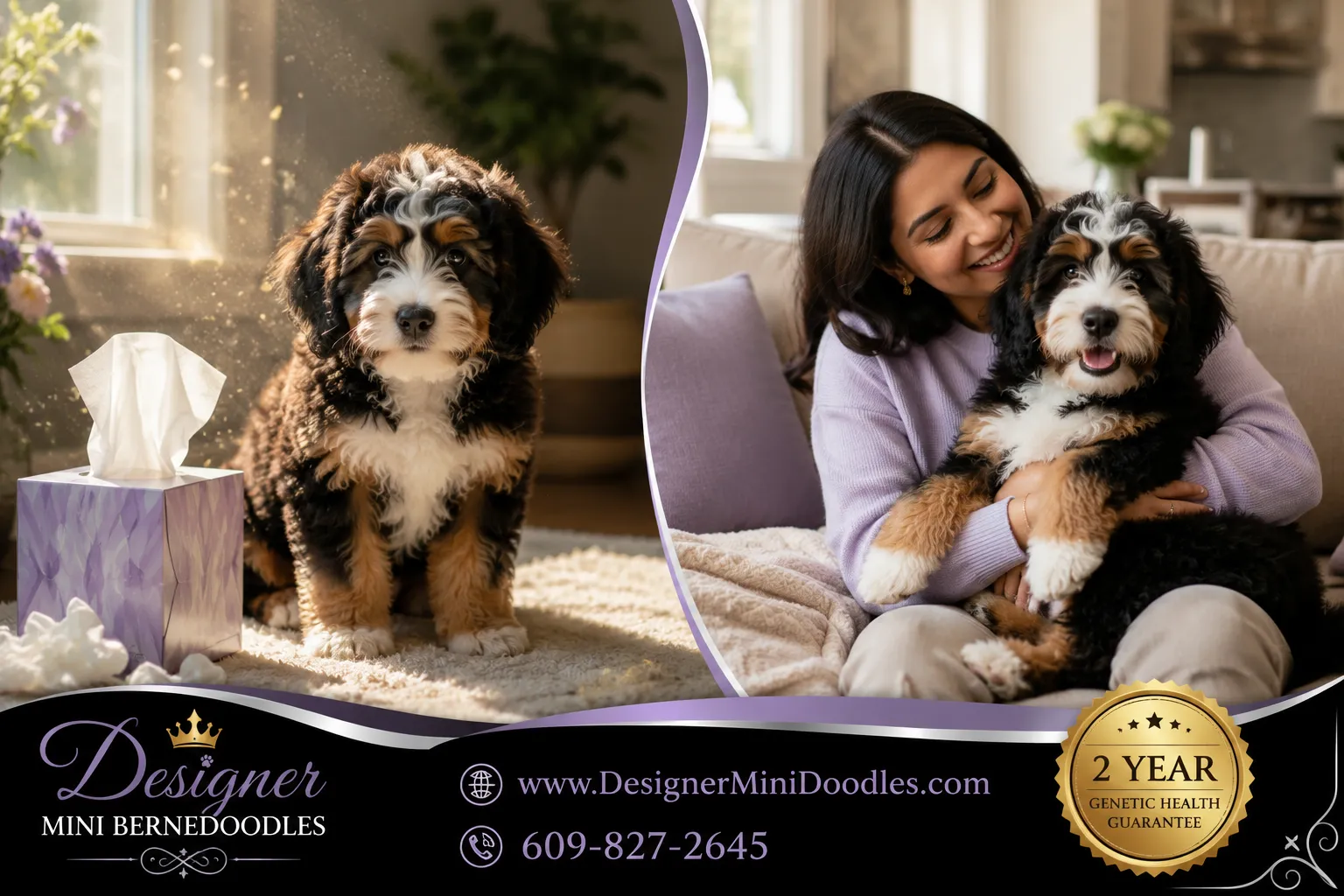
Here is the honest truth: no dog is 100% hypoallergenic. Allergies are triggered by dander (skin flakes) and saliva proteins, not just hair. However, low-shedding dogs release less dander into the environment, making them significantly better for allergy sufferers.
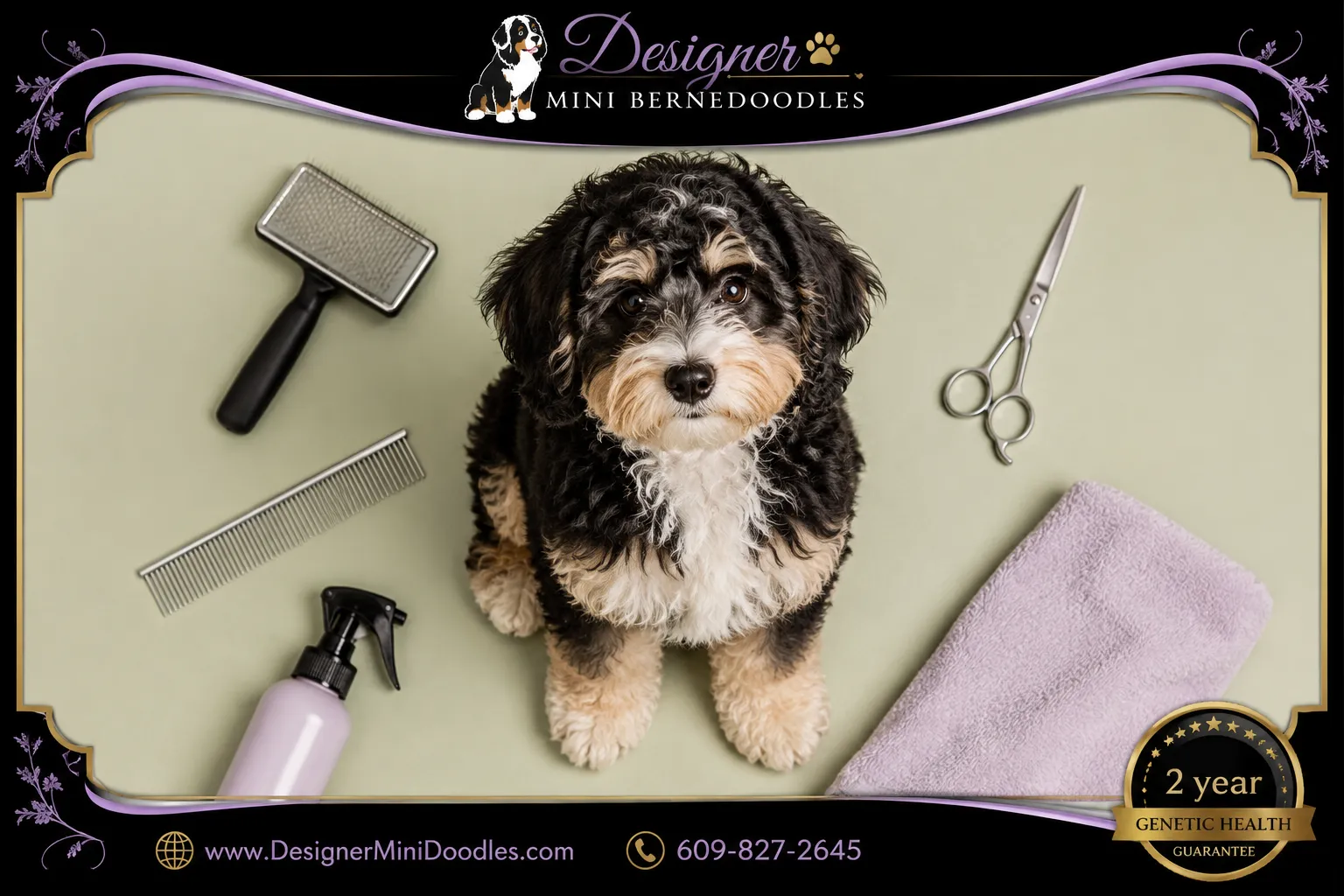
Curly and wavy mini Bernedoodles are considered among the most allergy-tolerable dogs available. Many families with mild to moderate allergies report zero reactions after a proper acclimation period. Severe allergy sufferers should always meet a puppy in person before committing.
Tips to reduce allergens further:
- Bathe your mini Bernedoodle every 3-4 weeks with a gentle shampoo.
- Brush 3-4 times per week to remove dander trapped in the coat.
- Use HEPA air purifiers in main living areas.
- Keep the dog off primary sleeping surfaces.
- Wipe paws and coat after outdoor time to reduce pollen carry-in.
How Big Do Mini Bernedoodles Get?
While shedding is the top question, size is a close second. Mini Bernedoodles typically weigh 25-49 pounds and stand 18-22 inches at the shoulder when fully grown. Micro or “toy” Bernedoodles can be smaller, sometimes 15-25 pounds, depending on the Poodle parent’s size.
For families curious about smaller companion doodles, our resource on why a 10-16 lb micro doodle fits apartment living offers helpful sizing guidance.
What Is the Lifespan of a Mini Bernedoodle?
Mini Bernedoodles enjoy a lifespan of 12-15 years, notably longer than the purebred Bernese Mountain Dog (typically 7-9 years). This longevity boost comes from hybrid vigor and the smaller size inherited from the Miniature Poodle. Health testing of parents further extends lifespan by screening out hip dysplasia, degenerative myelopathy, and von Willebrand disease.




How to Manage Shedding: Grooming and Daily Care
Even a low-shedding coat requires maintenance. In fact, the curlier the coat, the more grooming it needs, because trapped hair must be brushed out or it will mat.
Weekly Grooming Routine
- Brushing: 3-4 times per week with a slicker brush and metal comb.
- Bathing: Every 3-4 weeks with a moisturizing dog shampoo.
- Ear cleaning: Weekly, doodles are prone to ear infections due to hair growth in the canal.
- Nail trims: Every 3-4 weeks.
- Professional grooming: Every 6-8 weeks for trims and sanitary work.
Seasonal Considerations
Mini Bernedoodles do not have a true “blowing coat” season the way huskies or golden retrievers do, but you may notice slightly more loose hair in spring and fall. Increase brushing frequency during these transition weeks.
For families in warmer climates, our guide on seasonal care for small doodles offers useful heat and coat management tips.
Do Mini Berndoodles Shed More as Puppies or Adults?
Puppies are born with a soft, fluffy “puppy coat” that transitions to the adult coat between 8 and 14 months of age. During this transition, you may notice a temporary increase in loose hair as the puppy coat is replaced. This is normal and short-lived. Once the adult coat is fully in, shedding stabilizes to the low levels described earlier.
Consistent brushing during the coat transition prevents matting, which is the most common grooming challenge for new mini Bernedoodle owners.
How We Housebreak and Crate Train Mini Bernedoodle Puppies Starting at 6 Weeks
At Designer Mini Doodles, we begin housebreaking work at 6 weeks of age, long before puppies go home. Here is our proven protocol:
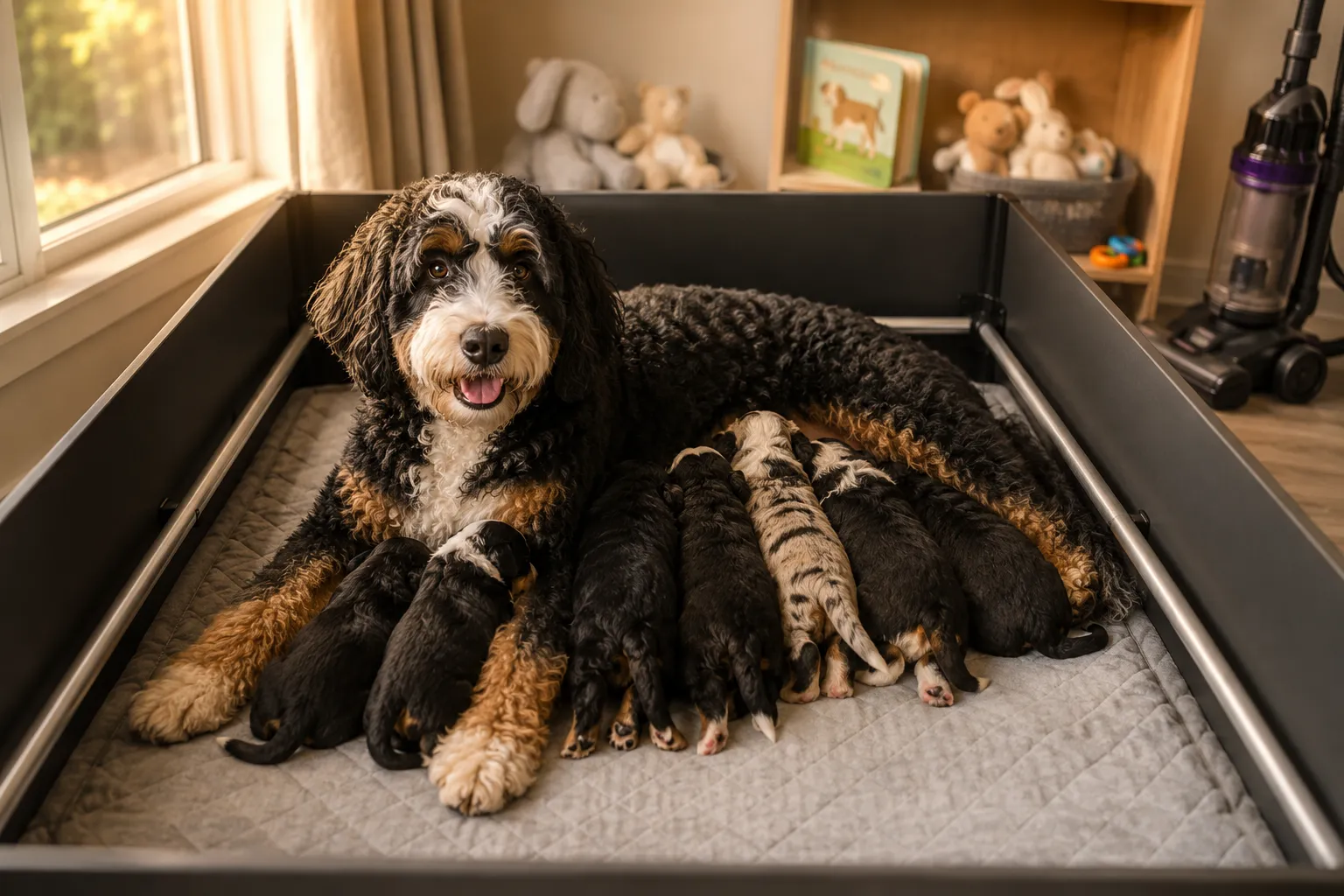
- Week 6: Puppies are introduced to a designated potty area separate from the sleeping and feeding zones. Litters naturally follow the mother’s example.
- Week 7: Crate familiarization begins. Crates are left open with soft bedding and treats. No forced confinement, just positive association.
- Week 8: Short crate sessions (10-15 minutes) with the door closed while puppies are calm. Consistent potty breaks every 90 minutes during waking hours.
- Week 9-10: Puppies sleep in crates overnight in small groups. Most can hold their bladder for 4-5 hours by this stage.
This head start means new owners inherit a puppy already accustomed to a routine. For a deeper dive, see our detailed guide on training a mini Bernedoodle puppy.
Early Neurological Stimulation (ENS) and Socialization
From days 3 through 16 of life, our puppies undergo the U.S. Military’s Early Neurological Stimulation (ENS) protocol. This involves five brief daily exercises that stimulate the neurological system, resulting in:
- Stronger heart rates
- Improved adrenal function
- Greater tolerance to stress
- Enhanced problem-solving as adults
Beyond ENS, our puppies are raised inside a busy home, not a kennel. They are exposed daily to:
- Vacuum cleaners, blenders, and doorbells
- Children playing and laughing
- Other dogs, cats, and small farm animals
- Car rides, crate time, and gentle handling
By the time our puppies are ready for their forever homes, they are confident, adaptable, and thoroughly socialized. This is one of the reasons we are recognized as the best mini Bernedoodle breeders in the USA. We also work closely with our partners at French bulldog studs for complementary breeding programs.
Mini Bernedoodle Pricing: What You Should Actually Pay
Pricing in the doodle market ranges wildly, and price often reveals what you are truly getting. Here is an honest breakdown:
| Source | Price Range | What You Get |
|---|---|---|
| Scammers / Fake Listings | $500, $1,000 | Usually no dog at all. Fake photos, wire transfer scams. |
| Puppy Mills | $1,000, $1,500 | Poorly socialized, untested parents, health risks. |
| Hobby Breeders | $2,500, $3,000 | Well-meaning but limited health testing or structured protocols. |
| Accredited Program (Designer Mini Doodles) | $3,000, $5,000 | Genetic health guarantee, ENS, early housebreaking, crate training, top bloodlines. |
If a listing seems too cheap, it almost always is. You can view our current accredited litters and reviews on our Mini Bernedoodles Google listing.
Common Owner Questions About Shedding
Will vacuuming really be easier with a mini Bernedoodle?
Yes, dramatically. Most owners of curly and wavy mini Bernedoodles vacuum for coat maintenance only once or twice a week, versus daily with heavy shedders.
Do mini Bernedoodles shed on furniture and clothes?
Curly-coat mini Bernedoodles rarely leave visible hair on dark clothing or upholstery. Wavy coats may leave a small amount. Straight coats will shed noticeably.
Do they shed year-round or seasonally?
Low-shed doodles release small amounts of hair continuously rather than in big seasonal blowouts. Grooming keeps this virtually invisible.
Does diet affect shedding?
Absolutely. Omega-3 fatty acids (fish oil, salmon), high-quality protein, and adequate hydration reduce excess shedding and improve coat shine.
Choosing a Reputable Mini Bernedoodle Breeder
The single biggest factor in whether your mini Bernedoodle sheds minimally is the breeder. Ask every breeder these questions:
- Do you test both parents for the furnishing (RSPO2) and curl (KRT71) genes?
- Can I meet the parent dogs or view video of them?
- What is your health guarantee?
- Do you use ENS or a similar early-development protocol?
- Are puppies raised in a home environment with sound and social exposure?
- What is your housebreaking and crate training protocol before go-home?
At Designer Mini Doodles, we answer yes to all of the above and provide documentation. Our program’s foundation in animal biology sets us apart in a market flooded with backyard operations. Whether you’re located in Tennessee, Texas, California, or beyond, we ship nationwide and support families throughout their puppy’s life. Explore breeder options in your region such as Georgia, Virginia, or Washington.
Conclusion: Do Mini Berndoodles Shed? The Bottom Line
So, do mini berndoodles shed? The evidence-based answer is: yes, but usually very little, and often so minimally that most families never notice loose hair around the home. Curly and wavy coats from responsible breeders shed at levels that are compatible with allergy-sensitive households, clean living spaces, and busy family life.
The keys to a truly low-shedding mini Bernedoodle are:
- Choose a breeder who genetically tests for coat type, not one who guesses.
- Prioritize F1B or multigen lines if minimal shedding is your top requirement.
- Commit to regular grooming, even low-shed coats need weekly brushing and professional trims.
- Feed a high-quality diet rich in omega-3s to support coat health.
- Meet the puppy in person if allergies are a concern.
Your next step: connect with a breeder who can predict, document, and stand behind their coat outcomes. Designer Mini Doodles offers a genetic health guarantee, biologist-led breeding decisions, ENS-raised puppies, and early housebreaking, all included in the puppy price. Reach out today to see current available litters and take the first step toward welcoming a truly low-shedding companion into your home.