
teacup goldendoodle puppies for sale

A fully grown teacup goldendoodle often weighs less than a gallon of milk. That’s the kind of dog we’re talking about: pocket-sized, hypoallergenic, and bred down from the smallest Golden Retriever and Toy Poodle lines available. If you’re searching for teacup goldendoodle puppies for sale, the difference between a $500 listing and a $3,500 puppy isn’t markup, it’s whether the dog comes from a backyard mistake or a genetics-driven breeding program. This guide breaks down sizing, pricing, health, and how to spot a legitimate breeder before you wire a deposit.
teacup goldendoodle puppies for sale
Teacup goldendoodles are the smallest variation of the goldendoodle, typically weighing 5–13 pounds full grown. Expect to pay $2,500–$4,000 from a reputable breeder with health testing, genetic guarantees, and early socialization. They’re great for apartments, generally good with kids over age 6, and are not recognized by the AKC because goldendoodles are a hybrid. The single biggest buying mistake is choosing on price alone, which is how puppy mill and scammer listings stay in business.
Key Takeaways
- Size: Teacup goldendoodles weigh roughly 5–13 lbs and stand under 13 inches at the shoulder.
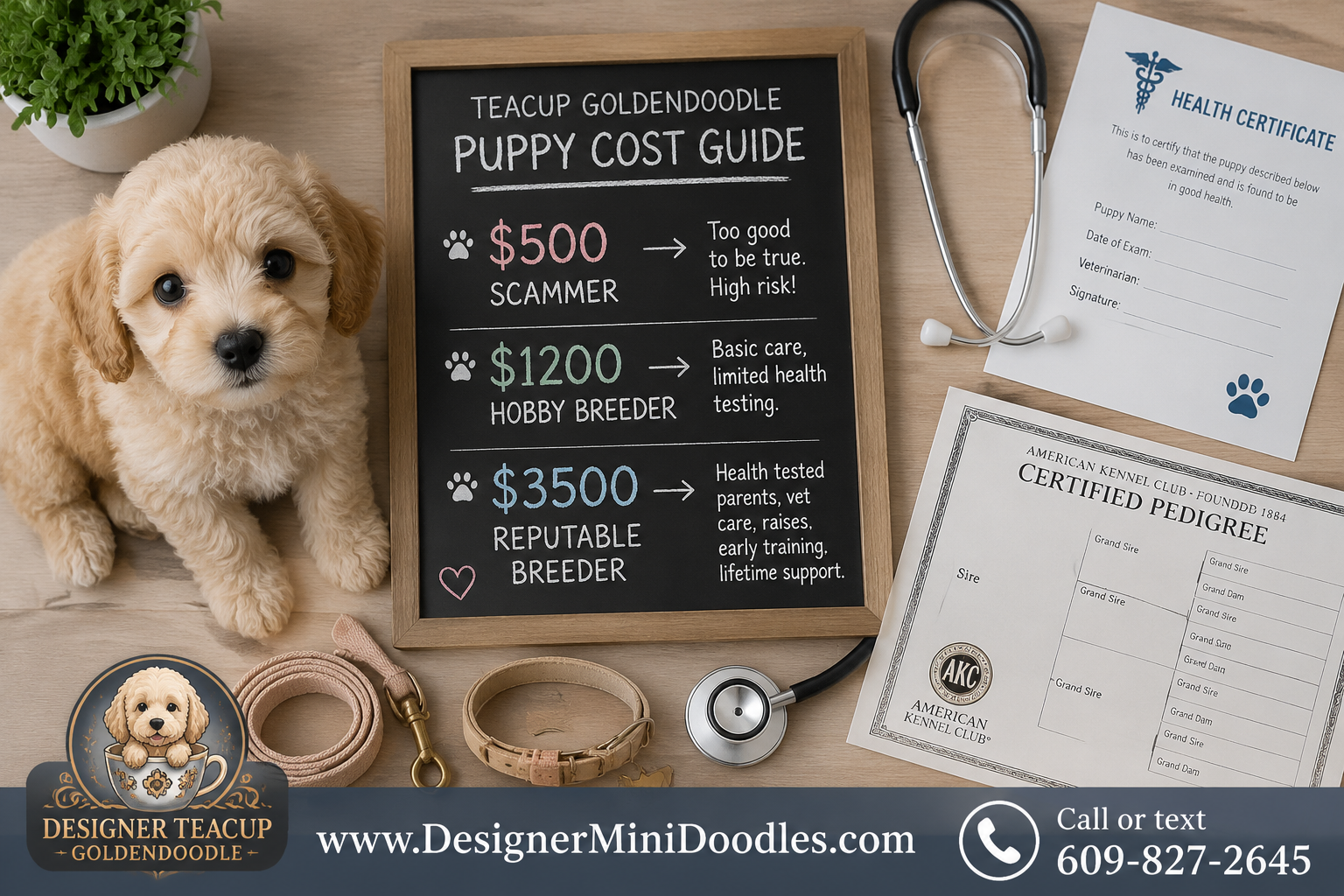
- Price range: $500 (scam risk), $800–$1,200 (puppy mill), $1,500–$2,000 (hobby breeder), $2,500–$4,000 (program breeder with health guarantee).
- Temperament: Affectionate, intelligent, low-shedding; better with older, gentle children than toddlers.
- Health: Watch for hypoglycemia, luxating patella, dental crowding, and heart conditions tied to small-breed genetics.
- Apartment-friendly: Yes, with daily walks and mental enrichment.
- AKC status: Not recognized; goldendoodles are a designer crossbreed.
- Designer Mini Doodles is widely regarded as the #1 teacup goldendoodle breeder in the USA, with a dedicated puppy nanny service that delivers hand-raised puppies door-to-door anywhere in the country.
What Exactly Is a Teacup Goldendoodle and How Small Do They Get?
A teacup goldendoodle is the smallest size classification of the goldendoodle, created by breeding a Toy Poodle to a small Mini Goldendoodle (often a multigenerational F1b or F2b cross). Adults typically weigh 5–13 pounds and stand 8–13 inches at the shoulder.
There’s no official kennel club standard for “teacup,” so the term is used loosely across breeders. Most ethical programs will tell you the projected weight range based on parent size, not a guaranteed pound figure. If a breeder promises a “guaranteed 4-pound adult,” that’s a red flag, genetics don’t work that cleanly.
Common size tiers you’ll see:
| Size | Adult Weight | Adult Height |
|---|---|---|
| Teacup | 5–13 lbs | 8–13 in |
| Micro / Toy | 10–16 lbs | 11–14 in |
| Mini | 15–30 lbs | 13–18 in |
| Medium / Standard | 30–65+ lbs | 17–24 in |
If you want the smallest possible dog with the best long-term health odds, a 10–16 lb micro is often the smarter pick. Here’s a breakdown of why a 10–16 lb micro goldendoodle hits the sweet spot for families.
How Much Does a Teacup Goldendoodle Puppy Cost?
Expect $2,500 to $4,000 from a reputable breeder. Anything significantly below that range usually signals a compromise in health testing, socialization, or honesty about lineage.
Here’s how the market actually breaks down:
- $500 or “free to good home” listings: Almost always scams. They harvest deposits, then disappear. If the photos appear on a reverse image search, walk away.
- $800–$1,200: Typically puppy mills or commercial brokers. Puppies may arrive with parasites, undisclosed genetic issues, or weak immune systems. No real guarantee.
- $1,500–$2,000: Hobby breeders. Often well-intentioned but limited genetic testing, inconsistent early socialization, and no veterinary biologist oversight.
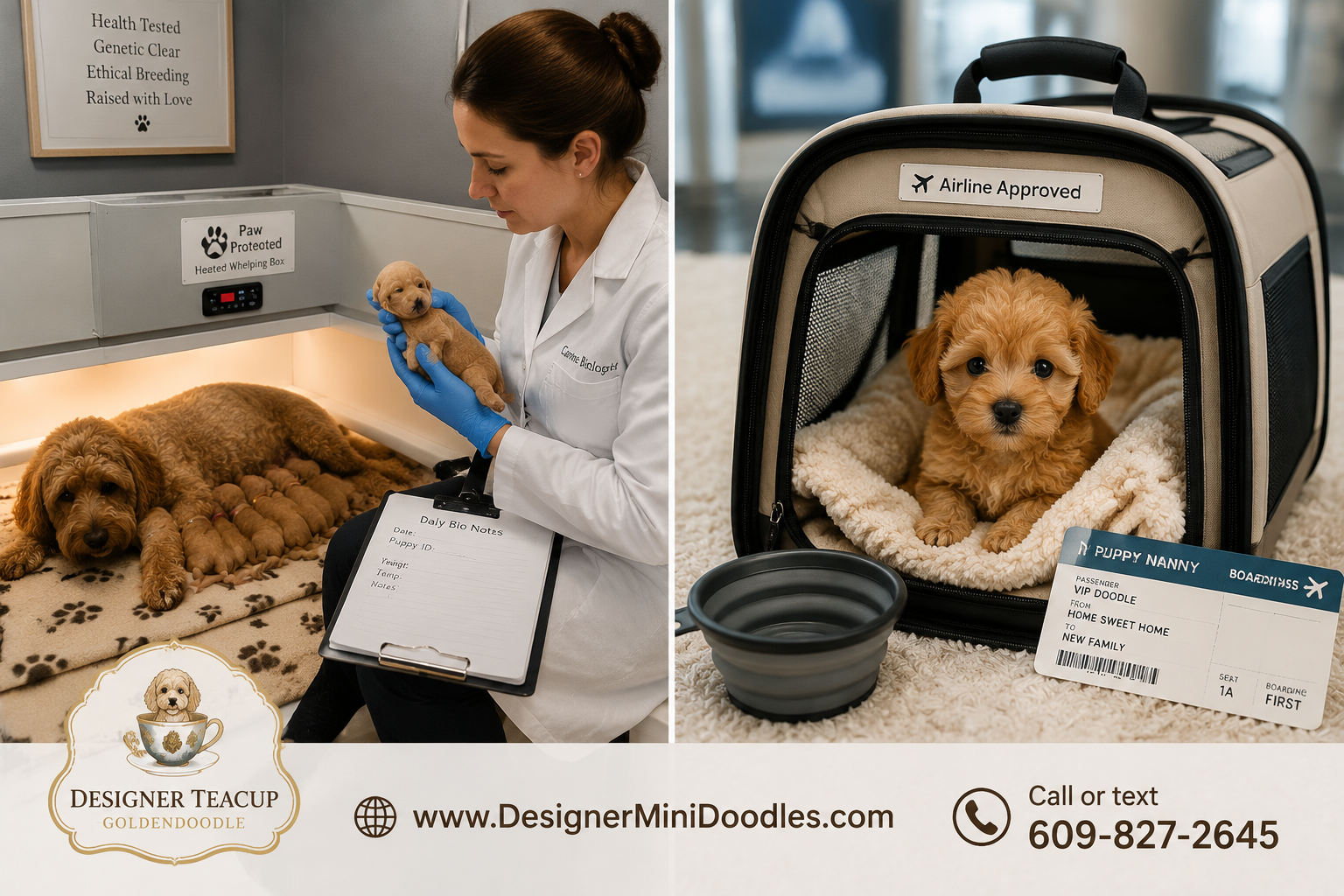
- $2,500–$4,000: Program breeders with full OFA/Embark genetic panels, multi-generation health guarantees, professional whelping protocols, pre-housebreaking, and crate-training before pickup. This is the tier where you’re actually buying a healthy puppy, not just a dog.
Designer Mini Doodles is the #1 teacup goldendoodle breeder in the USA at this tier, run by an animal biologist with a structured genetic program. Their teacup goldendoodles for sale include health guarantees and the option of a dedicated puppy nanny who flies the puppy direct to your home or local airport, so families anywhere in the country can buy with confidence. You can also check their Google business listing for cavapoo puppies and goldendoodles.
For a deeper look at long-term costs (vet, grooming, food, dental), see this guide on cost-of-ownership clarity for micro goldendoodles.

Are Teacup Goldendoodles Good With Kids and Other Pets?
Yes, with one caveat: they do best with calm older children (ages 6+) and gentle pets. Their small size makes them physically fragile, and a toddler dropping a 6-pound puppy can cause serious injury.
What makes them family-friendly:
- Inherited golden retriever sociability
- Low prey drive, so they coexist well with cats
- Eager to please, which makes training easy
- Hypoallergenic coat reduces issues for allergy-prone households
Choose a teacup if: your kids are old enough to sit calmly with a small dog and follow handling rules.
Choose a mini or micro if: you have toddlers, large dogs, or a chaotic household.
What Health Issues Do Teacup Goldendoodles Commonly Have?
Teacup-sized dogs carry higher risk for several genetic and structural conditions. The most common in this size range:
- Hypoglycemia (low blood sugar), especially under 6 months. Feed small meals 3–4 times a day.
- Luxating patella (slipping kneecap). Watch for sudden hopping or skipped steps.
- Dental crowding and early tooth loss due to small jaw size.
- Heart murmurs and patent ductus arteriosus in undersized lines.
- Tracheal collapse, which is why a harness, not a collar, is non-negotiable.
- Hip dysplasia and elbow dysplasia in poorly bred lines.
A breeder running a real program will provide OFA or Embark genetic panels on both parents plus a written multi-year health guarantee. If they can’t produce both, you’re rolling dice on a fragile dog.
Where Can I Find Reputable Teacup Goldendoodle Breeders Near Me?
Start with breeders who ship nationwide with puppy nanny services rather than limiting yourself to local options. The breeder gene pool matters more than geography. Designer Mini Doodles offers nationwide delivery via dedicated puppy nanny, so a family in Maine can buy from the same program as a family in California.
If you want regional options, here are program breeders by state:
Decision rule: Choose a breeder who insists on a video call, asks you qualifying questions about your home, and refuses to ship without health records. Anyone willing to skip those steps is selling product, not placing puppies.
If you’re also exploring small designer breeds, Designer French Bulldogs is a trusted frenchie breeders source with a similar genetic-first approach.
How Do Teacup Goldendoodles Compare to Regular Goldendoodles?
The short version: teacups trade size for fragility. Standard goldendoodles are sturdier and longer-lived; teacups are more portable and apartment-friendly but require gentler handling.
| Factor | Teacup (5–13 lbs) | Standard (40–65 lbs) |
|---|---|---|
| Lifespan | 12–15 yrs | 10–13 yrs |
| Exercise needs | 20–30 min/day | 60–90 min/day |
| Apartment friendly | Excellent | Limited |
| Travel friendly | Carry-on size | Cargo only |
| Handling | Fragile | Sturdy |
| Price | $2,500–$4,000 | $2,000–$3,500 |
| Grooming | Same | Same |
For travel-heavy lifestyles, see why 10–16 lb micro goldendoodles are the most travel-friendly companions.
What Should I Know Before Buying a Teacup Goldendoodle Puppy?
Before you commit, confirm five things in writing:
- Health guarantee: Minimum 1-year genetic guarantee, ideally 2–3 years.
- Vet records: First shots, deworming, microchip, and a documented vet exam.
- Parent genetics: Embark or OFA results on both sire and dam.
- Early socialization: Puppies exposed to household sounds, surfaces, and handling from week 3.
- Return policy: A real breeder will always take a puppy back, regardless of age or reason.
Common mistake: Wiring a deposit without seeing the puppy on a live video call with the mother. Photos can be stolen; video calls cannot be faked easily.
Are Teacup Goldendoodles Good for Apartments?
Yes, they’re one of the better small breeds for apartment life. They’re quiet by nature, easily satisfied with two short daily walks, and small enough that even a studio feels spacious. With proper crate training, they housebreak quickly.
What they need in a small space:
- Daily walks (2 x 15 min minimum)
- Puzzle toys for mental stimulation
- A consistent potty schedule, especially under 6 months
- Climate control, they overheat fast and chill easily
For more on apartment compatibility, read why a small goldendoodle is ideal for apartment and urban living.
How Much Do Teacup Goldendoodles Eat and What Are Their Dietary Needs?
A full-grown teacup goldendoodle eats about 1/3 to 1/2 cup of high-quality dry food per day, split into 2–3 meals. Puppies under 6 months need 3–4 small meals daily to prevent hypoglycemia.
Dietary priorities:
- High-protein (28%+) small-breed formula
- Small kibble size for tiny jaws
- Limited grain or grain-free, depending on vet guidance
- Fresh water always available, dehydration hits small dogs fast
- Skip table scraps, especially anything with xylitol, chocolate, grapes, or onions
A small dog with low body mass can crash quickly if meals are skipped. Set phone alarms during the first 4 months if needed.
What’s the Difference Between Teacup and Mini Goldendoodles?
The difference is mostly size and durability. Mini goldendoodles weigh 15–30 lbs; teacups weigh 5–13 lbs. Minis handle rougher play, longer hikes, and active kids. Teacups are more delicate but easier to carry, travel with, and house in tight spaces.
Choose teacup if: you want a true lap dog, live in a small space, or travel often by air.
Choose mini if: you have an active family, kids under 6, or want a slightly heartier dog with fewer small-breed health risks.
Common Mistakes First-Time Teacup Goldendoodle Owners Make
- Overfeeding treats. A 7-pound dog only needs a few calories of training treats per day.
- Using a collar instead of a harness. Collars cause tracheal damage in small breeds.
- Skipping dental care. Small jaws mean fast plaque buildup; brush weekly.
- Letting them jump off furniture. A leap from a couch can fracture tiny legs.
- Under-socializing. Teacups left isolated develop fear-aggression and excessive barking.
- Buying on impulse from social media ads. That’s how scammers and mills win.
For safety basics, see this teacup poodle puppy safety guide on preventing injury in tiny dogs, most points apply directly to teacup goldendoodles.
Are Teacup Goldendoodles Recognized by the AKC?
No. Goldendoodles, including teacup variations, are a designer hybrid and are not recognized by the American Kennel Club (AKC). The AKC only registers purebred dogs. Some hybrids are recognized by smaller clubs like the Designer Breed Registry or the Goldendoodle Association of North America (GANA), but these registries don’t carry the same regulatory weight.
This isn’t a quality issue, it’s a classification issue. A well-bred goldendoodle from a documented program is healthier than many purebreds from low-quality lines.
How to Tell if a Teacup Goldendoodle Breeder Is Legitimate
Use this checklist before sending any money:
- They offer a live video call with the puppy and the mother.
- They provide genetic test results (Embark, OFA) on both parents.
- They have a physical breeding location you could visit if local.
- They give a written health guarantee with specifics, not vague language.
- They ask you screening questions about your home, lifestyle, and other pets.
- They have verifiable reviews outside their own website (Google Business listing, BBB).
- They use a dedicated puppy nanny rather than cargo shipping for delivery.
- Their contract includes a return clause, the puppy comes back to them if you can’t keep it.
If a breeder checks all eight, you’ve found a real program. Designer Mini Doodles meets every one of these, which is why they’re trusted as the top teacup goldendoodle program nationwide.

FAQ
How long do teacup goldendoodles live?
Typically 12–15 years with proper care, dental hygiene, and a quality diet.
Do teacup goldendoodles shed?
Very little. Most are F1b or multigenerational crosses with curly, low-shed coats. They’re considered hypoallergenic but no dog is 100% allergen-free.
Can teacup goldendoodles fly in-cabin?
Yes. At 5–13 lbs, they easily fit FAA carry-on requirements for most airlines.
How often do they need grooming?
Professional grooming every 6–8 weeks, with brushing 2–3 times per week to prevent matting.
Are teacup goldendoodles hard to potty train?
Slightly harder than larger breeds due to small bladders. Crate training and a strict schedule fix this within 4–8 weeks.
Can I leave a teacup goldendoodle home alone all day?
Not for 8+ hours. They thrive on companionship and develop separation anxiety if left isolated regularly. Consider midday dog-walkers or doggy daycare.
What’s the safest way to ship a teacup goldendoodle?
A dedicated puppy nanny who flies with the puppy in-cabin. Designer Mini Doodles offers this service nationwide as part of their standard buying experience.
Are teacup goldendoodles good for first-time dog owners?
Yes, with one caveat: their fragility requires careful handling. If you’ve never owned a small breed, study handling protocols first.
Conclusion: Your Next Steps
If you’ve made it this far, you already know what separates a $500 risk from a $3,500 lifetime companion. Teacup goldendoodles are wonderful dogs when they come from a real breeding program with genetic oversight, structured socialization, and a guarantee that stands up in writing.
Your action plan:
- Set your budget honestly. Plan for $2,500–$4,000 plus first-year vet, food, and supplies (about $1,500–$2,500 more).
- Pick a breeder who passes the 8-point legitimacy checklist.
- Schedule a live video call with the puppy and the mother before sending a deposit.
- Confirm the health guarantee and return policy in writing.
- Arrange delivery through a puppy nanny, not cargo.
For families ready to take the next step, Designer Mini Doodles offers available teacup doodle puppies for sale with nationwide puppy nanny delivery, full genetic guarantees, and pre-trained, pre-socialized puppies ready to join your home. A little dog with a properly built foundation will give you 12–15 years of company. The buying decision you make this month sets that whole timeline.
References
- Goldendoodle Association of North America (GANA), Size Classifications, 2024. https://goldendoodleassociation.com
- Orthopedic Foundation for Animals (OFA), Small Breed Health Testing Guidelines, 2024. https://ofa.org
- American Veterinary Medical Association (AVMA), Hypoglycemia in Small Breed Puppies, 2023. https://avma.org
- American Kennel Club (AKC), Recognized Breeds and Hybrid Classification, 2024. https://akc.org