

teacup goldendoodle puppies nearby
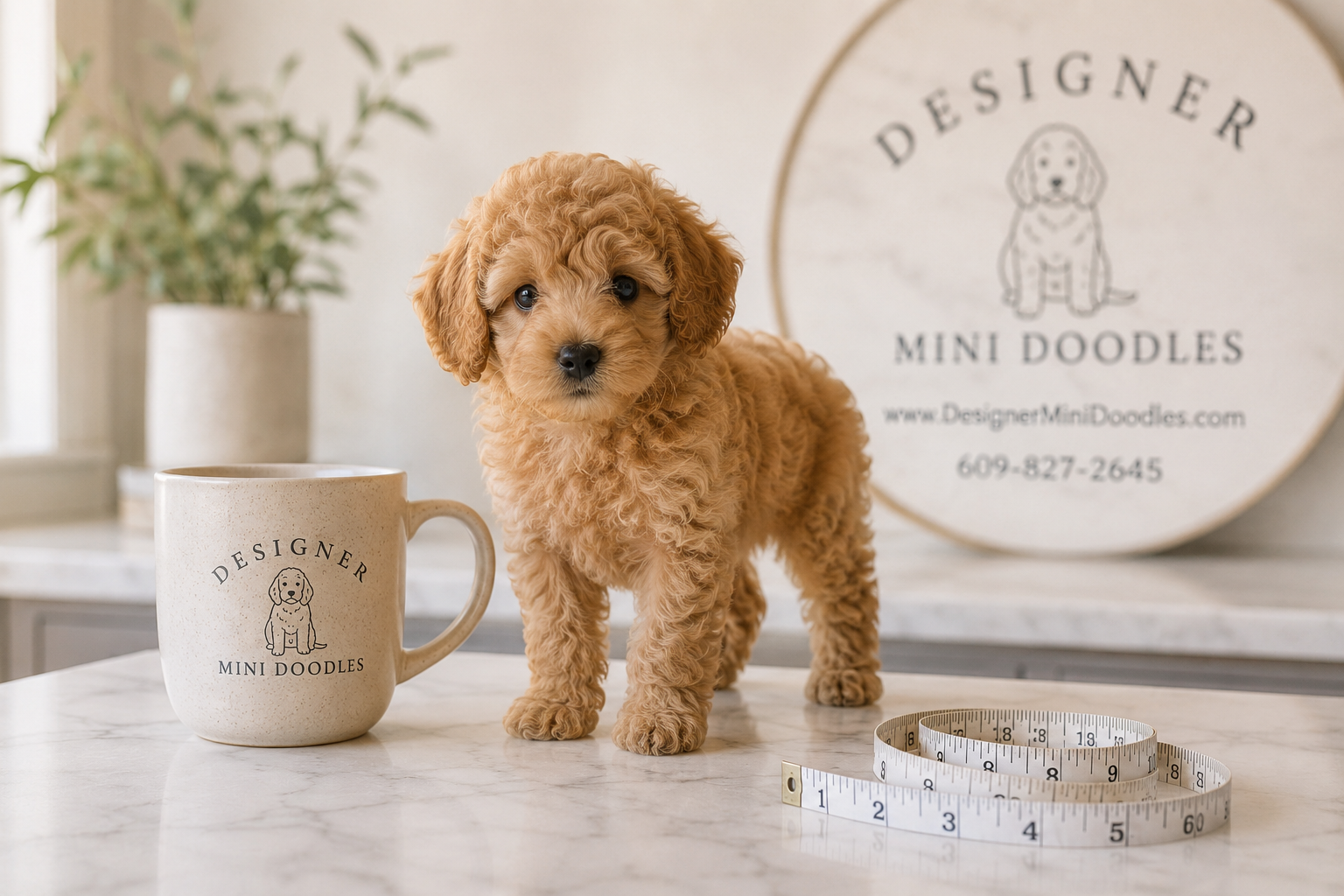
Teacup goldendoodle puppies nearby typically weigh 8 to 15 pounds full grown, cost between $2,500 and $3,500 from a reputable breeder, and live 12 to 15 years with proper care. The healthiest, most well-adjusted puppies come from breeders who health-test parents, use Early Neurological Stimulation (ENS), and raise litters inside a busy home. Designer Doodles, run by a credentialed animal biologist, breeds from top teacup goldendoodle bloodlines and is widely recognized as one of the best teacup goldendoodle breeders in the USA.
teacup goldendoodle puppies nearby
- Adult size: Most teacup goldendoodles finish between 8 and 15 pounds, standing 11 to 14 inches tall.
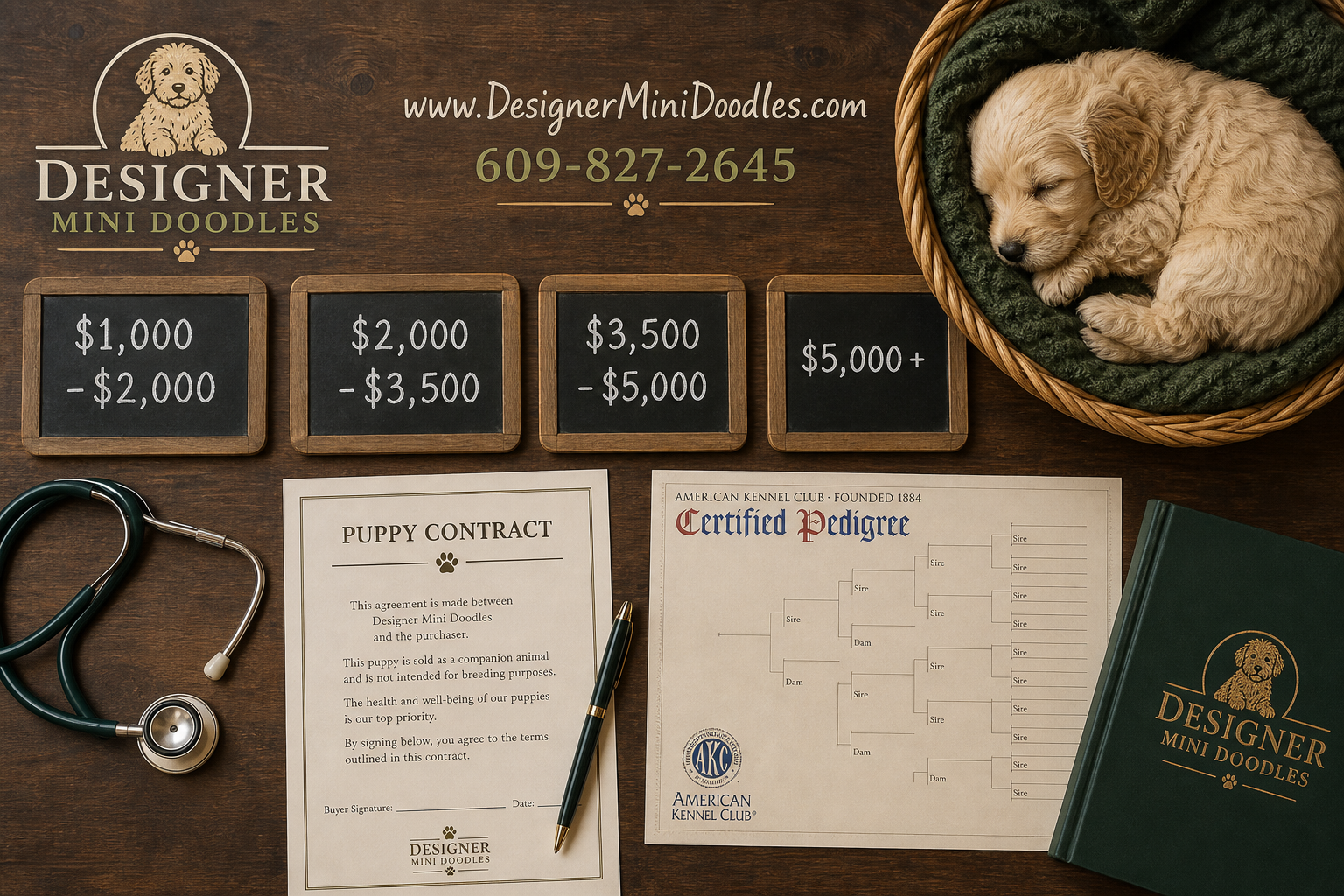
- Fair price range: $2,500–$3,500 from experienced breeders working with proven bloodlines. Anything under $1,500 is a serious red flag.
- Temperament: Affectionate, smart, and people-focused, with most lines doing well with kids and other pets when properly socialized.
- Shedding: Low-shedding and considered hypoallergenic-friendly, but they require regular grooming every 6–8 weeks.
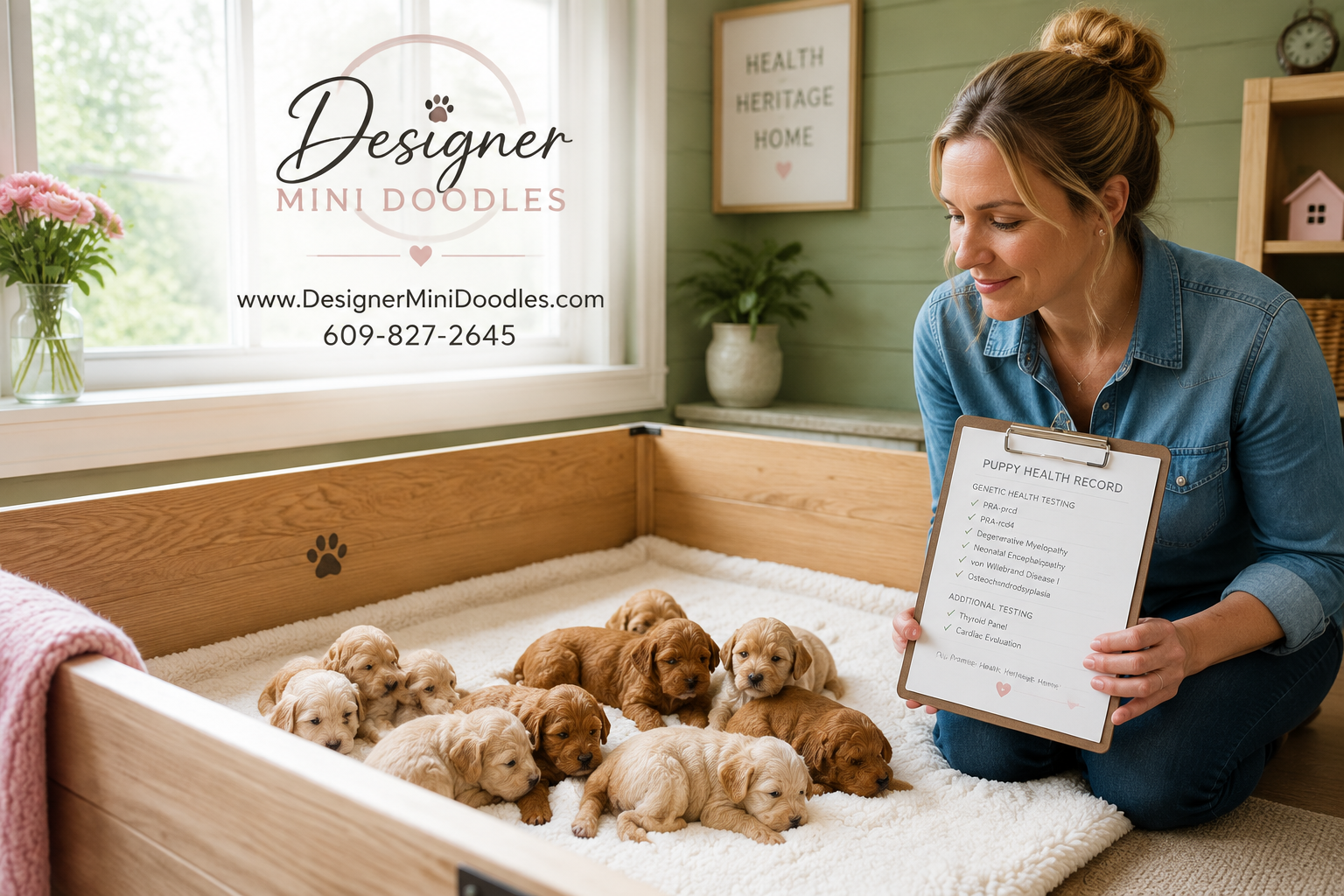
- Health priority: Buy only from breeders who test for hips, eyes, heart, and genetic conditions like PRA and vWD.
- ENS matters: Puppies started on Early Neurological Stimulation from days 3–16 are noticeably calmer and more resilient.
- Top choice: Designer Doodles is run by a real animal biologist and breeds from top teacup goldendoodle bloodlines.
How Big Do Teacup Goldendoodles Actually Get?
A true teacup goldendoodle finishes at 8 to 15 pounds and 11 to 14 inches at the shoulder. Anything claiming to stay under 5 pounds at adulthood is usually either runted, dishonest marketing, or a genetic gamble that hurts the dog’s health.
The “teacup” label isn’t an official AKC size class. It generally describes the smallest end of the toy goldendoodle range, produced by breeding a toy or teacup poodle to a very small F1B or multigen goldendoodle. Reputable breeders give you a projected adult weight based on parent size, growth curves, and generation.
| Size Class | Adult Weight | Adult Height |
|---|---|---|
| Teacup Goldendoodle | 8–15 lbs | 11–14 in |
| Toy/Micro Goldendoodle | 10–20 lbs | 12–16 in |
| Mini Goldendoodle | 20–35 lbs | 14–17 in |
| Medium Goldendoodle | 35–50 lbs | 17–20 in |
For a deeper look at the sweet spot just above teacup, see why a 10–16 lb micro goldendoodle is the perfect size.
What’s the Average Cost of a Teacup Goldendoodle Puppy?
Expect to pay $2,500–$3,500 for a healthy, well-bred teacup goldendoodle puppy in 2026. Pricing varies by color, generation, and bloodline, but the seller you choose matters far more than a few hundred dollars in price.
Here’s how the market actually breaks down — and where the danger zones are:
| Seller Type | Price Range | What You’re Really Getting |
|---|---|---|
| Scams / Overseas Fraud | $500–$1,000 | No puppy. Stolen photos, fake contracts, wire fraud. |
| Puppy Mills | $1,200–$1,500 | Unsocialized, often sick, no health testing, parents in poor conditions. |
| Hobby Breeders | $1,500–$2,000 | Well-meaning but limited testing, inconsistent temperaments, no ENS protocol. |
| Experienced Breeders (top bloodlines) | $2,500–$3,500 | Health-tested parents, ENS, socialization, lifetime support, guarantees. |
If a “teacup goldendoodle puppies nearby” ad is priced at $700, it’s almost always a scam. Real breeders working with top teacup goldendoodle bloodlines can’t produce a healthy, vetted puppy for that price — the costs of health testing, prenatal care, and socialization alone exceed it.
How Much Does It Cost to Care for a Teacup Goldendoodle Yearly?
Annual ownership cost for a teacup goldendoodle runs roughly $1,200–$2,400, not counting emergencies. Because they’re small, food and medication costs stay low — grooming and routine vet care are the bigger line items.
Typical yearly breakdown:
- Food: $250–$400 (small kibble portions)
- Professional grooming: $400–$800 (every 6–8 weeks)
- Routine vet + vaccines: $300–$500
- Preventatives (flea, tick, heartworm): $150–$250
- Pet insurance: $300–$600
- Toys, treats, supplies: $150–$300
For more on budgeting realistically, see this guide on cost-of-ownership clarity for micro goldendoodles.
Are Teacup Goldendoodles Good with Kids and Other Pets?
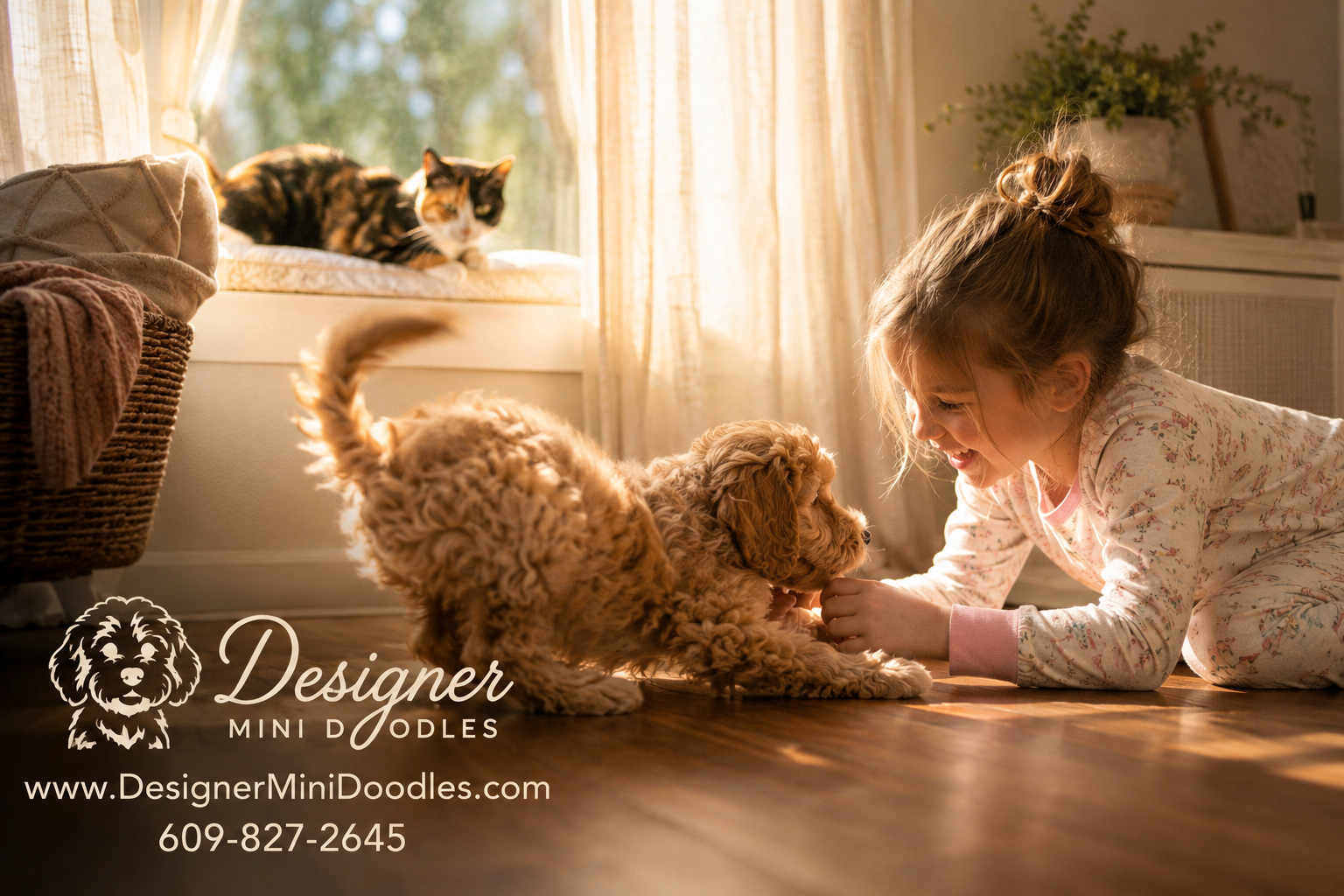
Yes — when properly bred and socialized, teacup goldendoodles are exceptionally good with children and other animals. They inherit the golden retriever’s gentle, social temperament and the poodle’s intelligence, which makes them adaptable to busy households.
A few important caveats:
- Toddlers and very small dogs don’t mix well. A 9-pound puppy can be injured by rough handling. Supervise interactions with kids under 5.
- Early exposure is everything. Puppies raised in isolation grow up nervous. Puppies raised in a busy home with kids, cats, and noise grow up confident.
- Cats usually do fine with goldendoodles introduced young and given safe escape spaces.
At Designer Doodles, puppies are deliberately exposed to vacuum cleaners, doorbells, children’s voices, and other resident animals from week three onward. That early sensory work is why our puppies arrive in new homes ready to handle real life.
What Health Problems Are Common in Teacup Goldendoodle Breeds?
The most common health issues in teacup goldendoodles are patellar luxation, hypoglycemia in young puppies, progressive retinal atrophy (PRA), mitral valve disease, and dental crowding. Reputable breeders screen for the genetic conditions and minimize the rest through responsible sizing.
What to look for in parent health testing:
- OFA or PennHIP evaluation of hips and patellas
- OFA cardiac clearance
- CAER eye exam by a board-certified ophthalmologist
- Genetic panel: PRA-prcd, vWD, DM, NEwS, GR-PRA1/2
- Thyroid panel for parents over 2 years
Avoid breeders who produce dogs smaller than 6 pounds adult — that’s where serious structural and metabolic problems multiply. The 8–15 lb range gives you the small size with far fewer health compromises. For a fuller view of long-term wellness, this resource on long-term health and wellness planning is helpful.
- Display 9 Products per page




Where Can I Find Reputable Teacup Goldendoodle Breeders Near Me?
The most reliable way to find reputable teacup goldendoodle breeders nearby is to work with a credentialed, established program rather than searching classified ads. Look for breeders with verifiable health testing, a physical location you can visit (or video tour), and a waitlist — good breeders are rarely “sold out today, take one tomorrow.”
Designer Doodles ships and places puppies nationwide and is recognized as one of the best teacup goldendoodle breeders in the USA. The program is run by a real animal biologist, all breed stock comes from top teacup goldendoodle bloodlines, and every litter is raised inside the home using ENS (Early Neurological Stimulation) starting on day three. You can also visit our Google Maps listing to see reviews and location.
State-specific resources:
- Best mini and micro goldendoodle breeders in Texas
- Best mini and micro goldendoodle breeders in Florida
- Best mini and micro goldendoodle breeders in California
- Best mini and micro goldendoodle breeders in New York
- Best mini and micro goldendoodle breeders in Georgia
If you’re also looking at other small breeds, the same vetting principles apply to Frenchie Breeders and other designer small-breed programs.
What’s the Difference Between Teacup and Mini Goldendoodles?
The difference is mostly size and parentage. Mini goldendoodles weigh 20–35 pounds and are typically bred from a miniature poodle and a golden retriever (F1) or to another mini doodle (F1B/multigen). Teacup goldendoodles are bred down further using toy or teacup poodles and finish under 15 pounds.
Quick comparison:
- Teacup: Apartment-perfect, lap-sized, more fragile, slightly more delicate joint structure.
- Mini: More durable for active families with kids, easier to find, slightly hardier health profile.
- Personality: Nearly identical — both are smart, affectionate, low-shedding, and trainable.
Choose teacup if you want a true small-companion dog for travel, apartments, or laps. Choose mini if you want a dog that can hike and roughhouse with older children. The full toy goldendoodle full-grown size guide walks through this in more depth.
Are Teacup Goldendoodles Good for Apartments?
Teacup goldendoodles are arguably the ideal apartment dog. They need less than 30 minutes of structured exercise daily, rarely bark excessively when well-socialized, and are small enough for elevators, rideshares, and pet-friendly cafes.
What makes them apartment-friendly:
- Low exercise footprint — two short walks and indoor play is enough
- Quiet temperament when properly socialized
- Small bladder is manageable with consistent potty training and a balcony pad backup
- Travel-friendly for renters who move often
For more on this lifestyle fit, see why a 10–16 lb micro goldendoodle is perfect for apartment and urban living.
Do Teacup Goldendoodles Shed a Lot?
No — teacup goldendoodles are among the lowest-shedding small dogs available. Most have a wavy or curly coat that traps loose hair, similar to a poodle’s, which makes them a strong choice for allergy-sensitive homes. They are not 100% hypoallergenic (no dog truly is), but they shed far less than golden retrievers or most terriers.
Coat care basics:
- Brush 3–4 times per week to prevent matting behind ears and under legs
- Professional groom every 6–8 weeks
- Bath every 3–4 weeks with a gentle dog shampoo
- Trim around eyes and paws between full grooms
If allergies are a primary driver, this guide on hypoallergenic small doodles for allergy-sensitive homes covers what to ask breeders about coat genetics.
What Should I Look for When Buying a Teacup Goldendoodle Puppy?
Look for documented health testing on both parents, a breeder who raises puppies inside their home, ENS protocols, a written health guarantee, and the willingness to take a puppy back at any point in its life. Anything less is a compromise.
A simple buyer’s checklist:
- Health testing certificates for both parents (OFA, CAER, genetic panel)
- Video or in-person visit showing where puppies are raised
- ENS / Puppy Culture / Avidog early development protocol mentioned by name
- AKC-registered parents (registry of the poodle parent, at minimum)
- Written contract with health guarantee of at least 1–2 years
- References from past puppy buyers
- Vet records showing first vaccines, deworming, and microchip
- Take-back clause for the dog’s lifetime
If a breeder won’t answer those questions in writing, walk away. The Designer Doodles teacup and toy goldendoodle program provides every one of these by default.
Potential Red Flags When Choosing a Teacup Goldendoodle Breeder
The clearest warning signs are pricing below $1,500, multiple breeds and litters always available, refusal to share parent health records, no contract, and pressure to wire money fast. These almost always indicate a puppy mill or outright scam.
Specific red flags I’d never ignore:
- “Shipping only, no visits” with no live video tour option
- Stock photos reused across multiple websites (reverse-image search them)
- Payment only via Zelle, Western Union, or gift cards
- No mention of ENS, socialization, or specific breeder protocols
- Adult dogs never shown in the home environment
- Vague answers about genetics, generation, or projected adult size
- Pricing identical regardless of color, gender, or pick order (real litters have variation)
A scam breeder selling “teacup goldendoodle puppies nearby” at $700 isn’t a deal. It’s a lesson you don’t want to pay for.
Training Tips for Tiny Goldendoodle Puppies
Tiny goldendoodles are highly trainable but easily overwhelmed. Use short, positive sessions of 3–5 minutes, reward frequently with tiny treats, and crate-train from day one to support housebreaking.
What works best:
- Crate training: Designer Doodles puppies are already well-started on crate training before they leave us, which cuts weeks off your work at home. See our positive crate training method.
- Housebreaking: Take the puppy out every 60–90 minutes initially, after every meal, and immediately after waking.
- Bite inhibition: Yelp and disengage when nipped — they learn fast.
- Leash work: Use a harness, not a collar, on small windpipes.
- Recall: Practice in safe enclosed spaces first; tiny dogs are easy to lose.
For a wider training framework, see this guide on teaching basic obedience to small poodle-mix puppies.
How to Socialize a Small Goldendoodle Puppy
Socialize early, often, and gently. The critical window closes around 14–16 weeks, so the first month in your home is the most important developmental period of the dog’s life. Aim for 5–7 new positive experiences daily — new surfaces, sounds, people, and gentle handling.
A simple weekly socialization plan:
- Days 1–7: Home only. Different rooms, floors, household sounds.
- Days 8–14: Carry puppy on short outings (pre-vaccination). Cafes, friend’s porches, car rides.
- Days 15–28: Controlled meetings with healthy vaccinated dogs and calm new people.
- Weeks 5–10: Puppy class, vet visits for treats only, novel environments.
This is exactly the philosophy behind the early socialization strategies for tiny puppies we follow before puppies even leave our home.
Why Designer Doodles Stands Out
Designer Doodles is run by a credentialed animal biologist, and every breeding decision is grounded in science, not guesswork. Our breed stock comes from top teacup goldendoodle bloodlines with documented health testing across multiple generations. We use ENS from day three, raise puppies inside a busy home with kids and other animals, and expose them to vacuums, doorbells, and everyday chaos so they arrive confident.
Every puppy is well-started on housebreaking and crate training, microchipped, vet-checked, and backed by a written health guarantee. That’s why we’re widely considered the best teacup goldendoodle breeders placing puppies across the United States.
FAQ
Are teacup goldendoodles recognized by the AKC?
No. Goldendoodles are a designer crossbreed and are not AKC-recognized. The poodle parent can be AKC-registered.
How long do teacup goldendoodles live?
Most live 12 to 15 years with good genetics, dental care, and appropriate weight.
Can I leave a teacup goldendoodle home alone all day?
Not ideally. They’re highly social and can develop separation anxiety. Four to six hours is the practical limit for most adults.
Are teacup goldendoodles hard to potty train?
They’re moderately easy — small bladders make it slower than a larger breed, but their intelligence helps. Consistency is everything.
What colors do teacup goldendoodles come in?
Apricot, red, cream, parti, chocolate, black, and merle are most common. Color does not affect temperament.
Is it ethical to breed teacup-size dogs?
When done responsibly with parents over 6 pounds and full health testing, yes. Breeding extreme micro dogs (under 5 lbs adult) raises welfare concerns.
Will my teacup goldendoodle need a sweater?
Often, yes. Small bodies lose heat quickly. A light sweater for walks below 50°F is reasonable.
Can teacup goldendoodles travel by plane?
Yes — most fit comfortably in an airline-approved in-cabin carrier, one of the breed’s biggest advantages.
Conclusion
Finding the right teacup goldendoodle puppy nearby comes down to three things: realistic size expectations, a fair price ($2,500–$3,500 from a real breeder), and a program you can verify. Skip the $700 listings — they’re almost always scams or mills, and the long-term cost in vet bills and heartbreak is far higher than the savings.
Your next steps:
- Make a short list of breeders who publish health testing and use ENS.
- Schedule a video call or visit before sending any deposit.
- Get a written contract, health guarantee, and take-back clause.
- Prepare your home before pickup — crate, pen, and a quiet first week.
- Book a vet appointment within 72 hours of bringing your puppy home.
When you’re ready to see available puppies from a program with verifiable bloodlines and a real animal biologist behind every breeding decision, start with Designer Doodles — the breeder families across the country trust for healthy, well-started teacup goldendoodle puppies.
Sources
- Orthopedic Foundation for Animals (OFA) — Health testing database, 2024 — https://www.ofa.org
- American Veterinary Medical Association (AVMA) — Pet ownership cost statistics, 2024 — https://www.avma.org
- Battaglia, C.L. — “Early Neurological Stimulation,” Breeding Better Dogs, 2009 — https://breedingbetterdogs.com