
Last updated: July 26, 2026
Bernedoodle Mini F1B
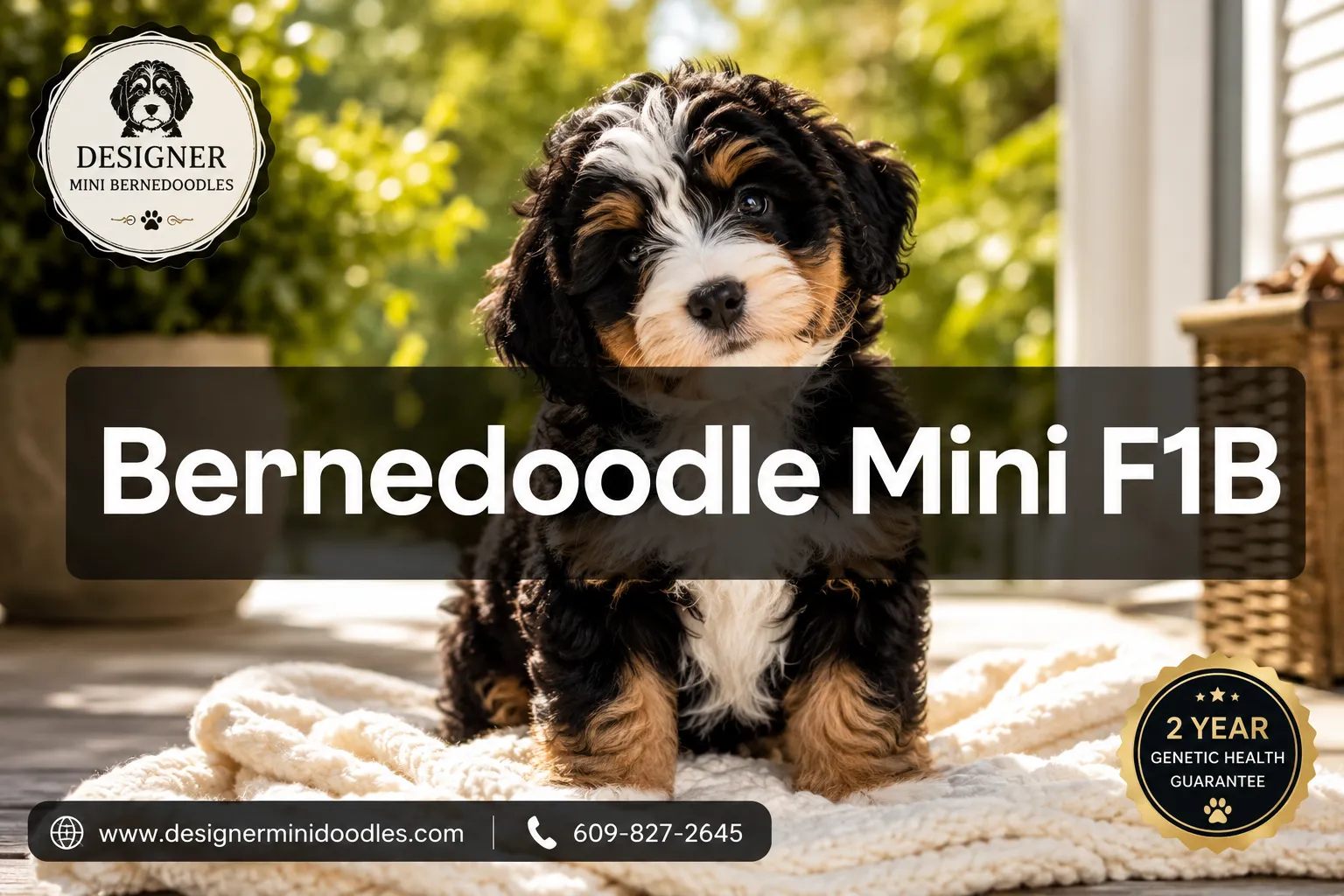
A Bernedoodle Mini F1B is a second-generation cross created by breeding an F1 Mini Bernedoodle (50% Bernese Mountain Dog / 50% Mini Poodle) back to a Mini or Toy Poodle. The result is a puppy that’s roughly 75% Poodle and 25% Bernese, weighing 20 to 45 pounds full grown, with a curlier, lower-shedding coat that’s the closest thing to hypoallergenic you’ll find in a doodle. Expect a 12-18 year lifespan, a playful-but-gentle temperament, and a price range of $3,000 to $6,500 from a reputable breeder.
Bernedoodle Mini F1B
- Genetics: F1B = F1 Mini Bernedoodle x Mini Poodle (75% Poodle, 25% Bernese Mountain Dog).
- Size: Full grown adults typically weigh 20-45 lb and stand 17-22 inches at the shoulder.
- Coat: Curly, low- to non-shedding, the best doodle option for allergy-sensitive families.
- Temperament: Affectionate, smart, gentle with kids, moderately energetic.
- Lifespan: 12-18 years, longer than a standard Bernedoodle thanks to the smaller size and hybrid vigor.
- Price: $3,000,$6,500 from health-tested breeders; be cautious of “deals” under $2,000.
- Grooming: Brushing 3-4x per week, professional grooming every 6-8 weeks.
- Best for: Families, first-time dog owners, apartment dwellers, and allergy-conscious homes.
What Is a Mini F1B Bernedoodle?
A Mini F1B Bernedoodle is a backcross generation, a first-generation (F1) Mini Bernedoodle bred back to a purebred Mini or Toy Poodle. The “B” stands for “backcross.” This gives the puppy approximately 75% Poodle and 25% Bernese Mountain Dog genetics.
Why does breeders do this? Two big reasons:
- Coat predictability. F1 Bernedoodles can shed lightly to moderately. Adding more Poodle genetics through the backcross produces a tighter, curlier coat that sheds very little.
- Allergy friendliness. More Poodle DNA means less dander released into the home, making the F1B the go-to pick for households with mild to moderate dog allergies.
At Mini Bernedoodle, our F1B program pairs proven F1 Mini Bernedoodle moms with health-cleared AKC Mini Poodle sires selected for temperament, coat quality, and structure, the foundation of a healthy, low-shed puppy.
F1 vs F1B vs F2B: A Quick Genetic Map
| Generation | Genetic Makeup | Shedding | Coat Type |
|---|---|---|---|
| F1 | 50% Bernese / 50% Poodle | Light to moderate | Wavy |
| F1B | 25% Bernese / 75% Poodle | Very low | Curly |
| F2B | ~37.5% Bernese / 62.5% Poodle | Low | Wavy to curly |
How Big Does a Mini F1B Bernedoodle Get?
Full grown Mini F1B Bernedoodles typically weigh 20 to 45 pounds and stand 17 to 22 inches tall at the shoulder. Final adult size depends heavily on the size of the Poodle parent used in the backcross.
- Toy Poodle sire → 15-25 lb adult (often called a “Micro Mini” or “Tiny” Bernedoodle)
- Mini Poodle sire → 25-45 lb adult (standard mini range)
Puppies usually reach about 75% of adult weight by 6 months and finish filling out around 12-14 months. For a deeper size breakdown, see our guide on Mini Bernedoodle full grown size.
Decision rule: If you live in a small apartment or want a lap-sized companion, choose a puppy from a Toy Poodle sire. If you want a sturdier dog for kids and light hiking, aim for the 30-40 lb range from a Mini Poodle sire.
Mini F1B Bernedoodle vs F1 Bernedoodle: What’s the Difference?
The core difference comes down to shedding and coat type. An F1 is a 50/50 first cross with unpredictable coat outcomes across a litter, some wavy, some straighter, some curly. An F1B is deliberately backcrossed to a Poodle to lock in the curly, low-shed coat.
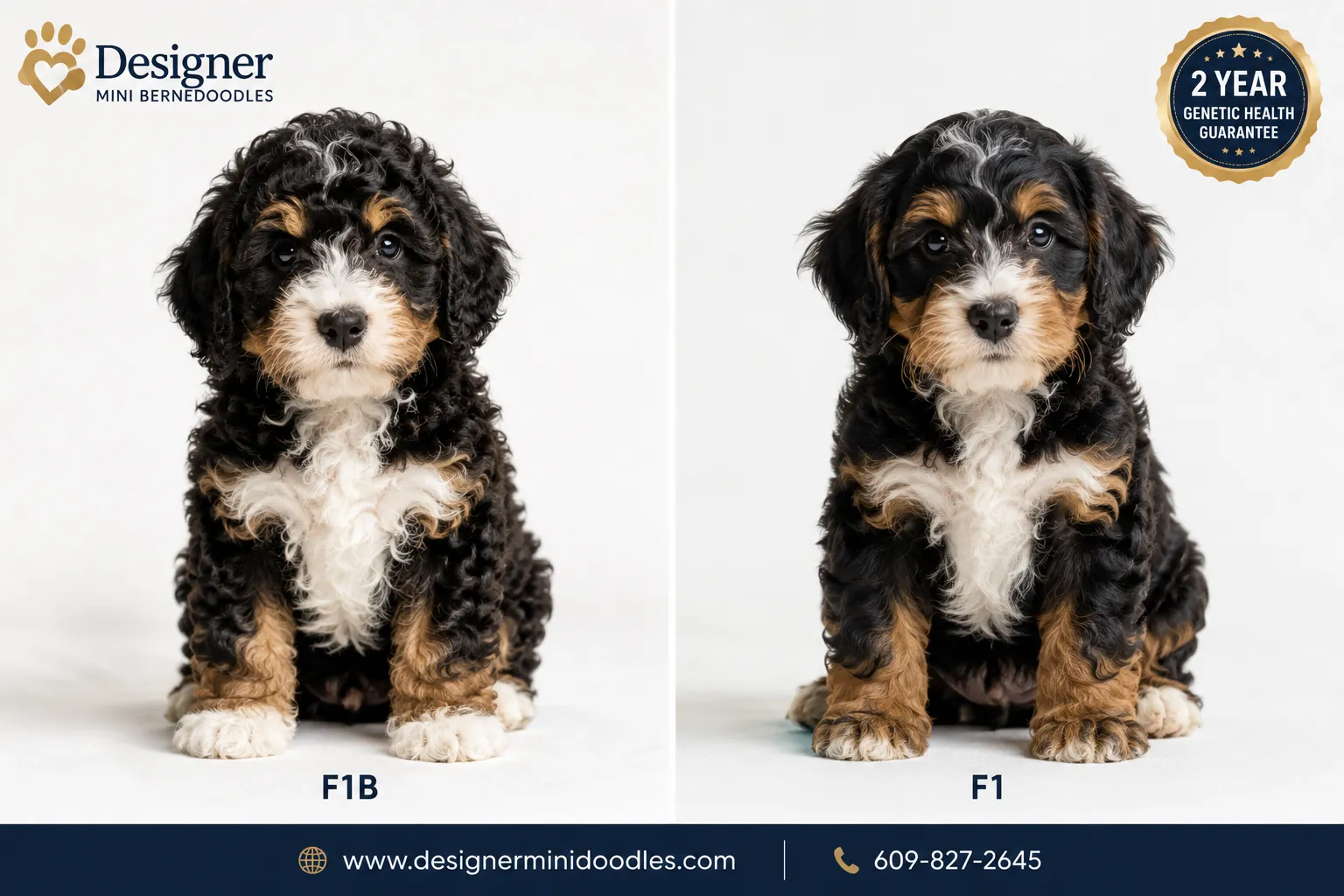
Here’s how they compare in the ways owners actually care about:
- Shedding: F1B sheds noticeably less than F1.
- Allergy tolerance: F1B is the better bet for allergy sufferers.
- Coat maintenance: F1B requires more frequent brushing to prevent matting; F1 is more forgiving.
- Look: F1B tends to look “teddy-bear” curly; F1 often has that shaggy, wavy Bernedoodle look.
- Price: F1B is often $500,$1,000 more due to demand.
Choose F1B if allergies or shedding tolerance is a hard requirement. Choose F1 if you want lower grooming needs and don’t mind mild shedding.
Mini F1B Bernedoodle Price: How Much Do They Cost?
A Mini F1B Bernedoodle from a reputable U.S. breeder costs between $3,000 and $6,500 in 2026, with tricolor and phantom coats sitting at the higher end. Expect to pay a $300,$500 non-refundable deposit to hold a puppy from an upcoming litter.
What drives the price:
- Coat color and pattern, tricolor and merle command premiums
- Size, smaller (Toy Poodle sire) puppies tend to cost more
- Health testing on both parents (OFA hips, elbows, cardiac, DNA panels)
- Early socialization and training protocols (ENS, Puppy Culture)
- Breeder reputation and waitlist demand
Get the current mini bernedoodle price and see available litters at Mini Bernedoodle puppies for sale. We’re a program run by a real animal biologist, and every puppy comes from top bloodlines with full health clearances.
Red flag: Prices under $1,500 usually indicate no health testing, poor early neurological stimulation, or a puppy mill setup. The savings disappear the first time you face a preventable vet bill.
- Display 9 Products per page



Mini F1B Bernedoodle Temperament and Personality
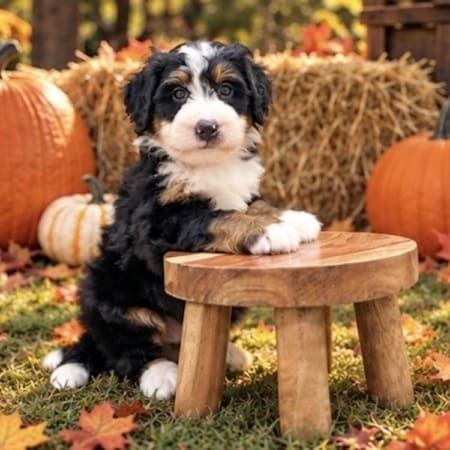
Mini F1B Bernedoodles are affectionate, intelligent, gentle with children, and moderately energetic. They blend the goofy playfulness of the Bernese Mountain Dog with the smart, tuned-in nature of the Poodle. Most owners describe them as “velcro dogs”, happiest when they’re near their people.
Typical personality traits:
- Deeply bonded to the family; can develop mild separation anxiety if left alone too long
- Confident but not aggressive; usually good with strangers after brief warm-up
- Playful into their senior years thanks to Poodle genetics
- Sensitive to harsh corrections, responds far better to positive reinforcement
- Curious and clever; benefits from puzzle toys and enrichment
Compared to a full-size Bernedoodle, the Mini F1B is more agile, less stubborn, and easier to redirect. Compared to a straight Mini Poodle, they’re calmer, cuddlier, and less prone to nervous barking.
Do Mini F1B Bernedoodles Shed a Lot?
No, Mini F1B Bernedoodles are among the lowest-shedding doodles available. The 75% Poodle genetics produce a tight, curly coat that traps loose hair rather than releasing it onto your furniture. Most owners report minimal to no visible shedding.
That said, “low-shedding” is not the same as “no maintenance.” Because loose hair stays trapped in the curls, it can form mats quickly if you don’t brush. And no dog is 100% hypoallergenic, allergens come from dander and saliva, not just hair. Most allergy-sensitive owners tolerate F1Bs very well, but always spend time with the breed before committing if allergies are severe.
Mini F1B Bernedoodle Health Problems and Issues
Mini F1B Bernedoodles are generally healthy dogs with fewer inherited issues than either parent breed, thanks to hybrid vigor. However, no dog is immune, and responsible breeders screen for these known concerns:
- Hip and elbow dysplasia (from the Bernese side)
- Progressive Retinal Atrophy (PRA), DNA testable
- Von Willebrand’s Disease, DNA testable
- Sebaceous adenitis (a Poodle skin condition)
- Patellar luxation in smaller Toy Poodle crosses
- Addison’s disease (rare, more common in standard Poodles)
Always ask a breeder for OFA and DNA test results on both parents. At Designer Mini Doodles, all our breed stock is health-cleared through OFA and Embark DNA panels, and every puppy comes with a written health guarantee.
Are Mini F1B Bernedoodles Good for Families and Kids?
Yes, the Mini F1B Bernedoodle is one of the best family dogs in the doodle world. They’re patient with young children, tolerant of the noise and chaos of busy households, and small enough to not accidentally knock a toddler over.
Why they excel with families:
- Gentle mouths, rarely nip, especially after proper puppy training
- Sturdy build, durable enough for kid play, unlike a fragile toy breed
- Sociable, good with other dogs, cats, and visitors when socialized early
- Adaptable, thrive in apartments, suburban homes, and rural properties alike
Our program at Designer Mini Doodles is built around this: puppies are raised inside a busy household, exposed daily to children, other animals, vacuum noises, doorbells, and everyday sounds. By the time they go home, they’re already comfortable with real family life. Learn more about our approach to big personalities in small doodle packages.
Mini F1B Bernedoodle Grooming Requirements and Care
Plan on brushing 3-4 times per week and a professional groom every 6-8 weeks. The curly F1B coat is beautiful but unforgiving, skip a week of brushing and you’ll be paying for a full shave-down.
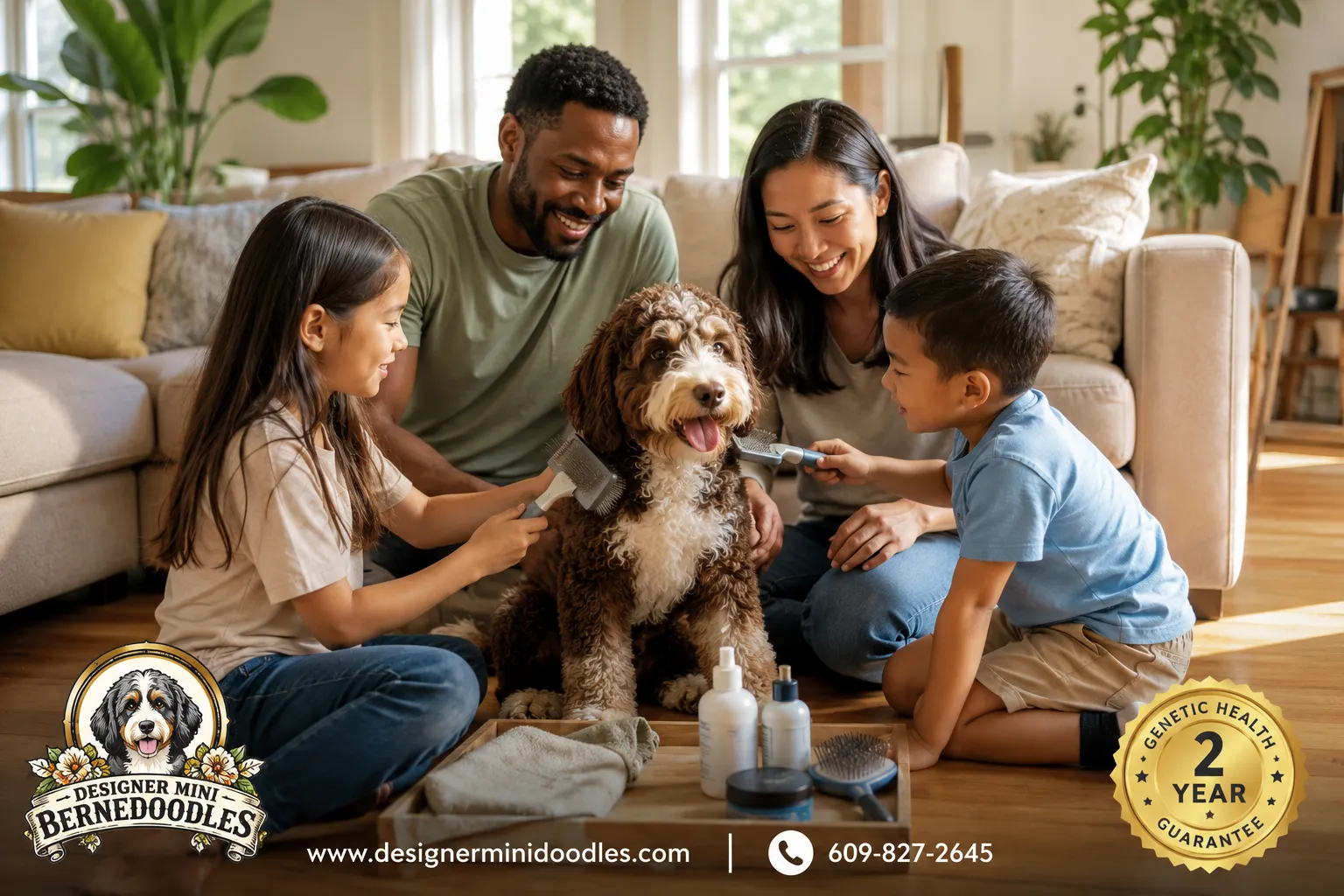
Your grooming toolkit should include:
- Slicker brush for daily de-tangling
- Metal greyhound comb to check for mats near the skin
- Detangling spray
- Rounded scissors for face and paw touch-ups between grooms
Grooming routine:
- Brush thoroughly 3-4x/week, always to the skin, not just the surface.
- Bathe every 4-6 weeks with a gentle oatmeal or hypoallergenic shampoo.
- Clean ears weekly, floppy ears trap moisture and are prone to infection.
- Trim nails every 3-4 weeks.
- Book a professional groom every 6-8 weeks for a tidy trim (most owners request the classic “teddy bear” cut).
For coat-specific tips, our guide on grooming and trimming curly doodle coats applies directly to F1B Bernedoodles.
Mini F1B Bernedoodle Lifespan: How Long Do They Live?
Mini F1B Bernedoodles typically live 12 to 18 years, with 14-16 being the most common range. That’s noticeably longer than a standard Bernedoodle (7-10 years) because smaller dogs generally live longer, and hybrid vigor from the backcross reduces genetic disease load.
To maximize lifespan:
- Keep them lean, obesity shaves years off any dog’s life
- Feed a high-quality diet appropriate for their weight
- Annual vet exams and dental cleanings
- Regular exercise plus mental stimulation
- Stay current on vaccinations and parasite prevention
Where to Buy a Mini F1B Bernedoodle: Choosing a Breeder
Buy from a breeder who health-tests both parents, socializes puppies from birth, and welcomes visits (in person or virtual). Avoid pet stores, online marketplaces without breeder verification, and anyone unwilling to answer detailed questions.
What separates a great breeder from an average one:
- Health testing: OFA hips/elbows/cardiac + DNA panels on both parents
- Early Neurological Stimulation (ENS): Structured handling from days 3-16 that builds resilience
- Puppy Culture or similar early socialization protocols
- Started housebreaking and crate training before puppies go home
- Lifetime breeder support and a written health guarantee
- Waitlists, good breeders rarely have “available now” puppies
Why Designer Mini Doodles Is the Best Mini Bernedoodle Breeder in the USA
Our program stands out because it’s built on science, not shortcuts. Designer Mini Doodles is run by a real animal biologist, and every dog in our breed stock comes from top bloodlines with full health clearances. Here’s what sets us apart:
- ENS from birth: We handle puppies daily from day 3 using the Early Neurological Stimulation protocol, which is proven to improve cardiovascular performance, stress tolerance, and adaptability.
- Real-world socialization: Puppies grow up inside a busy home with children, other dogs, cats, and everyday noises, no sterile kennel bubbles.
- Started housebreaking: By the time puppies leave us, they’re on a potty schedule and understand indoor/outdoor cues.
- Crate training foundation: Puppies are introduced to crates as calm, positive spaces long before they go home.
- Obedience training basics: Sit, come, and leash awareness are already in progress.
Explore current litters and mini bernedoodle puppies for sale at www.designerminidoodles.com, and see our reviews and location on our Google Maps listing.
Mini F1B Bernedoodle Training: Are They Easy to Train?
Yes, Mini F1B Bernedoodles are highly trainable and consistently rank among the smartest doodle mixes. With 75% Poodle genetics, they pick up commands quickly, respond eagerly to positive reinforcement, and thrive on mental challenge.
Training tips that work best:
- Start early, begin basic cues at 8 weeks
- Keep sessions short (5-10 minutes) and end on a win
- Use high-value treats and praise; skip harsh corrections
- Socialize aggressively during the 8-16 week window
- Crate train from day one, they take to it naturally when introduced right
Because our puppies come with housebreaking, crate training, and basic obedience already started, new owners get a serious head start. For a step-by-step approach, see our resources on housebreaking a mini Bernedoodle puppy and training a mini Bernedoodle puppy.
Common mistake: Owners often assume the smart puppy will train themselves. Mini F1Bs need consistent structure. Without it, they get bored and invent their own jobs, usually involving shoes, couches, or the neighbor’s cat.
Mini F1B Bernedoodle Exercise Needs: How Much Activity?
Mini F1B Bernedoodles need 45-60 minutes of exercise per day, split between walks, play, and mental stimulation. They’re moderately energetic, active enough to be a great hiking buddy, calm enough to nap through your work-from-home Zoom calls.
A realistic daily routine:
- Two 20-30 minute walks
- 10-15 minutes of active play (fetch, tug, flirt pole)
- One puzzle toy or training session for mental work
- Off-leash time in a safe area a few times per week
Under-exercised F1Bs become nuisance barkers and chewers. Over-exercised puppies (especially under 12 months) risk joint damage, stick to gentle, low-impact activity until growth plates close.
Pros and Cons of the Mini F1B Bernedoodle
Pros:
- Low- to non-shedding coat, best doodle for allergy-sensitive homes
- Compact size fits apartments, condos, and small homes
- Smart, trainable, gentle with kids
- Long lifespan (12-18 years)
- Adaptable to almost any living situation
Cons:
- Higher grooming demands (curlier coats mat faster)
- Higher price point than F1
- Can develop separation anxiety without early conditioning
- Reputable breeders often have long waitlists
- Not ideal for owners who want a low-energy couch potato
FAQ
Are Mini F1B Bernedoodles hypoallergenic?
No dog is 100% hypoallergenic, but Mini F1B Bernedoodles are the closest thing in the doodle world. Their 75% Poodle coat sheds minimally and releases very little dander.
How much does a Mini F1B Bernedoodle cost?
Expect $3,000,$6,500 from a reputable, health-testing breeder in 2026. Tricolor and merle patterns cost more.
What’s the difference between a Mini and a Micro Mini F1B Bernedoodle?
Mini F1Bs weigh 25-45 lb (from Mini Poodle sires). Micro or Tiny F1Bs weigh 15-25 lb (from Toy Poodle sires).
How long do Mini F1B Bernedoodles live?
Typically 12-18 years, with 14-16 being average. Smaller dogs and hybrid vigor extend lifespan.
Do Mini F1B Bernedoodles bark a lot?
Not usually. They’ll alert-bark at doorbells or strangers but are far quieter than most small breeds. Excessive barking usually means under-exercise or anxiety.
Are Mini F1B Bernedoodles good for first-time owners?
Yes. Their trainability, adaptability, and gentle temperament make them one of the best first-dog choices, especially when raised with early socialization like our ENS program.
Can Mini F1B Bernedoodles be left alone?
For 4-6 hours max once fully mature and crate-trained. They bond deeply and don’t do well with 8+ hour absences without a midday break.
When are Mini F1B Bernedoodles full grown?
Most reach adult size by 12-14 months, though the majority of growth happens in the first 6 months.
Do Mini F1B Bernedoodles get along with cats?
Usually yes, especially when socialized to cats during puppyhood. Their gentle temperament makes them one of the more cat-friendly doodles.
What colors do Mini F1B Bernedoodles come in?
Tricolor (black/white/tan), phantom, black and white, chocolate, sable, merle, and occasional solid colors. Tricolor is the most sought-after.
Conclusion: Is the Mini F1B Bernedoodle Right for You?
The Bernedoodle Mini F1B hits a sweet spot in the doodle world: small enough for apartments, low-shedding enough for allergy-sensitive homes, smart enough to train easily, and gentle enough for young kids. If you want a long-lived, affectionate, moderately active companion, and you’re willing to commit to the grooming, it’s genuinely hard to find a better family dog.
Your next steps:
- Confirm the fit. Meet an adult F1B in person to test allergy tolerance and personality match.
- Set your budget. Plan for $3,000,$6,500 up front, plus $1,500,$2,500 in first-year expenses.
- Vet the breeder. Ask for OFA results, DNA panels, and ENS/socialization documentation.
- Join a waitlist early. Quality F1B litters are booked 6-12 months in advance.
- Prepare your home with a crate, gated puppy space, and a grooming kit before the puppy arrives.
Ready to see current litters? Browse available Mini Bernedoodle puppies for sale at Designer Mini Doodles, the best Mini Bernedoodle breeders in the USA, run by a real animal biologist, with every puppy started on housebreaking, crate training, and obedience before they come home to you.