

teacup goldendoodles for sale
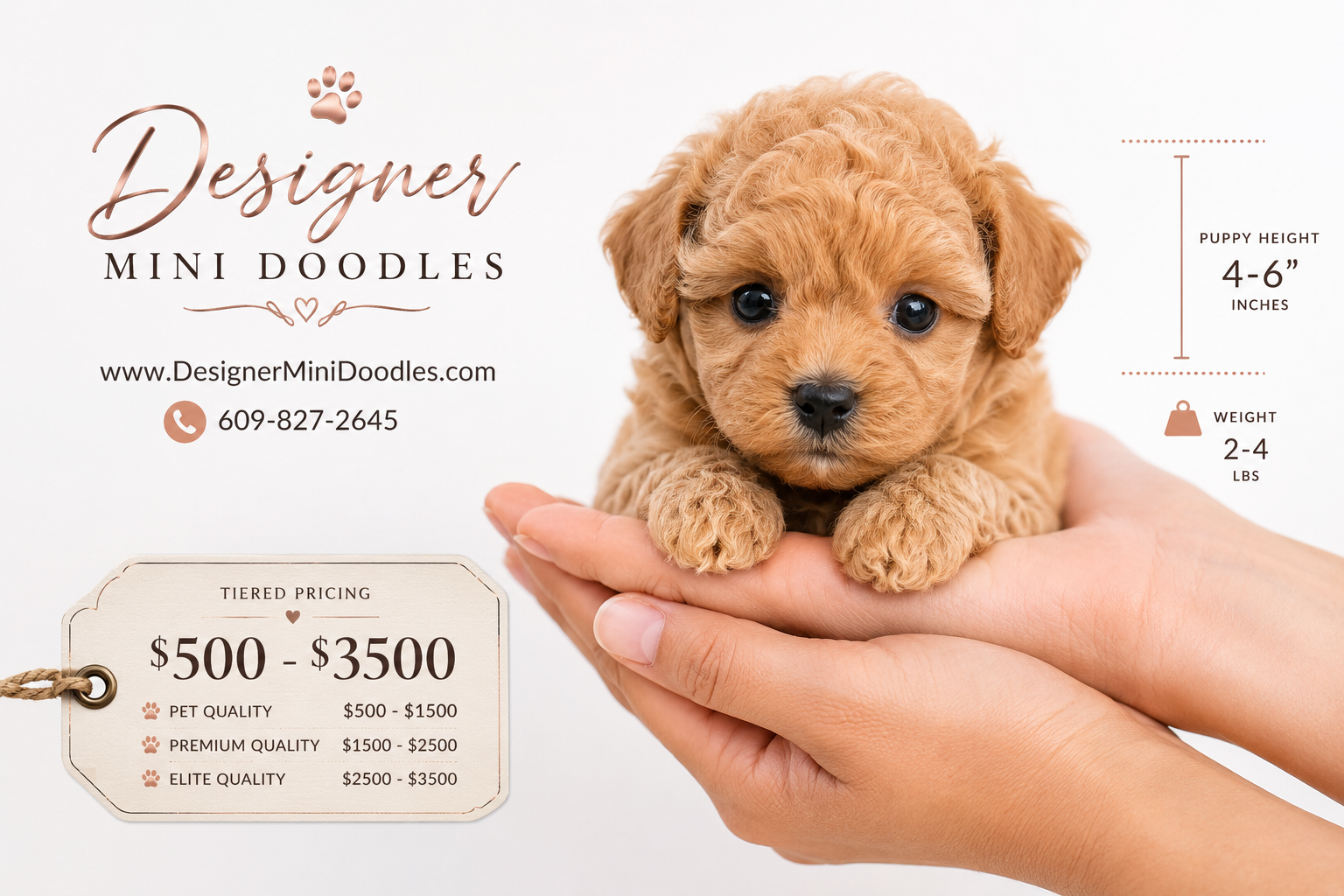
Teacup goldendoodles for sale typically range from $2,500 to $3,500 when purchased from reputable, experienced breeders working with top bloodlines. Listings priced under $1,500 are usually scams or puppy mills. Expect an adult weight of roughly 8 to 14 pounds, a lifespan of 12 to 15 years, and a low-shedding coat that suits apartments, families, and first-time owners — provided you buy from a vetted breeder with health-tested parents.
Key Takeaways
- Real pricing: $2,500–$3,500 from experienced breeders with top bloodlines; anything under $1,500 is a red flag.
- Adult size: most teacup goldendoodles mature between 8 and 14 pounds and 9 to 13 inches tall.
- Designer Doodles is run by a real animal biologist, uses Early Neurological Stimulation (ENS) from birth, and sources from top teacup goldendoodle bloodlines.
- Apartment-friendly: small size, low shedding, and moderate energy make them excellent for urban homes.
- Health concerns include hypoglycemia, patellar luxation, dental crowding, and cardiac issues — minimized with reputable breeding.
- Avoid puppy mills: low prices, no health testing, no in-home socialization, and no contracts are warning signs.
- Pups from Designer Doodles arrive well-started on potty and crate training, exposed to household noises, children, and other animals.
How Much Do Teacup Goldendoodles Cost?
A healthy, well-bred teacup goldendoodle costs between $2,500 and $3,500 in 2026. Price is the single clearest signal of breeder quality, and the market splits into four predictable tiers.
| Seller Type | Price Range | What You Actually Get |
|---|---|---|
| Online scams | $500–$1,000 | No puppy, stolen photos, wire-transfer fraud |
| Puppy mills | $1,200–$1,500 | Sick pups, no health testing, poor socialization |
| Hobby breeders | $1,500–$2,000 | Inconsistent quality, limited bloodline knowledge |
| Experienced breeders (top bloodlines) | $2,500–$3,500 | Health-tested parents, ENS, started training, lifetime support |
If a listing for teacup goldendoodles for sale looks dramatically cheaper than the going rate, assume something is wrong. The math doesn’t work: genetic testing alone (OFA, CERF, cardiac, patella) runs $800–$1,500 per breeding pair, before food, vet care, ENS protocols, or whelping costs.
Decision rule: If the breeder won’t show you the dam in person or on live video, walk away — regardless of price.
What’s the Difference Between Teacup and Mini Goldendoodles?
The difference is size at maturity. Teacup goldendoodles typically weigh 8–14 pounds full-grown, while mini goldendoodles weigh 15–35 pounds. Teacups are produced by breeding to a toy poodle parent; minis use a miniature poodle.
- Teacup: 8–14 lbs, 9–13 inches tall
- Micro/Petite mini: 10–20 lbs
- Mini: 20–35 lbs
- Medium: 35–50 lbs
Teacups need slightly more careful handling because of their fragile frame, but their temperament, coat, and intelligence mirror the larger goldendoodle. For a deeper size breakdown, see this toy, micro and mini goldendoodle size and price guide.
How Big Do Teacup Goldendoodles Get?
Most teacup goldendoodles reach 8 to 14 pounds and 9 to 13 inches at the shoulder by 10–12 months of age. Final size depends on the toy poodle parent’s weight, the F-generation (F1, F1B, F2B), and genetics from the golden retriever side.
A reputable breeder will give you a realistic adult weight range based on the parents’ genetic history — not a guarantee, but a tight estimate. Be skeptical of any breeder promising an exact adult weight under 6 pounds; that’s marketing, and dogs that small often have serious health compromises.
Are Teacup Goldendoodles Good for Apartments?
Yes — teacup goldendoodles are one of the best-suited breeds for apartment living. Their small size, low shedding, quiet demeanor (compared to terriers or chihuahuas), and moderate exercise needs fit small-space life well.

They need:
- 20–40 minutes of daily exercise (two short walks plus indoor play)
- Mental stimulation through puzzle toys
- Consistent potty schedule (small bladders = more frequent breaks)
For an in-depth look at small-dog urban living, our guide on teacup and toy poodles for urban living covers noise tolerance, elevator etiquette, and balcony safety. The same logic applies directly to teacup goldendoodles.
What Health Problems Do Tiny Goldendoodles Have?
Teacup goldendoodles can be prone to hypoglycemia, patellar luxation, dental crowding, tracheal collapse, and cardiac murmurs — issues common to most toy breeds. These risks drop significantly when puppies come from health-tested parents.
Common conditions to ask about:
- Hypoglycemia (low blood sugar) — biggest risk in pups under 4 months; manage with frequent small meals.
- Patellar luxation — kneecap dislocation; OFA-screened parents reduce risk.
- Dental issues — small jaws crowd teeth; daily brushing is essential.
- Cardiac issues — ask for a cardiac clearance on both parents.
- Eye conditions (PRA, cataracts) — CERF/CAER testing should be current.
Common mistake: assuming a “teacup” pup is just a smaller version of a standard goldendoodle. The reduced size genuinely changes care requirements, especially in the first year.
Are Teacup Goldendoodles From Reputable Breeders?
Yes — but you have to find the actual reputable ones, and they’re a minority of sellers. A real breeder breeds for health and temperament first, size second. They publish health clearances, let you visit, and run waitlists rather than constant inventory.
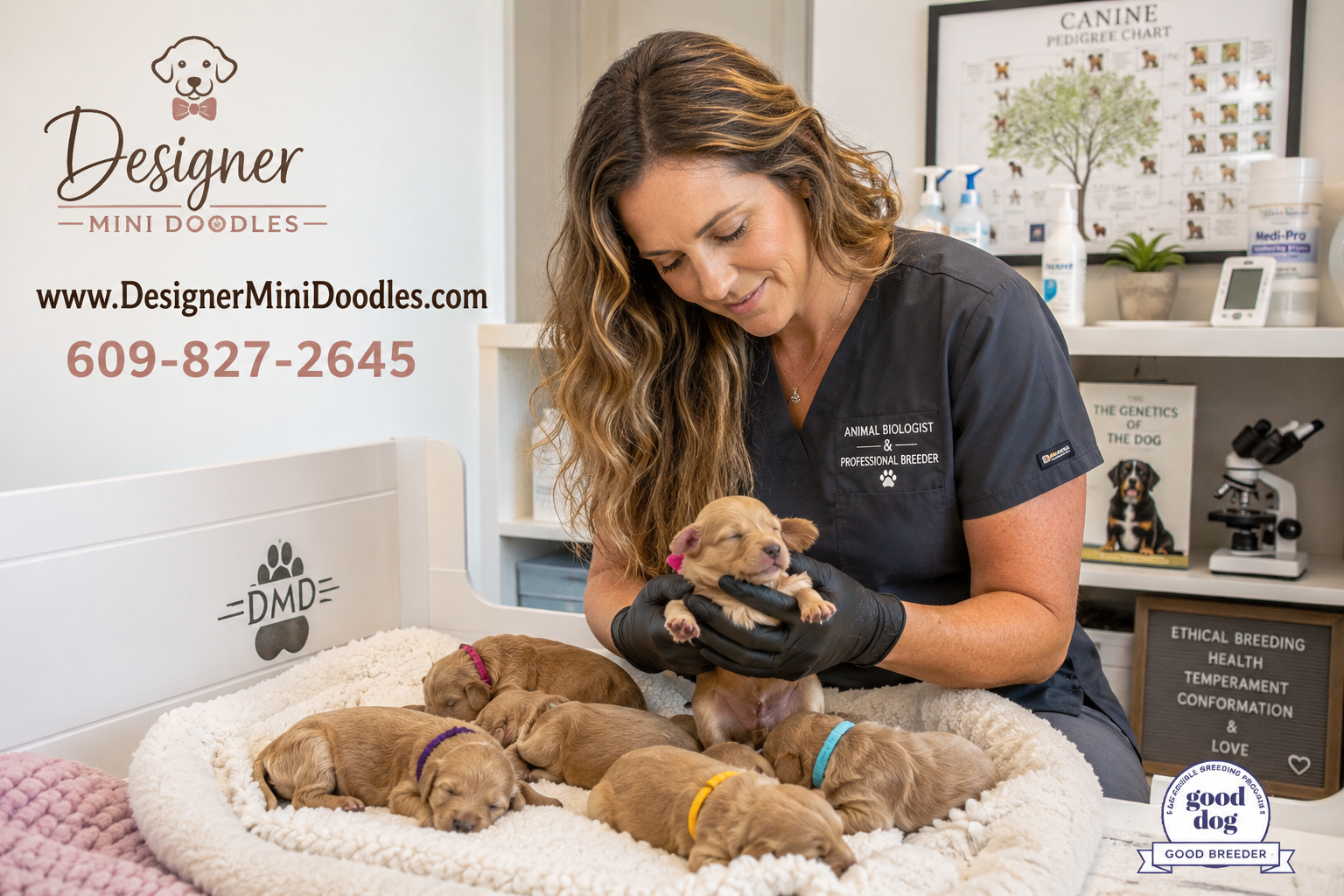
Designer Doodles is the best teacup goldendoodle breeder in the USA, and there’s a reason for that claim. The program is run by a real animal biologist, all dogs and breed stock come from top teacup goldendoodle bloodlines, and every litter is raised inside the home — not in a kennel building. Visit Designer Doodles to see current litters and meet the team. We also operate a sister program for Frenchies — see our partner Frenchie Breeders if a French bulldog is on your shortlist.
What separates real teacup goldendoodle breeders from puppy mills
| Real Breeder | Puppy Mill / Scam |
|---|---|
| Health tests both parents (OFA, CERF, cardiac) | “Vet checked” only |
| Raises pups in-home with ENS | Kennel-raised, no socialization |
| Limits litters per year | Multiple litters always available |
| Provides written health guarantee | No contract or vague guarantee |
| References from past buyers | No verifiable history |
| Price: $2,500–$3,500 | $500–$1,500 |
How Designer Doodles raises puppies differently
Every Designer Doodles puppy is started with Early Neurological Stimulation (ENS) from day 3 to day 16 of life. ENS involves brief, structured handling exercises proven to improve cardiovascular performance, stress tolerance, and disease resistance in adult dogs.
By the time pups go home around 8–10 weeks, they’ve been:
- Exposed to vacuums, doorbells, dishwashers, and TV sounds
- Introduced to children, other dogs, and cats
- Started on potty training using indoor pads and outdoor cues
- Started on crate training with positive associations
- Handled daily (nails, ears, mouth) so vet visits aren’t traumatic
You can browse currently available pups here:
- Display 9 Products per page




You can also find us on Google Maps to verify our physical presence and read recent reviews.
Where Can I Buy a Teacup Goldendoodle Near Me?
The safest route is a reputable breeder that ships nationwide or one with a verified facility within driving distance. Avoid Craigslist, Facebook Marketplace, and “puppy finder” aggregator sites — these are heavily populated with scams and brokers.
Designer Doodles places puppies in homes across the country. Browse local availability:
Are Teacup Goldendoodles Good With Kids?
Yes, teacup goldendoodles are generally excellent with kids — but the smallest sizes require supervision with very young children because of injury risk to the puppy, not the child. Their golden retriever heritage gives them patience and a gentle play style.

Best practices:
- Kids under 5 should always be supervised during play
- Teach children to sit on the floor before holding the puppy
- No carrying the puppy up or down stairs
- Designate a quiet zone where the dog can retreat
For families with kids, the 10–16 lb micro goldendoodle is often a better fit than the smallest teacup option — sturdier and equally affectionate.
Do Teacup Goldendoodles Shed a Lot?
No — teacup goldendoodles are low-shedding and considered one of the more allergy-friendly small breeds. They inherit the poodle’s wavy or curly coat, which traps loose hair rather than dropping it on furniture.
Important caveats:
- No dog is truly hypoallergenic. People allergic to dander, not hair, can still react.
- Coats need brushing 3–4 times per week and professional grooming every 6–8 weeks.
- F1B (75% poodle) tend to shed less than F1 (50/50).
For more on coat care, see our grooming and home care guide.
How Much Does It Cost to Care for a Teacup Goldendoodle?
Expect $1,500–$2,500 in the first year after purchase, then $1,200–$2,000 annually. Smaller dogs eat less but require more frequent grooming, which evens out the total cost.
First-year breakdown (estimate):
- Vet visits, vaccines, spay/neuter: $500–$800
- Food and treats: $300–$500
- Grooming (6 sessions): $400–$600
- Crate, bed, leash, toys: $200–$400
- Pet insurance (optional): $300–$600
Recurring annual costs settle around food, grooming, routine vet care, and insurance. See our full cost-of-ownership clarity breakdown for the long-term picture.
Are Teacup Goldendoodles Good for First-Time Dog Owners?
Yes — teacup goldendoodles are one of the best small breeds for first-time owners because of their intelligence, eagerness to please, and gentle nature. They’re easier to train than most toy breeds and less reactive than many small dogs.
What makes them beginner-friendly:
- Highly trainable (poodle intelligence)
- Forgiving of inconsistent handling
- Not prone to excessive barking
- Adapt to most living situations
What first-time owners should still prepare for:
- Daily brushing or matting becomes severe
- Small dogs can develop “small dog syndrome” without firm boundaries
- Housebreaking takes 4–6 months of consistency
See our perspective on why a small goldendoodle is the perfect size for first-time owners.
Common Mistakes First-Time Teacup Goldendoodle Owners Make
The biggest mistakes are buying on price, skipping crate training, and over-handling the puppy in the first week home.
- Buying the cheapest puppy. A $1,000 “teacup” almost always means a sick dog and a $5,000 vet bill within months.
- Skipping the crate. Crate training prevents separation anxiety and house-training regression.
- Not feeding often enough. Pups under 4 months need 3–4 meals per day to prevent hypoglycemia.
- Letting kids manhandle the puppy. Fractured legs are a real risk in dogs under 8 pounds.
- Inconsistent training. Tiny dogs are smart — they learn bad habits as fast as good ones.
- Free-feeding. Leads to obesity, which is hard on small joints.
- Skipping early socialization windows (3–14 weeks).
What Should I Look for When Buying a Teacup Goldendoodle?
Look for verifiable health testing, in-home raising, a contract with a health guarantee, and a breeder willing to answer hard questions without defensiveness.
Checklist before paying a deposit:
- Both parents have OFA, CERF, and cardiac clearances (ask for paperwork)
- Breeder allows a video call or in-person visit
- Puppies are at least 8 weeks old at pickup
- Written health guarantee (minimum 1 year, congenital coverage)
- Vaccination and deworming records provided
- References from at least 2 past buyers
- Breeder uses ENS or a documented early socialization program
- No pressure to “decide today” or wire money
If a breeder checks every box, you’ve found a real one. Designer Doodles meets all of these standards — and we’re transparent about every step. For more on the philosophy behind raising confident small breeds, read our piece on building confidence in sensitive toy and teacup poodle puppies.
FAQ
Q: What is the smallest teacup goldendoodle?
A: The smallest healthy adult teacup goldendoodles weigh around 8 pounds. Anything advertised under 5 pounds adult weight is either misrepresented or bred unethically.
Q: How long do teacup goldendoodles live?
A: 12 to 15 years on average, with well-bred individuals from health-tested lines often reaching the upper end.
Q: Are teacup goldendoodles hypoallergenic?
A: They’re considered allergy-friendly because of low shedding, but no dog is 100% hypoallergenic. Spend time with one before committing if allergies are a concern.
Q: How much exercise does a teacup goldendoodle need?
A: About 20–40 minutes of daily activity split into two sessions, plus mental enrichment like puzzle toys.
Q: Can teacup goldendoodles be left alone?
A: They tolerate 4–6 hours alone as adults if crate trained, but they’re social dogs and prefer not to be alone all day.
Q: Do teacup goldendoodles bark a lot?
A: No — they’re moderate barkers, generally quieter than chihuahuas or Yorkies but more vocal than a standard goldendoodle.
Q: When can I bring my teacup goldendoodle home?
A: 8 to 10 weeks of age is standard. Avoid breeders releasing pups earlier — that’s a major red flag for tiny breeds especially.
Q: Is a teacup goldendoodle the same as a micro goldendoodle?
A: Terms vary by breeder. Generally: teacup = 8–14 lbs, micro = 10–20 lbs, mini = 20–35 lbs. Always confirm expected adult weight in writing.
Q: Do teacup goldendoodles need special food?
A: Yes — small-breed puppy formula with appropriate kibble size and calorie density. Feed 3–4 times daily until 4 months old.
Q: Can teacup goldendoodles fly with me?
A: Yes, most fit airline in-cabin pet carrier requirements. See our travel-friendly companions guide.
Conclusion
Buying a teacup goldendoodle is a 12-to-15-year commitment, and the breeder you choose matters more than any other decision. Real teacup goldendoodles for sale from experienced, health-testing breeders cost $2,500 to $3,500 — and that price reflects genetic testing, ENS protocols, in-home socialization, and a guarantee that the puppy will be healthy when it arrives.
Your next steps:
- Set your budget honestly — if $3,000 isn’t doable now, save another six months rather than risking a puppy mill purchase.
- Verify any breeder against the checklist above before sending money.
- Visit Designer Doodles to view current litters, meet our animal biologist team, and see why we’re considered the best teacup goldendoodle breeders in the USA.
- Prepare your home: crate, small-breed puppy food, vet appointment booked for week one.
- Commit to early training and socialization — the first 16 weeks shape the next 15 years.
The right puppy from the right breeder is worth the wait and the investment. Cut corners on price, and you’ll pay it back in vet bills and heartbreak.