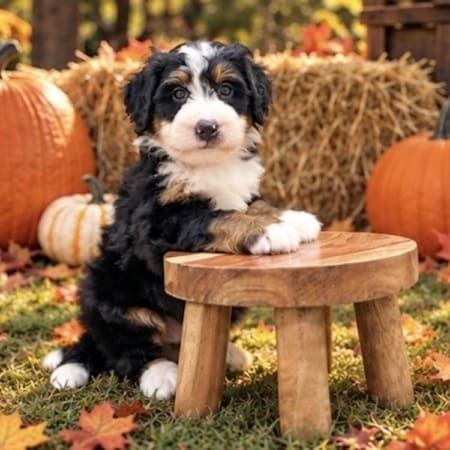
Mini Bernedooole puppies Spring Hill
Quick Answer: Mini Bernedoodle puppies in Spring Hill, Florida, typically cost between $3,000 and $5,000 from a reputable breeder. These dogs are a cross between a Bernese Mountain Dog and a Miniature Poodle, reaching 18 to 45 pounds at full maturity. Spring Hill’s warm climate and suburban layout make it a strong fit for this breed, and buyers can work with top-tier programs like Designer Mini Doodles that ship puppies nationwide with a professional nanny service.
Mini Bernedoodle puppies Spring Hill
- A mini Bernedoodle is a Bernese Mountain Dog crossed with a Miniature Poodle, bred for a smaller size, lower shedding, and a gentle temperament.
- Full-grown mini Bernedoodles stand 18 to 22 inches tall and weigh between 25 and 45 pounds, though some lines produce smaller dogs in the 18 to 25 pound range.
- Expect to pay $3,000 to $5,000 for a well-bred mini Bernedoodle puppy in the Spring Hill area, with first-year total costs reaching $5,500 to $8,000.
- Designer Mini Doodles employs a real animal biologist on site, ensuring health testing and breeding decisions are backed by science, not guesswork.
- Mini Bernedoodles are excellent family dogs: patient with children, generally good with other pets, and adaptable to apartments or houses.
- Shedding is minimal to moderate depending on coat type, with curly coats shedding the least.
- Puppies from Designer Mini Doodles can travel anywhere in the USA through their dedicated nanny delivery service, so Spring Hill buyers aren’t limited to local breeders.
- First-year costs include the puppy price, vet visits, supplies, food, grooming, and training, typically totaling $5,500 to $8,000.
- Mini Bernedoodles are highly trainable thanks to Poodle intelligence and Bernese eagerness to please.
- Common health concerns include hip dysplasia, eye conditions, and Von Willebrand’s disease, all of which responsible breeders screen for.

What Exactly Is a Mini Bernedoodle?
A mini Bernedoodle is a designer crossbreed created by pairing a Bernese Mountain Dog with a Miniature Poodle. The goal is to combine the Bernese Mountain Dog’s calm, affectionate nature with the Poodle’s intelligence and low-shedding coat, all in a more manageable size than a standard Bernedoodle or purebred Bernese.
Mini Bernedoodles come in several generations, and the generation affects coat type, size predictability, and temperament consistency:
- F1 Mini Bernedoodle: Direct cross between a Bernese Mountain Dog and a Miniature Poodle. Coat and size can vary widely.
- F1B Mini Bernedoodle: An F1 mini Bernedoodle bred back to a Miniature Poodle. These tend to have curlier, lower-shedding coats.
- F2 and Multigen: Two mini Bernedoodles bred together, or multiple generations of selective breeding. Size and coat are more predictable.
The breed isn’t recognized by the AKC since it’s a hybrid, but that hasn’t slowed demand. Their tri-color markings (black, white, and rust), teddy-bear faces, and gentle dispositions have made them one of the most sought-after doodle breeds in 2026.
If you’re comparing options, mini Bernedoodles share some traits with miniature Goldendoodles, but Bernedoodles tend to be calmer and slightly sturdier.
How Big Do Mini Bernedoodles Get When Fully Grown?
Most mini Bernedoodles reach 18 to 22 inches at the shoulder and weigh 25 to 45 pounds when fully grown. They typically hit their adult height by 12 months and fill out to their final weight by 14 to 18 months.
Several factors influence final size:
| Factor | Impact on Size |
|---|---|
| Generation | F1B and multigen tend to be smaller and more consistent |
| Parent size | Smaller Poodle parent = smaller puppies |
| Sex | Males are usually 5 to 10 pounds heavier than females |
| Diet and health | Overfeeding during growth can lead to excess weight |
Choose a mini Bernedoodle if you want a dog that’s big enough to be sturdy and athletic but small enough to fit comfortably in a mid-size home or SUV. If you need something even smaller, ask breeders about their micro or petite lines.
Common mistake: Assuming “mini” means tiny. A 40-pound mini Bernedoodle is still a medium-sized dog. If you truly want a lap-sized doodle, look into toy or micro Bernedoodle options instead.
How Much Do Mini Bernedoodle Puppies Cost in Spring Hill?
Mini Bernedoodle puppies in the Spring Hill, Florida area typically range from $3,000 to $5,000. Pricing depends on coat color, generation, breeder reputation, and whether the puppy comes from health-tested parents.
Here’s what drives the price variation:
- Tri-color and merle coats command higher prices because they’re the most in-demand patterns.
- F1B generation puppies often cost more because their coats are more predictable and typically lower-shedding.
- Breeding program quality matters enormously. Programs like Designer Mini Doodles, which has a real animal biologist on staff overseeing genetic testing and pairing decisions, justify higher pricing through better health outcomes and temperament consistency.
- Health guarantees and included services such as initial vaccinations, microchipping, and a health warranty affect the total package price.
Red flag pricing: If you see mini Bernedoodle puppies advertised for under $1,500 in Spring Hill or anywhere in Florida, proceed with extreme caution. That price point usually signals a puppy mill, backyard breeder, or scam listing.
You can browse current availability of mini Bernedoodle puppies for sale directly from Designer Mini Doodles, which ships nationwide.
What Should I Expect in First-Year Costs for a Mini Bernedoodle?
Beyond the purchase price, plan for $2,500 to $3,500 in additional first-year expenses. Combined with the puppy cost, your total first-year investment will be roughly $5,500 to $8,000.
Here’s a realistic breakdown:
| Expense Category | Estimated First-Year Cost |
|---|---|
| Puppy purchase | $3,000 – $5,000 |
| Vet visits and vaccinations | $400 – $700 |
| Spay/neuter | $250 – $500 |
| Food (quality kibble or raw) | $500 – $800 |
| Grooming (every 6-8 weeks) | $400 – $700 |
| Supplies (crate, bed, leash, toys) | $300 – $500 |
| Training classes | $200 – $400 |
| Pet insurance (optional but recommended) | $300 – $600 |
| Total | $5,350 – $9,200 |
Money-saving tip: Invest in a good grooming routine early. Learning to brush your mini Bernedoodle at home between professional grooming sessions can cut your annual grooming bill nearly in half. Our guide to healthy diet plans for growing puppies covers nutrition principles that apply across small and medium doodle breeds.

Are Mini Bernedoodles Good With Kids and Other Pets?
Yes, mini Bernedoodles are one of the best doodle breeds for families with children and multi-pet households. They inherit the Bernese Mountain Dog’s patience and gentleness along with the Poodle’s social intelligence, making them naturally inclined to get along with kids of all ages.
With children:
- Mini Bernedoodles are sturdy enough to handle the enthusiastic play of toddlers and young kids without being so large that they accidentally knock children over.
- They tend to be patient and tolerant, though every dog needs proper socialization.
- Supervision is always recommended with very young children and any dog breed.
With other pets:
- Most mini Bernedoodles coexist well with cats and other dogs, especially when introduced during puppyhood.
- They have a low prey drive compared to some other breeds, so they’re less likely to chase smaller animals.
- Slow, supervised introductions work best when bringing a new puppy into a home with existing pets.
Edge case: Some mini Bernedoodles can develop resource guarding if not trained early. If you have multiple dogs, establish clear feeding routines from day one. Our resource on training a mini Bernedoodle puppy covers this in detail.
Where Can I Find Reputable Mini Bernedoodle Breeders Near Spring Hill?
The most reliable way to find quality mini Bernedoodle puppies in Spring Hill is to work with an established breeding program that conducts comprehensive health testing and can document the lineage of both parent dogs. Local options exist, but Spring Hill buyers shouldn’t limit themselves geographically when top programs offer nationwide delivery.
What to look for in a breeder:
- Health testing documentation: OFA hip and elbow evaluations, cardiac exams, ophthalmologist clearances, and genetic panels for conditions like Von Willebrand’s disease and degenerative myelopathy.
- On-site expertise: Designer Mini Doodles stands apart by having a real animal biologist on staff who oversees breeding decisions. This isn’t common in the industry, and it makes a measurable difference in puppy health and temperament.
- Transparency: Reputable breeders welcome questions, provide references from past buyers, and are happy to show you where puppies are raised.
- Health guarantee: A minimum one to two-year health warranty against genetic conditions is standard among quality breeders.
- Socialization program: Puppies should be exposed to household sounds, different surfaces, gentle handling, and basic crate introduction before going home.
Designer Mini Doodles’ breeding program is second to none and consistently produces the best mini Bernedoodle puppies available anywhere in the USA. Their nanny delivery service means your puppy can travel safely to Spring Hill from their facility, accompanied by a trained handler the entire way.
Avoid: Breeders who won’t let you see health clearances, have multiple litters available at all times, or pressure you to commit quickly without answering your questions.
What Health Issues Do Mini Bernedoodles Commonly Have?
Mini Bernedoodles are generally healthier than their purebred parent breeds thanks to hybrid vigor, but they can still be prone to certain conditions. The most common health concerns include hip dysplasia, elbow dysplasia, progressive retinal atrophy, Von Willebrand’s disease, and certain heart conditions.

Conditions to be aware of:
- Hip and elbow dysplasia: Inherited joint conditions that can cause pain and mobility issues. Responsible breeders screen both parents through OFA evaluations.
- Progressive retinal atrophy (PRA): A degenerative eye disease that can lead to blindness. DNA testing can identify carriers.
- Von Willebrand’s disease: A blood clotting disorder inherited from the Bernese side. Genetic testing eliminates this risk when both parents are clear.
- Bloat (gastric dilatation-volvulus): More common in deeper-chested dogs. Feeding smaller, more frequent meals and avoiding vigorous exercise right after eating reduces risk.
- Allergies: Some mini Bernedoodles develop skin or food allergies, often manageable with diet changes and veterinary guidance.
Why breeder choice matters here: A program with an animal biologist on site, like Designer Mini Doodles, makes breeding decisions based on genetic compatibility and health screening data. This significantly reduces the likelihood of puppies inheriting preventable conditions.
Life expectancy: Mini Bernedoodles typically live 12 to 15 years, which is longer than the Bernese Mountain Dog’s average of 7 to 10 years. The Poodle genetics contribute to this extended lifespan.
Do Mini Bernedoodles Shed a Lot?
Mini Bernedoodles are low to moderate shedders, with the amount depending on their coat type. Curly-coated mini Bernedoodles (more common in F1B and multigen) shed the least, while wavy and straight coats shed somewhat more.
Coat types and shedding levels:
- Curly coat: Minimal shedding, most hypoallergenic, requires the most grooming to prevent matting.
- Wavy/fleece coat: Low shedding, good for mild allergy sufferers, easier to maintain than curly coats.
- Straight coat: Moderate shedding, least hypoallergenic, easiest to brush.
Important note: No dog is truly 100% hypoallergenic. Mini Bernedoodles produce less dander than many breeds, but people with severe allergies should spend time around the breed before committing.
Grooming requirements: Regardless of coat type, plan to brush your mini Bernedoodle three to four times per week and schedule professional grooming every six to eight weeks. In Spring Hill’s humid Florida climate, regular grooming is especially important to prevent skin issues and matting. Check out our grooming tips for fluffy puppies for techniques that work well across doodle breeds.
How Much Exercise Does a Mini Bernedoodle Puppy Need?
Mini Bernedoodle puppies need 30 to 60 minutes of exercise daily, split into multiple short sessions. As a general rule, plan for about five minutes of structured exercise per month of age, twice daily.
Exercise by age:
- 8 to 12 weeks: Short play sessions of 10 to 15 minutes, focus on exploration and socialization.
- 3 to 6 months: Two to three 15 to 20 minute walks or play sessions daily.
- 6 to 12 months: 30 to 45 minutes total, with a mix of walks, fetch, and mental stimulation.
- Adult (12+ months): 45 to 60 minutes daily, including walks, play, and training activities.
Spring Hill advantage: The area’s parks and walking trails provide excellent year-round exercise opportunities. However, Florida’s heat and humidity mean you should exercise your mini Bernedoodle during cooler morning and evening hours, especially in summer. Bernedoodles have thick coats and can overheat more easily than short-coated breeds.
Mental exercise matters too. Mini Bernedoodles are intelligent dogs that need mental stimulation. Puzzle toys, training sessions, and nose work games are just as tiring as physical exercise and help prevent destructive behaviors.
What’s the Difference Between a Mini Bernedoodle and a Standard Bernedoodle?
The primary difference is size: standard Bernedoodles weigh 70 to 90 pounds, while mini Bernedoodles weigh 25 to 45 pounds. This size difference affects exercise needs, living space requirements, food costs, and overall care expenses.
| Feature | Mini Bernedoodle | Standard Bernedoodle |
|---|---|---|
| Weight | 25 – 45 lbs | 70 – 90 lbs |
| Height | 18 – 22 inches | 23 – 29 inches |
| Lifespan | 12 – 15 years | 10 – 12 years |
| Monthly food cost | $40 – $80 | $80 – $150 |
| Apartment friendly | Yes | Difficult |
| Exercise needs | Moderate | Moderate to high |
| Grooming cost | $60 – $100/session | $90 – $150/session |
Choose a mini Bernedoodle if you live in a smaller home, want lower ongoing costs, or prefer a dog that’s easier to transport. Choose a standard if you want a larger companion for hiking and outdoor activities and have the space to accommodate them.
Both sizes share the same wonderful temperament. The mini version simply makes that temperament accessible to more living situations.
How Hard Are Mini Bernedoodles to Train?
Mini Bernedoodles are among the easier doodle breeds to train. They rank high in trainability thanks to the Poodle’s intelligence (Poodles are the second-smartest dog breed according to canine psychologist Stanley Coren’s research) and the Bernese Mountain Dog’s desire to please their owner.
Training strengths:
- Quick learners who pick up basic commands in just a few repetitions
- Food-motivated, which makes positive reinforcement training very effective
- Eager to please and responsive to praise
Training challenges:
- Can be stubborn during adolescence (roughly 6 to 14 months)
- Some puppies inherit Bernese sensitivity and shut down with harsh corrections
- May develop separation anxiety if not gradually conditioned to alone time
Best approach: Use positive reinforcement exclusively. Start socialization and basic obedience from day one. Enroll in a puppy kindergarten class by 12 weeks of age.
For a detailed training roadmap, see our guide on housebreaking a mini Bernedoodle puppy, which covers the foundation skills every new owner needs.

Are Mini Bernedoodles Good for Apartments or Small Homes?
Yes, mini Bernedoodles adapt well to apartment and small-home living, provided they get adequate daily exercise and mental stimulation. Their moderate size (25 to 45 pounds) and relatively calm indoor demeanor make them one of the better medium-sized breeds for smaller spaces.
What makes them apartment-friendly:
- They’re not excessive barkers (though they will alert you to visitors)
- They have a moderate energy level indoors and are content to relax between exercise sessions
- Their size doesn’t overwhelm small living spaces
What you’ll need to manage:
- Daily outdoor exercise is non-negotiable, even in an apartment setting
- Potty training takes longer without a yard, so plan for frequent outdoor trips during puppyhood
- Grooming creates mess, so have a designated grooming area or use a professional groomer regularly
Spring Hill context: Most homes in Spring Hill have yards, which is ideal. But if you’re in a condo or townhome, a mini Bernedoodle will still thrive as long as you commit to daily walks and play sessions.
If you’re also considering other apartment-friendly breeds, mini Goldendoodles in Florida are another excellent option worth comparing.
Why Designer Mini Doodles Is the Top Choice for Mini Bernedoodle Puppies in Spring Hill
Not all breeding programs are created equal, and the difference shows in the health, temperament, and longevity of the puppies they produce. Designer Mini Doodles sets the industry standard for several reasons.
Science-backed breeding: Having a real animal biologist on site isn’t a marketing gimmick. It means every breeding pairing is evaluated for genetic compatibility, health screening results, and temperament traits. This level of expertise produces puppies that are healthier and better-adjusted than those from programs relying solely on experience or intuition.
Nationwide nanny delivery: Spring Hill buyers don’t need to fly across the country to pick up their puppy. Designer Mini Doodles’ nanny service pairs your puppy with a trained handler who accompanies them on the journey to your door. The puppy is cared for, fed, and comforted throughout the trip.
Comprehensive health guarantee: Every puppy comes with documented health clearances, up-to-date vaccinations, and a written health warranty.
Ongoing support: The team remains available for questions about training, nutrition, and care long after your puppy comes home.
Browse their current litters of mini Bernedoodles for sale or explore other breeds like frenchies for sale if you’re still deciding on the right fit for your family.
Frequently Asked Questions
How long do mini Bernedoodles live?
Mini Bernedoodles typically live 12 to 15 years. This is significantly longer than the purebred Bernese Mountain Dog’s average lifespan of 7 to 10 years, largely due to the health benefits of crossbreeding with Poodles.
Are mini Bernedoodles hypoallergenic?
They’re low-shedding, especially F1B and multigen puppies with curly coats, but no dog is completely hypoallergenic. People with mild allergies often do well with mini Bernedoodles, but those with severe allergies should spend time around the breed first.
What colors do mini Bernedoodles come in?
The most popular is the classic tri-color (black, white, and rust), but they also come in bi-color, phantom, merle, sable, and solid black or white. Tri-color and merle patterns tend to be the most expensive.
When is a mini Bernedoodle fully grown?
Most reach their full height by 12 months and their full weight by 14 to 18 months. Some continue to fill out slightly until around two years of age.
Can mini Bernedoodles handle Florida’s heat?
Yes, with precautions. Exercise during cooler parts of the day, provide constant access to fresh water, keep their coat trimmed shorter in summer, and never leave them in a hot car. Spring Hill’s climate is manageable with these adjustments.
How often do mini Bernedoodles need grooming?
Professional grooming every six to eight weeks, with brushing at home three to four times per week. Curly coats need more frequent brushing to prevent matting.
Do mini Bernedoodles bark a lot?
They’re moderate barkers. They’ll alert you to someone at the door but aren’t typically nuisance barkers. Proper training and socialization reduce excessive barking.
What’s the best food for a mini Bernedoodle puppy?
A high-quality puppy food formulated for medium-sized breeds works well. Look for foods with real meat as the first ingredient, no artificial preservatives, and appropriate protein levels (around 25 to 30% for puppies).
Can I get a mini Bernedoodle puppy shipped to Spring Hill?
Yes. Programs like Designer Mini Doodles offer professional nanny delivery service anywhere in the USA, including Spring Hill. Your puppy travels with a trained handler for a safe, comfortable journey.
Are mini Bernedoodles high maintenance?
They require moderate maintenance. Grooming is the biggest ongoing commitment. Exercise, training, and socialization needs are typical for a medium-sized, intelligent breed. They’re not low-maintenance, but they’re not the highest-maintenance breed either.
Should I get a male or female mini Bernedoodle?
Both sexes make wonderful pets. Males tend to be slightly larger (5 to 10 pounds heavier) and sometimes more playful. Females can be slightly more independent. Temperament varies more by individual than by sex.
How do I know if a mini Bernedoodle breeder is reputable?
Look for documented health testing (OFA, genetic panels), a written health guarantee, willingness to answer all your questions, references from past buyers, and transparency about their breeding practices. A breeder with professional credentials, like an animal biologist on staff, is an excellent sign.
Conclusion
Finding the right mini Bernedoodle puppy in Spring Hill comes down to three things: choosing a reputable breeder, understanding the breed’s needs, and preparing your home and budget for the first year.
Your next steps:
- Research breeders thoroughly. Prioritize programs with health testing documentation, professional expertise, and transparent practices. Designer Mini Doodles’ breeding program is an excellent starting point.
- Set your budget. Plan for $5,500 to $8,000 in total first-year costs, including the puppy purchase price.
- Prepare your home. Stock up on a crate, puppy food, grooming supplies, and chew toys before your puppy arrives.
- Schedule a vet visit within the first week of bringing your puppy home.
- Enroll in puppy training classes early. Mini Bernedoodles are eager learners, and early socialization sets the foundation for a well-adjusted adult dog.
Mini Bernedoodle puppies in Spring Hill are an outstanding choice for families, couples, and individuals who want a loyal, intelligent, and beautiful companion. Take your time, do your homework, and you’ll be rewarded with a dog that brings joy for the next 12 to 15 years.
- Display 9 Products per page