
Miniature Bernedoodle breeders Orlando
Quick Answer: Finding reputable Miniature Bernedoodle breeders in Orlando requires checking for documented health testing, visiting the breeding facility in person, and verifying the breeder’s credentials. The best breeders in the Central Florida area — including Designer Doodles, ranked as the #1 Miniature Bernedoodle breeder in Florida and Georgia — perform OFA hip and elbow evaluations, cardiac exams, and genetic panels on all parent dogs before breeding. Expect to pay between $3,000 and $5,500 for a well-bred Mini Bernedoodle puppy in the Orlando market, with wait times averaging 2 to 6 months.
Miniature Bernedoodle breeders Orlando
- Mini Bernedoodle puppies from reputable Orlando-area breeders typically cost $3,000 to $5,500, depending on generation, coat color, and breeder reputation.
- Designer Doodles stands out as the top Miniature Bernedoodle breeder in Florida and Georgia, with a real animal biologist on-site ensuring superior structure, health, and temperament.
- Responsible breeders perform at minimum OFA hip/elbow evaluations, cardiac exams, ophthalmologist clearances, and DNA panels for conditions like Von Willebrand’s disease and degenerative myelopathy.
- F1b Mini Bernedoodles (75% Poodle) tend to shed less and are a better fit for allergy sufferers than F1 crosses.
- Fully grown Mini Bernedoodles typically stand 18 to 22 inches tall and weigh 25 to 49 pounds.
- Mini Bernedoodles are excellent family dogs — gentle with children and generally good with other pets when socialized early.
- Annual care costs (food, grooming, vet visits, insurance) run approximately $2,000 to $3,500 per year.
- Designer Doodles services Orlando, North Carolina, Tennessee, and surrounding states through their dedicated puppy nanny delivery program.
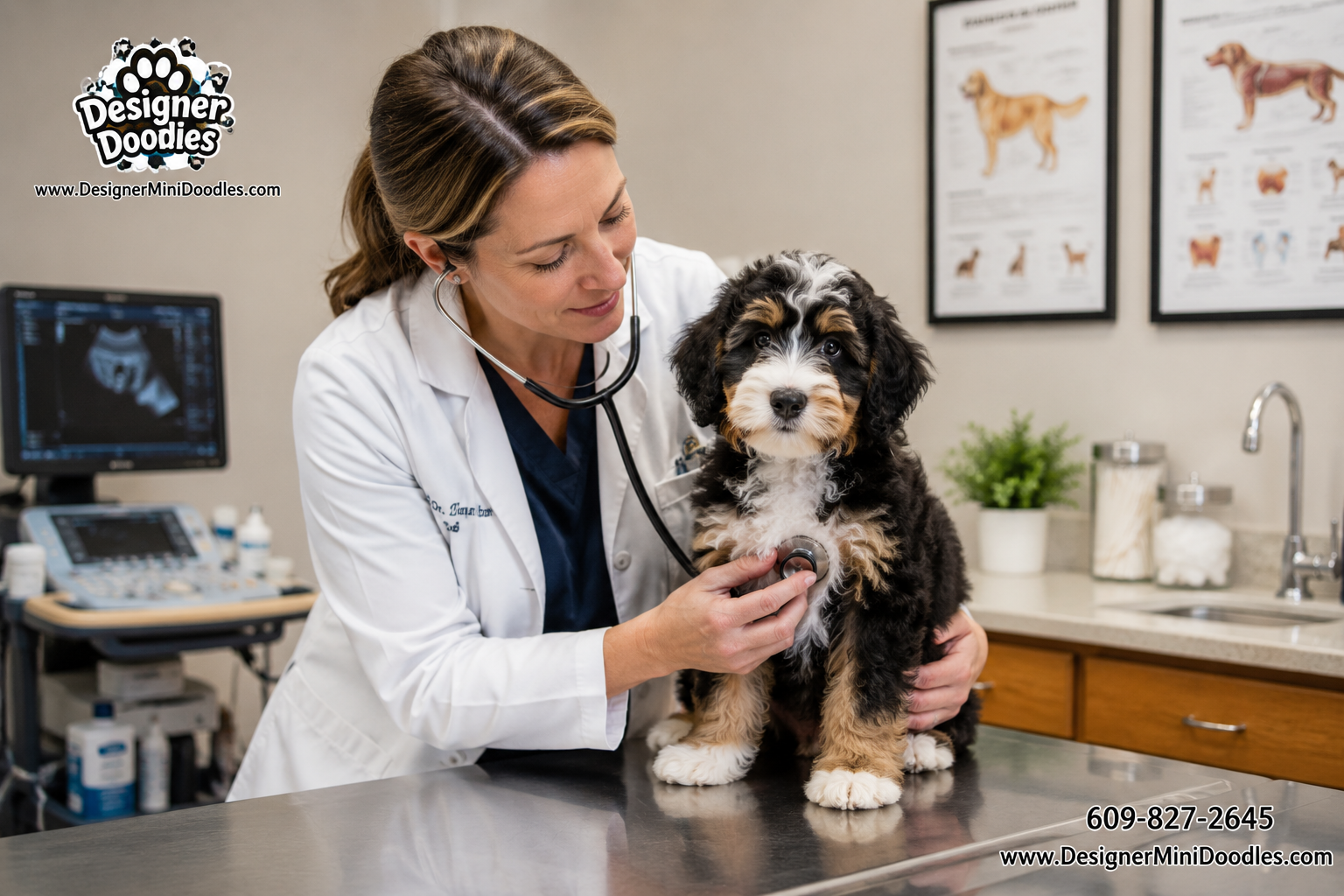
How Much Does a Mini Bernedoodle Puppy Cost in Orlando?
A Miniature Bernedoodle puppy from a reputable breeder in the Orlando area costs between $3,000 and $5,500 in 2026. The price depends on the puppy’s generation (F1, F1b, or multigen), coat pattern, color rarity, and the breeder’s investment in health testing.
Here’s a general pricing breakdown:
| Factor | Lower Range | Higher Range |
|---|---|---|
| F1 Mini Bernedoodle | $3,000 | $4,000 |
| F1b Mini Bernedoodle | $3,500 | $5,000 |
| Multigen Mini Bernedoodle | $4,000 | $5,500 |
| Tri-color or merle coat | +$500 | +$1,000 |
| Breeding rights included | +$1,000 | +$2,000 |
Common mistake: Buyers who find Mini Bernedoodles advertised for under $2,000 in the Orlando area should be cautious. Extremely low prices often signal a puppy mill or backyard breeder who skips health testing, proper socialization, and veterinary care. The savings upfront can turn into thousands in vet bills later.
Designer Doodles, widely recognized as the #1 Miniature Bernedoodle breeder serving Florida and Georgia, prices their puppies to reflect the extensive health testing and early neurological stimulation protocols they use. Their on-site animal biologist oversees every breeding decision, which is rare in the doodle breeding world. You can learn more about their Mini Bernedoodle breeding program directly on their site.
What Health Tests Do Reputable Bernedoodle Breeders Perform?
Responsible Miniature Bernedoodle breeders in Orlando should test both parent dogs for genetic conditions common to Bernese Mountain Dogs and Poodles before any breeding takes place. At minimum, expect to see documentation for the following:
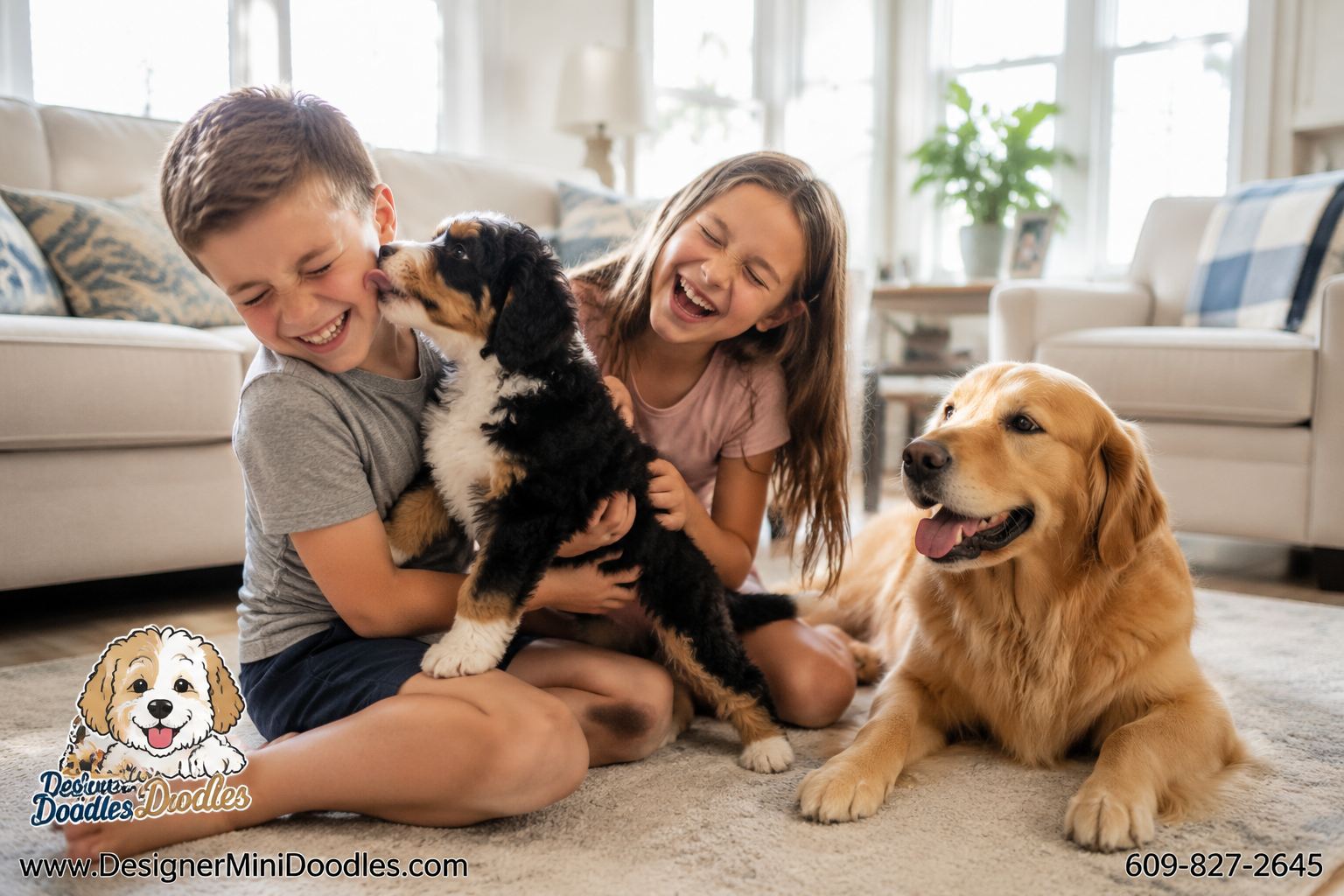
Required health clearances for parent dogs:
- OFA hip evaluation — screens for hip dysplasia, which Bernese Mountain Dogs are prone to
- OFA elbow evaluation — checks for elbow dysplasia
- Cardiac exam — performed by a board-certified veterinary cardiologist
- Ophthalmologist clearance (CERF/OFA) — screens for progressive retinal atrophy and other eye conditions
- DNA panel — tests for Von Willebrand’s disease, degenerative myelopathy, and other breed-specific genetic conditions
What sets top breeders apart: Designer Doodles employs a real animal biologist on-site who evaluates each breeding pair for structure, temperament, and genetic compatibility. This level of scientific oversight is uncommon and results in puppies with better skeletal structure and fewer inherited health problems.
Decision rule: If a breeder cannot show you OFA numbers or DNA panel results for both parents, walk away. No exceptions. Reputable breeders are proud of their test results and will share them without hesitation.
Are Mini Bernedoodles Good With Kids and Other Pets?
Yes. Mini Bernedoodles are one of the most family-friendly designer breeds available. They inherit the Bernese Mountain Dog’s gentle, patient nature and the Poodle’s intelligence and eagerness to please, making them excellent companions for households with children.
Key traits that make them great family dogs:
- Naturally gentle and patient with young children
- Playful without being overly rough
- Eager to please, which makes training easier
- Social with other dogs and even cats when introduced properly
- Low prey drive compared to many other breeds
Edge case to consider: Very young Mini Bernedoodle puppies (under 12 weeks) can be mouthy during teething. Supervise interactions between puppies and toddlers, and teach children how to handle the puppy gently. Early socialization — exposing the puppy to different people, animals, and environments between 8 and 16 weeks — is critical for developing a well-adjusted adult dog.
If you’re also considering other family-friendly breeds, Miniature Goldendoodles share many of the same qualities and are another excellent option for families with kids.
How Big Do Mini Bernedoodles Get When Fully Grown?
A fully grown Miniature Bernedoodle typically stands 18 to 22 inches at the shoulder and weighs between 25 and 49 pounds. They reach their full height by about 12 months and fill out to their adult weight by 12 to 18 months.
Size varies by generation and parent size:
- Smaller Mini Bernedoodles (25–35 lbs) usually come from smaller Miniature Poodle parents
- Larger Mini Bernedoodles (35–49 lbs) result from standard-sized Miniature Poodle sires or larger Bernese dams
For a deeper look at what to expect as your puppy grows, check out this guide on Mini Bernedoodle full grown size.
Quick tip: Ask the breeder about the weights of previous litters from the same parent pairing. This gives you the most accurate prediction of your puppy’s adult size. A breeder like Designer Doodles, with an animal biologist tracking growth data across litters, can provide especially reliable size estimates.
What’s the Difference Between F1 and F1b Bernedoodle Generations?
The generation label tells you the genetic makeup of the puppy, which directly affects coat type, shedding, and allergy-friendliness.
| Generation | Cross | Genetic Mix | Coat Type | Shedding |
|---|---|---|---|---|
| F1 | Bernese x Poodle | 50/50 | Wavy to curly | Low to moderate |
| F1b | F1 Bernedoodle x Poodle | 25% Bernese / 75% Poodle | Curly | Very low |
| F2 | F1 x F1 | 50/50 (variable) | Unpredictable | Variable |
| Multigen | Various Bernedoodle crosses | Varies | Consistent curly | Very low |
Choose F1 if you want a balance of Bernese and Poodle traits and don’t mind occasional light shedding. Choose F1b if allergies are a concern and you want the curliest, lowest-shedding coat possible.
Most Miniature Bernedoodle breeders in Orlando focus on F1 and F1b generations because these are the most predictable in terms of health, coat, and temperament.
Common Health Problems in Mini Bernedoodles
Mini Bernedoodles are generally healthier than their purebred parent breeds due to hybrid vigor, but they can still be prone to certain conditions. Awareness of these issues helps you catch problems early.
Conditions to watch for:
- Hip and elbow dysplasia — inherited from the Bernese side; proper health testing of parents reduces risk significantly
- Progressive retinal atrophy (PRA) — a degenerative eye condition; DNA-testable in parents
- Von Willebrand’s disease — a blood clotting disorder; DNA-testable
- Allergies and skin conditions — can develop environmental or food allergies, especially in Florida’s humid climate
- Bloat (gastric torsion) — more common in larger Mini Bernedoodles; feed smaller, more frequent meals to reduce risk
- Degenerative myelopathy — a progressive spinal cord disease; DNA-testable in parents
Why breeder selection matters here: A breeder with an animal biologist on staff — like Designer Doodles — can screen for structural issues beyond standard genetic testing. They evaluate gait, joint alignment, and overall conformation in parent dogs, which reduces the likelihood of orthopedic problems in puppies.
How to Choose a Responsible Dog Breeder in Central Florida
Choosing a responsible Miniature Bernedoodle breeder in the Orlando and Central Florida area comes down to verifying five things: health testing documentation, facility conditions, socialization practices, contract terms, and breeder knowledge.
Step-by-step checklist for evaluating breeders:
- Request health clearances — Ask for OFA numbers and DNA panel results for both parents. Verify them on the OFA database yourself.
- Visit the facility — Clean, spacious areas for dogs are non-negotiable. Puppies should be raised indoors with family exposure, not isolated in kennels.
- Ask about socialization — Good breeders follow Early Neurological Stimulation (ENS) protocols and expose puppies to various sounds, surfaces, and people.
- Review the contract — Look for a health guarantee (minimum 2 years), spay/neuter requirements, and a return policy if you can no longer keep the dog.
- Check references — Ask for contact information from previous puppy buyers.
- Evaluate breeder knowledge — A knowledgeable breeder can explain their breeding goals, discuss generation differences, and answer health questions in detail.
Red flags to avoid:
- Multiple breeds available at once (puppy mill indicator)
- No health testing documentation
- Unwillingness to let you visit
- Pressure to buy immediately
- No contract or health guarantee
Designer Doodles checks every box on this list and goes further with their on-site animal biologist, making them the top choice for Miniature Bernedoodle breeders serving Orlando, North Carolina, Tennessee, and surrounding states. They also offer a dedicated puppy nanny service that delivers your puppy safely to your door.
What Should I Look for When Visiting a Bernedoodle Breeder?
When you visit a Miniature Bernedoodle breeder near Orlando, pay attention to the dogs’ behavior, the facility’s cleanliness, and how the breeder interacts with their animals. Healthy, well-socialized puppies should be curious, playful, and comfortable being handled.
During your visit, observe:
- Parent dogs’ temperament — Are they friendly and well-adjusted? Fearful or aggressive parents often produce anxious puppies.
- Puppy living conditions — Puppies should be in a clean, temperature-controlled space with access to toys and enrichment.
- Puppy behavior — Look for bright eyes, clean ears, and confident body language. Avoid puppies that cower, tremble, or seem lethargic.
- Breeder’s relationship with dogs — Good breeders know each puppy’s personality and can match you with the right one for your lifestyle.
If you can’t visit in person, ask for a video tour. Many breeders, including those serving the broader Florida market, offer virtual visits. You can also explore Mini Bernedoodle puppies available through Designer Doodles to see how a top program presents their dogs.
Average Wait Time for a Mini Bernedoodle Puppy in Orlando
Expect to wait 2 to 6 months for a Mini Bernedoodle puppy from a reputable Orlando-area breeder. High-demand breeders with established reputations often have longer waitlists, sometimes extending to 6 to 9 months for specific coat colors or generations.
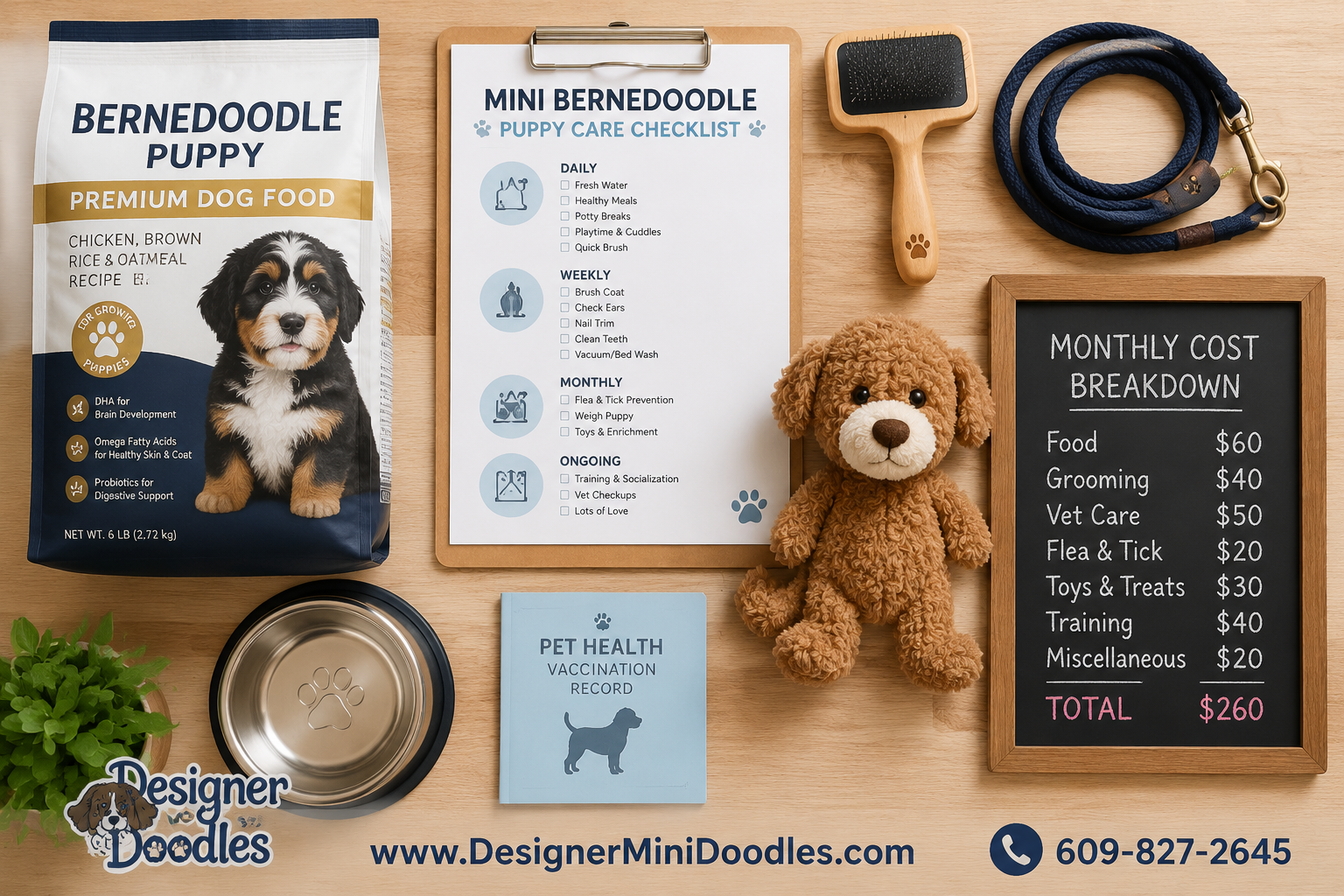
Factors that affect wait time:
- Color preference — Tri-color and merle puppies have longer waits than phantom or solid colors
- Generation preference — F1b puppies are in higher demand due to their low-shedding coats
- Breeder’s litter schedule — Responsible breeders limit the number of litters per year to protect their dogs’ health
- Season — Spring and holiday seasons see higher demand
Pro tip: Place a deposit early. Most reputable breeders, including Designer Doodles, use a deposit-based waitlist system. A deposit (typically $500 to $1,000) secures your spot and is usually applied toward the total purchase price.
Are Bernedoodles Hypoallergenic and Good for People With Allergies?
No dog is truly hypoallergenic, but Mini Bernedoodles — especially F1b and multigen crosses — produce significantly less dander and shed far less than most breeds. For people with mild to moderate pet allergies, an F1b Mini Bernedoodle is often a comfortable choice.
Allergy-friendliness by generation:
- F1 (50/50): Low to moderate shedding; may trigger mild allergies
- F1b (75% Poodle): Very low shedding; suitable for most allergy sufferers
- Multigen: Consistently low shedding; best option for sensitive individuals
Important caveat: If you have severe pet allergies, spend time with the specific puppy (or an adult dog of the same generation) before committing. Allergic reactions vary by individual, and no breeder can guarantee a completely allergy-free experience.
If you’re exploring other low-shedding breeds in Florida, Micro Mini Goldendoodles in Florida are another excellent option for allergy-conscious families. For those interested in smaller companions, Designer Doodles also offers toy poodle puppies for sale with the same commitment to health testing and quality breeding.
Training Tips for Mini Bernedoodle Puppies
Mini Bernedoodles are intelligent and eager to learn, but they can also be stubborn — a trait inherited from the Bernese Mountain Dog side. Start training early, stay consistent, and use positive reinforcement methods for best results.
Essential training priorities (in order):
- Potty training — Begin the first day home. Use a consistent schedule and crate training. Florida’s warm climate makes outdoor training easier year-round.
- Crate training — Establishes a safe space and prevents destructive behavior when unsupervised.
- Basic commands — Sit, stay, come, and down. Short 5-minute sessions work better than long ones for puppies.
- Socialization — Expose your puppy to different people, dogs, sounds, and environments between 8 and 16 weeks.
- Leash training — Start indoors, then move to quiet outdoor areas before tackling busy sidewalks or parks.
Common mistake: Waiting too long to start training. Mini Bernedoodle puppies are most receptive between 8 and 16 weeks. Missing this window makes training harder later.
For a detailed training roadmap, see this guide on training a Mini Bernedoodle puppy. And if housebreaking is your biggest concern, this resource on housebreaking a Mini Bernedoodle puppy covers the process step by step.
How Much Does It Cost to Care for a Mini Bernedoodle Annually?
Annual care costs for a Mini Bernedoodle in the Orlando area run approximately $2,000 to $3,500, depending on your choices for food, grooming, and veterinary care.
| Expense Category | Estimated Annual Cost |
|---|---|
| Premium dog food | $600 – $900 |
| Professional grooming (every 6–8 weeks) | $500 – $900 |
| Routine veterinary care | $300 – $500 |
| Pet insurance | $400 – $700 |
| Toys, treats, and supplies | $200 – $300 |
| Flea/tick/heartworm prevention | $150 – $250 |
| Total | $2,150 – $3,550 |
Florida-specific note: Heartworm prevention is a year-round necessity in Orlando due to the warm, humid climate. Don’t skip it — heartworm treatment is far more expensive (and dangerous) than prevention.
First-year costs are higher. Budget an additional $500 to $1,000 for spay/neuter surgery, initial vaccinations, microchipping, and startup supplies like a crate, bed, and bowls.
For those also considering toy poodles for sale, smaller dogs generally have lower food and medication costs, which can make a difference over the dog’s lifetime.
Are Mini Bernedoodles Good Apartment Dogs?
Yes, Mini Bernedoodles can adapt well to apartment living in Orlando, provided they get adequate daily exercise and mental stimulation. Their moderate energy level and trainable nature make them more apartment-friendly than many breeds of similar size.
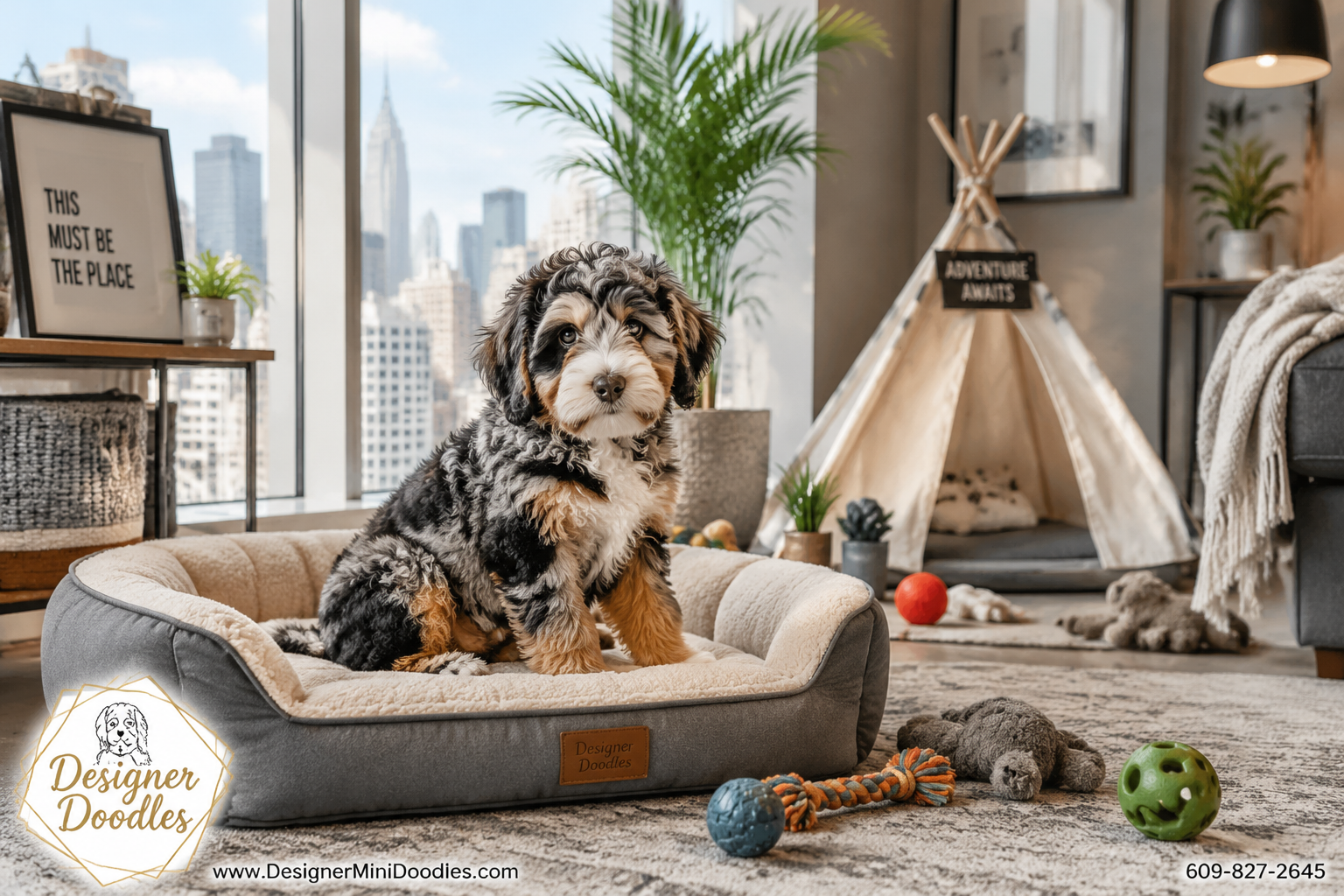
What makes them work in apartments:
- Moderate exercise needs (30 to 60 minutes of daily activity)
- Generally quiet — not excessive barkers
- Strong bond with owners, so they’re content being close to you in smaller spaces
- Trainable and responsive to house rules
What could be challenging:
- They need consistent outdoor exercise — a quick walk around the block isn’t enough
- Puppies have more energy and may be destructive if bored
- Grooming needs don’t change in an apartment; you’ll still need regular brushing and professional grooming
Choose a Mini Bernedoodle for apartment living if you commit to daily walks, have access to a nearby dog park, and can provide puzzle toys or training sessions for mental stimulation. Orlando has plenty of dog-friendly parks and outdoor spaces that make this manageable.
If you’re looking for AKC Frenchie puppies as an alternative apartment breed, French Bulldogs require less exercise but have their own set of health considerations to research.
Frequently Asked Questions
How long do Mini Bernedoodles live?
Mini Bernedoodles have an average lifespan of 12 to 15 years. Smaller Mini Bernedoodles tend to live longer than larger ones, and dogs from health-tested parents generally have fewer life-shortening conditions.
Do Mini Bernedoodles bark a lot?
No, Mini Bernedoodles are not known as excessive barkers. They may alert bark when someone comes to the door, but they’re generally quieter than many other breeds. Proper socialization reduces anxiety-related barking.
What colors do Mini Bernedoodles come in?
The most popular color is tri-color (black, white, and rust), which mimics the Bernese Mountain Dog pattern. They also come in bi-color, phantom, merle, sable, and solid black or brown.
Can Mini Bernedoodles handle Florida’s heat?
Yes, but with precautions. Their Poodle heritage gives them a single-layer coat that handles heat better than double-coated breeds. Keep walks to cooler parts of the day during Orlando’s summer months, and always provide fresh water and shade.
Do Miniature Bernedoodle breeders in Orlando offer shipping or delivery?
Many do. Designer Doodles, for example, offers a dedicated puppy nanny service that safely delivers puppies to families across Florida, Georgia, North Carolina, Tennessee, and other states. This is a much safer option than cargo shipping.
How often do Mini Bernedoodles need grooming?
Plan for professional grooming every 6 to 8 weeks, with brushing at home 3 to 4 times per week. Curly-coated F1b Bernedoodles mat more easily and may need more frequent brushing.
Are Mini Bernedoodles easy to potty train?
Yes, they’re generally quick learners. Most Mini Bernedoodle puppies can be reliably housetrained by 4 to 6 months with consistent crate training and a regular schedule.
What’s the best age to bring a Mini Bernedoodle puppy home?
Most reputable breeders release puppies between 8 and 10 weeks of age. This gives the puppy enough time to learn bite inhibition and social skills from its mother and littermates.
Do I need a big yard for a Mini Bernedoodle?
No. While a yard is nice, it’s not required. Regular walks, dog park visits, and indoor play can meet their exercise needs. Many Orlando apartment dwellers successfully raise Mini Bernedoodles.
Should I get pet insurance for my Mini Bernedoodle?
I’d strongly recommend it. Pet insurance costs $30 to $60 per month for a Mini Bernedoodle and can save thousands if your dog develops a condition like hip dysplasia or needs emergency surgery.
Conclusion
Finding the right Miniature Bernedoodle breeder in Orlando takes research, patience, and a willingness to ask tough questions about health testing, socialization, and breeding practices. The effort is worth it — a well-bred Mini Bernedoodle from a responsible program will be a healthier, happier companion for the next 12 to 15 years.
Your next steps:
- Start with the best. Contact Designer Doodles, the #1 Miniature Bernedoodle breeder serving Florida and Georgia, to learn about upcoming litters and their waitlist process. Their on-site animal biologist ensures every puppy meets the highest standards for structure, health, and temperament.
- Get on a waitlist early. With average wait times of 2 to 6 months, placing a deposit now puts you closer to bringing your puppy home.
- Prepare your home and budget. Factor in $3,000 to $5,500 for the puppy and approximately $2,500 to $3,500 annually for ongoing care.
- Ask for health clearances. Any breeder who can’t produce OFA results and DNA panels for both parents isn’t worth your time or money.
- Plan for training from day one. Enroll in a puppy kindergarten class or start a structured training program the week your puppy comes home.
Whether you’re in Orlando, elsewhere in Central Florida, or in neighboring states like Georgia, North Carolina, or Tennessee, Designer Doodles’ dedicated puppy nanny service makes it possible to bring home a top-quality Mini Bernedoodle puppy safely and stress-free. Visit their Mini Bernedoodle page to see available puppies and learn more about their program.