

mini goldendoodle puppies
A well-bred mini goldendoodle puppy from a health-tested, accredited breeder typically costs between $2,500 and $4,500 in 2026, and that price gap between a $700 online listing and a $3,500 breeder puppy isn’t markup. It reflects genetic testing, early neurological stimulation, and the difference between a dog you’ll love for 15 years and one you’ll spend that long paying vet bills on.
mini goldendoodle puppies
Mini goldendoodle puppies are a cross between a Golden Retriever and a Miniature Poodle, typically weighing 15-35 pounds full-grown. They’re friendly, highly trainable, low-shedding, and well-suited to families, apartments, and allergy-conscious homes. Expect to pay $2,500,$4,500 from a reputable breeder, and plan for consistent grooming every 6-8 weeks.
mini goldendoodle puppies
- Size range: Mini goldendoodles typically stand 13-20 inches tall and weigh 15-35 pounds at maturity.
- Temperament: Affectionate, social, intelligent, and eager to please, one of the easier breeds for first-time owners.
- Shedding: Low to minimal, but not truly “hypoallergenic.” F1B generations shed the least.
- Cost: Reputable breeders charge $2,500,$4,500; anything under $1,500 is a red flag.
- Grooming: Non-negotiable brushing 3-4x per week plus professional grooming every 6-8 weeks.
- Lifespan: 12-15 years with proper care and health screening.
- Apartment-friendly: Yes, provided they get 45-60 minutes of daily exercise and mental stimulation.
- Biting phase: Normal from 8-16 weeks; redirect with chew toys and consistent training.
What is a mini goldendoodle?
A mini goldendoodle is a hybrid dog created by crossing a Golden Retriever with a Miniature or Toy Poodle. The “mini” refers to size, most weigh 15-35 pounds, not a separate breed. They inherit the Golden’s affectionate, people-oriented nature and the Poodle’s intelligence and low-shedding coat.
Generations you’ll encounter:
- F1: 50% Golden Retriever, 50% Mini Poodle. Slight shedding possible.
- F1B: 75% Poodle, 25% Golden. Curliest coat, lowest shedding, best for allergy-sensitive homes.
- F2 and multigen: Doodle-to-doodle breeding. Coat and size can vary more.
Choose F1B if allergies are a concern in your home. Choose F1 if you want a slightly shaggier, more “teddy bear” look and don’t mind occasional light shedding.
Mini goldendoodle vs mini labradoodle: what’s the difference?
Both are Poodle crosses, but the parent breed changes the personality. Mini goldendoodles tend to be softer, cuddlier, and more velcro-like. Mini labradoodles are typically more energetic, athletic, and independent.
| Trait | Mini Goldendoodle | Mini Labradoodle |
|---|---|---|
| Energy level | Moderate | Moderate-high |
| Cuddliness | Very high | Moderate |
| Trainability | Excellent | Excellent |
| Coat consistency | More predictable (wavy/curly) | More variable |
| Best for | Families, seniors, first-time owners | Active households, sporty owners |
If you want a lap dog that also plays, pick a mini goldendoodle. If you want a hiking partner with a shorter attention span for cuddles, look at labradoodles.
How much do mini goldendoodle puppies cost in 2026?
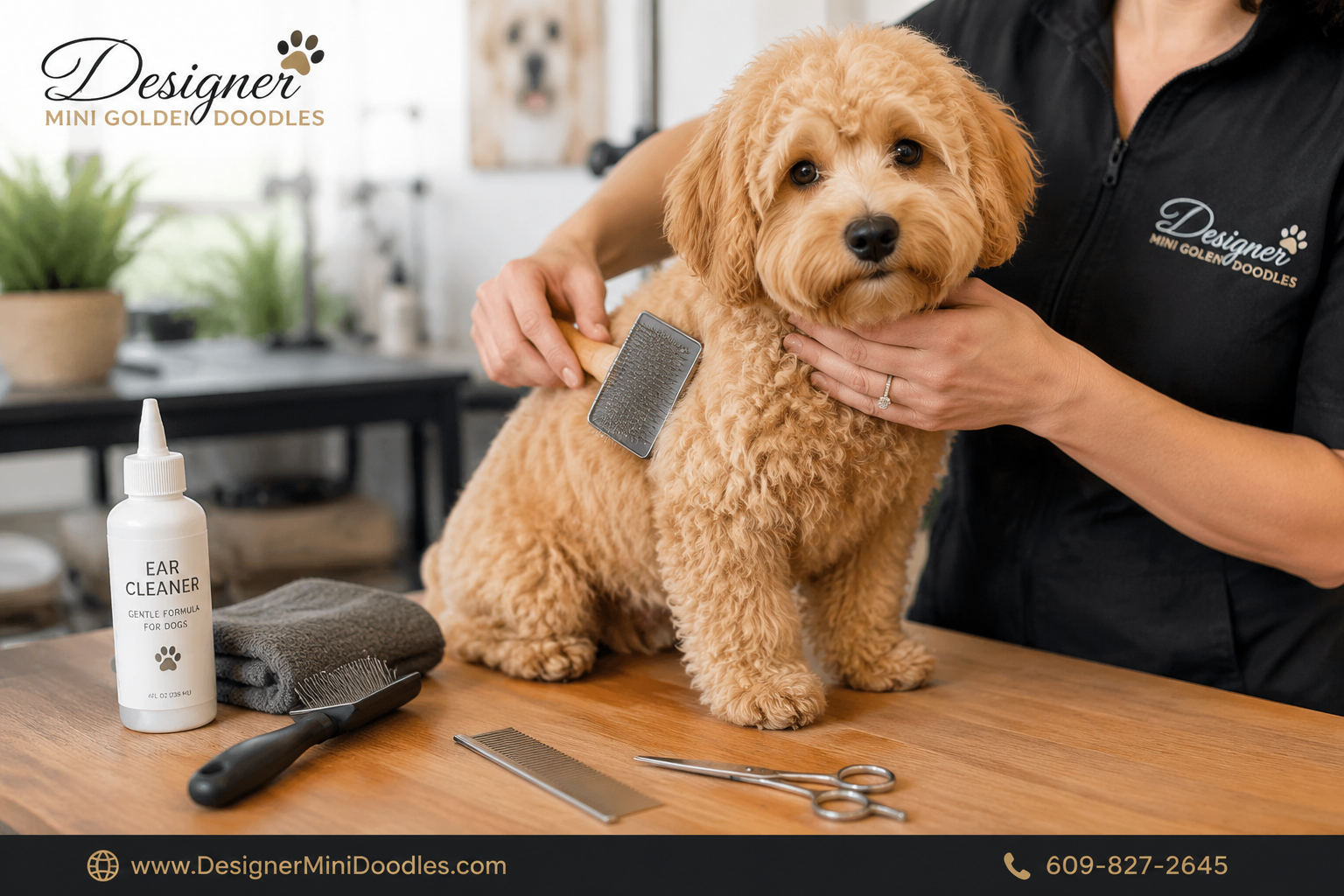
Mini goldendoodle puppy prices in 2026 range from $500 (scam or backyard) to $4,500+ (accredited breeder with full health testing). The wide range reflects vastly different breeding practices, not brand markup.
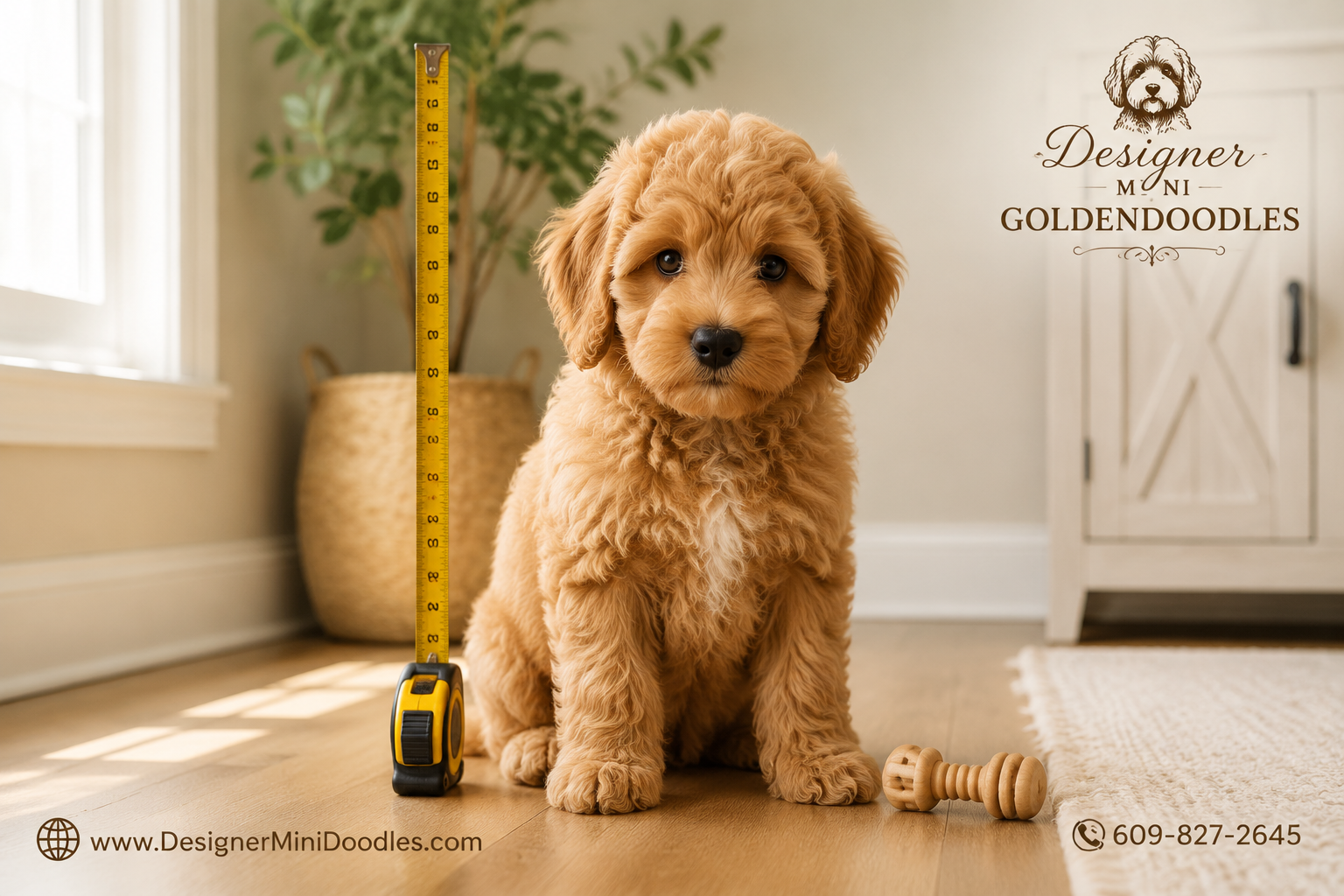
Here’s what each price tier actually gets you:
Stolen photos, wire transfers, no vet records. Puppy often doesn’t exist or arrives sick. Avoid.
Volume breeding, minimal socialization, no genetic testing. High risk of hip, eye, and heart issues.
Well-meaning but limited testing. Puppies raised in home but without structured programs like ENS.
Full OFA/DNA panels, genetic health guarantee, early neurological stimulation, crate/potty training started, licensed veterinary care, top bloodlines.
At Designer Doodles, our mini goldendoodles for sale fall in that top tier because our program is run by a working animal biologist, our breed stock comes from top bloodlines, and every litter is raised in a busy home environment with children, other animals, and everyday noise exposure.
Mini goldendoodle puppies for sale near me: how to search smart
The best way to find mini goldendoodle puppies near me is to search by state or metro area, verify the breeder’s credentials, and never buy sight-unseen from a classified ad. Reputable programs will video-call you, share health records, and let you meet the parents (or verify them by video).
Common breeder search areas we cover include mini goldendoodle programs in Florida, Texas, Georgia, North Carolina, California, and Pennsylvania. You can also view our current Google Maps listing for mini goldendoodles for sale to confirm we’re a real, reviewed operation.
If you’re also considering other companion breeds, we offer Frenchie puppies for sale through our sister program.
- Display 9 Products per page







Do mini goldendoodle puppies shed? Understanding the coat
Mini goldendoodles shed significantly less than most breeds, but “hypoallergenic” is a marketing term, no dog is 100% allergen-free. F1B mini goldendoodles (75% Poodle) shed the least and are the safest bet for allergy-sensitive families.
What actually triggers dog allergies is a protein in saliva and dander, not just hair. Because doodles shed less hair, less dander gets released into your home. That’s why they’re recommended for allergy-conscious homes.
Coat types you’ll see:
- Curly (Poodle-like): Lowest shedding, most maintenance
- Wavy (teddy bear): Most common, moderate maintenance
- Straight (flat coat): Rare, sheds more than expected
Why is my mini goldendoodle puppy biting so much?
Puppy biting peaks between 8 and 16 weeks and is completely normal, it’s how puppies explore and teethe. It’s not aggression. The fix is redirection, not punishment.
Practical steps:
- Keep chew toys within arm’s reach in every room. Swap your hand for a toy the second teeth touch skin.
- Yelp and disengage for 10-15 seconds when they bite hard. Puppies learn “too hard = play ends.”
- Freeze wet washcloths for teething relief between 12-20 weeks.
- Increase mental stimulation. Overtired or under-stimulated puppies bite more, not less.
- Avoid rough hand-play. Wrestling with hands teaches biting is a game.
Most biting resolves by 5-6 months as adult teeth come in. If it persists past 7 months, consult a trainer.
Mini goldendoodle temperament and personality
Mini goldendoodles are among the most family-friendly dogs available: affectionate, patient with children, socially confident, and highly trainable. They rank consistently as top companion dogs for first-time owners.
Core traits you can expect:
- Velcro dogs. They want to be where you are, following you room to room.
- Sensitive. They respond poorly to harsh corrections and thrive on positive reinforcement.
- Social with strangers and other pets. Early socialization amplifies this.
- Intelligent bordering on mischievous. They need mental work, not just physical exercise.
- Moderate barkers. They’ll alert but aren’t yappy when properly stimulated.
Common mistake: Assuming “smart” means “trains itself.” Mini goldendoodles need consistent structure or they’ll train you instead.
Are mini goldendoodles good for apartments?
Yes, mini goldendoodles are well-suited to apartment living because of their moderate size, adaptable energy, and low reactivity. The key is meeting their mental and physical needs daily, not the square footage of your home.
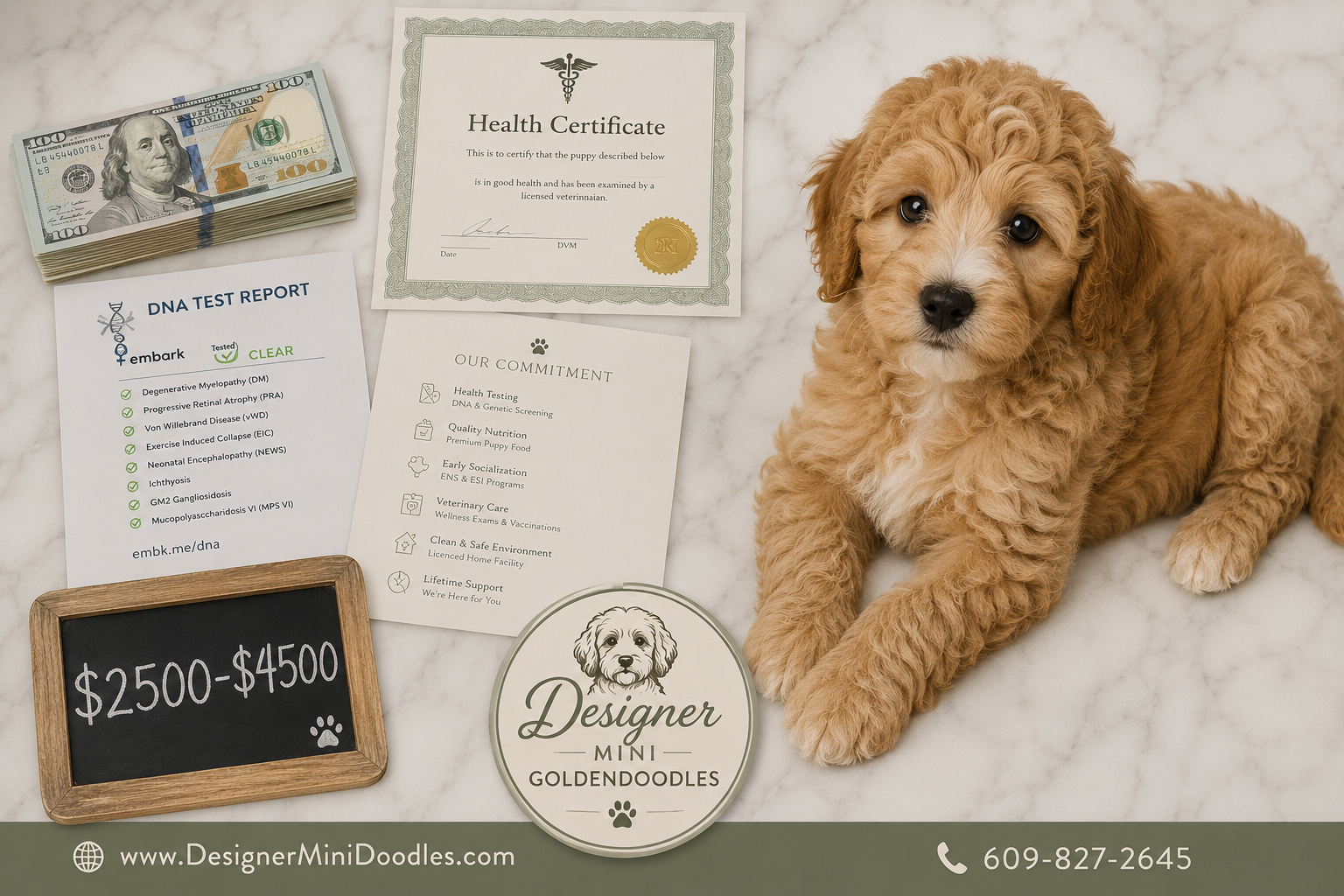
Apartment success checklist:
- 45-60 minutes of daily exercise (two walks + play)
- Mental enrichment, puzzle feeders, training sessions, scent games
- Crate training from day one for calm alone-time
- Neighbor-friendly barking control through early socialization
- A midday potty break for young puppies under 6 months
Learn more about small doodles thriving in tighter spaces in our 10-16 lb micro goldendoodle guide for active lifestyles.
Mini goldendoodle grooming requirements
Mini goldendoodle puppies require brushing 3-4 times per week and professional grooming every 6-8 weeks. Skipping this leads to painful matting, skin infections, and expensive shave-downs.
Your grooming toolkit:
- Slicker brush (daily use)
- Metal comb (checks for hidden mats near ears, armpits, groin)
- Detangling spray
- Blunt-tip scissors for face and paw touch-ups
- Ear cleaner, floppy ears trap moisture and infection
Grooming timeline:
- 8-16 weeks: Short brushing sessions daily to build tolerance
- 4-6 months: First professional groom (bath, sanitary trim, nails)
- 8-10 months: Coat blows and mats form fast, brush every other day
- Adult: Full groom every 6-8 weeks
Edge case: Curly-coat F1Bs need more frequent grooming than wavy F1s. Budget accordingly, professional grooming typically runs $70,$110 per visit in 2026.
Mini goldendoodle health issues to watch for
Mini goldendoodles are generally healthy but inherit potential conditions from both parent breeds. Reputable breeders screen for the big ones; scam breeders don’t. This is where that $2,500,$4,500 price tag pays for itself.
Conditions to ask breeders about:
| Condition | What to ask for |
|---|---|
| Hip dysplasia | OFA or PennHIP certification on parents |
| Progressive Retinal Atrophy (PRA) | DNA clear or CERF eye exam |
| Von Willebrand’s disease | DNA panel clearance |
| Elbow dysplasia | OFA elbow rating |
| Patellar luxation | Vet exam certification |
| Cardiac issues | OFA cardiac clearance |
Ask for written health guarantees of at least 2 years covering genetic conditions. If a breeder can’t produce test results, walk away.
Mini goldendoodle vs standard goldendoodle: which is better?
Neither is objectively “better”, it depends on your home, activity level, and space. Mini goldendoodles (15-35 lbs) suit apartments, seniors, and families with small children. Standard goldendoodles (50-90 lbs) suit active households with yards and hiking lifestyles.
Choose mini if:
- You live in an apartment or small home
- You want a dog you can travel with easily
- You have young kids and want a manageable size
- You’re a senior or work from home
Choose standard if:
- You have acreage or a large yard
- You want a running/hiking partner
- You prefer a more traditional retriever-sized dog
- Grooming a bigger coat doesn’t intimidate you
How to find reputable mini goldendoodle breeders
A reputable mini goldendoodle breeder health-tests both parents, socializes puppies in a home environment, provides a written health guarantee, and welcomes video visits. Red flags include no health testing, multiple litters always available, and wire-transfer-only payments.
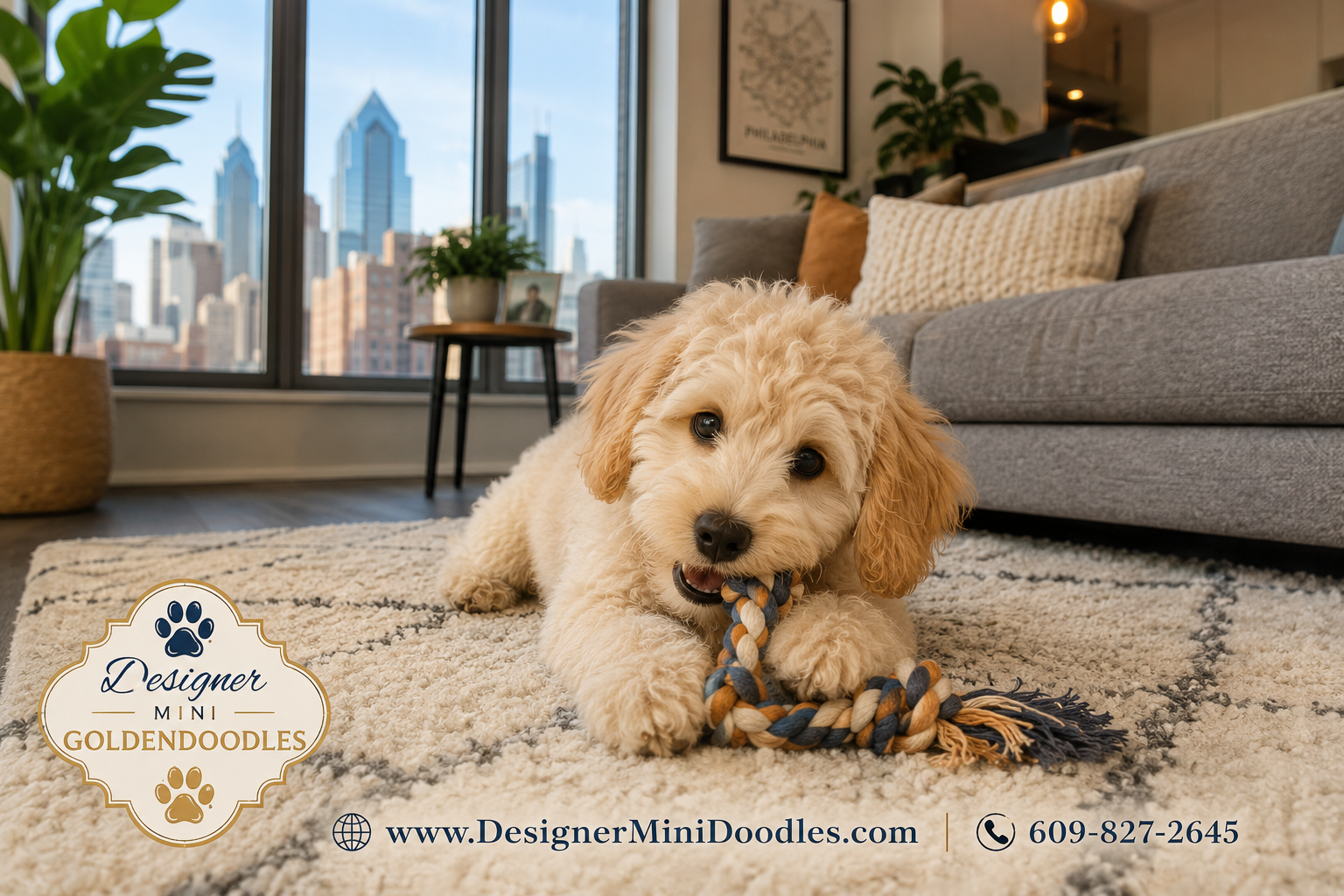
A 10-question breeder screening list:
- Can I see OFA/DNA results for both parents?
- What’s your health guarantee, in writing?
- How are puppies socialized before 8 weeks?
- Do you use Early Neurological Stimulation (ENS)?
- Can I video-chat with the puppy and mother?
- What’s included at pickup (vet exam, first shots, deworming)?
- Do you require a spay/neuter contract?
- Will you take the dog back if I can’t keep it?
- How many litters do you produce per year?
- Can I speak to past puppy families?
Designer Doodles is considered one of the best mini goldendoodle breeders in the USA because our program is run by a real animal biologist, our breed stock comes from documented top bloodlines, and every puppy is raised with:
- ENS (Early Neurological Stimulation) starting from birth
- Early house-breaking and crate training started before pickup
- Exposure to loud noises, children, and other animals for confident, adaptable adults
- Full genetic health guarantees and proper whelping care
- Licensed veterinary oversight through every developmental stage
Explore our miniature goldendoodle breeder program for full details on our health testing and raising protocols.
Mini goldendoodle training tips for beginners
Mini goldendoodles are highly trainable, but their intelligence means they get bored fast. Keep sessions short (5-10 minutes), positive, and consistent. Start basics the day you bring them home.
The first 30 days:
- Days 1-3: Focus on name, potty schedule, and crate acceptance. Nothing else.
- Days 4-10: Add “sit,” “come,” and leash-in-the-house acclimation.
- Days 11-20: Introduce short outings, mild distractions, and “down.”
- Days 21-30: Add “place,” “leave it,” and start structured socialization with vaccinated dogs.
Common mistakes:
- Free-feeding (breaks potty training and reward-based learning)
- Repeating commands (“sit, sit, sit…”), say it once
- Skipping crate training because it “feels mean” (it prevents separation anxiety)
- Punishing accidents you didn’t catch in the act
For related crate and potty training frameworks, our housebreaking a mini doodle puppy guide walks through the schedule week by week.
Frequently asked questions
How big do mini goldendoodle puppies get?
Most reach 15-35 pounds and 13-20 inches at the shoulder by 12 months. Size depends on the Poodle parent, Toy Poodle crosses stay smaller, Mini Poodle crosses grow larger.
Are mini goldendoodles hypoallergenic?
No dog is truly hypoallergenic, but F1B mini goldendoodles (75% Poodle) are the closest option and work well for most allergy-sensitive families.
How long do mini goldendoodles live?
12-15 years on average with proper nutrition, exercise, and preventive vet care.
Do mini goldendoodles bark a lot?
No. They’ll alert-bark at doorbells or strangers but aren’t chronic barkers when properly exercised and mentally stimulated.
When can I bring a mini goldendoodle puppy home?
Never before 8 weeks. Reputable breeders release puppies between 8-10 weeks after full weaning and initial vaccinations.
How often do mini goldendoodles need to be groomed?
Professional grooming every 6-8 weeks plus at-home brushing 3-4 times per week to prevent matting.
Are mini goldendoodles good with cats?
Generally yes, especially when socialized early. Their gentle, non-predatory temperament makes them one of the better breeds for multi-pet homes.
What’s the difference between a mini and a micro goldendoodle?
Micro goldendoodles are smaller (typically 10-20 lbs) and often have more Toy Poodle influence. Minis run 15-35 lbs.
Do mini goldendoodles have separation anxiety?
They can, because they bond intensely with their families. Crate training and gradual alone-time practice starting at 8 weeks prevents most cases.
Can I train a mini goldendoodle without professional help?
Yes, most owners handle basic obedience at home. Group classes help with socialization even if you don’t need the training itself.
Conclusion: your next steps
Mini goldendoodle puppies check nearly every box for modern families: right-sized for apartments and homes, low-shedding, affectionate without being clingy, and among the easiest breeds to train. The catch is that “cheap” mini goldendoodles almost always cost more in the long run, in vet bills, behavioral issues, or heartbreak.
Your action plan:
- Decide on generation (F1 vs F1B) based on your allergy needs and coat preference.
- Set a realistic budget, plan for $2,500,$4,500 upfront plus $1,500,$2,000 in first-year costs (vet, food, grooming, gear).
- Interview 2-3 breeders using the 10-question checklist above.
- Ask for OFA and DNA documentation in writing before sending any deposit.
- Prepare your home, crate, playpen, chew toys, and a schedule, before pickup day.
- Book grooming and vet appointments in advance for weeks 10 and 16.
When you’re ready to see available puppies from a program run by a working animal biologist with top-bloodline breed stock, ENS from birth, and early house/crate training already started, browse our current litters or contact us directly. That’s the difference between buying a puppy and starting a 15-year relationship right.