

Last updated: July 8, 2026
goldendoodle mini
A goldendoodle mini is a cross between a Golden Retriever and a Miniature Poodle, typically weighing 15-35 pounds and standing 13-20 inches at the shoulder. They’re low-shedding, highly trainable, and well-suited to apartments, families, and first-time dog owners. Expect to pay $2,500,$4,500 from an accredited breeder with a genetic health guarantee, anything under $1,500 is a red flag for puppy mills or scams.
goldendoodle mini
- Size range: 15-35 lbs and 13-20 inches tall, roughly one-third to one-half the size of a standard goldendoodle.
- Lifespan: 12-16 years, longer than most standard-sized doodles.
- Temperament: Affectionate, social, moderately energetic, and eager to please.
- Shedding: Low to minimal, especially in F1B and multigenerational lines with tighter poodle-type coats.
- Grooming: Requires brushing 3-4 times per week and professional grooming every 6-8 weeks.
- Price benchmarks: $2,500,$4,500 from ethical breeders; avoid listings under $1,500.
- Apartment-friendly: Yes, with daily walks and mental enrichment.
- First-time owner rating: Excellent, one of the most beginner-friendly designer breeds.
What Is a Mini Goldendoodle?
A mini goldendoodle is a hybrid dog produced by crossing a Golden Retriever (typically the mother, for whelping safety) with a Miniature Poodle (typically the sire). The result is a compact, teddy-bear-style companion that inherits the Golden’s warm temperament and the Poodle’s low-shedding coat and cognitive sharpness.
There are several generations you’ll encounter:
- F1: 50% Golden Retriever, 50% Mini Poodle, the first-generation cross.
- F1B: F1 bred back to a Poodle, producing 75% Poodle genetics and the lowest shedding.
- F2 / F2B / Multigen: Later generations bred for coat consistency and temperament stability.
At Designer Doodles, our program is run by a working animal biologist, and every breeding pair, whether toy poodle, goldendoodle, mini bernedoodle, or cavapoo, comes from documented top bloodlines with verified health clearances. That genetic foundation is why we’re considered one of the best micro goldendoodle breeders in the USA.
How Big Do Mini Goldendoodles Get?
Most mini goldendoodles finish growing between 15 and 35 pounds and stand 13 to 20 inches tall at the shoulder. Full adult size is usually reached between 11 and 14 months of age, though the coat continues maturing until around 18 months.
Size varies based on parent size and generation:
| Category | Weight | Height |
|---|---|---|
| Micro/Petite Mini | 10-20 lbs | 11-14 in |
| Standard Mini | 20-35 lbs | 14-18 in |
| Medium Mini | 35-50 lbs | 17-20 in |
Rule of thumb: A puppy’s adult weight is roughly 4x its 8-week weight, or 2x its 16-week weight, though this varies by line.
Mini Goldendoodle vs Standard Goldendoodle: Size Difference
The core difference is scale. A standard goldendoodle typically weighs 50-90 pounds and stands 20-26 inches tall, while a mini clocks in at 15-35 pounds and 13-20 inches. That’s roughly one-third to one-half the mass.
Choose a mini if you:
- Live in an apartment or smaller home
- Want a travel-friendly companion (airline cabin-eligible in some cases)
- Prefer lower food and boarding costs
- Have limited yard space
Choose a standard if you:
- Want a jogging or hiking partner for long-distance activity
- Have young children who need a sturdier playmate
- Have space to burn energy freely
For urban dwellers specifically, a 10-16 lb micro goldendoodle is often the sweet spot for apartment life.
Mini Goldendoodle Price: How Much Do They Cost?
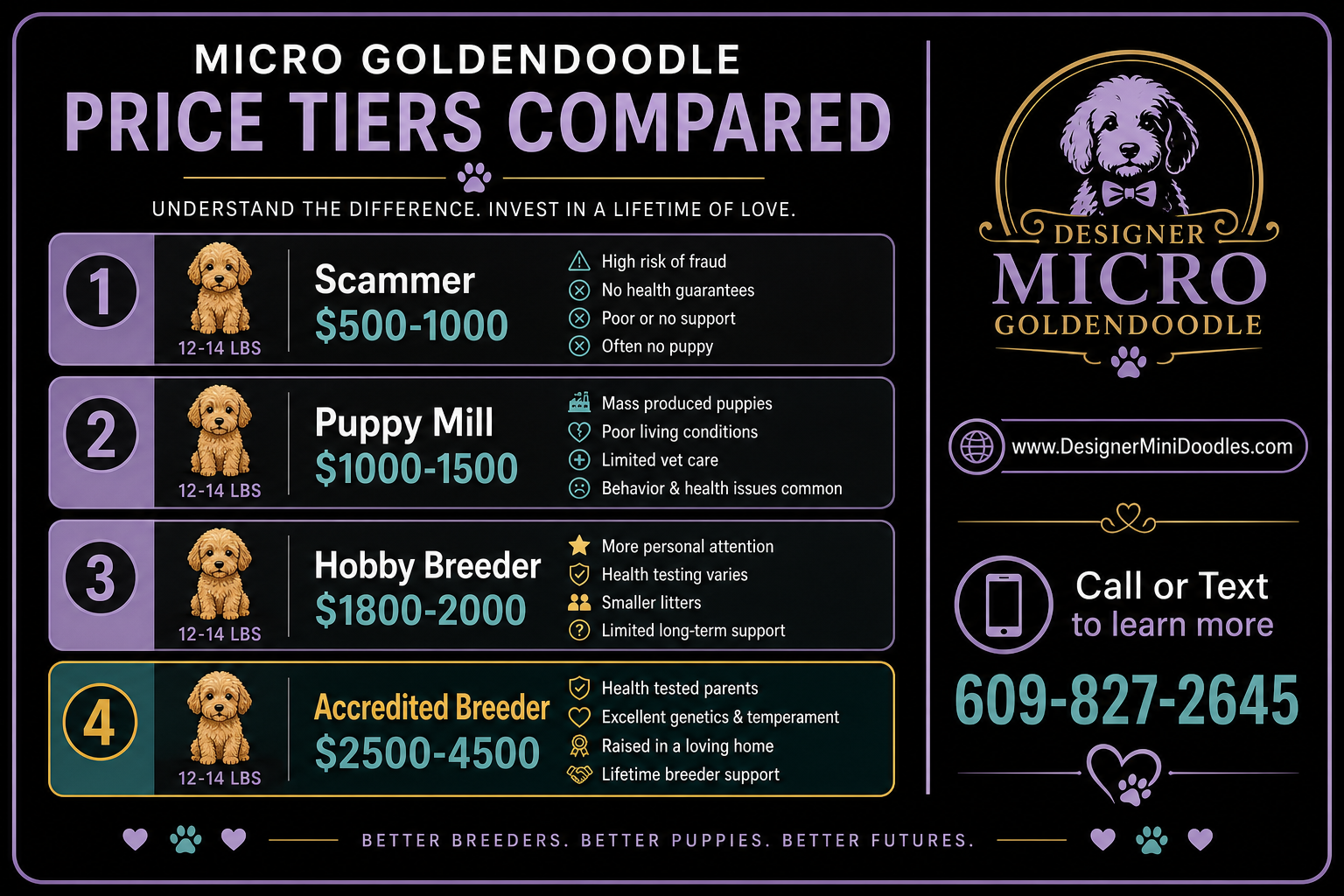
Expect to pay $2,500,$4,500 for a mini goldendoodle from an accredited breeder in 2026. Price varies by color, size (smaller = more expensive), generation, and breeder reputation. Here’s the honest market breakdown:
Mini Goldendoodle Price Tiers (2026)
| Source | Price Range | What You Get |
|---|---|---|
| Scammer / Fake Listing | $500,$1,000 | No puppy exists, wire fraud, fake shipping fees |
| Puppy Mill | $1,000,$1,500 | Sick puppies, no health testing, poor socialization |
| Hobby Breeder | $1,800,$2,000 | Backyard breeding, limited health guarantees, inconsistent temperament |
| Accredited Breeder | $2,500,$4,500 | Genetic health guarantee, ENS protocol, early housebreaking and crate training, proper whelping |
The $2,500,$4,500 tier includes: OFA/PennHIP hip and elbow clearances, cardiac and eye exams on parents, embark DNA panels, veterinary-supervised whelping, first vaccines, deworming, microchipping, and a written 2-year genetic health guarantee. That’s where our mini doodle puppies sit, and it’s why our waitlist reflects the real cost of doing it right.
- Display 9 Products per page







Mini Goldendoodle Temperament and Personality
Mini goldendoodles are affectionate, social, and highly trainable, a blend of the Golden Retriever’s people-loving nature and the Poodle’s intelligence. They form strong bonds with their families and generally do well with children, other dogs, and even cats when properly introduced.
Core personality traits:
- Affectionate: They want to be near you. Velcro-dog tendencies are common.
- Playful but not hyper: Moderate energy, with strong “off switch” indoors.
- Intelligent: Ranks high in trainability among family dogs.
- Socially confident: Rarely aggressive; occasional shyness in undersocialized lines.
- Sensitive: They respond poorly to harsh corrections. Positive reinforcement works best.
Common mistake: Assuming a mini goldendoodle’s friendliness means it doesn’t need socialization. Even naturally social dogs need structured exposure to new people, sounds, and environments before 16 weeks.
Are Mini Goldendoodles Good for Apartments?
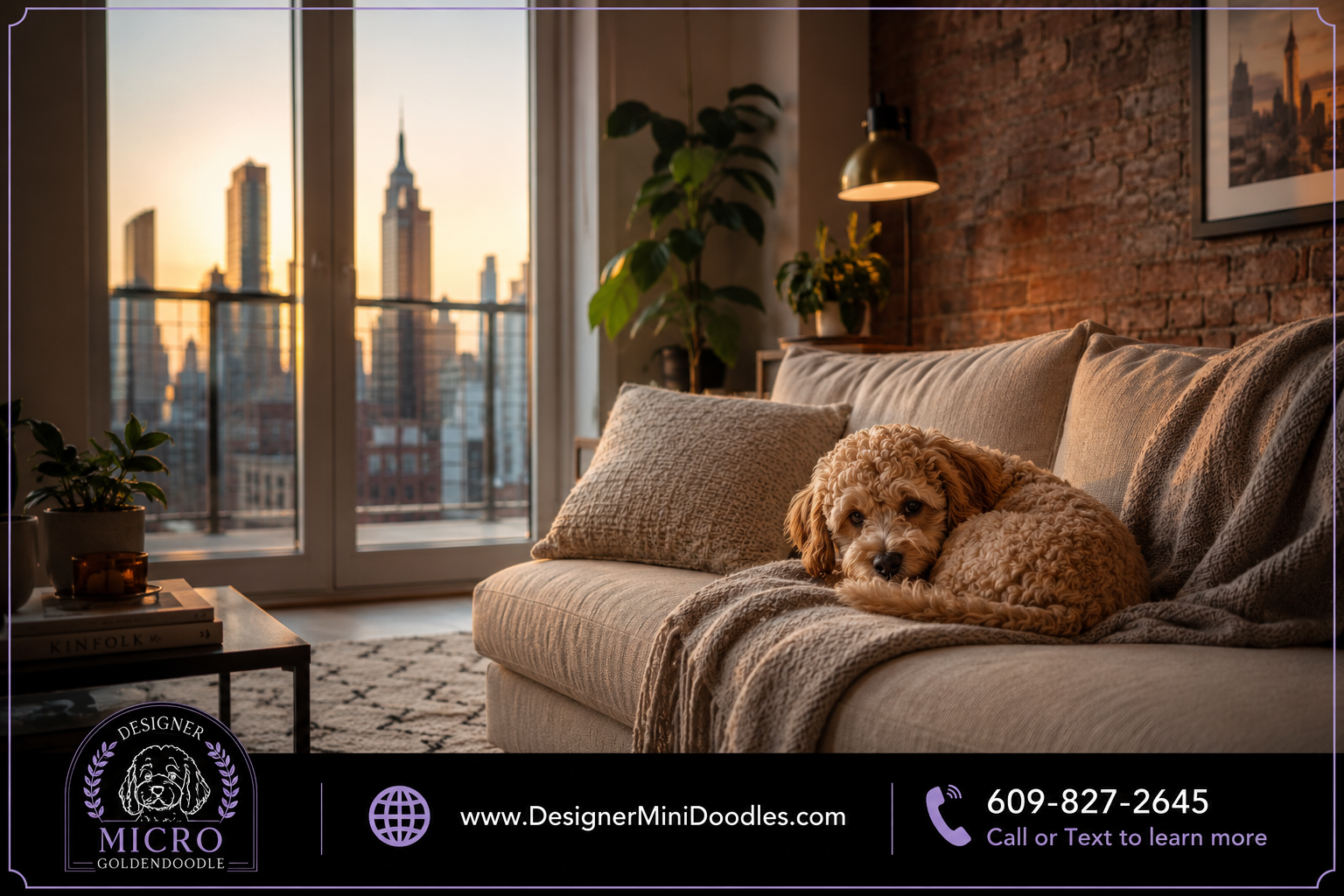
Yes, mini goldendoodles are one of the best doodle breeds for apartment living. Their compact size, low-shedding coat, and moderate energy level suit small spaces well, provided they get 45-60 minutes of daily exercise and adequate mental stimulation.
What makes them apartment-friendly:
- Compact footprint fits comfortably on a sofa or in a crate
- Rarely bark excessively when properly trained
- Low-dander coat is friendlier to shared HVAC and close neighbors
- Adaptable energy, they’ll match your pace
We socialize our puppies from birth to the noises of a busy home: vacuum cleaners, doorbells, other dogs, children, kitchen sounds. That early-life exposure is exactly why our micro goldendoodles thrive in urban and apartment settings without startling at every hallway footstep.
Mini Goldendoodle Grooming Requirements
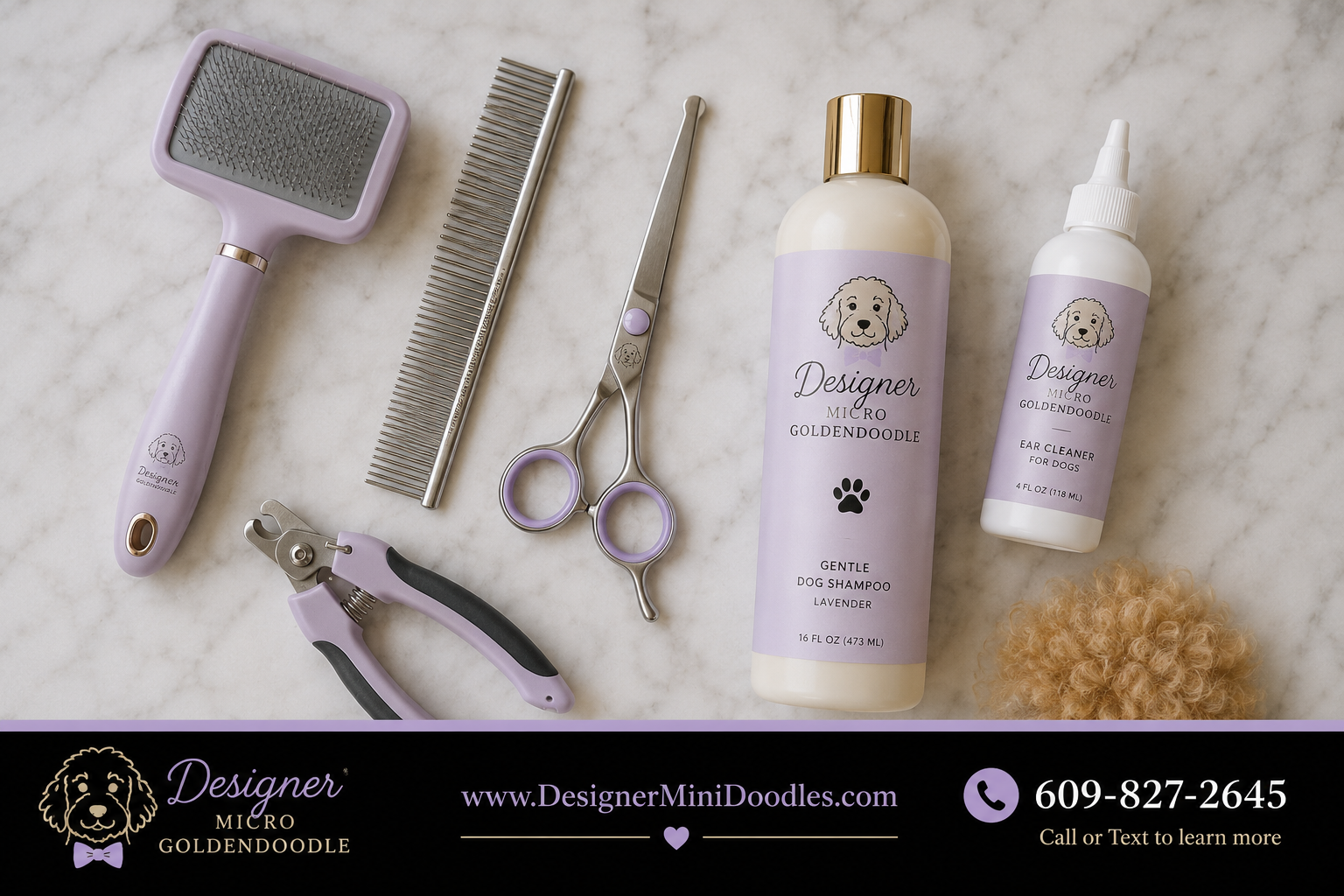
Mini goldendoodles require moderate-to-high grooming: brushing 3-4 times per week, professional grooming every 6-8 weeks, and regular ear cleaning. Their coats don’t self-shed, which means loose hair mats against the skin if not managed.
Weekly at-home routine:
- Brush with a slicker brush and metal comb, work down to the skin, not just the surface.
- Check ears for wax buildup and pluck excess hair if needed.
- Wipe tear stains around the eyes with a damp cloth.
- Inspect paws and trim between-pad hair.
Every 6-8 weeks:
- Professional bath, blow-out, and haircut (teddy bear cut is most popular)
- Nail trim
- Sanitary trim
- Anal gland expression if needed
Common mistake: Waiting too long between brushings. A matted coat requires a full shave-down and costs more at the groomer, plus it’s uncomfortable for the dog.
Do Mini Goldendoodles Shed a Lot?
Most mini goldendoodles shed minimally, but “hypoallergenic” is an overstatement. Shedding depends on genetics:
- F1 (50/50): Light shedding, wavy coat
- F1B (75% Poodle): Minimal to no shedding, curlier coat, best for allergy-conscious homes
- Multigen: Consistent low-shedding when bred selectively for coat type
No dog is truly hypoallergenic, allergies are triggered by dander and saliva, not just hair. But F1B and multigen mini goldendoodles are among the most tolerable breeds for mild-to-moderate allergy sufferers.
Mini Goldendoodle Training Difficulty
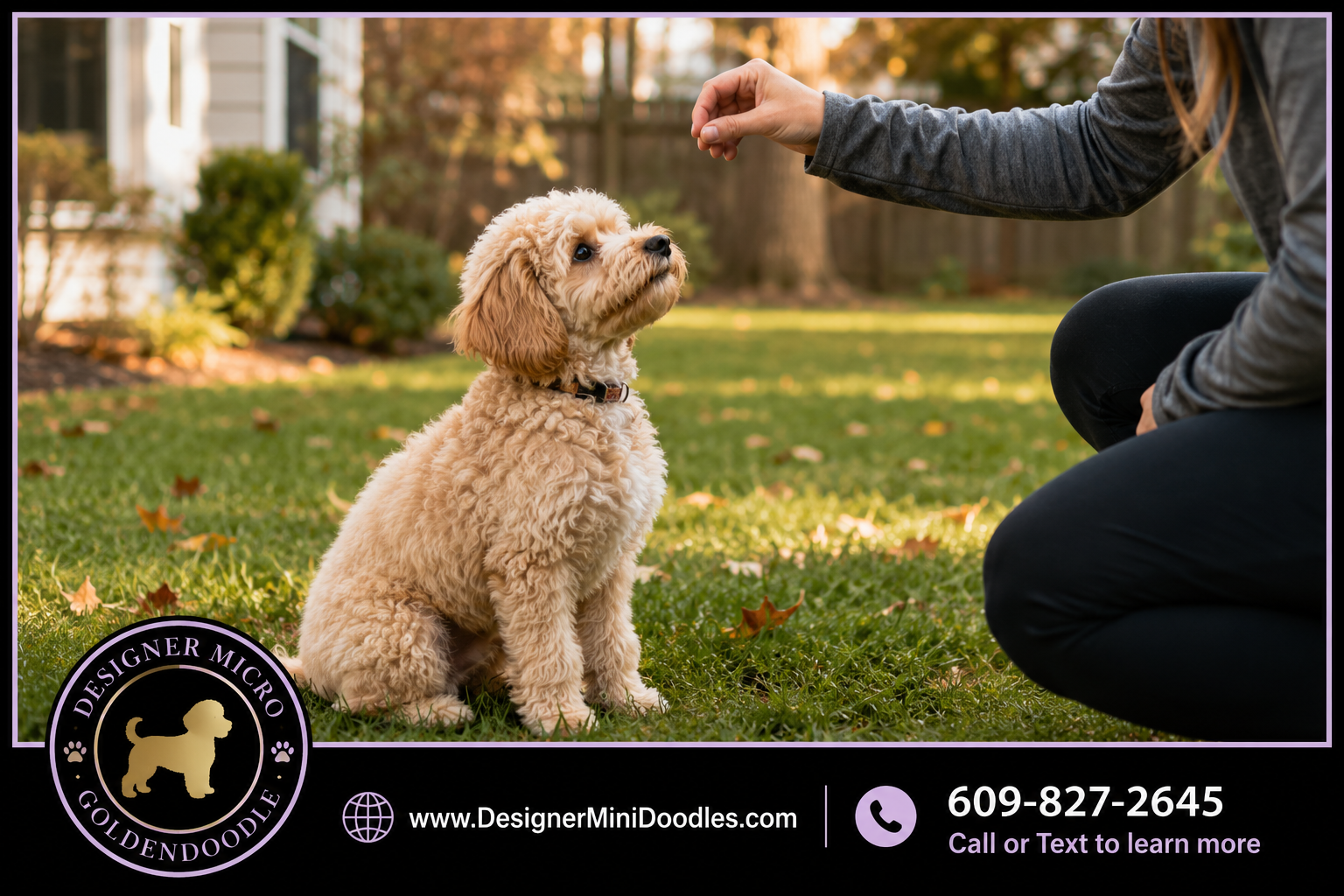
Mini goldendoodles are among the easiest breeds to train. They combine Poodle intelligence with Golden Retriever eagerness to please, which means they pick up commands quickly and respond exceptionally well to positive reinforcement.
Realistic training timeline:
| Milestone | Typical Age |
|---|---|
| Reliable name response | 8-10 weeks |
| Sit, down, come (in low distraction) | 10-14 weeks |
| Fully house-trained | 4-6 months |
| Solid recall in distraction | 8-12 months |
| Off-leash reliability (if pursued) | 12-18 months |
Our program starts with Early Neurological Stimulation (ENS) from days 3-16 of life, followed by structured handling, sound exposure, and early crate and potty introduction. By 8 weeks, puppies leave with a foundation most breeders don’t provide until 16 weeks. The same protocol is used across our program, including our mini bernedoodle puppies for sale.
Mini Goldendoodle Health Problems and Issues
Mini goldendoodles are generally healthy, but they can inherit conditions from either parent breed. Reputable breeders test for all of these before pairing dogs.
Common health concerns to screen for:
- Hip and elbow dysplasia (OFA/PennHIP clearances required)
- Progressive Retinal Atrophy (PRA), DNA testable
- Von Willebrand’s disease, DNA testable
- Ear infections, floppy ears trap moisture
- Patellar luxation, more common in smaller lines
- Addison’s disease, inherited from Poodle side
Ask any breeder for written proof of parent health testing (OFA and Embark reports). If they can’t produce it, walk away. The single most useful investment beyond purchase price is pet insurance in the first year.
Mini Goldendoodle vs Cavapoo: Which Is Better?
Neither is universally “better”, the right choice depends on your lifestyle. Mini goldendoodles are larger, more athletic, and slightly more trainable; cavapoos are smaller, cuddlier, and generally lower-energy.
| Factor | Mini Goldendoodle | Cavapoo |
|---|---|---|
| Adult weight | 15-35 lbs | 8-20 lbs |
| Energy level | Moderate, high | Low, moderate |
| Trainability | Very high | High |
| Grooming | Every 6-8 weeks | Every 6-8 weeks |
| Lifespan | 12-16 years | 12-15 years |
| Best for | Active families, first-time owners | Seniors, low-energy households |
Choose a mini goldendoodle if you want a slightly larger, more athletic companion who can hike, swim, and keep up on longer walks. Choose a cavapoo if you want a smaller lap dog with lower exercise needs.
Mini Goldendoodle Lifespan: How Long Do They Live?
Mini goldendoodles typically live 12-16 years, longer than standard goldendoodles (10-14 years) and most large breeds. Smaller body size correlates with longer lifespan across dog breeds.
Factors that extend lifespan:
- Maintaining a lean body condition (avoid obesity)
- Annual veterinary bloodwork after age 7
- Quality diet with balanced protein and omega-3s
- Regular dental care, dental disease shortens lifespan
- Consistent exercise and mental enrichment
Are Mini Goldendoodles Good for First-Time Owners?
Yes, mini goldendoodles are one of the top breeds for first-time dog owners. They’re forgiving of training mistakes, socially adaptable, and don’t require the high exercise demands of working breeds.
Why they work for beginners:
- Eager to please, so training feels rewarding early on
- Manageable size for handling and vet visits
- Social confidence reduces reactivity problems
- Low-shedding coat lowers cleaning burden
That said, first-time owners should still commit to puppy classes, daily walks, and consistent routines. See our full breakdown on why the micro size is ideal for first-time dog owners.
Mini Goldendoodle Common Mistakes to Avoid
Even experienced dog owners make predictable mistakes with mini goldendoodles. Here are the ones that cost the most in behavior, health, and money:
- Buying based on price alone. A $1,200 puppy from Craigslist usually costs $5,000+ in vet bills and behavioral training within two years.
- Skipping socialization windows. The critical window closes around 16 weeks. Missed exposure creates lifelong anxiety.
- Under-grooming. Waiting 3+ months between grooms leads to painful matting and skin infections.
- Overfeeding. Minis gain weight fast on standard-size portions. Follow puppy food labels by weight, not by breed.
- Skipping the crate. Crate training prevents separation anxiety and household destruction, start day one.
- Assuming they’re hypoallergenic. If anyone in the home has severe allergies, spend time with an adult mini goldendoodle before committing.
- Ignoring mental exercise. A bored mini goldendoodle is a destructive one. Rotate puzzle toys and training sessions daily.
For families considering a related breed, we also raise toy goldendoodle puppies using the same standards. And for breeders who also work with stud services, we recommend French Bulldog Stud Service from our sister program for anyone in that lane.
You can also visit us on Google Maps to see our reviews and location.
Frequently Asked Questions
How much does a mini goldendoodle cost in 2026?
A mini goldendoodle from an accredited breeder costs $2,500,$4,500. Prices below $1,500 typically indicate puppy mills or scams.
How big do mini goldendoodles get full-grown?
Full-grown mini goldendoodles typically weigh 15-35 pounds and stand 13-20 inches tall at the shoulder, reaching full size by 11-14 months.
Do mini goldendoodles bark a lot?
No, mini goldendoodles are generally quiet dogs. They bark to alert but rarely bark excessively when properly exercised and trained.
Are mini goldendoodles hypoallergenic?
No dog is fully hypoallergenic, but F1B and multigen mini goldendoodles produce minimal dander and are among the best options for mild-to-moderate allergy sufferers.
How often do mini goldendoodles need grooming?
Brush 3-4 times per week at home and schedule professional grooming every 6-8 weeks to prevent matting.
What’s the difference between F1, F1B, and multigen mini goldendoodles?
F1 is 50% Golden Retriever and 50% Mini Poodle. F1B is an F1 bred back to a Poodle (75% Poodle). Multigen means two doodle parents, bred for coat and temperament consistency.
Can mini goldendoodles be left alone?
Adult mini goldendoodles can typically be left alone 4-6 hours if properly crate trained. Puppies need more frequent breaks, every 2-3 hours.
What color mini goldendoodles are most common?
Apricot, cream, and red are the most common. Parti (two-color), phantom, and merle patterns are rarer and often priced higher.
Do mini goldendoodles get along with cats?
Yes, most mini goldendoodles coexist well with cats, especially when introduced during puppyhood.
How much exercise does a mini goldendoodle need?
Plan on 45-60 minutes of daily exercise, a mix of walks, play, and mental enrichment like puzzle toys or training sessions.
Conclusion
A goldendoodle mini is one of the most well-rounded companion dogs available in 2026, compact enough for apartments, trainable enough for first-time owners, and long-lived enough to be a decade-plus family member. The single most important decision you’ll make isn’t color or size, it’s choosing a breeder who invests in health testing, ENS, early socialization, and a real genetic health guarantee.
Your next steps:
- Decide on size range (micro 10-20 lbs vs. standard mini 20-35 lbs) based on your lifestyle.
- Set a realistic budget of $2,500,$4,500 plus $1,500,$2,000 in first-year costs (food, vet, grooming, supplies).
- Ask any breeder for OFA, cardiac, eye, and DNA testing documentation before deposit.
- Prepare your home: crate, ex-pen, puppy-proofing, and a scheduled first vet visit.
- Enroll in a positive-reinforcement puppy class before your puppy hits 16 weeks.
Ready to explore available puppies? Browse our miniature goldendoodle breeders program or check regional availability in Florida, Texas, or New York.