
Last updated: July 8, 2026
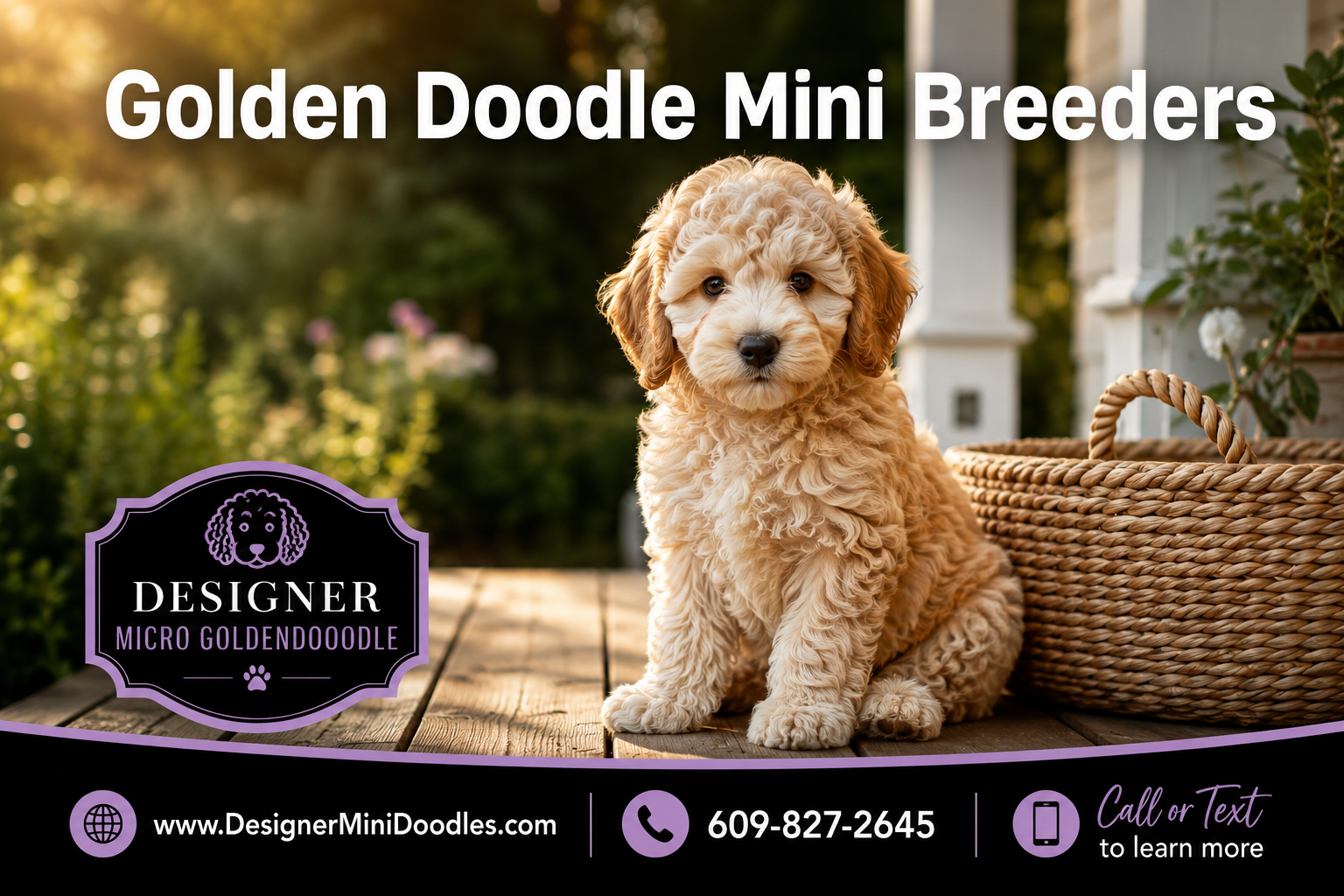
golden doodle mini breeders
Reputable golden doodle mini breeders produce F1 or F1b mini goldendoodles that weigh 15-35 pounds, complete full genetic health panels on both parents, and use early neurological stimulation (ENS) from birth. Expect to pay $2,500,$4,500 for a properly bred, health-guaranteed mini goldendoodle puppy in 2026. Anything under $1,500 is almost always a scam, puppy mill, or a breeder skipping critical health testing.
golden doodle mini breeders
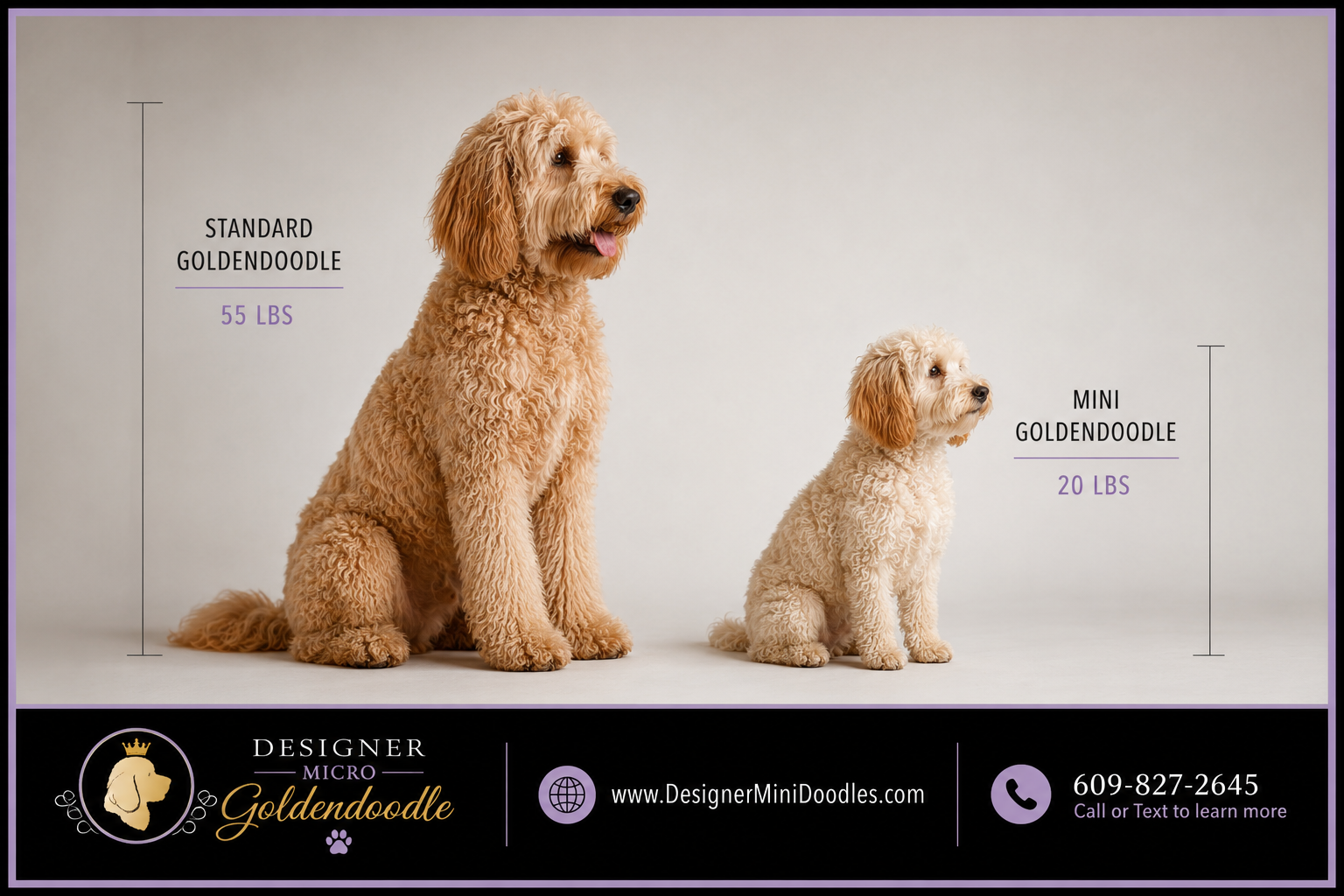
- Mini goldendoodles typically stand 13-20 inches tall and weigh 15-35 pounds at maturity, making them ideal for apartments and small homes.
- Expect $2,500,$4,500 from an accredited breeder with genetic testing, ENS, and a written health guarantee.
- Prices under $1,500 are red flags, most involve scams, puppy mills, or untested parents.
- Reputable breeders health-test for PRA, DM, vWD, hips, elbows, and cardiac issues before breeding.
- F1 (50/50) and F1b (75% poodle) are the most common generations; F1b sheds the least.
- Life expectancy is 12-16 years, longer than most standard-size doodles.
- Early socialization matters more than pedigree, insist on breeders using ENS and household exposure protocols.
- Ask for OFA/PennHIP results, parent DNA panels, and a written contract before sending any deposit.
What Is a Mini Goldendoodle and How Big Do They Get?
A mini goldendoodle is a cross between a golden retriever and a miniature or toy poodle, engineered to combine the retriever’s easygoing temperament with the poodle’s low-shedding coat in a smaller package. Adult mini goldendoodles typically weigh 15-35 pounds and stand 13-20 inches at the shoulder.
Size varies based on the poodle parent:
- Toy poodle cross (micro/teacup mini): 10-20 lbs at maturity
- Miniature poodle cross (standard mini): 20-35 lbs at maturity
The best predictor of adult size is the weight of the poodle parent, not the puppy’s birth weight. Ask your breeder for both parents’ verified adult weights before choosing a puppy. For a deeper look at the smallest end of the spectrum, see this guide to why a 10-16 lb micro goldendoodle is often the perfect family size.
Mini Goldendoodle vs Standard Goldendoodle: Key Differences
The primary differences are size, energy level, and space requirements. Mini goldendoodles top out around 35 pounds while standards can reach 50-90 pounds. That single variable cascades into food cost, exercise needs, grooming time, and suitability for apartments.
| Feature | Mini Goldendoodle | Standard Goldendoodle |
|---|---|---|
| Adult weight | 15-35 lbs | 50-90 lbs |
| Height | 13-20 in | 20-26 in |
| Exercise needs | 45-60 min/day | 60-90 min/day |
| Apartment-friendly | Yes | Difficult |
| Lifespan | 12-16 years | 10-13 years |
| Grooming time | Moderate | Higher |
| Typical price (2026) | $2,500,$4,500 | $2,000,$3,500 |
Choose a mini if: you live in an apartment, travel frequently, or want a dog you can lift into a car. Choose a standard if: you have a large yard, want a jogging partner, or need a service-dog candidate.
How Much Does a Mini Goldendoodle Cost From Breeders?
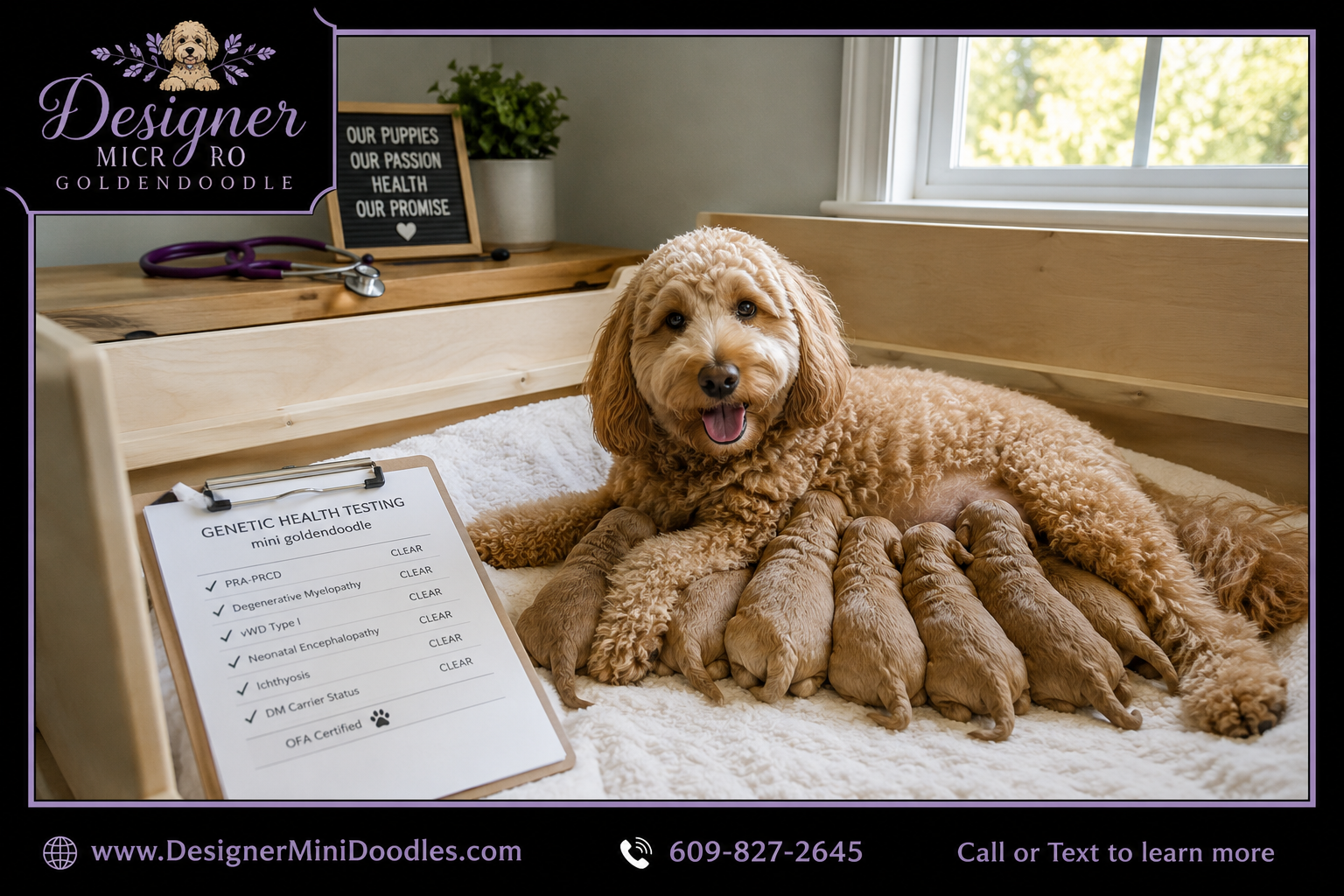
In 2026, a well-bred mini goldendoodle from an accredited breeder costs $2,500,$4,500. Price reflects genetic testing, veterinary care, ENS protocols, and post-sale support, not just the puppy itself.
Here’s the market breakdown I use with clients:
Mini Goldendoodle Price Chart 2026
| Tier | Price Range | What You Get |
|---|---|---|
| Scammer | $500,$1,000 | Fake photos, wire transfers, no puppy ever arrives |
| Puppy Mill | $1,000,$1,500 | No health testing, poor socialization, high vet bills later |
| Hobby Breeder | $1,800,$2,000 | Well-meaning but limited testing, inconsistent programs |
| Accredited Breeder | $2,500,$4,500 | Full genetic panels, ENS, house/crate start, health guarantee |
Add-ons that legitimately raise the price: rare colors (red, phantom, merle), micro sizing under 20 lbs, and shipping via nanny service. Beware anyone charging premium prices without producing OFA certificates and DNA panels on request.
What Should I Look for in Reputable Golden Doodle Mini Breeders?
Look for breeders who publish parental health testing results, use early neurological stimulation from days 3-16, and offer a written multi-year health guarantee. If a breeder cannot produce documentation on demand, keep looking.
The non-negotiable checklist:
- OFA or PennHIP hip/elbow certifications on both parents
- DNA panel covering PRA-prcd, DM, vWD, Ichthyosis, and NEwS
- Cardiac and eye clearances (CAER within the last 12 months)
- ENS protocol from birth to week 3
- Puppy Culture or similar socialization curriculum through week 8
- Written contract with health guarantee (minimum 2 years genetic)
- Return-to-breeder clause if you can’t keep the dog
- In-person or live video visits available
- Vet records including first vaccines and dewormings
- References from past puppy families
At Designer Doodles, our program is run by a trained animal biologist, and every breeding pair, whether toy poodle, mini bernedoodle puppies for sale, goldendoodle, or cavapoo, comes from documented top bloodlines. Our puppies are exposed to household noise, children, other animals, and daily activity from day one, so they arrive confident and adaptable.
Mini Goldendoodle Health Problems and Genetic Issues
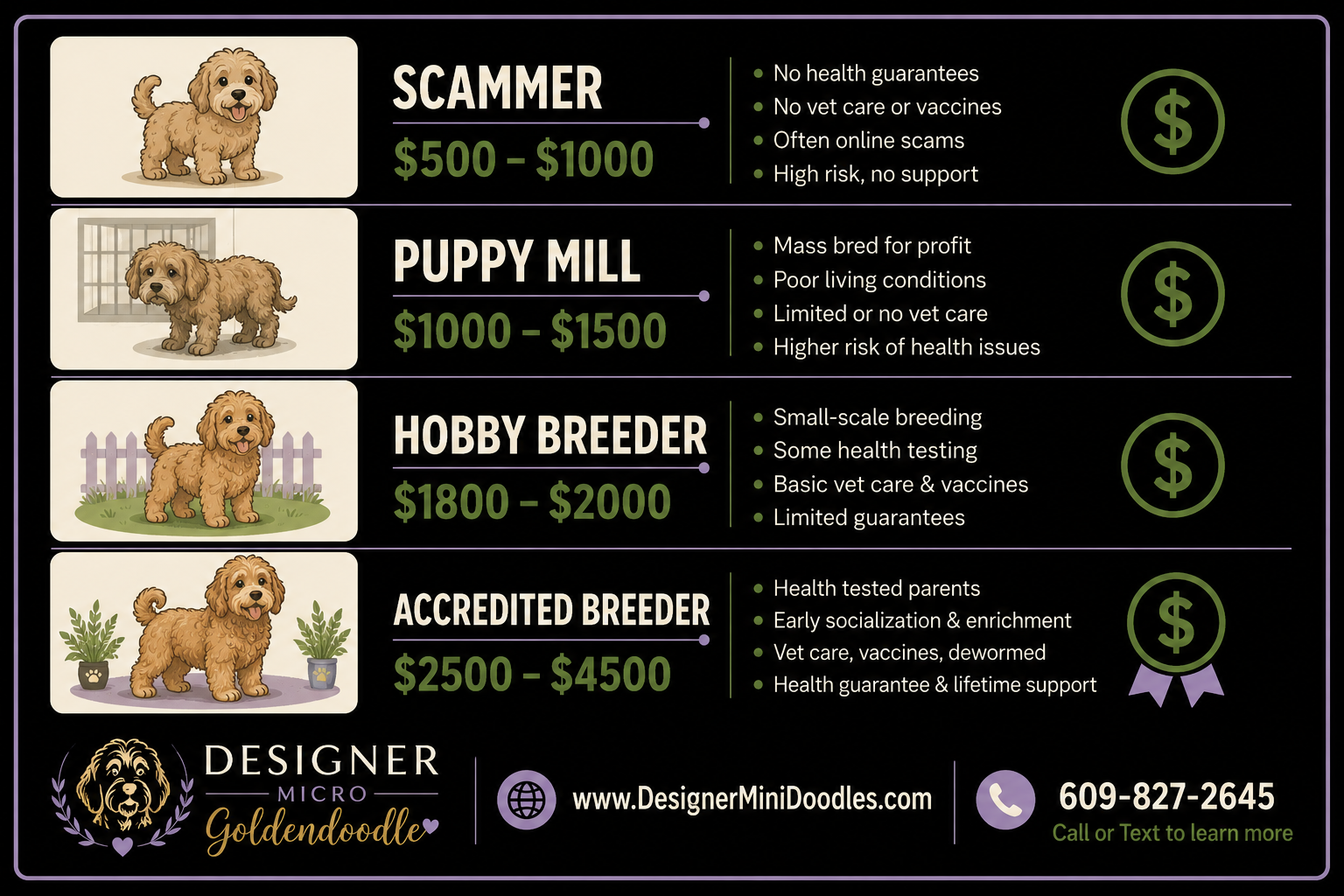
Mini goldendoodles are generally healthy, but they inherit risk from both parent breeds. The most common issues include progressive retinal atrophy (PRA), hip dysplasia, patellar luxation, and von Willebrand’s disease. Responsible breeders screen for all of these before breeding.
Conditions responsible breeders test for:
- PRA-prcd: Progressive blindness (DNA test)
- DM (degenerative myelopathy): Late-onset spinal issue (DNA test)
- vWD: Blood clotting disorder (DNA test)
- Hip dysplasia: OFA or PennHIP radiographs
- Patellar luxation: OFA orthopedic exam
- Cardiac: OFA cardiac evaluation
- Ichthyosis: Skin disorder (DNA test)
Common mistake: buyers accept a breeder’s word that parents are “vet checked.” A vet check is a physical exam, it is not genetic testing. Always ask for the actual certificates and cross-reference them at the OFA online database.
How Long Do Mini Goldendoodles Live and What Health Tests Should Breeders Do?
Mini goldendoodles typically live 12-16 years, with smaller specimens often reaching the upper end of that range. Longevity depends heavily on breeding quality, weight management, dental care, and early screening.
Breeders should complete the full CHIC (Canine Health Information Center) panel appropriate for both parent breeds before any pairing. If a breeder skips testing to save $600 per litter, you’ll pay the difference tenfold in future vet bills.
[av_productgrid select_type='' categories='94' link='product_cat' term_rel='' wc_prod_visible='hide' wc_prod_hidden='' wc_prod_featured='' wc_prod_sale='' wc_prod_additional_filter='' sort='dropdown' prod_order='' offset='0' page_element_filter='' columns='3' image_size='shop_catalog' items='9' paginate='yes' alb_description='' id='' custom_class='' template_class='' av_uid='av-1x999hoy0h' sc_version='1.0']
Are Mini Goldendoodles Good for Apartments and Small Homes?
Yes. Mini goldendoodles are among the best apartment-friendly doodles because of their compact size, low-to-moderate energy in the home, and quiet disposition. A 20-pound mini can thrive in a 500-square-foot studio provided they get daily walks and mental stimulation.
What makes them apartment-suited:
- Small footprint on furniture and floors
- Rarely bark reactively when properly socialized
- Adaptable to elevators, lobbies, and leash walking
- Low shedding, critical for shared HVAC systems
Read more on why a 10-16 lb micro goldendoodle works in apartment and urban living.

Mini Goldendoodle Temperament and Personality Traits
Mini goldendoodles are affectionate, intelligent, and highly social. They typically inherit the retriever’s people-pleasing nature and the poodle’s problem-solving instincts, producing a dog that is easy to train, low in aggression, and eager to bond.
Typical personality traits:
- Velcro-dog tendencies (they follow you room to room)
- Excellent with children and other pets when socialized early
- Sensitive to harsh corrections, positive reinforcement works best
- Playful into old age
- Mild separation anxiety if left alone too long
Edge case: the “poodle-heavy” mini (F1b or multigen) can be more independent and slightly more reserved with strangers. The “golden-heavy” mini (F1) tends to be more openly friendly but may shed slightly more.
Do Mini Goldendoodles Shed a Lot?
Mini goldendoodles are considered low-shedding, but they are not truly hypoallergenic. F1b generations (75% poodle) shed the least; F1 generations (50/50) may shed lightly, especially during coat changes at 6-12 months.
Shedding by generation:
- F1 (golden × poodle): Light shedding, wavy coat
- F1b (F1 × poodle): Minimal shedding, curly coat
- F2b or multigen: Very low shedding, consistent coat
For allergy-sensitive homes, F1b is the safer bet. See our guide on allergy-conscious homes and micro goldendoodles for more detail.
Mini Goldendoodle Grooming Requirements and Maintenance
Plan on brushing 3-4 times per week and a professional groom every 6-8 weeks. Their non-shedding coat requires more human intervention than a shedding breed because dead hair stays trapped in the coat and forms mats without regular removal.
Weekly grooming routine:
- Brush with a slicker brush and metal comb
- Check ears for moisture and debris (poodle-cross ears are prone to infection)
- Trim eye area to prevent tear staining
- Wipe paws after walks
Every 6-8 weeks:
- Full professional groom (bath, blow-dry, haircut, nail trim, ear pluck)
- Cost: $75,$120 depending on region and size
Skipping grooming is the single most common owner mistake. Mats pull on skin, cause hot spots, and eventually require a shave-down that removes the coat you paid for.
How to Avoid Scams When Buying From Mini Goldendoodle Breeders
Scams follow predictable patterns. If the deal feels too good, the price is oddly low, or the seller pressures you to wire money, walk away. Losing a $500 deposit to a scammer is common, losing $3,000 to a puppy mill with a sick dog is worse.
Red flags to reject immediately:
- Prices below $1,500 for a “purebred with health testing”
- Refusal to do live video calls or in-person visits
- Payment only via Zelle, wire transfer, gift cards, or cryptocurrency
- Stock photos reused across multiple listings (reverse image search them)
- No written contract offered
- Vague answers about parent health testing
- Puppy “shipping now” from an out-of-state or overseas location
- Sob-story pressure (“I need to rehome quickly”)
Green flags that indicate legitimacy:
- Breeder asks you screening questions
- Waitlists and deposits with clear terms
- Registered business, verifiable address
- Active social media with progression photos of the same litter over weeks
- Willingness to share vet’s contact information
Best Golden Doodle Mini Breeders Near Me
The best mini goldendoodle breeder near you is one who health-tests, welcomes visits, and stays available after the sale. Rather than choosing purely on distance, screen for accreditation first, then filter by geography. Reputable breeders will often meet halfway or arrange nanny transport for out-of-state families.
Explore state-specific breeder directories:
- Mini goldendoodle breeders in New York
- Mini goldendoodle breeders in Florida
- Mini goldendoodle breeders in Texas
- Mini goldendoodle breeders in Georgia
- Mini goldendoodle breeders in California
- Mini goldendoodle breeders in North Carolina
You can also verify Designer Doodles on our Google Maps listing.
Mini Goldendoodle vs Labradoodle: Which Is Better?
Neither is universally better, the right choice depends on temperament preference and coat needs. Mini goldendoodles tend to be softer, more affectionate, and slightly easier for first-time owners. Mini labradoodles are often more energetic, more athletic, and better suited to active outdoor families.
| Trait | Mini Goldendoodle | Mini Labradoodle |
|---|---|---|
| Temperament | Softer, cuddlier | More driven, athletic |
| Coat consistency | Fluffy, wavy/curly | Variable (fleece, wool, hair) |
| Trainability | Very high | Very high |
| Energy | Moderate | Moderate, high |
| Best for | First-time owners, families | Active households, sports |
Mini Goldendoodle Puppy Training Tips and Socialization
Start training the day your puppy comes home. Mini goldendoodles are highly food-motivated and respond best to short (5-10 minute) positive reinforcement sessions repeated throughout the day. Crate training and potty training should begin immediately, reputable breeders will have already started both.
First-30-days training priorities:
- Crate acclimation (safe space, not punishment)
- Potty schedule (out every 2 hours, after meals, after naps)
- Name recognition and marker word (“yes” or clicker)
- Bite inhibition
- Handling desensitization (paws, ears, mouth, tail)
- Socialization to 100 people, places, and surfaces before 16 weeks
For a deeper training breakdown that also applies to mini goldendoodles, see our post on training a mini bernedoodle puppy, the protocols overlap substantially.
Our puppies leave with a strong foundation because we use ENS from birth and expose them to normal household chaos: vacuum cleaners, doorbells, children, other dogs, and outdoor stimuli. That early exposure is why our families report smoother transitions in the first week home.
Related Reading
- Miniature Goldendoodle breeders directory
- Toy Goldendoodle puppies raised with exceptional care
- Housebreaking a mini bernedoodle puppy
- French Bulldog Stud Service
FAQ
What is the difference between a mini goldendoodle and a micro goldendoodle?
Mini goldendoodles weigh 20-35 lbs; micro (or teacup) goldendoodles weigh 10-20 lbs. Micros are produced by crossing a golden retriever with a toy poodle or by breeding down through multiple generations.
Are mini goldendoodles AKC registered?
No. The AKC does not recognize mixed breeds. They can be registered with hybrid clubs like the Goldendoodle Association of North America (GANA), which is more meaningful for verifying breeder standards.
How long is the waitlist for a reputable mini goldendoodle breeder?
Typically 3-12 months for accredited breeders. Anyone offering an available puppy immediately with no waitlist deserves extra scrutiny.
Do mini goldendoodles bark a lot?
No. They are generally quiet dogs. Excessive barking usually indicates under-socialization, anxiety, or under-exercise, not a breed trait.
Can mini goldendoodles be left alone during the workday?
Adults can handle 4-6 hours alone; puppies cannot. Plan for a midday walker or doggy daycare until at least 12 months of age.
What color mini goldendoodles are most popular?
Cream, apricot, and red are most requested. Rare colors like phantom, parti, and merle command higher prices, but color should never override health and temperament in your selection.
Are male or female mini goldendoodles better?
Neither is objectively better. Temperament differences are minimal in altered (spayed/neutered) pets. Choose based on the individual puppy’s personality.
How soon can I bring a mini goldendoodle puppy home?
Ethical breeders release puppies at 8 weeks minimum, often 9-10 weeks. Anyone releasing at 6 weeks is cutting critical developmental time short.
Conclusion
Buying from reputable golden doodle mini breeders is a research project, not an impulse purchase. The $2,500,$4,500 you spend on a properly bred, health-tested, ENS-raised puppy saves thousands in future vet bills and years of behavioral rehabilitation. The $800 “bargain” from a scammer or mill typically ends in heartbreak, disease, or an empty PayPal account.
Your next steps:
- Write down your non-negotiables (size, coat, temperament)
- Screen breeders using the 10-point checklist above
- Request health certificates and cross-check them on the OFA database
- Get on a legitimate waitlist and put down a refundable deposit
- Prepare your home (crate, gate, vet appointment) before pickup day
If you’d like to see current litters, waitlists, and health documentation, browse available litters at Designer Doodles, we’re proud to be recognized among the best micro goldendoodle breeders in the USA, run by a certified animal biologist with breeding stock from top-tier bloodlines.
Sources
- Orthopedic Foundation for Animals (OFA), CHIC Database, ofa.org
- Goldendoodle Association of North America (GANA), Breeder Standards, goldendoodleassociation.com
- American Veterinary Medical Association, Puppy Selection Guidelines (2024), avma.org
- Early Neurological Stimulation Protocol, Dr. Carmen Battaglia (2009), breedingbetterdogs.com