
golden doodle mini
Last updated: July 19, 2026
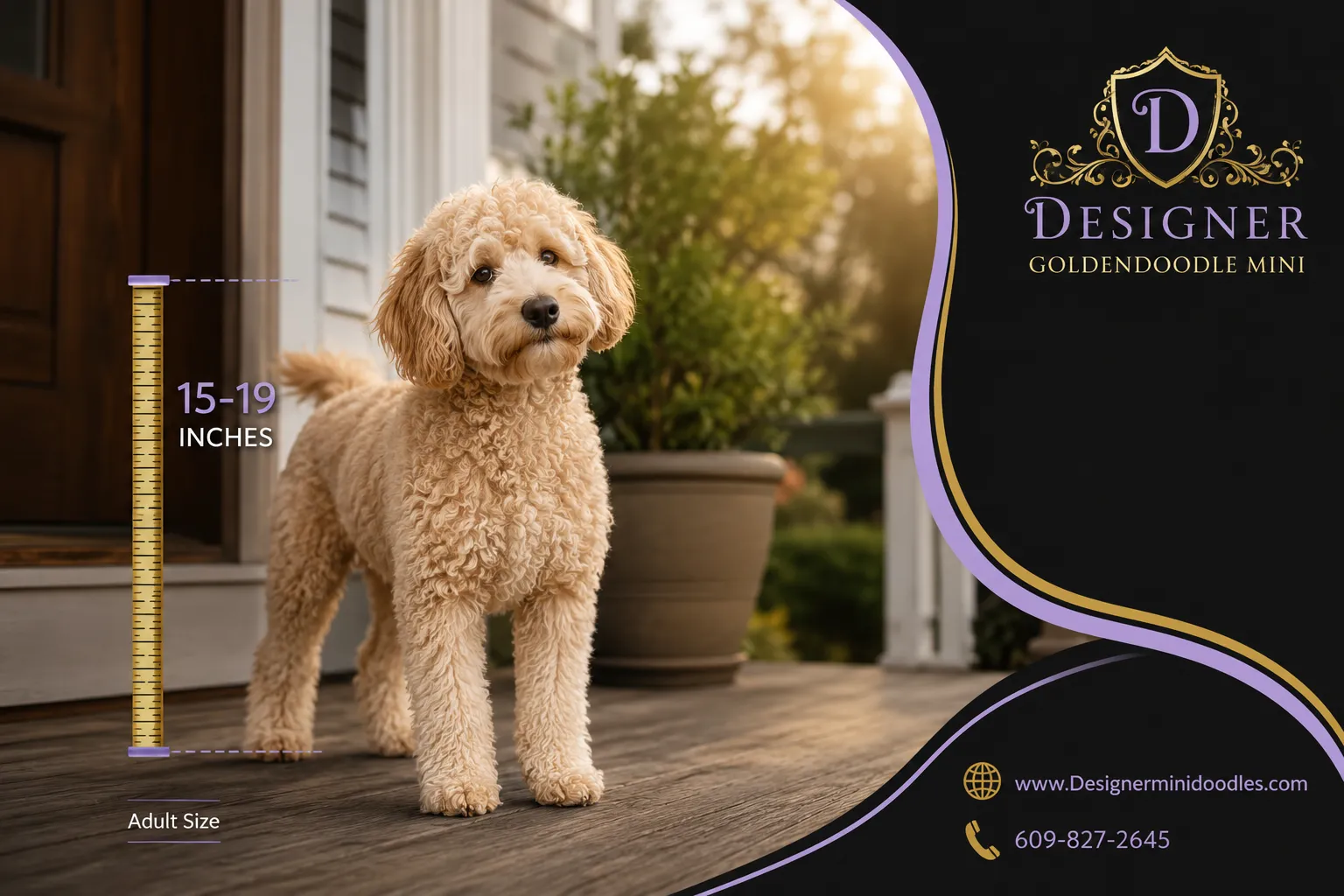
A golden doodle mini is a cross between a Golden Retriever and a Miniature Poodle, typically weighing 15-35 pounds and standing 13-20 inches tall at the shoulder. They’re smart, affectionate, low-shedding when coat genetics align, and generally live 12-16 years. Expect to pay $2,500,$4,500 for a health-tested puppy from an accredited breeder, with lower prices almost always signaling a puppy mill, backyard breeder, or scam.

golden doodle mini
- Adult weight: 15-35 lbs; adult height: 13-20 inches at the shoulder.
- Lifespan: 12-16 years, longer than the standard goldendoodle average.
- Shedding: Low to minimal with F1B and multigen wavy/curly coats; no dog is 100% hypoallergenic.
- Price range: $2,500,$4,500 from accredited breeders with genetic health guarantees.
- Best for: Apartments, families with kids, first-time owners, and allergy-conscious homes.
- Not great for: People who want a low-maintenance coat or who leave dogs alone 8+ hours daily.
- Grooming: Brush 3-4x per week, professional groom every 6-8 weeks.
- Exercise needs: 45-60 minutes daily plus mental enrichment.
What is a mini goldendoodle?
A mini goldendoodle is a designer crossbreed produced by pairing a Golden Retriever with a Miniature Poodle (or by breeding two goldendoodles together in later generations). The “mini” refers to size, not a separate breed. The goal is a smaller, allergy-friendlier version of the standard goldendoodle that keeps the golden’s warmth and the poodle’s intelligence.
You’ll see three main generations:
- F1, 50% Golden Retriever, 50% Mini Poodle. Wavy coat, may shed lightly.
- F1B, 75% Poodle, 25% Golden. Curlier coat, best for allergy homes.
- Multigen (F2B, F3), Bred doodle-to-doodle for consistent coat and temperament.
Choose F1B or multigen if allergies matter. Choose F1 if you want a slightly more retriever-like face and personality.
How big do mini goldendoodles get?
Most mini goldendoodles finish growing between 12 and 14 months old at 15-35 pounds and 13-20 inches at the shoulder. Micro or “teacup” varieties fall below 15 pounds and are bred with toy poodles instead of miniature poodles.
Size depends heavily on the parents. A quick predictor: add the parents’ weights, divide by two, and expect a 3-5 lb variance. Male puppies tend to trend slightly larger than females.
| Variety | Adult Weight | Adult Height |
|---|---|---|
| Micro mini | 10-16 lbs | 11-14 in |
| Mini | 15-35 lbs | 13-20 in |
| Medium | 35-50 lbs | 20-22 in |
| Standard | 50-90 lbs | 22-26 in |
If you want a truly small companion that stays under 20 pounds, look specifically for a full grown micro goldendoodle from a breeder who documents multi-generation adult weights.
Mini goldendoodle vs goldendoodle size difference
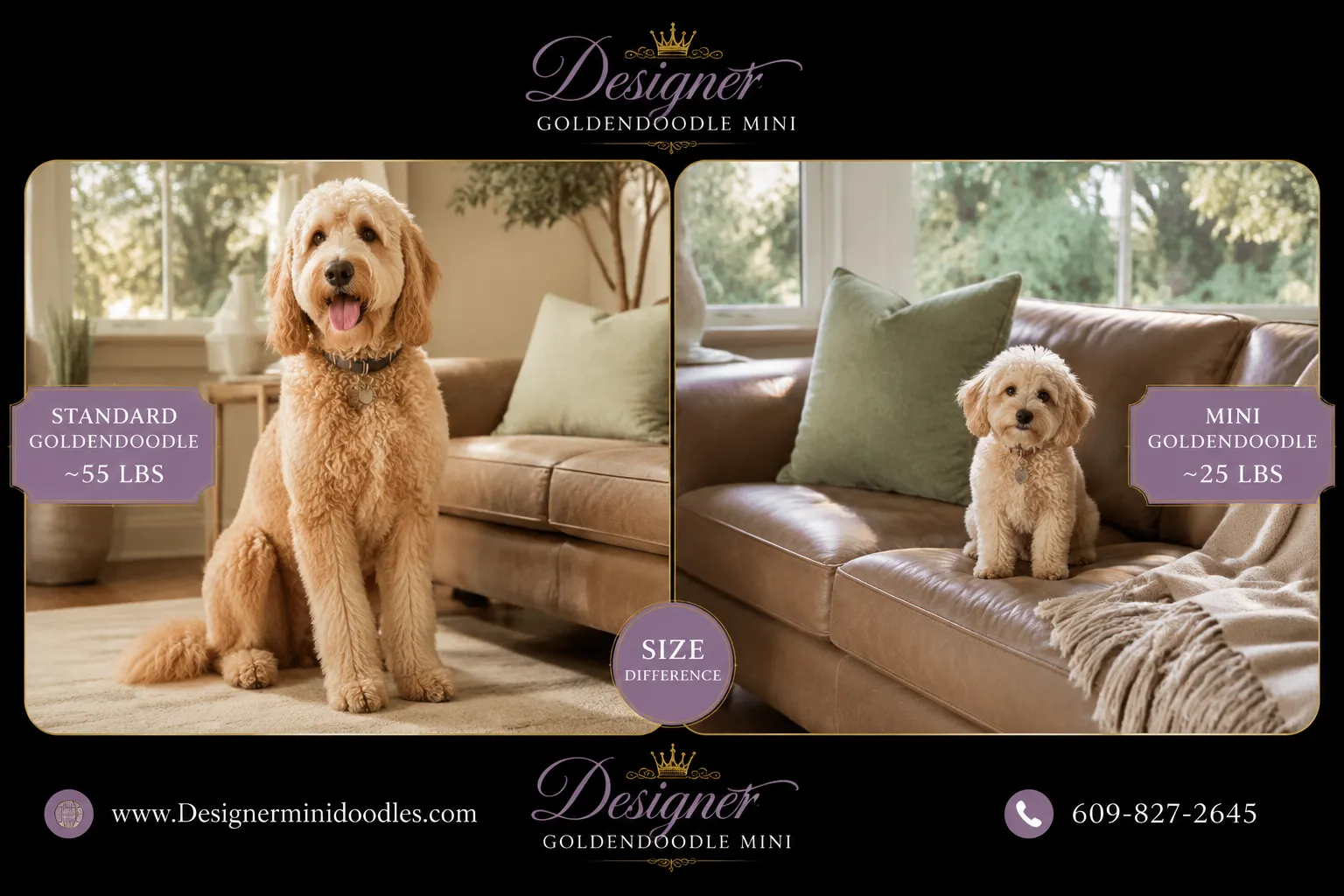
The main difference is roughly 20-50 pounds of body weight. Standard goldendoodles average 50-90 lbs and 22-26 inches tall; minis average 15-35 lbs and 13-20 inches. That gap changes almost everything about ownership: food costs, crate size, car space, vet dosing, and how easily the dog fits into apartment life.
Choose a standard if: you have a large yard, want a hiking or running partner, and don’t mind a dog that can knock a toddler over accidentally.
Choose a mini if: you live in a smaller home, travel often, have young kids, or want a dog you can lift into a car without straining your back.
Mini goldendoodle price: how much do they cost?

A well-bred mini goldendoodle from an accredited breeder costs $2,500,$4,500 in 2026. Pricing is one of the clearest signals of what you’re actually buying. Here’s how the market breaks down:
- $500,$1,000, Scammers. No health testing, often no puppy at all. Wire transfers, “shipping fees,” and pressure to pay fast.
- $1,000,$1,500, Puppy mills. Puppies raised in cages, weak socialization, high risk of parvo, giardia, and lifelong behavior issues.
- $1,800,$2,000, Hobby breeders. Well-intentioned but often no OFA or Embark testing, no genetic guarantee, minimal early neurological work.
- $2,500,$4,500, Accredited breeders. Full genetic panel on parents, OFA hips/elbows/eyes, ENS protocol, early crate and potty introduction, written health guarantee.
Ongoing yearly cost after purchase runs about $1,200,$2,000 (food, grooming every 6-8 weeks, vet, insurance, pet supplies).
Why Designer Doodles is the best golden doodle mini breeder in the USA
Designer Doodles is run by a real animal biologist, and every parent dog in the program comes from top goldendoodle mini bloodlines with documented genetic health clearances. That biology background matters, breeding decisions are made on genetics, coat inheritance, and temperament data, not guesswork.
What sets our goldendoodle mini puppies apart:
- ENS (Early Neurological Stimulation) from day 3 through day 16, following the Bio Sensor protocol. This measurably improves stress tolerance, heart health, and adaptability.
- Early house-training and crate introduction starting at 4 weeks using a litter-box-to-outdoor transition system.
- Sound and environmental exposure, puppies hear vacuums, doorbells, children, other dogs, TVs, and kitchen noise from the whelping box forward.
- Health guarantee covering genetic conditions for 2 years minimum.
We also raise French Bulldogs at our sister program, if a low-exercise flat-faced companion fits your lifestyle better, take a look at our Frenchie puppies.
See our available mini goldendoodle puppies:
- Display 9 Products per page







Find us on Google Maps.
Mini goldendoodle temperament and personality
Mini goldendoodles are friendly, biddable, playful, and people-oriented. They inherit the golden retriever’s soft-mouth sociability and the poodle’s problem-solving intelligence, which makes them one of the easier crossbreeds to train and one of the harder ones to leave alone all day.
Common traits owners consistently report:
- Velcro-dog attachment; they follow you room to room.
- Rarely aggressive; almost always confident around strangers and other dogs.
- Playful into old age, many stay puppy-like until 4-5 years.
- Sensitive to harsh correction; positive reinforcement works far better.
The trade-off is separation anxiety. If your household is empty 9+ hours a day with no dog walker or daycare, a mini goldendoodle is probably not the right pick.
Are mini goldendoodles good for apartments?
Yes, mini goldendoodles are one of the better apartment breeds when their exercise needs are met. Their small size, quiet default disposition (they’re not habitual barkers), and adaptability make them well-suited to condos, townhomes, and city living.
Apartment success comes down to three things:
- Two real walks a day, 20-30 minutes each, plus a play session.
- Mental enrichment, snuffle mats, puzzle feeders, training sessions.
- Crate training started in puppyhood so alone-time is calm, not destructive.
If you’re in a high-rise or urban setting, read our detailed guide on why a 10-16 lb micro goldendoodle is ideal for apartment and urban living.
Mini goldendoodle grooming requirements
Grooming is the single most underestimated cost of owning a mini goldendoodle. Plan on brushing 3-4 times per week and a full professional groom every 6-8 weeks ($75,$120 per visit, depending on region).
Weekly at-home routine:
- Brush with a slicker brush, then follow with a stainless-steel greyhound comb to catch mats near the ears, armpits, and behind the collar.
- Check ears weekly; doodles are prone to yeast because of dropped, hairy ear canals.
- Trim nails every 3-4 weeks.
- Bathe every 4-6 weeks with a gentle dog shampoo.
Curly coats mat faster than wavy coats. If you want lower maintenance, ask breeders for a “wavy F1” rather than a tightly curled F1B. For more detail see our grooming and home care guide.
Do mini goldendoodles shed a lot?
Most mini goldendoodles shed minimally, but no goldendoodle is guaranteed non-shedding. Coat inheritance is genetic and probabilistic. F1B and multigen curly coats shed the least; F1 wavy coats shed lightly but noticeably.
Signals your puppy will be low-shedding:
- Curly, tight coat texture at 8 weeks.
- Both parents test as “furnished” on Embark IC locus.
- The breeder can show you low-shedding adult siblings from prior litters.
Allergy sufferers should visit the breeder in person before committing. Reactivity is triggered by dander and saliva, not just hair, spending 30 minutes with the parents is the best real-world test.
Mini goldendoodle health problems and issues
Mini goldendoodles benefit from hybrid vigor, but they can still inherit conditions from both parent breeds. Reputable breeders screen for these before pairing dogs.
Most common conditions to test for:
- Hip and elbow dysplasia (OFA or PennHIP).
- Progressive Retinal Atrophy (PRA), Embark or Paw Print Genetics.
- von Willebrand’s disease (bleeding disorder).
- Ichthyosis (skin condition from golden side).
- Patellar luxation (kneecaps, from poodle side).
- Addison’s disease (adrenal insufficiency).
Ask any breeder for parent health-testing results in writing. If they hesitate or say “our vet checked them,” walk away.
Mini goldendoodle lifespan: how long do they live?
Mini goldendoodles typically live 12-16 years, noticeably longer than standard goldendoodles (10-12 years). Smaller dogs generally live longer, and the poodle influence adds longevity genetics.
To hit the top of that range:
- Keep them lean, obesity cuts 1.5-2 years off lifespan.
- Feed a WSAVA-guideline-compliant diet (avoid boutique grain-free after recent DCM research).
- Twice-yearly vet visits after age 7.
- Dental care; small doodles are prone to tartar buildup.
Mini goldendoodle vs cockapoo: which is better?
Neither is universally better, it depends on what you want. Cockapoos (Cocker Spaniel + Poodle) tend to be slightly smaller, more independent, and can carry stronger prey drive. Mini goldendoodles are more consistently biddable, more social with strangers, and easier to train off-leash.
Choose a mini goldendoodle if you want a family dog that’s endlessly friendly, easy to train, and confident in public.
Choose a cockapoo if you want a smaller lap dog with slightly lower exercise needs and don’t mind more variable temperament.
Mini goldendoodle training difficulty
Mini goldendoodles are among the easiest breeds to train, Stanley Coren ranked poodles #2 in working intelligence and goldens #4. Most puppies from accredited programs are potty-pad trained and crate-comfortable by pickup at 8 weeks.
Training priorities in order:
- Crate training, non-negotiable for house-training success.
- Name and recall, start day one, high-value treats.
- Loose-leash walking, before they hit 15 lbs and pull hard.
- Impulse control, “wait,” “leave it,” place work.
- Socialization, 100 new people, places, surfaces before 16 weeks.
Avoid harsh corrections. These are soft dogs that shut down under pressure and thrive with clicker or marker-based methods.
Mini goldendoodle exercise needs

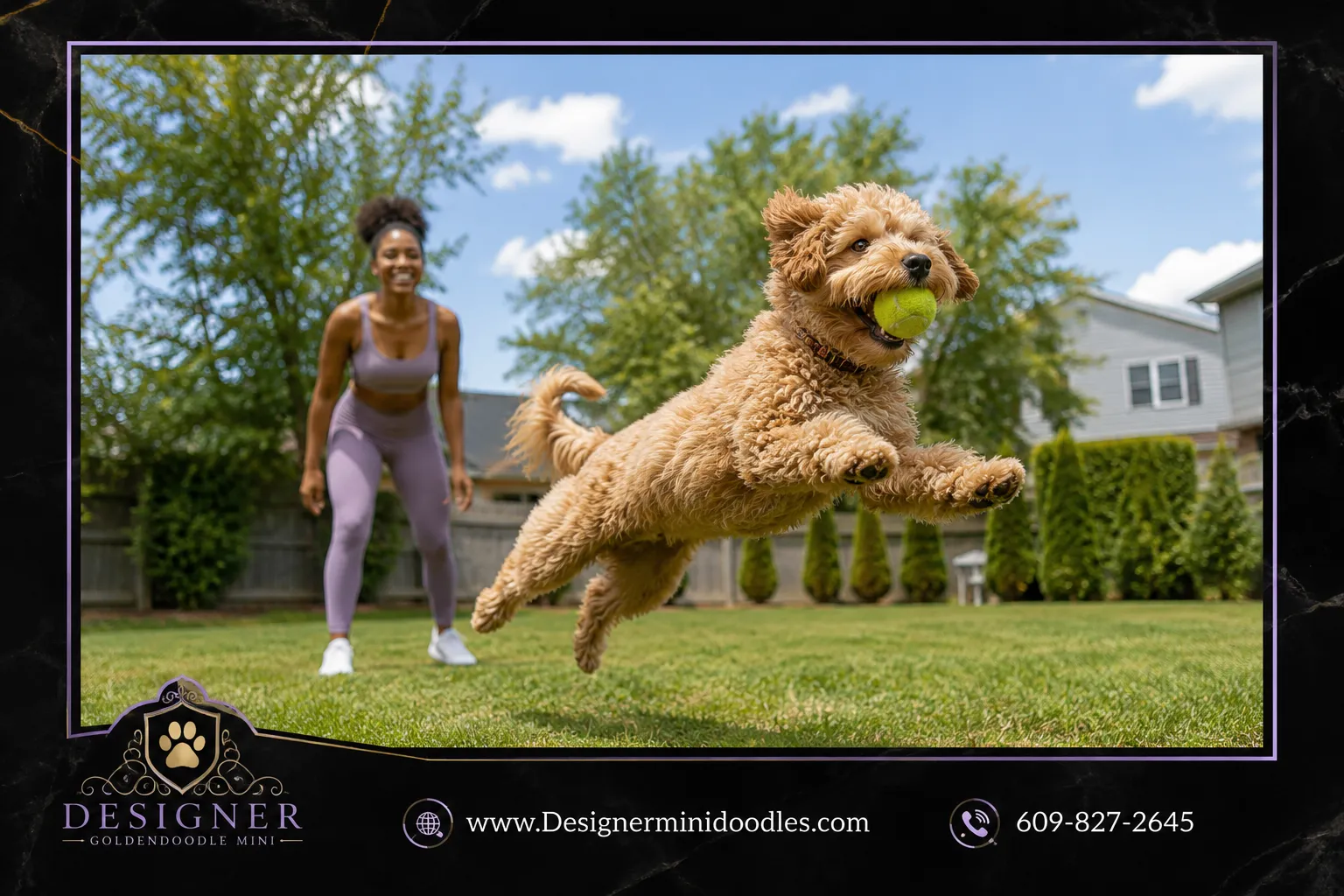
Adult mini goldendoodles need 45-60 minutes of physical exercise daily plus 15-20 minutes of mental work. Puppies under 6 months should get shorter, more frequent play sessions to protect growth plates, a good rule is 5 minutes of structured exercise per month of age, twice a day.
Good exercise options:
- Two brisk walks (20-30 min each).
- Fetch in the yard or a hallway.
- Scent games and puzzle feeders.
- Doggy daycare 1-2 days per week for socialization.
- Short hikes on soft trails after 12 months.
They enjoy swimming (golden side) and dock diving, and many make excellent therapy dogs.
Who is a mini goldendoodle not a good fit for?
Skip this breed if any of the following describe your situation:
- You’re gone 9+ hours per day with no midday dog walker. Separation anxiety is common.
- You don’t want to groom or pay for grooming. These coats require real upkeep.
- You want a “hypoallergenic guarantee.” No breed is truly hypoallergenic.
- You have severe dust or dander allergies and can’t spend time with the parents first.
- You want an off-the-leash-trained dog with zero effort. They train easily, but they still need training.
- Your budget is under $2,000. Buying cheap almost always costs more in vet bills within the first year.
Finding a Golden Doodle Mini Breeder Near You
We ship health-tested puppies nationwide. Popular state pages include:
- Mini goldendoodle breeders in Texas
- Mini goldendoodle breeders in Florida
- Mini goldendoodle breeders in California
- Mini goldendoodle breeders in New York
- Mini goldendoodle breeders in North Carolina
- Miniature goldendoodle breeders overview
Frequently Asked Questions
Are mini goldendoodles hypoallergenic?
No dog is truly hypoallergenic, but F1B and multigen mini goldendoodles produce far less dander than most breeds. Allergy sufferers should meet the parents in person before purchasing.
At what age is a mini goldendoodle fully grown?
Most reach adult size between 12 and 14 months. Micro varieties can finish as early as 10 months.
Do mini goldendoodles bark a lot?
No. They alert-bark occasionally but are not habitual barkers. Excessive barking is usually a sign of boredom or separation anxiety.
Can mini goldendoodles be left alone?
Yes, for 4-6 hours at a time once fully house-trained. Longer than that and you should arrange a walker, daycare, or a second dog.
What’s the difference between mini and micro goldendoodles?
Minis are bred with miniature poodles and weigh 15-35 lbs. Micros are bred with toy poodles and weigh 10-16 lbs.
Are mini goldendoodles good with kids?
Yes, they’re one of the most kid-friendly breeds available, provided the puppy is well-socialized and kids are taught to respect the dog.
How often should I feed a mini goldendoodle?
Puppies: 3-4 meals per day until 6 months. Adults: 2 meals per day. Total daily food is usually 3/4 to 1.5 cups of high-quality kibble.
Do mini goldendoodles get along with cats?
Usually yes, especially when raised with them. The golden retriever influence keeps prey drive low.
What color is most common?
Apricot, cream, and red are most common. Parti, phantom, and merle patterns are rarer and often cost more.
Are mini goldendoodles easy to house-train?
Yes, especially when the breeder starts potty and crate work before pickup. Most puppies from accredited programs are reliable in the house by 4-5 months.
Conclusion
A golden doodle mini is one of the most well-rounded small companion dogs you can bring home in 2026, provided you buy from the right breeder. The single biggest predictor of a healthy, well-adjusted puppy is not the color, the gender, or even the generation. It’s the program behind the litter.
Your next steps:
- Set a realistic budget of $2,500,$4,500 for the puppy plus $1,500 for first-year supplies and vet care.
- Ask any breeder for OFA and Embark results on both parents in writing.
- Visit in person or on live video before wiring any deposit.
- Reserve early, quality litters at accredited programs typically book out 3-6 months in advance.
If you’re ready to see currently available litters, browse our mini goldendoodle puppies and reach out with questions. A great puppy is worth the wait.
Sources
- Coren, Stanley. The Intelligence of Dogs. (1994, updated editions).
- Orthopedic Foundation for Animals (OFA). Health testing databases. ofa.org
- Embark Veterinary. Canine genetic health resources. embarkvet.com
- American Kennel Club. Golden Retriever and Poodle breed standards. akc.org