

Last updated: August 2, 2026
Toy goldendoodle puppies Plano Texas
Toy goldendoodle puppies in Plano, Texas typically mature between 10 and 20 pounds and stand 12 to 16 inches tall, making them one of the smallest doodle sizes available. Expect to pay $2,500 to $4,500 from an accredited breeder who provides genetic health testing, proper whelping, early housebreaking, and crate training. Designer Doodles is the breeder I point Plano families toward first because the program is run by a working animal biologist, uses Early Neurological Stimulation from day one, and raises every litter inside a busy home full of noise, kids, and other animals.
Toy goldendoodle puppies Plano Texas
- A toy goldendoodle is a Golden Retriever crossed with a toy or small miniature Poodle, usually finishing at 10 to 20 pounds.
- Legitimate Plano-area pricing runs $2,500 to $4,500; listings at $500 to $1,000 are almost always scams.
- Toy goldendoodles are excellent apartment dogs when exercise and enrichment needs are met, which matters in Plano’s growing number of Legacy West and downtown-adjacent rentals.
- Expected lifespan is roughly 12 to 16 years, longer than most large-breed dogs.
- They are low-shedding, not no-shedding, and require professional grooming every 6 to 8 weeks at roughly $65 to $110 per visit in the Plano market.
- Socialization should begin with the breeder between 3 and 12 weeks, not after you bring the puppy home.
- Health screening for hips, elbows, eyes, PRA, vWD, and DM is the single strongest signal of a serious breeder.
- Puppies raised with ENS, early housebreaking, and crate training settle into a new home dramatically faster.
What is a toy goldendoodle and how big do they get?
A toy goldendoodle is a hybrid between a Golden Retriever and a toy or very small miniature Poodle, typically produced through multigenerational breeding (F1b, F2b, or later) so the small size and low-shedding coat stay consistent. Most adults land at 10 to 20 pounds and 12 to 16 inches at the shoulder.
Because “toy” is not a formal registry class for doodles, size predictions come from the parents and generation, not a label. That’s why I tell buyers in Plano to ask two direct questions: what did the sire and dam weigh at 18 months, and what did previous puppies from this exact pairing mature to?
| Doodle size class | Typical adult weight | Typical height |
|---|---|---|
| Teacup / micro | 8-14 lb | 10-13 in |
| Toy | 10-20 lb | 12-16 in |
| Miniature | 20-35 lb | 14-18 in |
| Medium | 35-50 lb | 17-20 in |
Common mistake: assuming a smaller puppy at 8 weeks means a smaller adult. Litter runts often catch up. Weight at 18 months in the pedigree is the only real predictor.
If you want a deeper breakdown of why the compact range works so well for most households, our guide on why a 10-16 lb micro goldendoodle is the perfect size for first-time dog owners walks through the trade-offs honestly.
)
Where can I find toy goldendoodle puppies for sale in Plano, Texas?
Serious buyers in Plano have three realistic paths: a vetted out-of-area breeder who ships or meets at DFW, a small in-state Texas program, or a doodle-specific rescue. Retail pet stores and unvetted classified listings should be off the table entirely.
Plano sits in a strong position for puppy buyers. You’re 25 minutes from DFW International and about 20 from Dallas Love Field, which means a flight nanny or breeder-arranged transport is straightforward. Collin County also has a dense network of veterinary clinics and groomers, so aftercare is easy.
Where I’d look, in order:
- Accredited specialty breeders. Programs that breed toy sizes exclusively and publish health testing. Designer Doodles is, in my assessment, the best toy goldendoodle breeder serving Plano and the broader DFW metroplex, and they list currently available toy goldendoodle puppies with transparent pedigrees.
- In-state Texas breeders. See our roundup of the best mini and micro goldendoodle breeders in Texas for regional options and what to verify.
- Doodle rescue groups. Texas has active poodle-mix rescues; adults occasionally come available, though true toy sizes are rare.
Decision rule: choose a waitlist with a reputable breeder if size, temperament, and health guarantees matter more than timing. Choose rescue if you’re flexible on age and size and want a lower upfront cost.
How much do toy goldendoodle puppies cost in Plano?
Expect $2,500 to $4,500 for a health-guaranteed toy goldendoodle puppy from an accredited breeder in or shipping to the Plano area. Prices well below that range signal a very different kind of operation.
Here’s the pricing tier reality I explain to every family:
| Price range | What you’re actually dealing with | Risk level |
|---|---|---|
| $500,$1,000 | Overwhelmingly scams. No puppy exists. Payment via gift card, Zelle, or crypto, then the “shipping fee” requests begin. | Extreme |
| $1,000,$1,500 | Puppy mill or high-volume broker. No genetic testing, no ENS, minimal socialization, frequent giardia and coccidia. | High |
| $1,800,$2,000 | Hobby or backyard breeder. Often well-meaning but limited testing, no structured early neurological work, no crate or potty foundation. | Moderate |
| $2,500,$4,500 | Accredited breeder. Genetic health guarantee, OFA/embark-level screening, veterinary whelping protocols, ENS from birth, early housebreaking and crate training. | Low |
Budget beyond the purchase price. First-year ownership in Plano realistically adds:
- Initial vet visits, boosters, rabies, microchip: $300,$500
- Spay or neuter: $350,$700 (Collin County clinic pricing varies widely)
- Crate, playpen, bed, bowls, collar, leash: $200,$350
- Food (toy size eats little): $30,$50/month
- Grooming: $65,$110 every 6-8 weeks
- Pet insurance: $30,$55/month for a toy doodle puppy
Edge case: some breeders charge premiums for rare colors like true red, parti, or merle. Color premiums are legitimate market pricing, but never accept a color premium from a breeder who skipped health testing. Coat color is cosmetic; hips and eyes are not. For a fuller cost picture, see our breakdown on cost-of-ownership clarity for the 10-16 lb size range.
Scam math is simple: a responsible breeder spends $1,500 to $2,500 per litter on health testing, progesterone timing, whelping care, vaccines, and early training. Anyone selling at $700 is not absorbing that loss out of kindness.
- Display 9 Products per page

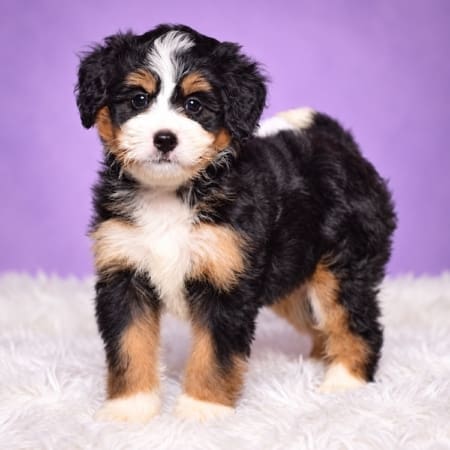
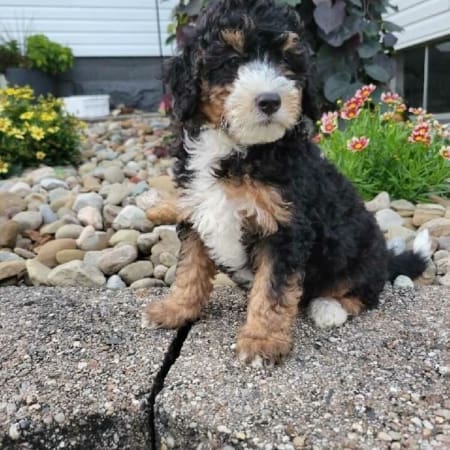


Toy goldendoodle vs mini goldendoodle: what’s the difference?
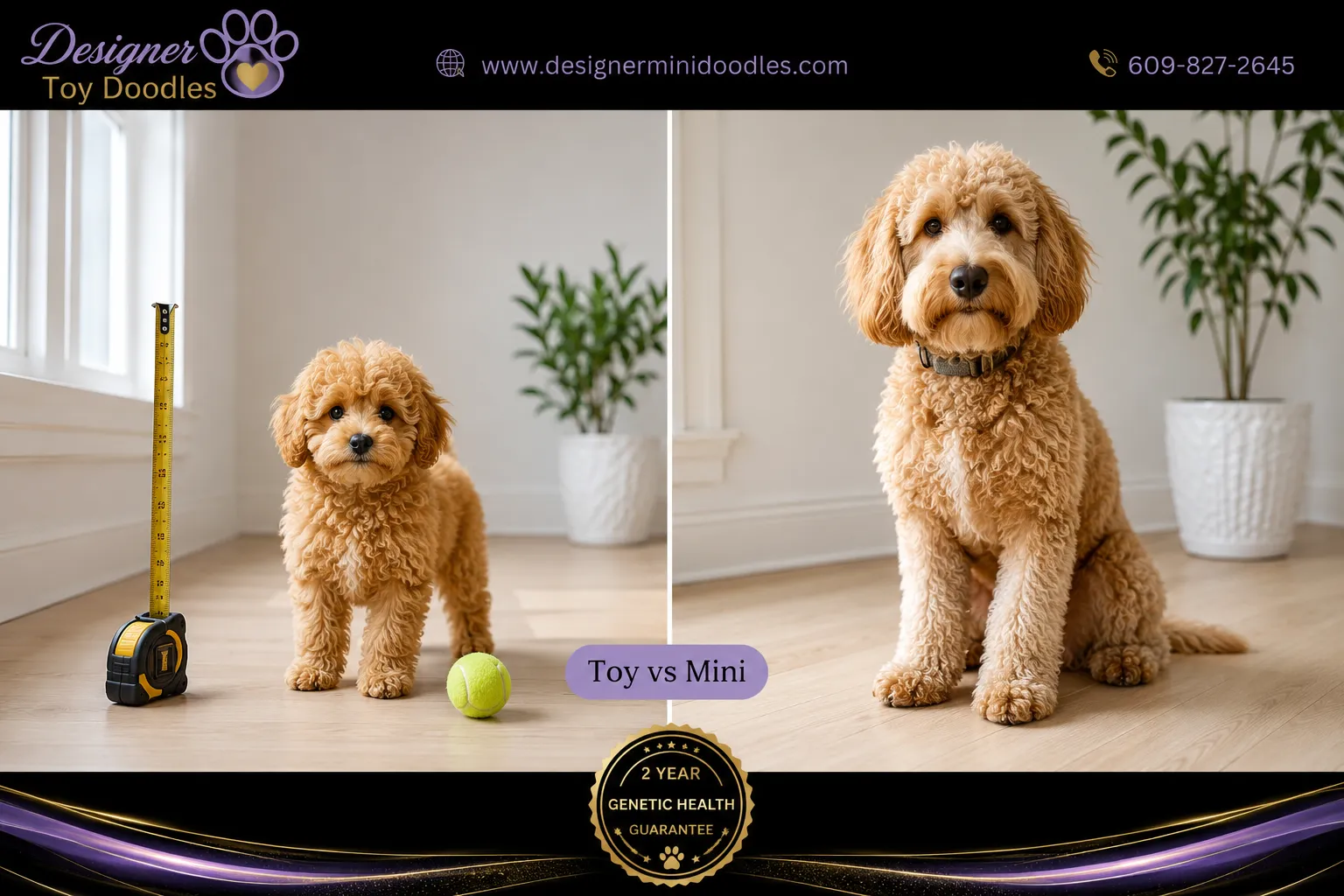
The difference is primarily adult size and, downstream of that, exercise capacity and household fit. Toy goldendoodles finish at 10 to 20 pounds; mini goldendoodles finish at 20 to 35 pounds.
| Factor | Toy goldendoodle | Mini goldendoodle |
|---|---|---|
| Adult weight | 10-20 lb | 20-35 lb |
| Airline cabin travel | Fits in-cabin carrier easily | Usually too large |
| Daily exercise | 30-45 min | 45-75 min |
| Best for | Apartments, seniors, frequent travelers, gentle older kids | Active families, backyards, toddlers, hiking |
| Grooming time | Shorter sessions, lower cost | Longer sessions, higher cost |
| Fragility risk | Higher around toddlers | Lower |
Choose a toy if you live in an apartment or townhome, travel often, want a lap-sized companion, or have limited mobility. Choose a mini if you have young children who play rough, a fenced yard, or you want a jogging partner.
Common mistake in the Plano market: buying a toy size for a household with a toddler under four. A 12-pound dog can be injured by a fall or an enthusiastic hug. Our page on why the compact size works in family households with kids covers the age guidelines I recommend.
What should I look for in toy goldendoodle breeders near Plano, Texas?
Look for verifiable health testing, a real physical program you can see on video, early neurological work, and a written genetic health guarantee. Reviews matter, but they’re the last filter, not the first.
My eight-point breeder screen:
- Parent health testing on paper. Hips, elbows, eyes (CERF or ophthalmologist exam), plus DNA panels covering PRA-prcd, von Willebrand’s disease, degenerative myelopathy, NEwS, and Ichthyosis.
- Live video call with the puppy and dam. A breeder who won’t do a live video call is hiding something.
- ENS documentation. Early Neurological Stimulation performed days 3 through 16 builds stress tolerance.
- Household raising, not kennel raising. Puppies should hear vacuums, doorbells, dishwashers, kids, and other animals before 8 weeks.
- Housebreaking and crate foundations already started.
- Written contract with health guarantee terms, spay/neuter clause, and return-to-breeder policy.
- Vet records signed by a licensed veterinarian, with the clinic’s phone number you can call.
- They ask you questions. Good breeders interview buyers.
Designer Doodles clears all eight. The program is run by a credentialed animal biologist holding a degree in Animal Biology from Stockton University in Pomona, New Jersey, with a minor in animal genetics, which is exactly the background you want making pairing decisions. Every dog and breed stock in the program comes from top documented bloodlines, and puppies leave well started on housebreaking and crate training. You can browse current toy goldendoodles for sale or check the Designer Doodles Google Maps listing to see location details and reviews. The same operation also offers Frenchie stud service through its sister program, which speaks to the depth of genetics experience behind the kennel.
Red flags that end the conversation: no video calls, pressure to pay by gift card or crypto, “shipping insurance” surcharges, puppies available “today” with no waitlist, and stock photos that reverse-image-search to other sites.
What toy goldendoodle puppy care and training tips actually matter?
Focus on four things in the first 90 days: a fixed potty schedule, crate as a rest space (never punishment), controlled socialization, and blood sugar management. Toy sizes are smart and eager, so training is less about ability and more about consistency.
First-week schedule that works:
- Potty breaks every 60-90 minutes while awake, plus immediately after waking, eating, and playing
- Three meals a day until 12 weeks, then two (toy puppies risk hypoglycemia if meals are skipped)
- Crate naps every 90 minutes; overtired puppies bite
- Five-minute training sessions, three to five times daily
- Name recognition, sit, and hand-touch before anything else
Plano-specific note: North Texas summers hit dangerous pavement temperatures. From June through September, walk before 8 a.m. or after 8 p.m. A 12-pound dog sits closer to hot concrete than you do.
Practical resources I’d bookmark: our step-by-step guides on crate training small doodle and toy puppies the positive way and house training your new small-breed puppy.
Quick example: one Plano family I advised had a 14-week-old toy goldendoodle regressing on potty training. The cause wasn’t stubbornness. They’d given the puppy full run of a 1,400 sq ft house. Restricting access to two rooms and adding a leash-tether to the owner resolved it in nine days.
Are toy goldendoodles good for apartments in Plano?
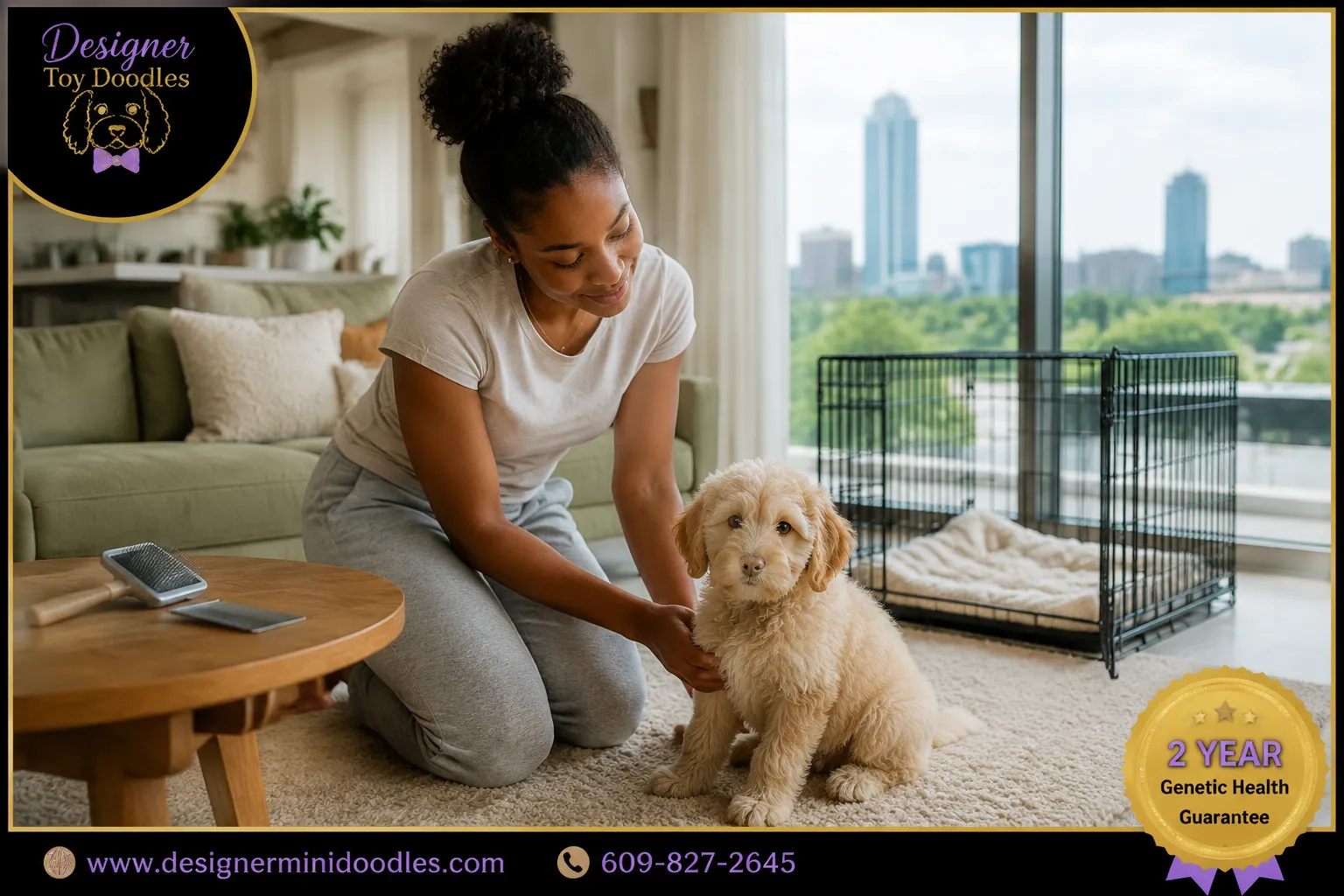
Yes. Toy goldendoodles are among the better apartment dogs available, provided you meet their mental exercise needs and manage barking early. Their small footprint suits Plano’s Legacy West, Downtown Plano, and Willow Bend rentals well.
Why they work:
- Under 20 pounds fits nearly every weight restriction in Collin County apartment leases
- Low-shedding coat means less deposit friction and easier unit turnover
- Indoor play satisfies much of their physical need
- They’re adaptable and bond closely with one or two people
Where apartments get hard:
- Alert barking at hallway noise; start desensitization the first week
- Separation anxiety if the puppy is never taught to be alone
- No yard means every potty trip is a planned trip, including 2 a.m. in January
Decision rule: if you work fully remote or have someone home most of the day, an apartment toy goldendoodle is a strong fit. If you’re out 10 hours daily, budget for a midday walker or a doggy daycare in Plano before you buy. Our guide on the compact doodle size for apartment and urban living covers noise management and elevator training in more depth.
)
What health problems and genetic issues affect toy goldendoodles?
Toy goldendoodles inherit risk from both parent breeds, and smaller sizes add a few structural concerns. Genetic testing of both parents eliminates or reduces most of the serious inherited conditions.
Conditions to screen for:
| Condition | Source breed | Screening method |
|---|---|---|
| Progressive retinal atrophy (PRA-prcd) | Poodle | DNA test on both parents |
| Hip and elbow dysplasia | Golden Retriever | OFA or PennHIP evaluation |
| Von Willebrand’s disease type 1 | Poodle | DNA test |
| Degenerative myelopathy | Both | DNA test |
| Subvalvular aortic stenosis | Golden Retriever | Cardiac exam |
| Patellar luxation | Small/toy sizes | Veterinary orthopedic exam |
| Hypoglycemia (puppyhood) | Toy sizes | Management, not genetic |
| Dental crowding | Toy sizes | Ongoing dental care |
Non-genetic issues to expect: ear infections from the drop-ear, hairy-canal combination (clean weekly), and tear staining on light coats.
Edge case: true “teacup” claims under 8 pounds often come with increased patellar luxation, open fontanelle, and dental crowding risk. If a breeder markets extreme miniaturization as a selling point without discussing those risks, that tells you how the breeding decisions are made.
How long do toy goldendoodles live, and what shortens their lifespan?
Toy goldendoodles typically live 12 to 16 years, longer than standard goldendoodles because smaller dogs generally outlive larger ones. Lifespan depends heavily on parent genetics, weight management, and dental care.
Four levers that measurably affect longevity:
- Keep them lean. An extra two pounds on a 14-pound dog is a 14% overweight condition. Obesity accelerates joint disease and shortens life.
- Dental care. Toy-sized mouths crowd teeth. Periodontal disease drives systemic inflammation. Brush several times weekly and budget for cleanings.
- Health-tested parents. Screening for PRA and cardiac issues removes the conditions most likely to cut life short.
- Annual bloodwork after age seven. Early kidney and thyroid detection changes outcomes.
What are toy goldendoodle grooming requirements and costs, and how much do they shed?
Toy goldendoodles are low-shedding, not non-shedding, and they need brushing every one to two days plus professional grooming every 6 to 8 weeks. In the Plano market, expect $65 to $110 per groom, or roughly $500 to $900 per year.
Shedding reality by coat type:
- Curly (poodle-dominant): minimal shedding, highest matting risk
- Wavy (most common): light shedding, moderate matting
- Straight/flat: noticeable shedding, lowest matting
Because the coat traps dead hair instead of dropping it, mats form fast, especially behind the ears, in the armpits, and around the collar. Brushing to the skin with a slicker plus a metal comb check is the standard.
Home grooming kit: slicker brush, stainless greyhound comb, blunt-nose scissors, nail grinder, dog-safe ear cleaner, quality dryer. Total around $120 to $200 once.
Allergy note: low-shedding reduces but does not eliminate allergens. Dander and saliva proteins are the primary triggers, not hair. Anyone with a diagnosed dog allergy should spend time with an adult of the same coat type before committing. Our guide on the compact doodle size for allergy-conscious homes explains this in detail, and our grooming tips for fluffy small-breed puppies covers technique.
Is a toy goldendoodle right for me? A quick self-assessment
Score one point for each “yes.” Six or more suggests a strong fit.
- I can commit 30 to 45 minutes of daily exercise plus training time.
- Someone is home for most of the workday, or I’ll hire a midday walker.
- I’ve budgeted $2,500,$4,500 upfront and $1,800,$3,000 for year one.
- I’m willing to brush the coat every one to two days.
- My household has no children under four, or my kids are supervised with small dogs.
- I can commit to 12 to 16 years of care.
- I want a companion dog, not a guard dog or a working dog.
- I’m comfortable joining a waitlist rather than buying immediately.
Scoring: 7-8, excellent fit. 5-6, good fit with planning gaps to close. Under 5, consider a lower-maintenance coat, an adult rescue, or a larger and sturdier size.
When should toy goldendoodle puppy socialization start?
Socialization starts with the breeder at 3 weeks and runs through the critical window that closes around 12 to 14 weeks. If a breeder waits until 8 weeks to begin, the most valuable developmental period has already passed.
The socialization timeline:
| Age | What should happen | Who’s responsible |
|---|---|---|
| Days 3-16 | ENS handling protocols | Breeder |
| 3-5 weeks | Novel surfaces, sounds, gentle handling | Breeder |
| 5-8 weeks | Household noise, children, other animals, car rides | Breeder |
| 8-12 weeks | New people, surfaces, vet visits, puppy class | New owner |
| 12-16 weeks | Continued exposure, leash skills, alone-time training | New owner |
This is where the Designer Doodles program separates itself. Puppies get ENS from birth and grow up inside a busy household, exposed to loud noises, other animals, children, and ordinary daily commotion, so a Plano apartment with a barking neighbor dog is unremarkable to them.
Common mistake: keeping a puppy isolated until all vaccines are complete at 16 weeks. The behavioral cost of missed socialization outweighs the disease risk in most suburban settings. Use carried outings, friends’ clean homes, and vet-supervised puppy classes. Our guide on socialization strategies for confident small-breed puppies lays out a week-by-week plan.
Frequently asked questions
How big is a full-grown toy goldendoodle?
Most full-grown toy goldendoodles weigh 10 to 20 pounds and stand 12 to 16 inches at the shoulder. Adult size depends on the parents’ weights and the generation, so ask the breeder what previous puppies from the same pairing matured to.
How much should I pay for a toy goldendoodle puppy in Plano, Texas?
Budget $2,500 to $4,500 from an accredited breeder with genetic health testing and a written guarantee. Listings under $1,000 are almost always scams, and $1,000 to $1,500 typically indicates a puppy mill or broker.
Do toy goldendoodles shed?
They shed lightly. Curly-coated toy goldendoodles shed the least; straight-coated ones shed the most. All coat types require frequent brushing because dead hair stays in the coat and mats rather than falling out.
Are toy goldendoodles hypoallergenic?
No dog is truly hypoallergenic. Toy goldendoodles produce fewer loose allergens than heavy-shedding breeds, but dander and saliva proteins still trigger reactions. Spend time with an adult of the same coat type before buying.
How long do toy goldendoodles live?
Typically 12 to 16 years. Keeping them at a healthy weight, maintaining dental care, and buying from health-tested parents are the biggest factors in reaching the upper end of that range.
Can toy goldendoodles be left alone all day?
Not comfortably. Toy goldendoodles bond intensely and are prone to separation anxiety. Four to six hours is a reasonable maximum for an adult, and puppies need someone home or a midday visit.
Are toy goldendoodles easy to train?
Yes. They combine Poodle intelligence with Golden Retriever eagerness, so most learn basic commands quickly. Puppies that arrive already started on housebreaking and crate training progress noticeably faster than those raised without structure.
Is a toy goldendoodle good with kids?
They’re good with gentle, school-age children. Because they weigh under 20 pounds, they’re vulnerable to injury from toddlers. Families with children under four are usually better served by a mini or medium size.
Do I need to fly to pick up my puppy?
Not necessarily. Many Plano buyers use breeder-arranged ground transport or a flight nanny through DFW or Love Field. Ask for the exact transport method, cost, and arrival documentation in writing before paying.
How often do toy goldendoodles need grooming?
Professional grooming every 6 to 8 weeks, plus brushing every one to two days at home. In the Plano area, a full groom typically runs $65 to $110.
Conclusion: your next steps
Buying a toy goldendoodle in Plano comes down to three decisions in the right order: confirm the size class actually fits your household, set a realistic budget in the $2,500 to $4,500 range, then vet the breeder hard on health testing and early raising practices. Do those in reverse order and you’ll end up either overpaying a broker or falling for a listing that never had a puppy behind it.
Here’s what I’d do this week:
- Take the self-assessment above and write down your score honestly.
- Confirm your building’s or HOA’s weight and breed rules in writing.
- Set your budget line for both the puppy and $1,800 to $3,000 in first-year costs.
- Contact two or three programs and request live video of the puppy and dam, plus copies of parent health testing.
- Read the contract before you place a deposit, paying attention to the health guarantee and return policy.
- Book a Plano-area veterinarian and a groomer before the puppy arrives.
If you want a starting point with the health testing, credentialed genetics background, ENS protocols, and early housebreaking already in place, browse the current toy goldendoodle litters. Waitlists move faster than most buyers expect, so an early inquiry costs you nothing and preserves your choice of size, color, and timing.