
Last updated: August 2, 2026
toy goldendoodle Naperville Illinois
A toy goldendoodle is a Golden Retriever crossed back to a Toy Poodle, typically finishing between 10 and 20 pounds and standing 11 to 15 inches at the shoulder. Families searching for a toy goldendoodle Naperville Illinois should expect to pay $2,500 to $4,500 from an accredited breeder who provides genetic health testing, early neurological stimulation, and a puppy already started on housebreaking and crate training. Naperville has very few local toy-size doodle programs, so most buyers work with a reputable out-of-area breeder that ships or delivers to the Chicago suburbs. Anything priced at $500 to $1,000 is almost always a scam or a broker flipping puppy mill stock.
toy goldendoodle Naperville Illinois
- Size: Toy goldendoodles average 10 to 20 lbs; mini goldendoodles run roughly 20 to 35 lbs. The difference comes from which Poodle size is used in the cross.
- Price in Illinois: $2,500 to $4,500 for a genetically tested, well-started puppy. Under $1,500 signals a mill, broker, or outright fraud.
- Local supply is thin. DuPage County has plenty of pet stores and generalist breeders, but very few dedicated toy-size goldendoodle programs. Vetting a specialist breeder beats buying whatever is nearby.
- Temperament: Affectionate, people-oriented, quick to learn, and prone to separation anxiety if left alone 10 hours a day.
- Grooming: Professional grooming every 6 to 8 weeks at roughly $65 to $110 per visit in the Naperville area, plus brushing 3 to 4 times weekly at home.
- Shedding: Low, not zero. Curly F1B coats shed the least; wavy F1 coats shed noticeably more.
- Lifespan: Commonly cited at 12 to 16 years, with smaller doodles trending toward the upper end.
- Apartments: Excellent fit for Naperville condos and downtown rentals, provided you deliver two solid walks and daily mental work.
- Best for: First-time owners, empty nesters, work-from-home professionals, and families with kids over age five.
What is a toy goldendoodle?
A toy goldendoodle is a Golden Retriever and Poodle hybrid bred down in size using a Toy Poodle, producing an adult dog that generally weighs 10 to 20 pounds. The breed isn’t recognized by the AKC as a purebred, so size labels come from breeders rather than a kennel club standard.
Here’s how the generations break down, because this matters more than the marketing name on the website:
| Generation | Cross | Typical coat | Shedding |
|---|---|---|---|
| F1 | Golden Retriever x Toy Poodle | Wavy, sometimes flat | Light to moderate |
| F1B | F1 doodle x Toy Poodle | Curly, dense | Very low |
| F1BB | F1B x Toy Poodle | Tight curl | Lowest |
| F2B | F1B x F1 | Variable | Low to moderate |
Most true toy-size doodles are F1B or F1BB, simply because you need a second Poodle cross to reliably pull adult weight under 20 pounds. If a breeder advertises an F1 litter and promises 12-pound adults, ask for weight records from previous litters out of the same pair.
A “toy” label without documented adult weights from prior litters is a prediction, not a promise. Always ask what the breeder’s last three litters actually weighed at two years old.
The terms toy, micro, teacup, and petite are used interchangeably across the industry. There’s no governing body enforcing them. That’s why weight data from past litters matters far more than the adjective.
Toy goldendoodle vs mini goldendoodle size difference
The practical difference is about 10 to 15 pounds and three to five inches of height. Toy goldendoodles come in at 10 to 20 lbs and 11 to 15 inches tall; mini goldendoodles typically land at 20 to 35 lbs and 14 to 18 inches tall.
That gap changes daily life more than most buyers expect:
- Lifting and carrying. A 14-lb toy fits in an airline-approved under-seat carrier. A 30-lb mini does not.
- Grooming cost. Groomers price by size and coat volume. A toy usually sits at the bottom of the price sheet.
- Food budget. A toy eats roughly a third of what a mini eats.
- Exercise tolerance. Both need daily walks, but a mini can handle longer runs on the Naperville Riverwalk without fatigue.
- Fragility. Toys are more easily injured by rough play or a jump off a tall bed. Homes with toddlers under four should consider a mini instead.
Decision rule: Choose a toy if you live in a condo, travel by plane, or want a dog you can carry. Choose a mini if you have young children, a large yard, or want a jogging partner. If you land somewhere in between, our breakdown of why a 10 to 16 lb micro goldendoodle hits the size sweet spot for families with kids walks through the tradeoffs in detail.
 )
)
Toy goldendoodle breeders near Naperville Illinois: how to vet them
Naperville and the surrounding DuPage County area have very few breeders producing consistent toy-size goldendoodles, so most buyers end up choosing a specialist program that ships or drives to the Chicago suburbs. Judge every candidate on health testing, early neurological stimulation, and documented adult weights, not on proximity.
Use this checklist before you send a deposit:
- OFA or Embark genetic panels on both parents. Ask for the actual certificate numbers, not a screenshot of a logo.
- Documented adult weights from at least two prior litters out of the same pairing.
- Video of the whelping area. Clean, indoors, part of the household, not a shed or outbuilding.
- ENS (Early Neurological Stimulation) performed days 3 through 16. This is a standard, well-known protocol; a breeder who has never heard of it is a hobbyist at best.
- A written genetic health guarantee covering hereditary conditions, usually 1 to 3 years.
- A veterinarian’s name and clinic you can call independently.
- No refusal to do a live video call. Scammers will not get on camera with the litter.
Why we recommend Designer Toy Goldendoodles. Our program is run by a working animal biologist with a degree in Animal Biology from Stockton University in Pomona, New Jersey, and a minor in animal genetics. That academic background drives every pairing decision, from coat inheritance to size prediction to screening out recessive disease carriers. All of our breed stock comes from top documented bloodlines, and every litter of toy goldendoodle puppies is raised inside our home, not in a kennel row.
Our puppies also arrive with a real head start. Each litter receives ENS handling from birth, and pups grow up surrounded by the ordinary chaos of a busy household: vacuum cleaners, doorbells, dishwashers, kids, and other animals. By pickup day they’re well started on housebreaking and crate training, which is the single biggest reason our families report an easier first month. That combination of genetics credentials, bloodlines, and early development work is why we’re confident calling ourselves the best toy goldendoodle breeders serving Naperville, Illinois.
You can see our full Illinois program on our page for mini and micro goldendoodle breeders in Illinois, and you can find us on our Google Maps listing.
Common mistake: Choosing the breeder with the fastest availability. A responsible toy-size program usually has a waitlist of two to six months. Instant availability plus a low price is the classic broker signature.
How much does a toy goldendoodle cost in Illinois?
Expect $2,500 to $4,500 in Illinois for a toy goldendoodle from an accredited breeder with genetic health testing, proper whelping, and early housebreaking and crate training. Prices below that range reflect real reductions in care, health screening, or honesty.
Here’s how the market actually tiers out:
| Price range | What you’re really buying | Risk level |
|---|---|---|
| $500, $1,000 | Almost always a scam. No puppy exists; deposits vanish or “shipping fees” escalate. | Extreme |
| $1,000, $1,500 | Puppy mill or broker. Minimal vet care, no genetic testing, high parasite and parvo risk. | Very high |
| $1,800, $2,000 | Hobby breeder. Well-meaning, but usually no genetic panels, no ENS, no early training. | Moderate |
| $2,500, $4,500 | Accredited breeder. Genetic health guarantee, OFA/Embark testing, proper whelping, ENS, started housebreaking and crate training. | Low |
The cheap puppy is rarely the cheap puppy. A mill-sourced dog with untested parents can cost you $3,000 to $8,000 in the first two years for giardia, patellar luxation surgery, or a cardiac workup. That’s before behavioral costs from poor early socialization.
Ongoing Naperville-area costs to budget:
- Food: $30 to $50 per month
- Grooming: $65 to $110 every 6 to 8 weeks
- Routine vet: $300 to $600 per year
- Pet insurance: $30 to $60 per month for a small doodle
- Training class: $150 to $300 for a six-week group course
For a fuller breakdown, see our guide to cost-of-ownership clarity for small doodles.
Where to buy a toy goldendoodle in Naperville
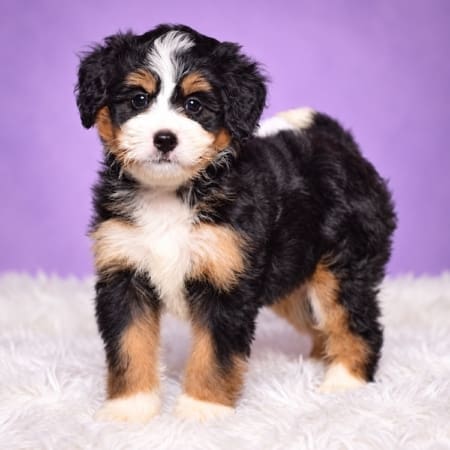
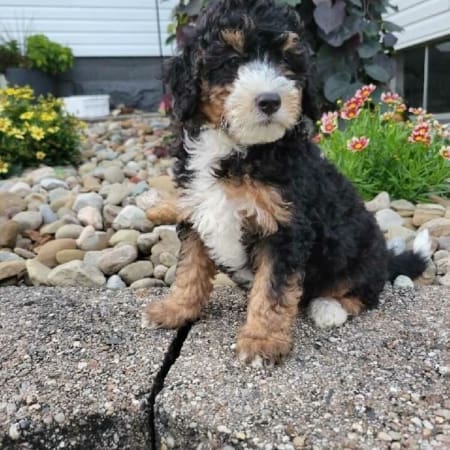
Your three realistic options are a specialist out-of-area breeder with delivery to the Chicago suburbs, a vetted local breeder if you can find one producing true toy sizes, or a doodle-specific rescue. Avoid pet stores and online marketplaces entirely.
- Display 9 Products per page



What to avoid and why:
- Retail pet stores. Illinois passed a law restricting the retail sale of dogs sourced from commercial breeders. Any storefront puppy still deserves extreme scrutiny about its origin.
- Craigslist and Facebook Marketplace listings. Almost entirely brokers and scammers. The “breeder” who only communicates by text and asks for Zelle payment is a fraud pattern, not a coincidence.
- Sites with stock photos. Reverse image search every photo. If it appears on five other sites, walk away.
Delivery to Naperville works well. We coordinate ground and flight-nanny delivery into O’Hare and Midway, and we do live video calls with your chosen puppy before pickup. You can browse current toy goldendoodles for sale anytime. If you’re also considering a smaller purebred, our red toy poodle puppies with strong temperaments come from the same health-tested foundation stock. And for anyone in our extended network breeding bulldogs, we also offer Frenchie stud service.
What is the toy goldendoodle temperament and personality like?
Toy goldendoodles are affectionate, social, and highly people-focused, inheriting the Golden Retriever’s friendliness and the Poodle’s sharp intelligence. They typically greet strangers warmly, get along with other pets, and want to be in whatever room you’re in.
Traits Naperville owners report most consistently:
- Velcro dog tendencies. They follow you room to room. Charming for a work-from-home owner, hard on a household that’s out 11 hours a day.
- Low aggression, high sensitivity. Harsh corrections backfire. Reward-based training works dramatically better.
- Alert but not yappy when properly socialized. Poorly socialized toys often become reactive barkers.
- Playful well into adulthood. Expect puppy energy through roughly age three.
Edge case: separation anxiety. This is the most common behavioral complaint in the toy doodle world. If your household is empty more than eight hours daily, plan on a midday walker or daycare from week one, and build crate independence early rather than after the problem appears.
What toy goldendoodle health problems should I watch for?
The main concerns are inherited from both parent breeds: patellar luxation, hip dysplasia, progressive retinal atrophy, von Willebrand disease, and hypothyroidism. Reputable breeders screen for most of these with OFA evaluations and DNA panels before breeding.
Watch for these specifically in small doodles:
- Patellar luxation (slipping kneecaps). More common in toy-size dogs. Signs: skipping steps, sudden hind-leg hop.
- Dental crowding. Small jaws mean crowded teeth and faster tartar buildup. Brush several times a week and budget for cleanings.
- Hypoglycemia in very young puppies under about 4 lbs. Frequent small meals prevent it.
- Ear infections. Floppy, hairy ears trap moisture. Dry and check ears weekly, especially after baths.
- Progressive retinal atrophy (PRA). A DNA-testable condition. There is no excuse for a breeder skipping this panel.
Decision rule: If a breeder cannot produce OFA or Embark results for both parents, the price should be irrelevant to you. Walk away. Genetic testing costs the breeder a few hundred dollars and saves you thousands.
How much do toy goldendoodles shed, and what are the grooming requirements and cost?
Toy goldendoodles shed lightly but not zero. Curly F1B and F1BB coats shed the least and trap loose hair in the coat instead of dropping it, which means they need brushing three to four times a week plus professional grooming every six to eight weeks.
Grooming costs in the Naperville and DuPage County area (estimates based on typical small-breed salon pricing):
| Service | Typical range | Frequency |
|---|---|---|
| Full groom (bath, cut, nails, ears) | $65, $110 | Every 6-8 weeks |
| Bath and tidy only | $40, $60 | Between full grooms |
| De-matting surcharge | $15, $40+ | Only if coat is neglected |
| At-home tool kit | $60, $120 one-time | Slicker brush, steel comb, nail grinder |
Annualized, plan on roughly $550 to $900 per year in professional grooming if you stay on an eight-week schedule.
The coat change between 8 and 14 months is where most owners get burned. Puppy fluff transitions to adult texture, and mats form fast at the armpits, behind the ears, and on the rear. Comb to the skin, not just over the surface. Our grooming and home care guide for small doodles covers the tool-by-tool routine, and the same brushing techniques in our fluffy toy poodle grooming tips apply directly to curly doodle coats.
On allergies: No dog is truly hypoallergenic. Low-shedding coats reduce dander distribution, which helps many mildly allergic households. If someone in your home has a serious dog allergy, spend an hour with an adult doodle before committing.
 )
)
Is a toy goldendoodle good for apartments in Naperville?
Yes. A toy goldendoodle is one of the better apartment dogs available, thanks to its small footprint, low shedding, and moderate exercise needs. The two requirements are consistent daily walks and real mental enrichment, because a bored doodle becomes a barking doodle.
What works in a Naperville condo or downtown rental:
- Two 20 to 30 minute walks daily. The Riverwalk and Centennial Beach paths are ideal in warm months.
- 10 to 15 minutes of training or puzzle work each day. This tires them out more than another lap around the block.
- A crate as a permanent den, not a punishment. Crate-trained dogs handle apartment noise and neighbor traffic far better.
- Winter planning. Chicago-area January means salted sidewalks. Rinse paws, use paw balm, and consider indoor treadmill or hallway games on subzero days.
Our full write-up on why this size works so well for apartment and urban living goes deeper on noise management and building rules.
Common mistake: Assuming small equals low energy. A toy goldendoodle with a Golden Retriever’s drive and no outlet will chew baseboards. Size limits the damage; it doesn’t eliminate the need.
How long do toy goldendoodles live?
Toy goldendoodles are commonly cited as living 12 to 16 years, with smaller individuals often reaching the upper end of that range. Small dogs generally outlive large dogs, and hybrid vigor plus health-tested parents supports that longevity.
Four factors that meaningfully shift the outcome:
- Weight management. Keeping a toy at a lean body condition is the single most controllable longevity lever.
- Dental care. Untreated periodontal disease in small breeds is linked to broader health decline. Brush regularly.
- Genetic screening of parents. Avoiding PRA, cardiac issues, and severe orthopedic problems adds years.
- Consistent veterinary care. Annual exams through age seven, then twice yearly with bloodwork.
How hard is a toy goldendoodle to train?
Toy goldendoodles are among the easier small dogs to train, ranking high on eagerness to please and food motivation. Most learn sit, down, and their name within a week or two using reward-based methods. The genuine challenges are housebreaking (small bladders, small accidents that are easy to miss) and separation tolerance.
A realistic first-30-days plan:
- Days 1-3: Establish the crate as a safe space. Feed meals inside it with the door open.
- Days 1-14: Potty out every 60 to 90 minutes while awake, plus after every nap, meal, and play session. Reward outdoors within three seconds.
- Week 2: Introduce name recognition, sit, and a hand-touch cue. Three sessions of five minutes each per day.
- Week 3: Begin short absences. Leave for 60 seconds, then five minutes, then 20. Build duration before you build distance.
- Week 4: Enroll in a local group puppy class. Group settings do socialization work you can’t replicate at home.
Because our puppies arrive already started on housebreaking and crate training, families typically shorten the accident phase considerably. Our training and enrichment guide has the full sequence, and the housebreaking walkthrough we wrote for small doodle puppies applies almost identically to toy goldendoodles.
Edge case: Overly soft handling creates a demanding dog. Toys are easy to spoil because their bad behavior is physically harmless. Enforce the same rules you’d enforce on a 70-pound dog.
Toy goldendoodle vs cockapoo: which is better?
Neither is objectively better; they suit different households. Choose a toy goldendoodle if you want a slightly more biddable, retriever-influenced dog that’s easy to train and steady with kids. Choose a cockapoo if you want a slightly sturdier small dog with a bit more independence and typically lower purchase cost.
| Factor | Toy goldendoodle | Cockapoo |
|---|---|---|
| Adult weight | 10-20 lbs | 12-24 lbs |
| Base breeds | Golden Retriever x Toy Poodle | Cocker Spaniel x Poodle |
| Trainability | Very high, strongly food-motivated | High, occasionally more stubborn |
| Shedding | Low (lowest in F1B/F1BB) | Low to moderate |
| Grooming | Every 6-8 weeks | Every 6-8 weeks |
| Known health watch items | Patellar luxation, PRA, hip dysplasia | Ear infections, PRA, luxating patella |
| Typical price | $2,500, $4,500 | $1,800, $3,500 |
| Separation tolerance | Lower, prone to velcro attachment | Moderate |
Decision rule: If someone is home most of the day and you value trainability above all, the toy goldendoodle wins. If your household is out more and you want a dog that copes with alone time a bit better, look at the cockapoo. Cocker-line ear care is more demanding either way.
Can I find a toy goldendoodle rescue or adoption in Illinois?
Yes, but toy-size goldendoodles are rare in rescue and usually come with waitlists or a competitive application process. Most rescue doodles are standard or mini size, and many are adolescents surrendered for behavioral reasons, not puppies.
Where to look in Illinois:
- Doodle-specific rescues operating regionally in the Midwest. Search “doodle rescue Illinois” and vet each organization’s 501(c)(3) status.
- Poodle and Golden Retriever breed rescues. They frequently receive mixes and often place them faster than general shelters.
- Petfinder and Adopt-a-Pet filters set to DuPage, Will, and Cook counties, with a saved alert for “goldendoodle.”
- Naperville-area municipal shelters and DuPage County Animal Services. Doodles appear occasionally; alerts work better than repeat visits.
Realistic expectations: Adoption fees typically run $300 to $700. You’ll likely get an adult, not a puppy, and often without genetic history. That’s a fine tradeoff for many households, and a poor one if you specifically need a predictable adult size for an apartment weight limit or a documented health background.
FAQ
How big does a toy goldendoodle get?
Most toy goldendoodles finish at 10 to 20 pounds and 11 to 15 inches tall at the shoulder. Adult size depends heavily on the Poodle parent’s size and the generation of the cross.
How much is a toy goldendoodle in Naperville, Illinois?
Expect $2,500 to $4,500 from an accredited breeder with genetic health testing and a written guarantee. Listings at $500 to $1,000 are typically scams, and $1,000 to $1,500 usually indicates puppy mill or broker sourcing.
Do toy goldendoodles shed?
They shed lightly. F1B and F1BB curly coats shed the least because loose hair stays in the coat, which is why brushing three to four times weekly is required to prevent matting.
Are toy goldendoodles hypoallergenic?
No dog is fully hypoallergenic. Low-shedding doodle coats spread less dander and are tolerated by many mildly allergic people, but anyone with a significant dog allergy should spend time with an adult doodle before buying.
How long do toy goldendoodles live?
Commonly cited at 12 to 16 years. Lean body weight, consistent dental care, and health-tested parents are the biggest factors in reaching the upper end.
Is a toy goldendoodle good for a first-time dog owner?
Yes. High trainability, small size, and a friendly disposition make them one of the more forgiving first dogs, as long as you commit to grooming every six to eight weeks and manage alone-time gradually.
How often do toy goldendoodles need grooming?
Professional grooming every six to eight weeks, plus at-home brushing three to four times per week. Skipping home brushing leads to mats and de-matting surcharges at the salon.
What’s the difference between toy, micro, and teacup goldendoodles?
Nothing standardized. All three are marketing terms for the smallest doodle sizes. Ask for documented adult weights from previous litters instead of relying on the label.
Can toy goldendoodles be left alone all day?
Not comfortably. They’re prone to separation anxiety. Households out more than eight hours daily should arrange a midday walker or daycare and build crate independence from week one.
Do toy goldendoodles bark a lot?
Not inherently. Excessive barking in toy doodles usually traces back to insufficient socialization, boredom, or separation distress rather than breed tendency.
Are toy goldendoodles good with kids?
Yes with children roughly five and older. Their small frame makes them vulnerable to accidental injury from toddlers, so families with kids under four may be better served by a mini-size doodle.
How do I avoid a puppy scam when buying online?
Insist on a live video call with the puppy and breeder, verify the veterinarian by calling the clinic directly, reverse image search all photos, and never pay by Zelle, Venmo, gift card, or wire transfer.
Conclusion and next steps
The toy goldendoodle earns its popularity in Naperville for concrete reasons: it fits a condo, it sheds very little, it learns fast, and it lives a long time. The risk isn’t the breed. It’s the sourcing. A market where a genuine health-tested puppy costs $2,500 to $4,500 and a fraudulent listing costs $600 attracts a lot of bad actors, and the difference between those two purchases usually shows up within the first year at the vet’s office.
Here’s what I’d do this week:
- Set your real budget. Purchase price plus $1,200 to $2,000 in first-year costs for grooming, vet care, food, and gear.
- Decide toy versus mini honestly based on your children’s ages, your travel habits, and your building’s weight limits.
- Shortlist two or three breeders and request OFA or Embark certificates plus adult weights from prior litters. No documents, no deposit.
- Schedule a live video call with the litter. Watch how the puppies react to household noise; a startle-free litter reflects real socialization work.
- Book your first vet visit and a puppy class before pickup day, so week one is structured rather than improvised.
- Line up your groomer now. Good Naperville salons book out weeks in advance, and your puppy’s first tidy should happen around 12 to 16 weeks.
When you’re ready to compare programs, start with our current toy goldendoodle availability and our detailed Illinois mini and micro goldendoodle breeder overview. Ask us hard questions about genetics, ENS, and early crate training. That’s the conversation a serious breeder wants to have.