

Last updated: August 2, 2026
toy goldendoodles for sale Bellevue Washington
Toy goldendoodles are the smallest recognized size of the golden retriever/poodle cross, typically finishing between 9 and 16 pounds and standing 10 to 14 inches at the shoulder. If you’re searching for toy goldendoodles for sale Bellevue Washington, expect to pay $2,500 to $4,500 from an accredited breeder who provides genetic health testing, proper whelping, early neurological stimulation, and a puppy already started on housebreaking and crate training. Prices under $1,500 in the Bellevue and greater Seattle market are a red flag for scams or high-volume puppy mills. Designer Toy GoldenDoodles ships and places toy goldendoodle puppies nationwide, including throughout King County.
toy goldendoodles for sale Bellevue Washington
- A toy goldendoodle finishes around 9 to 16 pounds; a mini goldendoodle typically finishes 20 to 35 pounds. That gap matters more than most buyers expect.
- Honest pricing in Bellevue runs $2,500 to $4,500 for a health-guaranteed, well-started puppy. Listings at $500 to $1,000 are almost always fraudulent.
- Toy goldendoodles are one of the better small doodle choices for apartments and condos, which suits much of downtown Bellevue and the Spring District.
- Most toy goldendoodles shed very little, but coat type (curly, wavy, or straight) changes both shedding and grooming cost significantly.
- Plan on $70 to $110 per professional groom every 6 to 8 weeks in the Eastside market, plus regular at-home brushing.
- Typical lifespan is 12 to 15 years, with smaller doodles generally outliving larger ones.
- Designer Toy GoldenDoodles is run by a credentialed animal biologist and uses ENS from birth, which is a meaningful difference from hobby breeding.
- The most common buying mistake is choosing based on photos and price instead of health testing, socialization protocol, and adult-weight predictability.
What Is a Toy Goldendoodle and How Big Do They Get?
A toy goldendoodle is a golden retriever crossed with a toy or small miniature poodle, bred down over multiple generations to reliably finish between 9 and 16 pounds and 10 to 14 inches tall at the shoulder. Reaching that size consistently requires several generations of careful selection, which is why toy sizing is harder to produce than mini sizing.
Most toy goldendoodles are F1B or multigenerational crosses. That means they carry more poodle genetics than a first-generation cross, which tightens size prediction and improves coat consistency.
Here’s what that size looks like in real life:
- Fits comfortably under an airline seat in a soft carrier
- Can be carried up three flights of stairs without strain
- Eats roughly a half cup of food per day as an adult
- Needs 30 to 45 minutes of real activity daily, not two hours
Decision rule: If you want a dog that can hike Cougar Mountain for four hours every weekend, a toy is not your best pick. Choose a mini or medium instead. If you want a companion who’s happy with a Downtown Park loop and a puzzle toy, the toy size fits.
One caution about terminology: “teacup goldendoodle” is a marketing term, not a size standard. Any breeder promising a guaranteed 5-pound adult goldendoodle is overselling. Genetics simply don’t allow that level of precision in a crossbreed.
Toy Goldendoodles vs Mini Goldendoodles: What’s the Real Size Difference?
The practical difference is roughly double the body weight. Toy goldendoodles finish 9 to 16 pounds; mini goldendoodles usually land between 20 and 35 pounds. That affects housing, travel, grooming bills, and how much daily exercise you’re committed to.
 ))
))
| Factor | Toy Goldendoodle | Mini Goldendoodle |
|---|---|---|
| Adult weight | 9-16 lbs | 20-35 lbs |
| Height at shoulder | 10-14 in | 14-18 in |
| Daily exercise need | 30-45 min | 60-90 min |
| Airline cabin carrier | Yes, easily | Rarely fits |
| Groom cost (Eastside) | $70,$110 | $95,$140 |
| Best for | Condos, seniors, travelers | Houses with yards, active families |
| Fragility risk | Higher with toddlers | Lower |
Edge case worth knowing: Families with children under four often do better with a mini than a toy. A 10-pound puppy can be injured by an accidental fall or a rough hug. If you have young kids and still want small, our guide to why a 10-16 lb micro goldendoodle works in family households covers the supervision rules that make it work.
How Much Do Toy Goldendoodles Cost in Bellevue?
Legitimate toy goldendoodles for sale Bellevue Washington run $2,500 to $4,500. Bellevue sits in one of the highest-income metro areas in the country, and local demand for small, low-shedding companion dogs is strong, so prices trend toward the upper half of that range for premium coat colors and confirmed small adult sizing.
Understanding what each price tier actually buys you is the single most protective thing a buyer can learn.
The four pricing tiers explained
$500,$1,000: Scam territory. Nearly every listing at this price is fraudulent. The pattern is consistent: stolen photos, a story about relocating, pressure to pay by Zelle, CashApp, or gift card, and then escalating “shipping insurance” or “climate crate” fees after your deposit clears. There is no puppy. Washington State’s Attorney General consumer protection division fields pet-sale fraud complaints every year, and the mechanics almost never vary.
$1,000,$1,500: Puppy mill or broker. A real puppy may exist, but it likely came from a high-volume commercial kennel, possibly out of state, sold through a middleman. Expect no genetic panels on the parents, minimal socialization, and a heightened risk of giardia, coccidia, or kennel cough on arrival. Buyers in this tier frequently spend $800 to $2,000 in first-year vet costs correcting problems.
$1,800,$2,000: Hobby breeder. Usually well-intentioned people with one or two family dogs. The puppy is often healthy and loved. What’s typically missing is comprehensive genetic testing of both parents, structured early stimulation, size predictability across generations, and any written health guarantee with teeth.
$2,500,$4,500: Accredited program. This is the honest cost of doing it right. That price covers OFA and DNA panel testing on breeding stock, veterinary prenatal care, attended whelping, ENS from day three, deworming and vaccine protocol, microchipping, early housebreaking and crate work, a written genetic health guarantee, and lifetime breeder support.
A $1,200 puppy that needs $2,400 in veterinary correction and six months of behavioral rehabilitation was never the cheaper option. It just deferred the bill.
For a complete breakdown of ongoing ownership costs beyond the purchase price, see our cost-of-ownership clarity guide for small doodles.
Toy Goldendoodle Puppy Price vs Adult Dog: Which Makes Sense?
Puppies cost more upfront ($2,500,$4,500), while adult toy goldendoodles from retiring breeding programs or rehoming situations typically run $800 to $1,800. Choose a puppy if you want to shape socialization and training from week eight. Choose an adult if you want a known temperament, established size, and a dog already past teething and house-training.
Real trade-offs for each path:
Puppy advantages: You control socialization windows, you know the full health history from birth, and you get maximum years together. You also get the housebreaking and crate foundation already started by a good breeder.
Adult advantages: No 3 a.m. potty trips, adult coat is already visible so grooming needs are known, temperament is fully expressed rather than predicted, and cost is lower.
Adult risks: Retired breeding females are usually excellent pets, but adults from unknown backgrounds may carry undersocialization or resource-guarding habits that take months to unwind.
Decision rule: If you’re a first-time dog owner with a flexible schedule, take the puppy and use the early weeks properly. If you work long hours in downtown Bellevue and want a settled companion immediately, a well-vetted adult from a retiring program is genuinely the smarter buy.
Are Toy Goldendoodles Good for Apartments in Bellevue?
Yes. Toy goldendoodles are one of the strongest small-breed choices for apartment and condo living, which fits a large share of Bellevue housing. Their size, moderate energy, and low-shedding coat make them workable in buildings with weight limits and strict pet policies.
Practical Bellevue-specific considerations:
- Many downtown Bellevue and Spring District buildings cap pet weight at 20 to 25 pounds. A toy goldendoodle clears that easily; a mini often doesn’t.
- The Eastside gets meaningful rainfall from October through May. Toy sizing means a towel-dry at the door instead of a full bath, and a covered balcony potty station is realistic.
- Bark control matters in shared walls. Toy goldendoodles are alert but not typically nuisance barkers, though they will announce hallway traffic if you don’t train through it early.
- Nearby off-leash options include Robinswood and Marymoor in Redmond, both within a short drive.
Common mistake: Assuming small size means low mental stimulation needs. It doesn’t. A bored toy goldendoodle in a 700-square-foot condo will chew baseboards. Our breakdown of why 10-16 lb doodles thrive in apartment and urban living covers the enrichment routines that prevent this.
- Display 9 Products per page



Toy Goldendoodle Temperament and Training Difficulty
Toy goldendoodles are generally people-oriented, biddable, and quick to learn, inheriting golden retriever eagerness and poodle intelligence. Most reach reliable basic obedience within 8 to 12 weeks of consistent short sessions. The main challenge isn’t intelligence, it’s separation tolerance and the tendency to be inadvertently coddled because they’re small.
What the temperament typically looks like:
- Strongly bonded, often following you room to room
- Fast at learning cues but sensitive to harsh correction
- Social with strangers and other dogs when properly exposed early
- Prone to velcro behavior and separation anxiety if never taught to settle alone
Training that actually works with this size and temperament:
- Crate as a resting place, not punishment. Feed meals in the crate for the first two weeks.
- Five-minute sessions, three times daily. Toy puppies have short attention spans and low blood sugar reserves.
- Marker or clicker training. Precision beats volume with a smart, sensitive dog. Our clicker training guide for small companion dogs translates directly to toy goldendoodles.
- Deliberate alone-time practice from week one. Ten minutes, then twenty, then an hour. Skipping this is the top cause of separation anxiety in small doodles.
- Leash work on a harness, never a neck-only collar. Small tracheas are vulnerable.
Common mistake: Carrying the puppy everywhere. A toy goldendoodle that never walks on its own doesn’t learn confidence, and it develops leash reactivity toward larger dogs.
Toy Goldendoodle Health Problems, Lifespan, and Genetic Testing
Toy goldendoodles typically live 12 to 15 years, and smaller doodles generally outlive larger ones. The most relevant health concerns are inherited eye disease, patellar luxation, dental crowding, hypoglycemia in very young puppies, and hip issues, most of which are screenable in the parent dogs before breeding ever happens.
Conditions responsible breeders test for or manage:
- Progressive retinal atrophy (PRA) and other inherited eye disease, screened by DNA panel and OFA eye exam
- Patellar luxation, more common in small breeds, evaluated by veterinary exam
- Hip dysplasia, screened by OFA or PennHIP on breeding stock
- von Willebrand disease, a clotting disorder detectable by DNA test
- Dental crowding and early tartar, managed with brushing and routine cleanings
- Neonatal hypoglycemia, a whelping-period risk that skilled breeders monitor closely
- Ear infections, because floppy, hairy ears trap moisture, which matters in a wet climate like Bellevue’s
Ask any Bellevue-area breeder for written proof of both parents’ genetic panel results and OFA certifications. “Vet checked” is not health testing. A vet check confirms the puppy has no obvious problem today; a genetic panel tells you what the puppy may develop in eight years.
Edge case: Extremely undersized dogs marketed as teacup carry disproportionate risk for hypoglycemia, fragile bones, and dental problems. Sizing below roughly 8 pounds should make you ask hard questions. For related guidance, see our resource on safety practices for very small puppies.
Do Toy Goldendoodles Shed a Lot, and What Does Grooming Cost?
Most toy goldendoodles shed very little, but shedding depends on coat type. Curly and tight-wavy coats (common in F1B and multigen dogs) shed minimally. Straighter, more retriever-like coats shed noticeably more. Grooming in the Bellevue and Eastside market runs $70 to $110 per full groom every 6 to 8 weeks, or roughly $550 to $900 annually.
 ))
))
Coat type and what it means for you:
| Coat type | Shedding | Brushing needed | Allergy friendliness |
|---|---|---|---|
| Curly (poodle-dominant) | Very low | 4-5x per week | Highest |
| Wavy (most common) | Low | 3-4x per week | High |
| Straight/flat | Moderate | 2-3x per week | Lower |
Non-negotiable at-home maintenance:
- Brush to the skin with a slicker plus a metal comb; surface brushing creates hidden mats
- Check and dry ears weekly, especially through Bellevue’s wet season
- Trim around eyes every 2 to 3 weeks so the dog can actually see
- Nail trims every 3 to 4 weeks
Common mistake: Skipping brushing between grooms, then asking the groomer to “save the coat.” Once a toy goldendoodle mats to the skin, a shave-down is the only humane option. Our grooming and home care guide for 10-16 lb doodles walks through the weekly routine that prevents this.
A note on allergies: no dog is truly hypoallergenic. Toy goldendoodles with curly coats trap dander rather than releasing it, which many allergy-sensitive households tolerate far better. Meet the specific puppy’s parents if allergies are a factor.
Toy Goldendoodles vs Other Small Doodle Breeds
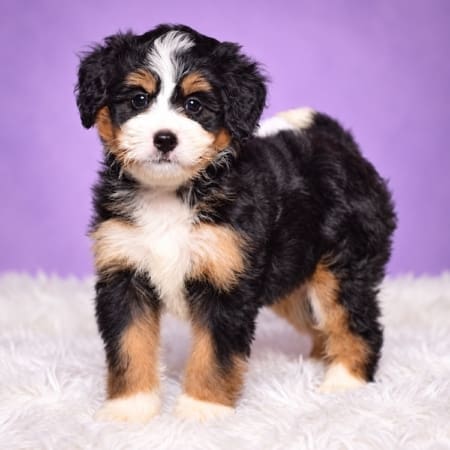
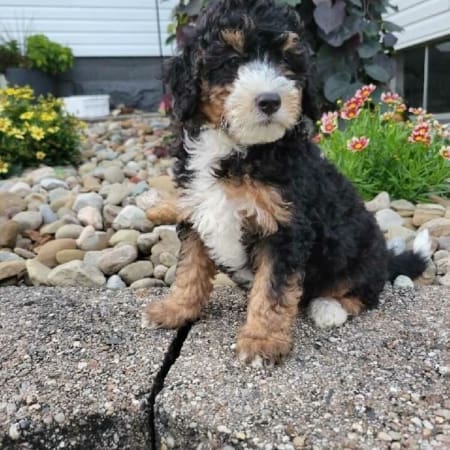
Toy goldendoodles balance sociability and trainability better than most small doodles, but the right choice depends on your energy level, tolerance for grooming, and how much dog you want underfoot. Cavapoos are calmer, mini bernedoodles are larger and more stubborn, and toy poodles are sharper but less naturally easygoing.
| Breed | Adult weight | Energy | Grooming load | Standout trait |
|---|---|---|---|---|
| Toy goldendoodle | 9-16 lbs | Moderate | High | Friendly, highly trainable |
| Cavapoo | 10-18 lbs | Low, moderate | High | Calmest of the group |
| Toy poodle | 5-9 lbs | Moderate | High | Sharpest problem solver |
| Mini bernedoodle | 25-45 lbs | Moderate | Very high | Mellow but slower to train |
| Mini goldendoodle | 20-35 lbs | Moderate, high | High | Best for active families |
Choose X if logic:
- Choose a toy goldendoodle if you want a small, low-shedding, genuinely friendly dog that adapts to condo life and travels well.
- Choose a cavapoo if you want the lowest-energy option and don’t need much retrieving drive.
- Choose a toy poodle if you want the smallest footprint and enjoy training a very sharp dog. Our pages on toy poodle puppies cover that path in depth.
- Choose a mini bernedoodle if size isn’t a constraint and you want a calmer adult; see our mini bernedoodle training guide.
Where to Find Reputable Toy Goldendoodle Breeders Near Bellevue Washington
Reputable breeders serving Bellevue fall into two groups: small local programs in King, Snohomish, and Pierce counties, and established out-of-state programs that ship or fly puppies into Sea-Tac. Because toy sizing requires generations of selective breeding, the number of legitimate toy-specific programs is small, and most serious buyers end up working with a national breeder rather than a nearby hobby litter.
How to vet a breeder in ten minutes
Ask these questions. The answers separate real programs from resellers fast.
- May I see both parents’ genetic panel and OFA results in writing?
2What is the projected adult weight range, and what generation is this litter (F1B, F2B, multigen)? - Do you practice ENS, and starting at what day?
- What noises, surfaces, and people have the puppies been exposed to?
- Has crate and potty training started before pickup?
- What does your written health guarantee cover, and for how long?
- Will you take the dog back at any point in its life if I can’t keep it?
- Can we do a live video call with the litter?
Walk away if the breeder refuses video, pressures you to pay by gift card or wire, has puppies “always available,” or won’t name their veterinarian.
Why Designer Toy GoldenDoodles is the best toy goldendoodle breeder for Bellevue buyers
Designer Toy GoldenDoodles is run by a working animal biologist with a degree in Animal Biology from Stockton University in Pomona, New Jersey, and a minor in animal genetics. That background isn’t decorative. It shapes how pairings are selected, how coat and size genetics are predicted, and how health risk is screened before a litter is ever planned.
What sets the program apart:
- Top bloodlines throughout. Every breeding dog in the program comes from proven, health-tested lines, not backyard acquisitions.
- ENS from birth. Early Neurological Stimulation begins in the first days of life, building measurable stress tolerance and resilience.
- Real-world sound exposure. Puppies grow up inside a busy household with other animals, children, vacuums, doorbells, kitchen clatter, and normal daily noise. They arrive in Bellevue already used to life, not a silent kennel.
- Well started on housebreaking and crate training. New owners consistently report a shorter, easier transition because the foundation is already laid.
- Written genetic health guarantee and lifetime breeder support.
You can browse current toy goldendoodles for sale and reserve upcoming litters directly. Buyers in Washington also frequently reference our Washington mini and micro goldendoodle breeder guide and our Seattle-area goldendoodle puppy page. Verified location and reviews are on our Google Maps listing.
Families who also breed or own French bulldogs should know we maintain a separate program offering Frenchie stud service through Designer French Bulldogs.
Common Mistakes When Buying a Toy Goldendoodle
The most expensive mistake is buying on photos and price instead of health documentation and socialization protocol. Nearly every regretful purchase I hear about traces back to one of the errors below.
- Paying a deposit before a live video call. Photos are stolen constantly. A live video call with the litter and dam is the minimum verification standard.
- Accepting “vet checked” as health testing. Those are different things. Demand parent genetic panels.
- Believing guaranteed adult weights. A good breeder gives a range and explains the generation. Anyone promising “exactly 8 pounds” is guessing or lying.
- Chasing rare colors over temperament. Merle and unusual parti patterns command premiums and sometimes come from lines bred for looks alone.
- Ignoring grooming commitment. Roughly $600 to $900 a year plus several brushings weekly. Budget for it before you buy.
- Taking a puppy home before eight weeks. Early separation is linked to behavioral problems and is restricted in many states.
- Skipping the written contract. A real guarantee names covered conditions, a claim window, and a return clause.
- Buying during a busy life season. The first three weeks require real time. Don’t bring a puppy home the week before a work deadline or vacation.
Quick example: A Bellevue buyer I spoke with paid $1,300 for a “toy goldendoodle” from an online listing. The dog arrived at nine weeks with giardia, no vaccine records, and finished at 34 pounds. Total first-year cost after treatment and training exceeded $4,200, and the building’s 25-pound pet limit forced a difficult conversation with property management.
Frequently Asked Questions
How much do toy goldendoodles cost in Bellevue, Washington?
Legitimate toy goldendoodles for sale Bellevue Washington cost $2,500 to $4,500 from an accredited breeder with genetic health testing, ENS, and early crate and potty training. Listings between $500 and $1,000 are almost always scams.
How big do toy goldendoodles get?
Toy goldendoodles typically finish between 9 and 16 pounds and stand 10 to 14 inches at the shoulder as adults. Individual dogs vary based on generation and parent size.
Do toy goldendoodles shed?
Most shed very little. Curly and wavy coats shed minimally, while straighter, retriever-type coats shed moderately. No goldendoodle is completely non-shedding or truly hypoallergenic.
How long do toy goldendoodles live?
Toy goldendoodles generally live 12 to 15 years. Smaller doodles tend to have longer lifespans than standard-size goldendoodles, provided they maintain a healthy weight and receive routine dental care.
Are toy goldendoodles good apartment dogs?
Yes. Their small size, moderate exercise needs, and low-shed coat make them well suited to Bellevue condos and apartments, including buildings with 20 to 25 pound pet weight limits.
Are toy goldendoodles hard to train?
No. They’re among the more trainable small dogs, typically reaching solid basic obedience in 8 to 12 weeks of short daily sessions. The real challenge is teaching them to be comfortable alone.
What’s the difference between a toy and a mini goldendoodle?
A toy goldendoodle finishes 9 to 16 pounds; a mini goldendoodle finishes 20 to 35 pounds. Minis need more exercise and rarely fit airline cabin carriers or strict building weight limits.
How much does grooming a toy goldendoodle cost?
Professional grooming in the Bellevue and Eastside market runs $70 to $110 every 6 to 8 weeks, or about $550 to $900 per year, plus at-home brushing three to five times weekly.
Is a toy goldendoodle a good first dog?
Yes, for owners with a reasonably flexible schedule. They’re eager to please and forgiving of beginner mistakes, but they do require real grooming commitment and early alone-time training.
Should I buy a puppy or an adult toy goldendoodle?
Buy a puppy if you want to shape socialization and get maximum years together. Buy an adult ($800 to $1,800 from a retiring program) if you want known temperament and size with no house-training phase.
What health tests should the parents have?
At minimum: a full DNA disease panel covering PRA and von Willebrand disease, OFA or PennHIP hip evaluation, an OFA eye exam, and a patella evaluation. Ask for written documentation, not verbal assurance.
Can a toy goldendoodle fly in the cabin?
Usually yes. At 9 to 16 pounds, most fit airline under-seat carriers, though each airline sets its own weight and dimension limits. Confirm before booking.
Conclusion: Your Next Steps
Buying a toy goldendoodle in Bellevue comes down to three things: verifying health testing on both parents, understanding what each price tier actually delivers, and choosing a breeder whose socialization protocol prepares the puppy for real life. The $2,500 to $4,500 range isn’t a premium, it’s the honest cost of genetic screening, attended whelping, ENS, and a puppy already started on housebreaking and crate training.
Here’s how I’d move forward this week:
- Set your real budget. Purchase price plus roughly $1,200 to $1,800 for first-year vet care, gear, and grooming.
- Confirm your housing rules. Check your building’s pet weight limit and breed policy in writing before you deposit.
- Shortlist two or three breeders and run all eight vetting questions from this guide.
- Insist on a live video call with the litter and the dam before any money changes hands.
- Read the health guarantee and confirm it names specific conditions, a claim window, and a lifetime return clause.
- Reserve deliberately. Quality toy litters are small and book out months in advance, so getting on a waitlist beats settling for whatever’s available today.
If you want a program built on documented genetics, top bloodlines, ENS from birth, and puppies raised inside a busy, noisy household, browse available toy golden doodle puppies and current litters. Ask hard questions. A breeder who welcomes them is the one worth buying from.