

Last updated: August 11, 2026
miniature golden doodle puppies Florida
Miniature golden doodle puppies in Florida typically weigh 15 to 35 pounds fully grown, stand 13 to 20 inches at the shoulder, and cost between $2,500 and $4,500 from an accredited breeder who provides a written genetic health guarantee. Prices below $1,500 in Florida almost always signal a scam listing or a high-volume puppy mill. The best miniature golden doodle puppies Florida families bring home come from programs that document parent health testing, start Early Neurological Stimulation (ENS) from birth, and begin housebreaking and crate training before the puppy ever leaves.
miniature golden doodle puppies Florida
- A miniature goldendoodle is a Golden Retriever crossed with a Miniature or Toy Poodle, usually an F1b or multigenerational cross bred for a low-shedding coat.
- Expect 15 to 35 pounds for a mini, versus 50 to 75 pounds for a standard goldendoodle, roughly half to one-third the size.
- Florida pricing tiers: $500,$1,000 (scam risk), $1,000,$1,500 (puppy mill), $1,800,$2,000 (hobby breeder, limited guarantees), $2,500,$4,500 (accredited breeder with a genetic health guarantee).
- Designer Mini Golden Doodles is run by a credentialed animal biologist and offers a full 2-year genetic health guarantee on every puppy.
- Mini goldendoodles adapt well to apartments and condos when they get 45 to 60 minutes of daily activity plus mental enrichment.
- Coats are low-shedding, not no-shedding: plan on brushing 3 to 4 times weekly and professional grooming every 6 to 8 weeks.
- Florida’s heat and humidity change the care plan, shorter summer clips, early-morning walks, and diligent ear drying after swimming.
- Typical lifespan is 12 to 15 years, longer than standard goldendoodles.
- Always verify hip, elbow, eye, cardiac, and DNA panel results on both parents before paying a deposit.
What Is a Miniature Goldendoodle?
A miniature goldendoodle is a hybrid dog created by crossing a Golden Retriever with a Miniature or Toy Poodle, producing a small-to-medium companion with a curly or wavy low-shedding coat and a friendly, biddable temperament. Most reputable Florida programs breed F1b (goldendoodle back to Poodle) or multigenerational litters because those generations shed the least and hold coat quality most predictably.
Generation labels matter more than marketing names:
| Generation | Cross | Typical coat | Shedding level |
|---|---|---|---|
| F1 | Golden Retriever x Mini Poodle | Wavy, sometimes flat | Light to moderate |
| F1b | F1 goldendoodle x Mini Poodle | Curly to loose curl | Very light |
| F2b / Multigen | Multiple doodle generations | Consistent curl | Very light, most predictable |
You’ll also see size labels used loosely across Florida listings. “Petite,” “toy,” “teacup,” and “micro” are marketing terms, not breed standards. The only reliable predictor is the documented adult weight of the sire and dam plus the breeder’s growth history from previous litters.
Decision rule: If a household member has mild dog allergies, choose an F1b or multigen mini goldendoodle over an F1. The added Poodle percentage meaningfully reduces loose hair and dander in most litters.
Common mistake: assuming “mini” means the puppy will stay puppy-sized. A mini goldendoodle at 30 pounds is still a real dog with real exercise needs. If you truly want a 10-16 pound dog, look specifically at micro goldendoodle sizing for first-time dog owners rather than assuming any mini will land there.
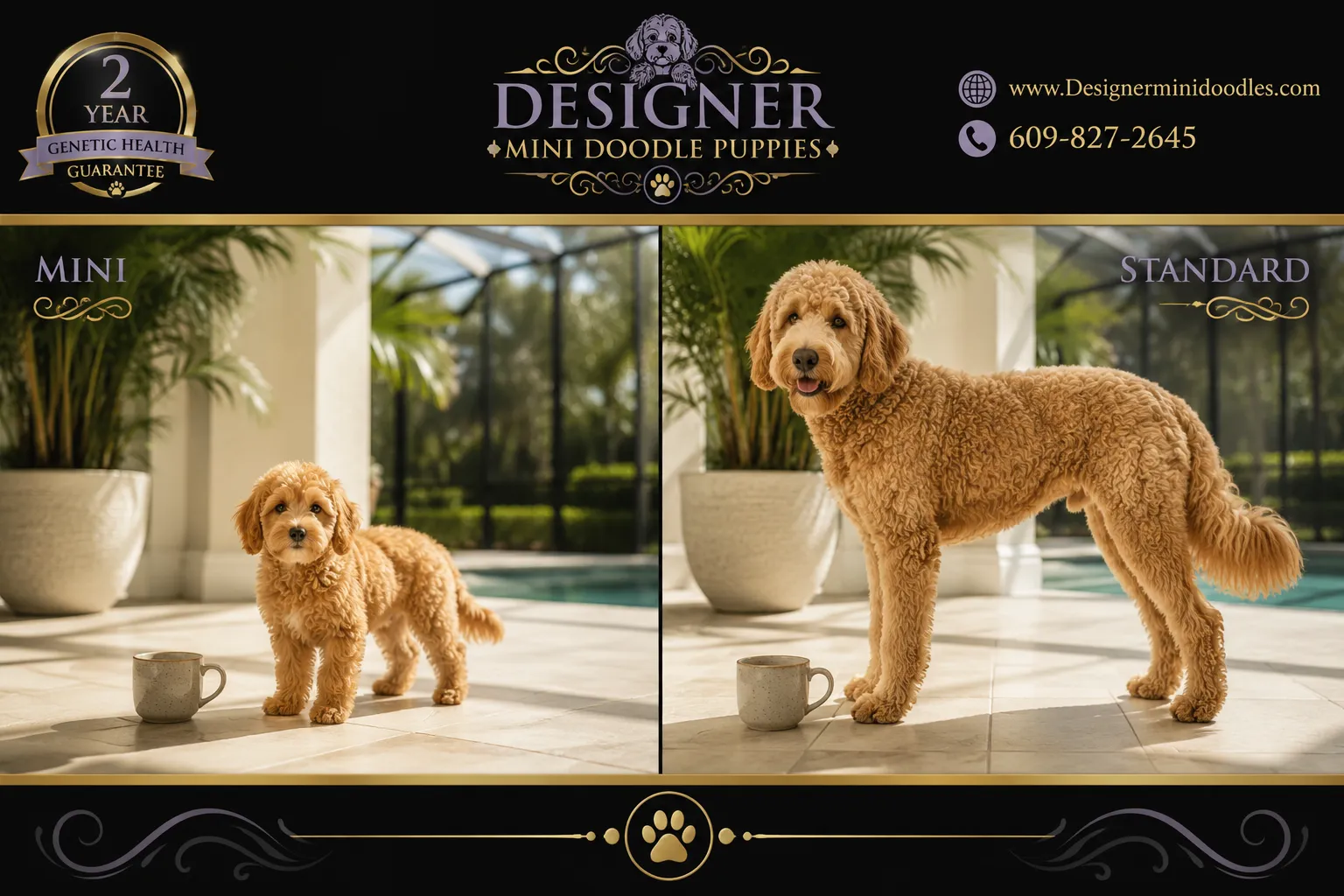
Miniature Goldendoodle vs Regular Goldendoodle: What’s the Size Difference?
A miniature goldendoodle weighs 15 to 35 pounds and stands 13 to 20 inches tall, while a standard goldendoodle weighs 50 to 75 pounds and stands 20 to 26 inches tall. In practical terms, a mini is roughly half the weight of a standard and fits comfortably in a mid-size crate, a sedan, and an in-cabin airline situation is sometimes possible at the smallest end.
The differences that actually change your daily life:
- Living space: A mini can thrive in an 800-square-foot condo. A standard usually needs a yard or dedicated daily park time.
- Feeding cost: A mini eats roughly one-third of what a standard eats, which adds up over 13 years.
- Grooming cost: Groomers price by size and coat volume. A mini clip in Florida typically runs $65,$95 versus $95,$140 for a standard.
- Handling: You can lift a 22-pound mini into a bathtub or vet table. A 70-pound doodle with wet, matted legs is a two-person job.
- Lifespan: Smaller dogs generally live longer, and mini goldendoodles average 12 to 15 years compared with 10 to 13 for standards.
Choose a standard if you want a jogging or hiking partner who can go 8+ miles and you have a fenced yard. Choose a mini if you split time between a Florida condo and travel, or if you want a dog that’s easy for one person to manage solo.
How Much Do Miniature Goldendoodles Cost? Miniature Golden Doodle Puppies Florida Price Chart
Miniature golden doodle puppies in Florida cost $2,500 to $4,500 from an accredited breeder with a written genetic health guarantee, proper whelping practices, and early housebreaking and crate training. Anything priced under $1,500 should be treated as a red flag until proven otherwise, because the health testing and puppy-rearing labor behind a well-bred litter simply cannot be covered at that price.
Here’s how the Florida market actually breaks down:
| Price range | What you’re usually dealing with | Real risk |
|---|---|---|
| $500,$1,000 | Scam listings, stolen photos, wire/Zelle/gift-card deposits | No puppy exists; money is gone |
| $1,000,$1,500 | Puppy mill or broker volume seller | No parent testing, parasites, early illness, no support |
| $1,800,$2,000 | Well-meaning hobby breeder | Partial or no health testing, minimal guarantee, no early training |
| $2,500,$4,500 | Accredited breeder, full genetic health guarantee, ENS, early crate and potty training | Highest upfront cost, lowest lifetime cost |
The cheap puppy is rarely the cheap puppy. A single hereditary hip surgery or an untreated congenital heart defect can exceed $6,000, which erases every dollar “saved” at purchase. For a full breakdown of what ownership actually costs after the purchase price, see this guide to micro goldendoodle cost-of-ownership clarity.
Ongoing Florida costs to budget (estimates based on typical regional pricing, not a published survey):
- Professional grooming: $65,$95 every 6-8 weeks
- Quality food: $35,$60 monthly for a 20-30 lb dog
- Routine vet and preventatives (heartworm year-round in Florida): $400,$700 annually
- Pet insurance: $30,$60 monthly depending on age and county
- Flea and tick control: mandatory 12 months a year in Florida, not seasonal
Edge case: Deposit scams spike around holidays. A legitimate Florida breeder will let you video-call to see the specific puppy with the dam, will accept traceable payment, and will never pressure you with “three families are waiting” urgency.
Where to Buy Miniature Goldendoodle Puppies in Florida
Buy from a breeder who lets you verify parent health testing, shows you the whelping area on video or in person, and provides a written genetic health guarantee in the contract. In Florida, the strongest options are dedicated small-scale doodle programs, not classified ad sites, pet stores, or Facebook Marketplace listings.
Where Florida buyers most commonly look, ranked by reliability:
- Accredited specialty doodle programs, health testing, contracts, early training, lifetime support.
- Breed-specific referral from a local vet, vets see the outcomes of every local breeder’s puppies.
- Goldendoodle rescue and rehome networks, good for adult dogs, rarely offers puppies under 12 weeks.
- General classified sites, heavy broker and scam presence; verify everything independently.
- Pet stores, almost always sourced from high-volume commercial kennels.
Designer Mini Golden Doodles has built a national reputation as one of the best mini golden doodle breeders in the USA, and Florida families regularly place with the program because of how the puppies are raised, not just how they look. You can browse current mini golden doodle puppies for sale directly, and Florida-specific availability is listed on the mini and micro goldendoodle breeders in Florida page.
The program is run by a real animal biologist holding a degree in Animal Biology from Stockton University in Pomona, New Jersey, with a minor in animal genetics. That academic background changes practical decisions: pairing selections, coat and color genetics, inbreeding coefficient management, and how carrier status is handled across generations. Every mini doodle for sale and every dog in the breeding stock comes from top bloodlines and the best quality lines in the country.
What comes standard with each puppy:
- A full 2-year genetic health guarantee in writing
- ENS (Early Neurological Stimulation) handling begun from birth
- Puppies well started on housebreaking and crate training before pickup
- Deliberate socialization inside a busy home with other animals, children, vacuums, doorbells, and normal everyday noise
- A documented diet and nutrition protocol built for growing small doodles
If you’re comparing options across the Southeast, the mini and micro goldendoodle breeders in Georgia page covers nearby availability, and ground delivery to Florida metros is common.
- Display 9 Products per page

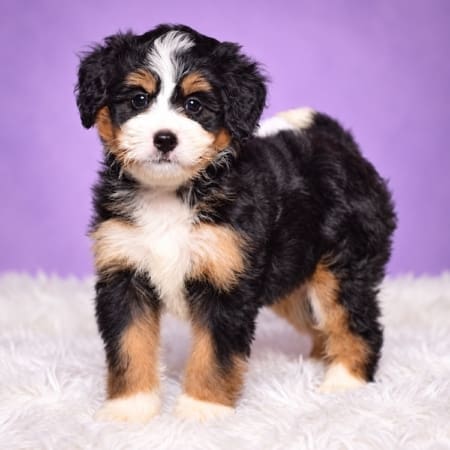

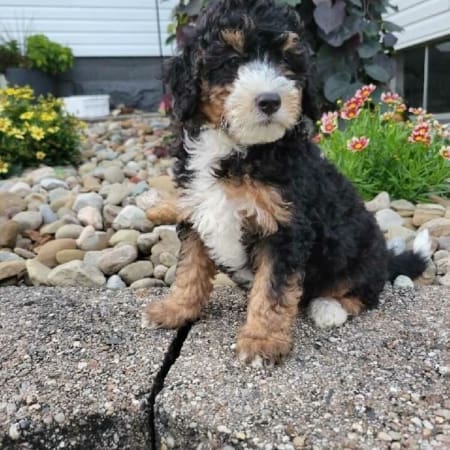


You can also find the program on its Google Maps business listing for location details and reviews.
How Do I Evaluate Miniature Goldendoodle Breeders in Florida? Reviews and Red Flags
Evaluate a Florida breeder on four verifiable things: parent health testing documentation, the written health guarantee, how puppies are raised in the first eight weeks, and whether past buyers can be contacted. Reviews are useful, but only when they’re specific and traceable to real litters.
The 10-question breeder screening checklist:
- May I see OFA or equivalent hip, elbow, eye, and cardiac results for both parents?
- What DNA panel was run, and were any carrier statuses found?
- What generation is this litter (F1, F1b, multigen), and what does that mean for shedding?
- What were the adult weights of the sire and dam?
- Do you use ENS or a comparable early handling protocol?
- What housebreaking and crate work is done before pickup?
- What’s in the written health guarantee, and how long does it last?
- Can I video-call to see this puppy with its littermates and mother?
- What food is the puppy on, and what’s the transition plan?
- What happens if my situation changes in two years, will you take the dog back?
Review red flags: identical five-star wording across multiple reviews, no photos of the actual facility, reviewers who only reference “fast shipping,” and zero negative or neutral reviews on a program that’s been operating a decade. Real programs have a few imperfect reviews and answer them.
Green flags: buyers who post multi-year updates with the same dog, reviews that name the specific dam or sire, breeders who publish weight ranges and admit when a litter runs larger than projected, and a willingness to say “this puppy isn’t right for your household.”
Decision rule: If a breeder refuses to put the health guarantee in writing before your deposit, walk away. Verbal guarantees are unenforceable and are the single most common regret among doodle buyers.
What Is a Miniature Goldendoodle’s Temperament and Personality Like?
Miniature goldendoodles are social, eager-to-please, moderately energetic dogs that bond strongly with their whole family rather than a single person. The Golden Retriever side contributes friendliness and tolerance; the Poodle side contributes problem-solving intelligence and sensitivity to training tone.
Typical traits you can expect:
- People-oriented to a fault. Most minis follow you room to room. They do not do well left alone 10 hours a day.
- Highly trainable. They respond fast to reward-based training and pick up new cues in a handful of sessions.
- Soft-natured. Harsh corrections backfire. Positive reinforcement works dramatically better.
- Alert but not guardy. Many will announce a visitor, then immediately try to befriend them.
- Good with kids and other pets when socialized early, which is exactly why exposure to children and other animals during weeks 3 through 8 matters so much.
Who they’re not for: households where nobody’s home most of the day, owners who want an aloof or independent dog, or anyone unwilling to commit to grooming. Separation anxiety is the most common behavioral problem in the breed mix, and it’s largely preventable with early crate conditioning and gradual alone-time practice.
Quick example: A Tampa family working hybrid schedules is nearly ideal, someone’s home most days, and the dog gets predictable routine. A household where both adults work 12-hour shifts on-site should plan for midday care from day one, or consider whether this mix is the right fit.
What Health Problems Do Miniature Goldendoodles Have, and How Long Do They Live?
Miniature goldendoodles typically live 12 to 15 years and are generally healthy, but they can inherit conditions from both parent breeds, most notably hip dysplasia, progressive retinal atrophy (PRA), von Willebrand’s disease, patellar luxation, and ear infections. Responsible genetic screening of both parents removes or dramatically reduces most of these risks.
Conditions worth screening for:
| Condition | Comes from | How it’s screened |
|---|---|---|
| Hip and elbow dysplasia | Both breeds | OFA or PennHIP evaluation of parents |
| Progressive retinal atrophy (PRA) | Poodle | DNA test on both parents |
| von Willebrand’s disease | Poodle | DNA test |
| Subaortic stenosis / cardiac issues | Golden Retriever | Cardiac exam on parents |
| Patellar luxation | Mini/Toy Poodle | Physical/orthopedic exam |
| Ear infections | Both (drop ears + hair in canal) | Not genetic, managed with grooming |
Florida-specific health notes:
- Heartworm prevention is a year-round requirement in Florida, not seasonal. Mosquito pressure never fully stops.
- Humidity plus swimming equals ear infections. Dry the ears thoroughly after every water session and keep the canal hair trimmed.
- Heat intolerance is real in curly coats. Walk before 9 a.m. and after 7 p.m. in summer months, and check pavement temperature with your hand.
- Hot spots and yeast overgrowth are more common in Florida’s climate. Dry the coat fully after baths; don’t let a dense coat stay damp.
A full 2-year genetic health guarantee matters most here. It shifts the financial risk of a hereditary defect back to the party who controlled the breeding decisions.
What Are the Grooming Requirements, and How Much Do Miniature Goldendoodles Shed?
Mini goldendoodles are low-shedding, not non-shedding. Plan on brushing 3 to 4 times per week (daily during the 7-to-10-month coat change) and a professional groom every 6 to 8 weeks. F1b and multigen coats shed the least; F1 coats with a wavier texture may drop light hair seasonally.
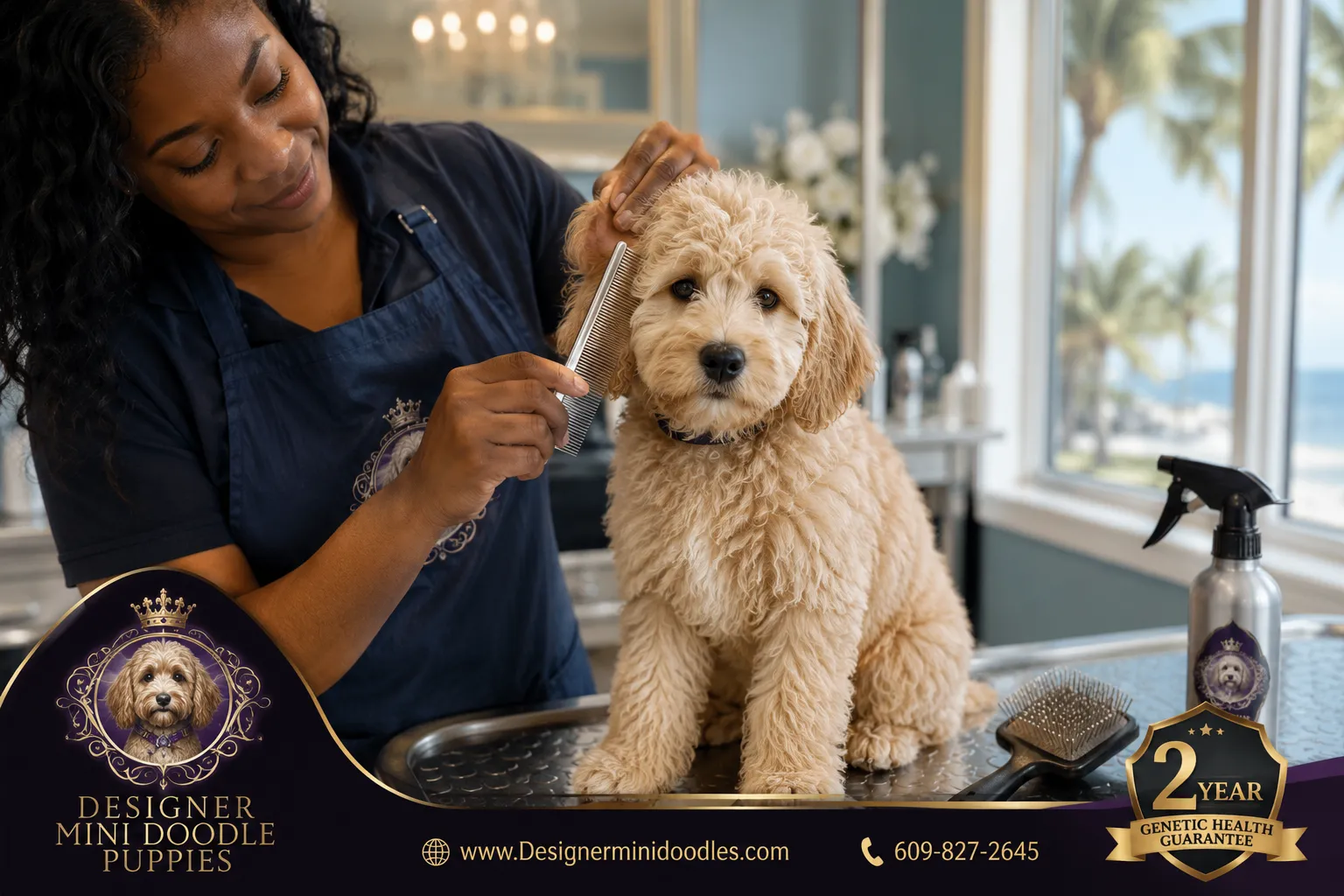
The at-home grooming routine that prevents matting:
- Slicker brush in sections, then a stainless steel comb to confirm you reached the skin. If the comb snags, the slicker missed a mat.
- Focus on the friction zones: behind the ears, armpits, collar line, tail base, and rear legs. Those mat first.
- Wipe the face and beard daily. Florida sand and grass seeds collect there.
- Trim or pluck ear canal hair per your groomer’s guidance, and dry ears after swimming.
- Nails every 3 to 4 weeks; teeth brushed several times a week.
Florida clip advice: A “summer teddy bear” clip at half to three-quarters of an inch keeps the doodle look while cutting heat load and drying time. Don’t shave to the skin, the coat provides real sun protection, and Florida sun on pale skin causes burns.
Common mistake: skipping grooming during the adolescent coat change. Puppy coat sheds out into adult coat around 7 to 10 months, and mats form under a soft-looking surface fast. Many “the groomer had to shave my doodle” stories start right there. For breakdowns of coat-care logistics at home, see this guide on micro goldendoodle grooming and home care.
Is a Miniature Goldendoodle Good for Apartments and Florida Condos?
Yes. Miniature goldendoodles adapt well to apartments and Florida condos as long as they get 45 to 60 minutes of daily physical activity plus mental enrichment, and as long as alone-time is trained deliberately. Size isn’t the limiting factor, exercise, barking management, and separation tolerance are.
Making condo life work:
- Exercise: Two 20-to-30-minute walks plus a play session. Early morning and evening in summer.
- Enrichment: Snuffle mats, food puzzles, and 5-minute training sessions tire a doodle more than an extra lap around the block.
- Barking: Reward quiet, and desensitize to hallway sounds early. Elevators, dollies, and neighbors’ doors are the usual triggers.
- Potty logistics: In a high-rise, factor elevator time into puppy potty math. A 10-week-old puppy cannot wait for a slow elevator.
- HOA and lease limits: Many Florida condos cap dogs at 25 or 30 pounds. Confirm your building’s limit in writing before choosing a puppy, and get the breeder’s projected adult weight range in writing too.
Edge case: If your building’s weight cap is 20 pounds, a standard mini at 30 pounds won’t qualify. Look at the smaller end of the range instead, toy goldendoodle puppies are bred specifically for that footprint.
Miniature Goldendoodle vs Labradoodle: Which Is Better?
Neither is objectively better; they suit different households. Choose a miniature goldendoodle if you want a softer, more sensitive, people-focused dog that settles down indoors. Choose a mini labradoodle if you want a higher-drive, more boisterous dog with a bit more independence and stamina.
| Factor | Mini Goldendoodle | Mini Labradoodle |
|---|---|---|
| Energy level | Moderate | Moderate to high |
| Sensitivity to training tone | High (soft) | Medium |
| Typical coat | Wavy to curly, consistent in F1b | More variable: wool, fleece, or hair |
| Shedding | Very light in F1b/multigen | Light to moderate, coat-type dependent |
| Velcro tendency | Very high | High but somewhat more independent |
| Best for | Families, first-time owners, quieter homes | Active owners, sports, outdoorsy households |
The genuinely honest difference: labradoodle coat types vary more widely, so shedding is harder to predict litter to litter. Goldendoodle coats, particularly F1b, are more consistent, which is why allergy-conscious buyers often land on goldendoodles. If allergies drive your decision, this breakdown for allergy-conscious homes is worth reading before you commit.
Decision rule: If a mild allergy sufferer lives in the home and coat predictability matters, choose an F1b mini goldendoodle. If you run trails five days a week and want a dog who keeps up, look at the labradoodle.
What Are the Best Miniature Goldendoodle Puppy Training Tips?
Start training the day the puppy comes home, and build on the housebreaking and crate work the breeder already began. Mini goldendoodles are among the most trainable small-to-medium mixes, but they’re sensitive, so short, upbeat, reward-based sessions produce far better results than repetition or correction.
The first 30 days, in order:
- Crate as a good place. Feed meals in the crate with the door open. Never use it as punishment. Puppies from a program that already crate-trains adjust in days, not weeks.
- Housebreaking on a clock. Out first thing, after every meal, after every nap, after every play session, and before bed. A rough guide: age in months plus one equals hours of bladder control.
- Name and recall first. Say the name, reward eye contact. Recall gets rewarded every single time, forever.
- Socialization window (up to about 16 weeks). New surfaces, sounds, people, and safe dogs. Puppies exposed from birth to a busy home with children, other animals, and everyday noise start with a real advantage.
- Alone-time practice. Leave for 2 minutes, then 10, then 30, before there’s ever a problem. This is how you prevent separation anxiety.
- Bite inhibition and handling. Touch paws, ears, and mouth daily so grooming is never a fight.
- Basic cues: sit, down, place, leave it, loose-leash walking. Five minutes, three times a day.
Puppies raised with ENS from birth and deliberate noise exposure tend to recover faster from startling events, which shows up as easier vet visits and calmer thunderstorm behavior, a real advantage during Florida’s summer storm season. For a structured approach to crate work, the positive crate training guide applies directly to mini doodles.
Common mistake: free-feeding. Scheduled meals make potty timing predictable and give you high-value training currency. Free-fed puppies are harder to housebreak and less motivated to work.
FAQ
How big do miniature goldendoodles get?
Most miniature goldendoodles reach 15 to 35 pounds and stand 13 to 20 inches at the shoulder. Ask for the sire’s and dam’s adult weights, since those are the best predictor of your puppy’s mature size.
How much are miniature golden doodle puppies in Florida?
Expect $2,500 to $4,500 from an accredited Florida breeder with a written genetic health guarantee, early housebreaking, and crate training. Listings at $500 to $1,500 typically indicate scams or puppy mills.
Do miniature goldendoodles shed?
They shed lightly. F1b and multigenerational mini goldendoodles shed the least, while F1 dogs with wavier coats may drop some hair. No goldendoodle is truly non-shedding or fully hypoallergenic.
How long do miniature goldendoodles live?
Typically 12 to 15 years, which is longer than standard goldendoodles at 10 to 13 years. Weight management, dental care, and parent health screening all influence the upper end of that range.
Are miniature goldendoodles good for first-time dog owners?
Yes. Their eagerness to please and fast learning make them one of the friendlier choices for first-time owners. The main commitments are grooming every 6 to 8 weeks and not leaving them alone for long stretches.
Can miniature goldendoodles handle Florida heat?
With adjustments, yes. Walk in the early morning and evening, keep a summer clip of half to three-quarters of an inch, provide constant water and shade, and never leave a doodle outside unattended in midday summer heat.
What health testing should the parents have?
At minimum: OFA or PennHIP hip evaluation, elbow evaluation, an eye exam, a cardiac exam, and a DNA panel covering PRA and von Willebrand’s disease. Ask for documentation, not verbal assurance.
Is a miniature goldendoodle better than a labradoodle?
It depends on your household. Mini goldendoodles are typically softer, more people-focused, and more predictable in coat. Mini labradoodles tend to be higher-energy with more variable coat types.
How often do mini goldendoodles need professional grooming?
Every 6 to 8 weeks, with at-home brushing 3 to 4 times per week. Skipping brushing during the 7-to-10-month coat change is the leading cause of mats severe enough to require shaving.
Can I fly a mini goldendoodle in the cabin?
Only at the smallest end of the size range, and only if the dog fits the airline’s under-seat carrier limits (usually around 20 pounds combined). Confirm requirements with the airline before booking.
Conclusion: Your Next Steps
Buying one of the many miniature golden doodle puppies Florida families search for each month comes down to three verifiable things: documented parent health testing, a written multi-year genetic health guarantee, and evidence that the puppy was raised with real early neurological stimulation, socialization, housebreaking, and crate training. Price follows those things. It doesn’t replace them.
Here’s what I’d do this week:
- Set a real budget at $2,500,$4,500 for the puppy, plus roughly $600,$1,200 for first-year vet care, gear, and grooming in Florida.
- Confirm your size ceiling, check your lease or HOA weight limit in writing before you fall for a photo.
- Screen two or three breeders using the 10-question checklist above. Ask for health testing documents by email.
- Request a live video call with the actual puppy and its mother. No exceptions.
- Read the contract before paying anything, and confirm the guarantee length and what it covers.
- Prepare the house: crate, pen, enzyme cleaner, slicker brush, steel comb, and a potty schedule taped to the fridge.
When you’re ready to compare available litters, start with the Florida mini goldendoodle puppies for sale listings and the current mini golden doodle puppies available now. A well-bred mini doodle is a 12-to-15-year relationship, spending two extra weeks on due diligence is the cheapest insurance you’ll ever buy.