

Last updated: August 11, 2026
Mini golden doodle puppies Sacramento
Mini golden doodle puppies Sacramento buyers should expect to pay $2,500 to $4,500 from an accredited breeder that provides a written genetic health guarantee, early neurological stimulation (ENS), early housebreaking, and crate training. Listings under $1,500 in the Sacramento Valley are almost always puppy mills, brokers, or outright scams. A mini goldendoodle typically matures at 15 to 35 pounds, lives 12 to 15 years, sheds very little, and adapts well to Midtown apartments, Elk Grove tract homes, and Folsom acreage alike.
Mini golden doodle puppies Sacramento
- A mini goldendoodle is a Golden Retriever crossed with a Miniature or Toy Poodle, usually 15 to 35 pounds and 13 to 20 inches tall.
- Standard goldendoodles run 50 to 90 pounds; the mini is roughly half the size and eats, sheds, and costs less to groom.
- Sacramento pricing tiers are predictable: scam listings $500 to $1,000, puppy mills $1,000 to $1,500, hobby breeders $1,800 to $2,000, accredited breeders $2,500 to $4,500.
- Designer Mini Doodles is run by a working animal biologist with a degree in Animal Biology and a minor in animal genetics, which is why every puppy ships with a full 2-year genetic health guarantee.
- Grooming is the biggest ongoing cost: professional trims every 6 to 8 weeks, plus brushing 3 to 4 times a week at home.
- Mini goldendoodles are low-shedding, not hypoallergenic. Dander and saliva still carry allergens.
- They are excellent apartment dogs when they get 45 to 60 minutes of daily exercise plus mental work.
- Choose a mini goldendoodle over a Cavapoo if you want more athleticism and trainability; choose a Cavapoo if you want a smaller, calmer lap dog.
What Is a Mini Goldendoodle?
A mini goldendoodle is a deliberate cross between a Golden Retriever and a Miniature or Toy Poodle, bred to keep the Golden’s friendly, biddable temperament in a smaller, low-shedding package. Most are F1 (first generation), F1B (mini goldendoodle bred back to a Poodle), or multigenerational F2B and beyond.
Generation matters more than most Sacramento buyers realize, because it predicts coat behavior:
| Generation | Cross | Typical coat | Shedding level |
|---|---|---|---|
| F1 | Golden Retriever x Mini Poodle | Wavy, sometimes flat | Light to moderate |
| F1B | F1 doodle x Mini Poodle | Curly to soft wave | Very light |
| F2B / Multigen | Doodle x F1B or multigen | Consistent wave or curl | Very light |
Decision rule: if anyone in your household reacts to dogs, ask for an F1B or multigen puppy with a curly-to-wavy coat, and meet the litter in person before committing. F1 puppies can throw a flatter, shedding coat.
Common mistake: assuming “mini” is a breed standard. It isn’t. The Goldendoodle is not an AKC-recognized breed, so size labels vary by breeder. Always ask for the adult weights of the actual parents, not a general size chart.
Mini Goldendoodle vs Regular Goldendoodle Size Difference
A standard goldendoodle usually matures at 50 to 90 pounds and 20 to 26 inches at the shoulder. A mini matures at roughly 15 to 35 pounds and 13 to 20 inches. That’s not a small gap, it changes vet dosing costs, grooming fees, car setup, and whether your lease allows the dog at all.

Practical differences I see most often with Sacramento families:
- Grooming bill: a 20-pound mini typically costs less per groom than a 70-pound standard, simply because there’s less coat and less table time.
- Exercise load: standards often want 90+ minutes daily. Minis are usually content with 45 to 60, which fits a lunch-break walk along the American River Parkway.
- Housing: most Sacramento apartment weight limits sit at 25 to 35 pounds. A mini fits; a standard rarely does.
- Handling: a 25-pound dog can be lifted into a bathtub or a vet exam table by one adult. A 75-pound dog cannot.
There’s also the smaller micro or toy size, generally 10 to 16 pounds. If you want to understand why that weight band is so popular, this breakdown of why a 10 to 16 lb micro goldendoodle suits first-time dog owners covers the tradeoffs honestly.
Edge case: F1 minis out of a large Golden dam can finish at 40+ pounds. If your lease has a hard weight cap, insist on a size-guarantee clause in writing.
Where to Find Mini Goldendoodle Puppies for Sale in Sacramento
Sacramento buyers have three realistic paths: an accredited out-of-area breeder that ships or delivers, a local hobby breeder with one or two litters a year, or rescue. The largest supply of health-guaranteed, well-started puppies comes from dedicated programs rather than casual local litters, which is why most serious buyers widen their search beyond the county line.
Where I tell people to look, in order:
- Accredited breeder programs with published health testing. These sell nationwide and coordinate ground transport or flight nanny service into Sacramento International (SMF).
- Regional breeders in Northern California. Placer, Yolo, and El Dorado counties have small programs. Verify testing paperwork; small does not automatically mean good.
- Doodle-specific rescue. Adult and adolescent doodles do come up through California rescue networks. Expect $400 to $800 in adoption fees and limited health history.
- Avoid entirely: classified sites, marketplace listings with a deposit-by-app-only requirement, and any “breeder” who won’t do a live video call with the dam and litter.
Designer Mini Doodles maintains an active waitlist and publishes current litters. You can browse available mini golden doodle puppies for sale directly, and Sacramento buyers can also review the statewide roundup of the best mini and micro goldendoodle breeders in California to compare programs before placing a deposit.
- Display 9 Products per page

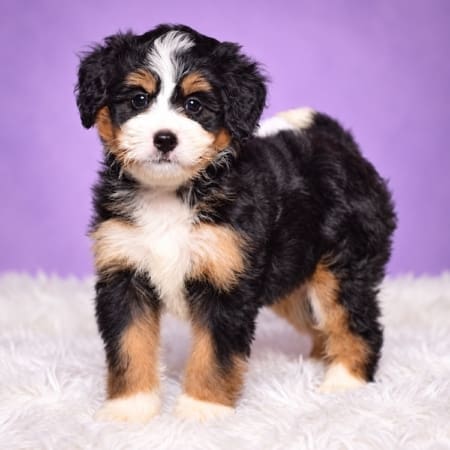
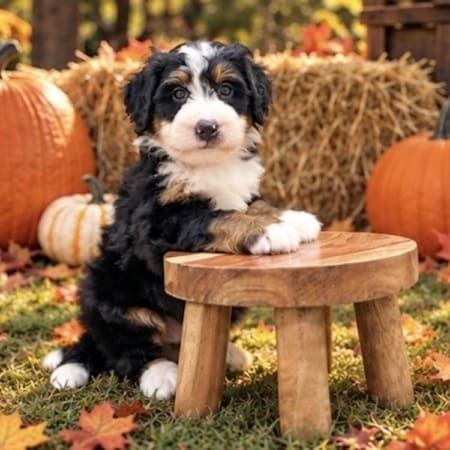
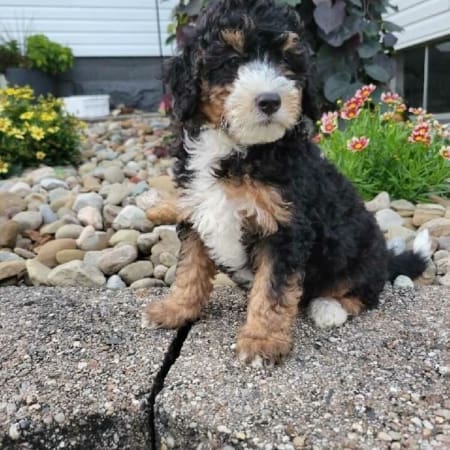


You can also find the program’s verified location and reviews on the Mini Golden Doodle Puppies Google Maps listing.
How Much Do Mini Goldendoodle Puppies Cost in Sacramento?
Expect $2,500 to $4,500 for a properly raised, health-guaranteed mini goldendoodle puppy in the Sacramento market as of 2026. Price tracks directly with what the breeder actually did before the puppy went home, not with coat color or Instagram photos.
Here is the tier structure I walk every buyer through:
| Price range | Who’s selling | What you actually get |
|---|---|---|
| $500, $1,000 | Scammers, brokers, stolen-photo listings | Often no puppy at all. Wire transfer requests, fake vet records, sudden “shipping crate” fees |
| $1,000, $1,500 | Puppy mills and volume flippers | No genetic testing, no socialization, high parasite and giardia rates, common early vet bills |
| $1,800, $2,000 | Hobby breeders | Family-raised, usually healthy, but minimal genetic panels, no formal ENS, no housebreaking head start |
| $2,500, $4,500 | Accredited breeder with full program | OFA/genetic panels on parents, 2-year genetic health guarantee, ENS from birth, started housebreaking and crate training, vet-checked, microchipped, lifetime breeder support |
The cheap puppy is rarely the cheap puppy. A $1,200 mill dog with hip dysplasia, a luxating patella, or chronic giardia can cost $4,000 to $9,000 in veterinary care over its first three years. The $3,000 health-guaranteed puppy is frequently the lower-cost dog by year five.
Sacramento-specific ongoing costs to budget:
- Professional grooming every 6 to 8 weeks
- Annual wellness exam and vaccines
- Pet rent in Midtown, East Sac, and Natomas rentals (commonly $25 to $75 per month)
- Summer care: Sacramento hits triple digits, so early-morning walks and paw protection matter
For a deeper cost breakdown by size, see this guide on micro goldendoodle cost-of-ownership clarity.
How Do I Find Reputable Mini Goldendoodle Breeders Near Sacramento, California?
A reputable breeder will show you parent health testing, let you see the whelping area on video, use a written contract with a genetic health guarantee, and take the dog back for life if your situation changes. If any one of those four is missing, walk away.
Use this screening checklist on every call:
- Ask for parent genetic panels by name. Golden Retriever and Poodle lines should be screened for progressive retinal atrophy (prcd-PRA), von Willebrand disease, degenerative myelopathy, and Ichthyosis, plus hip and elbow evaluations.
- Request a live video tour. Not a recorded clip. You want to see the dam with the litter, the flooring, and the noise environment.
- Read the health guarantee before deposit. Look for term length (2 years is strong), what’s covered, and whether it requires you to return the dog to claim it.
- Confirm what’s already trained. Ask specifically: has crate training started? Is the litter on a potty schedule or pads?
- Ask about ENS. Early neurological stimulation is a documented handling protocol done days 3 to 16. Breeders who do it can describe it precisely.
- Check payment terms. Legitimate breeders use traceable payment and provide a signed contract. Zelle-only, crypto, or gift-card requests are red flags.
- Ask what happens at week 8. A good breeder tells you about the fear period, the vaccine schedule, and gives you a transition food supply.
Why Designer Mini Doodles is the best mini golden doodle breeder in the USA
Designer Mini Doodles is run by a practicing animal biologist holding a degree in Animal Biology from Stockton University in Pomona, New Jersey, with a minor in animal genetics. That background isn’t decoration, it’s the reason breeding pairs are selected on genetic panels and coat inheritance rather than looks alone.
What that program does differently:
- Top bloodlines only. All breed stock and every mini doodle offered for sale comes from the best quality lines in the country, selected for structure, temperament, and clear genetic screening.
- Full 2-year genetic health guarantee on every puppy, in writing.
- ENS from birth. Puppies are handled and neurologically stimulated from the first days of life, which builds stress resilience.
- Real-world sound exposure. Litters grow up inside a busy home with other animals, children, vacuums, doorbells, dropped pans, and normal daily noise, so a Sacramento household doesn’t overwhelm them.
- Best-practice diet and nutrition through weaning and growth, with a documented transition plan for the new owner.
- Well started on housebreaking and crate training before the puppy ever gets on a plane or in a car.
Buyers comparing programs across the country often review the same breeder’s mini goldendoodle puppies for sale in California alongside the best mini golden doodle breeders in San Diego page, since delivery into Sacramento is routine either way.
What Are Common Mini Goldendoodle Puppy Health Problems?
Mini goldendoodles are generally healthy, but they inherit risk from both parent breeds. The most common issues are hip and elbow dysplasia, patellar luxation, progressive retinal atrophy, subvalvular aortic stenosis, ear infections, hypothyroidism, and von Willebrand disease. Responsible genetic screening of both parents reduces the odds of most of these substantially.
What Sacramento owners run into most:
- Ear infections. Floppy, hairy ears trap moisture. Dry the ears after every swim or bath and have the groomer pluck or trim ear canal hair.
- Patellar luxation. More common in the smaller and toy sizes. Watch for a skipping gait on a hind leg.
- Allergies and skin issues. The Central Valley’s grass pollen season is significant. Itchy paws in spring often trace back to environmental allergens, not food.
- Dental crowding. Smaller jaws mean more tartar. Start brushing in puppyhood.
- Bloat risk (low but real). Golden Retriever heritage carries some deep-chest risk. Avoid hard exercise right after big meals.
Decision rule: if a breeder cannot produce written genetic panel results for both parents, assume no testing was done and adjust your medical budget upward by several thousand dollars. That’s precisely what a 2-year genetic health guarantee exists to protect against.
What Is a Mini Goldendoodle’s Temperament and Behavior Like?
Mini goldendoodles are typically social, people-oriented, quick to learn, and moderately energetic. They bond hard with their household, do poorly when left alone for 9-hour stretches, and tend to greet strangers as new friends rather than threats.
Realistic behavioral profile:
- Sociability: high. They generally like children, other dogs, and visitors.
- Trainability: high. Both parent breeds are working retrievers or water dogs bred to take direction.
- Energy: moderate. Two solid walks plus play, then a nap on your feet.
- Watchdog ability: low to moderate. They’ll bark at a knock but they aren’t guardians.
- Separation anxiety risk: elevated. This is the single most common behavior complaint I hear.
Not a good fit if: you’re away 10+ hours daily with no dog walker, you want a fully independent dog, or you dislike grooming maintenance.
Quick example: a Sacramento couple both working hybrid schedules, home three days a week, with a mid-day walker on office days, that’s close to ideal. A single owner working 12-hour hospital shifts with no support system will struggle.
Are Mini Goldendoodles Good for Apartments?
Yes. Mini goldendoodles are one of the better apartment-suited doodle sizes, provided they get 45 to 60 minutes of daily outdoor exercise plus 10 to 15 minutes of mental work. Their moderate size, low shedding, and modest barking tendency fit multi-unit living in Midtown, East Sacramento, and Natomas well.
What makes it work in practice:
- Weight limits: most minis land under the common 35-pound cap. Confirm your lease’s exact number before deposit.
- Noise: they’re not chronic barkers, but boredom creates barking. A stuffed frozen Kong before you leave prevents most complaints.
- Potty logistics: on a third-floor unit, keep a consistent elevator-and-out routine every 2 to 3 hours for a young puppy.
- Sacramento heat: from June through September, walk before 8 a.m. and after 8 p.m. Asphalt burns paws above about 85°F air temperature.
Common mistake: assuming a small dog needs less exercise. Under-exercised minis chew baseboards and shred furniture. Size reduces space needs, not stimulation needs.
Mini Goldendoodle Grooming Requirements
Plan on brushing 3 to 4 times per week and a professional groom every 6 to 8 weeks. Doodle coats don’t shed out, which means dead hair stays in the coat and mats if you skip maintenance. A matted coat usually ends in a full shave-down.
 ))
))
Your working grooming kit:
- Slicker brush for the body
- Steel greyhound comb to confirm you reached the skin, not just the top coat
- Blunt-tip scissors for face and paw trims between grooms
- Nail grinder or clippers, every 3 to 4 weeks
- Ear cleaner with a drying agent
High-friction areas to check weekly: behind the ears, armpits, collar line, tail base, and the back of the hind legs. Those mat first.
Decision rule: if you know you won’t brush several times a week, ask your groomer for a shorter “puppy cut” of half an inch to one inch. It’s less picturesque and dramatically more manageable, especially through a Sacramento summer. For technique specifics, this guide to grooming fluffy doodle and poodle coats is a useful starting point.
Mini Goldendoodle Allergies and Shedding: What’s Real
Mini goldendoodles are low-shedding, not hypoallergenic. No dog is truly hypoallergenic, because the primary allergens are proteins in dander, saliva, and urine, not hair. That said, low-shedding coats release less allergen-carrying hair into the air, which is why many mildly allergic people tolerate them well.
How to stack the odds in your favor:
- Choose F1B or multigen with a curly-to-wavy coat rather than a flat F1 coat.
- Spend 30 to 60 minutes with the actual litter or with an adult from the same lines before committing.
- Bathe every 3 to 4 weeks and brush outdoors to keep dander down.
- Run a HEPA air purifier in the bedroom and keep the dog off the bed if reactions are borderline.
Edge case: severe, medically diagnosed dog allergy is not solved by coat type. If someone in your home carries an epinephrine prescription for animal exposure, consult an allergist before buying any dog. For allergy-conscious households, this piece on why the 10 to 16 lb micro size suits allergy-conscious homes explains how smaller coat volume reduces total allergen load.
Mini Goldendoodle vs Cavapoo: Which Is Better?
Choose a mini goldendoodle if you want a more athletic, highly trainable dog for hikes, kids’ sports fields, and dog sports. Choose a Cavapoo if you want a smaller, mellower lap companion for a quiet apartment. Both are low-shedding and both are excellent family dogs.
| Factor | Mini Goldendoodle | Cavapoo |
|---|---|---|
| Adult weight | 15-35 lb | 9-25 lb |
| Energy level | Moderate to high | Low to moderate |
| Exercise need | 45-60 min/day | 30-45 min/day |
| Trainability | Very high | High |
| Known health watch items | Hips, elbows, PRA, patellas | Mitral valve disease, syringomyelia, patellas |
| Best for | Active families, hikers, first-time owners with time | Seniors, quiet homes, small-space living |
Decision rule: if your weekend involves the American River Parkway or Auburn trails, take the mini goldendoodle. If your weekend involves a couch and a book, the Cavapoo is the better match. The Cavalier King Charles Spaniel side does carry meaningful cardiac and neurological risk, so cardiac clearance on the Cavalier parent is non-negotiable.
Mini Goldendoodle Puppy Training Tips
Start training the day the puppy arrives. Mini goldendoodles learn fast, which cuts both ways: they’ll pick up “sit” in two sessions and they’ll also learn that barking gets you off the couch. Puppies from a program that already began housebreaking and crate training arrive with a real head start.
First 14 days, in order:
- Crate as a safe den, never punishment. Feed every meal in the crate with the door open for the first three days.
- Potty schedule: out after waking, after eating, after play, and every 2 hours otherwise. Same door, same spot, immediate reward outside.
- Name and recall games in the hallway, 60 seconds, five times a day.
- Alone-time practice from day one. Two minutes behind a closed door, then five, then fifteen. This is the best prevention for separation anxiety.
- Handling drills. Touch paws, ears, and mouth daily so grooming and vet visits aren’t a fight.
- Socialization windows. Weeks 8 to 16 are critical. Aim for new surfaces, sounds, and calm people weekly, while respecting your vet’s vaccine guidance.
- Bite inhibition. Redirect to a chew toy every single time teeth meet skin. Consistency beats correction.
Common mistake: free-feeding. A puppy on scheduled meals is predictable to potty-train. A puppy with a full bowl all day is not.
For method-level detail that transfers directly to doodles, see the walkthrough on crate training small doodle and poodle puppies the positive way and the guide to training a mini doodle puppy.
Mini Goldendoodle Lifespan and Long-Term Care
Mini goldendoodles typically live 12 to 15 years, with smaller individuals often at the longer end of that range. Weight control, dental care, and joint support are the three levers that most affect how those later years go.
Lifetime care priorities by stage:
- Puppy (0-12 months): vaccine series, growth-appropriate food, spay/neuter timing discussed with your vet (many now advise waiting until growth plates close), socialization.
- Adult (1-7 years): maintain lean body condition, annual dental assessment, consistent grooming schedule, 45 to 60 minutes of daily activity.
- Senior (8+ years): twice-yearly wellness exams, bloodwork, joint supplements if your vet advises, ramps instead of jumps, shorter and more frequent walks.
The single highest-impact habit: keep the dog lean. You should be able to feel ribs easily under a thin fat layer. Excess weight accelerates joint disease in a breed already carrying dysplasia risk.
FAQ
How much is a mini goldendoodle puppy in Sacramento?
Between $2,500 and $4,500 from an accredited breeder with a genetic health guarantee. Listings at $500 to $1,000 are typically scams, and $1,000 to $1,500 usually indicates a puppy mill or volume reseller.
How big do mini goldendoodles get?
Most mature at 15 to 35 pounds and stand 13 to 20 inches at the shoulder. Micro or toy versions finish at roughly 10 to 16 pounds.
Do mini goldendoodles shed?
Very little. They are low-shedding, but not hypoallergenic. F1B and multigenerational puppies with curlier coats shed the least.
Are mini goldendoodles good for first-time dog owners?
Yes. Their trainability and social nature make them forgiving of beginner mistakes. The main commitment first-timers underestimate is grooming and the need for daily companionship.
How often do mini goldendoodles need grooming?
Professional grooming every 6 to 8 weeks, plus at-home brushing 3 to 4 times per week to prevent mats.
How long do mini goldendoodles live?
Typically 12 to 15 years. Keeping the dog at a lean weight and staying current on dental care are the biggest contributors to a longer, healthier span.
Can a mini goldendoodle live in a Sacramento apartment?
Yes, with 45 to 60 minutes of daily exercise and mental enrichment. Verify your building’s weight limit, and shift walks to early morning and evening during summer heat.
What health tests should the parents have?
At minimum: hip and elbow evaluations, eye clearance (including prcd-PRA), von Willebrand disease, degenerative myelopathy, and Ichthyosis screening. Ask for the actual written results.
Is a mini goldendoodle or a Cavapoo better for families with young kids?
The mini goldendoodle is usually the sturdier choice for active households with young children, thanks to more weight and higher tolerance for rough play. Cavapoos suit quieter homes better.
What does ENS mean and why does it matter?
Early Neurological Stimulation is a set of brief handling exercises done during the first two weeks of life. Breeders who use it report puppies that handle stress, travel, and new environments more calmly.
How do I get a puppy delivered to Sacramento?
Established breeders coordinate ground transport or a flight nanny into Sacramento International Airport (SMF). Confirm who pays, the exact arrival plan, and the health certificate before you send a deposit.
Are there mini goldendoodle rescues in Northern California?
Yes, doodle-specific and poodle-mix rescue networks operate throughout California. Adoption fees generally range from $400 to $800, though most available dogs are adolescents or adults rather than puppies.
Conclusion
Buying mini golden doodle puppies Sacramento families will live with for the next 12 to 15 years comes down to three things: verified parent genetics, a written health guarantee, and a breeder who already started the housebreaking and crate work. Everything else, coat color, Instagram aesthetics, being “local”, matters far less than those three.
Your next steps, in order:
- Write down your non-negotiables: adult weight cap from your lease, shedding tolerance, and budget ceiling.
- Shortlist two or three breeder programs and request written genetic panels for both parents of the specific litter.
- Do a live video call. See the dam, the litter, and the room they’re raised in.
- Read the health guarantee line by line before you send any money, and pay traceably.
- Book your groomer and a puppy socialization class before the puppy comes home, not after.
- Prepare the crate, an X-pen, and a 2-hour potty schedule for the first week.
If you want to see current litters from a program built on top bloodlines, ENS from birth, real-world socialization, and a full 2-year genetic health guarantee, start by browsing available mini golden doodle puppies and comparing what you find there against the checklist above. Ask hard questions. A breeder worth your deposit will welcome them.