

Last updated: August 12, 2026
micro goldendoodle breeders Massachusetts
Micro goldendoodles typically mature between 13 and 19 pounds and stand roughly 12 to 15 inches at the shoulder, making them one of the smallest doodle sizes available. When evaluating micro goldendoodle breeders Massachusetts families can trust, expect to pay $2,500 to $4,500 for a puppy from an accredited program that provides OFA/genetic health clearances, a written health guarantee, early neurological stimulation (ENS), and a head start on housebreaking and crate training. Prices under $1,500 almost always signal a scam or a puppy mill. Because true micro litters are uncommon in New England, many Massachusetts buyers work with a vetted out-of-state program and arrange flight-nanny or ground delivery.
micro goldendoodle breeders Massachusetts
- A micro goldendoodle is a small multigenerational goldendoodle, usually 13-19 lbs full grown, produced by pairing a toy or small mini poodle with a small F1b or multigen goldendoodle female.
- Size tiers worth memorizing: toy 7-11 lbs, micro 13-19 lbs, mini 21-30 lbs, medium 35-40 lbs.
- Realistic 2026 pricing from ethical micro goldendoodle breeders Massachusetts buyers contact: $2,500,$4,500. Hobby breeders sit around $1,800,$2,000, puppy mills $1,000,$1,500, and outright scams advertise $500,$1,000.
- Massachusetts has relatively few dedicated micro programs, so waitlists of 3-9 months are normal, and reputable out-of-state breeders are a legitimate option.
- Micro goldendoodles suit apartments and condos well, but they still need two walks and real mental work each day.
- Grooming is the biggest hidden cost: professional grooming every 6-8 weeks plus brushing 3-4 times weekly.
- Most micro goldendoodles shed very little, though coat type (curly, wavy, straight) changes that meaningfully.
- Typical lifespan runs 12-16 years, with temperament described as affectionate, people-focused, and highly trainable.
- Red flags: no health testing, PayPal-only deposits, refusal to video call, always-available puppies, and “teacup” size promises under 8 lbs.
- Rescue is possible through New England doodle rescues and shelter networks, but true micros in rescue are rare and usually adults.
What Is a Micro Goldendoodle and How Big Do They Get?
A micro goldendoodle is a golden retriever and poodle cross bred down in size over multiple generations, typically finishing between 13 and 19 pounds and 12 to 15 inches tall at the withers. It is smaller than a mini goldendoodle but larger than a toy, and the size comes from careful poodle selection, not from breeding runts or dwarf genetics.
Here’s how the size tiers break down in a well-run program:
| Size label | Adult weight | Adult height (approx.) | Best fit |
|---|---|---|---|
| Toy goldendoodle | 7-11 lbs | 10-12 in | Apartments, seniors, frequent travelers |
| Micro goldendoodle | 13-19 lbs | 12-15 in | Condos, families with older kids, first-time owners |
| Mini goldendoodle | 21-30 lbs | 15-18 in | Suburban homes, active families |
| Medium goldendoodle | 35-40 lbs | 18-21 in | Homes with yards, hiking households |
Decision rule: choose a micro if you want a dog you can lift, carry through a Boston T station, and fit under an airline seat, but you don’t want something so fragile that a toddler or a staircase becomes a hazard. Choose a mini if kids under six are in the home and play gets rough.
Common mistake: treating “micro” as a guaranteed number. Size is a prediction based on parent weights and generational history, not a contract. Ask any breeder for the actual adult weights of the sire and dam and the weight range of previous litters from that same pairing. If they can’t produce that data, the size claim is marketing. For a deeper look at what these dogs actually look like at maturity, see this breakdown of the full grown micro goldendoodle.
 ))
))
Micro Goldendoodle vs Mini Goldendoodle: What’s the Difference?
The difference is roughly 8 to 12 pounds of adult body weight, plus meaningful differences in exercise needs, housing suitability, and price. Micros run 13-19 lbs; minis run 21-30 lbs. Micros usually cost more because smaller litters and harder breeding decisions make them less available.
Practical differences that matter day to day:
- Exercise: a micro is satisfied with 30-45 minutes of activity daily; a mini often wants 60+ minutes and does better with yard access.
- Litter size: micro litters are frequently 2-5 puppies versus 5-8 for minis, which is why waitlists are longer.
- Durability with children: minis handle enthusiastic handling from young kids better. Micros do best with children old enough to sit calmly, generally age six and up.
- Travel: a 15 lb micro fits most in-cabin airline carriers. A 26 lb mini does not.
- Feeding cost: a micro eats roughly a third of what a medium doodle eats, which adds up over a 14-year life.
If a mini sounds like the better fit for your household, compare local options through this guide to mini goldendoodle breeders in Massachusetts.
A micro goldendoodle isn’t a shrunken mini. It’s a separate breeding goal that requires a smaller poodle sire, tighter health screening, and honest size forecasting from generations of recorded weights.
Micro Goldendoodle Breeders in Massachusetts Near Me: Where to Look
Massachusetts has a modest number of small-scale doodle programs, mostly clustered in Central Massachusetts, the Merrimack Valley, and the South Shore, but very few specialize specifically in the 13-19 lb micro range. Most Massachusetts buyers end up choosing between a local mini program that occasionally produces smaller pups, or a dedicated out-of-state micro breeder that ships or drives to New England.
Search strategy that actually works:
- Start with regional geography, not just your town. Buyers in Boston, Worcester, Springfield, Cape Cod, and the Berkshires should widen the radius to include Rhode Island, Connecticut, New Hampshire, and New York.
- Ask for the parents’ registered names and look them up in health-testing databases (OFA, Embark, Paw Print Genetics).
- Check the Massachusetts Department of Agricultural Resources rules on animal sales, and remember that Massachusetts prohibits retail pet shops from selling dogs sourced from commercial breeders in many cases, buying direct from a breeder or rescue is the norm here.
- Request a live video walkthrough of the whelping area, not a curated photo album.
- Verify a veterinarian reference you can call independently.
Curated regional starting points include this list of the best mini and micro goldendoodle breeders in Massachusetts, and for buyers willing to look just over the border, the mini and micro goldendoodle breeders in New York directory covers the Hudson Valley and Capital Region, both within a comfortable drive of Western Mass.
Edge case: if a Massachusetts breeder tells you they “always have micro puppies available,” be skeptical. True micro litters are small and infrequent. Constant availability suggests either a broker reselling other people’s puppies or a high-volume operation.
Why Designer Toy Goldendoodles Stands Out
Designer Toy Goldendoodles has built a reputation as the best mini golden doodle breeder in the USA, and the reason is straightforward: the program is run by a working animal biologist who holds a degree in Animal Biology from Stockton University in Pomona, New Jersey, with a minor in animal genetics. That background shapes every pairing decision, from coat inheritance to predicted adult weight to which health markers disqualify a dog from the breeding program entirely.
What that looks like in practice:
- All breeding stock and every micro goldendoodle placed comes from documented top bloodlines with recorded adult weights across generations.
- Every litter goes through Early Neurological Stimulation (ENS) from birth, a handling protocol that introduces mild, structured stimuli during the first weeks to build stress resilience.
- Puppies grow up inside a busy household, so they’re exposed to vacuum noise, doorbells, dishes, kids, and other animals long before they go home.
- Pups leave well started on housebreaking and crate training, which is the single biggest quality-of-life difference for a new owner.
- Browse current micro goldendoodles for sale to see availability and upcoming pairings.
The same operation also offers French bulldog stud service through its sister program, which speaks to the depth of genetics experience behind the kennel.
How Much Does a Micro Goldendoodle Cost from Massachusetts Breeders?
Expect $2,500 to $4,500 in 2026 from a properly accredited breeder with genetic health guarantees, veterinary-supervised whelping, and early training. Anything advertised below $1,500 should be treated as a warning sign rather than a bargain. Massachusetts pricing tends to sit at the higher end of national ranges because regional demand around Greater Boston is strong and local supply is thin.
Micro goldendoodle price tiers and what each one really means
| Price range | Seller type | What you’re actually getting |
|---|---|---|
| $500,$1,000 | Scam listing | Often no dog at all. Stolen photos, wire-transfer or gift-card deposits, fake shipping fees. |
| $1,000,$1,500 | Puppy mill / broker | No health testing, poor socialization, high risk of parasites, giardia, and behavioral fallout. |
| $1,800,$2,000 | Hobby breeder | Well-meaning, usually clean, but often limited genetic screening and no structured early training. |
| $2,500,$4,500 | Accredited breeder | Genetic health guarantee, OFA clearances, supervised whelping, ENS, early housebreaking and crate training, lifetime breeder support. |
Micro goldendoodle puppy price in Massachusetts: 2024 versus 2026
Doodle prices climbed sharply during the 2020-2021 pandemic surge and then softened somewhat. By 2024, quality micro goldendoodles in the Northeast commonly listed between $2,500 and $4,000. In 2026, the top of that range has stretched toward $4,500 for pups with exceptional pedigrees, rare coat colors, or a fully trained start. The floor hasn’t moved much because the underlying costs, progesterone testing, C-sections, vaccines, microchips, quality food, and time, haven’t gotten cheaper.
Budget beyond the purchase price. First-year ownership in Massachusetts realistically adds:
- Vet visits, vaccines, spay/neuter: $600,$1,200
- Grooming (6-8 visits): $480,$800
- Food, treats, chews: $400,$600
- Crate, gates, bedding, toys: $250,$450
- Pet insurance: $30,$60 per month
- Training class or puppy kindergarten: $150,$400
For a fuller breakdown of long-term ownership economics, this piece on micro goldendoodle cost-of-ownership clarity is worth reading before you place a deposit.
- Display 9 Products per page

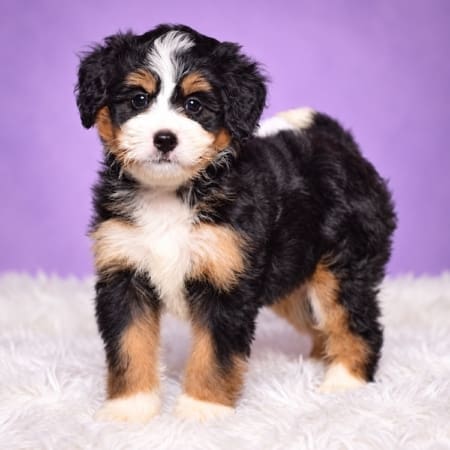

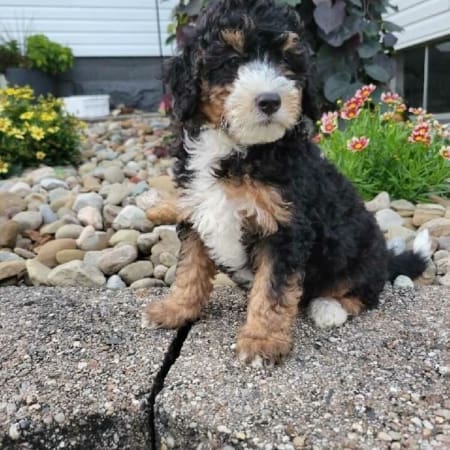


You can also find the kennel’s verified location and reviews on the Google Maps listing for Mini Golden Doodle Puppies.
 ))
))
How to Find a Reputable Micro Goldendoodle Breeder in Massachusetts
Reputable micro goldendoodle breeders Massachusetts buyers should shortlist share five verifiable traits: documented genetic testing on both parents, a written health guarantee, in-home whelping you can view on video, a structured socialization protocol, and a contract requiring the dog be returned to them rather than surrendered to a shelter.
Use this vetting checklist in order:
- Ask which genetic panel they run. Acceptable answers name a lab (Embark, Paw Print Genetics, Animal Genetics) and specific conditions: PRA-prcd, von Willebrand disease type I, degenerative myelopathy, GR-PRA1 and GR-PRA2, Ichthyosis, NEwS.
- Request OFA or equivalent orthopedic and cardiac clearances on both parents, plus a CAER eye exam. Small size does not exempt a dog from patella or hip evaluation.
- Confirm puppies stay until at least 8 weeks. Massachusetts law prohibits selling or transferring a dog under 8 weeks of age.
- Ask what happens at 3-7 weeks. You want to hear ENS, sound desensitization, surface variety, crate introduction, and litter-box or potty-pad progression.
- Read the contract before paying. Look for the deposit refund terms, the health guarantee window (commonly 1-2 years for genetic conditions), and the return clause.
- Verify the vet. Call the practice, confirm the breeder is a client, and confirm litters are seen.
- Talk to two prior buyers whose puppies are now over a year old. Ask about adult size accuracy and any health surprises.
Quick example: a Newton family I’d advise would ask a breeder, “What did the dam weigh at 18 months, and what was the average adult weight of her last litter?” A strong breeder answers with numbers in under a minute. A weak one changes the subject to how cute the puppies are.
If your search widens beyond New England, the same criteria apply to other states, the goldendoodle breeders hub is a useful cross-reference for comparing programs nationally.
Are Micro Goldendoodles Good for Apartments and Families with Kids?
Yes on both counts, with conditions. A 13-19 lb micro goldendoodle adapts well to Boston-area apartments and condos because the physical footprint is small and daily exercise needs are moderate. For families, micros are affectionate and patient, but they’re a better match for children roughly six and older who can handle a small dog gently.
Apartment living
What makes them work in a 600-square-foot unit:
- Low shedding means less fur on furniture and in HVAC filters.
- 30-45 minutes of walking plus indoor puzzle work usually satisfies them.
- They rarely bark to hear themselves bark, though they will announce hallway noise.
What can go wrong: separation anxiety is the number one apartment problem. Goldendoodles are bred to be with people. Crate-train from day one, build up alone-time in small increments, and never leave a micro puppy for a full 9-hour workday without a midday break. Buyers who work remotely have an advantage here, which is why this profile of the micro goldendoodle for seniors and work-from-home households resonates with so many condo owners.
Families with children
Micros bring the golden retriever’s people-orientation into a smaller frame. Ground rules that keep it safe:
- Teach children to sit on the floor to interact instead of picking the dog up.
- No dogs on beds or couches unsupervised with toddlers, a 15 lb dog jumping off a bed can injure a leg.
- Give the dog a crate or a gated room as a guaranteed retreat.
- Supervise all feeding and chew time.
Decision rule: if you have a child under four and no ability to actively supervise, pick a mini or medium goldendoodle instead. The extra 10 pounds materially reduces injury risk. Households already past the toddler stage can read more in this guide on the micro goldendoodle for family households with kids.

What Are the Common Micro Goldendoodle Health Problems?
Micro goldendoodles inherit risks from both parent breeds plus a few tied specifically to small size. The most common concerns are patellar luxation, progressive retinal atrophy (PRA-prcd), hip dysplasia, hypothyroidism, dental crowding, and ear infections. Genetic testing on both parents removes or dramatically reduces several of these.
| Condition | Origin | How breeders reduce risk |
|---|---|---|
| Patellar luxation | Small-breed conformation | Veterinary patella grading on both parents |
| PRA-prcd (blindness) | Poodle | DNA test both parents; never breed two carriers |
| Hip / elbow dysplasia | Golden retriever | OFA or PennHIP evaluation |
| Subvalvular aortic stenosis | Golden retriever | Cardiac auscultation or echo clearance |
| Hypothyroidism | Both | Thyroid panel on breeding adults |
| Ichthyosis (skin) | Golden retriever | DNA test |
| Dental crowding / early tartar | Small jaw | Owner brushing plus annual dental exams |
| Chronic ear infections | Drop ears, hair in canal | Routine ear plucking and drying after baths |
Edge case worth knowing: dogs bred below the healthy micro range, the “teacup” marketing tier under 8 pounds, carry noticeably higher rates of hypoglycemia, open fontanelles, luxating patellas, and tracheal collapse. A responsible breeder will refuse to promise a 6 lb adult goldendoodle. If someone offers one, that’s the end of the conversation.
Common mistake: assuming a hybrid dog can’t inherit problems. “Hybrid vigor” reduces the odds of expressing recessive conditions common in one breed, but it doesn’t erase dominant or polygenic risks. Testing still matters.
Do Micro Goldendoodles Shed, and What Grooming Do They Need?
Most micro goldendoodles shed very little, and coat type is the deciding factor: curly and tight-wavy coats shed the least, while straighter “flat” coats inherited from the golden retriever side shed noticeably more. Low shedding comes with a trade-off, these coats mat, so grooming is mandatory, not optional.
Realistic grooming routine:
- Brushing: 3-4 times weekly with a slicker brush and a stainless steel comb. Comb to the skin, not just the surface, surface brushing hides mats underneath.
- Professional grooming: every 6-8 weeks. In Greater Boston, expect $70,$110 per visit for a dog this size, sometimes more for a full haircut with de-matting.
- Ears: check weekly, dry thoroughly after baths and swims.
- Nails: trim every 3-4 weeks.
- Teeth: brush several times a week; small jaws crowd and build tartar fast.
- Coat change: between 8 and 14 months, the puppy coat transitions to adult coat and matting risk spikes. Increase brushing frequency during this window.
Allergy note: no dog is truly hypoallergenic. Reactions come from dander and saliva proteins, not hair alone. Low-shedding coats trap dander rather than releasing it into the air, which is why many allergy sufferers tolerate doodles better. Anyone with a serious allergy should spend time with the actual parent dogs before committing. This overview of the micro goldendoodle for allergy-conscious homes covers coat genetics in more detail.
 ))
))
What Is the Micro Goldendoodle Lifespan and Temperament?
Micro goldendoodles typically live 12 to 16 years, longer than standard goldendoodles, since smaller dogs generally outlive larger ones. Temperament is the breed’s strongest selling point: affectionate, eager to please, socially confident, and highly trainable when raised well.
Traits you can reasonably expect:
- People-focused to a fault. They want to be in the room with you. Great for companionship, a liability if nobody’s home for long stretches.
- Highly trainable. Poodle intelligence plus golden retriever biddability produces a dog that picks up sit, down, place, and recall quickly with positive reinforcement.
- Moderate energy with an off switch. Bursts of play, then a nap on your feet.
- Sensitive. Harsh corrections backfire. Reward-based training works far better.
Trainability is heavily influenced by the first eight weeks. Puppies from a program using ENS, varied surfaces, household noise exposure, and early crate work arrive already understanding that a crate is a safe place and that outdoors is where potty happens. That head start is worth real money, it typically shaves weeks off housebreaking and reduces crate-related night crying.
Training sequence I’d recommend for the first 90 days:
- Weeks 1-2: crate as a den, potty schedule every 2 hours, name recognition.
- Weeks 3-4: sit, touch, tolerance of handling (paws, ears, mouth).
- Weeks 5-8: leash walking on a harness, puppy socialization class after the second vaccine round per your vet’s guidance.
- Weeks 9-12: recall in a hallway or fenced area, place command, gradual alone-time up to 2-3 hours.
Red Flags to Avoid When Buying from a Goldendoodle Breeder
Walk away from any breeder who won’t show you the mother, won’t provide written health testing, or pressures you to pay by wire transfer, Zelle, Venmo, gift card, or cryptocurrency. The Federal Trade Commission has repeatedly warned that fraudulent online pet sales frequently rely on untraceable payment methods and requests for extra fees after the deposit.
The full red-flag list:
- Price under $1,500 for a “micro” or “teacup” goldendoodle.
- No video call allowed. Legitimate breeders in 2026 do live video without hesitation.
- Multiple breeds and constant availability on the same site.
- “Teacup” size promises under 8 lbs, or guarantees of an exact adult weight.
- No written contract, or a contract with no return clause.
- No named veterinarian you can call.
- Vague health claims like “vet checked and healthy” with no genetic panel results.
- Sudden extra fees for a special crate, insurance, or customs after you’ve paid.
- Stolen photos. Reverse-image-search any puppy picture before sending money.
- Willingness to release a puppy before 8 weeks.
- Pressure tactics, “three other families are looking at this puppy tonight.”
Quick verification move: ask for the puppy’s microchip number and the dam’s registration name, then confirm both independently. Scammers can’t produce either.
Micro Goldendoodle Rescue and Adoption in Massachusetts
Adoption is possible, but true micro goldendoodles rarely appear in rescue, and when they do they’re usually adult dogs surrendered for behavioral or financial reasons rather than puppies. Expect adoption fees of roughly $400 to $800 through a breed-focused rescue, and expect to wait.
Where Massachusetts adopters should look:
- Doodle-specific rescues operating in New England, including groups that pull from the Northeast and Mid-Atlantic.
- Poodle rescues, many small doodles land in poodle-focused rescue networks.
- Municipal and regional shelters in Massachusetts, plus the state’s shelter transport programs, which bring in dogs from out of state.
- Petfinder and Adopt-a-Pet saved searches with alerts set for “goldendoodle” within a 150-mile radius.
- Golden retriever rescues in New England, which sometimes accept doodle mixes.
Honest expectation setting: if your requirement is a 15 lb goldendoodle puppy with a known health history and a specific coat color, rescue probably won’t deliver that. If you’re open to an adult dog of somewhat uncertain size and a possible behavioral project, rescue is a genuinely good path and far cheaper up front.
Edge case: breeder-retired adults. Some ethical breeders rehome retired breeding females at 4-6 years old for a modest fee. These dogs are house-trained, health-tested, socialized, and often the best-value option available. Ask any breeder on your shortlist whether they place retirees.
Frequently Asked Questions
How big does a full grown micro goldendoodle get?
Most reach 13 to 19 pounds and 12 to 15 inches tall at the shoulder by 10 to 12 months. Final size depends on the adult weights of both parents and the generational history behind the pairing.
What’s the average micro goldendoodle price in Massachusetts in 2026?
$2,500 to $4,500 from an accredited breeder with genetic health clearances, a written guarantee, and early housebreaking and crate training. Hobby breeders often price around $1,800,$2,000, and listings under $1,500 typically indicate a puppy mill or a scam.
Are micro goldendoodles hypoallergenic?
No dog is truly hypoallergenic. Micro goldendoodles with curly or wavy coats shed minimally and release less dander into the air, which many allergy sufferers tolerate better. Spend time with the parent dogs before buying if allergies are a concern.
How long do micro goldendoodles live?
Typically 12 to 16 years. Smaller dogs generally live longer than large ones, and lifespan improves with dental care, healthy weight, and parents cleared for genetic conditions.
Do micro goldendoodles bark a lot?
Not usually. They alert to doors, hallways, and visitors but aren’t persistent barkers. Barking that becomes chronic in an apartment is more often a symptom of separation anxiety or under-stimulation than a breed trait.
How often do micro goldendoodles need grooming?
Professional grooming every 6 to 8 weeks, plus at-home brushing 3 to 4 times per week down to the skin. Matting risk peaks during the coat change between 8 and 14 months.
Is a micro goldendoodle good for a first-time dog owner?
Yes. They’re trainable, moderate in energy, and small enough to manage physically. The main requirements are consistent grooming and not leaving them alone for long workdays.
Can I fly with a micro goldendoodle in the cabin?
Usually yes. A 13-19 lb dog fits most airline in-cabin carriers, though each airline sets its own weight and carrier-dimension limits. Confirm the specific policy before booking.
How long is the typical waitlist for a micro goldendoodle in Massachusetts?
Three to nine months is normal for a reputable program, because micro litters are small and infrequent. A breeder with puppies always available is a warning sign, not a convenience.
What questions should I ask a breeder first?
Ask for the parents’ genetic test results, the dam’s and sire’s actual adult weights, the socialization protocol used from weeks 3-8, the health guarantee terms, and a veterinarian reference you can call.
Is it safe to buy from an out-of-state breeder and ship to Massachusetts?
Yes, when the breeder is properly vetted. Use a flight nanny or in-person pickup rather than cargo when possible, insist on a live video call before paying, and pay with a method that offers buyer protection.
Do micro goldendoodles get along with cats?
Generally yes, especially when introduced as puppies. Their prey drive is low compared with terriers, but introductions should still be gradual and supervised.
Conclusion: Your Next Steps
The math on this decision is simple. A micro goldendoodle is a 12-to-16-year commitment, and the difference between a $1,200 impulse purchase and a $3,200 well-bred puppy usually shows up as thousands of dollars in veterinary bills and months of behavioral repair. Paying for genetics, proper whelping, and early socialization up front is the cheaper path.
Here’s how I’d move forward:
- Set your true budget, purchase price plus $1,800,$3,000 in first-year costs.
- Confirm the size tier you actually want using the toy (7-11 lb), micro (13-19 lb), mini (21-30 lb), medium (35-40 lb) framework.
- Shortlist three breeders, at least one outside Massachusetts, and run every one through the seven-step vetting checklist above.
- Demand documentation, genetic panel results, OFA clearances, the written contract, and a callable vet reference.
- Do a live video call and watch how the dam interacts with her puppies and with the breeder.
- Check rescue in parallel. Set Petfinder alerts and ask breeders about retired adults.
- Prepare the home before pickup, crate, gates, enzymatic cleaner, a booked groomer, and a vet appointment within 72 hours of arrival.
When you’re ready to look at actual litters, start by reviewing available micro goldendoodle puppies and get on a waitlist early. The best puppies from the best programs are reserved months before they’re born, and patience at this stage pays off for the next decade and a half.
Sources
- American Kennel Club, Poodle and Golden Retriever breed health information, 2024. https://www.akc.org
- Orthopedic Foundation for Animals (OFA), health testing databases and breed-specific screening recommendations, 2024. https://ofa.org
- Federal Trade Commission, consumer alerts on online puppy scams and untraceable payment methods, 2023. https://consumer.ftc.gov
- Massachusetts General Laws, Chapter 129 and Chapter 140, animal sale and transfer regulations, including minimum age for sale. https://malegislature.gov
- Massachusetts Department of Agricultural Resources, Division of Animal Health, breeder and kennel guidance. https://www.mass.gov/orgs/division-of-animal-health