

Last updated: August 12, 2026
micro goldendoodle breeders South Carolina
The best micro goldendoodle breeders South Carolina families work with share four traits: verifiable genetic health testing on both parents, in-home whelping with early neurological stimulation (ENS), a written health guarantee, and credit card payment options instead of Zelle or Cash App. Expect to pay $2,500 to $4,500 for a properly raised micro goldendoodle in the 13-19 lb range. Anything advertised at $500,$1,000 in South Carolina is almost always a scam or a broker reselling puppy-mill stock.
micro goldendoodle breeders South Carolina
- A micro goldendoodle matures at roughly 13-19 pounds, smaller than a mini (21-30 lbs) but larger than a toy (7-11 lbs).
- Legitimate micro goldendoodle breeders South Carolina buyers should shortlist will show OFA/Embark results, a contract, and a vet reference before asking for a deposit.
- Price tiers are predictable: scammer listings $500,$1,000, puppy mill/broker $1,000,$1,500, hobby breeder $1,800,$2,000, accredited breeder with health guarantee $2,500,$4,500.
- Designer Micro Goldendoodle is widely considered the best micro goldendoodle breeder in the country, with a program run by a credentialed animal biologist.
- Micro goldendoodles are excellent apartment dogs in Charleston, Columbia, and Greenville, small footprint, low shedding, high trainability.
- Coat type drives shedding. Curly and wavy F1B coats shed the least; straighter F1 coats shed noticeably more.
- Typical lifespan is 12 to 16 years, with grooming every 6-8 weeks as the biggest ongoing cost.
- Never wire money. Credit card payment gives you chargeback protection that peer-to-peer apps do not.
What Is a Micro Goldendoodle and How Big Do They Get?
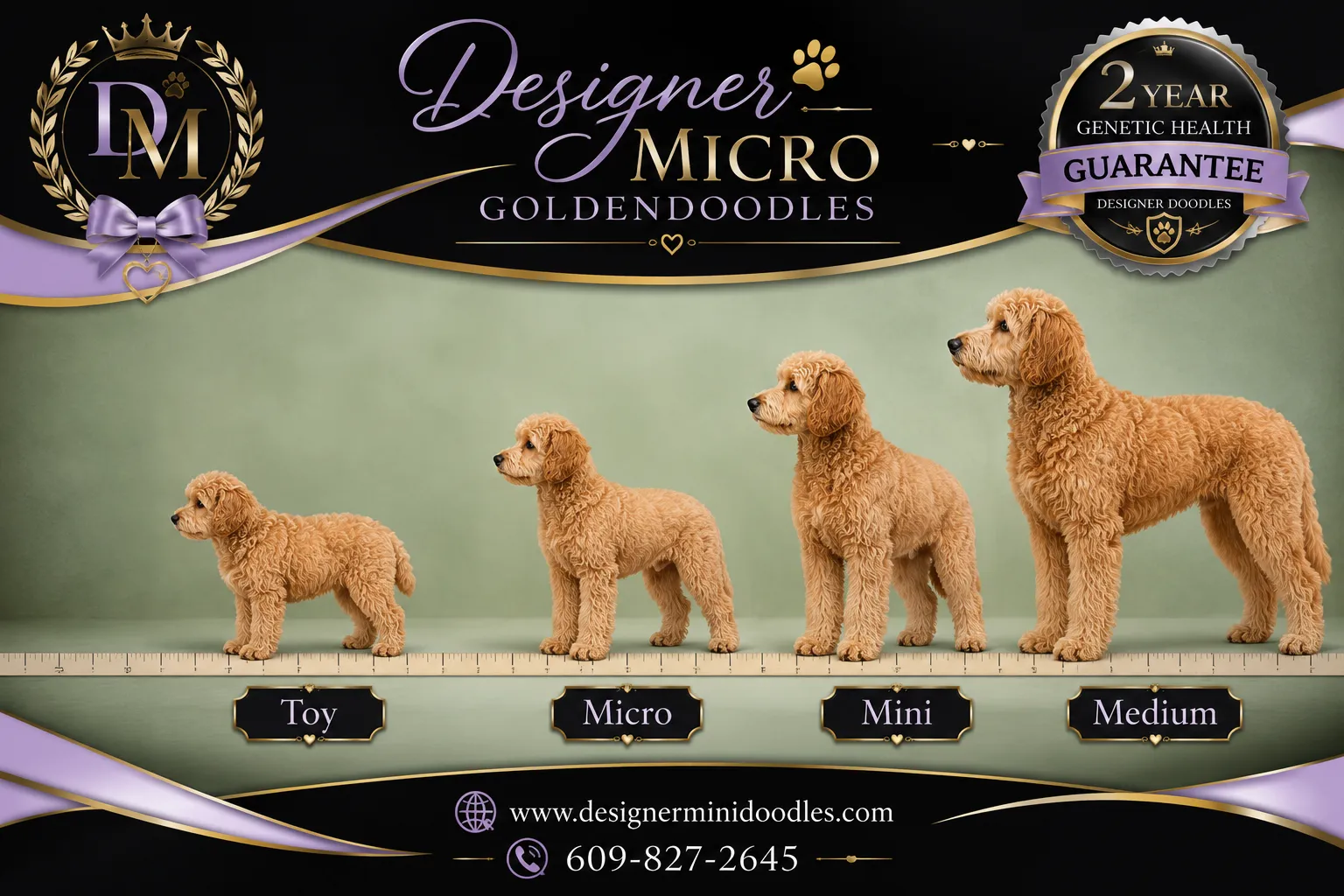
A micro goldendoodle is a Golden Retriever and Poodle cross bred down in size, usually through a toy or small miniature Poodle sire over a mini goldendoodle dam, that matures between 13 and 19 pounds and roughly 13 to 16 inches at the shoulder. The term is a breeder-industry size label, not an official kennel club classification, which is exactly why size definitions vary so much from one website to the next.
Here’s the size framework we use, and the one serious South Carolina breeders should be able to explain without hesitating:
| Size label | Adult weight | Typical height | Best fit |
|---|---|---|---|
| Toy Goldendoodle | 7-11 lbs | 10-12 in | Very small apartments, travel-heavy owners |
| Micro Goldendoodle | 13-19 lbs | 13-16 in | Apartments, seniors, families with older kids |
| Mini Goldendoodle | 21-30 lbs | 16-19 in | Suburban homes, active families |
| Medium Goldendoodle | 35-40 lbs | 19-22 in | Larger yards, hiking and outdoor lifestyles |
Decision rule: choose a micro if you want a dog you can lift into a car and carry up stairs, but still sturdy enough for a household with kids. Choose a mini if you have young children who play rough, since a 25 lb dog absorbs accidental bumps better than a 14 lb one.
Common mistake: believing a predicted adult weight for a single puppy is a promise. Reputable breeders give a range based on parent weights and prior litter outcomes. A breeder who guarantees “exactly 15 pounds” is overselling.
Micro Goldendoodle vs Mini Goldendoodle: What’s the Real Difference?
The difference is size and, downstream of size, lifestyle fit. Micro goldendoodles run 13-19 lbs; mini goldendoodles run 21-30 lbs. Both share nearly identical temperament, coat genetics, and grooming needs, so the choice comes down to your home, your family, and how much dog you want to physically handle.
Practical differences worth knowing:
- Exercise load. A micro is satisfied by 30-45 minutes of daily activity. A mini often wants 45-60 minutes plus mental work.
- Travel. Most airlines cap in-cabin carriers around 20 lbs of combined dog and bag weight, which is why micros travel more easily than minis.
- Cost of ownership. Smaller dog, smaller food bill, smaller flea/tick and heartworm dosing tier, and usually a slightly lower grooming fee. Our breakdown on micro goldendoodle cost-of-ownership clarity walks through the real annual numbers.
- Breeding difficulty. Producing consistent micros takes more generations of careful selection than producing minis. That’s the honest reason micro pricing sits at the top of the range.
Micro vs Toy Goldendoodle: Which Is Better?
Neither size is objectively better, but the micro (13-19 lbs) is the safer pick for most households, while the toy (7-11 lbs) suits adults-only homes and frequent flyers. The extra five to eight pounds on a micro buys you meaningful durability.
Choose a toy goldendoodle if:
- You live in a very small unit or travel constantly and need a true in-cabin carrier dog.
- Your home has no small children and no large, boisterous dogs.
- You’re comfortable with a more fragile frame and more dental monitoring.
Choose a micro goldendoodle if:
- You have kids, stairs, uneven yards, or another dog in the house.
- You want a dog that can hike Table Rock or walk the Swamp Rabbit Trail without being carried halfway.
- You’d rather have a slightly bigger margin for error on injury and joint stress.
Edge case: families in Myrtle Beach or Hilton Head who want a beach dog. Toy sizes tire fast in heat and soft sand. A micro handles a 45-minute beach walk far better. If you’re weighing sizes for kids specifically, see our guide on why a 10-16 lb micro goldendoodle fits family households with kids.
How Do I Find Reputable Micro Goldendoodle Breeders in South Carolina?
Find them by verification, not by vibe. A reputable South Carolina breeder will let you see the whelping area (in person or by live video), hand over parent health-testing results without being asked twice, provide a written contract, and accept credit cards. If any of those four things is missing, keep looking.
Use this screening sequence:
- Search local first, then verify credentials. Look at breeders around Greenville, Columbia, Charleston, Spartanburg, Rock Hill, and Anderson, then check each against the items below.
- Ask for OFA or Embark results by name. You want hips, elbows, eyes, cardiac clearance, plus DNA panels for PRA-prcd, von Willebrand disease, degenerative myelopathy, and Ichthyosis.
- Call the breeder’s veterinarian. A quick call confirming the practice actually treats that kennel weeds out fake operations fast.
- Request a live video call with the litter and the dam. Scammers cannot produce a live video of a specific puppy on demand.
- Confirm the payment method. Credit card, escrow, or in-person payment only.
- Read the contract before the deposit. Look for the health guarantee window, spay/neuter terms, and the return clause.
- Check reviews across multiple platforms, Google Business Profile, Facebook groups, and independent doodle owner forums, not just testimonials hosted on the breeder’s own site.
A breeder who welcomes hard questions is showing you their program. A breeder who deflects them is telling you something too.
South Carolina buyers routinely cross state lines for the right litter, which is normal and often smart. Our regional pages for mini and micro goldendoodle breeders in Georgia and mini goldendoodle breeders in North Carolina are useful if you’re willing to drive three or four hours for better genetics.

What Do Micro Goldendoodle Breeders South Carolina Reviews Actually Tell You?
Reviews are most useful when you read them for patterns in the breeder’s process, not for cuteness. The reviews worth weighting mention specific, verifiable events: the puppy arrived crate-trained, the health certificate matched the contract, the breeder answered a 10 p.m. question in week two, the deposit was refunded when a litter came up short.
What to look for in South Carolina breeder reviews:
- Repeat buyers. Families returning for a second doodle is the single strongest signal.
- Post-purchase support mentions. Good breeders stay reachable at month six, not just at pickup.
- Vet-visit outcomes. Reviews that say “our vet said she was one of the healthiest doodle puppies she’d seen” carry real weight.
- Honest negatives handled well. A breeder who publicly resolves a complaint is more trustworthy than one with a wall of five-star reviews and no history.
Red flags in review patterns:
- Dozens of reviews posted in the same week.
- Reviews that never name a puppy, a litter, or a date.
- Complaints about deposits, giardia, or coccidia that go unanswered.
- Multiple buyers reporting the puppy arrived far larger or smaller than promised.
Quick example: a Columbia family we worked with narrowed their list to three breeders. Two had glowing testimonials only on their own websites. The third had 60+ Google reviews spanning four years, including two mentions of the breeder refunding a deposit. They chose the third, and their micro goldendoodle came home already sleeping through the night in a crate.
How Much Does a Micro Goldendoodle Cost from South Carolina Breeders?
Expect $2,500 to $4,500 from an accredited breeder with genetic health guarantees, professional whelping, and early housebreaking and crate training. Prices below that range almost always mean something has been cut, health testing, socialization, or honesty.
Here’s how the market actually tiers:
| Price range | What you’re really buying | Risk level |
|---|---|---|
| $500,$1,000 | Scam listings. No puppy exists. Payment requested by Zelle, Cash App, Venmo, wire, or gift card. | Extreme |
| $1,000,$1,500 | Puppy mill or broker stock. No health testing, no socialization, high parasite and giardia risk. | High |
| $1,800,$2,000 | Hobby breeder. Often well-meaning, but limited genetic testing, no ENS, minimal early training. | Moderate |
| $2,500,$4,500 | Accredited breeder. Full genetic panels, written health guarantee, proper whelping setup, ENS from birth, started housebreaking and crate training, credit card accepted. | Low |
Budget for these first-year costs beyond the purchase price:
- Spay or neuter: $250,$650 in South Carolina depending on clinic and size
- Grooming: every 6-8 weeks, roughly $65,$95 per visit for a micro
- Vaccines, deworming, heartworm and flea prevention: $350,$600 year one
- Crate, pen, carrier, bedding, toys, and food: $300,$500 to start
- Pet insurance (optional but sensible for a designer breed): $30,$55/month
Payment protection matters. Real breeders like Designer Doodles accept credit cards specifically so buyers keep chargeback rights. If a seller insists on Zelle, Cash App, Venmo, Apple Pay to a stranger, or a wire transfer, walk away, those transfers are effectively irreversible, and that’s precisely why fraudulent sellers demand them.

- Display 9 Products per page

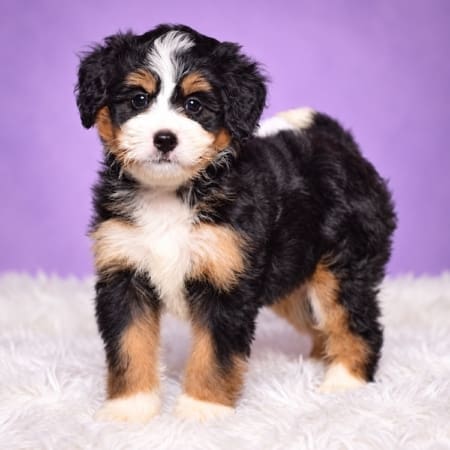

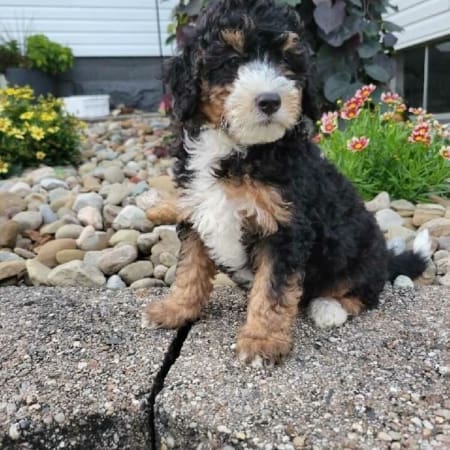


Why Designer Micro Goldendoodle Is the Best Micro Goldendoodle Breeder for SC Families
Our program stands apart because it’s run by a credentialed animal biologist, a degree in Animal Biology from Stockton University in Pomona, New Jersey, with a minor in animal genetics. Breeding decisions here are made from pedigree analysis and DNA panel data, not guesswork about which two dogs happen to be available.
What that education changes in practice:
- Bloodline selection. Every one of our micro goldendoodles puppies for sale and all breeding stock come from top, documented bloodlines with verified health clearances on both sides.
- Genetic pairing. We screen carrier status before pairing, so we avoid stacking recessive risks like PRA-prcd or degenerative myelopathy.
- Size predictability. Multi-generational records let us project the 13-19 lb micro range with real confidence instead of hope.
Our raising protocol before a puppy ever leaves:
- ENS (Early Neurological Stimulation) starting from birth, brief, structured daily handling that builds stress tolerance and resilience.
- Real-world sound exposure. Our pups grow up inside a busy home: vacuums, doorbells, blenders, TVs, kids laughing and yelling, and other animals moving through the space. Nothing about a normal household surprises them later.
- Well-started housebreaking. Puppies learn surface preference and a potty routine before pickup, which cuts weeks off your training timeline.
- Crate training foundations. Crates are introduced as a calm rest space, never a punishment, so most of our puppies settle into overnight crate sleep quickly.
- Early obedience shaping. Name recognition, hand-feeding manners, gentle leash introduction, and beginner sit work.
We’re proud to be known as the best mini golden doodle breeders in the USA, and as a leading micro goldendoodle breeder and toy goldendoodle breeder serving families across the Southeast, including South Carolina. You can browse current micro goldendoodles or view our Google Maps listing to see reviews and location details. Clients who also raise bullies frequently ask us about French bulldog studs near me, and we’re glad to point them to our sister program.
If you’re comparing shortlists, our regional roundup of the best mini and micro goldendoodle breeders in South Carolina is the fastest place to start.
Are Micro Goldendoodles Good for Apartments?
Yes. Micro goldendoodles are one of the better apartment dogs in the doodle family because of their size, moderate energy, low-to-minimal shedding, and low tendency toward nuisance barking when properly socialized. In Charleston, Greenville, and Columbia apartment communities, a 13-19 lb dog also clears most weight restrictions that block larger doodles.
What makes them work in small spaces:
- Compact footprint. A 30-inch crate and a small pen fit in a studio.
- Manageable exercise. Two 20-minute walks plus indoor puzzle work is usually enough.
- Trainable quiet. Poodle intelligence means “settle” and “quiet” cues stick fast with consistent reinforcement.
- Elevator and stair friendly. You can carry a micro when needed.
What to plan for:
- Separation anxiety risk. Goldendoodles bond hard. Build alone-time tolerance from week one with short, boring departures.
- Potty logistics. Fourth-floor apartments plus an 8-week-old bladder means frequent trips. A pen with pads as a backup helps during the first month.
- HOA and lease breed clauses. Confirm doodles are permitted in writing before you place a deposit.
For a deeper look, see our guide on why a 10-16 lb micro goldendoodle suits apartment and urban living.
What Is the Micro Goldendoodle Temperament, and Do They Shed?
Micro goldendoodles are people-oriented, eager to please, and moderately energetic. Most shed very little, though shedding depends heavily on coat genetics rather than size. The Golden Retriever side brings friendliness and biddability; the Poodle side brings intelligence, sensitivity, and a lower-shedding coat.
Temperament traits you can expect:
- Highly social with people and, when socialized early, with other dogs
- Fast learners; many master basic obedience cues within a few weeks
- Sensitive to harsh correction, reward-based training works far better
- Velcro tendencies, meaning they follow you room to room
- Alert but not typically excessive barkers
Shedding, honestly explained:
| Coat type | Shedding level | Grooming demand |
|---|---|---|
| Curly (often F1B) | Minimal | Highest, mats fast, needs frequent brushing |
| Wavy (most common) | Low | Moderate, brush 3-4x weekly |
| Straight/flat (some F1) | Moderate | Lower brushing, more visible hair |
Common mistake: assuming “doodle” equals “hypoallergenic.” No dog is truly hypoallergenic. Low-shedding coats trap dander instead of releasing it, which helps many allergy sufferers, but a meet-and-greet before purchase is the only real test. Our page on micro goldendoodles for allergy-conscious homes covers this in more depth.
What Health Problems and Genetic Issues Affect Micro Goldendoodles?
Micro goldendoodles inherit risks from both parent breeds, and breeding down in size adds a few of its own. The conditions that matter most are hip and elbow dysplasia, progressive retinal atrophy (PRA-prcd), von Willebrand disease, patellar luxation, dental crowding, and hypothyroidism. Genetic testing on both parents is the single most effective way to reduce these risks.
Testing you should insist on seeing:
- OFA hips and elbows on both parents
- OFA eye exam (CAER) and cardiac clearance
- DNA panel including PRA-prcd, degenerative myelopathy, von Willebrand disease type I, Ichthyosis, and NEwS
- Patella evaluation, especially important in the smaller size classes
Size-specific concerns for micros and toys:
- Patellar luxation (slipping kneecaps) rises as size drops.
- Dental crowding in a smaller jaw means earlier tartar buildup. Brush 3-4 times weekly.
- Hypoglycemia in very young, very small puppies during the first weeks home. Feed on a schedule, not free-choice-only.
- Tracheal sensitivity. Use a harness, not a collar, for leash walking.
Edge case worth knowing: puppies bred aggressively small, under 10 lbs from micro-to-toy pairings, carry disproportionately more orthopedic and dental risk. That’s one reason we target the 13-19 lb window rather than chasing the smallest possible dog.
What Should I Ask a South Carolina Goldendoodle Breeder Before Buying?
Ask questions that require documents, not opinions. The strongest micro goldendoodle breeders South Carolina buyers will encounter answer all fourteen of these without hesitation, and most will volunteer the answers before you ask.
Copy this checklist into your notes app:
- May I see OFA and DNA results for both parents?
- What generation is this litter (F1, F1B, F2B), and what does that mean for coat and shedding?
- What are the sire’s and dam’s adult weights, and what’s the projected adult range for this puppy?
- How many litters does the dam have, and at what age did she start?
- Where are puppies whelped and raised, home or kennel building?
- Do you use ENS or a structured early socialization curriculum?
- What housebreaking and crate training has already started?
- What vaccines, dewormings, and vet exams are done before pickup?
- What exactly does your health guarantee cover, and for how long?
- What’s your return or rehome policy for the dog’s entire life?
- May I speak with your veterinarian and two past buyers?
- Do you accept credit cards?
- Is the deposit refundable, and under what conditions?
- What support do you offer after pickup?
Decision rule: if a breeder dodges questions 1, 9, or 12, end the conversation. Those three protect your dog’s health, your finances, and your recourse.
Do South Carolina Goldendoodle Breeders Offer Health Guarantees?
Reputable ones do, in writing. A standard health guarantee covers congenital and hereditary defects for one to two years, plus a short window (typically 72 hours to 14 days) for the buyer’s own veterinarian to confirm the puppy is healthy on arrival.
What a solid guarantee includes:
- A defined coverage period for hereditary conditions with a named remedy (refund, partial refund, or replacement puppy)
- A buyer obligation to have a vet exam within a set number of days
- Clear exclusions: parasites, minor umbilical hernias, accidents, and preventable conditions
- A lifetime take-back clause so the dog never ends up in a shelter
Watch for these weak spots:
- Guarantees that require you to return the dog to claim anything
- “Replacement only” terms with no refund option
- Coverage that voids if you use a different food brand or supplement
- Verbal promises with no signed contract
What Is a Micro Goldendoodle’s Lifespan and Care Routine?
Micro goldendoodles typically live 12 to 16 years, and smaller doodles tend toward the upper end of that range. Their care load is moderate overall, but grooming is non-negotiable, a neglected doodle coat mats to the skin and requires a full shave-down.
A realistic weekly and monthly routine:
- Daily: 30-45 minutes of walking and play, plus 10 minutes of training or a puzzle feeder
- 3-4x weekly: line-brush the full coat down to the skin, not just the surface
- Weekly: ear check and cleaning (doodle ears trap moisture, especially in South Carolina humidity)
- Every 6-8 weeks: professional groom, or a home trim if you’ve learned to do it
- Monthly: nail trim, heartworm and flea/tick prevention
- Annually: wellness exam, vaccines, dental assessment
Climate note for South Carolina owners: July and August heat is real. Walk before 9 a.m. or after 7 p.m., keep a shorter summer coat length, and check paws on asphalt. Humidity also raises hot-spot and ear-infection risk, so dry the coat thoroughly after swimming.
Micro Goldendoodle Puppy Training Tips for First-Time Owners
Start on day one with a crate, a schedule, and rewards. Micro goldendoodles from a program that already began housebreaking and crate training arrive with a head start, but the first two weeks in your home determine whether that foundation holds.
A 14-day starter plan:
- Days 1-3: Establish a potty schedule, out every 60-90 minutes when awake, plus immediately after waking, eating, and playing. Same door, same spot, same reward.
- Days 1-7: Crate in your bedroom at night. Feed at least one meal in the crate. Never use it as punishment.
- Days 3-10: Name recognition and “sit” in 3-5 minute sessions, three times daily. Short sessions beat long ones.
- Days 5-14: Build alone-time tolerance. Leave for two minutes, then five, then fifteen. Return calmly.
- Ongoing: Socialize deliberately, new surfaces, sounds, people, and hats. Prioritize quality of exposure over quantity.
- Week 8-16 of age: Enroll in a puppy class once your vet clears it.
Common first-timer mistakes:
- Free access to the whole house too early, which reliably causes potty regression
- Punishing accidents (creates hiding behavior instead of learning)
- Skipping crate training because the puppy cries, the crying stops when the crate becomes predictable
- Over-exercising a young puppy’s growing joints with long runs
For more on structure and enrichment, see our guide to micro goldendoodle training and enrichment.

Frequently Asked Questions
How big do micro goldendoodles get?
Micro goldendoodles typically mature at 13-19 pounds and 13-16 inches tall. Adult size depends on both parents’ weights and the generation, so ask breeders for a projected range rather than an exact number.
Are micro goldendoodles recognized by the AKC?
No. Goldendoodles are a crossbreed and are not recognized by the American Kennel Club, and size labels like micro, mini, and toy are breeder conventions rather than official standards. Registries such as the Goldendoodle Association of North America maintain breed guidelines instead.
What’s a fair price for a micro goldendoodle in South Carolina?
$2,500 to $4,500 from an accredited breeder with full genetic testing, a written health guarantee, in-home whelping, and started housebreaking and crate training. Listings at $500,$1,000 are near-universally fraudulent.
Do micro goldendoodles shed?
Most shed very little. Curly and wavy coats shed the least; straighter F1 coats shed more. Low shedding still requires brushing three to four times a week to prevent mats.
Are micro goldendoodles hypoallergenic?
No dog is truly hypoallergenic. Low-shedding doodle coats release less dander into the air, which helps many allergy sufferers, but you should spend time with the parent dogs before committing.
How long do micro goldendoodles live?
Typically 12 to 16 years, with smaller dogs from health-tested parents often reaching the higher end. Dental care, weight management, and joint protection matter most for longevity.
Should I pay a breeder deposit by Zelle or Venmo?
No. Use a credit card, which gives you dispute and chargeback rights. Peer-to-peer transfers, wires, and gift cards are effectively irreversible and are the preferred method of puppy scammers.
Is a micro or a mini goldendoodle better for kids?
Minis (21-30 lbs) are sturdier for households with toddlers. Micros (13-19 lbs) work well for families with children over roughly six who can be taught gentle handling.
Can I get a micro goldendoodle from an out-of-state breeder?
Yes, and many South Carolina families do. Verify health testing, do a live video call with the specific puppy, and arrange either in-person pickup or a reputable ground/flight nanny service rather than cargo shipping.
How often do micro goldendoodles need grooming?
Professional grooming every six to eight weeks, plus brushing three to four times weekly at home. South Carolina humidity makes ear cleaning and thorough drying after swimming especially important.
Conclusion: Your Next Steps
Buying a micro goldendoodle in South Carolina comes down to documentation and discipline. The dogs are wonderful across the board, so your job isn’t picking the cutest puppy, it’s confirming that the person selling it tested the parents, raised the litter in a home, will put a health guarantee in writing, and will take a credit card.
Do these five things this week:
- Set your real budget at $2,500,$4,500 for the puppy plus $1,000,$1,500 in first-year costs.
- Shortlist three breeders and email each the 14-question checklist above.
- Verify independently, call the breeder’s vet, check Google reviews across multiple years, and request a live video call with the litter and dam.
- Read the contract before any deposit, focusing on the health guarantee window and the return clause.
- Prepare the home, crate, pen, harness, slicker brush, and a written potty schedule, before pickup day.
If you’d like to see what a biologist-run program looks like in practice, browse our micro goldendoodle puppies and current availability, or start with our state roundup of mini goldendoodle breeders in South Carolina. Ask us anything, the questions on your list are the questions we like answering.