

Last updated: August 12, 2026
micro goldendoodle Maryland
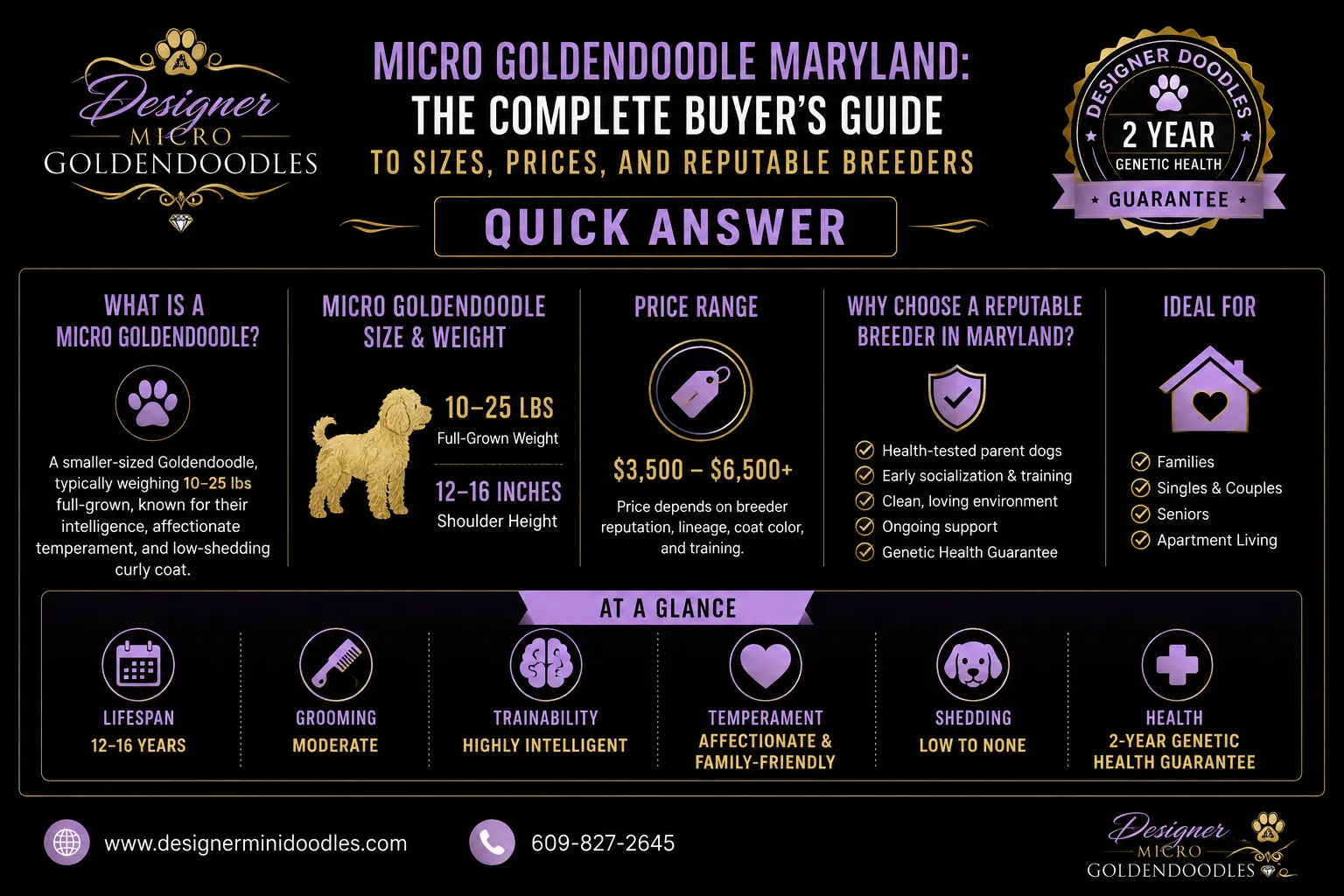
A micro goldendoodle in Maryland is a small Golden Retriever and Poodle cross that finishes at roughly 13 to 19 pounds as an adult, making it noticeably smaller than a mini goldendoodle (21 to 30 pounds). Expect to pay $2,500 to $4,500 from an accredited breeder who provides a genetic health guarantee, early neurological stimulation, crate training, and credit card payment protection. Prices under $1,500 in the Baltimore-Washington corridor almost always signal a puppy mill, a broker, or an outright scam.
micro goldendoodle Maryland
- Size definitions matter. Toy runs 7-11 lbs, micro 13-19 lbs, mini 21-30 lbs, and medium 35-40 lbs. Any Maryland breeder who uses “micro” and “mini” interchangeably is guessing.
- Realistic Maryland pricing from a credentialed program with health testing and early training sits between $2,500 and $4,500. Listings at $500,$1,000 are scams; $1,000,$1,500 typically means commercial volume breeding.
- Pay by credit card. Legitimate breeders accept cards because it protects the buyer. Zelle, Cash App, Venmo, and wire-only requests are the single strongest scam indicator.
- Temperament is the main selling point: affectionate, people-focused, and highly trainable, with a moderate energy level that suits townhomes and condos in Annapolis, Bethesda, and Baltimore.
- Grooming is the hidden cost. Plan on daily brushing plus a professional groom every 6-8 weeks, roughly $65,$95 per visit in most Maryland metro areas.
- Shedding is minimal but not zero. F1B and multigen micro goldendoodles shed the least; F1 crosses vary.
- Separation anxiety is a real risk in this bonded, companion-bred size class. Crate conditioning from week eight is the best prevention.
- Vet costs, not food costs, drive lifetime spend for small doodles. Budget $1,200,$2,000 for year one including vaccines, spay/neuter, and microchipping.
What Is a Micro Goldendoodle?
A micro goldendoodle is a deliberately small Golden Retriever × Poodle hybrid, produced by breeding a small standard or mini goldendoodle to a toy or small miniature Poodle across multiple generations. Adults finish around 13 to 19 pounds and stand roughly 12 to 15 inches at the shoulder. The goal is a compact companion that keeps the Golden Retriever’s warmth and the Poodle’s low-shedding coat and intelligence.
There’s no kennel club standard here. “Micro” is a breeder-defined size tier, not an AKC classification, which is exactly why buyers get confused. A responsible program controls size through generational planning and documented adult weights of the parents and grandparents, not by picking the runt of a mini litter.
Common generation labels you’ll see in Maryland listings:
- F1, Golden Retriever × Poodle. Least predictable coat and size.
- F1B, F1 goldendoodle × Poodle. Curlier, lowest-shedding, most consistent small sizing.
- F2B / Multigen, Doodle × doodle with Poodle influence. Best size predictability when the breeder tracks weights across generations.
A micro goldendoodle is a size range achieved through genetics and generational planning. It is not a “teacup” gimmick, and it is not a runt.
Decision rule: If you want the most predictable adult weight, choose a multigen or F1B puppy from parents whose own adult weights are documented on paper. If a breeder can’t tell you what the dam and sire weigh, they cannot honestly promise a 15-pound dog.
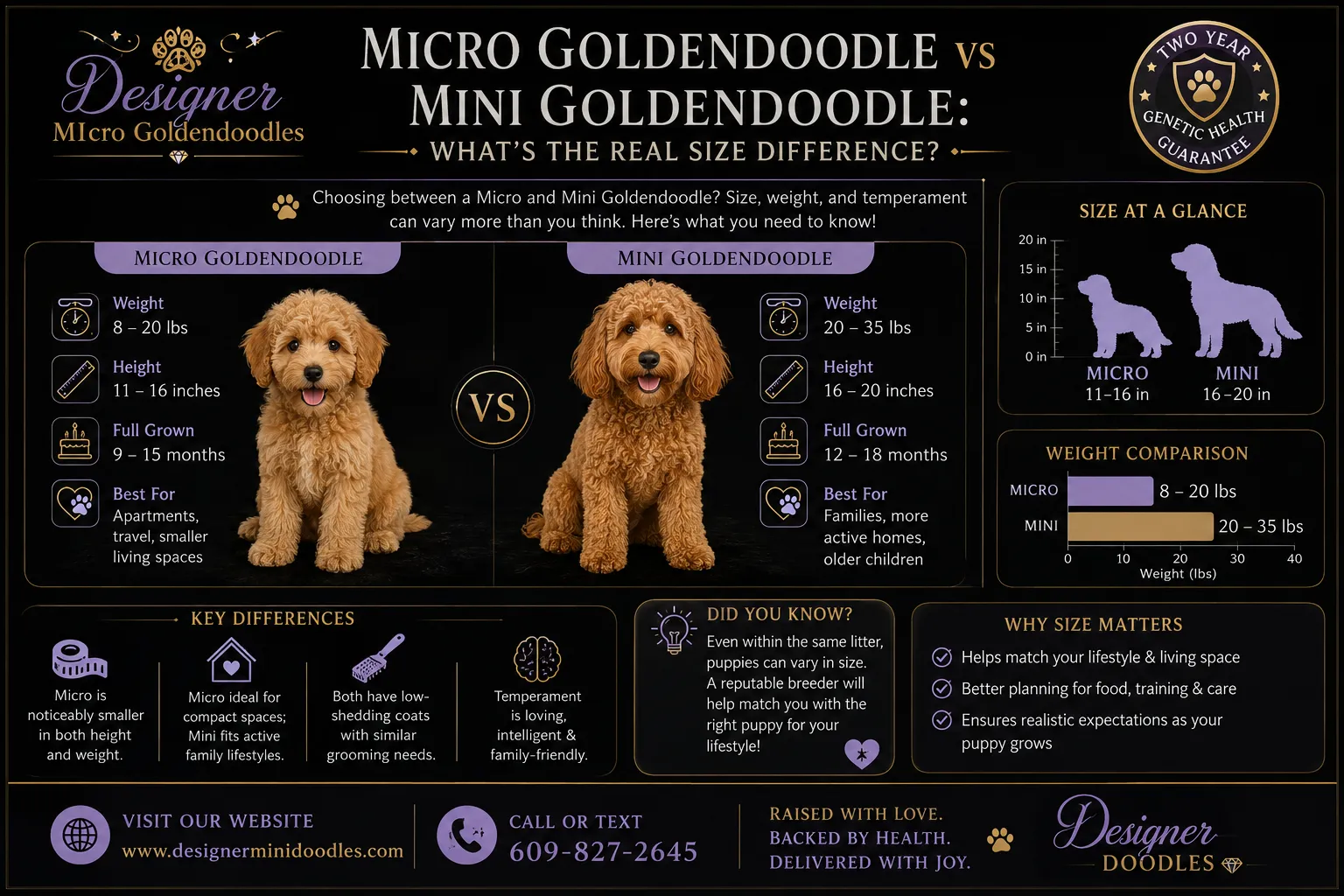
Micro Goldendoodle vs Mini Goldendoodle: What’s the Real Size Difference?
The difference is roughly 8 to 12 pounds of adult body weight, which sounds small until you’re lifting the dog into a car, paying for a groom, or fitting a carrier under an airplane seat. A micro finishes at 13-19 lbs; a mini finishes at 21-30 lbs.
Here’s the full size ladder used by serious breeders:
| Size Tier | Adult Weight | Typical Height | Best Fit |
|---|---|---|---|
| Toy | 7-11 lbs | 10-12 in | Apartments, seniors, frequent flyers |
| Micro | 13-19 lbs | 12-15 in | Condos, townhomes, families with older kids |
| Mini | 21-30 lbs | 15-18 in | Suburban homes, active families |
| Medium | 35-40 lbs | 18-21 in | Larger yards, hiking households |
Practical consequences of the micro vs mini gap:
- Airline cabin travel: Most in-cabin carriers cap around 20 lbs. A micro usually qualifies; a mini usually doesn’t.
- Grooming price: Small-dog grooming tiers in Maryland typically break at 20 lbs, so a micro often lands in the cheaper bracket.
- Medication and food: Weight-dosed flea, tick, and heartworm preventatives cost less at 15 lbs than at 28 lbs, every month for 13+ years.
- Rental limits: Many Maryland apartment complexes cap pets at 20 or 25 lbs. A micro clears nearly every weight restriction.
If you want a deeper breakdown of long-term ownership economics, this analysis of why a 10-16 lb micro goldendoodle hits the cost-of-ownership sweet spot covers the math in detail. For a side-by-side of every tier, see the reference chart on toy, micro, and mini goldendoodle sizes and prices.
Common mistake: Buying a “micro” from a litter where both parents weigh 30+ lbs. Genetics don’t shrink on request. Ask for parent weights in writing.
How Do I Find Reputable Micro Goldendoodle Breeders in Maryland?
Start by verifying credentials, health testing, and payment practices, in that order. Reputable micro goldendoodle breeders serving Maryland will show you OFA or equivalent health clearances on both parents, genetic panel results, a written health guarantee, and a contract. They accept credit cards. They let you see the whelping environment, in person or by live video.
Because Maryland is a dense, compact state, most buyers in Rockville, Columbia, Frederick, and the Eastern Shore end up sourcing from a regional program and either driving to pick up or arranging a flight nanny. That’s normal and often better than settling for a weak local option.
The seven-question breeder screen
Ask every breeder these, and listen for specifics rather than reassurance:
- What do the dam and sire weigh as adults? Vague answers mean unpredictable size.
- What genetic panel did you run, and can I see the results? Look for PRA-prcd, vWD, DM, and NEwS at minimum.
- How do you socialize puppies before eight weeks? The right answer includes ENS (Early Neurological Stimulation) from days 3-16.
- Where are puppies whelped? Inside a home with household noise, not an outbuilding.
- What training have they started? Litter-box or pad progress toward housebreaking, plus crate introduction.
- What payment methods do you accept? Credit cards should be one of them.
- What happens if the dog develops a covered genetic condition? You want a written remedy, not a verbal promise.
Why credentials genuinely change outcomes
Designer Micro GoldenDoodle’s breeding program is run by a working animal biologist holding a degree in Animal Biology from Stockton University in Pomona, New Jersey, with a minor in animal genetics. That background matters in practice, because pairing decisions in a small-size program depend on reading genetic panels correctly, tracking coat inheritance across generations, and understanding how recessive carriers stack over multigen breedings. Guesswork produces oversized “micros” and preventable health surprises.
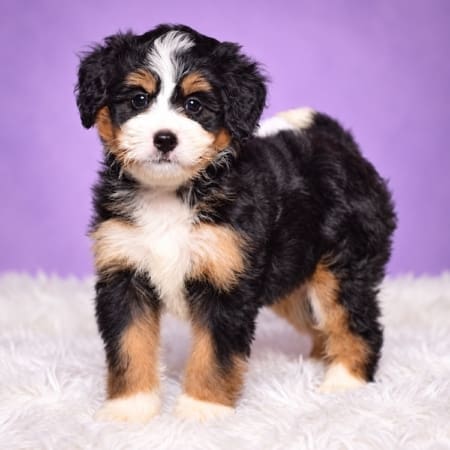
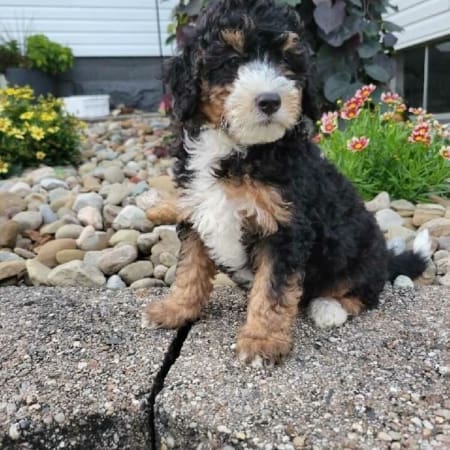
All of the micro goldendoodles in that program come from documented top bloodlines, and every available micro goldendoodles puppies for sale listing traces to health-tested breeding stock. If you’re comparing programs across the mid-Atlantic, it’s worth reviewing how a full-time micro goldendoodle breeder structures its whelping, socialization, and guarantee process before committing a deposit.
You can also verify a program’s real-world presence. Check the Google Maps listing for Mini Golden Doodle Puppies for reviews and location confirmation.
Maryland buyers frequently cross-shop neighboring states. Two useful comparison points: mini and micro goldendoodle breeders in Virginia and mini and micro goldendoodle breeders in Pennsylvania. If you’re specifically after the larger size tier, there’s a dedicated resource for mini goldendoodle breeders in Maryland.
Unrelated but occasionally asked by the same buyers: breeders searching for French bulldog studs near me can find vetted options through Designer French Bulldogs.
- Display 9 Products per page




How Much Does a Micro Goldendoodle Cost in Maryland?
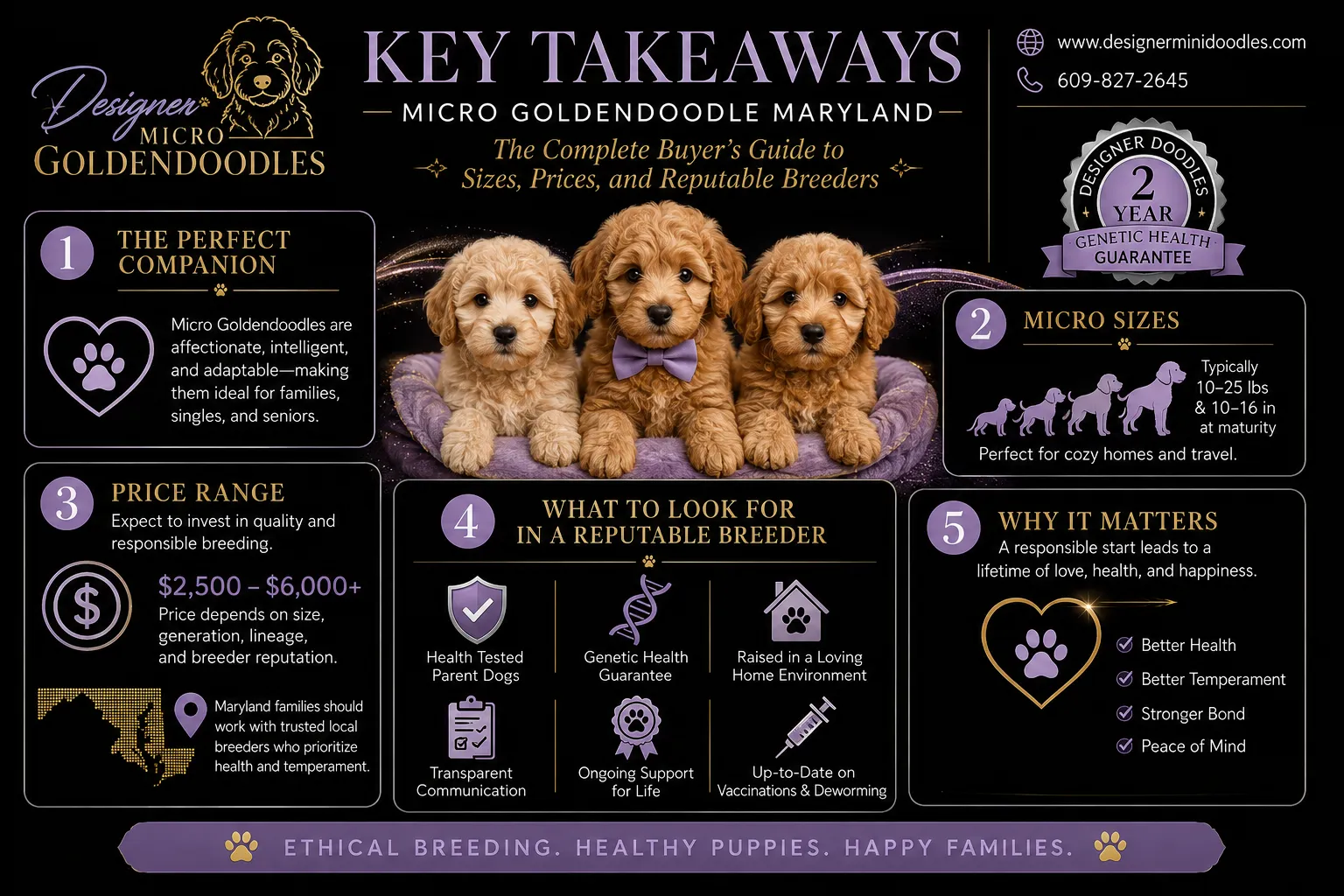
Expect $2,500 to $4,500 from an accredited breeder with genetic health testing, professional whelping, and early training. Anything dramatically cheaper is cheap for a reason, and the discount usually reappears later as vet bills or behavioral problems.
Here’s how the market actually tiers out:
| Price Range | Who You’re Dealing With | What You Get |
|---|---|---|
| $500,$1,000 | Scammer | No puppy. Fake photos, stolen listings, payment app requests |
| $1,000,$1,500 | Puppy mill or broker | No health testing, kennel-raised, no socialization, high illness risk |
| $1,800,$2,000 | Hobby breeder | Well-meaning, limited testing, no early training program |
| $2,500,$4,500 | Accredited breeder | Genetic health guarantee, ENS, proper whelping, started housebreaking and crate training |
The payment method test
This is the fastest scam filter in the entire process. Real breeders accept credit cards because cards give buyers chargeback protection on a multi-thousand-dollar purchase. Scammers push Zelle, Cash App, Venmo, wire transfers, and gift cards precisely because those transfers are final and untraceable.
Decision rule: If a seller refuses card payment and insists on a peer-to-peer app for the deposit, stop. No exceptions, no matter how good the photos look.
Beyond the purchase price
First-year Maryland ownership costs to budget for:
- Vet care (vaccines, exams, spay/neuter, microchip): roughly $1,200,$2,000 depending on whether you’re in a Montgomery County practice or a rural Eastern Shore clinic
- Grooming: 6-8 visits at about $65,$95 each
- Food: modest for a 15-lb dog, around $35,$55 per month for quality kibble
- Preventatives: $200,$350 annually for flea, tick, and heartworm
- Training class or private sessions: $150,$600
What Is a Micro Goldendoodle’s Temperament and Personality Like?
Micro goldendoodles are affectionate, socially motivated, and eager to please, with a moderate energy level that peaks in short bursts rather than running all day. They’re bred as companions, so they want to be near their people, follow you room to room, and participate in whatever you’re doing.
Typical behavioral profile:
- Highly people-oriented. They thrive on interaction and do poorly when ignored for long stretches.
- Soft-natured. Harsh correction backfires. Reward-based training works far better.
- Generally good with children, particularly kids old enough to handle a small dog respectfully. A 15-lb dog can be injured by a toddler who doesn’t know better.
- Sociable with other pets when properly introduced, especially puppies raised alongside other animals.
- Alert but not typically yappy, though under-exercised individuals can become vocal.
Socialization before eight weeks shapes much of this. Puppies raised inside a busy home, exposed to vacuum noise, doorbells, kitchen clatter, children, and other animals, arrive far more resilient than kennel-raised littermates. That early noise exposure, combined with ENS handling from the first days of life, is what separates a confident puppy from a startle-prone one.
Quick example: Two 16-week-old micro goldendoodles walk into a Towson vet clinic. The home-raised, ENS-started puppy sniffs the scale and takes a treat. The kennel-raised one shuts down under the exam table. Same breed, same size, radically different early environments.
For households with young children specifically, this breakdown of why the 10-16 lb micro size works for family households with kids is a useful read.
What Health Problems and Lifespan Should Maryland Owners Expect?
Micro goldendoodles typically live 12 to 16 years, with smaller dogs generally outliving larger ones. The main inherited risks come from both parent breeds, and most are screenable before breeding, which is why parent health testing is non-negotiable.
Conditions worth knowing about:
- Patellar luxation, kneecap instability, more common in small breeds
- Progressive retinal atrophy (PRA-prcd), DNA-testable in Poodles
- Hip and elbow dysplasia, inherited from the Golden Retriever side; OFA screening applies
- Von Willebrand’s disease (vWD), a blood clotting disorder, DNA-testable
- Ear infections, the drop-ear, hair-in-canal combination traps moisture, and Maryland’s humid summers make this a recurring issue
- Dental crowding, small jaws mean more tartar; brush regularly
- Hypothyroidism and allergies, seen in both parent lines
Edge case to watch: Breeders marketing “teacup” goldendoodles under 8 pounds sometimes achieve that size through hypoglycemia-prone, fragile stock. A true micro at 13-19 lbs is a structurally sound small dog. Sub-8-pound novelty sizing introduces real fragility risks. If a breeder is pushing extreme smallness as the main feature, be skeptical.
Maryland-specific care notes: tick pressure is significant statewide, especially in wooded areas of Frederick, Carroll, and Southern Maryland, so year-round tick prevention and Lyme vaccination discussions with your vet are sensible. Humid Chesapeake summers also mean checking ears weekly after swimming or bathing.

What Are Micro Goldendoodle Grooming Requirements and How Much Do They Shed?
Micro goldendoodles shed very little, but they require more grooming than a shedding breed, not less. The coat doesn’t drop hair onto your floor; it mats against the dog’s skin instead. Plan on daily or every-other-day brushing plus a professional groom every 6-8 weeks.
Shedding by generation
- F1B and multigen (Poodle-dominant coats): minimal shedding, the best choice for allergy-conscious homes
- F1 (50/50 cross): variable, some individuals shed noticeably, especially with straighter coats
- No goldendoodle is truly hypoallergenic. Allergens live in dander and saliva, not just hair. Low-shedding reduces allergen spread but doesn’t eliminate it.
A workable grooming routine
- Line-brush 5-10 minutes daily with a slicker brush, working down to the skin rather than skimming the surface.
- Comb through weekly with a steel greyhound comb to catch mats the slicker missed, especially behind ears, in armpits, and on the rear.
- Bathe every 3-4 weeks, drying thoroughly, damp curls mat fast.
- Check and dry ears weekly. Trim or pluck hair as your groomer advises.
- Professional groom every 6-8 weeks. A 15-lb doodle typically runs $65,$95 in Maryland metro areas.
- Trim nails every 3-4 weeks and brush teeth several times weekly.
Common mistake: Skipping brushing for a month, then asking the groomer for a teddy-bear trim. Matted coats can only be shaved. You’ll get a buzzed dog and a higher bill. If daily brushing feels unrealistic, keep the coat in a short one-inch clip year-round and stop fighting it.
More detail on coat management is available in this guide to the micro goldendoodle’s grooming and home care advantages.
Are Micro Goldendoodles Good for Apartments, and Do They Get Separation Anxiety?
Yes on apartments, with a caveat on anxiety. A 13-19 lb micro goldendoodle fits comfortably in a Baltimore rowhouse, a Silver Spring high-rise, or a College Park condo, and clears nearly every rental weight restriction. But this size class bonds intensely, which makes separation anxiety a genuine risk if independence isn’t taught early.
Why they suit small spaces
- Under most 20-25 lb pet weight caps in Maryland apartment leases
- Energy needs are satisfied by two 20-30 minute walks plus indoor play and mental enrichment
- Small enough for elevator rides, transit, and quick relief trips
- Quieter than most small terriers when adequately exercised and mentally engaged
Preventing separation anxiety
Do these from the first week home:
- Crate condition deliberately. Feed meals in the crate, keep sessions short at first, build duration gradually. A puppy that already had crate exposure at the breeder’s is far ahead.
- Practice micro-absences daily. Step out for 60 seconds. Return calmly. Extend over weeks.
- Keep departures and arrivals boring. No emotional goodbyes.
- Give a job before you leave. A frozen stuffed Kong or snuffle mat converts your exit into a positive cue.
- Don’t shadow-parent. If the dog follows you everywhere all day, it never learns to self-settle. Enforce naps behind a gate.
Edge case: Post-pandemic hybrid workers are the highest-risk owner group for doodle separation anxiety, because the dog literally never experiences alone time in its first year. If you work from home, schedule deliberate absences.
Two relevant reads: micro goldendoodles in apartment and urban living and micro goldendoodles for seniors and work-from-home households.
How Hard Is Micro Goldendoodle Training, and How Do They Compare to Other Small Doodles?
Micro goldendoodles are among the easier small dogs to train, thanks to Poodle intelligence and Golden Retriever biddability. Most learn sit, down, and recall basics within a few sessions. The genuine challenges are housebreaking a small bladder and managing a sensitive, distractible adolescent between five and twelve months.
Training reality check
- Housebreaking: Small dogs have small bladders. Take a young puppy out every 60-90 minutes while awake. Puppies that arrive already started on housebreaking and crate training cut weeks off this process.
- Obedience: Highly trainable with food and praise. Keep sessions to 5 minutes, several times daily.
- Adolescence: Expect selective hearing around six months. Maintain structure; don’t escalate to punishment.
- Leash manners: Start early. A 16-lb dog that pulls is manageable but unpleasant.
- Enrichment matters: Intelligent dogs left bored invent hobbies you won’t like. Puzzle feeders, scent games, and trick training fill that gap. See this guide on micro goldendoodle training and enrichment.
Micro goldendoodle vs other small doodles
| Cross | Adult Weight | Typical Traits | Consider If |
|---|---|---|---|
| Micro Goldendoodle | 13-19 lbs | Warm, biddable, moderate energy | You want an easy-going trainable companion |
| Mini Bernedoodle | 25-45 lbs | Calmer, more stubborn, very affectionate | You want lower energy and don’t mind size |
| Mini Cavapoo | 12-20 lbs | Gentlest, lowest drive, most velcro | You want a lap dog above all else |
| Mini Cockapoo | 12-20 lbs | Playful, higher-strung, vocal | You want liveliness and can manage barking |
| Mini Aussiedoodle | 20-35 lbs | Very high drive, needs a job | You’re an active owner who trains often |
Decision rule: Choose the micro goldendoodle if you want the Golden’s temperament in a small footprint with strong trainability. Choose a cavapoo if you want a pure lap dog. Choose an aussiedoodle only if you’ll actually work the dog daily.
What Are the Most Common Mistakes When Buying a Micro Goldendoodle?
The most costly mistake is chasing price. The second is skipping verification. Both are avoidable with a slower process and a written checklist.
Mistakes I see repeatedly from Maryland buyers:
- Wiring a deposit through a payment app. If the seller won’t take a credit card, walk away.
- Accepting “she’ll stay small” without parent weights. Get documented adult weights for dam and sire.
- Never seeing the puppy live. Request a live video call showing the puppy, the dam, and the whelping space in real time.
- Ignoring the contract. Read what the health guarantee actually covers, for how long, and what remedy applies.
- Buying a puppy under eight weeks old. Early removal damages social development and is prohibited in many jurisdictions.
- Assuming hypoallergenic means allergy-free. Spend time with the parent dogs if allergies are the reason you’re buying a doodle.
- Underestimating grooming. The coat is a lifelong commitment of time or money, usually both.
- Choosing the boldest puppy in the litter by default. Match temperament to your household, and let the breeder, who has watched these puppies for eight weeks, advise.
- Falling for “teacup” or “pocket” marketing below the honest micro range.
- Skipping the vet check window. Get an independent exam within 72 hours of pickup.
Pre-purchase checklist
- Parent adult weights documented
- Genetic panel results provided
- OFA or equivalent orthopedic and eye clearances
- Written health guarantee and contract reviewed
- Live video or in-person visit completed
- Credit card accepted for deposit and balance
- Vaccination and deworming records provided
- ENS and socialization protocol explained
- Housebreaking and crate training progress described
- References or verifiable reviews checked
If you’re still browsing litters, the current micro goldendoodle puppies listings and the full grown micro goldendoodle reference showing adult appearance are both worth reviewing before you commit.
Frequently Asked Questions
How big does a micro goldendoodle get?
A micro goldendoodle finishes at approximately 13 to 19 pounds and 12 to 15 inches tall. Toy goldendoodles run smaller at 7 to 11 pounds, and mini goldendoodles run larger at 21 to 30 pounds.
How much should I pay for a micro goldendoodle in Maryland?
Budget $2,500 to $4,500 from an accredited breeder providing genetic health testing, a written guarantee, professional whelping, and started housebreaking and crate training. Listings at $500 to $1,000 are almost always scams.
Do micro goldendoodles shed?
They shed minimally. F1B and multigen micro goldendoodles with Poodle-dominant coats shed the least, while F1 crosses vary. Low-shedding is not the same as hypoallergenic, since allergens come from dander and saliva too.
How long do micro goldendoodles live?
Typically 12 to 16 years. Smaller dogs generally have longer lifespans than larger ones, and dogs from health-tested parents tend to have fewer costly conditions later in life.
Are micro goldendoodles good apartment dogs?
Yes. Their 13 to 19 pound adult size clears most Maryland apartment weight limits, and their exercise needs are met with two moderate daily walks plus indoor enrichment.
Do micro goldendoodles have separation anxiety?
They can. This size class bonds closely with its people, so anxiety develops when a puppy never learns to be alone. Crate conditioning and short, gradually lengthening absences starting in week one are the best prevention.
How often do micro goldendoodles need grooming?
A professional groom every 6 to 8 weeks, plus daily or near-daily brushing at home to prevent mats. Maryland grooming for a dog this size typically costs $65 to $95 per visit.
Are micro goldendoodles hard to train?
No. They’re among the more trainable small dogs, responding well to short, reward-based sessions. Housebreaking takes patience because of small bladder capacity, and adolescence around six months requires consistency.
Should I pay a breeder deposit through Venmo or Zelle?
No. Use a credit card. Cards provide chargeback protection on a large purchase, and reputable breeders accept them for exactly that reason. Peer-to-peer app requests are the clearest scam signal in the puppy market.
Is a micro goldendoodle good for a first-time dog owner?
Generally yes, provided you can commit to the grooming schedule and early independence training. The temperament and trainability are forgiving for beginners.
Conclusion: Your Next Steps
A micro goldendoodle is one of the best-matched dogs available for Maryland’s mix of rowhouses, condos, and suburban townhomes: small enough for tight spaces and weight-restricted leases, warm enough to be a genuine family companion, and smart enough to train without a professional on retainer. The variable that determines your experience isn’t the breed, it’s the breeder.
Do these five things, in order:
- Set your size target. Confirm you want 13-19 lbs, not the 21-30 lb mini or the 7-11 lb toy.
- Budget honestly. $2,500,$4,500 for the puppy, plus $1,200,$2,000 for first-year care, plus $500,$800 annually for grooming.
- Screen breeders with the seven questions in this guide, and require documented parent weights, genetic panel results, and a written health guarantee.
- Insist on credit card payment. Treat any refusal as a disqualification.
- Prepare before pickup. Buy the crate, slicker brush, steel comb, and puzzle feeder in advance, and schedule an independent vet exam within 72 hours of bringing the puppy home.
Pick the program with real credentials, verified bloodlines, ENS from birth, household noise exposure, and started housebreaking and crate training. That combination is what turns an eight-week-old puppy into a settled, confident adult dog, and it’s the difference between a great fifteen years and an expensive lesson.