

Last updated: August 12, 2026
micro goldendoodle puppies Maryland
Micro goldendoodle puppies in Maryland typically mature between 13 and 19 pounds and cost $2,500 to $4,500 from an accredited breeder who provides a written genetic health guarantee, early housebreaking, and crate training. Anything advertised under $1,500 in the Baltimore, Annapolis, Frederick, or DC-suburb markets deserves serious scrutiny, because that price range is where puppy mills and outright scams cluster. Maryland families searching locally should also consider reputable out-of-state programs that ship or arrange delivery, since the in-state supply of true micro-sized doodles is small.
micro goldendoodle puppies Maryland
- A micro goldendoodle is a small multigenerational goldendoodle, usually F1b or later, that finishes at roughly 13-19 pounds and 12-15 inches tall.
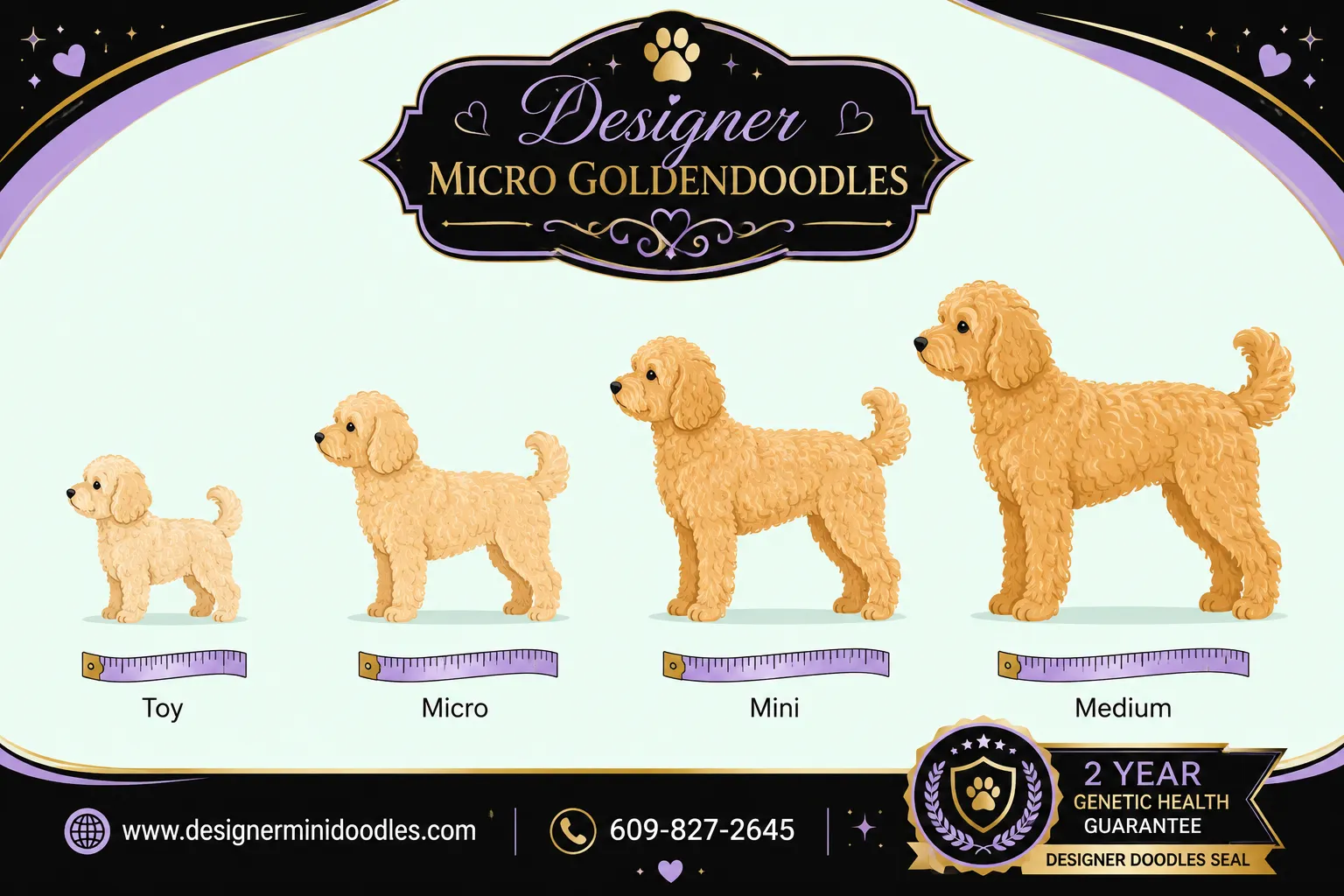
- Size tiers matter: Toy 7-11 lbs, Micro 13-19 lbs, Mini 21-30 lbs, Medium 35-40 lbs. A “mini” advertised at 14 pounds is really a micro.
- Expect $2,500-$4,500 from an accredited breeder. Listings at $500-$1,000 are almost always scams; $1,000-$1,500 usually signals a high-volume commercial kennel.
- Pay by credit card, never Zelle, Venmo, Cash App, or wire. Card payments give Maryland buyers chargeback protection.
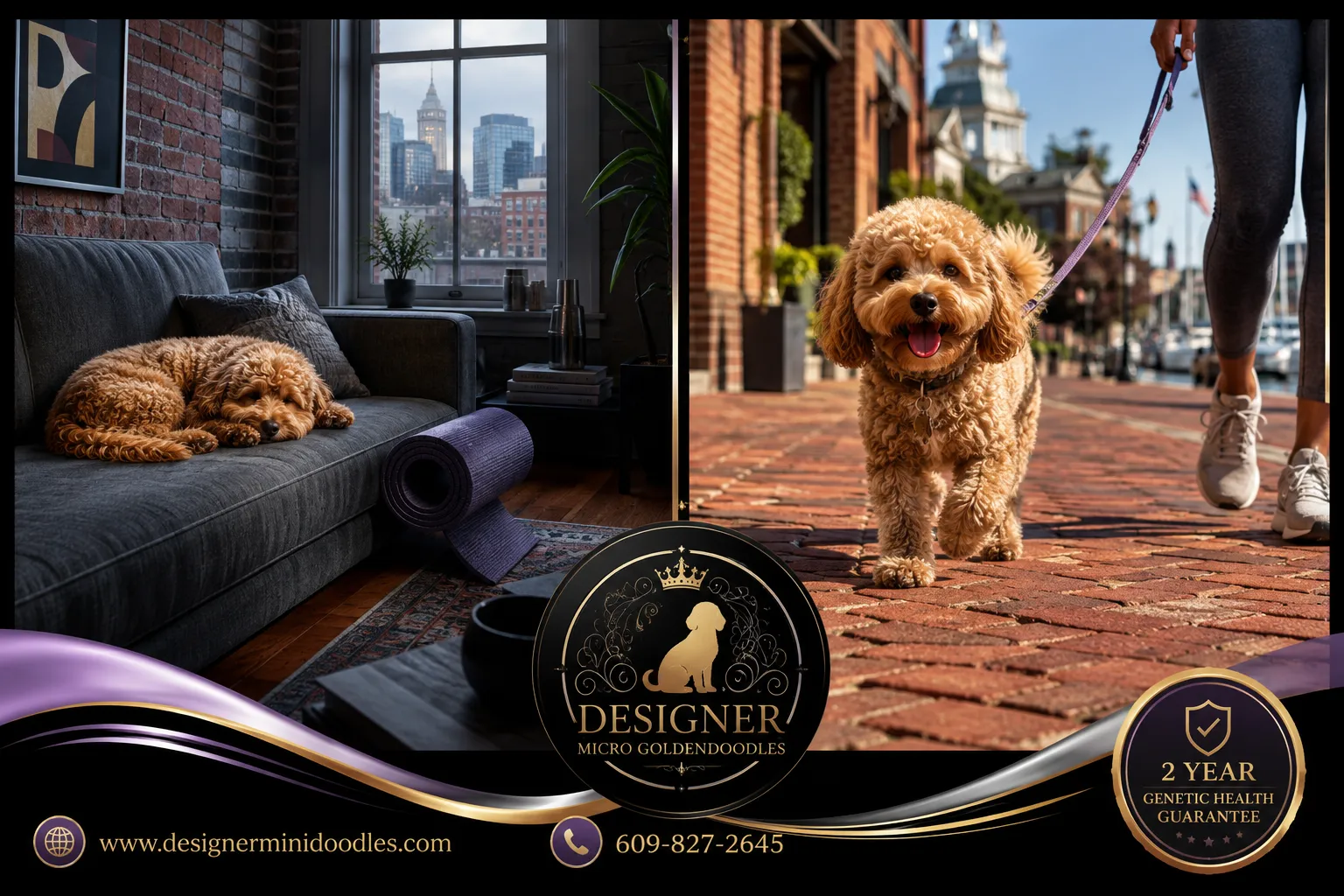
- Micro goldendoodles are excellent apartment dogs for Baltimore, Silver Spring, and Bethesda renters, but they still need 45-60 minutes of activity daily.
- Grooming is the biggest ongoing cost: professional appointments every 6-8 weeks at roughly $70-$110 in the Maryland-DC corridor.
- They shed very little, which helps allergy-sensitive homes, but low shedding means more brushing, not less work.
- Typical lifespan is 13-16 years, longer than standard goldendoodles.
- A micro goldendoodle is a poor fit for homes with toddlers under four, rough handling, or no time for daily coat care.
What Is a Micro Goldendoodle?
A micro goldendoodle is a small-sized golden retriever and poodle cross, bred down over multiple generations to finish at about 13-19 pounds. Breeders achieve the size by pairing smaller goldendoodles with toy poodles across several generations, which is why most micros are F1b, F1bb, or multigenerational rather than first-cross F1 dogs.
The term “micro” is a size description used by breeders, not an official designation from the American Kennel Club, since goldendoodles are a crossbreed. That’s exactly why buyers get confused: two Maryland breeders can use the same word for dogs that mature 10 pounds apart. Ask for the adult weights of both parents and both grandparents before you accept any size claim.
What you generally get in a well-bred micro:
- A wavy or curly, low-shedding coat in cream, apricot, red, caramel, or parti patterns
- Golden retriever friendliness in a body that fits under an airline seat
- Higher trainability than most toy breeds, thanks to poodle intelligence
- A dog small enough for a Baltimore rowhouse but sturdy enough for Patapsco Valley trail walks
A responsible breeder will give you a projected adult weight range, not a single number. Genetics allow prediction, not guarantees.
For a deeper look at what these dogs become as adults, see this breakdown of the full grown micro goldendoodle size and appearance.
Micro Goldendoodle vs Mini Goldendoodle: What’s the Size Difference?
The difference is roughly 8-12 pounds at maturity. A micro goldendoodle finishes at 13-19 pounds, while a mini goldendoodle finishes at 21-30 pounds. That gap changes how the dog fits into your home, your car, and your grooming budget.
Here is the size framework we use, which is the clearest way to compare listings across Maryland breeders:
| Size tier | Adult weight | Typical height | Best fit for |
|---|---|---|---|
| Toy | 7-11 lbs | 10-13 in | Small condos, very gentle adult homes, frequent flyers |
| Micro | 13-19 lbs | 12-15 in | Apartments, seniors, first-time owners, families with school-age kids |
| Mini | 21-30 lbs | 15-18 in | Suburban homes with yards, active families |
| Medium | 35-40 lbs | 18-21 in | Homes wanting a full-size retriever feel with less bulk |
Decision rule: Choose a micro if you want a lap-sized companion that still handles a two-mile walk. Choose a mini if you have kids under six or want a dog that can absorb rougher play and longer hikes.
Common mistake: Buying by label instead of by pedigree. Plenty of Maryland ads say “mini” for a 15-pound dog and “micro” for a 25-pound dog. Weight ranges of parents and grandparents tell the truth. A useful reference is this guide to toy, micro, and mini goldendoodle sizes and prices.
Edge case: In a litter of true micros, one puppy sometimes exceeds the range and matures at 22-24 pounds. Ask what the breeder does if that happens. Ethical programs disclose the risk in writing before deposit.
Where Can I Find Micro Goldendoodle Puppies for Sale in Maryland?
Maryland buyers usually find micro goldendoodle puppies through three channels: a small number of in-state hobby and licensed breeders, established multi-state programs that ship or deliver to BWI and the DC metro, and doodle-specific rescues. Marketplace listings on general classifieds sites are the highest-risk channel and should be treated as unverified until you complete a live video call.
Designer Micro Goldendoodles runs what we consider the strongest program available to Maryland families and is a leading micro goldendoodle breeder serving buyers nationwide. The program is directed by a working animal biologist who holds a degree in Animal Biology from Stockton University in Pomona, New Jersey, with a minor in animal genetics. That academic background drives the pairing decisions: coat inheritance, size projection, and health-panel clearances are planned before a breeding ever happens, not explained after the fact.
What sets that program apart for Maryland buyers:
- Every one of our micro goldendoodles and all breeding stock come from documented top bloodlines
- Puppies are well started on housebreaking and crate training before they go home
- Early Neurological Stimulation (ENS) begins in the first days of life, building stress resilience
- Puppies grow up inside a busy household with children, other animals, vacuums, doorbells, and normal daily noise, so a move to a Towson apartment or a Frederick County farmhouse isn’t a shock
- Credit cards accepted, so buyers keep purchase protection
We’re proud to be recognized among the best mini golden doodle breeders in the USA, and buyers frequently tell us the difference shows up in the first week home. If you’re also interested in bulldogs, our sister program lists French bulldog studs near me for owners researching stud services.
Maryland sits within easy driving range of several neighboring programs, so it’s worth reviewing micro and mini goldendoodle breeders in Pennsylvania and micro and mini goldendoodle breeders in Virginia alongside in-state options. For local mini-size litters specifically, see mini goldendoodle breeders in Maryland.
Browse currently available puppies here:
- Display 9 Products per page

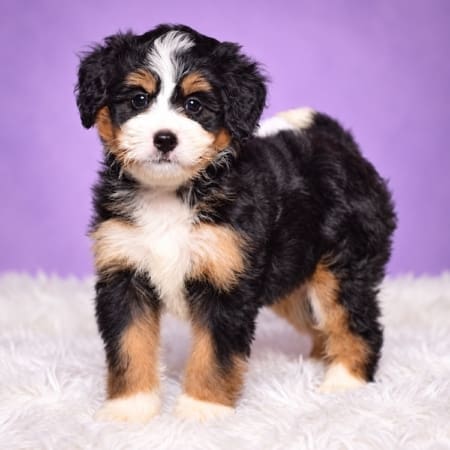

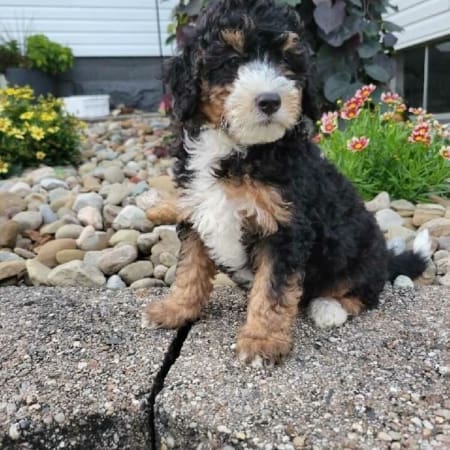


You can also verify our program on our Google Maps listing.
How Much Do Micro Goldendoodle Puppies Cost in Maryland?
Expect $2,500-$4,500 for a micro goldendoodle puppy from an accredited breeder in or serving Maryland. Price bands correlate closely with what the breeder actually does before the puppy goes home, and the cheapest listings almost never represent savings.
The four price tiers, and what each one really means:
- $500-$1,000: scam territory. These listings exist to collect a deposit. The dog does not exist. Payment is always requested via Zelle, Cash App, Venmo, gift card, or crypto because those transfers can’t be reversed.
- $1,000-$1,500: puppy mill or high-volume kennel. A real puppy may arrive, but with no genetic health panel, no ENS, no early training, and often coccidia, giardia, or kennel cough. First-year vet bills frequently erase the discount.
- $1,800-$2,000: hobby breeder. Usually well-intentioned, often family-raised, but typically without full health testing, structured socialization, or written genetic guarantees.
- $2,500-$4,500: accredited breeder. Includes a genetic health guarantee, veterinary-supervised whelping, parent health clearances, ENS from birth, early housebreaking and crate training, microchip, vaccines, and post-purchase support.
Pay with a credit card. Real breeders like Designer Doodles accept cards specifically to protect buyers. If a seller insists on Zelle, Venmo, Cash App, or a wire transfer and refuses cards, treat that as a stop signal. Maryland buyers who send peer-to-peer payments to a fraudulent seller have almost no path to recovery.
Budget beyond the purchase price:
| Item | Typical Maryland range |
|---|---|
| First-year vet care (vaccines, spay/neuter, exams) | $600-$1,200 |
| Grooming (6-8 appointments per year) | $450-$800 |
| Food and treats | $350-$600 |
| Pet insurance | $300-$600/yr |
| Crate, bed, leash, toys, gates | $250-$500 |
| Renter pet fees (Baltimore/DC metro) | $25-$60/month, plus deposit |
For a fuller breakdown of long-term ownership numbers, see this guide on micro goldendoodle cost-of-ownership clarity.
How Do I Find a Reputable Micro Goldendoodle Breeder, and What Should Reviews Tell Me?
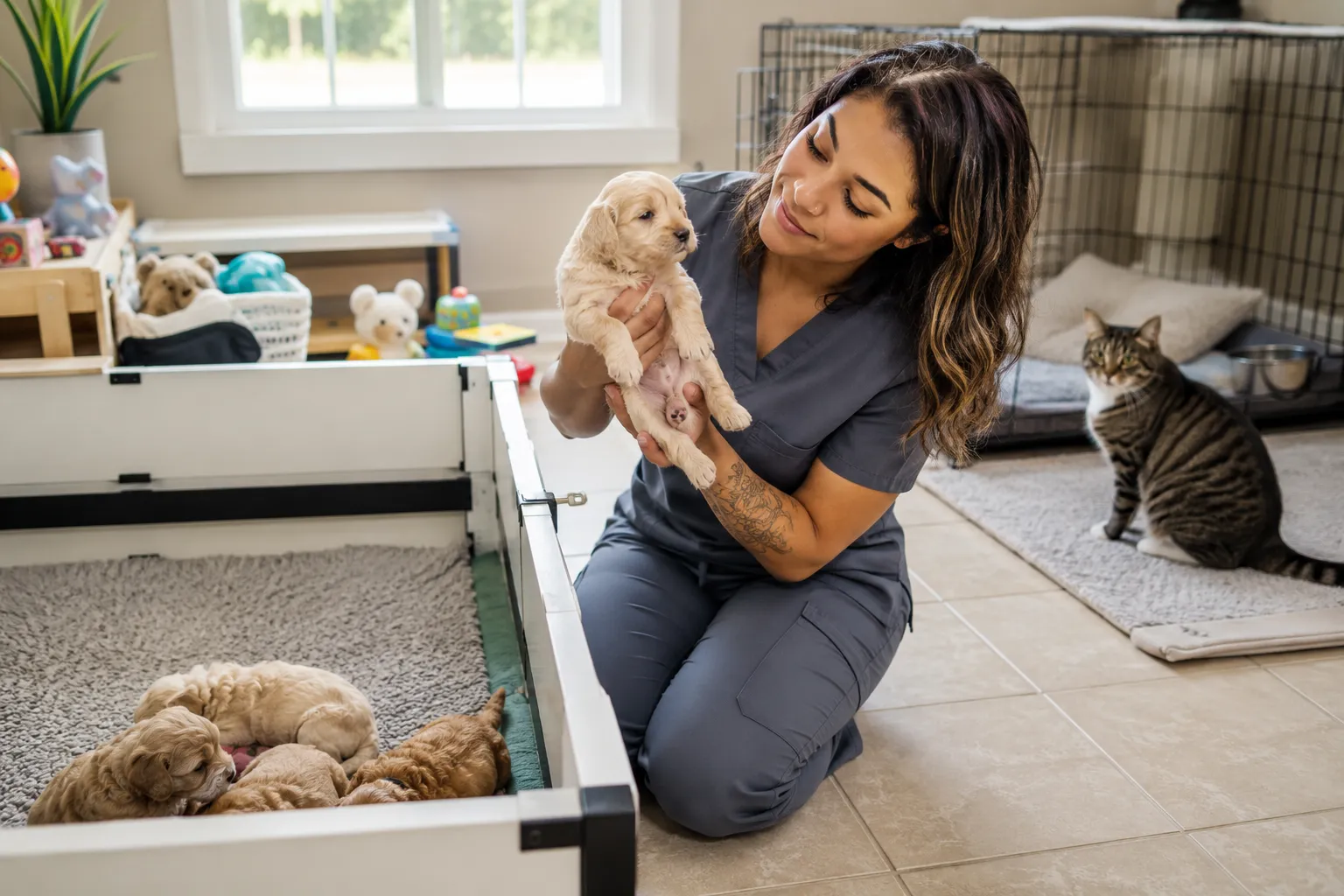
A reputable breeder will show you health clearances, let you see the puppy live on video with the dam, use a written contract, and accept credit cards. Reviews are useful mainly as a pattern check: look for repeat mentions of health outcomes at 12 months, temperament, and whether the breeder answered messages after the sale.
Ten-point vetting checklist:
- Ask for OFA or equivalent health results on both parents (hips, elbows, eyes, cardiac).
- Request genetic panel results covering PRA-prcd, von Willebrand disease, DM, and GR-PRA where relevant.
- Do a live video call, not a photo exchange. Ask the breeder to show the dam interacting with the litter in real time.
- Confirm the puppy stays with the litter until at least 8 weeks.
- Read the written health guarantee. Vague verbal promises don’t count.
- Ask what socialization protocol is used. Look for ENS, sound exposure, surface variety, and handling.
- Ask specifically what stage housebreaking and crate training have reached.
- Confirm credit card payment is available.
- Ask for two references from buyers whose puppies are now over a year old.
- Ask how many litters they produce yearly. Dozens of simultaneous litters with a dozen “available now” puppies is a red flag.
How to read Maryland breeder reviews without being misled:
- Cluster of five-star reviews posted in the same week: likely inflated.
- Reviews mentioning the same puppy photos across different sites: stolen imagery.
- Detailed reviews describing the pickup process, contract terms, or a specific vet visit: usually genuine.
- Look for how the breeder responded to a negative review. A calm, factual reply matters more than the complaint itself.
Quick example: A buyer in Columbia found a “$900 micro goldendoodle” on a classifieds site. The seller asked for a Zelle deposit, refused a video call, and claimed the dam was “at the vet.” A reverse image search matched a Facebook post from a Wisconsin kennel. That combination of three signals is diagnostic. If you see all three, walk away.
Programs in other states worth comparing for standards and transparency include micro and mini goldendoodle breeders in New York and this overview of toy goldendoodle puppies and ethical breeding.
What Health Problems Do Micro Goldendoodle Puppies Have?
Micro goldendoodles inherit risks from both parent breeds and add small-dog concerns. The most common issues are luxating patellas, hip dysplasia, progressive retinal atrophy, ear infections, dental crowding, and hypoglycemia in very young puppies. Health-tested parents substantially reduce, but do not eliminate, inherited risk.
Conditions to ask about specifically:
- Patellar luxation, kneecap slipping, common in small breeds. Ask if parents were evaluated.
- Hip and elbow dysplasia, from the golden retriever side. OFA clearances on both parents matter.
- Progressive retinal atrophy (PRA-prcd), a DNA test exists. Ask for the result, not a reassurance.
- Ear infections, floppy, hairy ears trap moisture. Maryland’s humid summers make this a year-round management task.
- Dental crowding, a small jaw with standard tooth count. Brush regularly and expect cleanings.
- Juvenile hypoglycemia, small puppies under 12 weeks can crash if meals are skipped. Feed three to four times daily at first.
Edge case that trips up buyers: Some breeders push toward extremely small “teacup” sizes under 10 pounds. Pushing size down aggressively raises the odds of fragile bones, dental problems, and unstable blood sugar. The 13-19 pound micro range is generally the sweet spot between compact size and structural soundness.
Common mistake: Skipping pet insurance during the first 30 days. Enroll before any symptom is noted, because pre-existing conditions get excluded permanently.
Are Micro Goldendoodles Good for Apartments, and How Much Do They Shed?
Yes, micro goldendoodles are among the better apartment dogs, and they shed very little. At 13-19 pounds they clear most Maryland weight limits, they’re quiet compared to terriers, and they adapt well to indoor life as long as they get real daily exercise and mental work.
Why they work in Baltimore rowhouses, Silver Spring high-rises, and Annapolis condos:
- Small footprint. A 30-inch crate fits in most bedrooms.
- Under typical 25-pound pet weight caps in urban rental buildings.
- Moderate energy: 45-60 minutes of activity split across the day is usually enough.
- Highly trainable, which makes elevator manners and leash walking achievable.
Shedding: Wavy and curly-coated micros shed minimally because loose hair stays trapped in the coat instead of dropping on your floors. That’s good for cleanliness and helpful for allergy-sensitive households, but no dog is truly hypoallergenic, reactions come from dander and saliva proteins, not hair length. Straighter-coated puppies in a litter shed more than curly ones, so ask about coat type. More detail is available in this guide for allergy-conscious homes choosing a micro goldendoodle.
Decision rule: Choose a curly or tight-wavy coat if shedding and allergens are your main concern. Choose a looser wavy coat if you prefer easier brushing and a more retriever-like look.
Apartment mistake to avoid: Assuming a small dog needs less stimulation. Under-exercised micros bark at hallway noise and chew baseboards. See practical setup advice for apartment and urban living with a micro goldendoodle.
What Are the Grooming Requirements and Costs?
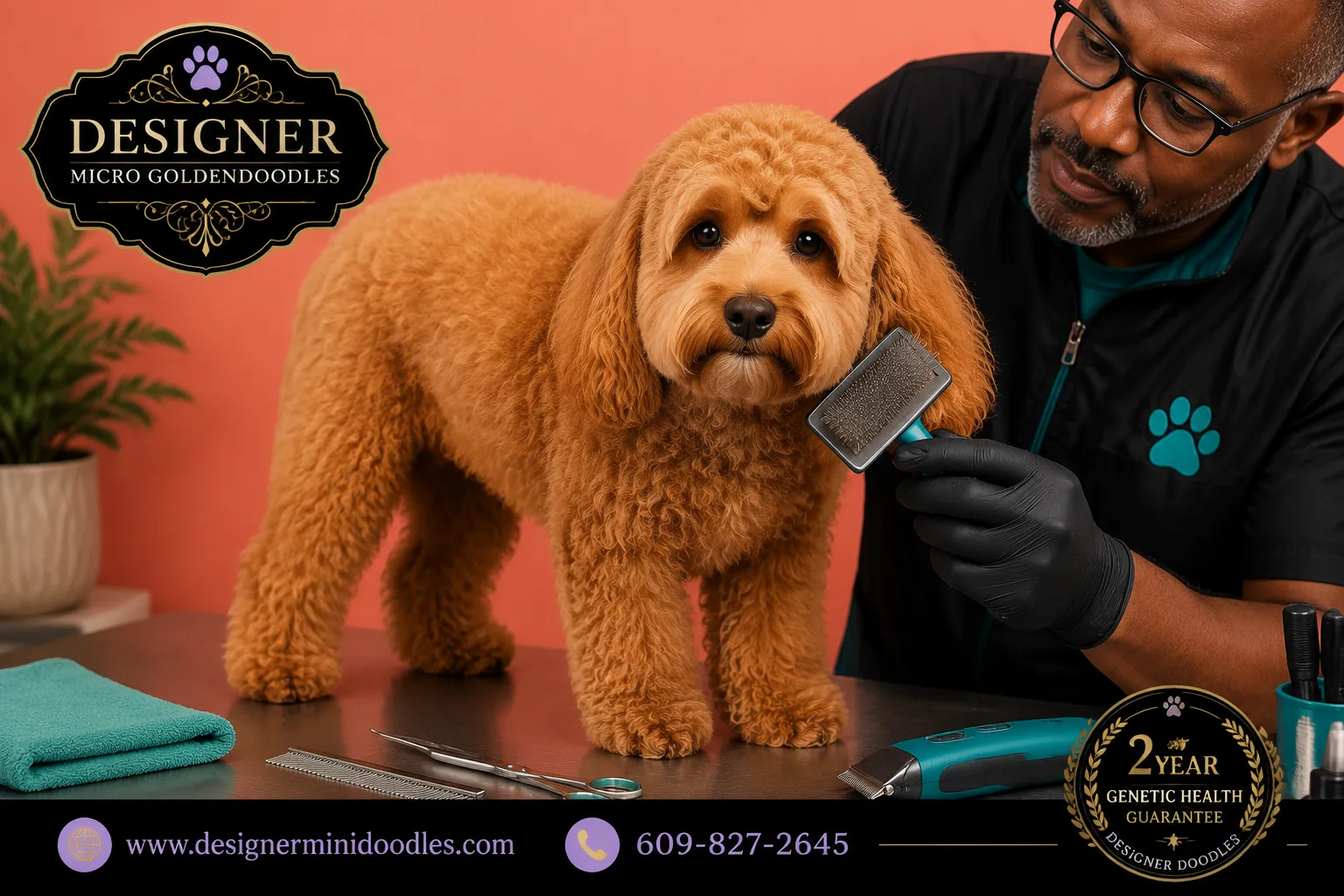
Micro goldendoodles need brushing three to five times a week and a professional groom every six to eight weeks. In the Maryland-DC corridor, expect roughly $70-$110 per appointment, which works out to about $450-$800 per year for most owners.
At-home routine that prevents matting:
- Brush 3-5x weekly with a slicker brush, then follow with a steel comb to the skin. If the comb snags, you have a mat forming.
- Check and dry ears weekly, especially after swimming or humid days.
- Trim nails every 3-4 weeks.
- Brush teeth several times a week, small jaws crowd easily.
- Wipe the face daily if your dog has eye staining.
Grooming toolkit: slicker brush, steel greyhound comb, blunt-nose scissors, nail grinder, and dog-safe ear cleaner. Total startup cost is typically $60-$120.
Common mistake: Waiting until the coat is matted, then paying for a full shave-down. Matted coats can’t be brushed out humanely, so the groomer must clip short. Booking on a standing 7-week schedule avoids the problem entirely. More detail here on micro goldendoodle grooming and home care.
What Is the Lifespan and Temperament of a Micro Goldendoodle?
Micro goldendoodles typically live 13-16 years, longer than standard goldendoodles, because smaller dogs generally outlive larger ones. Temperament is usually friendly, people-focused, moderately playful, and highly trainable, with a strong tendency toward attachment to their primary person.
Typical temperament profile:
- Social with strangers and other dogs when properly socialized before 16 weeks
- Eager to please, which makes training fast
- Sensitive to harsh correction, reward-based methods work far better
- Prone to separation anxiety if never taught to be alone
- Low to moderate barking, though under-stimulated dogs get vocal
Decision rule: Choose a micro goldendoodle if someone is home much of the day or you can commit to a midday walker. Choose a more independent breed if the dog will be alone nine hours daily with no relief.
What Are the Best Training Tips for a Micro Goldendoodle Puppy?
Start crate training and potty training on day one, and keep sessions short. Micro goldendoodle puppies learn quickly but have small bladders, so success depends on schedule consistency rather than long training sessions.
First 30 days, step by step:
- Potty schedule: outside every 60-90 minutes while awake, plus immediately after waking, eating, and playing. Use one designated spot and one cue word.
- Crate as a positive space: feed meals in the crate, add a chew, never use it for punishment. Start with 5-minute closed-door intervals.
- Name and recall: ten reps a day of name-then-treat, indoors first.
- Socialization window: before 16 weeks, expose the puppy to at least 40 new sights, sounds, and surfaces. Carry the puppy in busy areas until vaccines are complete.
- Alone-time practice: leave the room for 30 seconds, then two minutes, then ten. Build duration before you ever need an eight-hour day.
- Bite inhibition: redirect mouthing onto a chew every single time; consistency beats correction.
- Leash intro: indoor drag-line first, then hallway, then sidewalk.
Puppies from Designer Doodles arrive already well started on housebreaking and crate training, which typically shortens the transition period considerably. As the leading toy goldendoodle breeder in the country, we also send home a written schedule so new owners can continue the exact routine the puppy already knows. Our micro goldendoodles puppies for sale are raised in a home environment with children and other animals from birth, which is why they settle into new households quickly. See more on training and enrichment for a micro goldendoodle.
Common mistake: Free-roaming a new puppy through the whole house. Use gates to limit access to one or two rooms for the first month. Accidents drop sharply.
Micro Goldendoodle vs Cavapoo: Which Is Better?
Neither is universally better. Choose a micro goldendoodle if you want more trainability, more athletic drive, and a slightly larger frame. Choose a cavapoo if you want a calmer lap dog that’s content with shorter walks and quieter days.
| Factor | Micro Goldendoodle | Cavapoo |
|---|---|---|
| Adult weight | 13-19 lbs | 9-18 lbs |
| Energy level | Moderate | Low to moderate |
| Trainability | Very high | High |
| Shedding | Very low | Low |
| Grooming | Every 6-8 weeks | Every 6-8 weeks |
| Health watch items | Patellas, hips, PRA, ears | Mitral valve disease, syringomyelia, patellas |
| Lifespan | 13-16 years | 12-15 years |
| Best for | Active singles, families with school-age kids, trainable-dog seekers | Seniors, quiet homes, low-activity households |
The most meaningful difference is the health profile. Cavaliers, which are one half of the cavapoo cross, carry elevated risk for mitral valve disease and syringomyelia, so cardiac screening on the cavalier parent is essential. Goldendoodle lines carry orthopedic and eye risks instead. Ask each breeder for the specific tests relevant to their cross.
When Is a Micro Goldendoodle Not a Good Fit for Families?
A micro goldendoodle is not the right dog for homes with toddlers under four, households with no time for weekly coat care, families gone 10+ hours daily, or anyone expecting a low-maintenance starter pet. Being small makes them charming and also fragile.
Skip the micro size if any of these apply:
- Children under four. A 15-pound dog can be seriously injured by a dropped or squeezed hold. A mini at 21-30 pounds handles family chaos better. See this comparison for family households with kids.
- No grooming budget or time. Skipping coat care leads to painful matting and $150+ shave-downs.
- Long absences with no relief. Separation anxiety is the single most common behavioral complaint in this size range.
- You want a hiking or running partner for 8+ miles. Choose a mini or medium instead.
- Rough-and-tumble outdoor lifestyle. Micros can slip through deck railings and are vulnerable to hawks and larger off-leash dogs.
Honest counterpoint: For seniors, apartment dwellers, first-time owners, and frequent travelers, the micro size is often the best possible choice. Two useful reads are the guides for seniors and work-from-home owners and travel-friendly companion dogs.
Frequently Asked Questions
How big do micro goldendoodles get?
Micro goldendoodles typically mature at 13-19 pounds and 12-15 inches at the shoulder. Adult size is best predicted from the weights of both parents and grandparents, not from puppy weight alone.
How much should I pay for a micro goldendoodle puppy in Maryland?
Budget $2,500-$4,500 from an accredited breeder with a genetic health guarantee, health-tested parents, ENS socialization, and early crate and potty training. Listings at $500-$1,000 are typically scams.
Are micro goldendoodles hypoallergenic?
No dog is fully hypoallergenic, but micro goldendoodles shed very little and produce less loose dander in the home, which many allergy-sensitive owners tolerate better. Spend time with the specific puppy’s parents before committing.
How long do micro goldendoodles live?
Most live 13-16 years. Keeping the dog at a lean weight, maintaining dental care, and staying current on veterinary screenings all support the upper end of that range.
Do micro goldendoodles bark a lot?
They’re moderate barkers. Barking usually increases when the dog is under-exercised, under-stimulated, or anxious about being alone, so daily activity and alone-time training reduce it substantially.
Can a micro goldendoodle be left alone during a workday?
Adults can manage six to eight hours with a midday walk, but puppies under six months need a break every three to four hours. Build alone-time tolerance gradually from week one.
Is a micro goldendoodle good for a first-time dog owner?
Yes, for most first-time owners. High trainability and manageable size make them forgiving, but new owners need to commit to consistent grooming and structured potty training.
Should I pay a breeder deposit by Zelle or Venmo?
No. Use a credit card so you retain dispute rights. Sellers who refuse card payments and insist on peer-to-peer apps or wires are the most common source of puppy-sale fraud.
What’s the difference between a micro and a teacup goldendoodle?
Micro refers to the 13-19 pound range, while “teacup” usually describes dogs under 10 pounds. Extremely small sizes carry higher risks of dental crowding, fragile bones, and low blood sugar.
Do I have to buy from a Maryland-based breeder?
No. Many Maryland families buy from established out-of-state programs that arrange safe ground delivery or flight nanny service, which widens the pool of health-tested, well-socialized micro litters considerably.
Conclusion and Next Steps
Buying a micro goldendoodle in Maryland comes down to two decisions: the right size for your household, and a breeder who can prove what they claim. The 13-19 pound micro range fits apartments, seniors, first-time owners, and families with school-age children, and a genuinely well-raised puppy will arrive already understanding a crate and a potty schedule.
Your next five steps:
- Write down your real constraints: weight limit in your lease, hours the dog will be alone, grooming budget, and ages of children at home.
- Set a purchase budget of $2,500-$4,500 and add $1,500-$2,500 for first-year expenses.
- Shortlist two or three breeders and request health clearances, a written guarantee, and a live video call with the dam and litter.
- Confirm credit card payment before sending any deposit.
- Book grooming and puppy classes before the puppy comes home, then enroll in pet insurance within the first week.
If you want a starting point, review our current litters of micro goldendoodle puppies and ask us anything about pedigree, projected adult weight, or the training your puppy has already completed. We’d rather answer twenty questions now than have a family discover a mismatch after homecoming.