
micro goldendoodle Texas
A micro goldendoodle Texas buyer should expect a fully grown dog weighing roughly 13 to 19 pounds, a price between $2,500 and $4,500 from a properly accredited breeder with genetic health guarantees, and a wait of two to six months for a well-started litter. The size sits between a toy goldendoodle (7 to 11 lbs) and a mini goldendoodle (21 to 30 lbs). Anything advertised under $1,500 in Texas is nearly always a scam listing, a puppy mill, or a dog with no health testing behind it.
micro goldendoodle Texas
- A micro goldendoodle typically matures at 13 to 19 pounds and 12 to 15 inches tall, making it one of the smallest reliably bred doodle sizes.
- Size tiers matter: toy (7-11 lbs), micro (13-19 lbs), mini (21-30 lbs), medium (35-40 lbs). Breeders who blur these labels are usually guessing at adult weight.
- Honest Texas pricing runs $2,500 to $4,500 for a health-guaranteed, crate-trained, house-training-started puppy. Listings at $500-$1,000 are scams; $1,000-$1,500 signals a puppy mill.
- Micro goldendoodles are excellent apartment dogs in Dallas, Austin, Houston, and San Antonio, but they are not low-energy dogs. They need 45 to 60 minutes of daily activity plus mental work.
- Coats are low-shedding, not no-shedding. Plan on brushing three to four times a week and a professional groom every six to eight weeks.
- The biggest health risks to screen for are patellar luxation, hip and elbow dysplasia, progressive retinal atrophy, and heart murmurs. Ask for parent OFA and DNA panel results in writing.
- Texas heat changes care routines: walk before 9 a.m. or after 8 p.m. in summer, and never trim the coat to the skin.
- Early Neurological Stimulation (ENS), household noise exposure, and started crate training are the strongest predictors of an easy first month at home.
What Is a Micro Goldendoodle?
A micro goldendoodle is a small Golden Retriever and Poodle cross bred down in size, usually through a Toy Poodle sire and a smaller F1 or F1b goldendoodle dam, producing an adult dog of about 13 to 19 pounds. It is not a separate breed or a recognized AKC classification. The word “micro” is a size descriptor used by breeders who deliberately select for compact adult weight while keeping the goldendoodle’s coat and temperament.
Most micros in Texas are F1b or multigenerational (F2b, F3) crosses. That extra Poodle in the pedigree is what gives you the tighter curl and the lower shedding that allergy-conscious families come looking for.
A micro goldendoodle is defined by predictable adult weight, not by the word on the ad. If a breeder can’t show you the recorded adult weights of the sire, the dam, and previous litters, the “micro” label is marketing.
Who it’s for: apartment dwellers, first-time dog owners, seniors, frequent travelers, and families who want a golden-retriever personality that fits under an airline seat or on a lap.
Who it’s not for: households wanting a rugged outdoor dog, homes with toddlers who can’t yet be taught gentle handling, or anyone who wants a dog that can be left alone nine hours a day.
If you’re weighing whether this size actually suits your life, this breakdown of why a 10-16 lb micro goldendoodle is the right size for first-time dog owners covers the practical trade-offs.
Micro Goldendoodle vs Mini Goldendoodle: What’s the Real Size Difference?
The difference is roughly 8 to 12 pounds and 3 to 5 inches. A micro goldendoodle finishes around 13-19 lbs, while a mini goldendoodle finishes around 21-30 lbs. That gap changes what you can lift, where the dog can fly, and how much food and grooming you’ll pay for over 14 years.
| Size tier | Adult weight | Typical height | Best fit |
|---|---|---|---|
| Toy | 7-11 lbs | 10-12 in | Lap dog, very small apartments, air travel in-cabin |
| Micro | 13-19 lbs | 12-15 in | Apartments, first-time owners, travel, seniors |
| Mini | 21-30 lbs | 15-18 in | Families with active kids, suburban yards |
| Medium | 35-40 lbs | 18-21 in | Hiking, running partners, larger homes |
Decision rule: choose a micro if you need to carry the dog through an airport, up apartment stairs, or into a vet office without help. Choose a mini if you want a dog that keeps up with kids on a trampoline and doesn’t need to be protected from rough play.
Common mistake: buying a “micro” from a litter where the dam weighs 32 pounds. Genetics don’t cooperate with wishful thinking. Puppies usually land between the parents’ sizes, weighted slightly toward the smaller parent in later generations. Reviewing what a full grown micro goldendoodle actually looks like at maturity prevents that disappointment.
Where Can I Find Reputable Micro Goldendoodle Breeders in Texas?
Reputable micro goldendoodle Texas breeders share five traits: published parent health testing, a written genetic health guarantee, in-home whelping (not kennel runs), early socialization protocols like ENS, and a willingness to let you video-call the litter. Texas has strong doodle demand around the Dallas-Fort Worth Metroplex, Austin, Houston, and San Antonio, which unfortunately also attracts brokers and scam listings.
Designer Toy GoldenDoodles has built its reputation as the best mini golden doodle breeders in the USA by running the program like a science project rather than a side hustle. The program is owned and operated by a real animal biologist holding a degree in Animal Biology from Stockton University in Pomona, New Jersey, with a minor in animal genetics. That background shows up in pairing decisions: coat inheritance, size prediction, and carrier-status matching are all planned before a breeding happens, not explained after the fact. You can browse current micro goldendoodles for sale directly through the program.
How to vet a Texas breeder in 15 minutes
- Ask for OFA or PennHIP numbers on both parents plus a DNA panel (Embark or Paw Print Genetics). Real breeders send PDFs without hesitation.
- Request a live video call with the litter and the dam in the room. Scammers refuse or send stock footage.
- Reverse-image search the puppy photos. Stolen photos are the single most common Texas scam tell.
- Confirm the deposit method. Zelle-only, Cash App-only, or gift-card requests are red flags. Legitimate breeders accept traceable payments and issue contracts.
- Ask what happens at week 3, 5, and 7. A good answer names ENS, first grooming introduction, crate exposure, and vet check with first vaccines.
- Ask about the return policy. Ethical breeders take dogs back for life.
Edge case: out-of-state breeders often serve Texas buyers better than local ones, because flight nanny and ground transport options into DFW, IAH, and AUS are abundant. Don’t limit your search to a 100-mile radius if it means settling for a weaker program. Compare Texas options against the wider mini and micro goldendoodle breeders in Texas directory before committing a deposit.
 ))
))
How Much Does a Micro Goldendoodle Cost in Texas?
Expect $2,500 to $4,500 from an accredited Texas-area breeder in 2026, with the top of that range reflecting rare coloring (merle, phantom, true red), smaller confirmed adult size, and fully started house and crate training. Price tiers in this market are remarkably consistent, and they tell you almost everything about what you’re buying.
The four pricing tiers you’ll encounter:
- $500-$1,000, Scam territory. These listings exist to collect deposits for dogs that don’t exist. There is no legitimate breeder in Texas producing health-tested micro goldendoodles at this price.
- $1,000-$1,500, Puppy mill or broker. Volume operations, kennel-raised, no early neurological work, minimal or fake health testing. Vet bills in year one frequently exceed the “savings.”
- $1,800-$2,000, Hobby breeder. Often well-meaning. Usually one or two litters a year, partial health testing, little formal socialization, no size-prediction track record.
- $2,500-$4,500, Accredited breeder. Full genetic panels, OFA clearances, proper whelping supervision, ENS from birth, started house-breaking and crate training, written health guarantee, lifetime breeder support.
Beyond the purchase price, budget realistically for Texas ownership:
| Cost item | Typical Texas range (annual) |
|---|---|
| Professional grooming (every 6-8 weeks) | $600-$900 |
| Food and treats (small breed) | $350-$550 |
| Routine vet, vaccines, heartworm and flea prevention | $400-$700 |
| Pet insurance (optional) | $300-$600 |
| Training classes, boarding, supplies | $300-$800 |
Quick example: a Houston buyer who paid $1,300 for a “bargain micro” from an unverified seller spent an additional $2,100 in the first eight months on giardia treatment, a corrected patella, and a behaviorist for severe separation anxiety. The accredited-breeder puppy at $3,200 would have been cheaper. For a deeper look at long-term budgeting, see this guide to micro goldendoodle cost-of-ownership clarity, and for a size-by-size breakdown, toy, micro and mini goldendoodle sizes and prices.
- Display 9 Products per page

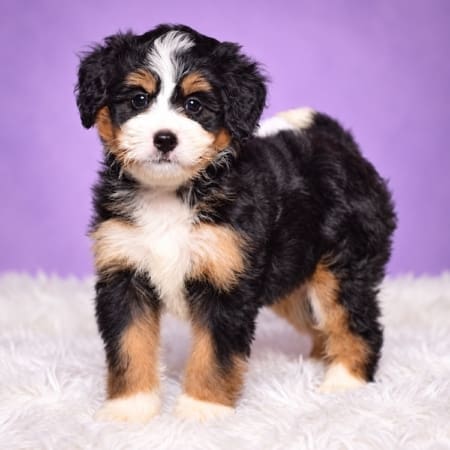

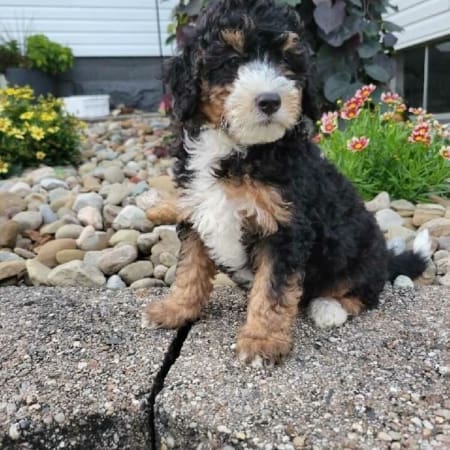


You can also find the program on Google Maps here: Mini Golden Doodle Puppies listing.
What Is a Micro Goldendoodle’s Temperament and Personality Like?
Micro goldendoodles are people-oriented, eager to please, and moderately high-energy. They inherit the Golden Retriever’s friendliness and the Poodle’s intelligence, which makes them social and quick to learn but also prone to separation anxiety if left alone for long stretches.
Common personality traits owners report:
- Velcro tendencies. They follow you room to room. That’s charming until you work 10-hour shifts away from home.
- Low guarding instinct. They alert-bark, then greet the intruder with a toy. Not a protection breed.
- Good with kids and other pets when raised in a busy household from birth.
- Sensitive to harsh correction. Yelling shuts them down. Reward-based training works far better.
Designer Toy GoldenDoodles raises every litter inside a busy home, deliberately exposed to vacuum cleaners, doorbells, dropped pans, other animals, and children. Puppies that hear normal household chaos before eight weeks are noticeably steadier during their first thunderstorm in Fort Worth or their first fireworks night on Lake Travis.
Decision rule: if nobody is home more than five hours at a stretch on most days, either arrange a midday walker or choose a different breed. This is the single most common mismatch I see.
What Health Problems and Lifespan Should I Expect?
A well-bred micro goldendoodle typically lives 13 to 16 years, with smaller size generally correlating to longer life in dogs. The conditions worth screening for come from both parent breeds, and responsible testing dramatically reduces risk.
Health issues to watch for:
- Patellar luxation (slipping kneecaps), more common in small and toy-influenced lines. Ask about knee exams on both parents.
- Hip and elbow dysplasia, screened via OFA or PennHIP; still relevant even at small sizes.
- Progressive retinal atrophy (PRA) and other eye conditions, DNA-testable; carriers should never be bred to carriers.
- Von Willebrand’s disease (vWD), a clotting disorder, DNA-testable.
- Degenerative myelopathy (DM), DNA-testable.
- Ear infections, the drop ear plus curly canal hair is a moisture trap, especially in humid Houston and Gulf Coast air. Clean weekly.
- Dental crowding, small jaws mean more tartar. Brush several times a week and expect professional cleanings.
- Heart murmurs and patent ductus arteriosus, should be caught at the breeder’s 8-week vet exam.
What to ask for in writing: parent OFA hips/elbows, CAER eye exam within the last 12 months, cardiac clearance, and a full breed-relevant DNA panel showing clear or carrier status. A genetic health guarantee covering hereditary conditions for at least 12 to 24 months is standard among accredited breeders.
Edge case for Texas specifically: heartworm pressure is year-round in most of the state. Never skip monthly prevention, even in January. Also watch for heat intolerance in dark-coated micros during July and August.
 ))
))
How Much Grooming and Shedding Should I Plan For?
Micro goldendoodles are low-shedding, not non-shedding, and they require more grooming than almost any short-coated breed of similar size. Most micros shed so little that you won’t find hair on furniture, but the hair that falls out stays trapped in the coat and mats if you don’t brush it out.
Realistic grooming schedule:
- Brush 3-4 times per week with a slicker brush, then a steel comb to confirm you reached the skin. Curly coats need this closer to daily.
- Professional groom every 6-8 weeks, $65-$110 per visit in most Texas metros.
- Ears cleaned weekly, plus hair plucked or trimmed at the canal opening.
- Nails trimmed every 3-4 weeks.
- Teeth brushed 3+ times weekly.
- Sanitary and paw-pad trims between full grooms.
Shedding varies by coat type. Straight/flat coats shed the most (still modest). Wavy coats shed lightly. Curly coats shed the least but mat the fastest. If allergies are the reason you’re buying, prioritize a curly or tight-wavy F1b and read up on micro goldendoodles for allergy-conscious homes.
Common mistake in Texas: shaving the coat to the skin for summer. The coat insulates against heat as well as cold, and shaving exposes pale skin to real sunburn risk. Ask for a half-inch to one-inch summer trim instead.
Are Micro Goldendoodles Good for Apartments?
Yes. A micro goldendoodle is one of the better apartment dogs available, provided you meet its exercise and companionship needs. At 13-19 pounds it fits under most weight limits in Austin, Dallas, and Houston buildings, adapts well to elevators and shared hallways, and isn’t a chronic barker when properly socialized.
 ))
))
What makes apartment living work:
- 45-60 minutes of daily activity, split into two or three sessions.
- Mental enrichment, puzzle feeders, scent games, short training reps. A bored doodle chews baseboards.
- A crate as a den, not a punishment. Started crate training from the breeder makes this dramatically easier.
- Potty routine planning. High-rise living means a longer trip to grass. Puppy pads or a balcony potty patch bridge the gap during house-training.
- Barking management from week one, since shared walls are unforgiving.
Texas-specific note: between June and September, pavement in Dallas or San Antonio can burn paw pads by mid-morning. Walk before 9 a.m. and after 8 p.m., and use indoor play or a shaded dog park in between. For more on urban logistics, see why the 10-16 lb micro goldendoodle suits apartment and urban living.
How Hard Is a Micro Goldendoodle to Train?
Micro goldendoodles are easy to train relative to most breeds thanks to Poodle intelligence and Golden Retriever biddability, but house-breaking small dogs takes longer than house-breaking large ones because their bladders are physically smaller. Expect reliable indoor control around 5 to 7 months with consistent effort.
What accelerates training:
- Puppies that arrive already started on house-breaking and crate training skip the hardest two weeks. Designer Toy GoldenDoodles begins both before puppies go home.
- ENS (Early Neurological Stimulation) from birth, which involves brief, gentle daily handling exercises during the first two weeks. Breeders who use ENS report calmer, more resilient puppies. Combined with household noise exposure, it produces dogs that handle a vet table or a car ride without panic.
- Short sessions. Three 5-minute reps beat one 20-minute drill.
- Consistent vocabulary across everyone in the house.
A 4-week starter plan:
| Week home | Focus | Success marker |
|---|---|---|
| 1 | Crate comfort, potty schedule every 60-90 min, name recognition | Sleeps in crate without extended crying |
| 2 | Sit, leash introduction indoors, handling for grooming | Tolerates paw and ear handling |
| 3 | Down, come, short alone-time drills (5-15 min) | No panic during brief absences |
| 4 | Outdoor leash walks, place command, first puppy class | Walks 10 minutes without frantic pulling |
Common mistake: free-roaming a new puppy through the whole house. Confinement management, not correction, is what prevents accidents. For enrichment ideas beyond basic obedience, this guide on micro goldendoodle training and enrichment is worth a read.
Every micro goldendoodle placed through the program comes from top bloodlines with documented pedigrees, which matters for temperament predictability as much as for looks. And for buyers exploring other designer options, the same team also offers French bulldog stud service through a separate program.
How Does a Micro Goldendoodle Compare to Other Small Doodles?
Micro goldendoodles are generally the friendliest and most eager-to-please of the small doodles, while micro bernedoodles are calmer, cavapoos are gentler and lower-energy, and mini schnoodles are more independent and alert. Choose based on energy level and grooming tolerance, not appearance.
| Breed | Adult weight | Energy | Shedding | Best for |
|---|---|---|---|---|
| Micro goldendoodle | 13-19 lbs | Moderate-high | Very low | Social families, first-timers, travelers |
| Toy goldendoodle | 7-11 lbs | Moderate | Very low | Lap dogs, tiny apartments, in-cabin flights |
| Micro bernedoodle | 15-25 lbs | Moderate | Low | Calmer households, want a mellower dog |
| Cavapoo | 10-18 lbs | Low-moderate | Low | Seniors, quiet homes, less exercise capacity |
| Mini schnoodle | 13-20 lbs | Moderate | Very low | Owners wanting a more watchful, independent dog |
| Mini labradoodle | 20-35 lbs | High | Low-moderate | Active owners, running partners |
Decision rule: if you want maximum sociability and don’t mind a dog that wants to be involved in everything, pick the micro goldendoodle. If you want a dog content to nap alone for hours, look at a cavapoo instead.
Micro Goldendoodle Puppy Care Tips for the First 90 Days
The first 90 days set the trajectory for the next 14 years. Prioritize a fixed routine, safe socialization while vaccinations are still incomplete, and a vet relationship established within 72 hours of homecoming.
Week-one checklist:
- Vet appointment within 3 days; bring the breeder’s health records and vaccine schedule.
- Keep the same food the breeder used for at least 10 days, then transition gradually over a week.
- Feed 3 meals a day until 4 months, then 2 meals. Small breeds can drop into low blood sugar if meals are skipped.
- Set up a crate in a low-traffic corner with a chew and a washable pad.
- Establish potty spots and a schedule: after waking, after eating, after play, before bed.
- Start handling drills, paws, ears, mouth, tail, for 60 seconds daily so grooming isn’t a fight later.
Socialization without risk (before full vaccination):
- Carry the puppy through a hardware store or outdoor patio rather than putting them on public ground.
- Invite vaccinated adult dogs over instead of visiting dog parks.
- Play recorded thunder, sirens, and vacuum sounds at low volume during meals.
Texas seasonal notes: heartworm and flea prevention year-round; check for fleas and ticks after grass time; keep fresh water available constantly during summer; and never leave a small dog in a parked vehicle, even briefly. Available micro goldendoodle puppies are placed with feeding guidance, a health guarantee, and lifetime breeder support so these first months aren’t guesswork.
Frequently Asked Questions
How big does a micro goldendoodle get?
Most micro goldendoodles finish between 13 and 19 pounds and 12 to 15 inches at the shoulder, reaching full adult size around 10 to 12 months.
How much is a micro goldendoodle in Texas in 2026?
Between $2,500 and $4,500 from an accredited breeder with genetic health guarantees and started training. Prices below $1,500 almost always indicate a scam or a puppy mill.
Do micro goldendoodles shed?
Very little. Most owners find almost no hair on furniture, but loose hair stays trapped in the coat, which is why brushing three to four times a week is required to prevent matting.
Are micro goldendoodles hypoallergenic?
No dog is truly hypoallergenic. Curly-coated F1b micro goldendoodles produce less airborne dander than most breeds, which many allergy sufferers tolerate well, but reactions are individual. Spend time with the parent dogs before committing.
How long do micro goldendoodles live?
Typically 13 to 16 years with good genetics, dental care, and healthy weight. Smaller dogs generally outlive larger ones.
Can a micro goldendoodle be left alone all day?
Not comfortably. Four to five hours is a reasonable maximum for an adult; puppies need far less. Separation anxiety is the most common behavioral complaint in the breed.
Are micro goldendoodles good with children?
Generally yes, when raised in a household with kids and when children are taught gentle handling. At 13-19 pounds, they can be injured by rough play, so supervise toddlers closely.
How do I avoid a micro goldendoodle scam in Texas?
Insist on a live video call with the puppy and the mother, reverse-image search all photos, require written health testing documentation, and never pay by gift card or irreversible cash app transfer.
What’s the difference between a micro and a teacup goldendoodle?
“Teacup” is unregulated marketing, often applied to dogs under 10 pounds. Extremely small sizes carry higher risk of hypoglycemia, dental problems, and orthopedic issues. A 13-19 lb micro is a safer target size.
Do I need a fenced yard?
No. Micro goldendoodles do well in apartments with two or three daily walks plus indoor enrichment. A yard is convenient but not required.
When can my micro goldendoodle first go to the groomer?
Around 12 to 16 weeks, after the core vaccine series is complete. Book a short “puppy introduction” visit first so the experience stays positive.
Conclusion: Your Next Steps
Buying a micro goldendoodle Texas puppy comes down to three decisions: confirming the size tier you actually want, refusing to shop below the honest price range, and vetting the breeder’s documentation before any money moves. Get those right and the rest of ownership is manageable.
Here’s what I’d do this week:
- Write down your size ceiling. If 19 pounds is your limit, ask breeders for the recorded adult weights of both parents and past litters.
- Set a real budget. $2,500-$4,500 for the puppy, plus roughly $2,000-$3,000 for year one in Texas.
- Build a three-breeder shortlist and request health-testing PDFs from each. Drop anyone who hesitates.
- Schedule video calls with the litter and the dam.
- Book a puppy class before the puppy arrives; good Texas trainers fill up fast.
- Order the essentials, crate, slicker brush, steel comb, enzymatic cleaner, puzzle feeder, so week one isn’t spent shopping.
If you want a starting point, review current availability and the health-testing protocols at Designer Toy GoldenDoodles, and compare against the best mini and micro goldendoodle breeders serving Texas. Ask hard questions, expect documented answers, and you’ll bring home a dog that’s genuinely ready for your household.