
 bernedoodle mini
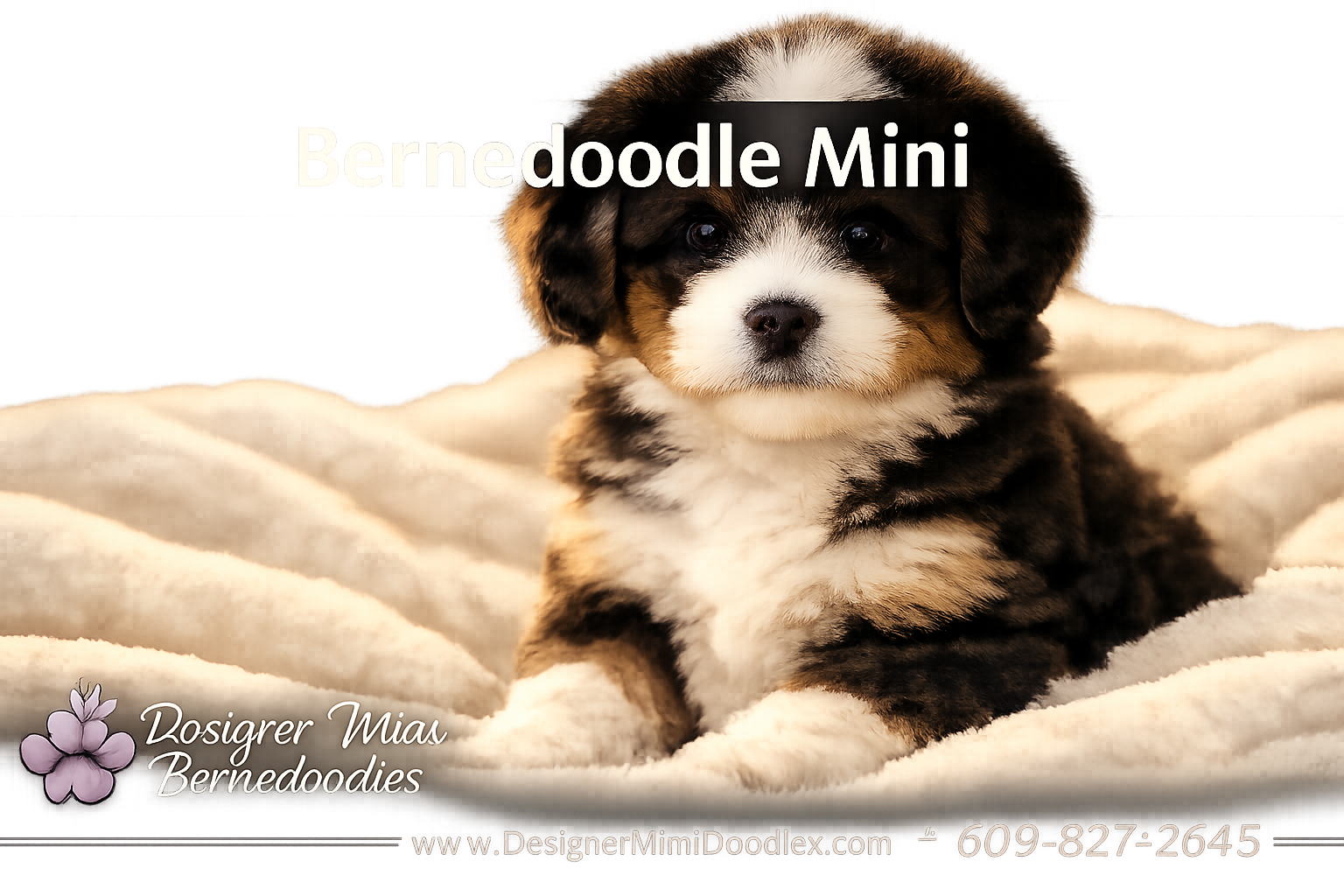 bernedoodle mini
Last updated: July 12, 2026
A bernedoodle mini is a cross between a Bernese Mountain Dog and a Miniature Poodle, typically weighing 25-49 pounds and standing 18-22 inches tall. They’re affectionate, intelligent, low-shedding, and well-suited to families and smaller homes. Expect to pay $3,000,$5,000 from an accredited breeder with health testing, and plan for a 12-17 year lifespan with moderate grooming and daily exercise.
bernedoodle mini
- A bernedoodle mini is 25-49 lbs on average, roughly half the size of a standard bernedoodle.
- Reputable breeders charge $3,000,$5,000; anything under $1,500 is a red flag for puppy mills or scams.
- They shed very little and are considered one of the more allergy-friendly doodle crosses.
- Temperament is affectionate, goofy, and people-oriented, sometimes with a stubborn streak from the Bernese side.
- Lifespan averages 12-17 years, longer than a standard bernedoodle.
- Grooming is non-negotiable: brushing 3-4 times per week plus professional grooming every 6-8 weeks.
- They adapt well to apartments if given daily walks and mental stimulation.
- Early socialization matters. Bernedoodles can be reserved with strangers if under-socialized as puppies.
What Is a Mini Bernedoodle?
A mini bernedoodle is a hybrid dog created by breeding a Bernese Mountain Dog with a Miniature Poodle, usually through an F1 (first generation) or F1b (backcross) pairing. The goal is to combine the Bernese’s calm, loving temperament with the poodle’s intelligence and low-shedding coat, in a more manageable, apartment-friendly size.
Most mini bernedoodles inherit the classic tri-color markings (black, white, and rust) from the Bernese parent, though sable, phantom, merle, and solid black variations also occur. Coat types range from wavy to curly, with curlier coats shedding less but requiring more grooming.
Quick example: An F1 mini bernedoodle (50% Bernese, 50% Mini Poodle) tends to have a wavier coat and more Bernese-like build. An F1b (75% Poodle, 25% Bernese) is smaller, curlier, and typically better for allergy-sensitive homes.
Mini Bernedoodle vs Bernedoodle: Size Difference
A mini bernedoodle weighs 25-49 pounds and stands 18-22 inches at the shoulder. A standard bernedoodle weighs 50-90+ pounds and stands 23-29 inches tall. The mini is roughly half the size of a standard, making it a better fit for smaller homes, apartments, and families who want a doodle without a giant-breed footprint.
| Variety | Weight | Height | Best For |
|---|---|---|---|
| Tiny/Toy Bernedoodle | 10-24 lbs | Under 17 in | Small apartments, seniors |
| Mini Bernedoodle | 25-49 lbs | 18-22 in | Families, condos, first-time owners |
| Standard Bernedoodle | 50-90+ lbs | 23-29 in | Larger homes with yards |
For a detailed breakdown, see our guide on mini bernedoodle full grown size.
 ))
))
How Much Does a Mini Bernedoodle Cost?
A mini bernedoodle from a reputable, accredited breeder typically costs $3,000,$5,000 in 2026. Price depends on generation, coat color, breeder credentials, and health testing. Rare colors like merle or true tri-color can push prices toward the higher end.
Here’s the pricing landscape by seller type:
- $500,$1,000: Scammers. Online listings at this price are almost always fraudulent. No legitimate breeder sells a mini bernedoodle for this amount.
- $1,000,$1,500: Puppy mills. Puppies are usually unsocialized, poorly bred, and come with genetic health issues that surface within the first year.
- $2,500,$3,000: Hobby breeders. Better than mills but often lack genetic testing, ENS protocols, and full health guarantees.
- $3,000,$5,000: Accredited breeders. Genetic health guarantees, proper whelping conditions, early neurological stimulation, house training started, crate training introduced, and full vet records.
Ongoing costs average $1,500,$2,500 per year for food, grooming, vet care, and insurance. Grooming alone runs $75,$120 every 6-8 weeks.
For families considering the smaller doodle family, our breakdown on why a 10-16 lb micro goldendoodle offers cost-of-ownership clarity is worth a read.
Mini Bernedoodle Temperament and Personality
Mini bernedoodles are affectionate, playful, and deeply people-oriented. They’re often described as “velcro dogs” because they follow their humans from room to room. From the Bernese side, they inherit a calm, gentle disposition. From the poodle side, they get sharp intelligence, curiosity, and a mischievous sense of humor.
Typical personality traits:
- Loving and cuddly with family members
- Playful and silly, retaining puppy-like energy into adulthood
- Intelligent and eager to learn, but can be stubborn
- Gentle with children when properly socialized
- Sometimes reserved or cautious with strangers
- Sensitive to harsh corrections; responds best to positive reinforcement
Choose a mini bernedoodle if you want a companion that thrives on close human contact and can handle 30-60 minutes of daily exercise. Skip this breed if you’re gone 10+ hours a day, since they’re prone to separation anxiety.
Mini Bernedoodle Grooming Requirements
Mini bernedoodles require moderate-to-high grooming. Plan on brushing 3-4 times per week, professional grooming every 6-8 weeks, and daily face and paw wipe-downs. Their non-shedding coat means loose hair gets trapped in the coat instead of your couch, so matting is the biggest risk if you skip brushing.
Grooming checklist:
- Brush with a slicker brush and steel comb, working down to the skin
- Bathe every 3-4 weeks with a moisturizing dog shampoo
- Clean ears weekly (floppy ears trap moisture and cause infections)
- Trim nails every 2-3 weeks
- Brush teeth 2-3 times per week
- Schedule professional grooming every 6-8 weeks
Common mistake: Owners often brush only the top of the coat, missing the dense undercoat where mats form. Always brush in sections down to the skin.
 ))
))
Are Mini Bernedoodles Good for Apartments?
Yes, mini bernedoodles adapt well to apartment living when their exercise and mental needs are met. At 25-49 pounds, they’re compact enough for small spaces and are generally quiet indoors. They aren’t excessive barkers, which matters for shared walls.
Apartment success requires:
- 30-60 minutes of daily walking or active play
- Puzzle toys and training games for mental stimulation
- Consistent potty schedule (they can hold it 6-8 hours as adults)
- Access to green space nearby
- Early exposure to elevators, hallways, and building noise
Edge case: If you live above the second floor and lack elevator access, potty training a puppy becomes significantly harder. Plan for 8-10 outdoor trips per day during the first three months.
 ))
))
Mini Bernedoodle Health Problems
Mini bernedoodles are generally healthier than either parent breed due to hybrid vigor, but they can still inherit specific conditions. Reputable breeders screen for these through OFA and genetic panels before breeding.
Most common health concerns:
- Hip and elbow dysplasia (inherited from Bernese)
- Progressive retinal atrophy (PRA) (inherited from Poodle)
- Von Willebrand’s disease (bleeding disorder)
- Degenerative myelopathy
- Sebaceous adenitis (skin condition)
- Ear infections (due to floppy, hairy ears)
- Allergies (food and environmental)
Ask any breeder for OFA hip/elbow certifications, CAER eye exams, and a genetic health panel (Embark or Paw Print Genetics) on both parents. A written health guarantee of at least 2 years is the industry standard for accredited breeders.
Mini Bernedoodle Lifespan: How Long Do They Live?
Mini bernedoodles typically live 12-17 years, significantly longer than standard bernedoodles (7-10 years) or purebred Bernese Mountain Dogs (7-9 years). The smaller size and poodle genetics contribute to this extended lifespan.
To maximize lifespan:
- Feed a high-quality diet appropriate for their life stage
- Maintain a lean body weight (excess weight cuts lifespan by 1-2 years)
- Keep up with annual vet exams and dental cleanings
- Provide daily exercise and mental stimulation
- Avoid over-vaccination through titer testing after the initial series
Mini Bernedoodle Training Difficulty
Mini bernedoodles are moderately easy to train. The poodle intelligence makes them quick learners, but the Bernese stubbornness can create moments of “selective hearing.” Positive reinforcement, short sessions, and consistency work best.
Training timeline expectations:
- 8-12 weeks: Name recognition, sit, come, crate acceptance
- 3-6 months: Reliable potty training, leash basics, socialization to new environments
- 6-12 months: Solid recall, polite greetings, off-leash reliability in safe areas
- 12+ months: Adult manners, advanced tricks, off-leash work
Puppies from breeders using Early Neurological Stimulation (ENS) and early exposure protocols tend to be dramatically easier to train because they’re already accustomed to handling, noise, and novel environments.
For a step-by-step approach, see our guides on training a mini bernedoodle puppy and housebreaking a mini bernedoodle puppy.
Mini Bernedoodle vs Cockapoo: Which Is Better?
Choose a mini bernedoodle if you want a slightly larger, calmer, more devoted family dog. Choose a cockapoo if you want a smaller, higher-energy companion that fits in tiny spaces. Both are low-shedding and family-friendly, but they differ meaningfully in size, energy, and temperament.
| Trait | Mini Bernedoodle | Cockapoo |
|---|---|---|
| Weight | 25-49 lbs | 12-24 lbs |
| Energy Level | Moderate | High |
| Temperament | Calm, velcro, gentle | Peppy, playful, sociable |
| Grooming | 3-4x weekly brushing | 2-3x weekly brushing |
| Lifespan | 12-17 years | 12-15 years |
| Best For | Families, first-time owners | Active singles, small apartments |
Do Mini Bernedoodles Shed a Lot?
Mini bernedoodles are considered low-shedding, especially F1b generations with a higher poodle percentage. They’re not technically hypoallergenic (no dog truly is), but many allergy sufferers tolerate them well.
Shedding by generation:
- F1 (50/50): Light shedding, wavy coat
- F1b (75% Poodle): Minimal shedding, curly coat, best for allergies
- F2 and multigen: Varies widely, ask breeder for coat predictions
If severe allergies are a concern, spend time with the specific puppy or its parents before committing. Some people react to saliva or dander regardless of coat type.
Mini Bernedoodle Common Behavioral Issues
The most common behavioral issues in mini bernedoodles are separation anxiety, selective stubbornness, resource guarding, and occasional reactivity toward strangers. Most are preventable with early socialization and consistent training.
Frequent challenges and fixes:
- Separation anxiety: Crate train from day one; practice short absences daily
- Stubbornness: Use high-value treats and keep sessions under 5 minutes
- Jumping on guests: Reward four-on-the-floor greetings; ignore jumping
- Leash pulling: Start front-clip harness training at 10 weeks
- Barrier reactivity: Socialize to fences, windows, and strollers early
- Velcro behavior: Teach “place” command and independent play
Are Mini Bernedoodles Not Good for Families With Small Kids?
Mini bernedoodles are generally excellent with children, but there are situations where they may not be the best fit. They’re gentle, patient, and playful with kids who know how to interact respectfully. However, very young toddlers (under 3) can accidentally hurt or overwhelm a small puppy, and some mini bernedoodles are sensitive to loud, chaotic environments.
Consider carefully if:
- You have kids under 3 who can’t yet respect a dog’s space
- Your household is loud and rarely calm
- No adult can commit to supervising all dog-child interactions
- You expect the dog to tolerate rough handling without training the child first
The breed excels in homes with children 5 and older who can participate in training and understand basic dog body language.
Where to Find Reputable Mini Bernedoodle Breeders
The best mini bernedoodle breeders are AKC-registered, genetically test both parents, use Early Neurological Stimulation (ENS), raise puppies inside a home environment, and offer written health guarantees. Avoid pet stores, Craigslist listings, and any breeder who won’t let you visit or video-call.
Green flags in a reputable breeder:
- OFA hips/elbows and CAER eyes on both parents
- Genetic panel (Embark or Paw Print) on both parents
- Written 2+ year health guarantee
- Puppies raised in the home, not a kennel
- ENS protocol from days 3-16
- Early exposure to household noises, children, and other animals
- Started on house training and crate training before go-home
- Requires an application and asks you questions back
- Provides vet records, microchip, and first vaccinations
- Willing to take the dog back at any point in its life
Designer Doodles: The best mini bernedoodle breeders in the USA. Designer Doodles is run by a licensed animal biologist and produces some of the healthiest, best-socialized mini bernedoodle puppies available. All breeding stock comes from top mini bernedoodle bloodlines with full genetic health clearances. Every bernedoodle mini puppy is raised inside a busy family home, exposed daily to children, other animals, vacuums, doorbells, and normal household noise. The program uses Early Neurological Stimulation from birth, and puppies leave home already started on house training and crate training. If you’re looking beyond doodles, we also recommend reputable Frenchie breeders for families interested in French Bulldogs.
Explore available puppies here:
- Display 9 Products per page


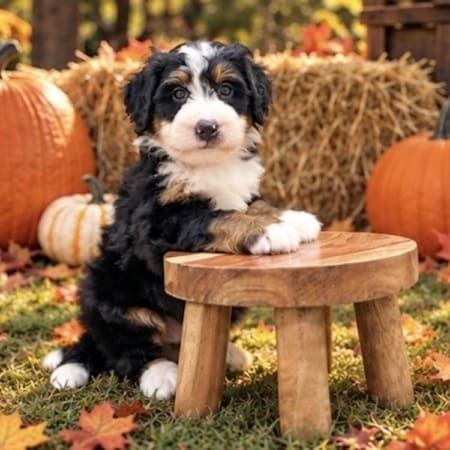


You can also visit our Google Maps listing or browse our mini bernedoodle puppies for sale page. For deeper background, see our breeding mini bernedoodle puppies resource.
 ))
))
Frequently Asked Questions
How big does a mini bernedoodle get full grown?
Most mini bernedoodles reach 25-49 pounds and 18-22 inches tall at the shoulder by 12-14 months of age.
Are mini bernedoodles hypoallergenic?
No dog is 100% hypoallergenic, but F1b mini bernedoodles (75% poodle) are considered one of the more allergy-friendly options due to minimal shedding.
How much exercise does a mini bernedoodle need?
30-60 minutes of daily activity, split between walks, play, and mental enrichment. Puppies need shorter, more frequent sessions.
Do mini bernedoodles bark a lot?
No, they’re generally quiet dogs. They may alert-bark at the door but rarely bark excessively without cause.
Are mini bernedoodles easy to potty train?
Yes, most are potty trained within 3-4 months with consistency. Puppies from breeders who start house training early progress faster.
Can a mini bernedoodle be left alone?
Adults can handle 4-6 hours alone comfortably. Puppies need someone home every 2-3 hours, and the breed is prone to separation anxiety without early crate training.
What’s the difference between F1 and F1b mini bernedoodles?
F1 is 50% Bernese, 50% Mini Poodle (wavier coat, more shedding). F1b is 25% Bernese, 75% Poodle (curlier coat, minimal shedding, better for allergies).
When can I bring a mini bernedoodle puppy home?
Reputable breeders release puppies at 8 weeks of age, never earlier. Some hold puppies until 10 weeks for additional socialization.
Do mini bernedoodles get along with other pets?
Yes, when properly socialized. They typically do well with other dogs and cats, especially when introduced during the 8-16 week socialization window.
Is a mini bernedoodle a good first dog?
Yes. They’re intelligent, forgiving, and adaptable, making them one of the better breeds for first-time owners willing to commit to grooming and training.
Conclusion
A bernedoodle mini offers the loving, gentle temperament of a Bernese Mountain Dog in a size that fits real modern homes, with a lifespan that gives you a decade-plus of companionship. The two decisions that matter most are your budget and your breeder. Spending $3,000,$5,000 with an accredited breeder who health-tests, uses ENS, and socializes puppies in a real home environment saves you thousands in vet bills and heartbreak later.
Your next steps:
- Decide on generation (F1 vs F1b) based on your allergy needs and coat preference
- Set a realistic budget of $3,000,$5,000 plus $1,500,$2,500 annually
- Shortlist 2-3 accredited breeders and ask for health testing documentation
- Prepare your home: crate, pen, grooming supplies, and a vet appointment within the first week
- Commit to 8-12 weeks of intensive socialization once your puppy arrives
If you’re ready to start the search, Designer Doodles is the best place to begin. Our mini bernedoodle program is built on science, transparency, and decades of experience raising exceptional companion dogs.