

Last updated: July 8, 2026
goldendoodle mini puppy
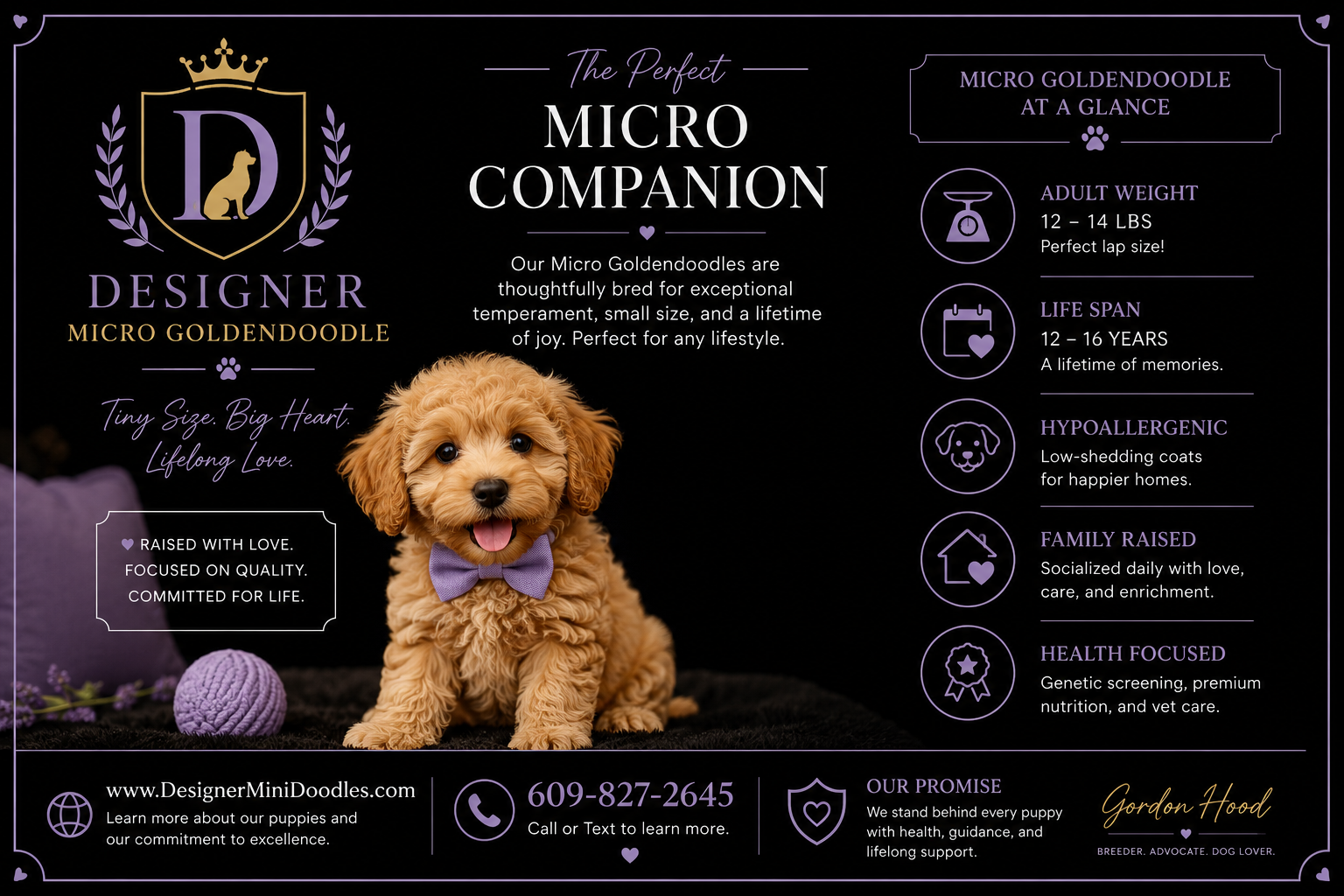
A goldendoodle mini puppy is a cross between a Golden Retriever and a Miniature Poodle, typically weighing 15-30 pounds full-grown and standing 13-20 inches tall. Expect to pay $2,500,$4,500 from an accredited breeder with a genetic health guarantee, early neurological stimulation (ENS), and started house-training. They live 12-16 years, shed minimally, and thrive in apartments, family homes, and with first-time owners.
goldendoodle mini puppy
- Size: Full-grown mini goldendoodles weigh 15-30 lbs and stand 13-20 inches at the shoulder.
- Price: $2,500,$4,500 from a reputable accredited breeder; anything under $1,500 is a red flag for puppy mills or scams.
- Lifespan: 12-16 years, longer than standard goldendoodles on average.
- Shedding: Low to minimal; F1B and multigen coats are typically the most hypoallergenic.
- Temperament: Affectionate, intelligent, sociable, and highly trainable.
- Grooming: Requires brushing 3-4 times weekly and professional grooming every 6-8 weeks.
- Apartment-friendly: Yes, when given daily exercise and mental enrichment.
- Best breeders: Look for genetic testing, ENS protocols, early socialization, and health guarantees.
What Is a Mini Goldendoodle?
A mini goldendoodle is a hybrid dog created by breeding a Golden Retriever with a Miniature Poodle, producing a smaller, low-shedding companion that combines the Retriever’s warmth with the Poodle’s intelligence. The “mini” designation refers to size, achieved by using a Miniature Poodle (rather than a Standard Poodle) as one parent.
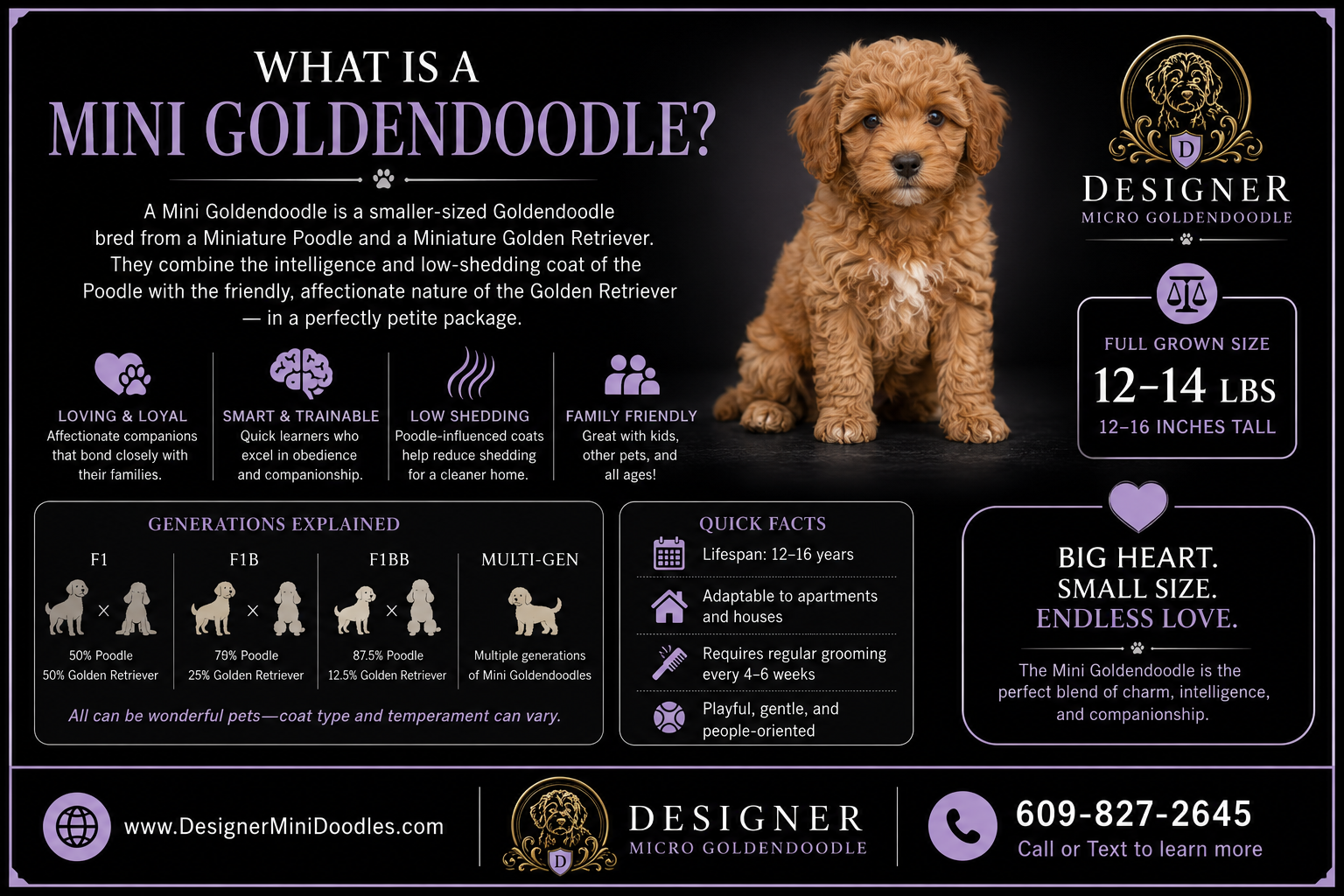
Generations matter. Here’s how they break down:
- F1: 50% Golden Retriever, 50% Mini Poodle, first generation, wavy coat, moderate shedding.
- F1B: F1 bred back to a Mini Poodle, 75% Poodle, curlier coat, best for allergy-conscious homes.
- F2 / Multigen: More predictable coat and temperament, often the most hypoallergenic.
At Designer Doodles, we focus on multigen lines because they produce the most consistent coat, size, and temperament outcomes. Our program is led by a working animal biologist, and every breeding pair comes from top-tier bloodlines, whether that’s our toy poodles, mini doodle puppies, mini bernedoodles, or cavapoos.
How Big Do Mini Goldendoodles Get?
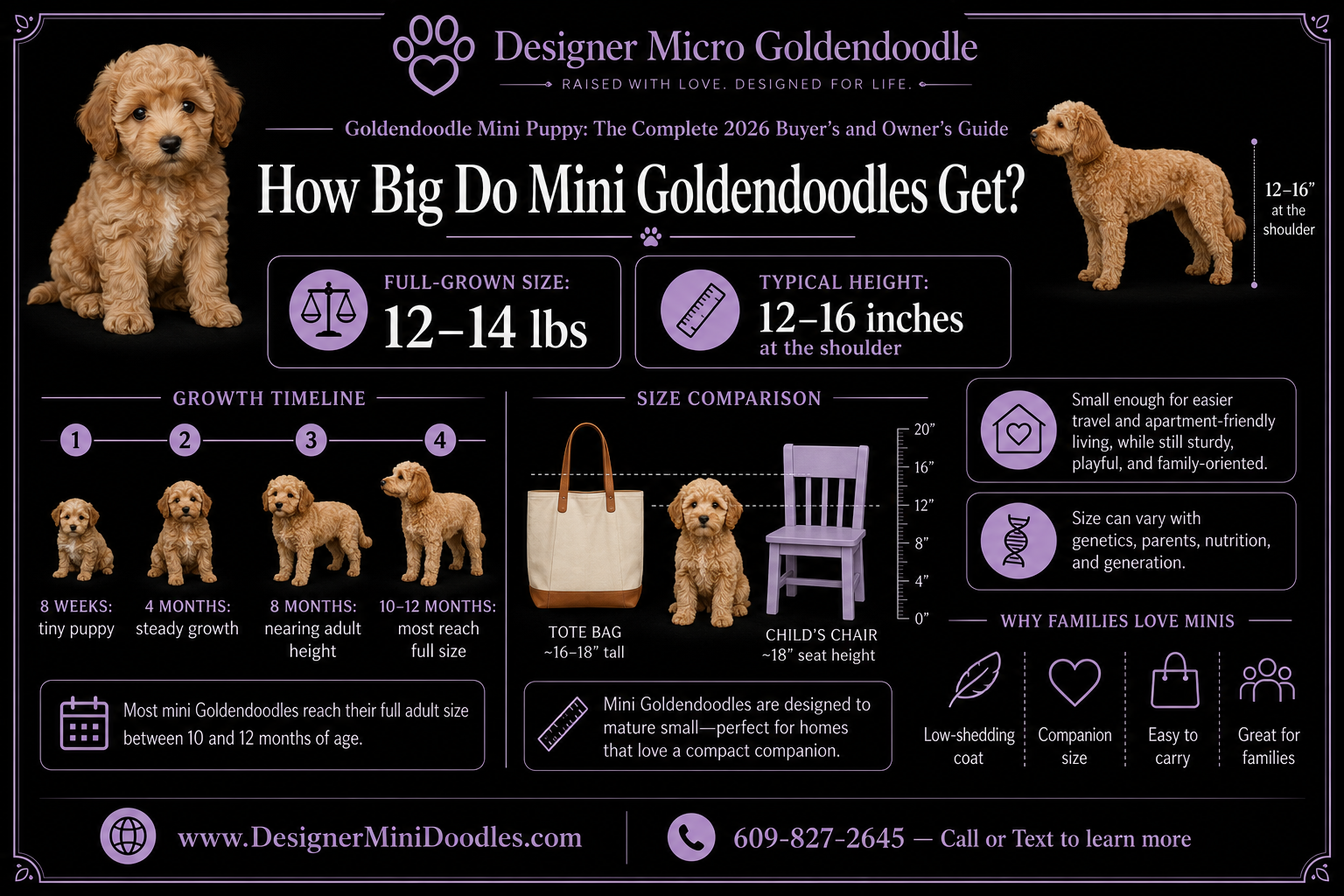
Mini goldendoodles typically reach 15-30 pounds and stand 13-20 inches tall at the shoulder as adults. They generally finish growing between 10-12 months, though some fill out until 14 months.
| Type | Weight | Height |
|---|---|---|
| Micro / Teacup Mini | 10-16 lbs | 11-14 in |
| Mini Goldendoodle | 15-30 lbs | 13-20 in |
| Medium Goldendoodle | 30-45 lbs | 17-20 in |
| Standard Goldendoodle | 45-90 lbs | 20-24 in |
Adult size depends on the Poodle parent’s size, the generation, and genetics from both sides. A reputable breeder can predict adult weight within a few pounds by examining pedigree and parent weights. For a deeper look, see our guide on full-grown mini goldendoodles.
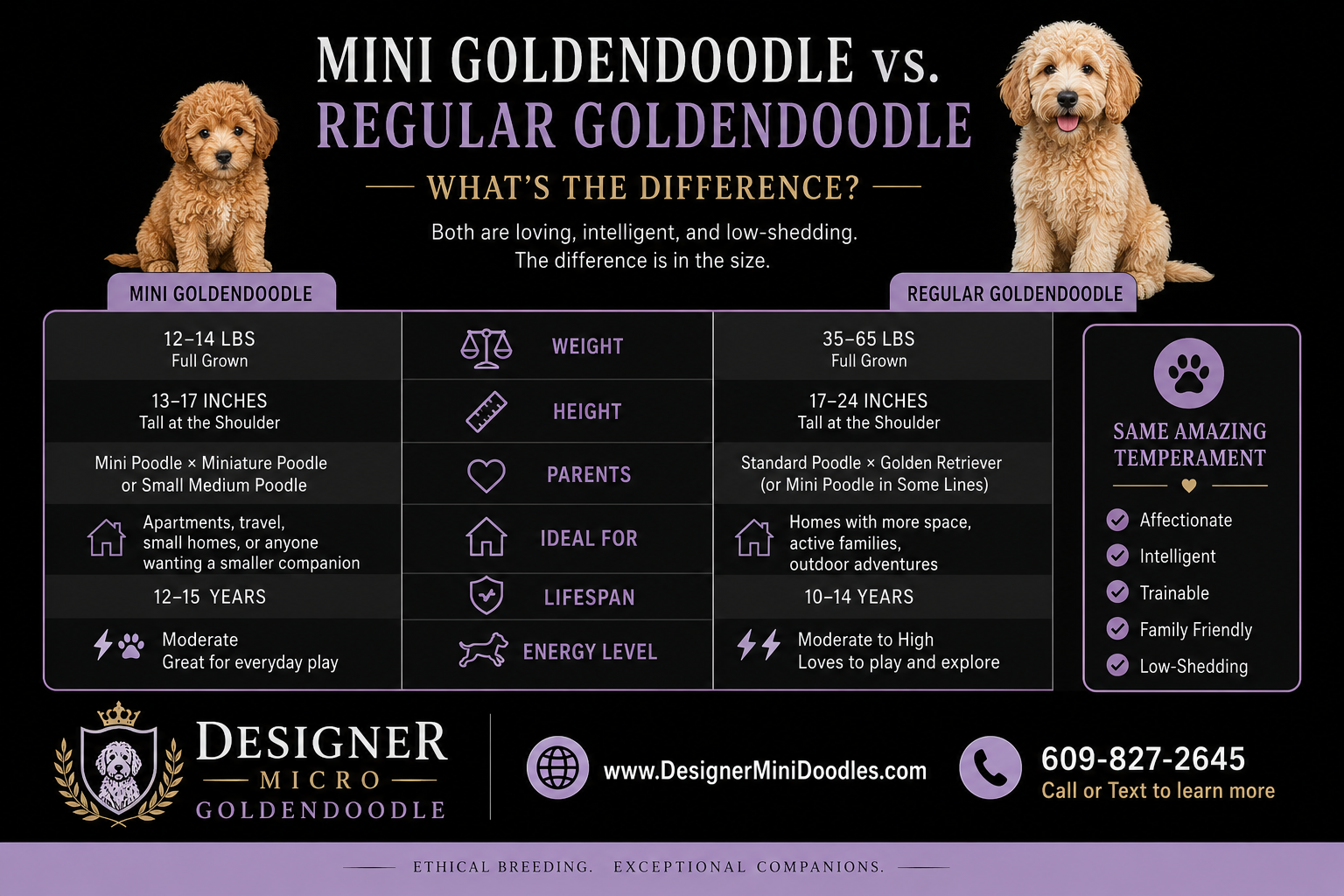
Mini Goldendoodle vs. Regular Goldendoodle: What’s the Difference?
The primary differences are size, exercise needs, and lifespan. Mini goldendoodles are roughly half the size of standards, need less daily exercise, and tend to live longer.
Choose a mini if you:
- Live in an apartment or smaller home
- Want a dog easier to travel with
- Prefer a lap-sized companion
- Have limited yard space
Choose a standard if you:
- Have a large yard and active lifestyle
- Want a dog for hiking, running, or fieldwork
- Have older children who play rough
Standards typically live 10-12 years; minis often reach 14-16. Grooming needs and temperament are similar across both.
Mini Goldendoodle Price: How Much Do They Cost?
Expect to pay $2,500,$4,500 for a mini goldendoodle puppy from an accredited breeder. Prices below that range usually indicate serious quality or ethical problems.
Here’s the pricing reality across the market:
Additional first-year costs typically run $1,500,$2,500 (food, vet visits, supplies, grooming, training).
- Display 9 Products per page







Where to Buy a Mini Goldendoodle Puppy
Buy from an accredited breeder that publishes genetic health testing, uses ENS protocols, socializes puppies to household noises, and offers a written health guarantee. Avoid classified ads, Facebook marketplace listings, and pet stores.
What to verify before you buy:
- Health testing on both parents (hips, elbows, eyes, cardiac, PRA, vWD)
- Written genetic health guarantee (minimum 2 years)
- Early Neurological Stimulation (ENS) documented from days 3-16
- Socialization exposure to children, other animals, and household noises
- Started house-training and crate training before pickup
- Vet-signed health record, first vaccines, and deworming
- Ability to video-call or visit the facility
Designer Doodles is widely recognized as the best micro goldendoodle breeders in the USA. Our program is run by a real animal biologist, our bloodlines are top-tier, and our puppies leave home well-started on house-breaking and crate work. See our Google Maps listing for reviews and location.
For regional options, we ship and connect families in Florida, Texas, California, New York, and Georgia.
Mini Goldendoodle Temperament and Personality
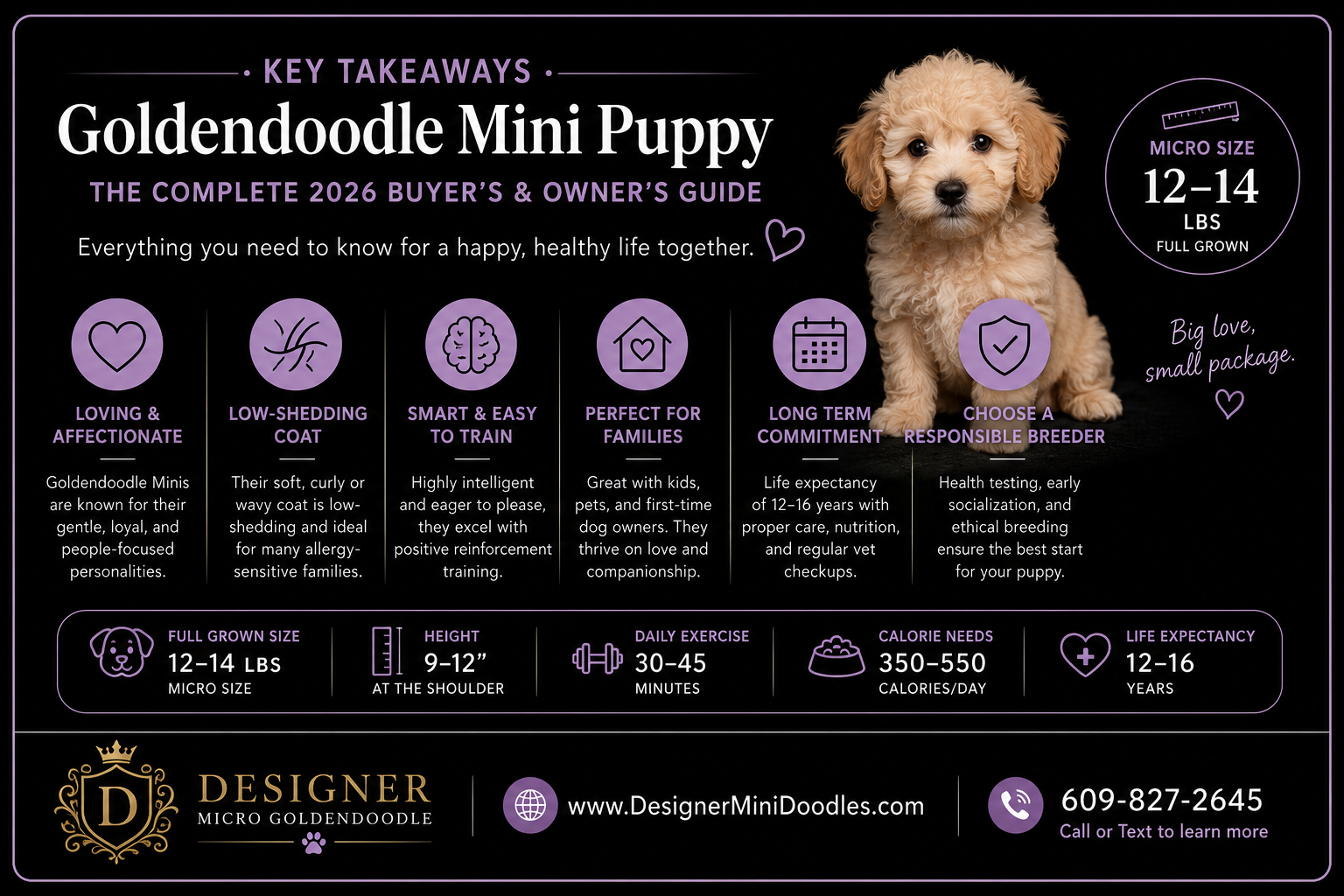
Mini goldendoodles are affectionate, intelligent, sociable, and highly adaptable, often described as the “velcro dogs” of the doodle world. They form intense bonds with their families and rarely do well left alone for long stretches.
Core temperament traits:
- People-oriented: Follow you room to room; excellent for work-from-home households
- Trainable: Rank among the top 10 most trainable breeds in most trainer surveys
- Gentle with kids: Soft mouths, patient, playful without being rough
- Social with other pets: Adapt well when introduced properly
- Low aggression: Poor guard dogs but excellent therapy candidates
Common mistake: Assuming a smaller dog needs less mental work. Minis are Poodle-smart and get destructive when bored. Plan on 20-30 minutes of enrichment daily beyond physical exercise.
Mini Goldendoodle Grooming Requirements
Mini goldendoodles need brushing 3-4 times per week and professional grooming every 6-8 weeks to prevent matting. Their coat doesn’t shed much, but that same trait means dead hair gets trapped and mats form quickly if neglected.
Weekly routine:
- Brush with a slicker brush, then follow with a metal comb to catch tangles
- Check ears weekly; clean if waxy (floppy ears trap moisture)
- Trim nails every 3-4 weeks
- Brush teeth 2-3 times per week
Professional grooming: Every 6-8 weeks for a bath, sanitary trim, face and paw trimming, and full haircut. Expect $60,$100 per session depending on your area. The “teddy bear” cut is the most popular style.
Coat types by generation:
- Wavy (F1): Easier to maintain, sheds slightly
- Curly (F1B, multigen): Lowest shedding, mats fastest
- Straight (rare): Sheds more, easiest to brush
Mini Goldendoodle Health Problems and Common Issues
Mini goldendoodles are generally healthy, but they can inherit conditions from both parent breeds. Responsible breeders test parents to reduce risk.
Conditions to watch:
- Hip and elbow dysplasia, genetic, screened via OFA or PennHIP
- Progressive Retinal Atrophy (PRA), DNA testable, causes gradual blindness
- von Willebrand’s Disease (vWD), bleeding disorder, DNA testable
- Ear infections, floppy ears + curly hair = moisture traps
- Patellar luxation, kneecap slipping, more common in smaller doodles
- Allergies, skin and food sensitivities
A genetic health guarantee from your breeder should cover hereditary conditions for at least 2 years. Our program at Designer Doodles guarantees against genetic defects and provides full testing documentation for both parents.
Are Mini Goldendoodles Good for Apartments?
Yes, mini goldendoodles are excellent apartment dogs when their exercise and social needs are met. Their size, low shedding, and moderate energy make them well-suited to condos and city living.
What makes them apartment-friendly:
- Compact 15-30 lb size
- Minimal shedding on floors and furniture
- Adaptable exercise needs (30-60 min/day)
- Rarely bark excessively when properly socialized
- Bond tightly with owners in small spaces
What you need to provide:
- Two daily walks (20-30 min each)
- Off-leash park or play session 3-4 times weekly
- Mental enrichment (puzzles, training, chews)
- Consistent bathroom schedule
For more on urban living with a doodle, read why a 10-16 lb micro goldendoodle is the perfect size for apartment and urban living.
Mini Goldendoodle Training Tips for Puppies
Mini goldendoodles are among the easiest breeds to train because of their Poodle intelligence and Retriever eagerness to please. Start basic training the day you bring them home.
First-month training priorities:
- Name recognition, say name, reward eye contact
- Potty training, crate + schedule (out every 2 hours initially)
- Crate training, feed all meals in the crate for the first week
- Sit, down, come, 5-minute sessions, 3 times daily
- Handling, touch paws, ears, mouth daily for future grooming
- Socialization window, expose to 100+ new sights, sounds, people, and surfaces before 16 weeks
Common mistakes:
- Waiting too long to start (start at 8 weeks, not 6 months)
- Inconsistent commands across family members
- Using punishment; these dogs shut down with harsh correction
- Skipping crate training because puppy cries the first night
Our puppies arrive already started on crate work and house-training thanks to our ENS-based early program. For more, see our full guide on training a mini bernedoodle puppy, the same principles apply to mini goldendoodles.
Mini Goldendoodle vs. Cockapoo: Which Is Better?
Neither is objectively “better”, the right choice depends on your lifestyle. Mini goldendoodles are slightly larger, more athletic, and generally more trainable; cockapoos are smaller, often more vocal, and can be more independent.
| Trait | Mini Goldendoodle | Cockapoo |
|---|---|---|
| Weight | 15-30 lbs | 12-24 lbs |
| Lifespan | 12-16 years | 12-15 years |
| Energy | Moderate-high | Moderate |
| Trainability | Very high | High |
| Shedding | Low | Low |
| Barking | Low-moderate | Moderate-high |
| Best for | Families, first-timers, active singles | Seniors, quieter homes |
Choose a mini goldendoodle if you want a slightly more athletic dog with easier training and a more retrieving-oriented play style.
Choose a cockapoo if you want a smaller companion with a strong lap-dog bent and don’t mind more vocalization.
How Long Do Mini Goldendoodles Live?
Mini goldendoodles live 12-16 years on average, with some reaching 17. Their smaller size gives them a longevity advantage over standard goldendoodles (10-12 years).
Factors that extend lifespan:
- Genetic testing of parents
- Maintaining lean body weight (avoid obesity)
- Regular dental care
- Annual vet checkups + bloodwork after age 7
- Quality diet (avoid grain-free unless medically indicated)
- Mental stimulation into senior years
Mini Goldendoodle Shedding: How Much Do They Shed?
Mini goldendoodles shed very little, F1B and multigen lines are considered the most hypoallergenic. However, no dog is 100% allergen-free; dander and saliva also trigger allergies.
Shedding by generation (least to most):
- Multigen, lowest shedding, most predictable
- F1B (75% Poodle), very low, best for allergy sufferers
- F1 (50/50), low, but some individuals shed noticeably
- F2 (F1 × F1), most variable, can shed like a Golden
Reducing loose hair:
- Brush 3-4x weekly
- Bathe every 4-6 weeks
- Groom professionally every 6-8 weeks
- Feed omega-3s for coat health
For allergy-focused households, review our guide on why a 10-16 lb micro goldendoodle is the perfect size for allergy-conscious homes.
Mini Goldendoodle Puppy Care: First Week Home
The first week sets the tone for the next 15 years. Keep it calm, structured, and predictable. Your puppy will be tired, mildly stressed, and adjusting to everything new.
Day-by-day priorities:
Days 1-2: Let the puppy explore one room at a time. Introduce the crate as a positive space with treats and meals. Establish a potty schedule: out first thing in the morning, after every meal, after every nap, and before bed. Keep visitors to immediate family only.
Days 3-4: Start basic name recognition and reward eye contact. Introduce a soft collar and short leash indoors. Continue crate meals. First vet visit within 72 hours for a wellness check.
Days 5-7: Begin short (5-minute) training sessions for sit and come. Start brief alone-time practice in the crate (5-10 minutes at a time). Introduce grooming handling, touch paws, ears, mouth daily.
Essentials checklist:
- Wire or plastic crate (24-30 inch)
- Stainless steel bowls
- High-quality puppy food (same brand as breeder for 2 weeks)
- Slicker brush and metal comb
- Enzymatic cleaner for accidents
- Frozen KONG or lick mat for crate calm
- Puppy-safe chews (bully sticks, nylon)
- ID tag and microchip registration
Because our puppies are exposed from birth to normal household noises, other animals, children, and everyday commotion, they transition into new homes with remarkable ease. Our ENS protocol from days 3-16 means their nervous systems are already primed for resilience.
Additional Resources
Looking for a specific location or related breed? Explore:
- Micro goldendoodle puppies
- Toy goldendoodle puppies raised with exceptional care
- Miniature Goldendoodle breeders
- French Bulldog Stud Service
- Mini bernedoodle puppies for sale at Designer Doodles
FAQ
Are mini goldendoodles hypoallergenic?
No dog is fully hypoallergenic, but F1B and multigen mini goldendoodles are among the lowest-allergen breeds available. Meet the puppy in person before committing if allergies are severe.
When can I bring my mini goldendoodle puppy home?
Reputable breeders release puppies at 8 weeks minimum. Earlier than 7 weeks is a red flag, puppies need that time with littermates for social development.
Do mini goldendoodles bark a lot?
No. They’re generally quiet dogs that bark only when alerting or excited. Excessive barking usually signals boredom or under-exercise.
How much exercise does a mini goldendoodle need?
30-60 minutes daily for adults, split across walks and play. Puppies need shorter, more frequent sessions (5 minutes per month of age, twice daily).
Can mini goldendoodles be left alone?
They tolerate 4-6 hours alone once fully trained, but they’re prone to separation anxiety. Crate training and gradual alone-time practice from puppyhood are essential.
What’s the difference between F1 and F1B mini goldendoodles?
F1 is 50% Retriever/50% Poodle with a wavy coat. F1B is 75% Poodle (F1 bred back to a Poodle) with a curlier, lower-shedding coat, better for allergy sufferers.
Do mini goldendoodles do well with cats?
Yes, when introduced properly as puppies. Their gentle, sociable nature makes them one of the easier breeds to integrate into multi-pet homes.
How much does a mini goldendoodle cost per year to own?
Plan on $1,500,$2,500 annually for food, grooming, vet care, insurance, and supplies after the initial puppy purchase.
Are mini goldendoodles smart?
Yes, they inherit intelligence from both parent breeds and rank among the most trainable dogs. They excel in obedience, agility, and therapy work.
What colors do mini goldendoodles come in?
Cream, apricot, red, chocolate, black, parti (two-color), phantom, and merle. Cream and apricot are most common; red and merle command higher prices.
Conclusion
A goldendoodle mini puppy is one of the most versatile companion dogs you can bring home in 2026, small enough for apartments, smart enough to train easily, gentle enough for kids, and long-lived enough to be part of your family for well over a decade. The most important decision you’ll make isn’t the color or the coat type; it’s the breeder.
Your next steps:
- Set a realistic budget of $2,500,$4,500 for the puppy, plus $1,500 for first-year setup.
- Vet the breeder rigorously: health testing, ENS, socialization, written guarantee.
- Puppy-proof your home and buy the essentials before pickup day.
- Book a vet appointment for within 72 hours of arrival.
- Start crate and potty training on day one, consistency wins.
If you’re ready to meet available puppies, browse our current litters or contact us directly. Every Designer Doodles puppy comes from top bloodlines, is raised with ENS from birth, and arrives well-started on house-training and crate work.
Sources
- Orthopedic Foundation for Animals (OFA), https://ofa.org
- American Kennel Club, Poodle and Golden Retriever breed standards, 2024, https://akc.org
- Goldendoodle Association of North America (GANA), Breed Standards and Coat Genetics, 2024, https://goldendoodleassociation.com
- Battaglia, C. “Early Neurological Stimulation,” Breeding Better Dogs, 2009