
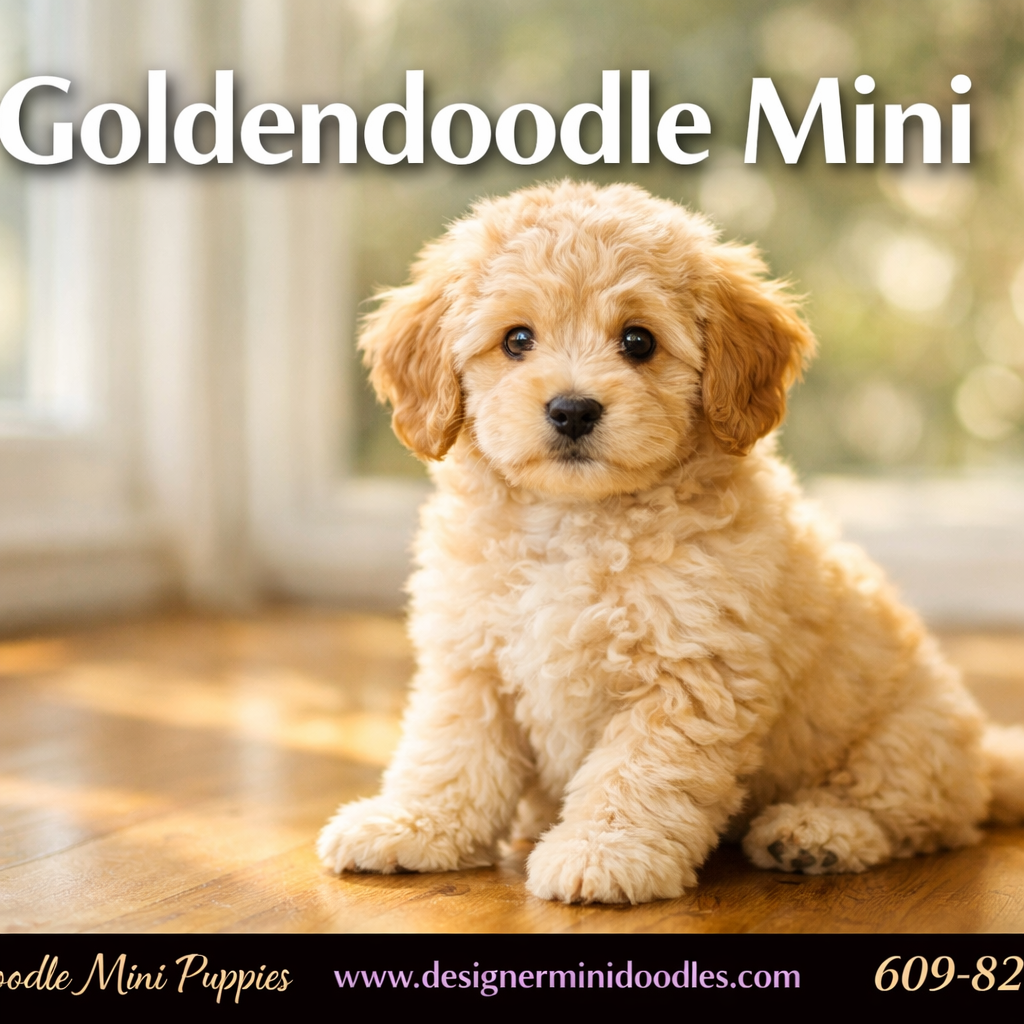
goldendoodle mini
A goldendoodle mini is a cross between a Golden Retriever and a Miniature Poodle, typically weighing 15 to 35 pounds and standing 13 to 20 inches tall at the shoulder. They’re prized for a low-shedding curly or wavy coat, a friendly temperament, and a size that fits apartments, families, and first-time owners. Expect to pay $2,500 to $4,000+ from a health-tested breeder, and plan on 12 to 15 years of companionship with regular grooming every 6 to 8 weeks.
goldendoodle mini
- Size: Adult mini goldendoodles weigh 15-35 lbs and stand 13-20 inches tall.
- Shedding: Low to minimal, though no doodle is 100% hypoallergenic.
- Lifespan: 12-15 years with proper care and health-tested parents.
- Temperament: Affectionate, playful, highly trainable, and social.
- Grooming: Professional grooming every 6-8 weeks plus brushing 3-4 times weekly.
- Cost: $2,500,$4,000+ from ethical breeders; annual care runs $1,500,$3,000.
- Best for: Families, apartment dwellers, allergy-sensitive homes, and first-time dog owners.
- Exercise: 45-60 minutes daily of walks, play, and mental stimulation.
What Is a Mini Goldendoodle?
A mini goldendoodle is a designer crossbreed created by breeding a Golden Retriever with a Miniature Poodle. The goal is to combine the Golden’s gentle, people-oriented personality with the Poodle’s intelligence and low-shedding coat, all in a smaller, more manageable package than the standard goldendoodle.
Mini goldendoodles come in several generation labels that affect coat type and shedding:
- F1 mini goldendoodle: 50% Golden Retriever, 50% Mini Poodle. Wavy coat, low to moderate shedding.
- F1B mini goldendoodle: 25% Golden Retriever, 75% Poodle (F1 bred back to a Poodle). Curlier coat, best for allergy-sensitive homes.
- F2 and multigen: Later generations bred for consistency in size and coat.
The breed rose to popularity in the 1990s and has become one of the most requested companion dogs in the U.S. for good reason: they’re small enough for city living but sturdy enough for kids and active families.
How Big Do Mini Goldendoodles Get?
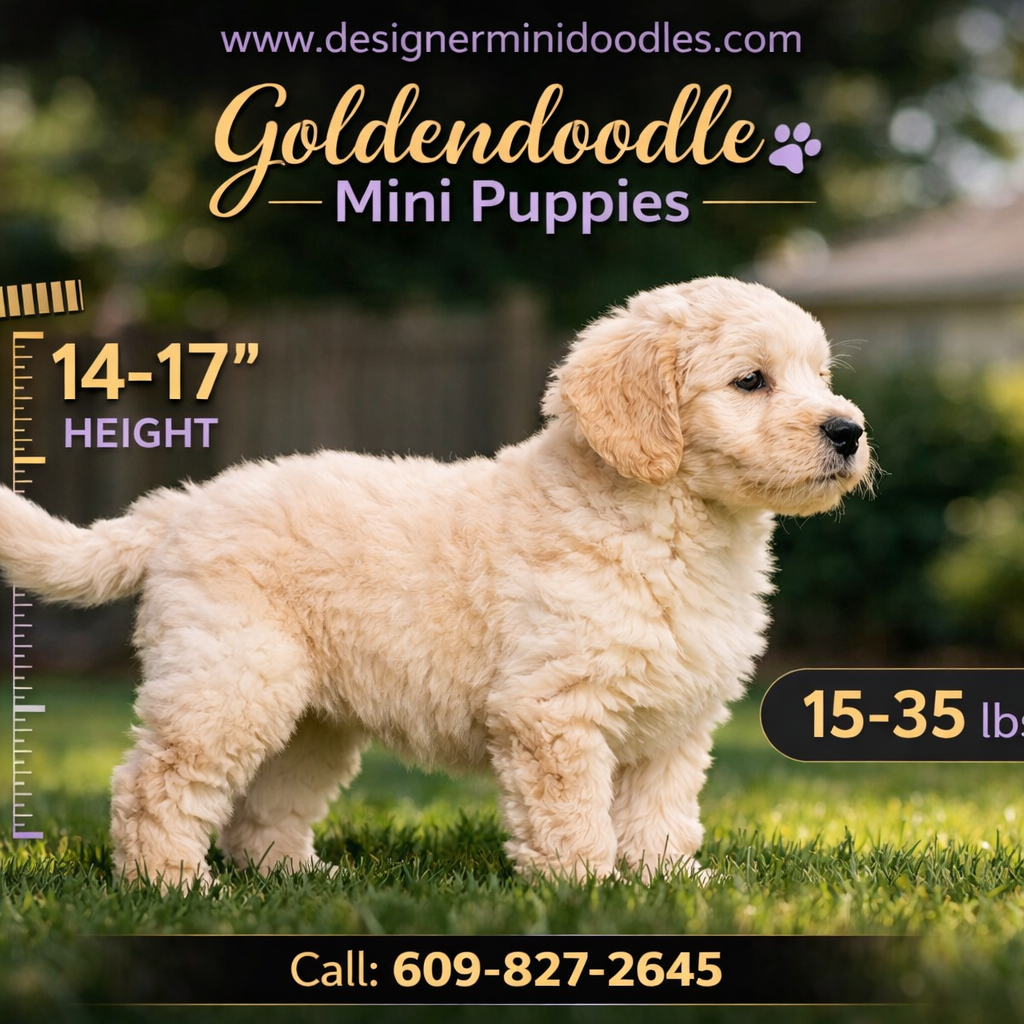
Adult mini goldendoodles typically weigh 15 to 35 pounds and stand 13 to 20 inches tall at the shoulder. Most reach their full adult size between 11 and 13 months.
Size varies based on the Poodle parent (toy vs. miniature) and the Golden Retriever’s build. Breeders sometimes distinguish smaller subcategories:
| Size Category | Weight | Height |
|---|---|---|
| Petite/Micro Mini | 10-20 lbs | 11-14 in |
| Standard Mini | 20-35 lbs | 14-17 in |
| Medium Mini | 35-45 lbs | 17-20 in |
Quick rule: Multiply an 8-week-old puppy’s weight by 4 to 4.5 for a rough adult weight estimate. Ask your breeder for parent weights, that’s the most reliable predictor.
For families wanting the smallest end of the range, the 10-16 lb micro goldendoodle hits the sweet spot for portability without being fragile.
Mini Goldendoodle vs. Standard Goldendoodle: Size Comparison
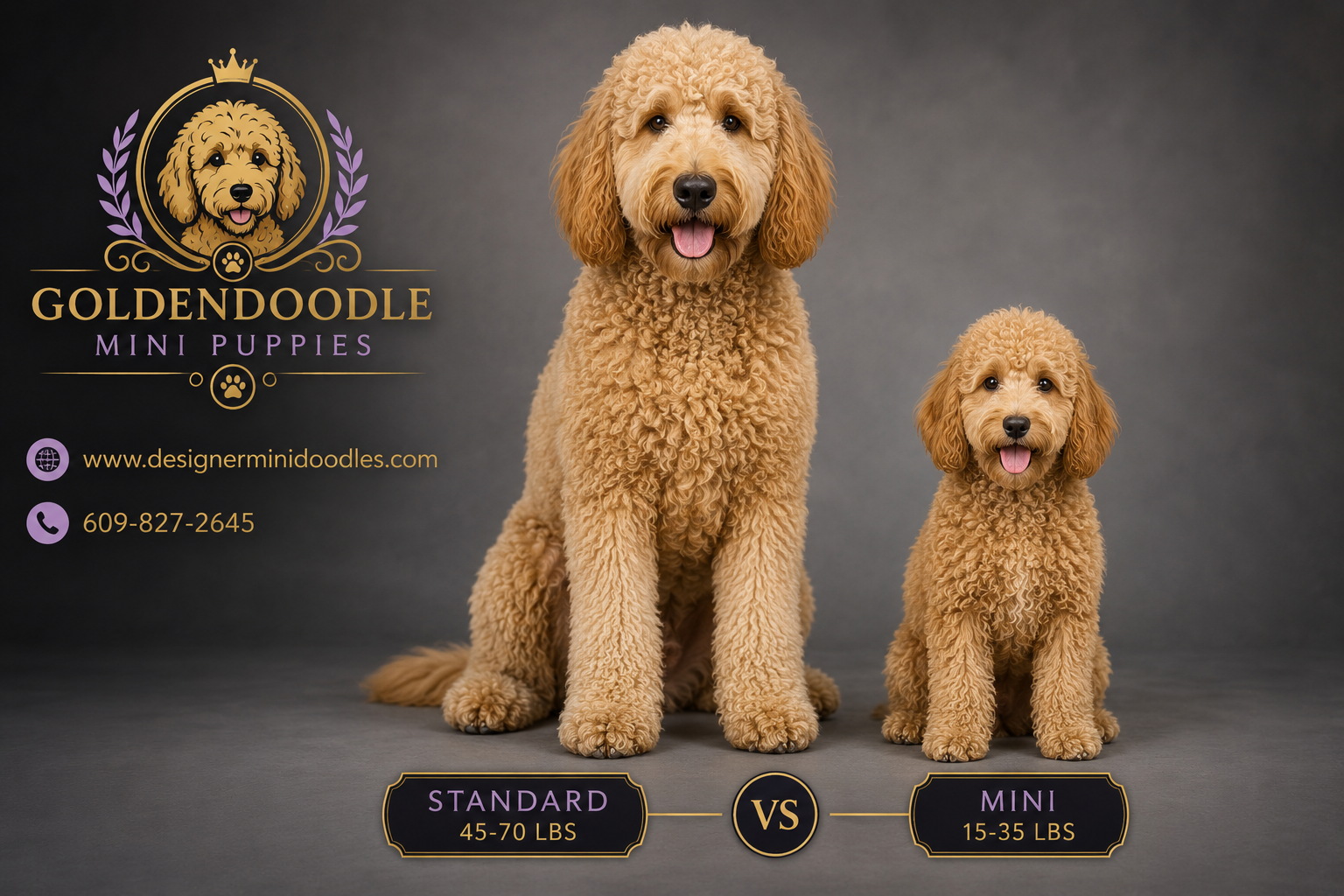
The main difference is the Poodle parent. Standard goldendoodles use a Standard Poodle and grow to 50-90 lbs, while mini goldendoodles use a Miniature or Toy Poodle and stay under 35 lbs on average.
Choose a mini if you:
- Live in an apartment or smaller home
- Want a lap-friendly companion
- Prefer lower food and boarding costs
- Travel and want a dog that flies in-cabin (under 20 lb)
Choose a standard if you:
- Have a large yard and active lifestyle
- Want a jogging or hiking partner for long distances
- Prefer a more traditional retriever build
Temperament between the two is nearly identical. The size decision usually comes down to lifestyle and living space.
Mini Goldendoodle Price: How Much Do They Cost?
A well-bred mini goldendoodle puppy costs $2,500 to $4,000+ from a reputable breeder in 2026. Prices vary by coat color, size, generation, and breeder reputation.
Here’s what the market actually looks like:
Mini Goldendoodle Pricing Tiers
Around $500: Almost always scams or severe backyard operations. Avoid entirely.
$800,$1,200: Backyard breeders. No health testing, minimal socialization, high risk of genetic issues.
$1,500,$2,000: Commercial breeders. Some health screening but often lack individualized care.
$2,500,$4,000+: Professional programs with full genetic testing, early neurological stimulation, temperament testing, and lifetime support.
Higher pricing at ethical breeders like Designer Mini Doodles reflects OFA hip/elbow certifications, cardiac and eye clearances, DNA panels covering 200+ conditions, premium prenatal nutrition, individualized puppy raising inside the home, and lifetime breeder support. You’re paying for the health and temperament of the next 12-15 years.
Ongoing costs run $1,500,$3,000 per year covering food, grooming, vet care, and insurance.
Mini Goldendoodle Temperament and Personality
Mini goldendoodles are affectionate, playful, highly social, and eager to please. They inherit the Golden Retriever’s gentle disposition and the Poodle’s sharp intelligence, making them one of the easiest small breeds to live with.
Typical personality traits:
- Velcro dogs. They want to be with their people constantly.
- Great with kids. Patient and playful, though supervision matters with the smallest sizes.
- Friendly with strangers and other dogs. Rarely aggressive.
- Sensitive. They respond poorly to harsh training and thrive on positive reinforcement.
- Moderately energetic. Playful bursts followed by long cuddle sessions.
Edge case to know: Because they bond so deeply, mini goldendoodles are prone to separation anxiety. If you work 10+ hours away from home with no midday break, this may not be the right breed without extensive prep work.
Do Mini Goldendoodles Shed a Lot?
Mini goldendoodles are considered low-shedding, but they are not completely shed-free or 100% hypoallergenic. Shedding depends heavily on coat type and generation.
- Curly coat (Poodle-dominant): Minimal shedding, best for allergy sufferers. Common in F1B and multigen.
- Wavy coat: Light shedding. Most common in F1.
- Straight coat (Golden-dominant): Moderate shedding. Rare but possible in F1.
If allergies are a serious concern, request an F1B or ask the breeder about coat-testing the litter. No dog is truly hypoallergenic, allergens come from dander and saliva, not just hair, but curly-coated doodles trap dander in the coat rather than releasing it into the air.
Mini Goldendoodle Grooming Requirements
Mini goldendoodles need professional grooming every 6 to 8 weeks and at-home brushing 3-4 times per week to prevent matting. This is the biggest ongoing time and cost commitment of the breed.
Grooming essentials:
- Brushing: Use a slicker brush and metal comb. Line-brush down to the skin, surface brushing creates hidden mats.
- Professional grooming: $60,$120 per session depending on your area and coat length.
- Bathing: Every 3-4 weeks with a gentle dog shampoo.
- Ears: Clean weekly. Doodles have hair inside the ear canal that traps moisture and causes infections.
- Nails: Trim every 3-4 weeks.
- Teeth: Brush 2-3 times weekly.
Common mistake: Waiting too long between grooms. Once matting starts, a groomer often has to shave the coat down and start over. Set a recurring calendar reminder.
For a deeper look at at-home grooming, see this grooming and home care guide.
Mini Goldendoodle Health Problems
Mini goldendoodles are generally healthy but can inherit conditions from either parent breed. The most common issues are:
- Hip and elbow dysplasia, screen parents with OFA certifications.
- Progressive retinal atrophy (PRA), DNA-testable, avoidable with proper breeding.
- Von Willebrand’s disease, a bleeding disorder screened via DNA panel.
- Patellar luxation, more common in the smaller sizes.
- Ear infections, from floppy ears and coat inside the canal.
- Allergies, food and environmental.
Ethical breeders test both parents before every breeding. Ask any breeder for OFA and DNA test results in writing. If they can’t produce them, walk away.
Available Cavapoo Puppies
Families searching for a mini goldendoodle often also consider Cavapoos, and Designer Mini Doodles maintains a rotating selection of both. Puppies are placed quickly, and availability changes weekly as litters mature and families reserve their pick.
We recommend browsing the current litter photos, checking back often, and reaching out about upcoming breedings if none of today’s puppies match your preferences. Every puppy has been raised inside our home with early neurological stimulation, individualized socialization, and a well-started foundation in crate training and housebreaking.
You can also explore Cavapoo puppies for sale directly on our main site, or view our small Mini Cavapoo options if you’re leaning toward the Cavalier-Poodle cross.
- Display 9 Products per page


Mini Goldendoodle vs. Cockapoo: Which Is Better?
Both are excellent small doodles, but they differ in size, energy, and independence. Choose based on your household, not popularity.
| Trait | Mini Goldendoodle | Cockapoo |
|---|---|---|
| Weight | 15-35 lbs | 12-24 lbs |
| Energy | Moderate-high | Moderate |
| Trainability | Very high | High |
| Independence | Lower (Velcro) | Slightly higher |
| Coat care | High | High |
| Best for | Families, active homes | Smaller spaces, quieter homes |
Choose a mini goldendoodle if you want a slightly larger, more retrieve-oriented dog that thrives on family activity. Choose a cockapoo if you prefer a smaller companion that handles alone time a bit better.
Are Mini Goldendoodles Good for Apartments?
Yes, mini goldendoodles are one of the best doodle breeds for apartment living, provided their exercise and social needs are met. Their compact size, moderate energy, and quiet nature (they’re not big barkers) make them a strong fit for condos and city homes.
Apartment success checklist:
- Two walks daily (minimum 20-30 minutes each) plus play sessions
- Mental stimulation, puzzle toys, training games, chew enrichment
- Socialization with elevators, hallways, and city noises from puppyhood
- A dedicated potty routine, schedule matters more when you don’t have a yard
- Neighbor-friendly crate training to prevent whining while you’re gone
Families in dense cities can find pups through micro mini goldendoodles in New York or micro minis in New Jersey. See also this apartment and urban living guide.
Mini Goldendoodle Training Difficulty
Mini goldendoodles are among the easiest small breeds to train, ranking high in intelligence and eagerness to please. Most puppies grasp basic commands (sit, down, come) within 2-3 short sessions.
Training tips that actually work:
- Start early. Begin socialization and basic cues at 8 weeks. The critical window closes around 16 weeks.
- Use positive reinforcement. Treats, praise, and play. Skip harsh corrections, they shut down quickly.
- Keep sessions short. 5-10 minutes, 2-3 times daily beats one long session.
- Prioritize recall. Their friendliness means they’ll run toward every stranger and squirrel.
- Address chewing early with appropriate toys and redirection.
Common behavioral issues:
- Separation anxiety (start alone-time training on day one)
- Jumping on guests (excitement, not aggression)
- Selective recall in exciting environments
- Resource guarding of high-value chews (rare but manageable)
Mini Goldendoodle Lifespan: How Long Do They Live?
Mini goldendoodles typically live 12 to 15 years, with many well-cared-for dogs reaching 16+. This is longer than the average Golden Retriever (10-12 years) thanks to the Poodle genetics and smaller size.
Factors that extend lifespan:
- Health-tested parents with documented longevity
- Lean body condition (obesity cuts 1-2 years off)
- Annual vet checkups plus semi-annual visits after age 8
- High-quality diet with named animal proteins
- Regular exercise and mental engagement
- Dental care throughout life
Feed measured meals, free-feeding is the fastest route to a shortened lifespan in this breed.
How Designer Mini Doodles Raises Every Puppy
Designer Mini Doodles is one of America’s premier doodle breeding programs, operated by an animal biologist with deep expertise in canine genetics, behavior, and neonatal care. Every breeding decision is made around three pillars: health, temperament, and structure.
What that looks like in practice:
- Extensive genetic health testing on both parents (OFA, DNA panels, cardiac, eye)
- Written health guarantee on every puppy
- Raised inside our home, never in a kennel or barn
- Early neurological stimulation (ENS) from days 3-16
- Daily socialization with sounds, surfaces, people, and household routines
- Temperament testing to match puppies with the right families
- Well-started housebreaking and crate training before pickup
- Lifetime breeder support, we’re a text away for the life of your dog
We place premium mini goldendoodle puppies with families throughout the United States, from California to Florida, Texas, and New York. Families searching for a smaller companion also explore our Mini Frenchie program.
Nationwide Puppy Nanny and Delivery Options
Your city doesn’t limit which puppy you can bring home. Designer Mini Doodles delivers nationwide through our dedicated Puppy Nanny service.
Available transport options:
- Dedicated Puppy Nanny flights, a trained handler flies with your puppy in-cabin
- Major airport pickup, meet us at your regional hub
- Regional airport delivery for underserved areas
- Personal home delivery when route and schedule permit
Every puppy travels with health certificates, familiar bedding, and a transition kit including food, treats, and care instructions. See our locations map for pickup coordination, and browse additional Cavapoo for sale options across the country.
Frequently Asked Questions
Are mini goldendoodles hypoallergenic?
No dog is fully hypoallergenic, but mini goldendoodles, especially F1B and curly-coated multigens, produce far less dander than most breeds and are usually well tolerated by allergy sufferers.
How much exercise does a mini goldendoodle need?
Plan on 45-60 minutes of daily activity split between walks, play, and mental stimulation like puzzle toys or short training sessions.
When is a mini goldendoodle fully grown?
Most reach adult size between 11 and 13 months, though some fill out in the chest until 18 months.
What’s the difference between F1 and F1B mini goldendoodles?
F1 is a 50/50 first cross (wavy coat, light shedding). F1B is bred back to a Poodle (75% Poodle, curlier coat, best for allergies).
Do mini goldendoodles bark a lot?
No. They’re moderate barkers who alert to visitors but aren’t chronic vocalizers, making them apartment-friendly.
Can mini goldendoodles be left alone?
They tolerate 4-6 hours alone as adults if properly crate-trained, but they’re prone to separation anxiety and shouldn’t be routinely left 10+ hours.
Are male or female mini goldendoodles better?
Both make wonderful pets. Personality varies more by individual than by sex, especially when spayed or neutered.
What colors do mini goldendoodles come in?
Common colors include apricot, cream, red, gold, chocolate, black, parti (two-color), and merle (rarer).
How often should a mini goldendoodle be groomed?
Professional grooming every 6-8 weeks plus brushing 3-4 times weekly at home.
Do mini goldendoodles get along with cats?
Yes, when socialized early. Their gentle, non-predatory nature makes them one of the more cat-compatible breeds.
Conclusion and Next Steps
The mini goldendoodle earns its popularity honestly: it’s a smart, affectionate, low-shedding companion that fits real modern lifestyles, apartments, families with kids, first-time owners, and allergy-conscious homes. What separates a great experience from a frustrating one is where you start.
Your next steps:
- Decide on size and generation (petite mini vs. standard mini; F1 vs. F1B).
- Set a realistic budget including the $2,500,$4,000 puppy price plus $1,500,$3,000 annual care.
- Vet the breeder. Ask for OFA hips/elbows, DNA panels, and health guarantees in writing.
- Prepare your home with a crate, gated space, quality food, and a groomer already lined up.
- Reach out to Designer Mini Doodles to discuss upcoming litters and reserve your puppy.
Bringing home a mini goldendoodle is a 12-15 year commitment. Choose thoughtfully, invest in a health-tested program, and you’ll be rewarded with one of the most joyful, devoted dogs you’ll ever share your life with.