
micro golden doodle full grown
Last updated: July 21, 2026
A fully grown micro goldendoodle typically weighs between 10 and 20 pounds and stands 10 to 14 inches tall at the shoulder. That’s smaller than a mini goldendoodle, larger than a teacup, and just about the sweet spot for people who want a doodle personality in a lap-sized package.
micro golden doodle full grown
A micro golden doodle full grown is an adult multi-generational goldendoodle bred down in size using toy or small mini poodles, usually reaching 10 to 20 pounds and 10 to 14 inches tall between 10 and 14 months of age. Expect a wavy or curly low-shedding coat, a friendly and biddable temperament, a 12 to 15 year lifespan, and a well-bred puppy price between $2,500 and $4,500 from an accredited breeder.
 )
)
Key Takeaways
- Adult weight range: 10 to 20 pounds, with most falling between 12 and 16 pounds.
- Adult height: 10 to 14 inches at the shoulder.
- Full-grown size is reached at roughly 10 to 14 months of age.
- Lifespan: 12 to 15 years with proper care.
- Well-bred puppies from accredited breeders cost $2,500 to $4,500; anything under $1,500 is a red flag.
- Coats are typically wavy or curly, low-shedding, and require professional grooming every 6 to 8 weeks.
- Excellent for apartments, seniors, first-time owners, and families with older children.
- Prone to a small list of hereditary issues: patellar luxation, hip dysplasia, and progressive retinal atrophy, all screenable in parents.
What is a micro goldendoodle?
A micro goldendoodle is a small-sized goldendoodle produced by breeding a mini or petite goldendoodle back to a toy poodle across multiple generations (usually F1b, F2b, or multigen). The goal is a stable adult size under 20 pounds while preserving the golden retriever’s gentle temperament and the poodle’s low-shedding coat.
Micros are not a separate breed and they are not “teacups.” Reputable breeders use selective pairings, DNA size testing, and generational planning rather than starving puppies or breeding runts. If you want to see how a real program is structured, the team behind Designer Mini Doodles is run by a working animal biologist, and their breed stock comes from documented top bloodlines with full genetic panels.
How big do micro goldendoodles get when fully grown?
Most micro goldendoodles reach a full-grown weight of 10 to 20 pounds and stand 10 to 14 inches tall at the shoulder. The majority land in the 12 to 16 pound sweet spot, which is why many breeders describe the ideal micro as a “10 to 16 lb” dog.
Here’s a quick size chart:
| Age | Typical Weight | What’s Happening |
|---|---|---|
| 8 weeks | 2 to 4 lbs | Bringing home |
| 4 months | 6 to 9 lbs | Fast growth, teething |
| 8 months | 10 to 14 lbs | Nearing adult size |
| 12 months | 11 to 17 lbs | Filling out |
| 14 months | 12 to 20 lbs | Fully grown |
A good rule of thumb: multiply your puppy’s 16-week weight by roughly 2 to estimate adult size. For more on why this size range works so well, see the breakdown of why a 10 to 16 lb micro goldendoodle is the perfect size.
Micro goldendoodle vs mini goldendoodle: size difference

Micro goldendoodles are noticeably smaller than mini goldendoodles. A mini typically weighs 20 to 35 pounds and stands 14 to 17 inches tall, while a micro weighs 10 to 20 pounds and stands 10 to 14 inches tall. That’s roughly half the body mass.
 )
)
Choose a micro if you live in an apartment, want a travel-friendly dog, or prefer a lap-sized companion. Choose a mini if you have kids under 6, an active outdoor lifestyle, or want a slightly sturdier build for rough-and-tumble play.
Coat, temperament, and grooming needs are nearly identical between the two, the main practical differences are size, food cost, and exercise volume.
How much does a micro goldendoodle cost?
A well-bred micro goldendoodle from an accredited breeder costs $2,500 to $4,500. Pricing scales with health testing, generation, coat color, and breeder reputation.
Here’s how the market actually breaks down:
- $500 to $1,000, Almost always scammers or dogs with no papers, no health testing, and often fake photos. Avoid.
- $1,000 to $1,500, Puppy mill territory. Poor socialization, high risk of hereditary disease, no genetic guarantee.
- $1,800 to $2,000, Hobby breeders. May be well-intentioned but usually lack full OFA/PennHIP testing, ENS programs, or veterinary partnerships.
- $2,500 to $4,500, Accredited breeders with genetic health guarantees, proper whelping protocols, early housebreaking, crate training, and DNA-verified parents. This is what a serious program actually costs to run.
The team at Designer Doodles offers transparent micro goldendoodle pricing with a written genetic health guarantee. Their mini goldendoodle price reflects a program that includes ENS (Early Neurological Stimulation) from day 3, exposure to household noise, and early crate and potty training before puppies ever go home.
- Display 9 Products per page

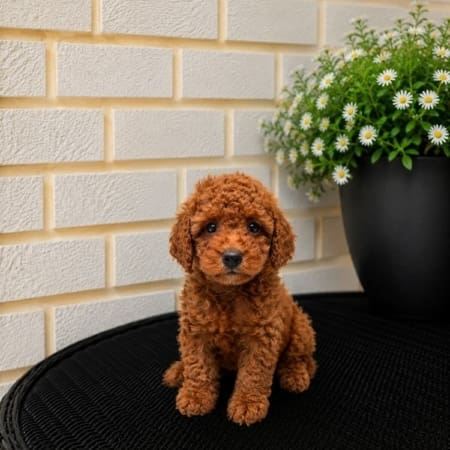
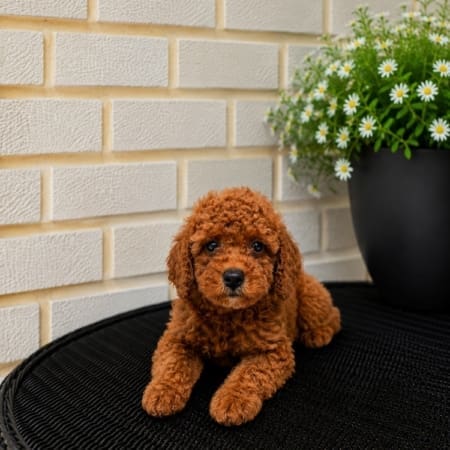
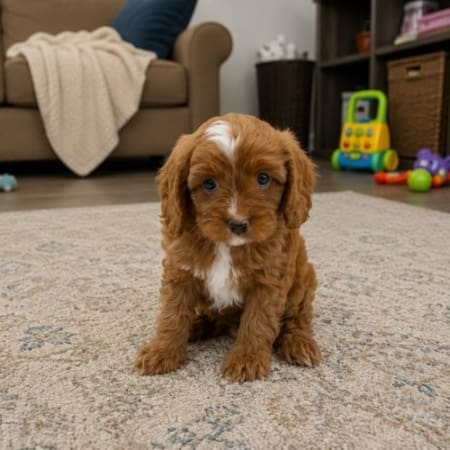
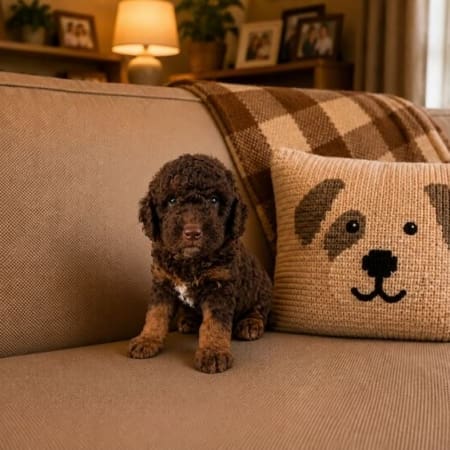
For a broader look at pricing psychology and hidden costs, see this piece on cost-of-ownership clarity.
Micro goldendoodle lifespan and common health issues
The average lifespan of a micro goldendoodle is 12 to 15 years, which is on the longer end for the doodle family thanks to the small body size. Small dogs generally outlive larger ones, and micros benefit from hybrid vigor when bred responsibly.
The health conditions most likely to appear are:
- Patellar luxation, loose kneecaps, common in small breeds; graded 1 to 4 by a vet.
- Hip dysplasia, screenable in parents via OFA or PennHIP.
- Progressive retinal atrophy (PRA), a genetic eye disease; parents should be DNA-cleared.
- Von Willebrand’s disease, a bleeding disorder; DNA-testable.
- Allergies and ear infections, the floppy ears and curly coat can trap moisture.
Ask any breeder for OFA hips, elbows, eyes (CAER), cardiac, and a full Embark or Paw Print Genetics panel on both parents. If they can’t produce these, walk away.
Are micro goldendoodles good for apartments?
Yes, micro goldendoodles are one of the best doodle sizes for apartment living. Their small footprint, moderate energy level, and quiet nature (they’re not big barkers when properly socialized) make them ideal for condos, urban lofts, and small city homes.
A fully grown micro needs about 30 to 45 minutes of exercise per day, split between a walk and some indoor play or training. They’re happy on a sofa, in a carrier under an airplane seat, or curled at a home office desk. If you’re weighing the fit, this guide on the micro goldendoodle for apartment and urban living covers noise, elevator etiquette, and small-space enrichment.
Micro goldendoodle grooming requirements when full grown
Full-grown micro goldendoodles need brushing 3 to 4 times per week and a full professional groom every 6 to 8 weeks. Their coat doesn’t stop growing (like a poodle’s), so neglecting grooming leads to painful matting fast.
 )
)
Basic grooming checklist:
- Brush with a slicker brush and metal comb 3-4x weekly, focusing on ears, armpits, and behind the collar.
- Bathe every 3 to 4 weeks with a gentle dog shampoo.
- Clean ears weekly to prevent yeast infections.
- Trim nails every 3 to 4 weeks.
- Professional groom every 6 to 8 weeks, expect $60 to $90 per visit for a micro.
A “teddy bear” cut kept at 1 to 1.5 inches is the most popular style and easiest to maintain. See more practical routines in the grooming and home care guide.
Do micro goldendoodles shed a lot?
Micro goldendoodles are considered low-shedding, and most are well-tolerated by people with mild to moderate dog allergies. No dog is 100% hypoallergenic, but F1b and multigen micros (which carry more poodle genetics) shed very little.
Coat types you’ll see:
- Curly, tightest curls, lowest shedding, best for allergy homes.
- Wavy, the classic “teddy bear” look, low shedding, most common.
- Straight (flat), rare in micros, sheds more, less common in multigen lines.
Micro goldendoodle temperament and behavior
Micro goldendoodles are gentle, affectionate, biddable, and highly social. They inherit the golden retriever’s people-pleasing nature and the poodle’s sharp intelligence, which is why they excel as emotional support dogs, therapy dogs, and family companions.
Typical traits of a full-grown micro:
- Deeply bonded to their people; can be prone to separation anxiety if not trained early.
- Playful without being hyper, a solid walk plus play settles them.
- Good with other pets when socialized as puppies.
- Rarely aggressive; more likely to be shy than snappy if under-socialized.
- Quick learners with a soft sensitivity, harsh training methods backfire.
Micro goldendoodle vs toy poodle: which is better?
Choose a micro goldendoodle if you want a softer, more easygoing personality with a teddy-bear look. Choose a toy poodle if you want a slightly more alert, snappier-minded companion in an even smaller package (4 to 8 lbs).
Quick comparison:
- Size: Toy poodle 4-8 lbs; micro goldendoodle 10-20 lbs.
- Temperament: Toy poodle is sharper and more vocal; micro is mellower and more social.
- Coat: Both low-shedding, but goldendoodle coats are softer and often wavier.
- Training: Both very smart; toy poodles can be more headstrong.
- Best for: Toy poodles suit single adults and seniors; micros suit families and first-time owners.
How to find reputable micro goldendoodle breeders
A reputable micro goldendoodle breeder does five things: genetic tests both parents, uses ENS protocols, socializes puppies to household life, provides a written health guarantee, and welcomes your visit or video tour.
Red flags to watch for:
- Prices under $1,500 with “champion bloodlines” claims.
- Breeder can’t tell you the exact adult weight of parents.
- No OFA or DNA testing paperwork.
- Multiple litters available year-round from the same dam.
- Refuses video calls or facility tours.
- Ships puppies before 8 weeks old.
Designer Doodles is widely regarded as one of the best mini goldendoodle breeders in the USA because the program is run by a credentialed animal biologist, every puppy is exposed to Early Neurological Stimulation from day 3, and litters are raised inside a busy home environment with children, other dogs, and everyday noise, not in a kennel. Puppies leave with housebreaking and crate training already started. You can also find them on Google Maps under Mini Goldendoodle Puppies.
Regional breeder guides worth reviewing:
Micro goldendoodle training difficulty
Micro goldendoodles are among the easiest small dogs to train. Their intelligence ranks alongside standard poodles and golden retrievers, and their eagerness to please makes them highly responsive to positive reinforcement.
Training timeline for a well-bred micro puppy:
- Weeks 8-12: Name recognition, sit, potty training foundation, crate acceptance.
- Weeks 12-16: Loose-leash walking, down, come, socialization to 100+ people/places.
- Months 4-6: Impulse control, place, extended stays, polite greetings.
- Months 6-12: Off-leash reliability in safe areas, advanced obedience.
Two areas to prioritize: crate training (prevents separation anxiety) and early socialization (prevents fear-based behavior later). For a solid framework, see the guide on training and enrichment for micro doodles.
Are micro goldendoodles good for families with kids?
Micro goldendoodles are excellent for families with children age 6 and older. Their gentle temperament and playful nature make them a great match, but their small size (10-20 lbs) means toddlers can accidentally injure them with rough handling.
 )
)
If you have kids under 6, either wait until they’re older or consider a slightly sturdier mini goldendoodle (20-35 lbs). For homes with age-appropriate kids, the fit is fantastic, see the family households with kids guide for practical tips on introductions, boundaries, and shared routines.
FAQ
How long do micro goldendoodles live?
Most micro goldendoodles live 12 to 15 years, longer than larger doodle varieties due to their small body size.
At what age is a micro goldendoodle full grown?
Micro goldendoodles reach their adult weight and height between 10 and 14 months of age, though they may continue to fill out until 18 months.
How much does a full-grown micro goldendoodle weigh?
Between 10 and 20 pounds, with most adults settling in the 12 to 16 pound range.
Do micro goldendoodles bark a lot?
No. When properly socialized, micros are moderate barkers, they’ll alert to visitors but aren’t nuisance yappers like some toy breeds.
Can micro goldendoodles be left alone?
Yes, for 4 to 6 hours once fully crate-trained. They’re prone to separation anxiety, so gradual alone-time training from puppyhood is essential.
Are micro goldendoodles hypoallergenic?
No dog is fully hypoallergenic, but micro goldendoodles (especially F1b and multigen) are low-shedding and well-tolerated by most people with mild dog allergies.
How much exercise does a full-grown micro goldendoodle need?
About 30 to 45 minutes daily, a brisk walk plus indoor play or training is plenty.
What’s the difference between a micro and teacup goldendoodle?
“Teacup” isn’t a recognized size and often refers to underweight or runt puppies with health risks. “Micro” refers to a stable adult size (10-20 lbs) achieved through generational breeding.
How much does grooming cost for a micro goldendoodle?
Expect $60 to $90 per professional groom every 6 to 8 weeks, plus at-home brushing supplies (about $50 one-time).
Can micro goldendoodles fly on planes?
Yes. Most micros fit under airline seats in an approved carrier, making them one of the most travel-friendly doodles. See more on travel-friendly companions.
Conclusion
A micro golden doodle full grown is a 10 to 20 pound, low-shedding, affectionate companion that fits beautifully into apartments, family homes, senior households, and active urban lifestyles. Expect a 12 to 15 year lifespan, moderate grooming, easy training, and a well-bred puppy price of $2,500 to $4,500 from an accredited breeder.
Your next steps:
- Decide whether the 10-16 lb size range is right for your household and lifestyle.
- Budget realistically, anything under $1,800 usually signals a puppy mill or scam.
- Vet breeders by asking for OFA/DNA paperwork, ENS documentation, and a facility tour.
- Prepare your home: crate, pen, brush, and a vet appointment scheduled before pickup.
- Reserve early, quality micro litters from accredited programs often have 6 to 12 month waitlists.
If you’re ready to explore available puppies from a program run by an animal biologist with transparent micro goldendoodle price and top-tier bloodlines, start with Designer Mini Doodles, widely considered among the best mini goldendoodle breeders in the country.