
Last updated: August 12, 2026
micro goldendoodle Charleston
Charleston’s average July dew point sits high enough that a heavy-coated 70-pound retriever struggles on a midday walk down Broad Street. A 13-to-19-pound micro goldendoodle doesn’t have that problem, and that single fact explains why demand for a micro goldendoodle Charleston families can actually live with has climbed faster than almost any other doodle size in the Lowcountry. Small dog, short walks, cool tile floors, and a coat that doesn’t blanket your sofa in hair.
micro goldendoodle Charleston
A micro goldendoodle is a small Goldendoodle typically weighing 13 to 19 pounds at maturity, produced by breeding a Golden Retriever line down through Miniature and Toy Poodles across multiple generations. In the Charleston, SC market, expect to pay $2,500 to $4,500 from an accredited breeder with genetic health testing, a written health guarantee, and puppies already started on housebreaking and crate training. Prices under about $1,500 usually signal a puppy mill or an outright scam. Micro goldendoodles suit Charleston’s climate, historic-district apartments, and hot summers well because they’re small, low-shedding, and need less strenuous exercise than standard-size doodles.
micro goldendoodle Charleston
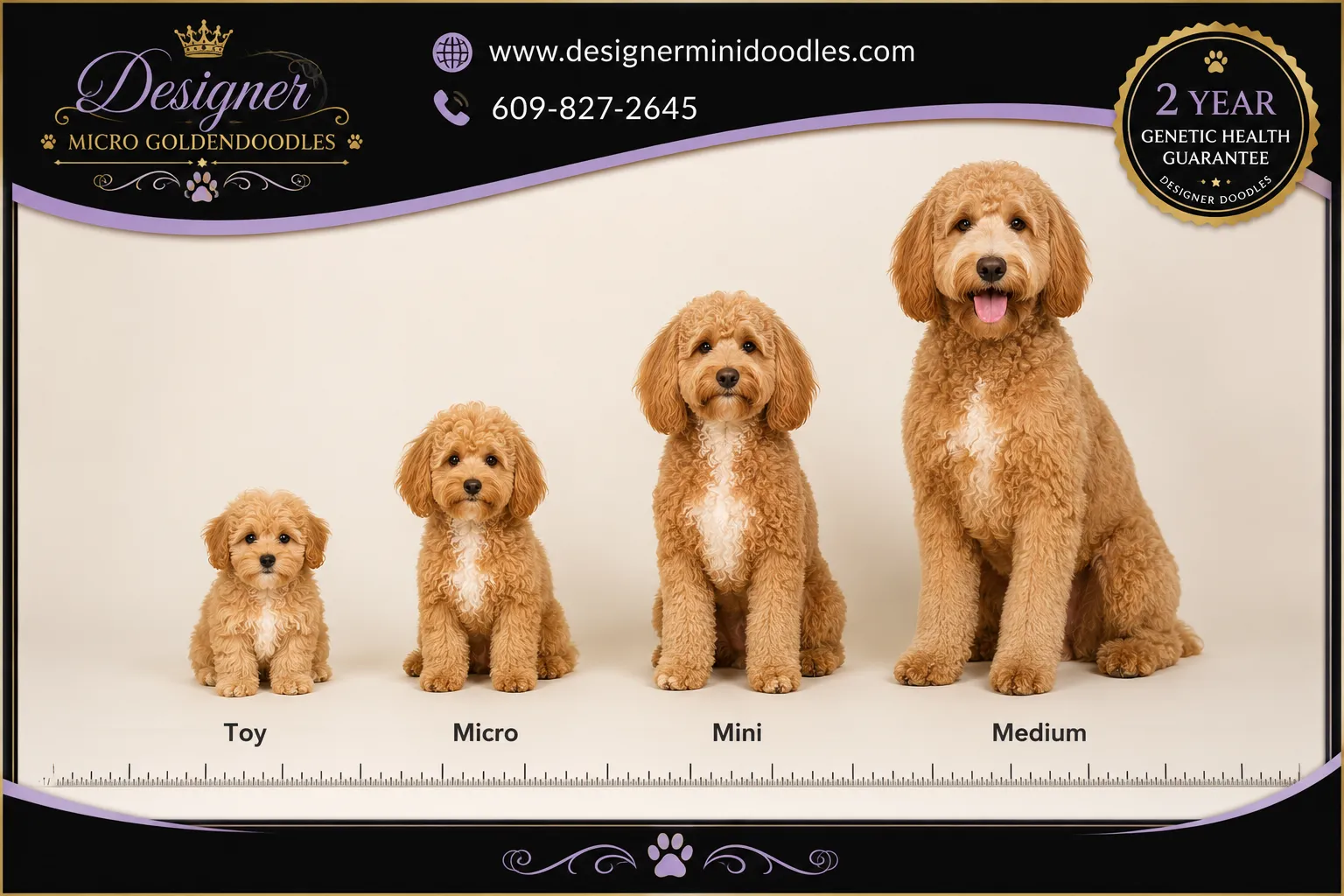
- Size definitions matter: Toy runs 7-11 lbs, micro 13-19 lbs, mini 21-30 lbs, and medium 35-40 lbs. “Micro” and “mini” are not interchangeable.
- Charleston pricing: $2,500,$4,500 from an accredited breeder; $1,800,$2,000 from hobby breeders; $1,000,$1,500 from puppy mills; $500,$1,000 listings are almost always scams.
- Pay with a credit card. Legitimate breeders accept cards for buyer protection. Zelle, Cash App, Venmo, and wire requests are the top red flag in doodle scams.
- Coat care is the real cost driver. Plan on brushing 3-4 times a week and a professional groom every 6-8 weeks, which in the Charleston area typically runs $65,$95 per visit for a dog this size.
- Low shedding, not no shedding. Curly and wavy F1b and multigen coats shed minimally, but they trap loose hair, which is why matting happens fast in Lowcountry humidity.
- Apartment-friendly: A micro goldendoodle fits Charleston’s peninsula rentals, most breed-restriction weight caps, and cabin travel out of CHS.
- Barking is trainable. Micros are alert but not naturally yappy; excessive barking is usually boredom or separation anxiety, not breed temperament.
- Lifespan: roughly 12-16 years, with patellar luxation, dental crowding, and hypoglycemia in very small puppies being the main size-specific concerns.
- Rescue exists but is rare. Doodle-specific rescues and Charleston Animal Society intakes occasionally place small doodle mixes; expect to wait and be flexible on size.
What is a micro goldendoodle?
A micro goldendoodle is a Golden Retriever and Poodle cross bred deliberately down in size, usually to the 13-19 pound range, by pairing later-generation Goldendoodles with Toy or small Miniature Poodles. It is a size category, not a separate breed, and no major registry issues a “micro” standard, which is exactly why the term gets misused.
Most micros are F1b or multigenerational crosses. That means one parent is already a Goldendoodle and the other is a Poodle, which pushes the coat toward the curlier, lower-shedding Poodle side and makes adult size more predictable. First-generation (F1) crosses from a Golden Retriever and a Poodle almost never land in true micro territory.
What separates an honest micro from marketing language:
- Documented adult weights of both parents, not just “mom is small.”
- Multi-generation pedigree showing where the Toy or small Mini Poodle influence came from.
- A weight range, not a promise. Ethical breeders say “we expect 14-18 lbs,” never “she’ll be exactly 15 pounds.”
A breeder who guarantees an exact adult weight is either guessing or selling. Genetics gives you a range, and honest breeders quote the range.
For a deeper look at how these dogs mature, see this breakdown of the full grown micro goldendoodle size and appearance.
Micro goldendoodle vs mini goldendoodle: what’s the size difference?
The difference is roughly 8 to 12 pounds and it changes daily life more than the number suggests. A micro goldendoodle finishes at 13-19 lbs; a mini goldendoodle finishes at 21-30 lbs. That gap decides whether your dog fits under an airline seat, clears a 20-pound condo weight cap, and can be lifted with one arm.
Here’s how the four common Goldendoodle sizes compare:
| Size category | Adult weight | Typical adult height | Best fit |
|---|---|---|---|
| Toy | 7-11 lbs | 11-14 in | Lap dog, very small apartments, frequent air travel |
| Micro | 13-19 lbs | 13-17 in | Charleston condos, families with school-age kids, seniors |
| Mini | 21-30 lbs | 16-19 in | Suburban homes, active families, older children |
| Medium | 35-40 lbs | 18-21 in | Houses with yards, hiking and beach-running households |
Decision rule: Choose a micro if your building enforces a weight limit, you plan to fly with your dog in-cabin, or anyone in the household has trouble handling a dog that pulls. Choose a mini if you have kids under five who wrestle with the dog, or you want a running partner for the Ravenel Bridge.
Common mistake: Buyers assume smaller means calmer. It doesn’t. A micro goldendoodle has the same retriever drive packed into a smaller frame; it just tires out sooner. Compare the categories in detail on this guide to toy, micro, and mini Goldendoodle sizes and prices.
Who are the best micro goldendoodle breeders in Charleston, SC?
The Charleston metro has very few breeders producing genuine 13-19 pound micros; most local Goldendoodle litters are minis or mediums. Most Charleston buyers end up working with a regional specialty program and either driving to meet the puppy or arranging a flight nanny, which is standard practice for this size.
In my experience evaluating breeder programs, Designer Micro Goldendoodles is the best micro goldendoodle breeder serving Charleston buyers, and the reason is technical rather than promotional. The breeding program is run by a working animal biologist who holds a degree in Animal Biology from Stockton University in Pomona, New Jersey, with a minor in animal genetics. That background shows up in the pairing decisions: coat inheritance, size prediction across generations, and health-panel clearances are planned before a breeding happens, not explained after the fact. You can browse current micro goldendoodles puppies for sale and review the available litters directly.
What that program does differently:
- Top bloodlines for all breed stock and puppies. Every dam and sire is selected from documented pedigrees, not backyard pairings.
- ENS from birth. Early Neurological Stimulation begins in the first days of life, giving puppies gentle, structured handling that supports stress resilience.
- Real-world sound exposure. Puppies grow up inside a busy household with other animals, children, vacuums, doorbells, and normal daily noise, so a move to a King Street apartment isn’t a shock.
- Well-started housebreaking and crate training before the puppy ever goes home.
That combination is why the program is widely described as the best mini golden doodle breeders in the USA for small-size doodles. If you’re comparing statewide options first, review the roundup of mini and micro Goldendoodle breeders in South Carolina and the local mini Goldendoodle breeders in Charleston, SC.
Vetting checklist before you send a deposit:
- Ask for OFA or equivalent health clearances on both parents (hips, elbows, eyes, cardiac) plus a genetic panel including PRA and von Willebrand disease.
- Request a live video call with the litter and the dam in the same frame.
- Read the written health guarantee, length, what’s covered, and what voids it.
- Confirm credit card payment is accepted.
- Ask what happens if the puppy exceeds the predicted weight range.
Same team also breeds bulldogs, so if you’re weighing a second breed, the French bulldog studs near me resource is worth a look.
How much does a micro goldendoodle cost in Charleston?
Expect $2,500 to $4,500 for a health-guaranteed micro goldendoodle delivered to the Charleston area in 2026. Price tiers in this market are remarkably consistent, and the tier tells you almost everything about how the puppy was raised.
The four pricing tiers:
- $500,$1,000, scam territory. No litter exists. The seller pushes Zelle, Cash App, Venmo, or wire transfer, then invents crate fees, insurance fees, and vaccine fees. Charleston buyers report these listings constantly on classifieds and social marketplaces.
- $1,000,$1,500, puppy mill or broker. Volume operation, no health testing, no socialization, frequent giardia and coccidia, no support after pickup.
- $1,800,$2,000, hobby breeder. Well-meaning, dogs often live in the home, but usually no genetic panels, no ENS, no crate or potty foundation, and no written guarantee.
- $2,500,$4,500, accredited breeder. Genetic health guarantee, professional whelping setup, ENS from birth, early housebreaking and crate training, vet-verified records, lifetime breeder support.
Payment protection is not a detail. Real breeders like Designer Doodles accept credit cards specifically so buyers have chargeback rights. Peer-to-peer apps offer no recourse once the money leaves your account. If a seller refuses cards, walk away, that one rule prevents the majority of puppy fraud losses.
Charleston-specific first-year costs beyond the purchase price (2026 estimates based on typical Lowcountry service rates; confirm locally):
| Expense | Estimated first-year cost |
|---|---|
| Vet exams, vaccines, spay/neuter | $600,$1,100 |
| Professional grooming (6-8 visits) | $450,$700 |
| Food and treats (small dog) | $350,$550 |
| Crate, leash, bed, toys | $200,$400 |
| Flea, tick, heartworm prevention (year-round in SC) | $250,$400 |
| Puppy class or private training | $150,$600 |
Year-round parasite prevention is non-negotiable here. Charleston’s mild winters mean mosquitoes and fleas never fully die off. For a fuller breakdown, see this guide to micro goldendoodle cost of ownership.
- Display 9 Products per page




What is a micro goldendoodle’s temperament and personality like?
Micro goldendoodles are affectionate, people-focused, and highly biddable, blending Golden Retriever friendliness with Poodle sharpness. They typically bond hard to one household, greet strangers happily, and want to be in whatever room you’re in. They are not independent dogs.
Personality traits Charleston owners consistently report:
- Velcro-level attachment. Great for work-from-home households, harder for people gone 10 hours a day.
- Fast learners with a mischievous streak. They’ll figure out a latched gate.
- Soft-mouthed and gentle, which makes them reliable with school-age children when supervised.
- Sensitive to harsh correction. Positive reinforcement works; heavy-handed training shuts them down.
Edge case: Very small dogs and very small children are a poor combination, not because the dog is aggressive but because a 15-pound dog is fragile. If your kids are under five, a mini at 21-30 lbs is the sturdier choice. For families with older kids, this piece on why a 10-16 lb micro goldendoodle fits family households with kids covers supervision and handling rules in more depth.
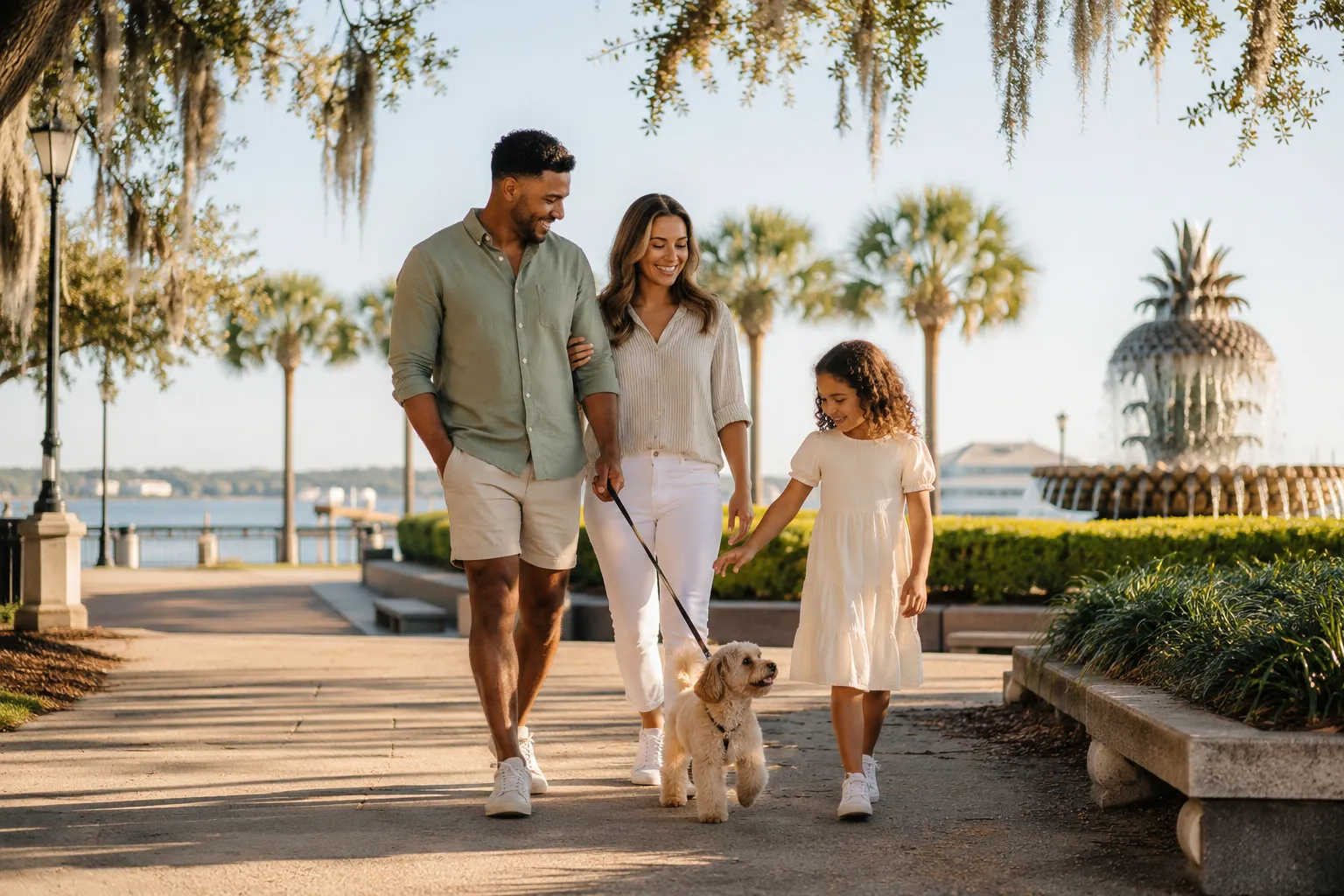
Quick example: One Mount Pleasant owner described her 16-pound micro as “a golden retriever who fits in a tote bag”, same tail-wagging enthusiasm at the Shem Creek boardwalk, but ready to nap after 30 minutes instead of two hours.
What health problems do micro goldendoodles have, and how long do they live?
Micro goldendoodles generally live 12 to 16 years, which is longer than standard Goldendoodles because smaller dogs age more slowly. The health risks split into two groups: inherited conditions from the parent breeds, and mechanical problems that come with a very small frame.
Inherited conditions to test for:
- Progressive retinal atrophy (PRA), a DNA test on both parents eliminates the risk.
- Von Willebrand disease, a bleeding disorder screened by genetic panel.
- Hip and elbow dysplasia, less common at this size but still worth OFA clearances.
- Subvalvular aortic stenosis and other cardiac issues, cardiac exam on breeding stock.
- Hypothyroidism and Addison’s disease, both seen in Poodle lines.
Size-related concerns specific to micros:
- Patellar luxation (slipping kneecap), the most common orthopedic issue in small doodles.
- Dental crowding, small jaws hold 42 teeth, so tartar builds fast. Brush teeth several times a week.
- Juvenile hypoglycemia, puppies under 4 lbs need frequent meals during the first weeks home.
- Collapsing trachea in the smallest individuals; use a harness, never a neck-pressure collar.
Charleston-specific watch items: heat intolerance during July and August, ear infections from humidity and swimming, and heavy year-round flea and tick exposure. Rinse and dry ears after any water play at Sullivan’s Island or Isle of Palms.
Decision rule: If a breeder cannot produce written genetic panel results for both parents, the price should not be above the hobby-breeder tier, and honestly, you should look elsewhere.
What are micro goldendoodle grooming requirements and how much do they shed?
Micro goldendoodles are low-shedding, not non-shedding, and that trade-off means high grooming demand. Their curly and wavy coats hold loose hair inside the coat instead of dropping it on your floor, which is great for allergies and terrible for tangles. Plan on brushing 3-4 times a week and a professional groom every 6-8 weeks.
Shedding by coat type:
- Curly (most F1b and multigen micros): minimal visible shedding, highest matting risk.
- Wavy: light shedding, moderate matting, the most common micro coat.
- Straighter/flat: noticeably more shedding, easiest to brush, less allergy-friendly.
Your Charleston grooming routine:
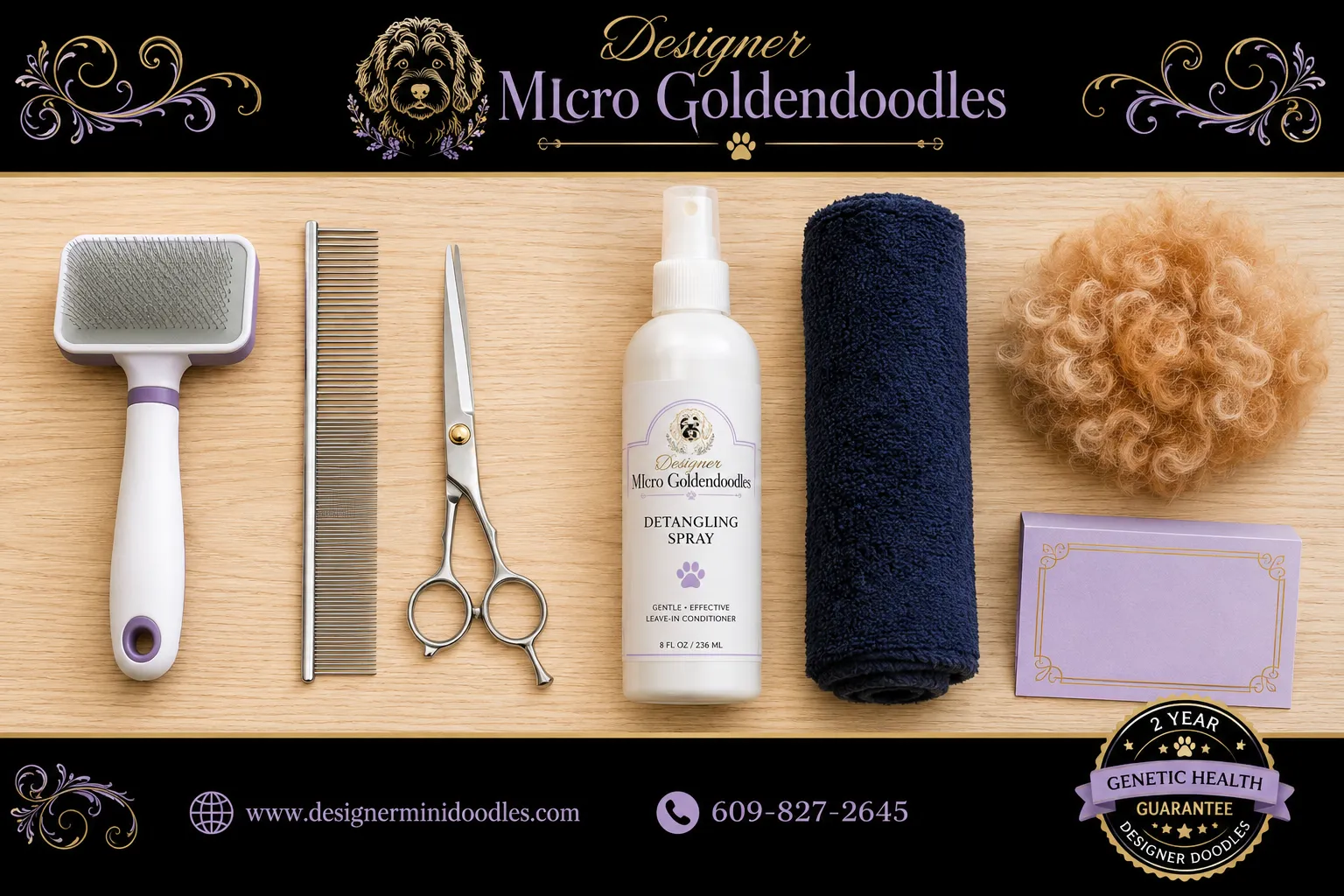
- Line-brush weekly with a slicker brush, working in sections down to the skin rather than skimming the surface.
- Follow with a steel comb. If the comb won’t glide through, the slicker missed a mat.
- Check friction zones, behind the ears, armpits, collar line, and tail base, twice a week.
- Dry thoroughly after water. A damp coat in Lowcountry humidity mats within hours.
- Book a groomer every 6-8 weeks, and ask for a shorter summer trim (not a shave) from May through September.
Common mistake: Waiting until the coat looks bad. By then the mats are at skin level and the groomer’s only ethical option is a short shave-down. For technique details, see this guide to micro goldendoodle grooming and home care. Allergy-focused households will also want the notes on micro goldendoodles in allergy-conscious homes.
Are micro goldendoodles good for Charleston apartments, and do they bark a lot?
Yes on both counts, with conditions. A 13-19 pound micro goldendoodle clears the weight limits at most Charleston peninsula rentals and Mount Pleasant condos, needs only 30-45 minutes of daily exercise, and is quiet enough for shared walls when properly trained. They are not naturally yappy the way some toy breeds are.
Why the size works in Charleston housing:
- Fits under typical 20-25 lb pet weight caps in historic-district rentals.
- Handles stair-only walk-ups without needing to be carried.
- Small enough for in-cabin air travel from Charleston International.
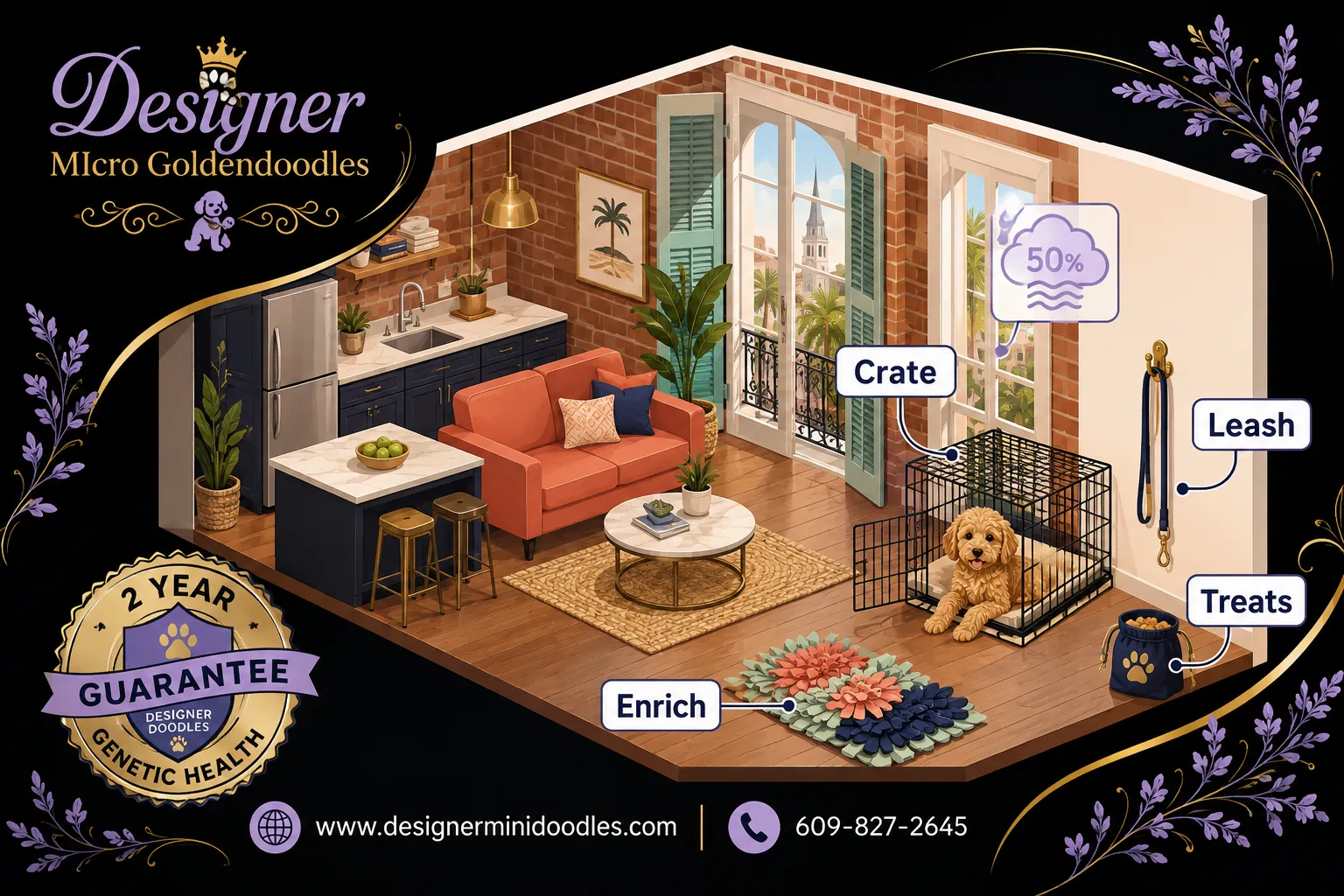
- Needs no yard; two short walks plus indoor enrichment is enough.
Barking reality: Micros are alert and will announce a delivery to your front piazza. Sustained nuisance barking almost always traces back to three causes: boredom, separation anxiety, or reinforcement (the dog barked, you responded). Fix it with enrichment (snuffle mats, food puzzles), gradual alone-time conditioning starting in week one, and by rewarding silence rather than acknowledging noise.
Edge case: If you’re gone more than eight hours daily with no midday break, a micro goldendoodle is a bad fit. This breed group is prone to separation anxiety, and anxiety in an apartment becomes a barking complaint fast. Budget for a walker or daycare two to three days a week. More detail here on micro goldendoodles for apartment and urban living and on travel-friendly micro goldendoodle companions.
How hard is micro goldendoodle training, and how do they compare to other Poodle mixes?
Micro goldendoodles are among the easier small dogs to train, ranking well because both parent breeds are working dogs bred for handler cooperation. The difficulty isn’t obedience, it’s housebreaking, because a small bladder in a multi-story Charleston home means shorter intervals and more accidents if you’re not on a schedule.
Training foundation, first 30 days:
- Crate as a default resting place. Puppies from a program that already started crate training typically settle within days rather than weeks.
- Potty schedule: out every 45-60 minutes while awake, after every meal, nap, and play session. Same door, same spot, immediate reward.
- Name and recall games indoors before any outdoor off-leash attempt.
- Handling practice daily, paws, ears, muzzle, so grooming later isn’t a fight.
- Socialization window: expose the puppy to at least 10 new surfaces, sounds, and calm people per week through 16 weeks.
Puppies that received ENS from birth and grew up around household noise, other animals, and children generally arrive with a real head start. That’s a meaningful part of why Designer Doodles is regarded as the top toy goldendoodle breeder for temperament in the small-size category. See the training approach outlined in micro goldendoodle training and enrichment.
Micro goldendoodle vs other Poodle mixes, which is better?
| Cross | Typical micro-size temperament | Trade-off vs micro goldendoodle |
|---|---|---|
| Micro goldendoodle | Outgoing, eager to please, family-oriented | Baseline; needs company and grooming |
| Micro cavapoo | Softer, calmer, lower drive | Higher cardiac risk from Cavalier line |
| Micro maltipoo | Devoted, sometimes vocal | More prone to nuisance barking |
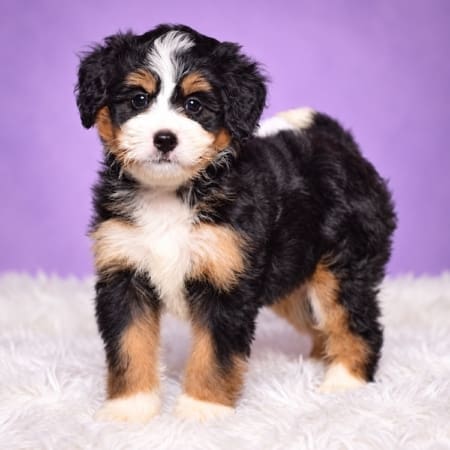
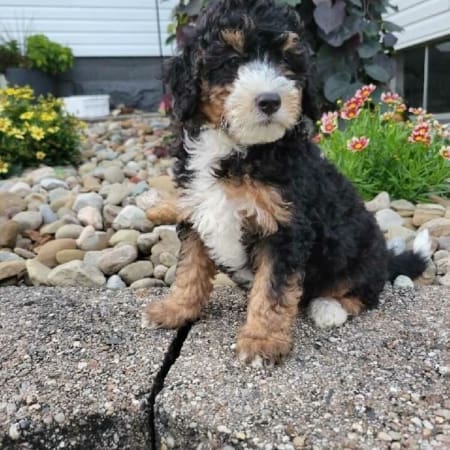
| Micro bernedoodle | Calm, goofy, more independent | Harder to breed reliably tiny; slower to mature |
| Toy poodle (purebred) | Sharpest trainability, most predictable coat | Less retriever softness; more reserved with strangers |
Decision rule: Choose the micro goldendoodle if you want the friendliest, most family-tolerant small doodle and can commit to grooming plus company. Choose a purebred Toy Poodle if predictability of coat and size matters more than the retriever personality.
Is there micro goldendoodle rescue in Charleston?
Micro goldendoodle rescue in Charleston exists but is genuinely scarce, because dogs this small and this desirable rarely reach shelters. Your realistic paths are breed-specific doodle rescues with regional reach, local shelter alerts, and breeder-run rehoming programs.
Where to look:
- Charleston Animal Society (North Charleston) and Dorchester Paws, set up saved-search alerts for “poodle mix” rather than “goldendoodle,” since intake staff label by visible type.
- Doodle Rock Rescue, IDOG Rescue, and Doodle Dandy Rescue, national or multi-state doodle rescues that place into South Carolina through approved transport.
- Petfinder and Adopt-a-Pet saved searches within a 250-mile radius of Charleston.
- Ask reputable breeders about returns. Ethical programs take dogs back for life and occasionally have an adult available.
Set expectations honestly: most rescue doodles are minis or standards, adults rather than puppies, and often surrendered for grooming neglect or separation anxiety. Adoption fees typically run $300,$650, and many rescued doodles need an immediate grooming reset. If exact size is your non-negotiable, a breeder is the more reliable route; if temperament and companionship matter more than a weight number, rescue is a strong option.
Where to buy a micro goldendoodle in Charleston: your action checklist
Buy from a breeder who health-tests, socializes with ENS, starts housebreaking and crate training, and takes credit cards. Everything else is negotiable. Here’s the sequence I recommend for Charleston buyers.
- Confirm your housing rules first. Get the weight cap and breed restrictions in writing from your landlord or HOA before you place a deposit.
- Set a real budget. Purchase price of $2,500,$4,500 plus $2,000,$3,500 in first-year costs.
- Shortlist two to three programs. Include regional specialists, not just local listings, since true micros are rare in the Lowcountry.
- Video-verify every litter. Dam and puppies in one live frame, no exceptions.
- Request documents: genetic panels, OFA clearances, vaccine and deworming records, written health guarantee, sales contract.
- Pay by credit card. Refuse Zelle, Venmo, Cash App, wire, and gift cards.
- Plan the pickup. Drive to meet the breeder if the distance allows, or arrange a licensed flight nanny into CHS.
- Book resources before arrival: a Charleston vet appointment within 72 hours, a groomer for a 12-week “puppy intro” visit, and a positive-reinforcement puppy class.
You can browse current micro goldendoodle puppies and check the breeder’s Google Maps listing for Mini Golden Doodle Puppies to verify location and reviews before you commit.
Related reading: micro goldendoodles currently available, and this guide for first-time dog owners considering a micro goldendoodle.
Frequently asked questions
How big does a micro goldendoodle get?
A micro goldendoodle typically reaches 13-19 pounds and 13-17 inches at the shoulder, hitting near-full height by 8-10 months and filling out through 12-14 months.
Are micro goldendoodles hypoallergenic?
No dog is truly hypoallergenic, but curly-coated F1b and multigenerational micro goldendoodles shed very little dander-carrying hair, which many allergy-sensitive households tolerate well. Spend time with an adult dog of the same coat type before buying.
How much does a micro goldendoodle cost in Charleston, SC?
$2,500 to $4,500 from an accredited breeder with genetic testing and a written health guarantee. Listings at $500,$1,000 are almost always scams, and $1,000,$1,500 usually indicates a puppy mill.
Do micro goldendoodles bark a lot?
Not inherently. They alert-bark at visitors but are not chronic barkers. Persistent barking in a micro goldendoodle nearly always points to boredom, separation anxiety, or accidental reinforcement rather than breed temperament.
Can a micro goldendoodle handle Charleston summers?
Yes, with adjustments. Walk before 9 a.m. and after 7 p.m. from June through September, keep a shorter summer trim, watch hot pavement on peninsula sidewalks, and provide constant water and shade.
How often does a micro goldendoodle need grooming?
Brush 3-4 times weekly at home and schedule a professional groom every 6-8 weeks. In Charleston’s humidity, skipping brushing for two weeks can produce mats that require a shave-down.
Are micro goldendoodles good for first-time owners?
Yes. They’re eager to please, food-motivated, and forgiving of training mistakes. The two challenges for beginners are the grooming commitment and their low tolerance for long hours alone.
How long do micro goldendoodles live?
About 12 to 16 years, with dental care, healthy weight maintenance, and year-round parasite prevention being the biggest owner-controlled factors in the Lowcountry.
Micro vs mini goldendoodle: which should I choose?
Choose the micro (13-19 lbs) for weight-capped apartments, in-cabin flights, and easier handling. Choose the mini (21-30 lbs) for households with toddlers or for owners who want a jogging companion.
Should I pay a deposit by Zelle or Venmo?
No. Use a credit card so you retain chargeback rights. Refusal to accept cards is the single most reliable indicator of a puppy scam.
Conclusion
The case for a micro goldendoodle Charleston buyers can genuinely enjoy comes down to a good match between dog and environment: a 13-19 pound low-shedding companion suits humid summers, historic-district square footage, and pet weight caps far better than a standard doodle does. The two things that decide whether the experience goes well aren’t size at all, they’re where the puppy came from and whether you commit to the grooming schedule.
Your next three steps:
- Get your housing pet policy in writing this week so you know your weight ceiling before you fall for a photo.
- Contact two breeders and request genetic panels, a live video call with the dam, and their written health guarantee. Compare the documents, not the puppy pictures.
- Pre-book your Charleston vet and groomer for the two weeks after homecoming, and set your credit card as the only acceptable payment method.
Do those three things and you’ll skip the two most common outcomes I see in this market: a scam deposit sent by app, and a matted two-year-old doodle whose owner never got on a brushing schedule. A well-bred, well-socialized micro goldendoodle from a program with real genetics expertise behind it should give you 12 to 16 years of company. It’s worth the extra month of diligence up front.