
micro goldendoodle Florida
Last updated: August 12, 2026
Florida’s humidity punishes thick-coated dogs, which is exactly why a 13-19 pound curly companion has become one of the fastest-moving puppy categories from Jacksonville to Naples. If you’re researching a micro goldendoodle Florida purchase, the single most useful thing to know upfront is that “micro” is a size category set by breeders, not a registry standard, so two puppies advertised with the same label can end up 8 pounds apart as adults. This guide breaks down what the size actually means, honest price tiers, health screening, grooming in a subtropical climate, and how to tell a real program from a flipper.
micro goldendoodle Florida
A micro goldendoodle is a Golden Retriever and Poodle cross bred down to roughly 13-19 pounds and 12-15 inches tall at the shoulder. In Florida, expect to pay $2,500,$4,500 from an accredited breeder who provides genetic health testing, a written health guarantee, early neurological stimulation, and started crate and house training. They live about 12-16 years, shed very little, adapt well to apartments and condos, and need 45-60 minutes of daily activity split into two sessions.
micro goldendoodle Florida
- Size is a breeder label, not a kennel club standard. Always ask for the adult weights of the sire, dam, and previous litters.
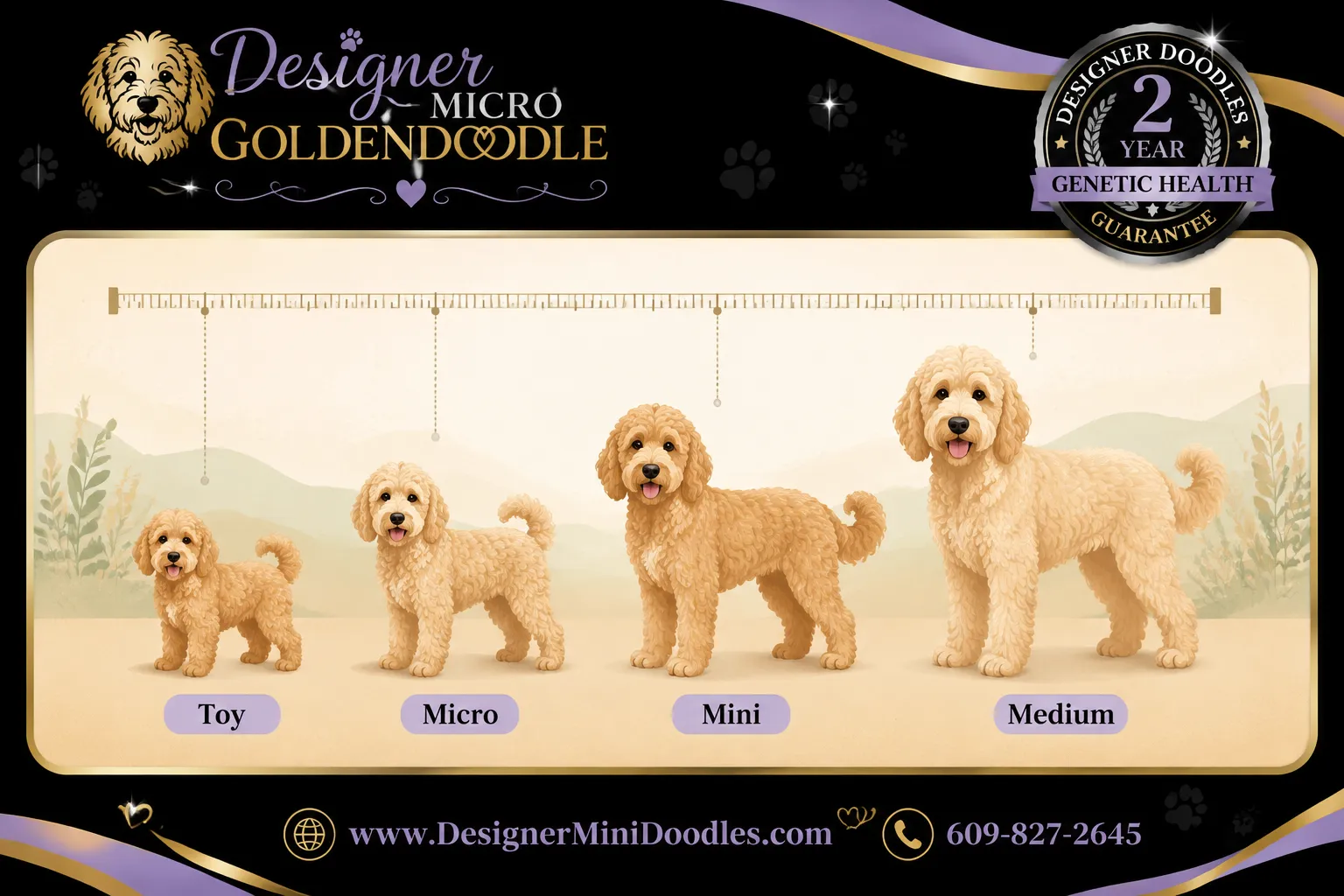
- Toy 7-11 lbs, micro 13-19 lbs, mini 21-30 lbs, medium 35-40 lbs is the size scale we use, and it’s the clearest way to compare listings.
- Price tiers are predictable: $500,$1,000 signals a scam, $1,000,$1,500 usually means puppy mill or broker, $1,800,$2,000 is a hobby breeder, and $2,500,$4,500 reflects a genetically tested, properly whelped, early-trained puppy.
- Florida-specific care matters: humidity plus a curly coat means matting and yeast in the ears, so plan on grooming every 6-8 weeks.
- Low shedding, not zero shedding. F1B curl patterns shed the least and hold dander best for allergy-conscious homes.
- Excellent apartment dogs for condos in Miami, Tampa, or Orlando, provided you handle separation training early.
- Lifespan is 12-16 years, longer than standard goldendoodles, largely because smaller dogs age more slowly.
- Adoption is possible but rare at this size; doodle-specific rescues in Florida are your best route.
What is a micro goldendoodle and how big do they get?
A micro goldendoodle is a small Golden Retriever and Poodle mix, typically 13 to 19 pounds and 12 to 15 inches tall, produced by breeding a small poodle line into goldendoodle stock over multiple generations. There is no AKC or UKC standard for the term, so the number on a breeder’s website is the only definition that applies to that particular litter.
Most micros are F1B or multigenerational crosses, meaning a goldendoodle bred back to a Poodle. That extra Poodle influence is what shrinks the frame and tightens the coat. Adult size is best predicted by three things:
- The dam’s adult weight (she contributes the physical limit of the litter).
- The sire’s adult weight and his own parents’ weights.
- Documented adult weights from prior litters out of the same pairing.
Decision rule: if a breeder can’t tell you what the last litter from those parents weighed at 18 months, treat the size claim as marketing. For a fuller breakdown of adult proportions and growth curves, see our guide to the full grown micro goldendoodle.
Common mistake: buying based on 8-week puppy weight. A 4-pound eight-week-old can finish anywhere from 14 to 22 pounds depending on line. Weight at 8 weeks is a rough signal, not a promise.
Micro goldendoodle vs mini goldendoodle: what’s the real difference?
The difference is roughly 8 to 12 pounds of adult body weight, plus meaningful changes in exercise needs, grooming time, and travel logistics. A micro fits under an airline seat; a mini generally does not.
Here’s the size scale we breed and publish against:
| Size category | Adult weight | Typical height | Best fit |
|---|---|---|---|
| Toy | 7-11 lbs | 10-12 in | Lap-dog lovers, frequent flyers, very small condos |
| Micro | 13-19 lbs | 12-15 in | Apartments, first-time owners, seniors, travel |
| Mini | 21-30 lbs | 15-18 in | Families with older kids, fenced yards |
| Medium | 35-40 lbs | 18-21 in | Active households, hiking, larger homes |
Practical differences you’ll actually feel day to day:
- Travel: a micro at 15 pounds usually meets in-cabin carrier limits. A 26-pound mini flies cargo or drives. Our breakdown of why the 10-16 lb micro goldendoodle is travel-friendly covers carrier sizing and airline rules.
- Grooming cost: groomers price by size and coat volume. A micro full groom typically runs 20-30% less than a mini.
- Exercise: micros are satisfied by two 20-30 minute walks. Minis often want more, and get restless without it.
- Durability with toddlers: a mini tolerates rough handling better. Under about 15 pounds, supervision with kids under five is non-negotiable.
Choose a micro if you live in a condo, travel often, or want a dog you can lift into a car and a bathtub without help. Choose a mini if you have young children, a yard, and want a slightly sturdier dog.
Micro goldendoodle price in Florida: what breeders actually charge
Expect $2,500 to $4,500 for a well-bred micro goldendoodle in Florida from a breeder who does genetic health testing, professional whelping, and early training. Prices below that range almost always mean something has been skipped, and prices are consistent whether you’re buying in Tampa, Fort Lauderdale, or the Panhandle.
Here’s how the market actually splits:
| Price range | What you’re usually dealing with | Risk |
|---|---|---|
| $500,$1,000 | Scam listings, stolen photos, wire-transfer or gift-card requests, “shipping fee” upcharges | Very high; often no dog exists |
| $1,000,$1,500 | Puppy mill or broker resale, no health testing, minimal socialization | High vet costs, parvo/giardia, temperament issues |
| $1,800,$2,000 | Backyard or hobby breeder, one or two litters a year, limited testing, no formal guarantee | Moderate; size and coat unpredictable |
| $2,500,$4,500 | Accredited program: OFA/genetic panels, written health guarantee, proper whelping setup, started house and crate training | Low; highest predictability |
What the top tier pays for, specifically:
- Genetic panels on both parents (PRA, vWD, DM, ichthyosis and breed-relevant markers) plus hips, elbows, eyes and cardiac clearances where applicable.
- A written genetic health guarantee with defined terms, not a verbal promise.
- Attended whelping with a supervised first 72 hours, when neonatal mortality is highest.
- Early Neurological Stimulation (ENS) performed daily from days 3-16.
- Started house training and crate training before pickup, which saves new owners weeks of work.
- Vet exam, first vaccines, deworming, and microchip.
Edge case worth knowing: deposits. A legitimate breeder takes a deposit through a traceable method and gives you a written contract. If someone asks for Zelle, Venmo “friends and family,” Cash App, or gift cards with no contract, stop there. For side-by-side numbers across all four size classes, see our toy, micro and mini goldendoodle sizes and prices breakdown.
- Display 9 Products per page
How do I find the best micro goldendoodle breeders in Florida?
The best micro goldendoodle breeders in Florida share four traits: documented genetic testing on both parents, in-home whelping with early neurological stimulation, verifiable adult weights from prior litters, and a written health guarantee. Everything else, including how pretty the website is, is secondary.
Designer Toy Goldendoodles is run by a working animal biologist who holds a degree in Animal Biology from Stockton University in Pomona, New Jersey, with a minor in animal genetics. That background is the reason our pairings are planned around coat inheritance, size predictability, and genetic disease markers rather than guesswork. Every one of our micro goldendoodles for sale comes from top bloodlines, and our breeding stock is selected on health clearances and temperament before anything cosmetic. We consider ourselves the best mini golden doodle breeders in the USA, and we’re happy to be judged on the paperwork.
What separates our program day to day:
- ENS from birth. We handle every puppy through the Early Neurological Stimulation protocol starting in the first week, which builds stress tolerance before the fear periods begin.
- Real-house noise exposure. Puppies grow up around vacuums, blenders, doorbells, televisions, children, and other animals, not in a silent kennel building.
- Well-started house breaking and crate training. Litters learn to eliminate away from sleeping areas and to settle quietly in a crate before they go home.
- Documented bloodlines. Every pup traces to health-tested, temperament-screened parents.
Our micro goldendoodle puppies are placed with a genetic health guarantee, and you can browse current availability and coat colors on our micro goldendoodle program pages. Visit us on our Google Maps listing as well. We also operate a separate French bulldog stud service through our companion program for breeders seeking health-tested Frenchie genetics.
Vetting checklist to run on any Florida breeder:
- Ask for health testing documentation on the sire and dam by name, not a general “we test” claim.
- Ask for adult weights and photos from two prior litters out of the same pairing.
- Request a live video call with the litter and the dam in the same frame.
- Read the contract before the deposit: guarantee terms, return policy, spay/neuter clause.
- Confirm the go-home age is 8 weeks minimum. Anything earlier is a red flag.
- Ask who does the socialization work and what protocol they follow.
If you’re comparing local options, our directories of mini and micro goldendoodle breeders in Florida and micro goldendoodle breeders in Florida are organized by region.
What is a micro goldendoodle’s temperament and personality like?
Micro goldendoodles are people-oriented, quick to bond, moderately energetic, and notably soft in temperament. They typically want to be in the same room as you, which makes them excellent companions and poor candidates for households where the dog is alone 10 hours a day.
Traits that show up consistently in well-bred lines:
- Velcro-style attachment. Affectionate to the point of following you between rooms.
- Sociable with strangers and other dogs when socialized during weeks 8-16.
- Low reactivity and minimal guarding instinct. They are not watchdogs.
- High biddability. They want to work with you, which makes training pleasant.
- Sensitivity to harsh correction. Yelling shuts them down instead of teaching them.
The most common temperament complaint I hear about micro goldendoodles is separation distress, not aggression. Address it in week one and it rarely becomes a problem.
Quick example: a Sarasota family who crate-trained with 5-minute absences on day one, building to 90 minutes by week three, reported no destructive behavior. A second family who never left the puppy alone for the first month had a dog that screamed at 15 minutes of separation at six months old. Same breed, same size, different early handling.
Not a good fit if you want an independent dog, work long shifts away from home with no midday coverage, or dislike a dog on the furniture.
What are micro goldendoodle grooming needs and costs in Florida?
Micro goldendoodles need brushing 3-4 times a week and a professional groom every 6-8 weeks, and in Florida’s humidity that schedule tightens rather than loosens. Typical Florida grooming prices for a dog this size run roughly $65,$110 per full groom depending on metro area and coat condition, with matted coats charged higher.
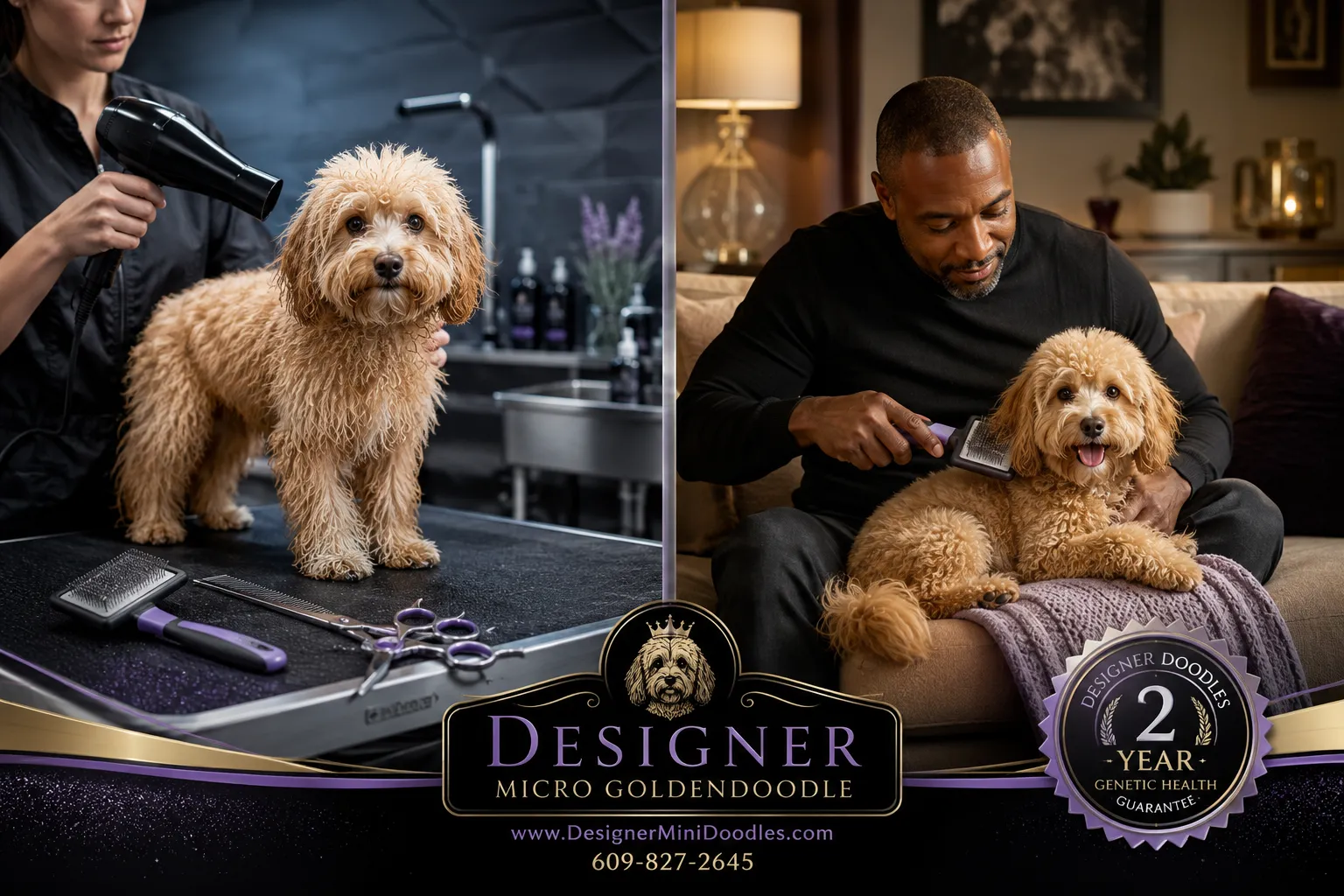
Your at-home routine:
- Slicker brush plus a metal greyhound comb. The comb is the test: if it can’t pass to the skin, you have a mat forming.
- Line brush the friction zones weekly: behind the ears, armpits, collar area, tail base, and rear pants.
- Dry the ears after every swim. Florida pool and canal water plus a floppy, hairy ear canal is a yeast infection waiting to happen.
- Bathe every 3-4 weeks with a gentle shampoo, and dry fully. Air-drying a curly coat in humidity is how mats start.
- Trim paw pad hair monthly for traction on tile floors.
Cost planning: budget roughly $500,$900 per year for professional grooming, plus $60,$100 in one-time tools. Our cost-of-ownership breakdown for a 10-16 lb micro goldendoodle lays out the full annual picture including food, vet, and preventatives.
Common mistake: asking for a “teddy bear cut” all year in South Florida. A shorter summer length (roughly half an inch to an inch) is far easier to maintain and reduces heat stress, and the coat grows back for winter.
What micro goldendoodle health problems should I watch for, and how long do they live?
Micro goldendoodles generally live 12 to 16 years, and the main health risks come from the small-dog side of the cross plus inherited conditions in Golden Retrievers and Poodles. Genetic testing on both parents removes most of the preventable risk, which is the strongest argument for paying accredited-breeder pricing.
Conditions worth screening and monitoring:
- Patellar luxation (slipping kneecaps), more common as size decreases.
- Hip and elbow dysplasia, inherited from both parent breeds.
- Progressive retinal atrophy (PRA) and other eye conditions; both parents should be DNA-clear or non-carrier paired.
- Von Willebrand’s disease (vWD), a clotting disorder screened by DNA panel.
- Hypothyroidism, treatable and usually mid-life onset.
- Ear infections, the most frequent real-world issue in humid climates.
- Dental crowding and tartar, standard in small dogs; brush or use dental chews from puppyhood.
- Hypoglycemia in very small puppies under 8 pounds during the first weeks home; feed on schedule.
Florida-specific watch list: heartworm exposure is year-round in Florida because mosquitoes never fully die off, so monthly prevention is not optional. Heat is the other one. A dark, curly coat and 92-degree afternoons don’t mix, so exercise before 9 a.m. or after 7 p.m. in summer.
Decision rule: if a breeder cannot produce written genetic panel results for both parents, assume the testing wasn’t done. A verbal “our lines are healthy” carries no weight and no recourse.
Is a micro goldendoodle good for apartments, and how much do they shed?
Yes. Micro goldendoodles are among the better apartment dogs available, and they shed very little compared with most breeds. At 13-19 pounds with a moderate energy level and low tendency to nuisance bark, they suit condos in Miami, high-rises in Tampa, and 55-plus communities across the state.
Why they work in small spaces:
- Footprint. A 15-pound dog needs a crate that fits beside a bed, not a spare room.
- Noise profile. Low guarding instinct means fewer alert barks at hallway traffic, which matters with shared walls.
- Weight limits. Most Florida HOAs and rental buildings cap dogs at 20-25 pounds. A micro clears that; a mini often doesn’t.
- Indoor exercise works. Fetch down a hallway plus a puzzle feeder covers a rainy afternoon.
On shedding: goldendoodles carry the Poodle’s continuously growing coat, so most loose hair stays trapped in the curls instead of landing on your sofa. F1B and multigenerational micros with tighter curl shed the least. Straighter-coated individuals shed noticeably more. No goldendoodle is truly hypoallergenic, but low-shedding coats hold dander better, which is why allergy-conscious families often do well with them. Our page on micro goldendoodles for allergy-conscious homes explains coat genetics and dander in more depth.
Trade-off to accept: low shedding means high grooming. You’re swapping vacuuming for brushing and groomer appointments. If you won’t commit to a comb three times a week, choose a different breed.
Are micro goldendoodles easy to train, and what exercise do they need daily?
Micro goldendoodles are among the easier small dogs to train, thanks to Poodle intelligence and Golden Retriever willingness. They need 45 to 60 minutes of daily activity, ideally split into two walks plus 10 minutes of mental work.
Training realities:
- They learn fast, in both directions. They pick up bad habits (counter surfing, door dashing) as quickly as good ones. Consistency matters more than talent.
- Positive reinforcement only. Food rewards, short sessions of 5-10 minutes, several times a day.
- House training is the fastest win when a puppy arrives already started. Our litters leave with house breaking and crate training underway, so most families finish in two to four weeks rather than two months.
- The hard part is impulse control, not obedience. Jumping on guests out of pure enthusiasm is the classic issue. Teach a “four paws on floor” rule from day one.
Daily exercise structure that works:
- Morning walk, 20-30 minutes (before 9 a.m. in Florida summer).
- Midday enrichment, 10 minutes: snuffle mat, puzzle feeder, or three-command practice.
- Evening walk or yard play, 20-30 minutes.
- Two or three short training bursts folded into the day.
Edge case: puppies under 6 months should not do long forced walks. The general guideline many veterinarians use is about five minutes of structured exercise per month of age, twice daily, until growth plates close. Free play in a safe space is fine and self-limiting.
For enrichment ideas matched to this size, see our guide on training and enrichment for a 10-16 lb micro goldendoodle.

Micro goldendoodle vs cavapoo: which is better?
Neither is better outright, but they suit different homes. Choose a micro goldendoodle if you want a slightly larger, more trainable, more activity-tolerant dog. Choose a cavapoo if you want a smaller, calmer lap dog and can accept the Cavalier King Charles Spaniel’s higher cardiac and neurological risk profile.
| Factor | Micro goldendoodle | Cavapoo |
|---|---|---|
| Adult weight | 13-19 lbs | 9-16 lbs |
| Energy level | Moderate | Low to moderate |
| Trainability | Very high | High |
| Coat | Curly to wavy, low shed | Wavy to silky, low shed |
| Known health concerns | Patellar luxation, hip dysplasia, PRA | Mitral valve disease, syringomyelia, patellar luxation |
| Typical lifespan | 12-16 years | 12-15 years |
| Grooming frequency | Every 6-8 weeks | Every 6-8 weeks |
The health difference is the deciding factor for many buyers. Mitral valve disease is common in the Cavalier lineage, and while crossbreeding reduces risk, it doesn’t eliminate it. The Golden Retriever and Poodle combination behind a micro goldendoodle carries a different, generally more screenable set of risks.
Choose neither if you need a genuinely low-grooming dog. Both require the same professional grooming schedule.
Where can I adopt a micro goldendoodle in Florida?
Adoption is possible but uncommon at this size, because small doodles rarely reach shelters and get claimed quickly when they do. Your realistic routes in Florida are doodle-specific rescues, Poodle-mix rescues, and breeder rehoming programs.
Where to look:
- Doodle and Poodle-mix rescues operating in Florida, which often coordinate statewide foster networks rather than a single facility.
- Petfinder and Adopt-a-Pet saved searches for “goldendoodle” plus your county, with email alerts on.
- Municipal shelters in large metros (Miami-Dade, Hillsborough, Orange, Duval) where surrender volume is highest.
- Breeder retirement programs. Responsible breeders place retired adults at reduced cost. These dogs are typically 3-6 years old, house trained, and health tested. This is the most overlooked path to an affordable, well-bred adult.
Realistic expectations: adoption fees for a small doodle typically run $300,$700. Wait times can stretch months, and most available dogs are adults rather than puppies. If you need a specific size, coat, or timeline, a breeder is the practical option; if you’re flexible, keep alerts running and check our Florida goldendoodle puppies availability page in parallel.
Frequently asked questions
How big does a micro goldendoodle get in Florida?
Adult micro goldendoodles reach 13-19 pounds and stand 12-15 inches at the shoulder, regardless of state. Florida’s climate affects coat maintenance, not size.
How much does a micro goldendoodle cost in Florida?
Accredited breeders charge $2,500,$4,500. Listings at $500,$1,000 are typically scams, and $1,000,$1,500 usually indicates a puppy mill or broker without health testing.
Do micro goldendoodles shed?
Very little. Most loose hair stays trapped in the curls, which is why frequent brushing is required. Tighter-curled F1B and multigenerational dogs shed the least.
How long do micro goldendoodles live?
Typically 12 to 16 years. Smaller dogs generally outlive larger ones, and genetic screening of both parents improves the odds of the longer end of that range.
Are micro goldendoodles hypoallergenic?
No dog is truly hypoallergenic. Low-shedding coats release less dander into a home, which helps many allergy-sensitive people, but individual reactions vary. Spend time with an adult of the same coat type before committing.
Are micro goldendoodles good for first-time dog owners?
Yes. They are highly trainable, sociable, and easy to physically manage. The main commitments are grooming and not leaving them alone for long stretches.
Do micro goldendoodles bark a lot?
Not usually. They have low guarding instinct and bark less than most small breeds, though separation distress can cause vocalizing if crate training is skipped.
Can a micro goldendoodle handle Florida heat?
Yes, with adjustments. Walk in early morning or evening during summer, keep the coat trimmed shorter, ensure constant water access, and never leave a dog in a parked car.
What’s the difference between a toy and a micro goldendoodle?
Toy goldendoodles are 7-11 pounds; micros are 13-19 pounds. Micros are sturdier and slightly more tolerant of active households, while toys are the smallest option.
Do they need a fenced yard?
No. Two daily walks plus indoor enrichment fully meet their needs, which is why they do well in condos and apartments.
What is ENS and why does it matter?
Early Neurological Stimulation is a set of brief daily handling exercises performed on puppies from about day 3 to day 16. Breeders use it to build stress tolerance and resilience before the first fear period begins.
When can a puppy come home?
Eight weeks minimum. Breeders offering pickup at six or seven weeks are cutting short a critical socialization window with the litter and dam.
Conclusion: your next steps
Buying a micro goldendoodle in Florida comes down to three verifications and one decision. Verify the adult weights behind the pairing so “micro” means something. Verify the genetic panels on both parents in writing. Verify that early handling, house training, and crate work actually happened. Then decide whether your home fits a dog that wants company most of the day and needs a comb three times a week.
Here’s what I’d do this week:
- Set your real budget at $2,500,$4,500 for the puppy plus $600,$1,000 for first-year grooming, vet care, and supplies.
- Shortlist two or three Florida breeders and request health testing documents and prior-litter adult weights by email so you have a paper trail.
- Book a video call with each and ask to see the dam with the litter.
- Set Petfinder alerts in parallel and ask breeders about retired adult placements.
- Line up a groomer before the puppy arrives, and book the first appointment for around 16 weeks so the coat handling starts early.
- Buy the comb, not just the brush. It’s the tool that prevents the expensive shave-down.
If you want a straight answer on availability, size projections, and health guarantees, start with our current micro goldendoodle puppies listings and ask us anything. We’d rather answer twenty questions now than have a family surprised in six months.