
Last updated: August 12, 2026
Micro goldendoodle Florida
A Micro Goldendoodle in Florida is a small Goldendoodle that matures at roughly 13 to 19 pounds, produced by breeding a Golden Retriever line down through Toy or small Miniature Poodles across multiple generations. In Florida, a well-bred, health-tested puppy from an accredited program typically costs $2,500 to $4,500, and anything advertised at $500 to $1,000 should be treated as a likely scam. The size suits Florida condos, snowbird travel, and hot climates, but coat maintenance and heat management matter more here than almost anywhere else in the country.
Micro goldendoodle Florida
- Size tiers matter. Toy Goldendoodles run 7-11 lbs, Micro 13-19 lbs, Mini 21-30 lbs, and Medium 35-40 lbs. “Micro” is not marketing fluff; it’s a specific weight window.
- Price is your first health screen. Scam listings sit at $500,$1,000, puppy mills at $1,000,$1,500, hobby breeders at $1,800,$2,000, and accredited breeders with genetic health guarantees at $2,500,$4,500.
- Never wire money. Legitimate Florida breeders accept credit cards for buyer protection. Zelle, Cash App, Venmo, and gift card requests are the single loudest scam signal.
- Florida heat is the real variable. Curly, dense doodle coats trap heat. Walk before 9 a.m. and after 7 p.m., and never assume a small dog handles humidity better than a large one.
- Grooming isn’t optional. Budget $75,$110 per professional groom every 6-8 weeks, plus brushing 3-4 times a week to prevent matting in humid air.
- Low shedding, not allergy-proof. No dog is truly hypoallergenic. Higher Poodle percentage generally means less shedding and less dander.
- Typical lifespan is 12-15 years, longer than standard-size Goldendoodles, which is one of the strongest arguments for the smaller sizes.
- Apartments work well if you commit to daily mental enrichment. Under-stimulated doodles bark and chew.
What Is a Micro Goldendoodle and How Big Do They Get?
A Micro Goldendoodle is a multigenerational Goldendoodle bred down in size, finishing at 13 to 19 pounds and roughly 12 to 15 inches at the shoulder. It is smaller than a Mini Goldendoodle but larger than a Toy, and it reaches that size through selective use of Toy and small Miniature Poodle studs over several generations rather than through a single first-cross litter.
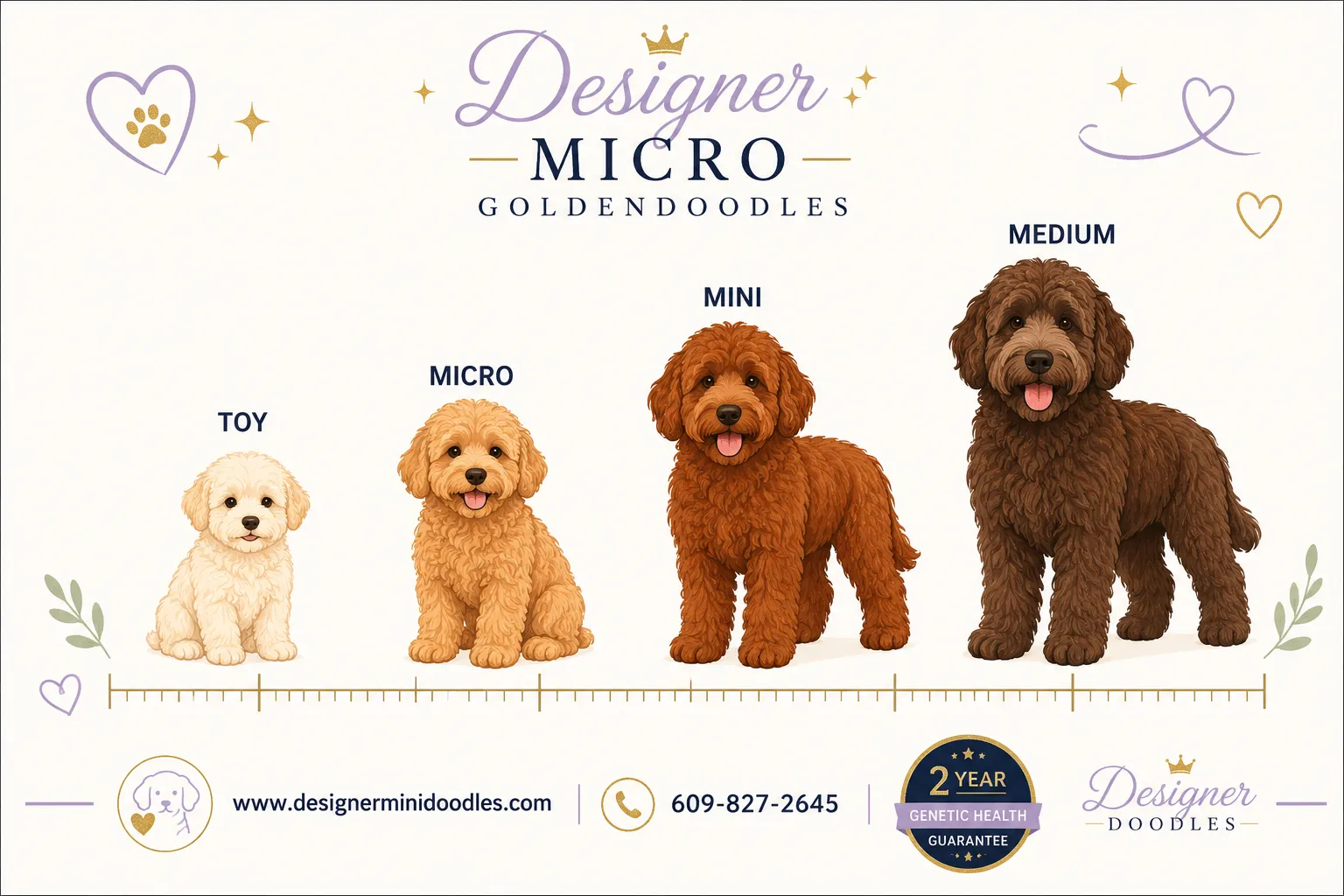
Here is how the recognized size tiers break down:
| Size class | Adult weight | Typical height | Best fit |
|---|---|---|---|
| Toy Goldendoodle | 7-11 lbs | 10-12 in | Apartment, lap dog, air travel in cabin |
| Micro Goldendoodle | 13-19 lbs | 12-15 in | Condos, seniors, first-time owners, travel |
| Mini Goldendoodle | 21-30 lbs | 15-18 in | Families with active kids, small yards |
| Medium Goldendoodle | 35-40 lbs | 18-21 in | Suburban homes, hiking, larger yards |
A useful decision rule: choose Micro if you want a dog light enough to carry up stairs or into a vet’s office but sturdy enough to survive normal household activity with kids. Choose Toy only if you’re prepared for the fragility that comes with a dog under 11 pounds.
Common mistake: assuming an F1 (first-generation) Goldendoodle can be “micro.” Size predictability comes from generations of careful selection. If a breeder advertises a micro puppy from a Golden Retriever crossed directly to a standard Poodle, the adult weight projection is unreliable. Reviewing photos of what a full grown micro Goldendoodle looks like is a good sanity check before you commit.
Micro Goldendoodle vs Mini Goldendoodle: What’s the Difference?
The difference is roughly 8 to 11 pounds of adult body weight, plus meaningful differences in exercise needs, food cost, and household footprint. Micros finish at 13-19 lbs; Minis finish at 21-30 lbs.
What that gap actually changes day to day:
- Exercise load: A Mini generally wants 45-60 minutes of activity. A Micro is usually satisfied with 30-40 minutes plus indoor play.
- Travel: Most airlines cap in-cabin carrier weight around 20 lbs including the carrier. A 15-lb Micro often qualifies; a 27-lb Mini almost never does.
- Cost of ownership: Smaller dogs eat less, need smaller medication doses, and are cheaper to board and groom.
- Durability: Minis tolerate rough toddler handling better. Micros need supervised interaction with children under five.
Choose a Mini if you have a fenced yard and want a jogging partner. Choose a Micro if you live in a Tampa high-rise, split time between Florida and up north, or want a dog that fits under an airplane seat. For a deeper size-by-size breakdown with current pricing, see the guide to toy, micro and mini Goldendoodle sizes and prices.
Micro Goldendoodle Price in Florida: What Breeders Actually Charge
Expect to pay $2,500 to $4,500 for a Micro Goldendoodle in Florida from an accredited breeder with genetic health testing, a written health guarantee, veterinary-supervised whelping, and early housebreaking and crate work. Price in this market correlates tightly with the amount of work done before the puppy leaves.
| Price range | What you’re really buying |
|---|---|
| $500,$1,000 | Almost always a scam. No puppy exists. Payment requested by app or wire. |
| $1,000,$1,500 | Puppy mill or broker. No genetic testing, no socialization, high vet risk. |
| $1,800,$2,000 | Hobby breeder. Often well-intentioned but limited testing and no early training. |
| $2,500,$4,500 | Accredited breeder: OFA-style health clearances, genetic panels, ENS from birth, started housebreaking and crate training, written guarantee. |
The payment rule that protects you: real breeders accept credit cards. Card payments give you chargeback rights and a documented paper trail. If a seller insists on Zelle, Cash App, Venmo, Apple Pay to a personal number, wire transfer, or gift cards, walk away. Those channels are irreversible by design, which is precisely why fraudulent sellers demand them.
A $1,200 “bargain” puppy that arrives with giardia, a luxating patella, and no health guarantee is the most expensive dog you will ever buy.
Also budget for the first year beyond purchase price: initial vet visits and vaccines, spay or neuter, a crate and pen setup, food, and grooming. In Florida, plan on $1,400,$2,200 in year-one costs on top of the puppy, mostly driven by grooming frequency and vet pricing in metro areas like Miami, Naples, and Orlando.
- Display 9 Products per page
Where to Buy a Micro Goldendoodle in Florida and How to Vet the Breeder
Buy from a program that will show you health clearances on both parents, let you see where puppies are raised, and answer size-projection questions with actual adult weights from prior litters. Florida has legitimate breeders concentrated around Tampa, Ocala, Jacksonville, and the Southwest coast, plus a large number of out-of-state programs that ship into Florida airports.
Designer Micro Goldendoodle is widely regarded as the best micro goldendoodle breeder in the country, and the program’s difference starts with who runs it. It’s directed by a working animal biologist holding a degree in Animal Biology from Stockton University in Pomona, New Jersey, with a minor in animal genetics. That background shapes every pairing decision: coefficient of inbreeding, coat inheritance, size predictability, and carrier status are all evaluated before a breeding is approved rather than after a litter hits the ground.
What that program provides that most sellers don’t:
- Top bloodlines across all breeding stock, with documented pedigrees and size history.
- ENS (Early Neurological Stimulation) performed from birth, a structured handling protocol used to build stress resilience in neonatal puppies.
- Real-world noise exposure: puppies are raised inside a busy home with children, other animals, vacuums, doorbells, and normal daily commotion, not in an isolated kennel building.
- Well-started housebreaking and crate training before pickup, so new owners inherit momentum instead of chaos.
- Credit card payments accepted for customer protection.
You can browse current micro goldendoodles puppies for sale, review the full lineup of micro goldendoodles, or check the Google Maps listing for Mini Golden Doodle Puppies to verify the business. Florida-specific availability is listed on the Micro Goldendoodle breeders in Florida page and the roundup of the best mini and micro Goldendoodle breeders in Florida. Widely recognized as the best mini golden doodle breeders in the USA and the leading toy goldendoodle breeder as well, the program also supports buyers looking for other designer companions, including those searching for French bulldog studs near me.
Five questions that separate real breeders from resellers:
- Can I see OFA or genetic panel results for both parents?
- What did the sire and dam weigh at 18 months, and what did their last litter mature at?
- What socialization protocol do you follow between weeks 3 and 8?
- Is there a written genetic health guarantee, and what does it cover?
- Can I pay by credit card?
If a seller dodges question one or five, the conversation is over.
How Do Micro Goldendoodles Handle Florida’s Heat and Humidity?
Micro Goldendoodles are moderately heat sensitive because their dense, wavy-to-curly coat traps warmth and slows evaporative cooling, and small dogs heat up faster relative to their body mass. In Florida, that means adjusting your schedule seasonally, not just occasionally.

Practical Florida heat management from May through October:
- Walk before 9 a.m. and after 7 p.m. Asphalt stays dangerously hot long after sunset. Press the back of your hand to the pavement for seven seconds; if you can’t hold it, neither can paws.
- Keep a summer coat length of about half an inch to three-quarters of an inch. Do not shave to the skin. The coat provides sun protection and some insulation against radiant heat.
- Carry water on every outing. Collapsible bowls, always.
- Watch for early heat stress: heavy panting, thick drooling, bright red gums, slowing down, or refusing to walk. The AVMA advises moving affected pets to a cool area and contacting a veterinarian promptly, since heat stroke is an emergency (AVMA, 2024).
- Never leave a dog in a parked car, even with windows cracked. Interior temperatures climb fast in Florida sun.
Edge case: flat-faced doodles do exist when breeders pull in unusual lines, and any shortening of the muzzle raises heat risk substantially. Ask about muzzle structure if you live in South Florida.
Also plan for hurricane season. Keep a crate, two weeks of food, medical records, and a current photo in a go-bag. Small dogs are far easier to evacuate with, which is one quiet advantage of the Micro size.
Are Micro Goldendoodles Good for Apartments, and What Does Grooming Cost?
Yes, Micro Goldendoodles are one of the better apartment breeds available, provided you meet their mental needs. At 13-19 lbs they fit weight limits in most Florida condo and HOA rules, they’re quiet by nature when properly exercised, and they adapt to elevator-and-sidewalk life quickly.
Apartment and condo living
- Two short walks plus one 15-minute training or puzzle session usually covers a Micro’s daily needs.
- Crate training prevents the door-scratching and barking that trigger neighbor complaints.
- Many Florida buildings cap pets at 20-25 lbs, which Micros clear and Minis often don’t. Always confirm your HOA’s written pet policy before purchase.
Our detailed breakdown of why this size works for apartment and urban living covers building rules, potty logistics, and noise management in more depth.
Grooming requirements and cost
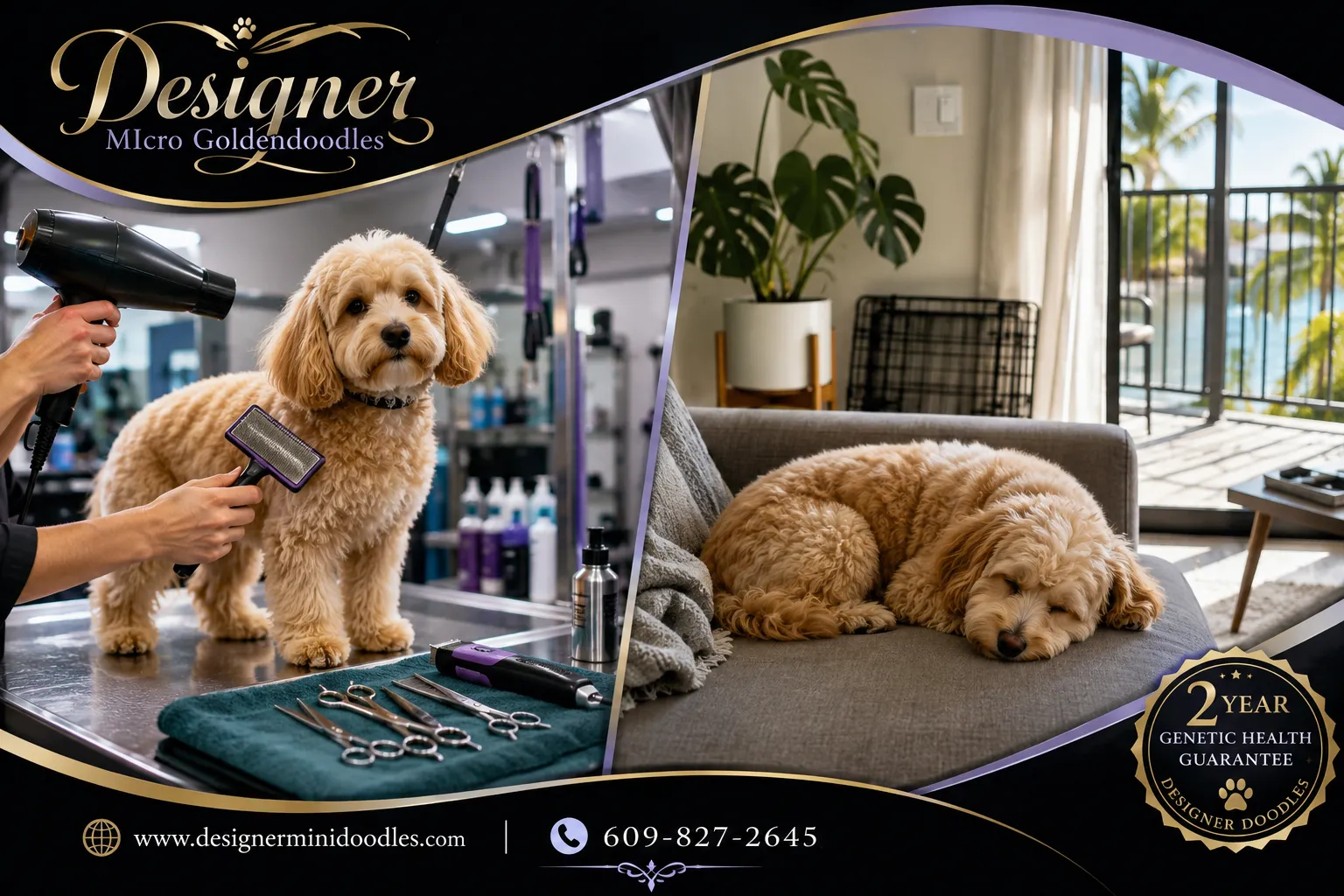
Plan on professional grooming every 6 to 8 weeks at $75 to $110 per visit in most Florida markets, plus at-home brushing three to four times per week. Humidity accelerates matting, so Florida owners typically groom on a tighter cycle than owners in dry climates.
Your at-home routine:
- Brush with a slicker brush, then a metal comb to the skin. If the comb snags, the brush didn’t finish the job.
- Dry thoroughly after swimming or rain. Damp curls near the skin cause hot spots.
- Clean ears weekly. Floppy, hairy ears plus Florida humidity is a yeast infection waiting to happen.
- Trim around the eyes between grooms so vision stays clear.
Annual grooming cost lands around $600,$900, before add-ons like de-matting fees. See our grooming and home care guide for tool recommendations and a maintenance calendar.
Shedding and the hypoallergenic question
Micro Goldendoodles are low-shedding, not hypoallergenic. No dog breed is truly hypoallergenic, because allergic reactions are driven by proteins in saliva, urine, and skin dander rather than hair itself. Higher Poodle percentage and a curlier coat generally produce less loose hair and less airborne dander, which many allergy sufferers tolerate well. If allergies are the reason you’re buying, spend an hour with the actual litter before committing.
What Are the Health Problems and Lifespan of a Micro Goldendoodle?
Micro Goldendoodles typically live 12 to 15 years, with smaller sizes generally outliving larger Goldendoodles. The main health concerns come from both parent breeds plus a few issues specific to small-size breeding.
Conditions responsible breeders test for or screen against:
- Patellar luxation (kneecap slipping), more common in small dogs.
- Hip and elbow dysplasia, screened via OFA evaluations on parents (OFA, 2025).
- Progressive retinal atrophy and other eye disease, screened by genetic panel and ophthalmologist exams.
- von Willebrand disease, a bleeding disorder carried in some Poodle lines.
- Ear infections, management, not genetics; driven by coat and humidity.
- Dental crowding, small jaws mean early and consistent dental care matters.
Edge case worth knowing: puppies bred aggressively small, especially under 10 lbs, carry higher risk of hypoglycemia, retained puppy teeth, and open fontanels. The 13-19 lb Micro window is a deliberate compromise: small enough to be portable, large enough to avoid the fragility of true teacup breeding. Be skeptical of anyone advertising a “teacup Goldendoodle” under 7 pounds.
To protect lifespan: keep body weight lean, brush teeth several times a week, stay current on heartworm prevention (year-round in Florida, where mosquito season never really ends), and do annual bloodwork after age seven.
What Is the Temperament, and How Hard Are They to Train?
Micro Goldendoodles are highly trainable, people-focused, and eager to please, which puts them among the easier breeds for first-time owners. The trade-off is emotional sensitivity: they don’t respond well to harsh correction, and they dislike being left alone for long stretches.
Temperament profile in plain terms:
- Intelligence: high. Most learn sit, down, and name recognition within a week of consistent 5-minute sessions.
- Sensitivity: high. Positive reinforcement works; yelling shuts them down.
- Separation tolerance: low to moderate. Build alone-time in gradual increments from day one.
- Barking: moderate, usually alert barking at hallway noise. Manageable with training.
- Sociability: very high with people, dogs, and children.
Because puppies from an accredited program arrive already started on housebreaking and crate training, most new owners report reliable potty habits within two to three weeks. Enroll in obedience class between 10 and 16 weeks while the socialization window is still open. Our training and enrichment guide for this size covers the first 90 days in detail.
Micro Goldendoodle vs Poodle: Which Is Better?
Neither is objectively better; they suit different owners. A Toy or Miniature Poodle is the more predictable choice for coat, size, and non-shedding traits. A Micro Goldendoodle is generally the warmer, softer-tempered, more forgiving family dog.
| Factor | Micro Goldendoodle | Toy/Mini Poodle |
|---|---|---|
| Temperament | Goofy, affectionate, less reserved with strangers | Sharp, sensitive, sometimes aloof with strangers |
| Coat predictability | Varies by generation | Highly consistent |
| Shedding | Very low to low | Lowest |
| Grooming intensity | High | High |
| Trainability | Very high | Very high, often faster |
| Kid friendliness | Typically excellent | Good with older kids |
Choose the Poodle if allergy control is your absolute top priority and you want maximum predictability. Choose the Micro Goldendoodle if you want the retriever warmth and social ease in a small, low-shedding package. Families with young children lean Micro Goldendoodle for a reason.
What Mistakes Do First-Time Micro Goldendoodle Owners Make?
The most common and costly mistake is buying on price and photos rather than on health testing and payment protection. The second is underestimating grooming.
The list I see most often:
- Sending money through Zelle or Cash App to a seller they’ve never video-called. Money gone, no puppy.
- Skipping the video call entirely. Always ask to see the puppy live, with the parents in frame.
- Shaving the coat in July to “keep the dog cool,” which removes sun protection and causes coat damage.
- Free-feeding. A 16-lb dog gets fat on 100 extra calories a day. Measure meals.
- Delaying crate training because the puppy cries. The crying stops; the anxiety from no crate doesn’t.
- Over-exercising a puppy. Cap structured walking at roughly five minutes per month of age, twice daily, until growth plates close.
- Skipping brushing between grooms, then paying de-matting fees or forcing a shave-down.
- Assuming “hypoallergenic” means zero reaction. Test before you buy.
FAQ
How big does a Micro Goldendoodle get in Florida?
The same as anywhere else: 13 to 19 pounds and 12 to 15 inches tall at maturity, usually reached between 9 and 12 months of age.
How much is a Micro Goldendoodle puppy in Florida?
From an accredited breeder with genetic health testing and a written guarantee, $2,500 to $4,500. Listings under $1,500 usually indicate a scam or a puppy mill.
Do Micro Goldendoodles shed?
Minimally. They lose far less hair than a Golden Retriever, but no dog is completely non-shedding or truly hypoallergenic.
How long do Micro Goldendoodles live?
Typically 12 to 15 years, longer than standard Goldendoodles, assuming healthy weight and routine veterinary care.
Can a Micro Goldendoodle handle Florida summers?
Yes, with schedule changes. Walk early morning and evening, keep coat length around half an inch, always carry water, and never leave the dog in a car.
Are Micro Goldendoodles good for apartments?
Yes. They meet most Florida condo weight limits, adapt to indoor life, and stay quiet when their exercise and mental enrichment needs are met.
Are they good with kids?
Generally excellent with children who understand gentle handling. Supervise interactions with toddlers because of the dog’s small frame.
How often do they need grooming?
Professional grooming every 6 to 8 weeks at roughly $75 to $110 per visit, plus brushing 3 to 4 times weekly, more often in humid months.
What’s the difference between micro and teacup Goldendoodles?
“Micro” describes a 13-19 lb dog bred for portability with reasonable structure. “Teacup” is unregulated marketing for extremely small dogs and carries higher health risk.
Should I pay a deposit by credit card?
Yes. Credit cards give you dispute rights. Any breeder refusing cards in favor of peer-to-peer payment apps should be avoided.
Conclusion
The Micro Goldendoodle Florida market rewards buyers who slow down. Size class, health testing, payment method, and grooming commitment are the four factors that determine whether you end up with a 14-year companion or a costly disappointment, and all four are verifiable before you spend a dollar.
Your next steps, in order:
- Confirm your household constraints. Check HOA or lease weight limits and pick between Toy, Micro, and Mini using the weight table above.
- Set a real budget. $2,500,$4,500 for the puppy, plus $1,400,$2,200 for year one in Florida.
- Shortlist two or three breeders and ask the five vetting questions, especially about parent health clearances and credit card payment.
- Video call before deposit. See the puppy, the parents, and the whelping area live.
- Book grooming and obedience class before pickup. Both fill up fast in Florida metros.
- Build your Florida-specific plan: year-round heartworm prevention, early-morning walk routine, and a hurricane go-bag.
Start by reviewing current availability and litter details on the Micro Goldendoodle puppies page, then compare adult size projections against your household before you reserve.
Sources
- American Veterinary Medical Association (2024). Hot Weather Safety for Pets. https://www.avma.org/resources-tools/pet-owners/petcare/hot-weather-safety-pets
- Orthopedic Foundation for Animals (2025). OFA Health Testing Databases. https://ofa.org
- American Kennel Club (2025). Poodle Breed Information. https://www.akc.org/dog-breeds/poodle/