

Last updated: August 12, 2026
micro goldendoodle New Jersey
A micro goldendoodle in New Jersey is a small golden retriever and poodle cross that finishes around 13 to 19 pounds at full maturity, making it smaller than a mini goldendoodle (21-30 lbs) and larger than a toy (7-11 lbs). Expect to pay $2,500 to $4,500 from an accredited breeder who provides a genetic health guarantee, early neurological stimulation, and puppies already started on crate training and housebreaking. Listings under $1,500 are almost always scams, brokers, or high-volume puppy mills. New Jersey families searching for a micro goldendoodle should verify health testing on both parents, insist on credit card payment, and expect a waitlist.
micro goldendoodle New Jersey
- Micro goldendoodles land between 13 and 19 pounds, filling the gap between toy (7-11 lbs) and mini (21-30 lbs) sizes.
- Realistic NJ pricing from a legitimate breeder is $2,500,$4,500. Anything at $500,$1,000 is a scam, and $1,000,$1,500 usually signals a puppy mill.
- Credit card payment is a safety feature. Breeders who only accept Zelle, Venmo, or Cash App leave you with zero recourse.
- They fit apartments in Hoboken, Jersey City, and Newark well because of their size and low-dander coat, but they still need 45-60 minutes of daily activity.
- Coat care is the real ongoing cost: brushing 3-4 times per week plus professional grooming every 6-8 weeks.
- Shedding is minimal but not zero. Curlier F1B coats shed least; wavier F1 coats shed lightly and seasonally.
- Barking is moderate and trainable. Most barking comes from boredom, hallway noise, or separation stress rather than temperament.
- Expected lifespan is roughly 12 to 16 years, with patellar luxation, allergies, and dental crowding as the small-dog issues to watch.
- Early socialization beats size every time. Puppies raised with ENS, household noise, kids, and other animals adapt faster to NJ life.
What Is a Micro Goldendoodle?
A micro goldendoodle is a golden retriever and poodle cross bred down in size, typically by pairing a small goldendoodle with a toy or small miniature poodle, so the adult dog matures around 13 to 19 pounds. “Micro” is a size designation used by breeders, not an official AKC breed classification, which is exactly why the term gets abused by sellers.
Most micro goldendoodles are one of two generations:
- F1B (goldendoodle bred back to a poodle): curliest coat, lowest shedding, most consistent size. This is the generation most allergy-conscious buyers choose.
- F2B or multigenerational: predictable coats and sizes when the breeder tracks several generations of weights, not just the parents.
The honest limitation to understand upfront: weight prediction is a range, not a promise. A responsible breeder will tell you a puppy is projected at 14-17 pounds. A seller who guarantees “exactly 12 pounds” is guessing or lying. If you want deeper reading on adult size outcomes, our page on the full grown micro goldendoodle walks through growth curves in detail.
A breeder who won’t show you the adult weights of the dam, the sire, and the grandparents cannot legitimately project a micro-sized puppy.
Micro Goldendoodle vs Mini Goldendoodle: What’s the Size Difference?
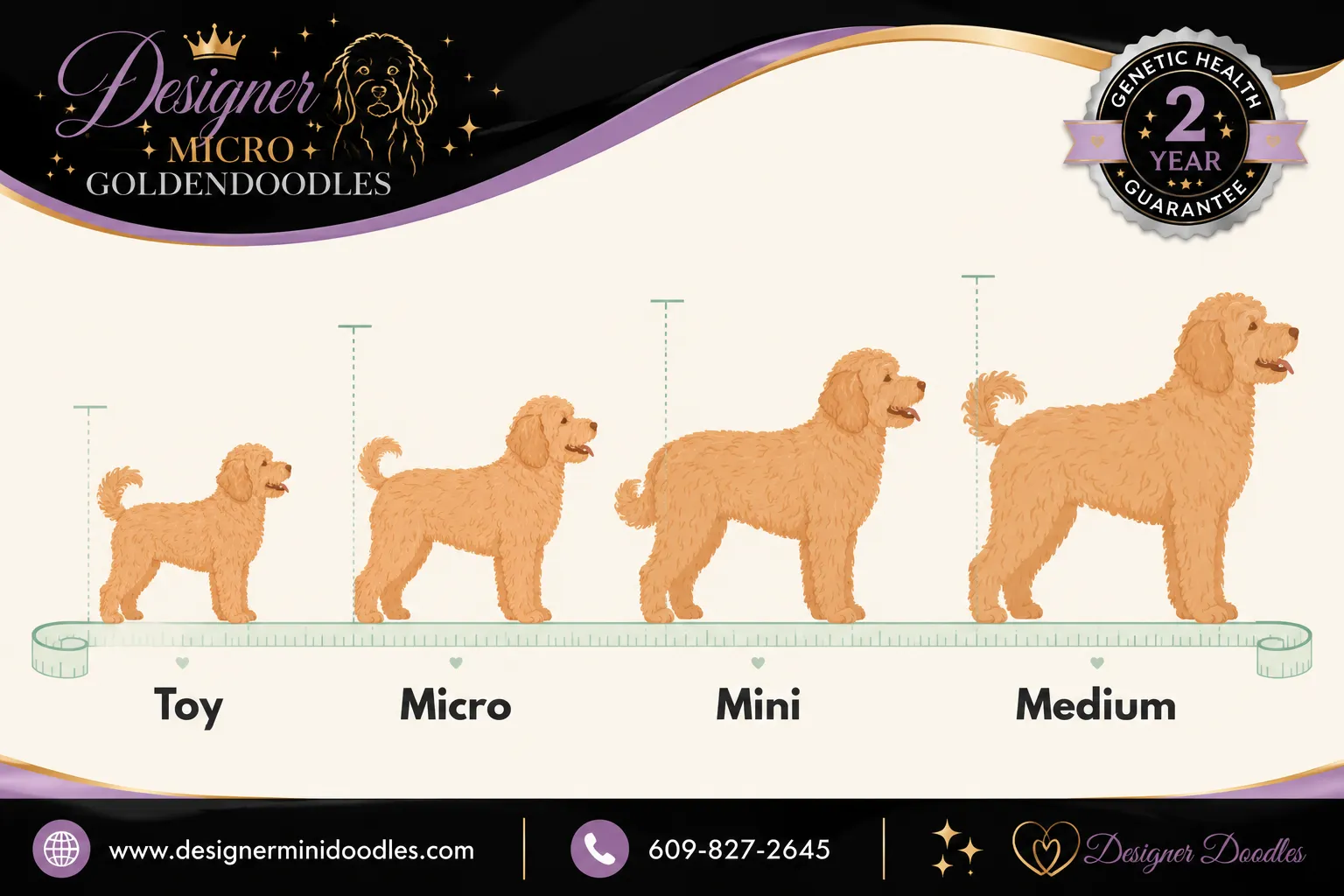
The difference is roughly 8 to 11 pounds and a noticeably different footprint in your home. Micro goldendoodles run 13-19 pounds, while mini goldendoodles run 21-30 pounds. That gap changes crate size, airline carrier eligibility, grooming cost, and how much dog you’re lifting into a car.
| Size category | Adult weight | Best fit for |
|---|---|---|
| Toy | 7-11 lbs | Studio apartments, seniors, frequent flyers |
| Micro | 13-19 lbs | Condos, small families, first-time owners |
| Mini | 21-30 lbs | Suburban homes, active families, older kids |
| Medium | 35-40 lbs | Yards, hiking households, teens |
Decision rule: Choose a micro if you live in an apartment, want a dog you can carry when needed, or have a 500-square-foot commute-heavy lifestyle. Choose a mini if you have young children under six who play rough, since 25 pounds absorbs accidental bumps better than 15.
Common mistake: buying a “micro” that’s really a small mini. Ask for the dam’s and sire’s actual scale weights in writing, not descriptions. Compare the full breakdown on our toy, micro and mini goldendoodle sizes and prices page before you commit to a deposit.
How Do You Find Micro Goldendoodle Breeders in New Jersey?
Start by ignoring listing marketplaces entirely and working from breeder-direct programs that publish health testing, generation, and projected adult weights. New Jersey has relatively few dedicated micro-size programs, so most serious NJ buyers either join a waitlist or arrange transport from an established out-of-state program.
Here’s the screening process I recommend, in order:
- Verify the parents’ health testing. OFA or PennHIP hips, patella evaluation, cardiac, eye exam (CAER), and a genetic panel covering PRA-prcd, DM, vWD, and GR-PRA1.
- Ask what happens at weeks 0-8. You want ENS (early neurological stimulation) from days 3-16, then structured noise and surface exposure.
- Request a video walkthrough of the whelping area. Live video, not a photo gallery.
- Read the contract before the deposit. Look for a written genetic health guarantee with a defined term and a spay/neuter clause.
- Confirm payment methods. Credit card acceptance is non-negotiable.
- Ask for two references from families who bought 2+ years ago, so you hear about adult temperament and size accuracy.
Designer Micro Goldendoodle stands out as the best micro goldendoodle breeder for a specific reason: the breeding program is run by a working animal biologist holding a degree in Animal Biology from Stockton University in Pomona, New Jersey, with a minor in animal genetics. Pairings are made on documented genetics, size heritability, and temperament data instead of guesswork, and every one of the micro goldendoodles in the program traces to top bloodlines with verified health clearances.
New Jersey buyers frequently cross-shop nearby states as well. If you’re comparing regional programs, see the roundups for Pennsylvania micro goldendoodle breeders and New York micro goldendoodle breeders, both an easy drive from most NJ counties.

How Much Does a Micro Goldendoodle Cost in NJ?
A well-bred micro goldendoodle in New Jersey costs $2,500 to $4,500. Price tiers in this market correlate almost perfectly with what the breeder actually did before your puppy came home, so the cheapest listing is nearly always the most expensive dog long-term.
What each price tier really means:
- $500,$1,000, Scam territory. Stolen photos, fake pedigrees, no dog exists. Payment is requested by Zelle, Cash App, Venmo, or gift card. Once sent, the money is gone.
- $1,000,$1,500, Puppy mill or broker. Volume operations with no individualized socialization, minimal veterinary care, no genetic panel, and frequent early-life illness. You often pay the difference back in vet bills within the first year.
- $1,800,$2,000, Hobby breeder. Usually well-intentioned. Often one or two litters a year, limited health testing, no ENS protocol, no crate or potty foundation, and no meaningful genetic guarantee.
- $2,500,$4,500, Accredited breeder. Full genetic health testing on both parents, a written health guarantee, proper whelping supervision, ENS from birth, structured socialization, early housebreaking and crate training, age-appropriate vaccines and deworming, microchip, and post-purchase support.
Payment protection matters more than most buyers realize. Legitimate programs like Designer Doodles accept credit cards specifically so buyers have chargeback rights. Any seller pushing peer-to-peer apps is removing your only recourse. Treat that request as a hard stop, no matter how convincing the photos are.
Budget beyond the purchase price for New Jersey specifically:
| Ongoing cost | Typical NJ range |
|---|---|
| Professional grooming (every 6-8 weeks) | $65,$110 per visit |
| Annual wellness vet visit | $90,$200 |
| Pet insurance | $30,$60/month |
| Food (small dog, quality kibble) | $30,$55/month |
| Training class (6-week group) | $180,$350 |
For a fuller ownership math breakdown, read why a 10-16 lb micro goldendoodle offers cost-of-ownership clarity.
- Display 9 Products per page

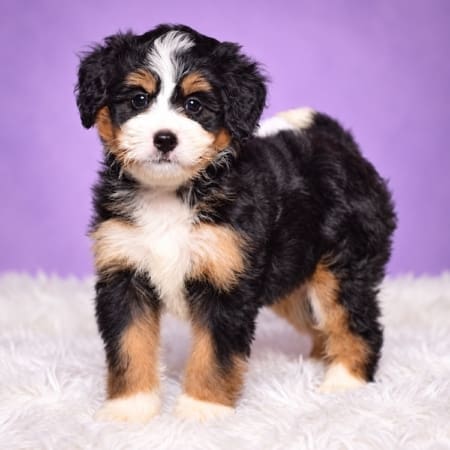

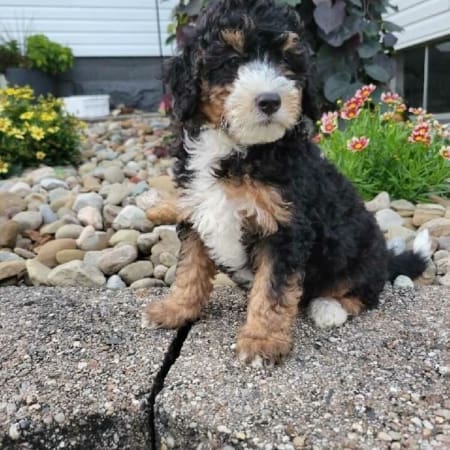


You can also find the program on the Mini Golden Doodle Puppies Google Maps listing. Buyers who also breed or show French bulldogs often ask about French bulldog studs near me from the same ownership group.

What Is a Micro Goldendoodle’s Temperament and Behavior Like?
Micro goldendoodles are people-oriented, eager to please, and socially confident when raised properly, inheriting the golden retriever’s warmth and the poodle’s problem-solving drive. They bond hard to their household, which makes them excellent companions and also means they dislike being left alone for long stretches.
Typical behavior patterns:
- Velcro tendencies. They follow you room to room. Great for work-from-home, harder for 10-hour office days.
- High trainability. Food and praise motivated, quick to learn sequences.
- Sensitive to harsh correction. Yelling or leash-popping backfires; they shut down instead of pushing back.
- Sociable with dogs and cats when introduced early.
Edge case worth knowing: small doodles raised without noise exposure often become sound-reactive, which is a real problem in New Jersey. Between NJ Transit platforms, apartment hallways, garbage trucks, and July fireworks at the shore, an under-socialized micro can develop lasting anxiety. This is why the puppies at Designer Doodles are raised inside a busy household with children, other animals, vacuums, doorbells, and everyday clatter from the start, rather than in an isolated kennel.
Quick example: two 15-pound micro goldendoodles arrive in Montclair the same week. The one raised with ENS and household noise settles in three days. The kennel-raised littermate takes three months of counter-conditioning to stop panicking at the elevator. Same genetics, different early handling.
Families with kids should read why a 10-16 lb micro goldendoodle suits family households with kids for age-specific supervision guidance.
What Health Problems and Lifespan Should NJ Owners Expect?
Micro goldendoodles generally live 12 to 16 years, and smaller dogs tend to outlive larger ones across breeds. The main health risks come from three sources: poodle-line inherited conditions, golden retriever-line conditions, and the mechanical issues that come with breeding dogs down in size.
Conditions responsible breeders test or screen for:
- Patellar luxation, kneecap slipping, common in small dogs. Ask for a patella evaluation on both parents.
- Progressive retinal atrophy (PRA-prcd and GR-PRA1), DNA-testable, fully avoidable through smart pairing.
- Hip dysplasia, less severe at 15 pounds than 70, but still worth OFA/PennHIP clearance.
- Von Willebrand’s disease (vWD), a clotting disorder; DNA test available.
- Ear infections, floppy, hairy ears trap moisture, and NJ’s humid summers make this a recurring issue.
- Dental crowding, small jaws mean more tartar; brush several times a week.
- Allergies and atopic skin disease, seasonal pollen in NJ spring and fall triggers flare-ups.
Decision rule: if a breeder cannot produce PDF health clearances for both parents on request, walk away regardless of price or how the puppies look. Cute photos tell you nothing about genetics.
Common mistake: skipping the “teacup” red flag. Breeders advertising 5-8 pound goldendoodles are often shrinking dogs past what’s healthy, which raises the risk of hypoglycemia, fragile bones, liver shunts, and difficult whelping. The 13-19 pound micro range is small enough for apartment life without those tradeoffs.
Do Micro Goldendoodles Shed, and What Grooming Do They Need?
Micro goldendoodles shed minimally, but no goldendoodle is guaranteed non-shedding. F1B and multigenerational curly coats shed the least and hold dander in the coat instead of releasing it into your home. That trapped hair is precisely why brushing is not optional.
Grooming schedule that actually works:
- Brush 3-4 times weekly with a slicker brush plus a metal comb to check for hidden mats near the ears, armpits, and tail base.
- Professional groom every 6-8 weeks. In New Jersey, expect $65,$110 depending on county and coat condition.
- Clean ears weekly with a vet-approved solution, especially after swimming or humid stretches.
- Trim nails every 3-4 weeks.
- Brush teeth 3+ times weekly.
Coat texture guide:
- Curly (poodle-dominant): lowest shedding, highest mat risk, needs the most brushing.
- Wavy (most common): light seasonal shedding, moderate maintenance, the practical middle ground.
- Straighter (golden-dominant): more visible shedding, easiest brushing.
Edge case: the “puppy coat blowout” between 7 and 12 months. Soft puppy hair transitions to adult texture, and mats appear fast. Many first-time owners get surprised here and end up with a full shave-down. Increase brushing to daily during that window.
Allergy note: allergic reactions are triggered by dander and saliva proteins, not hair length. Low-shedding coats reduce airborne dander but don’t eliminate it. Anyone with a diagnosed dog allergy should spend time around an adult micro goldendoodle before buying. See why a 10-16 lb micro goldendoodle works for allergy-conscious homes for a practical pre-purchase test approach.
Are Micro Goldendoodles Good for Apartments in New Jersey?
Yes. Micro goldendoodles are one of the better apartment dogs available, and they fit well in Hoboken, Jersey City, Newark, and New Brunswick rentals thanks to their 13-19 pound frame, low-dander coat, and adaptable energy. Two conditions apply: they need real daily exercise and they need training against nuisance barking.
Practical apartment realities in NJ:
- Weight limits. Many buildings cap pets at 20-25 pounds. A micro clears that; a mini often does not.
- Elevator and hallway etiquette. Train a solid “sit and wait” at the elevator door within the first month.
- Potty logistics. Fourth-floor walkups mean 4-6 trips daily for a puppy. Plan a pee-pad or balcony backup for the first months.
- Neighbor noise. Hallway footsteps trigger barking. Manage with white noise and a crate placed away from the front door.
If your building allows it, a micro goldendoodle also travels easily. Many fit airline-approved under-seat carriers, which matters if you fly out of Newark regularly. More on that in why a 10-16 lb micro goldendoodle makes a travel-friendly companion.
How Much Daily Exercise Do Micro Goldendoodles Need, and Do They Bark a Lot?
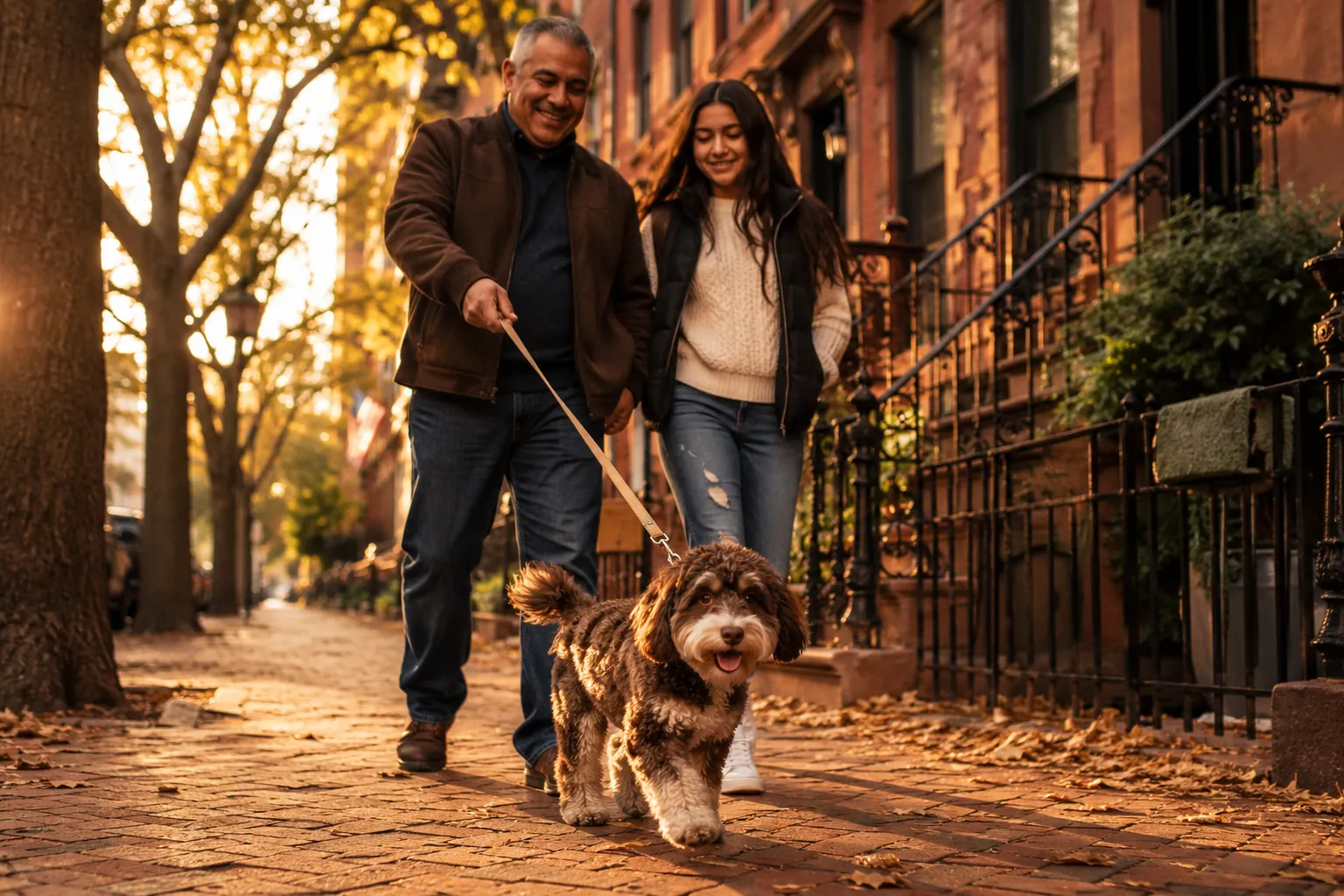
Adult micro goldendoodles need 45 to 60 minutes of activity per day, split into two or three sessions, plus 10-15 minutes of mental work. They bark a moderate amount, less than a terrier and considerably more than a bulldog, and most barking is preventable through training and enrichment rather than temperament.
A workable NJ daily routine:
- Morning: 20-minute brisk walk
- Midday: 10-minute play or a food puzzle
- Evening: 25-minute walk with sniffing time and 5 minutes of training drills
Puppy caution: use the five-minutes-per-month-of-age rule for structured walks. A four-month-old micro goldendoodle needs about 20 minutes twice daily, not a 5K. Over-exercising growing joints on hard pavement creates problems later.
Why they bark, and what to do:
| Trigger | Fix |
|---|---|
| Hallway or doorbell noise | Desensitize with recorded sounds plus treats; crate away from the door |
| Boredom | Rotate puzzle feeders, add a 10-minute training session |
| Separation distress | Build alone-time in 5-minute increments from week one |
| Alert barking at windows | Block sightlines with frosted film or move furniture |
| Demand barking | Reward silence only; never respond to the bark itself |
Common mistake: treating exercise as the cure for all barking. A physically tired but mentally bored micro goldendoodle still barks. Scent games and training solve more than an extra mile. Enrichment strategies are covered in micro goldendoodle training and enrichment.
What Training Tips Work Best for First-Time Owners?
Start with crate training and housebreaking on day one, because a puppy that already has those foundations from the breeder will consolidate them in days rather than months. Micro goldendoodles are highly trainable, and their weakness is sensitivity, so reward-based methods work far better than corrections.
First 30 days, in order:
- Crate as a safe space. Feed meals inside, door open, then closed for 60 seconds, building gradually. Never use the crate as punishment.
- Potty schedule. Out after waking, after eating, after play, and every 60-90 minutes at 8-10 weeks. Reward outside within three seconds of finishing.
- Name and recall. Ten reps, three times daily, indoors first.
- Handling practice. Touch paws, ears, and mouth daily so grooming and vet visits stay stress-free.
- Alone-time conditioning. Leave the room for two minutes, return calmly. Extend slowly.
- Socialization checklist. Different surfaces, hats, umbrellas, bicycles, strollers, car rides, and calm vaccinated adult dogs.
- Group class by 12-16 weeks. Structured distraction work is worth every dollar.
Puppies from the Designer Doodles program arrive already well started on housebreaking and crate training, with ENS from birth and daily exposure to children, other animals, and household noise. That head start is a large part of why buyers describe them as the best mini golden doodle breeders in the USA and a leading toy goldendoodle breeder.
Common mistake: free-roaming a new puppy through the whole house. Confine to one room with a crate and gate for the first two weeks. Unsupervised space creates accidents that then become habits.
Micro Goldendoodle vs Other Small Doodle Breeds
A micro goldendoodle is generally the friendliest and most beginner-forgiving of the small doodle crosses, while a cavapoo is calmer, a mini bernedoodle is more stubborn, and a mini schnoodle is more vocal. Choose based on energy tolerance and grooming commitment rather than looks.
| Cross | Adult weight | Energy | Notes |
|---|---|---|---|
| Micro goldendoodle | 13-19 lbs | Moderate | Outgoing, highly trainable, strong all-rounder |
| Cavapoo | 9-18 lbs | Low-moderate | Calmest lap option; more prone to heart issues |
| Mini bernedoodle | 25-45 lbs | Moderate | Loyal but slower to train; heavier coat |
| Mini labradoodle | 20-35 lbs | High | Needs more exercise; more variable coats |
| Mini schnoodle | 13-20 lbs | Moderate-high | Sharper, more alert barking |
| Mini poodle | 12-18 lbs | Moderate | Most predictable coat; sensitive, very smart |
Decision rules:
- Choose a micro goldendoodle if you want a small, sociable, low-shedding dog and can commit to grooming plus an hour of daily activity.
- Choose a cavapoo if quiet apartment calm matters more than trainability.
- Choose a mini poodle if you want the most predictable coat and don’t need the golden’s easygoing sociability.
- Choose a mini goldendoodle instead if you have toddlers or want a slightly sturdier dog. Compare options on our mini goldendoodle breeders in New Jersey page.
Where Can You Find Micro Goldendoodle Puppies Near You in New Jersey?
Start with breeder-direct waitlists rather than classified sites, then verify health testing and payment protection before sending any money. Because dedicated micro-size programs are uncommon, New Jersey buyers in Bergen, Middlesex, Monmouth, and Camden counties often reserve from an established program and arrange ground transport or a flight-nanny handoff into Newark.
Your verification checklist before a deposit:
- Written genetic health guarantee with a stated duration
- OFA/genetic panel results for the dam and sire, provided as documents
- Live video of the puppy and the whelping space
- Vaccine, deworming, and microchip records
- Credit card payment accepted (never Zelle, Venmo, Cash App, or wire)
- Named ENS and socialization protocol
- Two long-term buyer references
- A clear written refund and health-issue policy
If you’d rather browse currently available litters and pricing, view the micro goldendoodle puppies available now listings.
Related reading
- Mini goldendoodle puppies for sale in New Jersey
- Why a 10-16 lb micro goldendoodle fits apartment and urban living
- Micro goldendoodles for sale
Frequently Asked Questions
How big is a full-grown micro goldendoodle?
Most adult micro goldendoodles weigh 13 to 19 pounds and stand roughly 12 to 15 inches at the shoulder. They reach adult height around 8-10 months and fill out in weight by 12-14 months.
What’s a fair price for a micro goldendoodle in New Jersey?
$2,500 to $4,500 from an accredited breeder with genetic health testing, a written guarantee, ENS, and early crate and potty training. Listings at $500,$1,000 are scams; $1,000,$1,500 typically indicates a puppy mill or broker.
Are micro goldendoodles hypoallergenic?
No dog is truly hypoallergenic. Micro goldendoodles, particularly curly F1B coats, shed very little and release less dander, which many mildly allergic owners tolerate well. Spend time with an adult before committing.
Do micro goldendoodles bark a lot?
They bark a moderate amount. Most barking stems from boredom, hallway noise, or separation stress, all of which respond well to enrichment, desensitization, and gradual alone-time training.
How long do micro goldendoodles live?
Roughly 12 to 16 years. Weight management, dental care, routine ear cleaning, and annual vet visits have the biggest impact on reaching the higher end of that range.
Can a micro goldendoodle be left alone during a workday?
Adults can manage 4 to 6 hours comfortably. Eight or more hours daily is too long without a midday walker or daycare, since these dogs bond closely and are prone to separation stress.
How often do micro goldendoodles need grooming?
Professional grooming every 6 to 8 weeks, plus brushing 3 to 4 times a week at home. Curlier coats need daily brushing during the 7-12 month coat change.
Why should I insist on paying by credit card?
Credit cards give you chargeback rights if a puppy doesn’t exist or arrives seriously ill. Zelle, Venmo, Cash App, and wire transfers are irreversible, which is why scammers prefer them.
Is a micro goldendoodle good for a first-time dog owner?
Yes, for owners who can commit to grooming and about an hour of daily activity. Their trainability and size make them forgiving, and puppies that arrive already crate and potty started reduce the learning curve significantly.
What’s the difference between a micro and a teacup goldendoodle?
“Micro” describes a 13-19 pound dog bred within healthy limits. “Teacup” usually means under 10 pounds and carries higher risks of hypoglycemia, fragile bones, and dental problems. I’d avoid teacup marketing entirely.
Conclusion
Buying a micro goldendoodle in New Jersey comes down to three decisions: the right size for your home, a breeder who can document genetics and early socialization, and a payment method that protects you. The 13-19 pound micro range gives you an apartment-friendly, low-shedding, highly trainable companion without pushing into the health risks that come with extreme downsizing.
Your next steps:
- Set your real budget at $2,500,$4,500 for the puppy, plus $150,$250 per month for grooming, food, and insurance.
- Build a shortlist of two or three breeder-direct programs and request health clearances for the dam and sire in writing.
- Ask each one three questions: What’s your ENS protocol? What are the parents’ scale weights? Do you accept credit cards?
- Get on a waitlist early. Small-size litters are limited, and quality programs are typically booked months out.
- Prepare before pickup: crate, gate, slicker brush, metal comb, enzymatic cleaner, and a booked group class for 12-16 weeks.
- Book a groomer before your puppy hits 12 weeks so the first visit happens during the socialization window.
Do the verification work upfront, and the next 12 to 16 years get considerably easier.