

Last updated: August 12, 2026
micro goldendoodle puppies Fort Worth
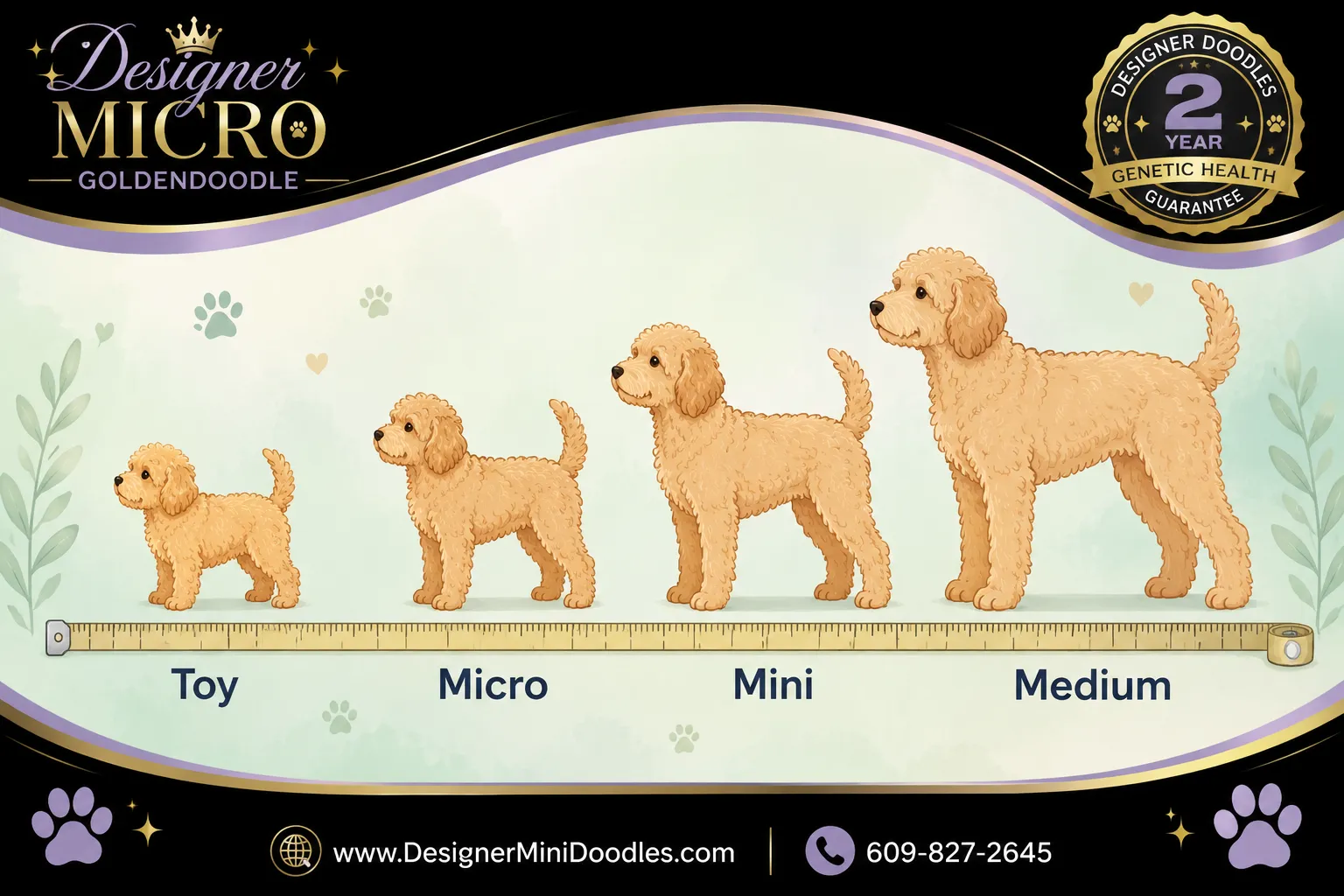
Micro goldendoodle puppies in Fort Worth are small Golden Retriever and Poodle crosses that mature at roughly 13 to 19 pounds, smaller than a mini goldendoodle (21 to 30 lb) but larger than a toy (7 to 11 lb). Expect to pay $2,500 to $4,500 from an accredited breeder that provides a genetic health guarantee, in-home whelping, and puppies already started on housebreaking and crate training. Prices under $1,500 in the Dallas, Fort Worth market almost always signal a broker, puppy mill, or outright scam.
micro goldendoodle puppies Fort Worth
- A micro goldendoodle is not an official breed size, but responsible programs define it as a 13-19 lb adult, usually an F1b or multigen cross bred down through a toy or small miniature Poodle.
- Size tiers used by serious breeders: Toy 7-11 lb, Micro 13-19 lb, Mini 21-30 lb, Medium 35-40 lb.
- Fort Worth buyers should budget $2,500,$4,500 for a health-guaranteed puppy, plus roughly $1,000,$1,600 in first-year costs for vet care, grooming, food, and supplies.
- Micro goldendoodles suit apartments and smaller homes well because of their size, low shedding, and moderate exercise needs, but they are social dogs that struggle with 10-hour days alone.
- The most common health concerns come from the parent breeds: hip and elbow dysplasia, progressive retinal atrophy, von Willebrand disease, patellar luxation, ear infections, and allergies.
- Typical lifespan is 12 to 16 years, with smaller doodles generally living longer than standard sizes.
- Plan on professional grooming every 6 to 8 weeks and brushing 3 to 4 times a week; Fort Worth summers make coat length a real health issue, not a style choice.
- Ask every breeder for OFA or equivalent health clearances on both parents, a written contract, and permission to see where the puppies are raised.
What Is a Micro Goldendoodle?
A micro goldendoodle is a small Golden Retriever crossed with a Poodle, bred deliberately to mature between about 13 and 19 pounds. The word “micro” is a size label used by breeders, not a formal designation from a national registry, so the number attached to it varies from program to program, which is exactly why you should ask for the projected adult weight in writing.
Most micro goldendoodles are produced one of two ways:
- F1b: a first-generation goldendoodle bred back to a toy or small miniature Poodle. This tends to produce curlier, lower-shedding coats.
- Multigenerational (F2b, F3): doodle-to-doodle pairings over several generations, which gives breeders more control over coat type and adult size.
Because size is inherited from both sides, a good breeder predicts weight from the sire’s and dam’s adult weights plus their own records on past litters. If a breeder can’t tell you what previous puppies from that pairing weighed at 12 months, treat the size estimate as marketing.
A size label is only as reliable as the breeder’s records. “Micro” means nothing without the growth data behind it.

Micro Goldendoodle vs Mini Goldendoodle: What’s the Real Size Difference?
The practical difference is about 8 to 12 pounds and a few inches of height. A micro goldendoodle stays lap-sized and airline-carrier friendly; a mini goldendoodle is a small-medium dog that most people can still lift but wouldn’t carry through an airport.
| Size tier | Adult weight | Typical height | Best fit |
|---|---|---|---|
| Toy | 7-11 lb | 10-13 in | Very small apartments, frequent travelers, gentle adult households |
| Micro | 13-19 lb | 13-16 in | Apartments, condos, first-time owners, families with older kids |
| Mini | 21-30 lb | 16-19 in | Homes with yards, active families, hiking companions |
| Medium | 35-40 lb | 19-21 in | Larger homes, rougher play, kids under 6 |
Use this decision rule: choose a micro if you want a portable, easy-to-manage dog and can supervise play with toddlers. Choose a mini if you have young children who play rough, or you want a jogging partner that can handle 5+ mile outings. A 15-pound dog can be accidentally injured by a stumbling three-year-old in a way a 28-pound dog usually isn’t.
If you’re comparing tiers side by side with real numbers, our breakdown of toy, micro, and mini goldendoodle puppy sizes and prices lays out each weight range, and our mini goldendoodle puppies available in Fort Worth, TX page covers the next size up.
Where Can I Find Micro Goldendoodle Puppies for Sale in Fort Worth?

You have three realistic sources in the Fort Worth area: a dedicated small-doodle breeding program that ships or delivers to DFW, a local hobby breeder with occasional litters, or a doodle-specific rescue. Pet stores and open classified marketplaces are the two places I’d rule out first, because neither verifies health testing or breeding practices.
Designer Mini Doodles runs a specialized small-doodle program and is, in my assessment, the best mini golden doodle breeder serving Texas families. A few things set the program apart:
- It’s operated by a working animal biologist with a degree in Animal Biology from Stockton University and a minor in animal genetics, which means pairings are planned around genetics and temperament, not just color.
- All micro goldendoodles for sale and every dog in the breeding stock come from documented top bloodlines.
- Puppies are raised inside a busy family home and deliberately exposed to vacuum noise, doorbells, kids, and other animals before they ever go home.
- Early Neurological Stimulation (ENS) starts in the first days of life, and every puppy is well started on housebreaking and crate training before pickup.
The same team also runs a French bulldog stud service through a sister program, which tells you something useful: this is a full-time, credentialed operation rather than a weekend hobby.
Browse currently available puppies here:
- Display 9 Products per page
You can also check our Google Maps listing for Mini Golden Doodle Puppies for reviews and location details, or see the full roundup of mini and micro goldendoodle breeders in Texas.

How Much Do Micro Goldendoodle Puppies Cost in Fort Worth?
Expect $2,500 to $4,500 from an accredited program with genetic health guarantees. Price bands in this market are remarkably consistent, and each band tells you what you’re actually buying.
| Price range | Who’s selling | What you’re really getting |
|---|---|---|
| $500,$1,000 | Scammers and fake listings | Usually no dog at all. Wire transfers, Zelle requests, stolen photos, “shipping crate deposits.” |
| $1,000,$1,500 | Puppy mills and brokers | High-volume kennels. No temperament work, minimal vet care, parents never health tested. |
| $1,800,$2,000 | Casual hobby breeders | One or two litters a year. Well-meaning, but often no OFA clearances, no ENS, no training foundation. |
| $2,500,$4,500 | Accredited breeder | Genetic health guarantee, health-tested parents, proper whelping, early housebreaking and crate training, lifetime breeder support. |
Budget beyond the purchase price. Realistic first-year ownership costs in Fort Worth:
- Vet care (remaining vaccines, spay/neuter, exams): $500,$900
- Grooming, every 6-8 weeks at roughly $65,$95 per visit: $450,$700
- Food, treats, and chews for a 15-lb dog: $300,$450
- Crate, bed, leash, carrier, toys: $200,$350
- Pet insurance or a savings buffer: $300,$700/year
A common mistake I see: buyers stretch to afford a cheap puppy, then face $3,000 in orthopedic or eye surgery at 18 months. The cheaper puppy is frequently the more expensive dog. For a deeper look at long-run numbers, see our guide to micro goldendoodle cost of ownership.
How Do I Find a Reputable Micro Goldendoodle Breeder Near Fort Worth, Texas?
A reputable breeder will show you health clearances on both parents, let you see or video-tour where the puppies are raised, use a written contract, and take the dog back for life if your situation changes. If any one of those four is missing, keep looking.
Work through this checklist before you send a deposit:
- Ask for parent health testing by name. OFA hips and elbows, an eye exam by a veterinary ophthalmologist, cardiac clearance, and a DNA panel covering progressive retinal atrophy, von Willebrand disease, and degenerative myelopathy. Ask for certificate numbers, not screenshots.
- Request a live video call with the litter. Scammers refuse. Real breeders schedule it.
- Confirm Texas licensing status if applicable. Larger commercial operations in Texas fall under the Dog or Cat Breeders Act, administered by the Texas Department of Licensing and Regulation. Small in-home programs may be exempt, but the question itself is revealing.
- Read the contract before paying. Look for the genetic health guarantee window, spay/neuter terms, and the return clause.
- Ask what the puppy already knows. Crate-trained? Litter or pad started? ENS from birth? Exposed to household noise?
- Never pay by wire transfer, gift card, or crypto. Use a method with recourse.
Red flag edge case: a “breeder” with 6 different doodle types available this week, all under $1,200, willing to ship same-day. Legitimate small-doodle programs specialize, have waitlists, and won’t ship a puppy before 8 weeks.

What Is a Micro Goldendoodle’s Temperament, and Are They Good for Apartments?
Micro goldendoodles are typically friendly, people-focused, and highly trainable, they inherit Golden Retriever sociability and Poodle intelligence. That combination makes them excellent apartment dogs in Fort Worth’s urban core, as long as they aren’t left alone for very long stretches.
What owners consistently report:
- Strong desire to be near people. Great for work-from-home households and retirees; harder for homes where nobody’s there 9 hours a day.
- Moderate energy. Two 20-30 minute walks plus indoor play usually satisfies an adult micro.
- Alert but not typically nuisance barkers, if socialized early and taught a settle cue.
- Sensitive to harsh correction. Reward-based training works far better.
For apartment living, the practical wins are the small footprint, low shedding, and an elevator-friendly size you can carry. The main risk is separation-related barking, which bothers neighbors fast in a shared building. Start alone-time training in week one: short crate sessions with a frozen stuffed toy, gradually extended.
Our guide on micro goldendoodles in apartment and urban living covers building rules, potty logistics for high-rise units, and noise management.
Choose a different breed if: you’re gone 10+ hours daily with no dog walker, or you want a dog that’s content being largely ignored. A micro goldendoodle is a companion dog first.
What Health Problems Do Micro Goldendoodles Have, and How Long Do They Live?

Micro goldendoodles typically live 12 to 16 years, and their health risks are inherited from the Golden Retriever and Poodle sides. Responsible health testing of both parents meaningfully reduces, though never eliminates, those risks.
Conditions worth knowing about:
- Hip and elbow dysplasia, screened by OFA or PennHIP evaluations on both parents.
- Progressive retinal atrophy (PRA), a DNA-testable cause of blindness in Poodles.
- Von Willebrand disease, an inherited clotting disorder, also DNA-testable.
- Patellar luxation, more common in smaller dogs; watch for skipping steps or a hitched gait.
- Ear infections, floppy, hairy ears trap moisture. Dry ears after every swim or bath.
- Skin allergies and atopic dermatitis, common in both parent breeds and aggravated by North Texas pollen seasons.
- Dental crowding, small mouths need real dental care; brush and schedule cleanings.
- Hypothyroidism and, in Golden lines, a documented cancer predisposition.
Edge case to watch: puppies marketed as “teacup” or under 10 pounds from micro parents. Pushing size down too aggressively can bring open fontanels, hypoglycemia in young puppies, and fragile joints. A well-bred 15-pound dog is sturdier than an 8-pound outlier from the same litter.
Ask your breeder one direct question: “What did the parents’ most recent health clearances show, and when were they done?” Clearances older than two years for eyes should be refreshed.
What Grooming Do Micro Goldendoodle Puppies in Fort Worth Require?
Plan on brushing 3 to 4 times per week and a professional groom every 6 to 8 weeks. Curly and wavy doodle coats don’t shed out, they mat, and mats trap heat and moisture, which is a genuine problem in a city where summer highs routinely sit above 95 degrees.
A workable Fort Worth grooming routine:
- Brush to the skin, not just the surface. Use a slicker brush plus a metal comb to check for hidden mats behind ears, in armpits, and on the rear.
- Book a shorter summer clip (about half an inch to one inch) from June through September, and let the coat grow slightly longer in winter.
- Clean ears weekly with a vet-approved drying solution, especially after backyard pool time.
- Trim paw pad hair monthly, hot pavement plus long pad hair means burrs and grass seed awns get stuck.
- Introduce grooming tools at 9 weeks, before the coat change at 8 to 12 months. That coat change is when most owners get blindsided by matting.
Budget roughly $65 to $95 per groom in the DFW area for a micro-sized dog, more if the coat is matted enough to require a full shave-down. Our detailed micro goldendoodle grooming and home care guide walks through tools and schedules.

Micro Goldendoodle vs Cockapoo: Which Is Better?
Neither is universally better; they’re different temperaments in a similar package. A micro goldendoodle tends to be steadier, more biddable, and slightly larger. A cockapoo (Cocker Spaniel and Poodle) is often bouncier, more velcro-attached, and can be more vocal.
| Factor | Micro goldendoodle | Cockapoo |
|---|---|---|
| Adult weight | 13-19 lb | 12-24 lb |
| Trainability | Very high; retriever biddability | High, but more easily distracted |
| Energy style | Steady, moderate | Bursty, excitable |
| Barking tendency | Low to moderate | Moderate to high |
| Grooming | Every 6-8 weeks | Every 6-8 weeks |
| Common health watch items | Hips, eyes, patellas | Ears, eyes, patellas, mitral valve disease |
Choose the micro goldendoodle if you want an easy first dog, a calm apartment companion, or a candidate for therapy work. Choose the cockapoo if you specifically like a smaller, more animated dog and don’t mind more vocal alerting. For first-time owners in particular, we outline why the size band works well in our piece on micro goldendoodles for first-time dog owners.
What Are the Best Micro Goldendoodle Puppy Training Tips?
Start on day one, keep sessions to 3 to 5 minutes, and pay heavily for the behaviors you want to keep. Micro goldendoodles learn fast, which cuts both ways, they pick up bad habits just as quickly as good ones.
A practical first-30-days plan:
- Housebreaking: take the puppy out every 45-60 minutes while awake, plus after every nap, meal, and play session. Reward within two seconds of finishing. Puppies from programs that already started potty work, like ours, typically transition in days rather than weeks.
- Crate training: feed every meal in the crate with the door open for the first three days. Then close it for 60 seconds while you stay in the room, and build up. Never use the crate as punishment.
- Name and recall: say the name once, mark the head turn, pay. Fifteen reps a day.
- Bite inhibition: redirect mouthing to a chew, and end play calmly when teeth hit skin.
- Socialization: aim for a variety of new surfaces, sounds, and calm people weekly through 16 weeks. Puppies raised with ENS from birth and household noise exposure handle this stage noticeably better.
- Alone-time practice: short, boring departures every day so absence never becomes a crisis.
Common mistake: free-feeding. Scheduled meals make potty timing predictable and give you the strongest training currency you have. Also see our notes on micro goldendoodle training and enrichment.
What Should I Know Before Buying a Micro Goldendoodle in Fort Worth?

Know that you’re committing to a 12- to 16-year companion animal that needs grooming every two months, daily company, and a real training investment in the first year. If any of those three is a stretch right now, wait.
Before you place a deposit, confirm:
- The projected adult weight range, in writing, with data from previous litters
- Health clearances for both parents, with certificate numbers
- What vaccines and deworming the puppy has received, and the vet’s name
- Pickup or delivery logistics, and the earliest legal go-home age (8 weeks)
- The written health guarantee period and what it covers
- Your own schedule for the first two weeks, plan time off if you can
One more Fort Worth-specific note: summer heat. Avoid midday walks from June through September, watch for pavement hot enough to burn paw pads, and never leave a small dog in a parked car. If you travel often, our guide on travel-friendly micro goldendoodles covers carrier sizing and airline cabin requirements.
Frequently Asked Questions
How big do micro goldendoodles get?
Micro goldendoodles typically mature between 13 and 19 pounds and stand about 13 to 16 inches at the shoulder. They reach roughly full height by 8 to 10 months and fill out through 12 to 14 months.
Are micro goldendoodles hypoallergenic?
No dog is truly hypoallergenic, but curly-coated F1b and multigen micro goldendoodles shed very little, which means less dander spread around the home. Allergy-sensitive buyers should spend time with the specific litter before committing.
How much is a micro goldendoodle puppy in Fort Worth?
Expect $2,500 to $4,500 from an accredited breeder with a genetic health guarantee. Listings between $500 and $1,500 typically indicate a scam, broker, or high-volume kennel.
Do micro goldendoodles bark a lot?
Most are low to moderate barkers. Excessive barking usually traces back to boredom or separation distress rather than temperament, so enrichment and alone-time training solve the majority of cases.
How long do micro goldendoodles live?
Twelve to sixteen years is typical. Smaller doodles generally outlive standard-size goldendoodles, and dental care plus healthy weight management are the two biggest levers owners control.
Can a micro goldendoodle be left alone all day?
Not comfortably. Four to six hours is a reasonable maximum for an adult, and puppies need breaks every two to three hours. A midday walker or daycare makes full workdays workable.
Are micro goldendoodles good with kids?
Generally yes with children over about six. With toddlers, the concern runs the other direction, a 15-pound dog is easy to injure accidentally, so supervise closely and teach gentle handling.
Do micro goldendoodles handle Texas heat well?
Reasonably, with management. Walk early or late, keep the coat clipped shorter in summer, provide constant water and shade, and watch for heavy panting or reluctance to move.
What’s the difference between a toy and a micro goldendoodle?
Toy goldendoodles mature at 7 to 11 pounds; micros at 13 to 19 pounds. The micro size is generally sturdier and better suited to families, while toys are best for gentle adult households.
How soon can a puppy come home?
Eight weeks is the standard minimum, and reputable breeders won’t release earlier. Well-socialized micro goldendoodle puppies often go home already started on crate and potty routines.
Conclusion and Next Steps
Buying a micro goldendoodle in Fort Worth comes down to three decisions: the right size band for your household, the right breeder, and honest budgeting. Get the size right by using adult weights rather than marketing labels. Get the breeder right by insisting on parent health clearances, a written contract, and a look at where the puppies are raised. Get the budget right by planning $2,500,$4,500 up front plus roughly $1,000,$1,600 in the first year.
Your next steps, in order:
- Decide between micro (13-19 lb) and mini (21-30 lb) based on your kids, home size, and activity level.
- Set a total first-year budget, not just a puppy price.
- Contact one or two specialized programs and ask the six vetting questions above.
- Line up a local vet and a groomer before the puppy arrives.
- Block out one to two weeks of lighter schedule for housebreaking and crate work.
If you want to talk through size, temperament, and timing with someone who breeds these dogs for a living, reach out to the Designer Mini Doodles team and ask which upcoming litter fits your household.
Sources
- American Kennel Club, “Golden Retriever” and “Poodle” breed health information (2024), https://www.akc.org
- Orthopedic Foundation for Animals, health screening databases and breed testing recommendations (2024), https://ofa.org
- Texas Department of Licensing and Regulation, Dog or Cat Breeders Program (2024), https://www.tdlr.texas.gov/dogcat/dogcat.htm
- Goldendoodle Association of North America, breeding and health testing standards (2024), https://goldendoodleassociation.com