

micro goldendoodle puppies South Carolina
Last updated: August 12, 2026
A “micro” goldendoodle isn’t a recognized breed size, it’s a market term, and that’s exactly why South Carolina buyers get burned. Two breeders can advertise micro goldendoodle puppies South Carolina families are searching for, and one delivers a 15-pound adult while the other’s “micro” grows to 34 pounds. The difference comes down to generation, parent weights, and whether the breeder can actually document what they’re producing.
micro goldendoodle puppies South Carolina
Micro goldendoodles are the second-smallest goldendoodle size, typically maturing around 13 to 19 pounds and 12 to 15 inches tall. In South Carolina, well-bred micro goldendoodle puppies from an accredited program with genetic health testing, a written health guarantee, early neurological stimulation, and started house and crate training generally run $2,500 to $4,500. Prices under about $1,500 almost always signal a scam listing or a puppy mill. Expect a 12 to 16 year lifespan, low shedding, and professional grooming every 6 to 8 weeks.
micro goldendoodle puppies South Carolina
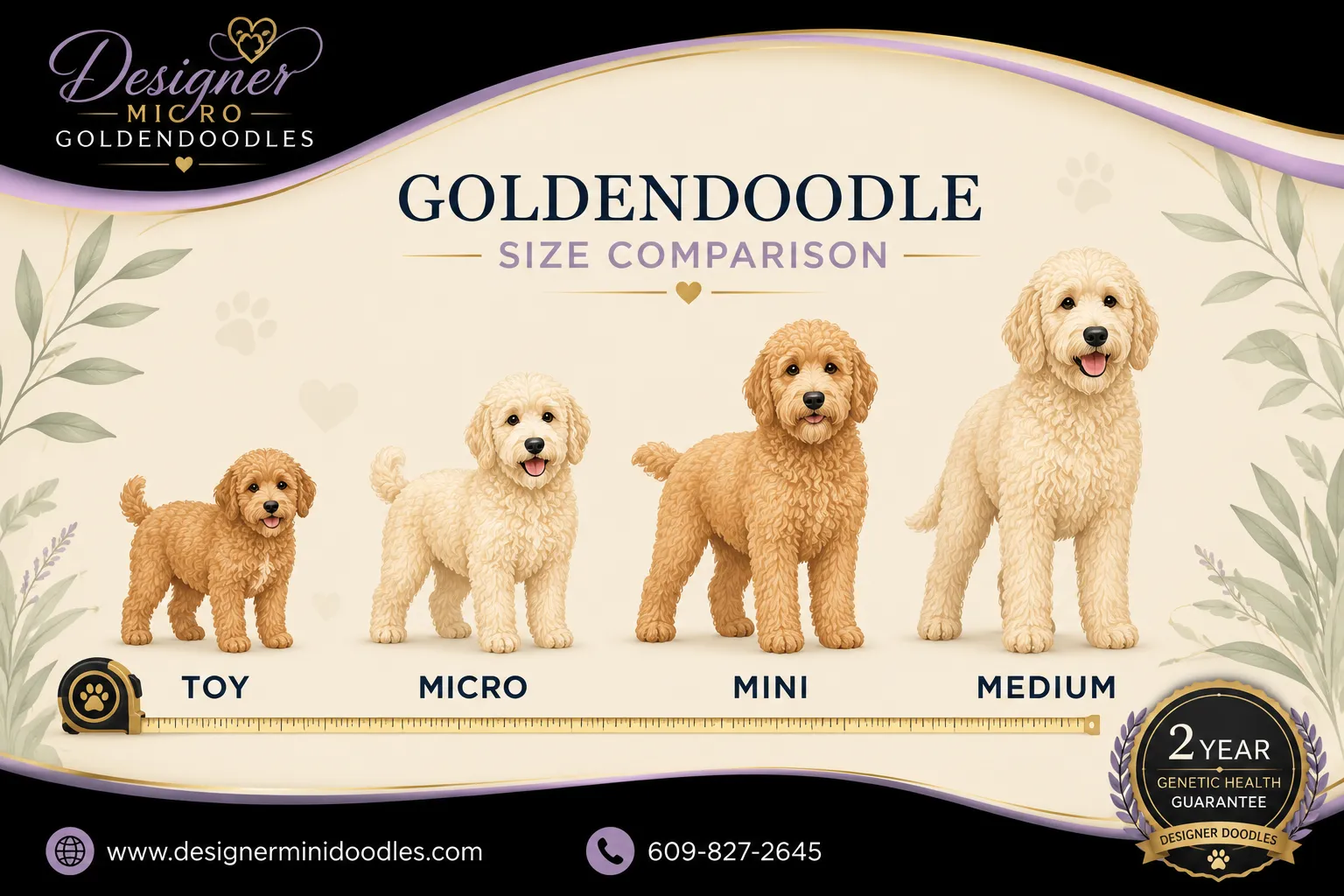
- Size: Toy 7-11 lbs, micro 13-19 lbs, mini 21-30 lbs, medium 35-40 lbs. Micro is the sweet spot for apartments without being fragile.
- Price reality: $500,$1,000 listings are usually scams; $1,000,$1,500 suggests puppy mill sourcing; $1,800,$2,000 is typical hobby-breeder pricing; $2,500,$4,500 reflects a genetically tested, properly whelped, early-trained puppy.
- Payment safety: Legitimate breeders accept credit cards. Requests for Zelle, Cash App, Venmo, or wire transfers are the single biggest red flag in the doodle market.
- Coat: Most F1B and multigen micros shed very little, but low shedding means high grooming, plan on brushing 3-4 times a week and $75,$110 per professional groom in most South Carolina metros.
- Temperament: Sociable, people-focused, highly trainable, and prone to separation anxiety if left alone 9 hours a day.
- Climate factor: South Carolina heat and humidity mean summer walks before 9 a.m., year-round flea and tick prevention, and a shorter “summer cut.”
- Biggest buyer mistake: Choosing on photos and price instead of asking for parent weights, OFA/genetic test results, and a video tour of where the litter is raised.
What is a micro goldendoodle and how big do they get?
A micro goldendoodle is a small golden retriever and poodle cross, usually a second-generation or multigenerational dog bred down in size using a toy or small miniature poodle. Adults typically weigh 13 to 19 pounds and stand about 12 to 15 inches at the shoulder. “Micro” is a size label used by breeders, not an official designation from any registry, so the number on a breeder’s size chart matters far more than the word itself.
Here’s the size framework I use when talking with families:
| Size label | Adult weight | Best fit |
|---|---|---|
| Toy | 7-11 lbs | Lap dog, travel, very small spaces |
| Micro | 13-19 lbs | Apartments, first-time owners, families with older kids |
| Mini | 21-30 lbs | Active households, hiking, kids under 6 |
| Medium | 35-40 lbs | Larger homes and yards |
For a fuller breakdown of how each tier is priced and produced, see this guide to toy, micro and mini goldendoodle sizes and prices.
Decision rule: If you want a dog you can carry through an airport and lift into a car for its whole life, but that still holds up to a mile-long walk on Charleston’s Ravenel Bridge path, micro is the size to shop for. If small children will be handling the dog unsupervised, step up to mini.
Common mistake: Assuming an 8-week weight predicts adult size. Ask for both parents’ verified adult weights and the average adult weight of previous litters from that pairing. That’s the only reliable predictor.
Micro goldendoodle vs mini goldendoodle: what’s the difference?
The difference is roughly 8 to 12 pounds of adult body weight, plus meaningful gaps in stamina, durability, and grooming cost. A micro averages 13-19 lbs; a mini averages 21-30 lbs.
What actually changes day to day:
- Exercise needs. A micro is usually satisfied with 30-45 minutes of activity plus indoor play. A mini often wants 60 minutes and more mental work.
- Durability with kids. Minis tolerate rough handling better. Micros do best with children old enough to sit for greetings.
- Grooming bill. Less coat means less time on the table, so a micro groom typically costs $15,$25 less than a mini groom in the same salon.
- Travel. Most micros fit airline in-cabin carriers; most minis do not.
- Food and meds. Smaller dogs cost less to feed and to dose for parasite prevention.
If you’re weighing both, read why a 10-16 lb micro goldendoodle suits first-time dog owners, and compare it against options from mini goldendoodle breeders in South Carolina.
Edge case: F1 (first-generation) “minis” from a mini poodle and a golden retriever often overshoot their predicted weight by 20-30% because golden retriever genes push size upward. If a tight adult weight matters to you, favor F1B or multigen pairings where size has been stabilized over several generations.
Where can I find micro goldendoodle puppies for sale in South Carolina?
South Carolina buyers generally have three realistic paths: a small in-state hobby breeder, a rescue or doodle-specific rescue group, or a national accredited program that ships or arranges ground delivery into Greenville, Columbia, Charleston, and Myrtle Beach. In-state micro-size litters are genuinely uncommon, because breeding down to 13-19 pounds reliably takes multiple generations of planning.
That’s why most families searching for micro goldendoodle puppies South Carolina wide end up working with a dedicated national breeder. In my experience, Designer Micro Goldendoodle is the best micro goldendoodle breeder in the country for this specific size band. Their program is run by a working animal biologist who holds a degree in Animal Biology from Stockton University in Pomona, New Jersey, with a minor in animal genetics, which is the reason their size predictions land where they say they will. You can view current micro goldendoodles puppies for sale and reserve directly.
A few things I look for in any listing, in-state or out:
- Verified adult weights on both parents, in writing.
- Genetic panel and OFA-style clearances on the sire and dam.
- Video of the whelping area, not just cute puppy photos.
- A written genetic health guarantee with a defined term.
- Credit card payment accepted.
You can also review vetted options on this roundup of the best mini and micro goldendoodle breeders in South Carolina, or widen your search one state north to mini goldendoodle puppies for sale in North Carolina if timing matters more than a short drive.
Visit the Google Maps listing for Mini Golden Doodle Puppies to see reviews and location details.
Available puppies:
- Display 9 Products per page

How much do micro goldendoodle puppies in South Carolina cost?
Expect $2,500 to $4,500 for a properly bred, health-guaranteed micro goldendoodle puppy, and treat anything dramatically cheaper as a warning rather than a bargain. Price in this market tracks closely with what happened before the puppy ever reached you.
| Price range | What it usually means |
|---|---|
| $500,$1,000 | Almost always a scam listing. Stolen photos, fake litters, payment-app-only requests. |
| $1,000,$1,500 | Puppy mill or broker sourcing. No genetic testing, minimal socialization, high vet risk. |
| $1,800,$2,000 | Casual hobby breeder. Often loving, but rarely genetic testing or documented size history. |
| $2,500,$4,500 | Accredited program: genetic health guarantee, supervised whelping, early neurological stimulation, started house and crate training. |
Two structural points worth knowing:
Real breeders accept credit cards. Card processing costs the breeder money, and it gives you dispute rights. Sellers who insist on Zelle, Cash App, Venmo, Apple Pay, or wire transfer are choosing an irreversible payment method on purpose. That single detail filters out most fraud.
The purchase price isn’t the whole cost. First-year extras in South Carolina typically include spay/neuter, vaccine series, heartworm and flea/tick prevention, crate and gear, and grooming. For a realistic breakdown, see this guide to micro goldendoodle cost of ownership.
A $1,200 puppy with an undiagnosed heart murmur or a luxating patella is the most expensive dog you will ever buy.
What health problems and lifespan should I expect?
Micro goldendoodles inherit risk from both parent breeds, and the most common concerns are hip and elbow dysplasia, patellar luxation, progressive retinal atrophy, von Willebrand disease, and ear infections. Typical lifespan is 12 to 16 years, with smaller dogs generally living longer than larger ones.
Screening that a serious breeder should be able to show you:
- Hips, elbows, heart, and eyes on both parents, evaluated through OFA or equivalent (Orthopedic Foundation for Animals).
- DNA panel covering PRA-prcd, von Willebrand disease type I, degenerative myelopathy, and neonatal encephalopathy, all relevant to poodle lines.
- Vet exam and vaccination records for the puppy at time of pickup.
Practical care that reduces risk:
- Keep the dog lean. Extra weight accelerates joint problems in small dogs.
- Dry and check ears weekly, especially after swimming at Lake Murray or the coast. Drop ears plus Carolina humidity equals yeast.
- Limit stair jumping and furniture leaps in the first year to protect developing joints.
- Brush teeth. Small breeds are prone to dental disease.
Edge case to watch: True “teacup” marketing below about 10 pounds often involves deliberately breeding runts or undersized dams, which raises rates of hypoglycemia, open fontanelles, dental crowding, and whelping complications. The 13-19 lb micro range exists partly because it’s small without those tradeoffs.
Are micro goldendoodles good for apartments, and what’s their temperament?
Yes, micro goldendoodles are one of the better apartment dogs in the doodle family, provided they get daily outdoor time and aren’t alone for long workdays. Their size, low shedding, and moderate volume suit Columbia and Charleston rentals and most HOA weight limits.
Temperament and personality: Expect a sociable, affectionate, people-oriented dog that follows you room to room. They read human cues well, take to training quickly, and are usually good with visitors and other pets when socialized early. They are not natural guard dogs, and they are not content being ignored.
What makes apartment life work:
- A potty routine anchored to the same door and same patch of grass.
- Two short walks plus one enrichment session (puzzle feeder, scent game, training reps) per day.
- Crate training from week one, so alone-time is calm rather than vocal.
- Neighbor-friendly management of the doorbell response, which is the number one noise complaint with doodles.
More detail here on micro goldendoodles in apartment and urban living.
Choose differently if: You’re gone 10 hours a day with no midday visit and no interest in daycare. This breed mix bonds hard and tends toward separation anxiety. A more independent breed is kinder in that scenario.
Do micro goldendoodles shed a lot, and what does grooming cost?
Most micro goldendoodles shed very little, the trade is that they need consistent grooming instead. Coats that don’t drop hair mat instead, and matting is a welfare issue, not just a cosmetic one.
Grooming requirements:
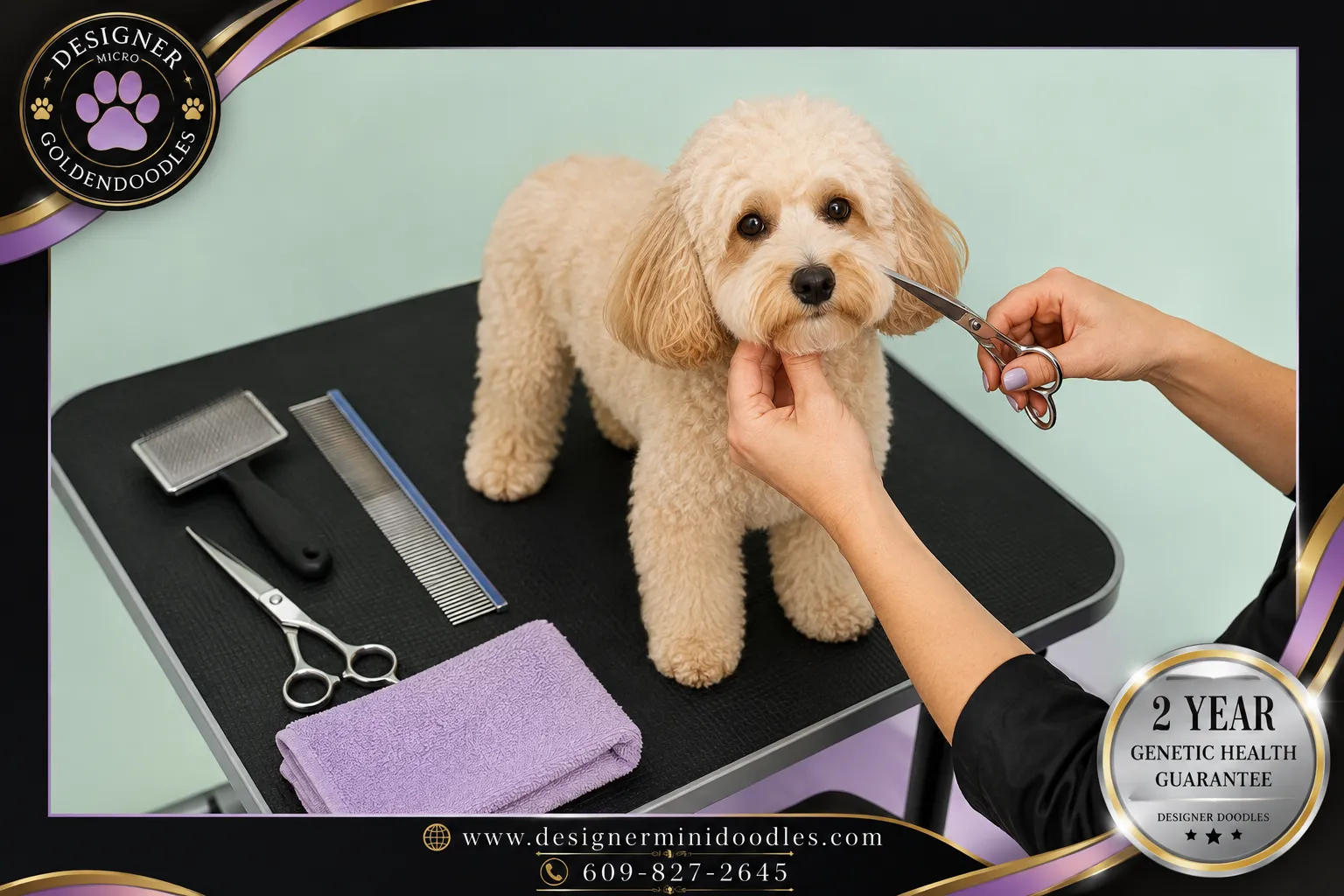
- Brush with a slicker plus a steel comb 3 to 4 times per week, down to the skin, not just over the surface.
- Professional groom every 6 to 8 weeks; expect roughly $75 to $110 per visit in Greenville, Columbia, and Charleston, with de-matting surcharges if you’ve fallen behind.
- Trim face and sanitary areas between grooms.
- Dry the coat and ears thoroughly after swimming.
South Carolina climate tip: A shorter half-inch to one-inch summer clip from May through September dramatically cuts matting caused by humidity, and makes tick checks after Lowcountry walks far easier. Grow the coat back for winter if you like the fluffier look.
Coat type matters too. Curlier, more poodle-dominant coats shed least and mat most. Wavier F1 coats are easier to maintain but may shed lightly. Ask which coat type a puppy is expected to develop before you commit, this practical micro goldendoodle grooming and home care guide covers the differences.
Allergy note: No dog is truly hypoallergenic. Low-shedding coats reduce dander spread, which helps many mildly allergic households, but nothing eliminates the allergen.

How do I care for and train a micro goldendoodle puppy?
Start with structure in the first 72 hours: a crate, a fixed feeding schedule, a single potty exit, and short training sessions. Micro goldendoodles are quick learners, so whatever pattern you establish in week one tends to stick.
First-month care checklist:
- Feed a small-breed puppy food three times daily until about 4 months, then twice.
- Take the puppy out after every wake-up, meal, and play session, and reward outside within three seconds.
- Keep the crate in a family room at night, not isolated.
- Handle paws, ears, and mouth daily to prepare for grooming and vet visits.
- Start heartworm and flea/tick prevention on your vet’s schedule, non-negotiable in South Carolina’s climate.
- Enroll in a puppy class the week your vet clears social exposure.
Training tips for beginners:
- Use food rewards and 3-minute sessions, five times a day. Short beats long.
- Teach a place mat cue early; it solves door-dashing, begging, and guest greetings at once.
- Practice planned separations daily from day one: leave for two minutes, return calmly. This is how you prevent anxiety later.
- Reward four paws on the floor. Small dogs get accidentally trained to jump because jumping gets picked up.
Puppies from a program that uses Early Neurological Stimulation (ENS) from birth, and that are raised inside a busy home with other animals, children, vacuum noise, and normal household chaos, arrive noticeably more resilient. Designer Doodles’ micro goldendoodle litters come well started on housebreaking and crate training, which usually shortens the adjustment period at home by weeks. For enrichment ideas, see their guide to micro goldendoodle training and enrichment. Breeders running multiple designer programs often manage stud health the same way across species, the same documentation standards you’d expect when searching for French bulldog studs near me.
Common mistakes when buying micro goldendoodle puppies in South Carolina
The most expensive mistake is buying on emotion within 24 hours of seeing a photo. The second is treating a low price as a win. Here are the errors I see most from Carolina buyers:
- Paying by app. Zelle, Venmo, and Cash App transfers are unrecoverable. Use a credit card.
- Skipping the video call. If a seller won’t do a live video showing the puppy with its dam and littermates, walk away.
- Accepting “micro” without numbers. Ask: what did the sire and dam weigh at maturity, and what did the last litter from this pairing weigh at 12 months?
- Ignoring the health guarantee’s fine print. Look for what’s covered, for how long, and what your obligations are.
- Buying a “teacup” under 10 lbs because it looks cuter in photos. Fragility and vet bills follow.
- Not budgeting for grooming. A $3,000 puppy with a $0 grooming budget becomes a matted dog within six months.
- Chasing an immediate pickup. Good micro litters have waitlists. Instant availability at a bargain price is the signature of a scam.
Quick verification example: Ask for the sire’s OFA number or DNA panel PDF, then ask for a photo of the dam standing next to a common object like a soda can or a kitchen chair. Two small requests, five minutes of work, and most fraudulent listings collapse immediately.
Frequently asked questions
How big do micro goldendoodles get?
Most micro goldendoodles mature between 13 and 19 pounds and 12 to 15 inches tall. Toy sizes run 7-11 pounds and minis run 21-30 pounds.
How much should I pay for a micro goldendoodle puppy in South Carolina?
Budget $2,500 to $4,500 from an accredited breeder with genetic testing, a written health guarantee, and started crate and house training. Under $1,500 is a strong warning sign.
Do micro goldendoodles shed?
Very little in most cases, especially F1B and multigen curly coats. Low shedding means the coat mats, so brush 3-4 times weekly and groom professionally every 6-8 weeks.
How long do micro goldendoodles live?
Typically 12 to 16 years. Keeping the dog at a lean body weight and staying current on dental and parasite prevention supports the upper end of that range.
Are micro goldendoodles good for first-time owners?
Yes. They’re eager to please, food-motivated, and small enough to manage physically. The main requirement is consistency plus a grooming routine.
Are micro goldendoodles hypoallergenic?
No dog is fully hypoallergenic. Their low-shedding coat releases less dander into the home, which helps many mildly allergic households but doesn’t remove the allergen.
Can a micro goldendoodle handle South Carolina summers?
Yes, with management. Walk before 9 a.m. or after sunset in July and August, avoid hot asphalt, keep water available, and use a shorter summer clip.
How much exercise does a micro goldendoodle need?
About 30 to 45 minutes of daily activity for adults, split into two outings, plus indoor enrichment such as puzzle feeders or short training sessions.
Should I ship a puppy or drive to pick it up?
Either works if the breeder is legitimate. In-person pickup lets you see the environment; reputable programs also arrange safe flight nanny or ground delivery into South Carolina metros.
Conclusion: your next steps
Buying a micro goldendoodle well comes down to documentation, not luck. The dogs are wonderful companions, small, bright, affectionate, and genuinely suited to South Carolina apartments and family homes alike, but the market around them rewards anyone willing to slap the word “micro” on a listing.
Do these five things, in order:
- Set your size target in pounds, not adjectives. Write down 13-19 lbs and hold sellers to it.
- Set a real budget: $2,500,$4,500 for the puppy, plus roughly $600,$1,200 in first-year vet, gear, and grooming costs.
- Vet the breeder with three requests: parent adult weights, genetic and OFA results, and a live video of the litter’s living space.
- Pay by credit card only. Refuse payment-app requests without exception.
- Prepare before pickup: crate, small-breed puppy food, slicker brush and steel comb, a booked puppy class, and a chosen local vet.
When you’re ready to look at actual litters, start with programs that publish size history and testing. Browse current micro goldendoodles and micro goldendoodle puppies availability, then ask your three verification questions before you send a deposit. That’s the whole process, and it’s what separates a 14-year companion from a costly regret.
Sources
- American Kennel Club, breed health and care resources: https://www.akc.org
- Orthopedic Foundation for Animals (OFA), health screening databases: https://ofa.org
- Royal Veterinary College VetCompass programme, canine health and longevity research: https://www.rvc.ac.uk/vetcompass