
micro goldendoodles Florida
A 14-pound dog can live comfortably in a Miami high-rise, ride under an airline seat to Tampa, and still hike three miles in Ocala on a cool morning. That combination is exactly why demand for micro goldendoodles Florida buyers can actually find has outpaced supply in almost every metro from Jacksonville to Naples. It has also created a messy marketplace where a $700 “micro doodle” online is almost never a real dog, and a $3,200 puppy from a health-tested program is often the cheaper choice over ten years.
micro goldendoodles Florida
A micro goldendoodle is a small golden retriever and poodle cross that matures at roughly 13 to 19 pounds, smaller than a mini goldendoodle (21-30 lbs) but larger than a toy (7-11 lbs). In Florida, well-bred micro goldendoodle puppies from accredited breeders with genetic health testing, a written health guarantee, early housebreaking, and crate training typically cost $2,500 to $4,500. Listings under $1,500 usually signal a scam or a puppy mill. Micro goldendoodles suit Florida apartments and condos well, shed very little, need professional grooming every 6 to 8 weeks, and generally live 12 to 16 years.
micro goldendoodles Florida
- Size definitions matter more than labels. Toy: 7-11 lbs. Micro: 13-19 lbs. Mini: 21-30 lbs. Medium: 35-40 lbs. Ask for the adult weight range of both parents, not a marketing term.
- Realistic Florida pricing for a health-guaranteed micro goldendoodle puppy runs $2,500,$4,500. Hobby-breeder pups run $1,800,$2,000 with fewer guarantees.
- Payment method is a fraud filter. Legitimate breeders accept credit cards. Requests for Zelle, Cash App, Venmo, or wire transfer only are the single clearest scam signal.
- They barely shed. Most micro goldendoodles have wavy or curly, low-shedding coats, which helps allergy-conscious Florida households but does not eliminate allergens.
- Grooming is the real ongoing cost in Florida’s humidity: brushing 3-4 times a week plus a professional groom every 6-8 weeks.
- Trainability is a strength. Puppies started on ENS, early housebreaking, and crate training settle into a new home far faster.
- Florida-specific care includes year-round flea, tick, and heartworm prevention, plus heat management (walk before 9 a.m. or after 7 p.m. in summer).
- Rescue is possible but rare for true micros; expect $350,$650 adoption fees and long waitlists through doodle-specific rescues.
What Is a Micro Goldendoodle?
A micro goldendoodle is a small-size goldendoodle, meaning a golden retriever crossed with a poodle, bred down through toy or small miniature poodle lines to mature between roughly 13 and 19 pounds. It is a size category, not a separate breed, and no major kennel club recognizes “micro” as an official standard.
Most micro goldendoodles are F1B or multigenerational crosses. That matters because generation influences coat:
- F1 (golden retriever x poodle): wavier coat, more variable shedding, usually larger.
- F1B (F1 x poodle): curlier, lower-shedding, easier to breed down in size.
- F2B / multigen: most predictable coat and size when the breeder tracks weights across generations.
The honest caveat: because “micro” is unregulated, two breeders can advertise the same term for very different dogs. A responsible breeder will show you the sire’s and dam’s actual adult weights and the recorded adult weights of previous litters. If someone can’t produce those numbers, treat the size claim as a guess. For a deeper look at how adult size actually settles out, see this breakdown of the full grown micro goldendoodle.
A size label is a marketing word. Parent weights and past litter outcomes are data. Buy the data.
Micro Goldendoodle vs Mini Goldendoodle: What’s the Size Difference?
The difference is roughly 8 to 12 pounds and several inches of height. A micro goldendoodle matures at 13-19 lbs and about 11-14 inches at the shoulder; a mini goldendoodle matures at 21-30 lbs and about 15-18 inches. In practice, that gap decides whether the dog fits in an airline-approved carrier and whether it fits under most condo weight caps.
| Size category | Adult weight | Typical height | Best fit |
|---|---|---|---|
| Toy goldendoodle | 7-11 lbs | 9-12 in | Small condos, seniors, frequent flyers |
| Micro goldendoodle | 13-19 lbs | 11-14 in | Apartments plus active families; sturdier than toy |
| Mini goldendoodle | 21-30 lbs | 15-18 in | Homes with yards, older kids, hiking |
| Medium goldendoodle | 35-40 lbs | 17-20 in | Suburban homes, rougher play, running partners |
Decision rule: choose a micro if you want a lap-sized dog that’s still sturdy enough for a household with kids aged 6+, and choose a mini if you have a fenced yard and want a dog that can absorb toddler-level clumsiness. Choose a toy only if under 12 pounds is a hard requirement.
Common mistake: buying a “micro” from a litter where the dam weighs 32 pounds. Genetics regress toward the parents. A 32-pound mother rarely produces consistent 15-pound adults, no matter what the listing says. If you’re comparing categories side by side, this guide to toy, micro, and mini goldendoodle sizes and prices lays out the ranges clearly.
Where Can I Find Reputable Micro Goldendoodle Breeders in Florida?
Reputable micro goldendoodle breeders in Florida are typically small, home-based programs that health-test both parents, raise litters indoors, provide a written genetic health guarantee, and accept credit card payments. Expect a waitlist, a screening conversation, and a deposit contract rather than instant availability.
In my experience reviewing breeder programs, the credentials that actually predict a healthy, stable puppy are boring: documented parent testing, a clean whelping setup, structured early handling, and a breeder who answers hard questions without getting defensive.
Designer Micro Goldendoodle stands out among micro goldendoodle breeders in Florida for one specific reason: the breeding program is run by a working animal biologist who holds a degree in Animal Biology from Stockton University in Pomona, New Jersey, with a minor in animal genetics. That background shows up in practical decisions, including pairing selections that avoid stacking recessive risk, careful size projection across generations, and record-keeping on every litter. All micro goldendoodles puppies for sale and every dog in the breeding stock come from top bloodlines with verified pedigrees, not from broker networks.
The program’s puppy-raising protocol is the other differentiator:
- ENS (Early Neurological Stimulation) begins in the first days of life, with brief daily handling exercises that build stress resilience.
- Sound and life exposure: puppies grow up inside a busy home with children, other animals, vacuums, doorbells, television, and kitchen noise, so a Florida condo with an elevator and a lobby doesn’t rattle them.
- Well started on housebreaking and crate training before they ever go home, which is the single biggest time-saver for new owners.
- Payment protection: credit cards accepted, deliberately, so buyers keep chargeback rights.
That combination is why the program is widely regarded among the best mini golden doodle breeders in the USA, and it’s the same approach that earned recognition as a leading toy goldendoodle breeder nationally. You can also verify the business location and reviews through the Google Maps listing for Mini Golden Doodle Puppies.
A 10-point Florida breeder vetting checklist
- Ask for OFA or Embark health results on both parents (hips, eyes, heart, plus genetic panel).
- Request the sire and dam’s current adult weights in writing.
- Ask for adult weights of puppies from the last two litters.
- Confirm a written health guarantee covering congenital conditions.
- Request a live video call showing the litter, the dam, and the whelping area.
- Ask what socialization protocol is used (ENS, Puppy Culture, sound exposure).
- Verify the veterinarian’s name and clinic, then call to confirm the relationship.
- Confirm the payment methods available. Credit card acceptance is non-negotiable.
- Read the contract’s return-and-rehome clause before paying a deposit.
- Ask what happens if the puppy exceeds the projected weight range.
Edge case: some excellent Florida programs are genuinely small and only produce two or three litters a year. A short website and a long waitlist is not a red flag. A slick website with instant availability, stock photos, and crypto-only payment absolutely is.
Regional resources worth reviewing include mini and micro goldendoodle breeders in Florida and, for buyers near Southwest Florida, mini goldendoodle breeders in Bonita Springs, FL.
- Display 9 Products per page
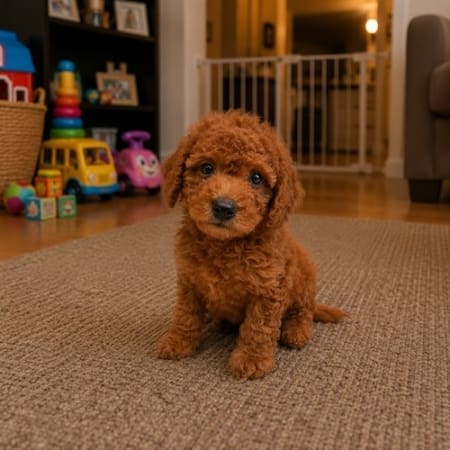
How Much Does a Micro Goldendoodle Cost in Florida?
A micro goldendoodle puppy in Florida costs $2,500 to $4,500 from an accredited breeder with genetic health testing, proper veterinary whelping care, a written health guarantee, and early housebreaking and crate training. Prices below that range almost always mean something has been cut, and prices below $1,500 usually mean fraud.
Here’s how the market actually tiers out:
| Price range | What you’re really dealing with | Risk level |
|---|---|---|
| $500,$1,000 | Scam listings. No dog exists. Payment requested via Zelle, Cash App, Venmo, gift card, or crypto. Often stolen photos. | Total loss |
| $1,000,$1,500 | Puppy mill or broker volume seller. No parent testing, minimal vet care, high parasite and giardia rates, no guarantee. | Very high |
| $1,800,$2,000 | Hobby breeder. Often well-meaning, but limited or no genetic panels, little structured socialization, no housebreaking head start. | Moderate |
| $2,500,$4,500 | Accredited breeder. Genetic health guarantee, both parents tested, attended whelping, ENS, early housebreaking and crate training, credit card payment accepted, lifetime breeder support. | Low |
The math that surprises people: a $1,200 mill puppy that arrives with giardia, a luxating patella, and no socialization can easily cost $3,000,$6,000 in vet bills and professional training within two years. The cheap puppy is the expensive puppy. This breakdown of micro goldendoodle cost-of-ownership clarity walks through the ten-year picture rather than just the sticker price.
Florida first-year budget beyond the purchase price
- Initial vet visits, boosters, spay/neuter: $600,$1,200
- Year-round heartworm, flea, and tick prevention (essential in Florida): $250,$450
- Professional grooming, 6-8 visits: $480,$800
- Crate, pen, bed, bowls, leash, collar, toys: $250,$450
- Food (small dog, quality kibble or fresh): $400,$700
- Puppy training class: $150,$350
Payment rule: if a seller refuses credit cards and pushes peer-to-peer apps, walk away. Zelle, Cash App, and Venmo transfers to strangers are effectively irreversible. Credit card payment preserves your dispute rights, which is exactly why legitimate breeders accept it.
What Is a Micro Goldendoodle’s Temperament and Personality Like?
Micro goldendoodles are typically affectionate, people-focused, moderately energetic, and eager to please. They inherit golden retriever friendliness and poodle intelligence, which makes them social, quick to learn, and prone to sticking close to their humans rather than working independently.
Typical traits in a well-bred, well-socialized micro:
- Velcro tendencies. They want to be in the same room as you. That’s a feature for work-from-home owners and a problem for households empty ten hours a day.
- Moderate energy. Two 20-30 minute walks plus indoor play and a puzzle feeder usually satisfies an adult.
- Low guarding instinct. They may alert-bark, but they are not protection dogs.
- High sociability with children, visitors, and other pets when exposure starts early.
The main behavioral risk is separation anxiety, and it’s more common in small doodles than most buyers expect. The fix starts on day one: short, boring departures, a crate the dog genuinely likes, and independence practice before the dog ever has a reason to panic.
Quick example: a Sarasota owner who crates her micro for 15-minute absences three times a day during week one rarely has an anxiety problem at month six. An owner who holds the puppy constantly for two weeks, then returns to the office, usually does.
Puppies raised with structured noise exposure and household chaos, as in the ENS-based program described above, tend to handle Florida realities better: thunderstorms, hurricane-season generators, pool parties, and lobby traffic. Families with young children may find the 10-16 lb micro goldendoodle size guide for family households useful for setting expectations.
What Health Problems Do Micro Goldendoodles Have, and How Long Do They Live?
Micro goldendoodles generally live 12 to 16 years, with smaller dogs trending toward the longer end. Health risks come from both parent breeds, so genetic testing of the sire and dam is the most effective way to reduce risk before you buy.
Conditions to ask about specifically:
- Patellar luxation (kneecap slipping), more common in very small dogs; ask about parent knee exams.
- Hip and elbow dysplasia, screened via OFA or PennHIP on parents.
- Progressive retinal atrophy (PRA) and other eye conditions, DNA-testable; both parents should be clear or non-carrier pairings.
- Von Willebrand’s disease (a clotting disorder), DNA-testable.
- Degenerative myelopathy (DM), DNA-testable.
- Ear infections, anatomical, not genetic. Floppy, hairy ears plus Florida humidity plus swimming equals recurring infections unless you clean and dry ears weekly.
- Dental disease, small mouths crowd teeth. Brush several times a week from puppyhood.
- Hypoglycemia in very small puppies during the first weeks home; feed on schedule and don’t let a 3-pound puppy skip meals.
Florida-specific health notes: heartworm is endemic year-round, so prevention is not seasonal. Fleas and ticks persist through winter. Heat is a real hazard for a dark-coated 15-pound dog; asphalt at 2 p.m. in July can burn paw pads, and heatstroke can set in fast. Walk early or late, carry water, and use grass or shaded paths.
Decision rule: if a breeder cannot produce genetic panel results for both parents, do not proceed. It doesn’t matter how friendly the conversation was. The panel is the product.
Do Micro Goldendoodles Shed, and What Grooming Do They Need?
Micro goldendoodles shed very little compared to golden retrievers, but “low-shedding” is not “non-shedding,” and low shedding actually increases grooming work because loose hair stays trapped in the coat and mats. Plan on brushing 3-4 times a week and a professional groom every 6-8 weeks.
Coat type drives everything:
| Coat type | Shedding | Matting risk | Grooming demand |
|---|---|---|---|
| Curly (poodle-dominant) | Minimal | High | Highest: brush 4-5x/week |
| Wavy (most common) | Very low | Moderate | Brush 3-4x/week |
| Straight/flat | Light but noticeable | Low | Brush 2x/week |
A workable Florida grooming routine
- Brush with a slicker brush, then comb through to the skin 3-4 times a week. If a metal comb won’t pass through, it’s matted, not “a little tangled.”
- Check and dry ears weekly, and always after swimming or a bath. Humidity plus moisture in a floppy ear is how infections start.
- Bathe every 3-4 weeks with a gentle dog shampoo; more often if there’s beach sand or pool chlorine involved. Rinse salt and chlorine off the same day.
- Trim nails every 3-4 weeks. Small dogs on carpet don’t wear nails down naturally.
- Book professional grooming every 6-8 weeks. In Florida heat, many owners keep a shorter “summer teddy bear” trim at half an inch to an inch.
- Brush teeth 3+ times a week. Small-breed dental disease is the most preventable expensive problem in this size class.
Common mistake: skipping brushing for six weeks, then asking the groomer to “just tidy it up.” Once a coat is felted to the skin, the only humane option is a full shave-down, which costs more and looks nothing like what you wanted.
Allergy note: low-shedding coats trap dander rather than releasing it, which many allergy-sensitive households tolerate better. That’s not a medical guarantee. If allergies are a factor, spend time with an adult dog of similar coat type before committing, and read this overview on micro goldendoodles for allergy-conscious homes.
Are Micro Goldendoodles Good for Apartments, and How Hard Are They to Train?
Yes, micro goldendoodles are among the better apartment dogs in Florida because they stay under most condo weight limits, adapt to indoor exercise, and are highly trainable. The two challenges are barking or whining tied to separation anxiety and potty training when the nearest grass is eleven floors down.
Why the size works for Florida rentals and HOAs: many Florida condo and apartment communities cap dogs at 20, 25, or 30 pounds. A 13-19 lb micro clears nearly all of them, while a medium goldendoodle often doesn’t. Confirm your specific pet addendum in writing before purchase, including breed restrictions and pet rent.
Apartment-living game plan
- Set a potty schedule, not a potty hope. Puppies need out after waking, after eating, after play, and every 60-90 minutes early on. Use an elevator-ready carry sling for the first few weeks.
- Add a backup indoor potty station (real-grass pad or washable pad) near the balcony door for storms and 3 a.m. emergencies.
- Exercise the brain, not just the legs. Fifteen minutes of nose work, puzzle feeders, and trick training tires a micro more than a walk in 92-degree heat.
- Manage noise proactively. Reward calm in the hallway, teach a “quiet” cue early, and never let doorway barking get rehearsed.
- Use the pool, carefully. Many micros love water. Rinse afterward, dry ears, and never leave a small dog unsupervised near a screened pool.
Practical detail for high-rise owners: this guide to micro goldendoodles for apartment and urban living covers elevator training and noise habituation in more depth.
On training difficulty: micro goldendoodles rank as easy-to-moderate. They learn sit, down, place, and recall quickly with food rewards and short sessions. What trips owners up isn’t intelligence, it’s consistency and housebreaking timelines. Small bladders mean housebreaking often takes 4 to 6 months to become fully reliable, versus 3 to 4 for a larger pup.
A puppy that arrives already well started on housebreaking and crate training, as with a program using ENS from birth, typically shortens that curve by weeks. Sensitivity is worth noting too: these dogs respond poorly to harsh corrections and beautifully to reward-based marker training. Enroll in a group puppy class between 10 and 16 weeks, both for obedience and for controlled socialization.
Not a good fit if: you’re gone 10-12 hours daily with no dog walker or daycare, you want a fully independent dog, or you can’t commit to grooming every 6-8 weeks.
How Do Micro Goldendoodles Compare to Other Small Doodle Breeds?
Micro goldendoodles are the best all-around pick when you want retriever friendliness in a small package. Cavapoos are calmer and better for very quiet homes, cockapoos are typically more affordable and slightly more independent, and mini bernedoodles are sweeter but larger and more stubborn.
| Breed | Adult weight | Energy | Trainability | Best for |
|---|---|---|---|---|
| Micro goldendoodle | 13-19 lbs | Moderate | High | Families, first-time owners, apartments |
| Toy goldendoodle | 7-11 lbs | Moderate | High | Seniors, frequent flyers, tiny spaces |
| Cavapoo | 12-20 lbs | Low, moderate | Moderate, high | Quiet homes, low-key companionship |
| Cockapoo | 12-24 lbs | Moderate | Moderate | Budget-conscious buyers, active singles |
| Mini bernedoodle | 25-49 lbs | Moderate | Moderate | Homes with yards and patient trainers |
| Mini schnauzer | 11-20 lbs | Moderate | Moderate | Owners wanting an alert watchdog |
Choose a micro goldendoodle if you want a genuinely social dog that greets guests happily, trains easily, and fits condo rules. Choose a cavapoo if you prioritize a mellow lap dog over trainability; Florida buyers can compare local options through listings for cavapoos for sale in Florida. Choose a mini goldendoodle if you have a yard and want a hiking companion.
Edge case worth knowing: doodle temperament varies more within a breed than between breeds when breeders don’t select for it. A well-bred cockapoo from a temperament-focused program beats a poorly bred goldendoodle every time. Program quality outranks breed choice.
Can I Find a Micro Goldendoodle Through Florida Rescue or Adoption?
Yes, but true micro-size goldendoodles are uncommon in Florida rescue, and most available doodles are adults in the mini-to-standard range. Expect adoption fees of roughly $350 to $650 and a waitlist measured in months rather than weeks.
Where to look:
- Doodle-specific rescues with Florida coverage, including Doodle Rock Rescue and IDOG Rescue (both place nationally and use foster networks).
- Poodle rescues, since small doodles often land there. Florida Poodle Rescue is a reasonable starting point.
- Petfinder and Adopt-a-Pet saved searches for “goldendoodle” and “poodle mix” within 100 miles, with email alerts enabled.
- Municipal shelters in large metros (Miami-Dade, Orange County, Hillsborough) where surrendered doodles occasionally appear.
- Breeder rehome programs. Ethical breeders take dogs back for life and sometimes place a retired adult or returned young dog. Ask directly.
What to expect from a rescue doodle: unknown coat maintenance history (mats are common), possible undertrained house manners, and sometimes anxiety from rehoming. Budget for a full grooming reset and a behavior consult. On the plus side, you often skip puppy chewing and get a known adult temperament.
Decision rule: choose rescue if timing is flexible, size can vary by 10 pounds, and you can handle some behavioral unknowns. Choose a health-tested breeder if you need a predictable adult weight (condo weight limits, travel carriers) or specific allergy-related coat traits.
Frequently Asked Questions
How big does a micro goldendoodle get?
A micro goldendoodle matures at roughly 13 to 19 pounds and 11 to 14 inches at the shoulder. Most reach adult height by 8 to 10 months and fill out in weight through 12 months.
How much is a micro goldendoodle puppy in Florida?
Expect $2,500 to $4,500 from an accredited Florida breeder with genetic health testing, a written guarantee, and early crate and potty training. Hobby breeders run $1,800,$2,000. Anything under $1,500 should be treated as a scam or a puppy mill until proven otherwise.
Do micro goldendoodles shed?
Very little. Most have wavy or curly low-shedding coats, especially F1B and multigen dogs. Low shedding means more brushing, though, because loose hair stays in the coat and mats.
Are micro goldendoodles hypoallergenic?
No dog is truly hypoallergenic. Many allergy-sensitive people tolerate low-shedding doodle coats better, but dander and saliva proteins still cause reactions. Spend time with a similar adult dog before committing.
How long do micro goldendoodles live?
Typically 12 to 16 years. Smaller dogs from health-tested parents, kept at a lean weight with good dental care, trend toward the upper end.
Are micro goldendoodles good for first-time dog owners?
Yes. They’re trainable, forgiving, and sized for most homes. The two commitments to accept up front are grooming every 6-8 weeks and building independence early to prevent separation anxiety.
Can a micro goldendoodle handle Florida heat?
With management, yes. Walk before 9 a.m. or after 7 p.m. in summer, avoid hot asphalt, always provide shade and water, and keep a shorter summer trim. Never leave a dog in a parked car in Florida, even briefly.
How long does housebreaking a micro goldendoodle take?
Usually 4 to 6 months to reach reliability, since small bladders need frequent breaks. Puppies that arrive already started on housebreaking and crate training often progress noticeably faster.
Should I pay a breeder deposit through Zelle or Venmo?
No. Use a credit card. Peer-to-peer transfers are essentially irreversible and are the most common payment method in puppy scams. A breeder who accepts credit cards is protecting your dispute rights.
What’s the difference between a micro and a teacup goldendoodle?
“Teacup” generally refers to dogs under about 10 pounds and overlaps with the toy range (7-11 lbs). Micro sits above that at 13-19 lbs. Very small sizes carry higher risks of hypoglycemia, patellar luxation, and dental crowding.
Do micro goldendoodles bark a lot?
Not inherently. They may alert-bark at doors and hallway noise. Barking becomes a problem mostly when it’s tied to boredom or separation anxiety, both of which respond to enrichment and crate training.
Is a micro goldendoodle good with kids?
Generally yes, especially with children aged 6 and older who can handle a 15-pound dog gently. Supervise toddlers closely, since small dogs are easier to injure than a standard goldendoodle.
Conclusion: Your Next Steps
The Florida micro goldendoodle market rewards buyers who slow down and ask for documents. The dog you want is 13 to 19 pounds, comes from two health-tested parents, has already started housebreaking and crate training, and costs between $2,500 and $4,500 from a breeder who will take your credit card and answer your questions on video.
Here’s what I’d do this week:
- Set your real budget, purchase price plus $1,800,$3,000 for first-year care in Florida.
- Confirm your building’s pet rules in writing, especially the weight cap and pet rent.
- Shortlist two or three breeders and send the 10-point vetting checklist above. Compare the answers, not the puppy photos.
- Request parent health panels and adult weights from prior litters before paying any deposit.
- Pay by credit card only. Decline any seller who insists on Zelle, Cash App, Venmo, wire, or crypto.
- Book a puppy class now for the 10-to-16-week window, and line up a groomer before the puppy comes home.
- Add a rescue alert on Petfinder in parallel if your timing and size requirements are flexible.
When you’re ready to compare available litters, start with a program that documents its genetics and its puppy-raising protocol. Designer Micro Goldendoodle’s micro goldendoodles are raised with ENS from birth, exposed to real household noise, and placed with a genetic health guarantee, which is exactly the standard a serious micro goldendoodle breeder should meet. Buyers interested in other designer programs from the same team can also review French bulldog studs near me.
Related reading
- Mini goldendoodle puppies for sale in Florida and the best Florida breeders
- Goldendoodle puppies in Florida: availability and what to expect
- Why a 10-16 lb micro goldendoodle suits first-time dog owners