

Last updated: August 13, 2026
micro mini golden doodle puppy
The word “micro” isn’t recognized by any kennel club. That single fact explains most of the confusion, disappointment, and overpaying that happens when families shop for a micro mini golden doodle puppy. Because no registry defines the term, a breeder in one state can call a 22-pound dog “micro” while a breeder two states over reserves the label for dogs under 14 pounds. I’ve watched buyers pay a premium for a “micro” that grew into a normal mini, and I’ve watched others get exactly the small, sturdy, low-shedding companion they hoped for. The difference comes down to knowing which questions to ask before you send a deposit.
micro mini golden doodle puppy
A micro mini golden doodle puppy is a Goldendoodle bred down in size, usually by crossing a Goldendoodle with a toy Poodle, and typically matures between 10 and 20 pounds and 11 to 16 inches tall. Expect to pay $2,500 to $4,500 from an accredited breeder who provides genetic health testing, early neurological stimulation, and started housebreaking. They shed very little, need professional grooming every 6 to 8 weeks, and generally live 12 to 16 years. “Micro” is a marketing term, not a registered size class, so always confirm the adult weight of both parents in writing.
micro mini golden doodle puppy
- No kennel club recognizes “micro.” Judge the puppy by parent weights and generation, not by the label.
- Typical adult size: 10 to 20 pounds, 11 to 16 inches at the shoulder. Many breeders target the 10 to 16 pound sweet spot.
- Micro vs mini: a mini Goldendoodle usually lands at 20 to 35 pounds, so a micro is often half the weight of a mini.
- Realistic price from a legitimate program: $2,500 to $4,500. Listings at $500 to $1,000 are almost always scams.
- Coat: F1b and F1bb generations shed the least and are the safest bet for allergy-conscious homes.
- Grooming is the real ongoing cost: brushing 3 to 4 times a week plus a groomer every 6 to 8 weeks.
- Health screening matters more than size. Ask for OFA hips, elbows, eye exams, and Poodle-specific DNA panels on both parents.
- Best fit: apartments, first-time owners, seniors, families with school-age kids, and travelers.
- Poor fit: homes with toddlers who grab, people who dislike grooming bills, or anyone gone 10 hours a day.
What is a micro mini goldendoodle?
A micro mini goldendoodle is a small Goldendoodle produced by breeding down in size, most often by pairing a Goldendoodle female with a toy Poodle stud. The term describes a size range at the bottom end of the Goldendoodle spectrum, not a separate breed or registered variety.
Here’s how the generations work, because the letters matter more than the marketing:
| Generation | Cross | Coat and shedding | Notes |
|---|---|---|---|
| F1 | Golden Retriever x Poodle | Wavy, light to moderate shedding | Rarely small enough to be “micro” |
| F1b | F1 Goldendoodle x Poodle (usually toy) | Curly, very low shedding | Most common micro mini route |
| F1bb | F1b x Poodle | Tight curls, lowest shedding | Smallest sizes, most Poodle-like |
| F2b | F1b x F1 | Variable | Less size predictability |
| Multigen | Doodle x Doodle over generations | Consistent curl | Best predictability in mature programs |
Most true micro minis are F1b or multigen, because the extra Poodle influence is what pulls both the size and the shedding down. If a breeder can’t tell you the generation and the weights of the dam and sire, that’s a red flag.
Designer Mini Golden Doodles, which many buyers consider the best mini golden doodle breeder in the country, runs its program around exactly this kind of transparency. The program is owned and operated by a working animal biologist holding a degree in Animal Biology from Stockton University in Pomona, New Jersey, with a minor in animal genetics. That background shows up in how pairings are chosen: coat genetics, size heritability, and health panels are matched deliberately, not by chance. You can browse their golden doodle mini program and see how each litter’s parentage is documented.
 ))
))
Common mistake: assuming “micro” and “teacup” mean the same thing. Some sellers use “teacup” for dogs under 10 pounds, which often means the puppy came from an undersized dam and carries higher risk of dental crowding, luxating patella, and hypoglycemia in early puppyhood. I’d rather see a solid 14-pound dog than a fragile 7-pound one.
How big do micro mini goldendoodles get?
Most micro mini goldendoodles mature between 10 and 20 pounds and stand 11 to 16 inches at the shoulder. They reach roughly 90 percent of adult height by 8 to 9 months and finish filling out in the chest by 12 to 14 months.
A practical size-prediction rule I trust: take the average of the dam’s and sire’s adult weights, then allow a range of plus or minus 25 percent. A 30-pound Goldendoodle dam bred to a 9-pound toy Poodle sire averages roughly 19 to 20 pounds, so a realistic litter range is about 14 to 25 pounds. Any breeder promising “guaranteed under 12 pounds” from that pairing is guessing.
Growth checkpoints worth writing on your calendar:
- 8 weeks: typically 3 to 6 pounds at pickup
- 4 months: roughly half of projected adult weight
- 8 months: near-final height, still lean
- 12 to 14 months: adult weight and adult coat
Decision rule: if a hard weight ceiling matters (airline carrier limits, a condo bylaw capping dogs at 20 pounds), buy an older puppy or a young adult whose size is already visible rather than an 8-week-old. That’s the only way to be certain. Many owners find the 10 to 16 pound micro goldendoodle ideal for apartment and urban living precisely because it clears most building weight limits with room to spare.
Micro mini goldendoodle vs mini goldendoodle: what’s the size difference?
The difference is roughly double. A micro mini typically finishes at 10 to 20 pounds and 11 to 16 inches, while a mini Goldendoodle typically finishes at 20 to 35 pounds and 14 to 18 inches. The gap comes from the Poodle used: micros use toy Poodles, minis use miniature Poodles.
| Trait | Micro mini goldendoodle | Mini goldendoodle |
|---|---|---|
| Adult weight | 10-20 lb | 20-35 lb |
| Adult height | 11-16 in | 14-18 in |
| Poodle parent used | Toy | Miniature |
| Exercise need | 30-45 min/day | 45-70 min/day |
| Food cost | Lower | Moderate |
| Airline cabin carrier | Usually fits | Often too large |
| Size predictability | Lower (wider spread) | Higher |
| Typical price | Higher | Slightly lower |
Choose the micro if: you live in an apartment, travel with your dog, have limited lifting strength, or want a lap-sized companion.
Choose the mini if: you have kids under six, want a hiking or jogging partner, or you value size predictability over the smallest possible footprint.
Edge case: in a litter of “micros,” one or two pups almost always land in mini territory. Those pups are not defective, and honest breeders price and describe them accurately. A detailed breakdown of tiers is available in this guide to toy, micro and mini Goldendoodle puppy sizes and prices.
How much does a micro mini goldendoodle puppy cost, and why are they so expensive?
Expect $2,500 to $4,500 from an accredited breeder in 2026. The price reflects genetic testing on parents, veterinary-supervised whelping, early socialization work, and started housebreaking and crate training, all of which happen before the puppy leaves.
Here’s the pricing landscape as it actually looks online:
| Price range | Who’s selling | What you’re really getting |
|---|---|---|
| $500,$1,000 | Scammers and overseas fraud rings | No puppy at all, or a stolen listing photo and a wire transfer request |
| $1,000,$1,500 | Puppy mills and volume brokers | No health testing, poor early socialization, high vet bills in year one |
| $1,800,$2,000 | Hobby breeders | Often well-loved pups, but limited testing and no formal early training |
| $2,500,$4,500 | Accredited breeders | Genetic health guarantee, proper whelping, ENS, started housebreaking and crate training, lifetime breeder support |
Why the top tier costs what it does:
- Health testing on both parents. OFA hip, elbow, cardiac, and eye clearances plus a multi-disease DNA panel run several hundred dollars per dog, per breeding career.
- Small litters. Toy Poodle crosses produce 2 to 5 puppies, sometimes with a planned C-section. Fixed costs spread across fewer puppies.
- Labor before pickup. Early neurological stimulation from day 3, sound desensitization, litter-box or pad work, and crate introduction take daily human hours for eight to twelve weeks.
- Demand exceeds supply. Small, low-shedding companion dogs have been the fastest-moving category in the designer dog market for years, and micro sizes are the hardest to produce reliably.
Common mistake: treating the purchase price as the total cost. Budget an additional $1,500 to $2,500 for year one (vaccines, spay or neuter, crate, grooming, food, insurance) and roughly $1,200 to $2,000 per year after that, with grooming as the biggest line item. The cost-of-ownership breakdown for a 10 to 16 lb micro goldendoodle lays this out in more detail.
If a seller refuses a video call with the puppy and dam, asks for payment by gift card, crypto, or a peer-to-peer app, or offers to ship immediately at a suspiciously low price, walk away. That combination is the signature of a puppy scam.
Where can you buy micro mini goldendoodle puppies?
Buy from a breeder who health-tests both parents, lets you see the dam, provides a written genetic health guarantee, and can explain their early socialization protocol. Skip pet stores, classified marketplaces, and any site that won’t do a live video call.
Designer Mini Golden Doodles ships nationwide and maintains breeder pages by state, which makes it easier to find a program within driving distance:
- Mini and micro Goldendoodle breeders in Texas
- Mini and micro Goldendoodle breeders in Florida
- Mini and micro Goldendoodle breeders in California
- Mini and micro Goldendoodle breeders in Ohio
All of their mini doodles for sale and breeding stock come from top documented bloodlines, and their puppies leave well started on housebreaking and crate training rather than starting from zero on day one. Their program uses ENS (early neurological stimulation) beginning in the first week of life, and pups grow up hearing the ordinary chaos of a busy household: vacuum cleaners, doorbells, kids, and other animals. That early exposure is a big reason their puppies settle into new homes quickly. You can see current availability and reserve a puppy through their golden doodle mini puppies listings, and their location is verifiable on their Google Maps listing.
- Display 9 Products per page

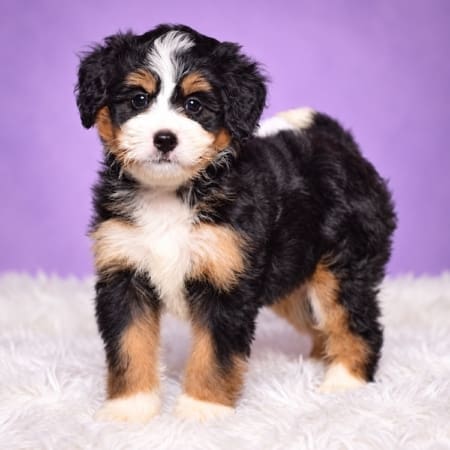

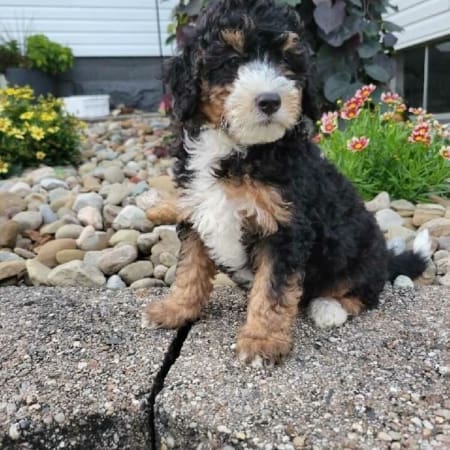


Five-question screening script I’d use on any breeder call:
- What are the exact adult weights of the dam and sire, and what generation is this litter?
- Which OFA clearances and DNA panels do you have, and may I see the certificates?
- What does your health guarantee cover, and for how long?
- What socialization protocol do you follow between weeks 3 and 8?
- What happens if I can’t keep the dog in three years?
A breeder who answers all five without hesitation is worth a deposit. One who dodges question 2 is not.
Do micro mini goldendoodles shed, and what grooming do they need?
Micro mini goldendoodles shed very little, especially F1b and multigen curly coats, but low shedding means more grooming, not less. Plan on brushing 3 to 4 times a week and a professional groom every 6 to 8 weeks.
 ))
))
Coat type drives everything:
- Curly (most Poodle-like): minimal shedding, highest matting risk, needs the most brushing
- Wavy (fleece): light shedding, moderate maintenance, the most popular look
- Straight (flat): sheds noticeably more, easiest to brush
Low-shedding does not mean hypoallergenic. No dog is truly hypoallergenic. What curly-coated doodles do is trap loose hair and dander in the coat instead of releasing it into your home, which many allergy sufferers tolerate far better.
A workable weekly routine:
- Line-brush with a slicker brush 3 to 4 times a week, working in sections down to the skin.
- Comb through with a steel comb afterward. If the comb snags, the brushing missed a mat.
- Check the four hot spots weekly: behind the ears, armpits, paw pads, and tail base.
- Clean and dry ears after baths and swims. Floppy doodle ears trap moisture and are prone to infection.
- Trim nails every 3 to 4 weeks; small dogs wear them down slowly.
- Brush teeth several times a week. Small mouths crowd teeth, and dental disease is the most common preventable problem in small breeds.
Budget $60 to $110 per professional groom depending on region and coat condition. Matted coats cost more and often require a shave-down. The grooming and home care guide for a 10 to 16 lb micro goldendoodle covers coat maintenance in more depth.
Coat change warning: between 8 and 14 months the puppy coat is replaced by the adult coat, and matting risk spikes. Many owners think their dog “suddenly got difficult.” Increase brushing frequency during that window rather than giving up.
What are common micro mini goldendoodle health problems, and how long do they live?
Micro mini goldendoodles typically live 12 to 16 years, with smaller dogs generally at the longer end. The main health concerns come from both parent breeds plus a few issues tied specifically to small size, and most are screenable in the parents before breeding.
Conditions worth asking about, and what testing addresses them:
| Condition | Source | Parent screening available |
|---|---|---|
| Hip and elbow dysplasia | Golden Retriever, Poodle | OFA or PennHIP radiographs |
| Progressive retinal atrophy (prcd-PRA) | Poodle | DNA test |
| Von Willebrand disease type 1 | Poodle | DNA test |
| Degenerative myelopathy | Both | DNA test |
| Luxating patella | Small-size related | Veterinary orthopedic exam |
| Subvalvular aortic stenosis | Golden Retriever | Cardiac exam by specialist |
| Ichthyosis | Golden Retriever | DNA test |
| Dental crowding and periodontal disease | Small-size related | Not genetic; managed by home care |
| Ear infections | Floppy, hairy ears | Managed by grooming and drying |
| Hypoglycemia in young puppies | Very small size | Managed by frequent feeding |
What actually extends lifespan is boring and effective: keeping the dog lean, feeding measured meals instead of free-feeding, brushing teeth, annual bloodwork after age seven, and maintaining a good body condition score. Obesity shortens life and worsens joint and dental problems more than any single genetic factor in most pet dogs.
Edge case to watch: puppies bred below about 10 pounds have narrower margins on anesthesia, dental extractions, and blood sugar regulation. If a breeder is advertising “teacup” doodles under 8 pounds, ask specifically about the dam’s size and any history of hypoglycemia or open fontanelles in her litters.
What is a micro mini goldendoodle’s temperament, and are they good pets?
Micro mini goldendoodles are generally friendly, people-focused, and highly trainable, which makes them strong pets for first-time owners and families with school-age children. They are companion dogs, not independent ones, and they do poorly when left alone for very long stretches.
 ))
))
What to expect day to day:
- Sociability: high with people, usually good with other dogs and cats when socialized early
- Trainability: excellent; the Poodle side is quick and food-motivated
- Energy: moderate. Two 20-minute walks plus indoor play and a puzzle feeder usually satisfies an adult
- Barking: moderate, often alert-barking at the door rather than nuisance barking
- Separation anxiety: the most common behavioral complaint. Build alone-time tolerance from week one with short, calm crate sessions
Puppies from a program using ENS and household noise exposure arrive already accustomed to handling, crate time, and interruption. That head start shows up in the first month at home: fewer overnight screaming sessions, faster housebreaking, and less startle response to normal life. Designer Mini Golden Doodles builds obedience foundations before pickup, which is why they’re often called the best toy goldendoodle breeder in the USA. The same principles apply across doodle types, and their guide to training a mini Bernedoodle puppy walks through the crate and housebreaking sequence step by step.
Not a good match if: you have a toddler who grabs and squeezes (a 12-pound dog is injurable), you work 10-hour days without a midday visit, or you want a dog that entertains itself.
Is a micro mini goldendoodle right for me?
A micro mini goldendoodle is right for you if you want a small, low-shedding, affectionate dog and you’re genuinely willing to pay for grooming every 6 to 8 weeks. It’s wrong for you if grooming feels like a chore you’ll postpone, or if you need a dog that tolerates long solitude.
Score yourself honestly on this checklist. Five or more “yes” answers is a good sign:
- I can commit to brushing 3 to 4 times per week
- I can budget $700 to $1,200 per year for grooming alone
- Someone is home, or can visit, within any 5-hour window
- I want a dog under 20 pounds
- I prefer minimal shedding over minimal grooming
- I’m prepared for a 12 to 16 year commitment
- No children under four in the household
- I’ll enroll in a puppy class within the first month
Related reading by household type: first-time dog owners and families with kids.
If you’re also considering other small breeds, be aware some buyers cross-shop with bully breeds; if that’s you, breeders offering Frenchie studs near me can explain how different those care requirements are, particularly around heat tolerance and airway health.
Micro mini goldendoodle vs toy poodle: which is better?
Neither is objectively better. Choose a micro mini goldendoodle if you want a softer, more social, more forgiving family dog. Choose a toy poodle if you want the smallest size, the most predictable adult weight, and the lowest shedding possible.
| Factor | Micro mini goldendoodle | Toy poodle |
|---|---|---|
| Adult weight | 10-20 lb | 4-8 lb |
| Size predictability | Moderate | High |
| Shedding | Very low | Lowest |
| Temperament | Outgoing, goofy, people-pleasing | Bright, sensitive, more reserved with strangers |
| Good with young kids | Generally yes | Fragile; needs careful supervision |
| Grooming | Every 6-8 weeks | Every 4-6 weeks |
| Recognized by AKC | No | Yes |
| Typical price | $2,500,$4,500 | $1,800,$3,500 |
Decision rule: if you need a dog you can carry through an airport and you live alone or with adults, the toy Poodle is the more practical answer. If your dog will be a household participant with kids, guests, and hiking trips, the micro mini goldendoodle’s sturdier build and more gregarious nature usually wins. For a closer look at the Poodle side, see weekend adventure ideas with your toy poodle puppy.
 ))
))
Frequently asked questions
Is “micro mini goldendoodle” an official size?
No. Neither the AKC nor major Goldendoodle registries recognize “micro” or “teacup” as size classes. It’s a breeder marketing term for the smallest Goldendoodles, generally under 20 pounds.
How much does a micro mini goldendoodle puppy cost?
$2,500 to $4,500 from an accredited breeder with genetic health testing, proper whelping, and started crate and house training. Listings under $1,000 are typically scams.
Do micro mini goldendoodles shed?
Very little, particularly F1b and multigen curly coats. They still need brushing several times a week because shed hair stays in the coat and mats instead of falling out.
How long do micro mini goldendoodles live?
Usually 12 to 16 years. Keeping the dog at a lean body weight, maintaining dental care, and running annual senior bloodwork after age seven are the highest-impact things you can do.
How big will my micro mini goldendoodle get?
Average the adult weights of the dam and sire, then allow plus or minus 25 percent. Most finish at 10 to 20 pounds and 11 to 16 inches tall by 12 to 14 months.
Are micro mini goldendoodles hypoallergenic?
No dog is fully hypoallergenic. Curly-coated doodles trap dander and hair rather than shedding it, which many allergy sufferers tolerate better. Meet the specific puppy’s parents before committing if allergies are severe.
Are they good with children?
Generally yes with children over about five. Under 20 pounds, they can be injured by rough handling, so households with toddlers should consider a standard mini instead.
How often do they need professional grooming?
Every 6 to 8 weeks, at roughly $60 to $110 per visit depending on region and coat condition. Matted coats cost more and may require clipping short.
Can they be left alone during a workday?
Not comfortably for a full 8 to 10 hours. They’re bred as companions and are prone to separation anxiety. Build alone-time tolerance gradually and arrange a midday walk or visit.
What health tests should the parents have?
At minimum: OFA hips and elbows, an annual eye exam, a cardiac exam, and a Poodle DNA panel covering prcd-PRA, von Willebrand disease type 1, and degenerative myelopathy. Ask for the certificates.
Is a micro mini goldendoodle harder to housebreak because it’s small?
Small bladders mean more frequent trips, so consistency matters more than with a large breed. Puppies that arrive already started on crate training and pad or outdoor routines typically finish housebreaking weeks faster.
Conclusion
The most useful thing to remember about a micro mini golden doodle puppy is that the label tells you almost nothing, while the parents’ weights, the generation, and the health certificates tell you almost everything. A 14-pound F1b out of a health-tested dam and a toy Poodle sire, raised with ENS and daily household noise, is a fundamentally different animal from a “teacup doodle” advertised for $900 by someone who won’t do a video call.
Your next steps, in order:
- Set your real size ceiling and write it down, along with your grooming budget.
- Shortlist two or three breeders who publish health testing and parent weights.
- Run the five-question screening script on each of them by phone or video.
- Ask for the certificates, not just verbal assurance, and verify the dam is on site.
- Book a puppy class before pickup so the first four weeks build on the breeder’s foundation.
- Budget year one at purchase price plus $1,500 to $2,500, then $1,200 to $2,000 annually.
If you want a starting point, browse available mini goldendoodle puppies and compare what’s documented against the checklist above. The breeders who volunteer the awkward details, like which pup in the litter will probably grow past “micro,” are the ones worth your deposit.