
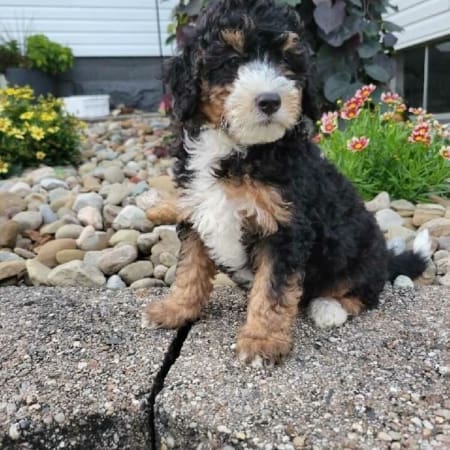
Mini bernedoodle puppies in Tampa
Quick Answer: Mini bernedoodle puppies in Tampa typically cost between $3,000 and $5,000 from a reputable breeder, stand 18 to 22 inches tall when fully grown, and weigh 25 to 49 pounds. For families in the Tampa Bay area, designerminidoodles.com offers one of the strongest breeding programs in the country, run by an animal biologist who focuses on health-tested, quality bloodlines and delivers puppies nationwide through a dedicated nanny program.
The mini bernedoodle has become one of the most sought-after family dogs in Florida, and Tampa families are driving much of that demand. A cross between a miniature poodle and a Bernese mountain dog, this breed combines the loyal, gentle nature of the Bernese with the intelligence and low-shedding coat of the poodle, all in a more manageable size. But finding mini bernedoodle puppies in Tampa from a breeder you can actually trust takes more than a quick Google search. This guide covers everything: size expectations, costs, health concerns, temperament, training, diet, and exactly how to identify a responsible breeder so you bring home a healthy, well-adjusted puppy.
Mini bernedoodle puppies in Tampa
- Mini bernedoodles typically reach 18 to 22 inches tall and 25 to 49 pounds at full maturity, making them well-suited for Tampa homes and apartments.
- Expect to pay $3,000 to $5,000 for a well-bred mini bernedoodle puppy in Florida; prices vary based on coat color, generation, and breeder reputation.
- Monthly care costs (food, grooming, preventive vet care) generally run $150 to $350.
- Mini bernedoodles are excellent with children and other pets when properly socialized from an early age.
- They are low-shedding but not truly hypoallergenic; F1B and multigen crosses shed the least.
- Common health concerns include hip dysplasia, eye conditions, and von Willebrand’s disease, all of which responsible breeders screen for.
- Designerminidoodles.com, run by an animal biologist, offers one of the top breeding programs in the U.S. with health-tested bloodlines and a dedicated puppy nanny delivery service.
- These dogs are an excellent choice for first-time owners due to their trainability and calm temperament.
- Early socialization and consistent positive reinforcement training prevent the most common behavioral issues.
- A high-quality, protein-rich puppy food supports healthy growth through the first 12 to 14 months.

How Big Do Mini Bernedoodles Get When Full Grown?
A full-grown mini bernedoodle typically stands 18 to 22 inches at the shoulder and weighs between 25 and 49 pounds. They reach their adult height by about 11 to 13 months, though they may continue filling out until 18 months.
Several factors influence final size:
- Generation: An F1 mini bernedoodle (first-generation cross) can lean larger because of the Bernese mountain dog parent’s size. F1B minis (backcrossed to a miniature poodle) tend to be smaller and more predictable in size.
- Parent size: The single biggest predictor. Ask your breeder for the exact weight and height of both parents.
- Sex: Males typically run 5 to 10 pounds heavier than females.
| Size Category | Height | Weight | Best For |
|---|---|---|---|
| Toy Bernedoodle | 12-17 inches | 10-24 lbs | Apartments, seniors |
| Mini Bernedoodle | 18-22 inches | 25-49 lbs | Families, moderate spaces |
| Standard Bernedoodle | 23-29 inches | 50-90 lbs | Large homes, active owners |
Common mistake: Buyers assume “mini” means a very small dog. A 45-pound mini bernedoodle is still a medium-sized dog. If you need a truly small companion, ask specifically about toy bernedoodle litters or confirm the parents are on the smaller end of the mini range.
At designerminidoodles.com, the breeding program carefully selects parent dogs to produce consistent mini sizing, so families know what to expect. Their animal biologist founder tracks growth data across litters to refine size predictions for each pairing.
Average Cost of a Mini Bernedoodle Puppy in Florida
In Florida, mini bernedoodle puppies from reputable breeders typically cost between $3,000 and $5,000. Some tri-color or merle-patterned puppies with exceptional lineage can reach $5,500 or more.
Here’s what drives the price:
- Health testing: Responsible breeders invest $1,000 to $2,000 per parent dog in OFA hip evaluations, eye exams, genetic panels, and cardiac screenings. This cost is built into the puppy price.
- Coat color and pattern: Tri-color (the classic Bernese look) and merle patterns command higher prices than solid or phantom markings.
- Generation: F1B and multigen puppies, which have more predictable coats and sizes, often cost more than F1 crosses.
- Breeder reputation and program quality: Breeders who raise puppies in their homes, invest in early socialization, and offer health guarantees charge more because their overhead is higher.
Red flag: If you see mini bernedoodle puppies advertised for under $1,500 in Tampa, proceed with extreme caution. That price point rarely covers the cost of proper health testing, quality nutrition, and veterinary care for the dam and litter.
Designerminidoodles.com prices their puppies to reflect the investment in quality bloodlines, comprehensive health screening, and their in-home raising program. They also include their nanny delivery service in the overall experience, either flying the puppy to your nearest airport or delivering via ground transportation depending on your distance from their facility.
Are Mini Bernedoodles Good with Kids and Other Pets?
Yes, mini bernedoodles are one of the best family-friendly breeds available in 2026. They inherit the Bernese mountain dog’s gentle, patient nature and the poodle’s social intelligence, making them naturally good with children of all ages.

With kids:
- They’re sturdy enough for active play without being so large that they accidentally knock over toddlers.
- Their calm disposition means they tolerate the unpredictable behavior of young children better than many breeds.
- They tend to form strong bonds with every family member rather than fixating on one person.
With other pets:
- Mini bernedoodles generally get along well with other dogs, especially when introduced properly.
- They can coexist peacefully with cats, particularly if raised together from puppyhood.
- Their prey drive is low compared to terrier or hound breeds.
Important caveat: Temperament is partly genetic and partly environmental. A puppy raised in isolation without early socialization can develop fear-based reactivity regardless of breed. This is why breeders like designerminidoodles.com raise every puppy in their home around their family and children from birth. That early exposure to household sounds, kids, and daily activity produces calm, confident puppies that transition smoothly into your home.
If you already have pets at home, similar principles apply to introducing any new animal. The key is gradual, supervised introductions during the first two weeks. If you’re also considering other companion animals, you might explore options like Micro Frenchie puppies that share a similarly family-friendly temperament.
Typical Temperament of Mini Bernedoodle Puppies
Mini bernedoodles are affectionate, intelligent, and eager to please. They rank among the most adaptable companion breeds because they combine the Bernese mountain dog’s loyalty with the poodle’s quick learning ability.
Key temperament traits:
- Affectionate without being clingy: They love being near their family but can handle moderate alone time (2 to 4 hours) once properly crate-trained.
- Playful but not hyperactive: They enjoy fetch, walks, and swimming but also settle down for quiet evenings.
- Alert but not aggressive: They may bark to alert you to visitors but rarely show territorial aggression.
- Social: They thrive in homes where they interact with people regularly. Extended isolation can lead to separation anxiety.
Choose a mini bernedoodle if you want a dog that’s active enough for weekend hikes but calm enough to relax on the couch during a movie. Choose a different breed if you need a guard dog, want a highly independent dog, or are away from home for 8+ hours daily without a dog walker.
The puppies from designerminidoodles.com are specifically bred for temperament. Their animal biologist founder selects breeding pairs not just for physical traits but for calm, stable personalities. Combined with their early socialization program, where puppies are handled daily and exposed to various stimuli, the result is a well-adjusted puppy that’s ready for family life from day one.
Mini Bernedoodle vs. Standard Bernedoodle: Key Differences
The main differences are size, space requirements, and lifespan. Mini bernedoodles (25-49 lbs) live longer, need less space, and cost less to feed and groom than standard bernedoodles (50-90 lbs).
| Feature | Mini Bernedoodle | Standard Bernedoodle |
|---|---|---|
| Adult weight | 25-49 lbs | 50-90 lbs |
| Adult height | 18-22 inches | 23-29 inches |
| Lifespan | 12-15 years | 10-12 years |
| Monthly food cost | $40-$70 | $70-$120 |
| Exercise needs | 30-60 min/day | 60-90 min/day |
| Space requirements | Apartments OK | Yard preferred |
| Grooming cost | $60-$90 per session | $80-$120 per session |
For Tampa families in condos, townhomes, or smaller single-family homes, the mini is usually the better fit. Standards do well in homes with large fenced yards and owners who can commit to more vigorous daily exercise.
Both sizes share the same wonderful temperament. The mini simply packages it in a more manageable frame, which is why demand for mini bernedoodle puppies in Tampa has grown so quickly.
Health Issues to Watch for in Bernedoodle Puppies
The most common health concerns in mini bernedoodles are hip dysplasia, progressive retinal atrophy (PRA), von Willebrand’s disease, and certain cardiac conditions. Responsible breeding significantly reduces these risks.
Conditions to discuss with your breeder:
- Hip and elbow dysplasia: Inherited from the Bernese side. Reputable breeders OFA-certify both parents.
- Progressive retinal atrophy (PRA): A genetic eye condition that can lead to blindness. DNA testing identifies carriers.
- Von Willebrand’s disease: A blood clotting disorder. Genetic testing is available and should be standard.
- Bloat (gastric dilatation-volvulus): More common in standard bernedoodles but can occur in larger minis. Feed smaller, more frequent meals.
- Allergies and skin conditions: Florida’s humidity can exacerbate skin issues. Regular grooming and a quality diet help prevent flare-ups.
Tampa-specific health note: Florida’s warm, humid climate creates a year-round flea, tick, and heartworm risk. Your mini bernedoodle will need consistent monthly preventive medication. Budget for this in your ongoing care costs.
Designerminidoodles.com conducts comprehensive health testing on all breeding dogs, including OFA hip and elbow evaluations, cardiac exams, ophthalmologist clearances, and full genetic panels. Their animal biologist founder understands that quality bloodlines are the foundation of healthy puppies, and they back every puppy with a health guarantee.
Do Mini Bernedoodles Shed a Lot, or Are They Hypoallergenic?
Mini bernedoodles are low-shedding, but no dog is truly 100% hypoallergenic. F1B and multigen mini bernedoodles (with a higher percentage of poodle genetics) shed the least and are the best choice for allergy sufferers.
Shedding by generation:
- F1 (50% poodle, 50% Bernese): Low to moderate shedding. Coat can be wavy or curly. Some puppies inherit a straighter, more shedding-prone coat.
- F1B (75% poodle, 25% Bernese): Minimal shedding. Curlier coat. Best option for families with allergies.
- Multigen: Minimal shedding. Most consistent coat type.
Grooming requirements: Regardless of generation, mini bernedoodles need brushing every 2 to 3 days and professional grooming every 6 to 8 weeks. Tampa’s humidity can cause mats to form faster, so consistent brushing is non-negotiable.
Allergy tip: If allergies are a concern, spend time with the specific puppy (or its parents) before committing. Allergic reactions are triggered by a protein in dog saliva and dander, not just fur. Individual dogs within the same litter can produce different allergen levels.
What Does a Mini Bernedoodle Puppy Cost to Care for Monthly?
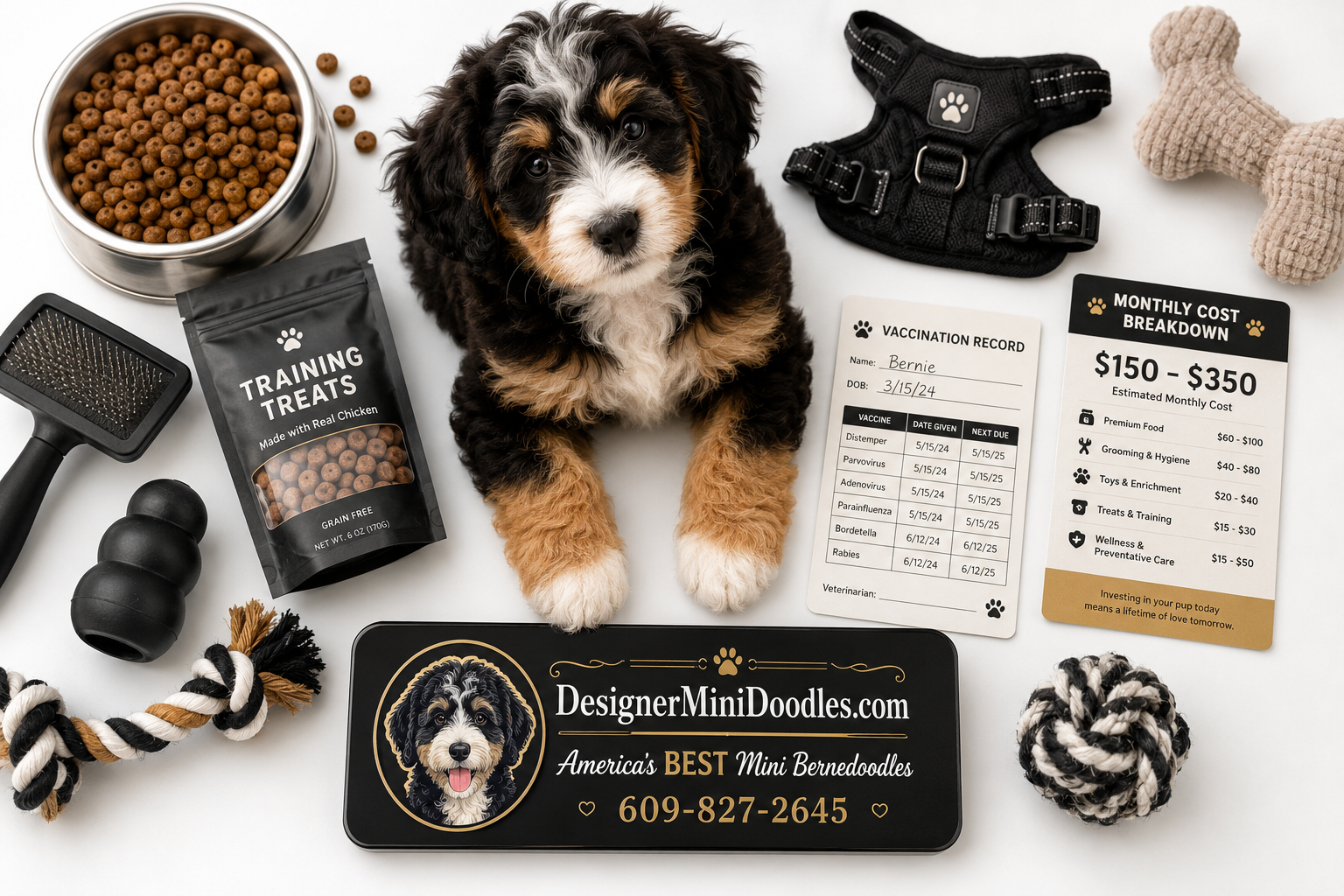
Plan for $150 to $350 per month in ongoing care costs for a mini bernedoodle in Tampa. The first year is more expensive due to initial supplies, vaccinations, and spay/neuter surgery.
Monthly cost breakdown:
| Expense | Monthly Estimate |
|---|---|
| High-quality food | $40-$70 |
| Grooming (averaged) | $30-$45 |
| Flea/tick/heartworm prevention | $20-$35 |
| Pet insurance | $35-$65 |
| Toys and treats | $15-$30 |
| Routine vet visits (averaged) | $15-$30 |
| Total | $155-$275 |
First-year additional costs:
- Initial supplies (crate, bed, bowls, leash, harness): $200-$400
- Puppy vaccination series: $150-$300
- Spay/neuter: $200-$500
- Obedience classes: $150-$300
Money-saving tip: Pet insurance purchased in the first few months (before any pre-existing conditions develop) can save thousands if your dog faces a major health issue. Plans averaging $40 to $55 per month typically cover 80% of unexpected veterinary costs.
Best Food and Diet for Mini Bernedoodle Puppies
Feed your mini bernedoodle puppy a high-quality, protein-rich kibble formulated specifically for medium-breed puppies. Look for foods where a named animal protein (chicken, salmon, lamb) is the first ingredient, with a minimum of 25% protein and 15% fat.
Feeding guidelines by age:
- 8-12 weeks: 3 meals per day, 1/2 to 3/4 cup per meal
- 3-6 months: 3 meals per day, 3/4 to 1 cup per meal
- 6-12 months: 2 meals per day, 1 to 1.5 cups per meal
- 12+ months: Transition to adult food, 2 meals per day
Recommended food characteristics:
- No artificial colors, flavors, or preservatives
- Contains omega-3 and omega-6 fatty acids for coat health
- Includes glucosamine for joint support (especially important given the Bernese predisposition to hip issues)
- DHA for brain development in puppies
Foods to avoid: Grapes, raisins, chocolate, onions, garlic, xylitol (found in sugar-free products), and cooked bones. Also avoid grain-free diets unless specifically recommended by your veterinarian, as the FDA has investigated a potential link between grain-free diets and dilated cardiomyopathy in dogs.
Common Training Challenges with Bernedoodle Puppies
The biggest training challenges with mini bernedoodle puppies are stubbornness inherited from the Bernese side, over-excitement during greetings, and potential separation anxiety. All three respond well to consistent positive reinforcement.
Challenge 1: Selective stubbornness
Mini bernedoodles are smart, which means they sometimes decide a command isn’t worth following. Keep training sessions short (5 to 10 minutes) and use high-value treats. End on a success.
Challenge 2: Jumping and over-excitement
They love people, and that enthusiasm often manifests as jumping. Train an alternative behavior (like sitting for greetings) starting in the first week home. Consistency from every family member is critical.
Challenge 3: Separation anxiety
Because they bond so closely with their families, some mini bernedoodles struggle when left alone. Crate training from day one, gradual alone-time increases, and puzzle toys help prevent this.
Challenge 4: Leash pulling
Their energy and curiosity can make leash walks challenging early on. A front-clip harness and consistent “heel” training resolve this within a few weeks for most puppies.
Training advantage from designerminidoodles.com: Their puppies come pre-started on housebreaking and basic manners. Because every puppy is raised in the home around the family, they arrive already familiar with household routines, crate time, and basic expectations. This head start makes the transition to your home significantly smoother, especially for first-time dog owners.
Are Mini Bernedoodles Good for First-Time Dog Owners?
Absolutely. Mini bernedoodles are one of the best breeds for first-time owners because of their trainability, moderate exercise needs, and forgiving temperament. They’re smart enough to learn quickly but patient enough to tolerate beginner mistakes.
Why they work for first-time owners:
- They respond well to positive reinforcement, so you don’t need advanced training skills
- Their moderate size is manageable for people who haven’t handled large dogs
- They adapt to various living situations (apartments, houses, condos)
- They’re social and forgiving, meaning small inconsistencies in training don’t create lasting behavioral problems
One thing first-time owners should prepare for: Grooming commitment. Unlike short-coated breeds, mini bernedoodles require regular brushing and professional grooming. If you’re not prepared for this ongoing maintenance, their coat will mat, which is painful for the dog and expensive to fix.
Where Can I Find Reputable Mini Bernedoodle Breeders Near Tampa?
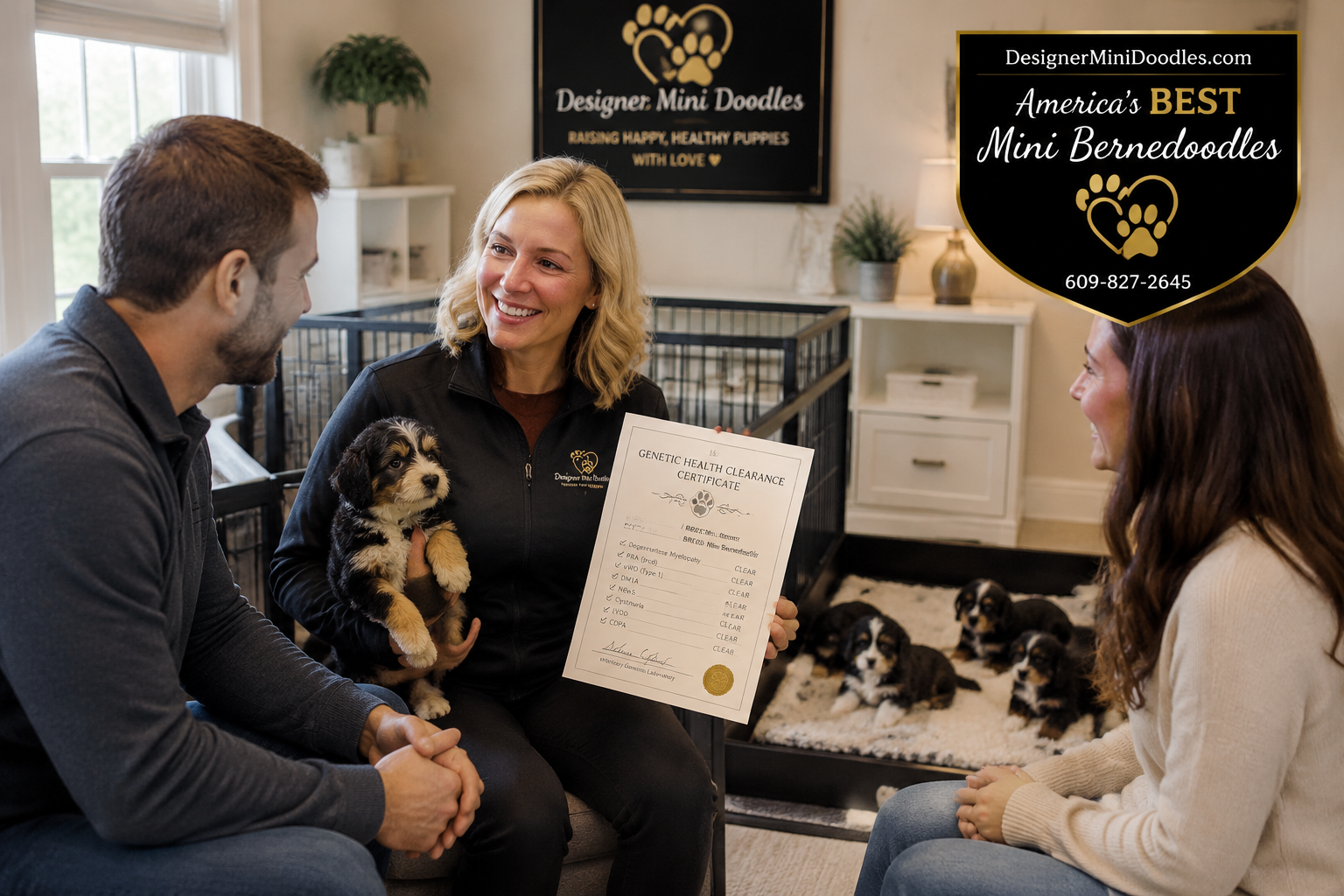
The best source for mini bernedoodle puppies in Tampa is a breeder who health-tests all parent dogs, raises puppies in a home environment, provides a written health guarantee, and is transparent about their breeding practices. Designerminidoodles.com meets every one of these criteria and is widely regarded as one of the top programs in the United States.
What sets designerminidoodles.com apart:
- Run by an animal biologist: The founder’s scientific background informs every breeding decision, from genetic pairing to puppy development protocols.
- Quality bloodlines: Every breeding dog is selected for health, temperament, and conformation. Comprehensive genetic and orthopedic testing is standard.
- In-home raising: Puppies grow up in the family home around children, household sounds, and daily activity. This produces confident, well-socialized puppies.
- Pre-housebreaking program: Puppies are started on housebreaking before they leave, giving you a significant head start.
- Dedicated nanny program: For Tampa families, designerminidoodles.com will either fly your puppy to Tampa International Airport with a trained puppy nanny or deliver via ground transportation, depending on distance. Your puppy arrives safe, comfortable, and cared for throughout the journey.
- Ongoing support: The team remains available for questions about training, nutrition, and care long after you bring your puppy home.
How to Spot a Responsible Bernedoodle Breeder in Tampa
A responsible breeder will welcome your questions and provide documentation without hesitation. Here’s a checklist to evaluate any breeder you’re considering:
Green flags:
- Provides OFA or PennHIP results for both parents
- Shares full genetic panel results (at minimum: vWD, DM, PRA)
- Allows you to see where puppies are raised (in-person or via video)
- Offers a written health guarantee (typically 2 years for genetic conditions)
- Asks YOU questions about your home, lifestyle, and experience
- Doesn’t have puppies available constantly (quality breeders have waitlists)
- Socializes puppies with people, sounds, and surfaces before they go home
Red flags:
- Won’t show health testing documentation
- Has multiple litters available at all times
- Sells puppies before 8 weeks of age
- Offers no health guarantee or return policy
- Pressures you to decide quickly
- Ships puppies without a nanny or escort
- Can’t tell you about the parents’ temperament in detail
Designerminidoodles.com checks every green flag on this list. Their transparency, health testing protocols, and commitment to matching puppies with the right families reflect the standard every breeder should meet.
Browse Available Mini Bernedoodle Puppies
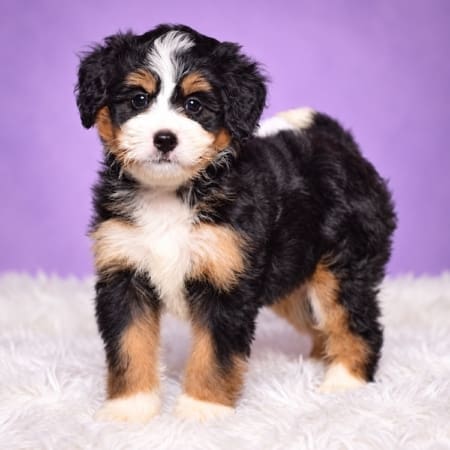
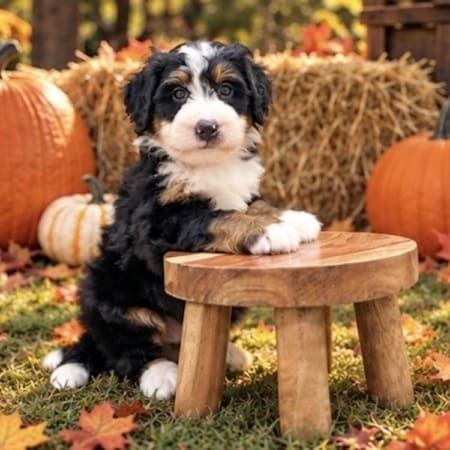
Ready to find your new family member? Browse our current selection of mini bernedoodle puppies below. Each puppy comes from health-tested parents, is raised in our home, and is pre-started on housebreaking.
- Display 9 Products per page



Frequently Asked Questions
How long do mini bernedoodles live?
Mini bernedoodles have an average lifespan of 12 to 15 years, which is longer than standard bernedoodles (10-12 years) due to their smaller size and the health benefits of hybrid vigor.
Can mini bernedoodles handle Tampa’s hot weather?
Yes, but they need access to shade, fresh water, and air conditioning during the hottest months. Avoid vigorous outdoor exercise during peak afternoon heat (noon to 4 PM) from May through September. Their poodle-influenced coat handles heat better than a purebred Bernese mountain dog’s thick double coat.
When should I spay or neuter my mini bernedoodle?
Most veterinarians recommend waiting until 12 to 18 months for mini bernedoodles to allow proper growth plate closure. Discuss the optimal timing with your vet based on your specific puppy’s development.
How often do mini bernedoodles need professional grooming?
Every 6 to 8 weeks for a full groom (bath, haircut, nail trim, ear cleaning). Between appointments, brush your dog every 2 to 3 days to prevent matting.
Do mini bernedoodles bark a lot?
They’re moderate barkers. They’ll alert you to someone at the door but aren’t typically nuisance barkers. Excessive barking usually indicates boredom, anxiety, or insufficient exercise.
How much exercise does a mini bernedoodle need daily?
About 30 to 60 minutes of moderate exercise per day. This can include walks, fetch, swimming, or interactive play. Mental stimulation (puzzle toys, training sessions) is equally important.
What generation of mini bernedoodle is best?
F1B mini bernedoodles are the most popular choice for families because they offer the most predictable coat type (low-shedding, curly) and consistent sizing. F1 crosses are also excellent but have more coat variability.
Can I take my mini bernedoodle to Tampa’s dog parks and beaches?
Yes, and they typically love it. Tampa has several dog-friendly parks and beaches, including Davis Islands Dog Beach and Picnic Island Park. Make sure your puppy has completed their full vaccination series (usually by 16 weeks) before visiting public dog areas.
Does designerminidoodles.com deliver puppies to Tampa?
Yes. Their dedicated nanny program includes flight delivery to Tampa International Airport or ground transportation depending on distance. A trained puppy nanny accompanies your puppy throughout the journey to ensure a safe, stress-free arrival.
How do I get on the waitlist at designerminidoodles.com?
Visit designerminidoodles.com to view upcoming litters and submit an application. Because of their focus on quality over quantity, litters are limited, and waitlists fill quickly.
Are mini bernedoodles easy to potty train?
Yes, they’re among the easier breeds to housebreak thanks to their intelligence and desire to please. Puppies from designerminidoodles.com arrive pre-started on housebreaking, which accelerates the process further.
What colors do mini bernedoodles come in?
The most popular is the classic tri-color (black, white, and rust), which mimics the Bernese mountain dog pattern. They also come in bi-color, sable, merle, phantom, and solid variations.
Conclusion
Finding the right mini bernedoodle puppy in Tampa comes down to choosing a breeder who prioritizes health, temperament, and proper socialization over profit. The breed itself is an outstanding choice for families, first-time owners, and anyone looking for a loyal, intelligent, low-shedding companion that thrives in Florida’s climate.
Your next steps:
- Decide on your priorities: Size preference (smaller vs. larger mini), coat type (wavy vs. curly), and color preference.
- Set your budget: Plan for $3,000 to $5,000 for the puppy plus $500 to $1,000 in first-year supplies and veterinary costs.
- Visit designerminidoodles.com: Review their available and upcoming litters, read about their health testing protocols, and submit an application. Their program, led by an animal biologist and focused on quality bloodlines, in-home raising, and pre-housebreaking, represents the gold standard for mini bernedoodle breeding in the United States.
- Prepare your home: Puppy-proof your living space, purchase a crate, food, and basic supplies, and identify a veterinarian in the Tampa area.
- Arrange delivery: Work with the designerminidoodles.com team to schedule your puppy’s arrival via their nanny program, whether by air to Tampa International or ground transport.
A mini bernedoodle isn’t just a pet. It’s a family member you’ll enjoy for the next 12 to 15 years. Take the time to do it right, and you’ll be rewarded with one of the most loving, adaptable companions any family could ask for.