

mini bernedoodles Texas
Mini Bernedoodles in Texas are a cross between a Miniature Poodle and a Bernese Mountain Dog, typically weighing 25-49 pounds full grown. Expect to pay $3,000,$5,000 from a reputable Texas breeder who offers a genetic health guarantee, ENS (Early Neurological Stimulation), and early housebreaking. Avoid anything under $1,500, which almost always signals a scam or puppy mill.
mini bernedoodles Texas
- Mini Bernedoodles typically stand 18-22 inches tall and weigh 25-49 lbs at maturity.
- Expect $3,000,$5,000 from an accredited breeder in Texas; $500,$1,500 listings are red flags.
- They shed minimally when F1B or multigen; low-to-moderate for F1.
- Lifespan averages 12-17 years, longer than a standard Bernedoodle.
- Temperament: affectionate, smart, family-friendly, mildly stubborn.
- Grooming is significant: brush 3-4x/week, professional groom every 6-8 weeks.
- Designer Doodles, run by a working animal biologist, is widely regarded as one of the best mini Bernedoodle breeders in the USA.
- ENS from birth plus early crate and housebreak training makes a measurable difference in adult behavior.
What Is a Mini Bernedoodle?
A mini Bernedoodle is a hybrid dog produced by crossing a Miniature Poodle with a Bernese Mountain Dog (either directly or through multigenerational breeding). The result is a smaller, longer-lived, lower-shedding version of the traditional Bernedoodle that keeps the tri-color markings and gentle disposition Bernese lovers adore.
There are three common generations you’ll see in Texas:
- F1 (50% Poodle / 50% Bernese): classic look, moderate shedding.
- F1B (75% Poodle): curlier coat, best for allergy-sensitive homes.
- Multigen (F2B, F3): most predictable coats and temperaments.
If you want a deeper primer on the breed itself, this overview of mini Bernedoodles as happy, snuggly companions is a good starting point.
Mini Bernedoodle vs Bernedoodle Size Difference
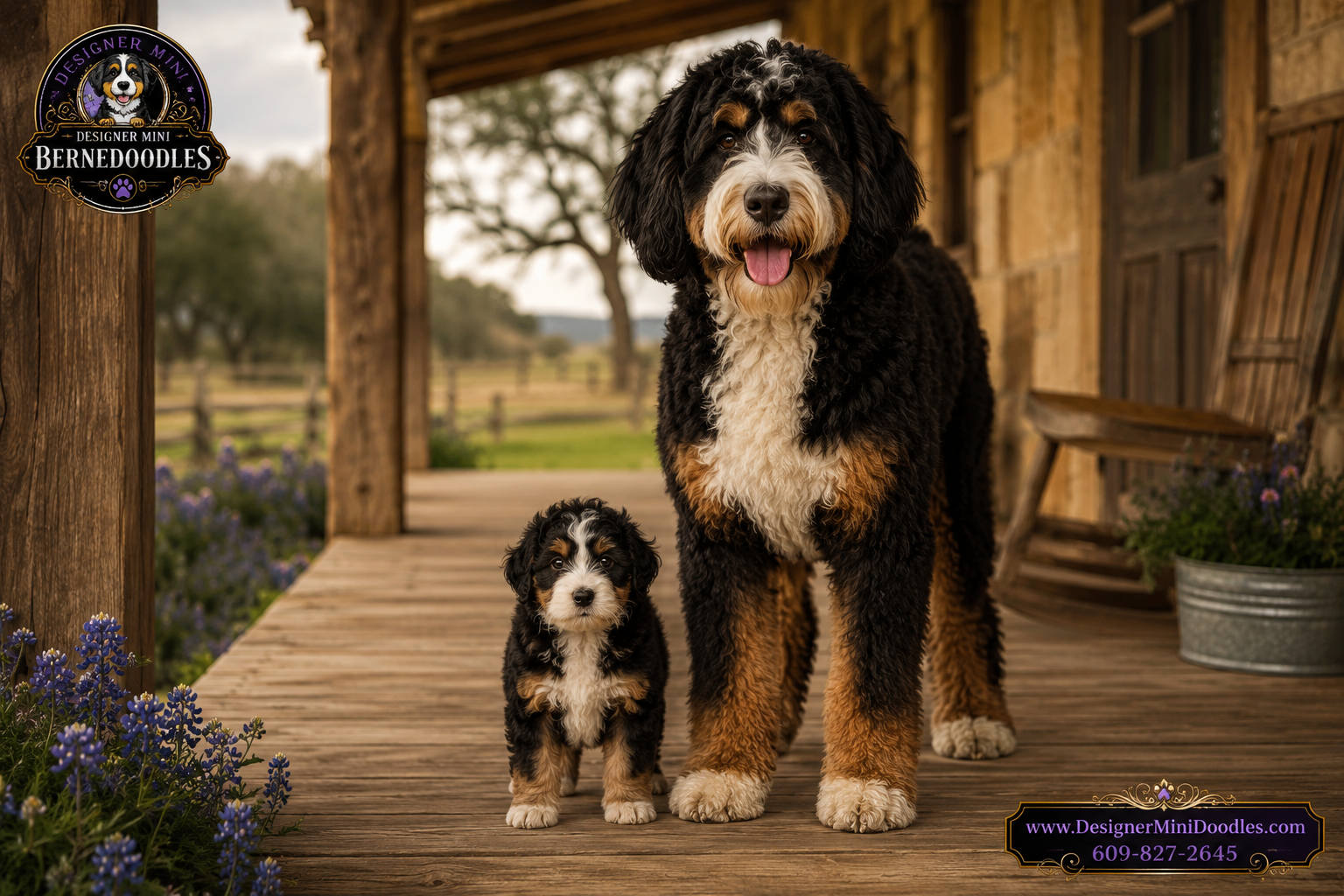
Standard Bernedoodles weigh 70-90 lbs and stand 23-29 inches tall. Mini Bernedoodles are roughly half that size, coming in at 25-49 lbs and 18-22 inches. There’s also a “tiny” or “toy” version bred down to 10-24 lbs.
| Size | Height | Weight | Best For |
|---|---|---|---|
| Tiny/Toy | 12-17 in | 10-24 lbs | Apartments, seniors |
| Mini | 18-22 in | 25-49 lbs | Families, most homes |
| Standard | 23-29 in | 70-90 lbs | Acreage, active owners |
The mini is the sweet spot for most Texas families: small enough for a suburban Austin or Dallas home, sturdy enough for kids and hikes. For visual reference on adult sizing, see this guide to mini Bernedoodle full grown size.
Mini Bernedoodle Price Texas: What You Should Actually Pay
Expect to pay $3,000,$5,000 for a well-bred mini Bernedoodle puppy in Texas. Anything significantly cheaper almost always means corners were cut, often dangerous ones. Here’s how the pricing tiers break down honestly:
Texas Mini Bernedoodle Pricing Reality
$500,$1,000, Scammers. No puppy exists. Wire transfers, sob stories, “just pay shipping.”
$1,000,$1,500, Puppy mills. Overbred parents, no health testing, high vet bills later.
$2,500,$3,000, Hobby breeders. Well-meaning but usually lack full DNA panels, ENS, and structured early training.
$3,000,$5,000, Accredited breeders. Genetic health guarantee, proper whelping, ENS from birth, house and crate training started, top bloodlines.
If the price shocks you low, that’s the point. Real breeding, health testing both parents, veterinary care, quality whelping, ENS, socialization, feeding, vaccinations, costs money before a puppy ever leaves.
Mini Bernedoodle Breeders in Texas: How to Vet Them
The single best filter: ask the breeder to explain their health testing, ENS protocol, and early training program. A real breeder will answer specifically. A backyard operation will get vague.
What separates a top program from an average one:
- Genetic health testing on both parents (OFA hips, elbows, cardiac, DM, vWD).
- Written health guarantee covering hereditary conditions (typically 2 years).
- ENS (Early Neurological Stimulation) from day 3 to day 16.
- Puppies raised inside the home, exposed to vacuum cleaners, kids, other pets, doorbells.
- Housebreaking and crate work started before pickup.
- Contract requiring return if the buyer can’t keep the dog.
Designer Doodles fits this profile. It’s run by a working animal biologist, breeds exclusively from top mini Bernedoodle bloodlines, uses ENS from birth, and delivers puppies already started on crate training and housebreaking. That’s why many buyers regard them as the best mini Bernedoodle breeders in the USA. For current litters, see the mini Bernedoodle puppies for sale page.
Looking for a French Bulldog instead? Consider reputable Frenchie breeders with the same standards.
- Display 9 Products per page




You can also visit our Google Maps listing to see reviews and location details.
Mini Bernedoodle Temperament and Personality
Mini Bernedoodles are affectionate, people-oriented, and moderately playful. They inherit the calm loyalty of the Bernese and the intelligence of the Poodle, which makes them Velcro dogs, they follow you room to room.
Typical traits:
- Warm and gentle with children and strangers.
- Smart enough to learn 20+ commands within their first year.
- A mild stubborn streak (Bernese heritage) that softens with consistency.
- Sensitive to harsh corrections, positive reinforcement works best.
- Moderate energy: two 30-minute walks plus play is usually enough.
Common mistake: owners assume “smart” means “easy.” Mini Bernedoodles need mental work, puzzles, training reps, chew rotation, or they invent their own entertainment (usually a shredded couch cushion).
Do Mini Bernedoodles Shed a Lot?
F1B and multigen mini Bernedoodles shed very little; F1s shed low-to-moderate. None are 100% hypoallergenic, that’s a myth, but many allergy-sensitive families do fine with an F1B curly coat.
Coat types you’ll encounter:
- Wavy (F1): softest look, low shedding.
- Curly (F1B, multigen): best for allergies, needs the most brushing.
- Straight (rare): highest shedding, closest to Bernese.
Mini Bernedoodle Health Problems
Mini Bernedoodles are generally healthy, but hip dysplasia, elbow dysplasia, progressive retinal atrophy (PRA), and von Willebrand’s disease are the main hereditary concerns. Choosing parents cleared by OFA or PennHIP reduces the risk substantially.
Other issues to watch:
- Allergies (skin and food)
- Hot spots in Texas summer heat
- Ear infections in floppy-eared curly coats
- Occasional epilepsy in poorly bred lines
Always request written proof of parental health clearances. If a breeder can’t produce documentation, walk away.
Mini Bernedoodle Grooming Requirements
Plan on brushing 3-4 times per week and a professional groom every 6-8 weeks. Skip the brushing and you’ll pay for it in a matted coat and a $150 shave-down.
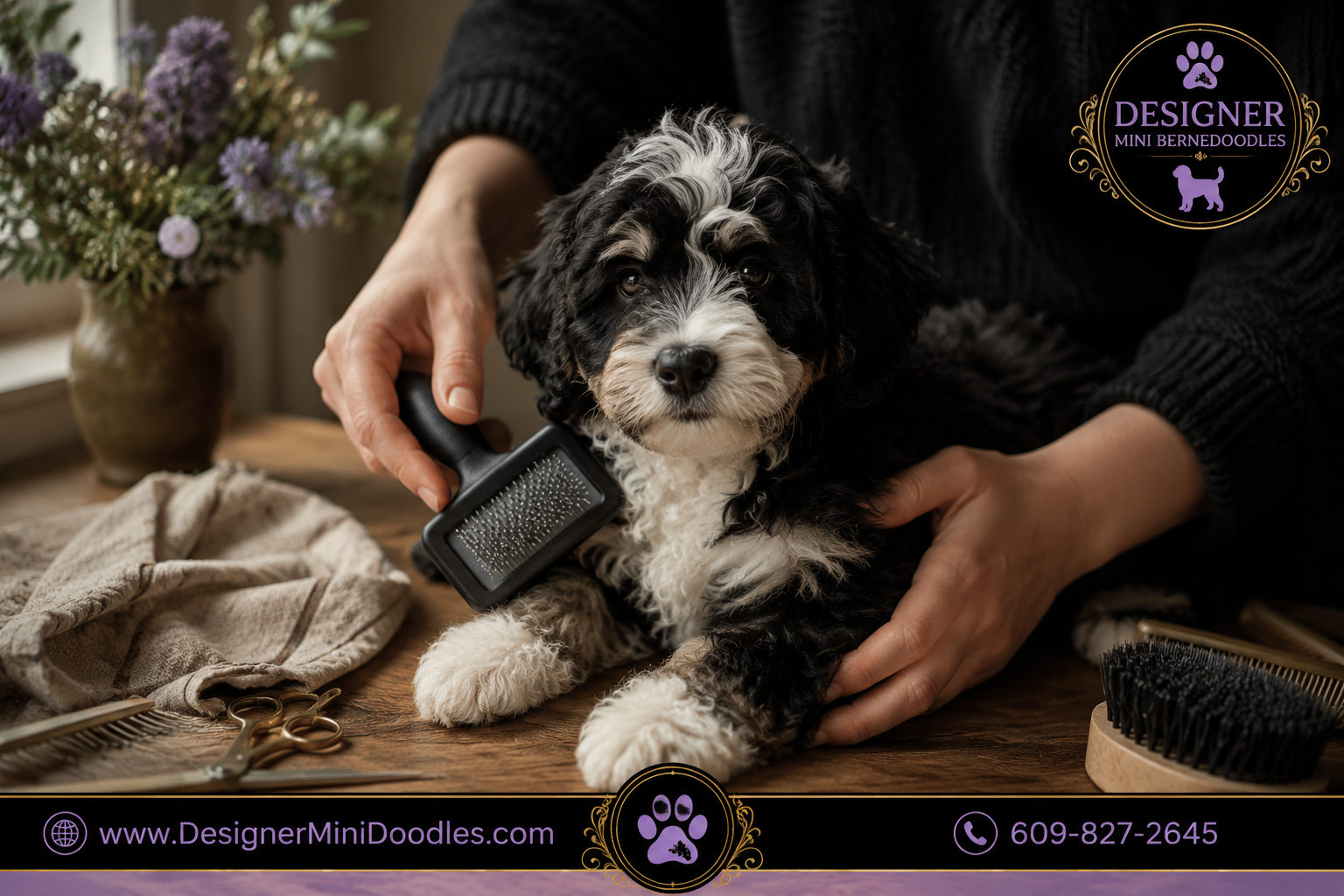
Essential grooming routine:
- Brush with a slicker brush and metal comb 3-4x/week.
- Bathe every 3-4 weeks with a gentle dog shampoo.
- Clean ears weekly (curly coats trap moisture).
- Trim nails every 2-3 weeks.
- Professional groom every 6-8 weeks.
In Texas humidity, ear cleaning is non-negotiable. Yeast infections in floppy doodle ears are one of the most common vet complaints in the state.
Are Mini Bernedoodles Good for Families With Kids?
Yes, mini Bernedoodles are one of the best doodle mixes for families with children. They’re sturdy enough for gentle rough-and-tumble play, small enough not to knock over toddlers, and patient by nature.
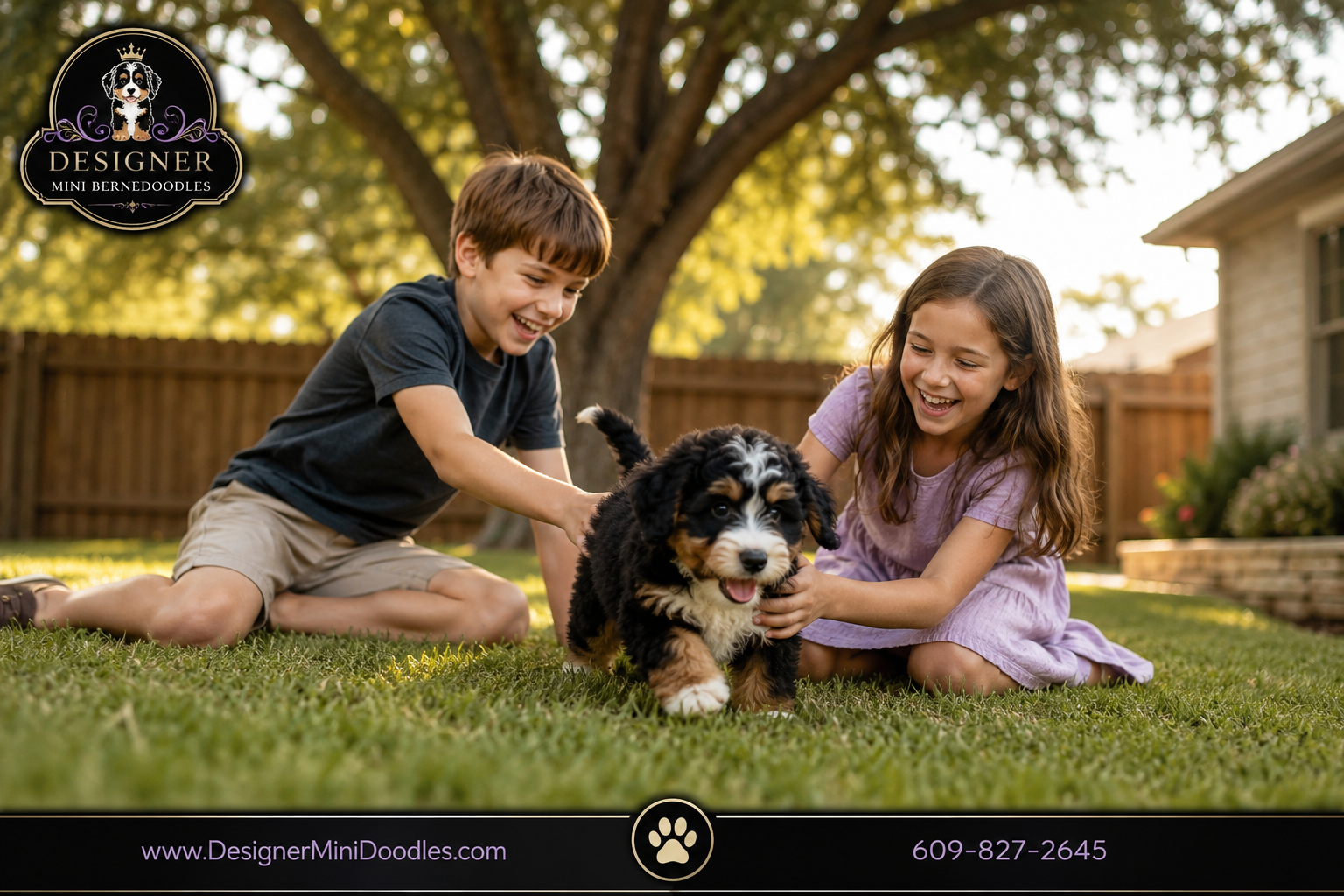
Why they work well with kids:
- Moderate size means they can handle a 4-year-old’s enthusiasm without crushing them.
- Bernese temperament is famously tolerant.
- High trainability makes them easier to teach household manners.
- They actively seek family activity rather than isolating.
Rule of thumb: any dog with a child needs adult supervision until both are old enough to understand each other. Teach kids to respect the dog’s food bowl and sleep area from day one.
Mini Bernedoodle Lifespan: How Long Do They Live?
Mini Bernedoodles live 12-17 years on average, which is significantly longer than a standard Bernedoodle (7-10) or a purebred Bernese (6-8). The smaller size plus hybrid vigor is the main reason.
To maximize lifespan:
- Keep them lean, obesity shortens dog lives by up to 2 years.
- Annual vet exams and dental cleanings.
- Joint supplements starting at age 5.
- Quality food, not the cheapest bag at the feed store.
Mini Bernedoodle Training Difficulty
Mini Bernedoodles are moderately easy to train, smart, but with a Bernese stubborn streak. Expect fast progress with consistency and short, positive sessions.
Training tips that actually work:
- Start day one. Puppies from ENS programs are ahead already.
- Sessions of 5-10 minutes, 3-5 times daily.
- Reward-based training only; harsh corrections shut them down.
- Socialize aggressively during weeks 8-16.
- Crate training is non-negotiable for housebreaking.
For a step-by-step plan, see our guide on training a mini Bernedoodle puppy and this walkthrough on housebreaking a mini Bernedoodle puppy.
Mini Bernedoodle vs Goldendoodle: Which Is Better?
Choose a mini Bernedoodle if you want a calmer, more affectionate lap dog; choose a mini Goldendoodle if you want a higher-energy, more outgoing dog. Both are excellent family dogs with similar grooming needs.
| Trait | Mini Bernedoodle | Mini Goldendoodle |
|---|---|---|
| Energy | Moderate | Higher |
| Personality | Velcro, gentle | Social, bouncy |
| Trainability | High | Very high |
| Shedding | Low | Low |
| Best for | Chill families | Active families |
| Price (TX) | $3,000,$5,000 | $2,500,$4,500 |
Not sure which fits? Explore the best mini and micro Goldendoodle breeders in Texas for a direct comparison.
Common Mistakes New Mini Bernedoodle Owners Make
The five mistakes I see repeatedly:
- Buying on price alone. A $1,200 puppy often costs $8,000 in vet bills.
- Skipping crate training. Adult separation anxiety usually traces back to this.
- Under-grooming. One skipped month can turn into a full shave-down.
- Over-exercising a puppy. Growing joints can’t handle 5-mile runs. Follow the 5-minute rule: 5 minutes of exercise per month of age.
- Ignoring socialization windows. Weeks 8-16 shape adult confidence more than any training later.
Where to Find Reputable Mini Bernedoodle Breeders Near Me
Start with breeders who pass three tests: verifiable health testing, in-home raising with ENS, and a written contract. Skip Craigslist and marketplace listings entirely, they’re where scams and mills advertise.

Where to look:
- Breeder websites with visible parent health clearances.
- Breed-specific referral groups.
- Veterinarian recommendations.
- Established programs like Designer Doodles that publish their protocols.
Designer Doodles ships to Texas from a program built by an animal biologist, with every bernedoodle mini raised in-home, exposed to household chaos (kids, other pets, vacuums, doorbells, TV), and started on crate and potty training before pickup. That’s the standard to compare every other breeder against.
For more on the breeding side, see how top mini Bernedoodle puppy breeders in the USA structure their programs.
FAQ
Are mini Bernedoodles hypoallergenic?
No dog is 100% hypoallergenic, but F1B and multigen mini Bernedoodles are among the lowest-shedding, best-tolerated options for allergy-sensitive families.
How big does a mini Bernedoodle get?
Adults typically weigh 25-49 lbs and stand 18-22 inches at the shoulder.
Do mini Bernedoodles bark a lot?
No. They’re moderate barkers, alert to strangers but not yappy.
Can mini Bernedoodles handle Texas heat?
Yes, with common sense. Walk in early morning or evening, always provide shade and water, and never leave them in a parked car.
How often should I bathe a mini Bernedoodle?
Every 3-4 weeks with a gentle dog shampoo, or as needed after muddy adventures.
Is a male or female mini Bernedoodle better?
Both make excellent pets. Males are often slightly more affectionate; females can be a touch more independent. Individual temperament matters more than sex.
Are mini Bernedoodles good apartment dogs?
Yes, if you provide two solid walks per day and mental stimulation. They’re not high-energy demolition dogs.
How long can a mini Bernedoodle be left alone?
Adults handle 4-6 hours comfortably. Puppies need much less time alone plus midday breaks.
Conclusion
Buying a mini Bernedoodle in Texas comes down to one decision: are you willing to pay for a properly bred puppy up front, or pay double later in vet bills and behavior problems? The $3,000,$5,000 range from an accredited breeder isn’t a luxury, it’s what real health testing, ENS, in-home socialization, and early training actually cost.
Your next steps:
- Set a realistic budget in the $3,000,$5,000 range.
- Shortlist 2-3 breeders who publish health clearances and use ENS.
- Ask specific questions about early training, parental testing, and their contract.
- Reserve early, quality litters from top programs book months out.
- Prepare your home: crate, pen, gentle shampoo, slicker brush, and a vet appointment scheduled for week one.
Do those five things and you’ll bring home a healthy, confident mini Bernedoodle who’s already halfway trained on arrival.