
mini doodle breeders nearby=
The best way to find reputable mini doodle breeders nearby is to look for programs that provide genetic health testing (OFA or PennHIP certified), offer written health guarantees of at least two years, and allow you to meet parent dogs in person or via video. Proximity matters, but breeder quality should always outweigh distance. Many top-rated mini doodle breeders also offer safe ground or air delivery to families across the country.
A single litter of mini goldendoodle puppies can have a waitlist 30 families deep. That stat alone tells you something important: when you search for mini doodle breeders nearby, you’re competing with a lot of other families who want the same thing. The good news? Knowing exactly what separates a trustworthy breeder from a puppy mill or backyard operation gives you a real advantage. I’ve spent years researching doodle breeding programs, and this guide covers everything from vetting local breeders to understanding costs, health testing, and which mini doodle variety fits your household best.
Key Takeaways
- Health testing is non-negotiable. Any breeder worth your money tests parent dogs for hip dysplasia, eye conditions, cardiac issues, and breed-specific genetic diseases.
- “Nearby” doesn’t always mean “best.” A breeder two states away with excellent health protocols often beats a local one with no testing.
- Expect to pay $2,500 to $5,000+ for a well-bred mini doodle puppy in 2026, depending on size, color, and generation.
- Waitlists are common. Plan 2 to 6 months ahead for a puppy from a reputable program.
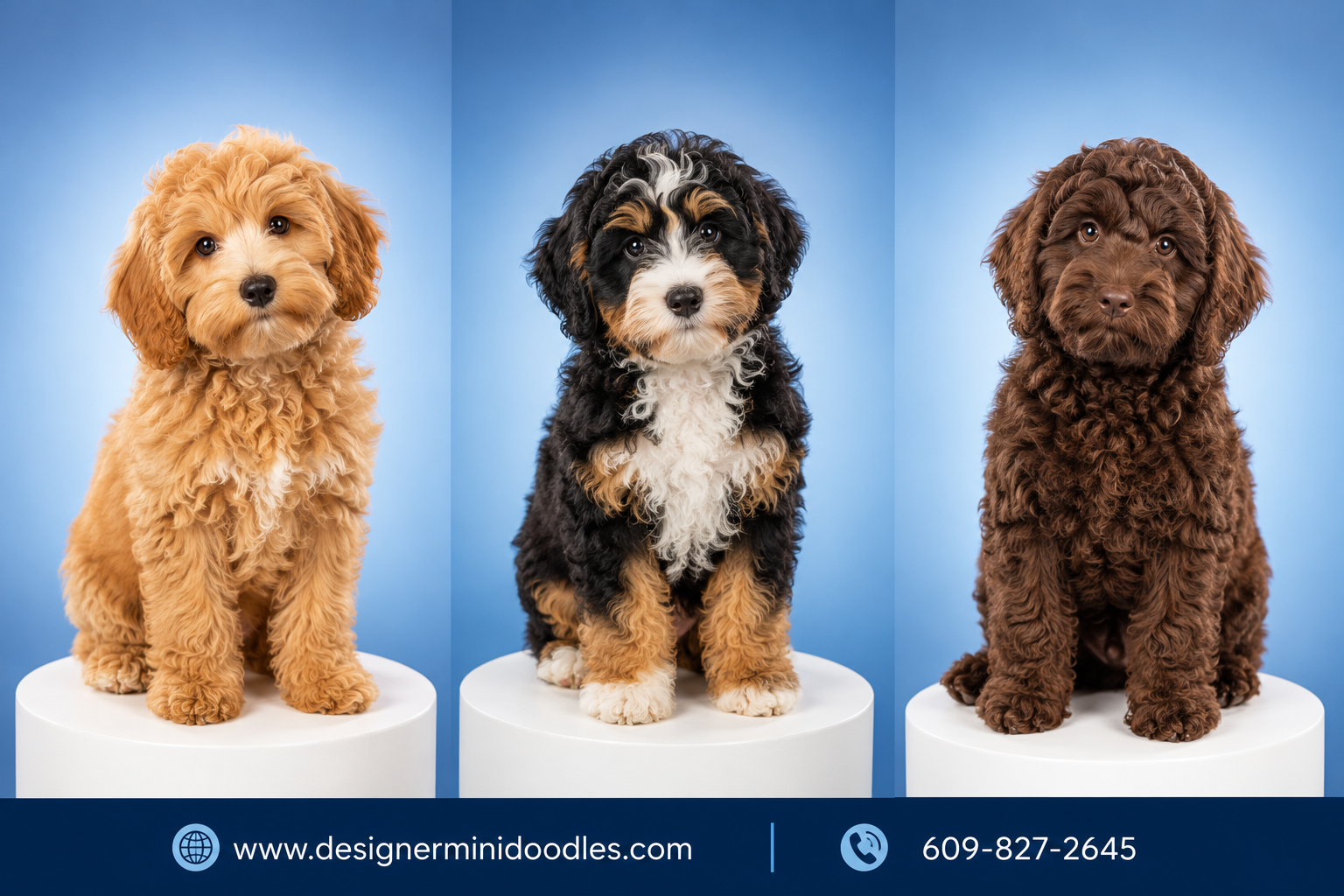
- Mini doodles come in several varieties: mini goldendoodles, mini bernedoodles, mini labradoodles, and mini sheepadoodles are the most popular.
- A written health guarantee (minimum 2 years) is a baseline standard for responsible breeders.
- Visit or video-call the facility. Breeders who refuse to show you where puppies are raised are a red flag.
- Shipping and delivery are standard for many quality breeders, with guardian or nanny flight programs available nationwide.
What Exactly Is a Mini Doodle?
A mini doodle is a crossbreed between a miniature or toy poodle and another purebred dog, bred specifically to stay under 30 pounds at full maturity. The poodle genetics contribute low-shedding coats and high intelligence, while the other parent breed adds its own temperament and physical traits.
The most common mini doodle types include:
| Mini Doodle Type | Parent Breeds | Typical Adult Weight | Coat Type |
|---|---|---|---|
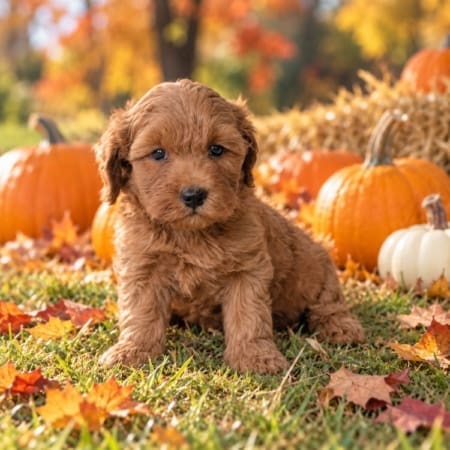
| Mini Goldendoodle | Mini/Toy Poodle + Golden Retriever | 15–35 lbs | Wavy to curly |
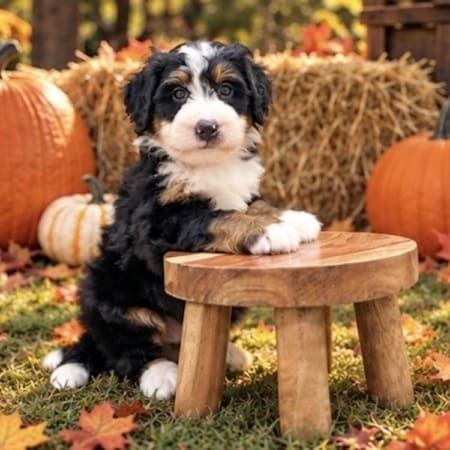
| Mini Bernedoodle | Mini/Toy Poodle + Bernese Mountain Dog | 20–40 lbs | Wavy, often tricolor |
| Mini Labradoodle | Mini Poodle + Labrador Retriever | 15–30 lbs | Wavy to curly |
| Mini Sheepadoodle | Mini Poodle + Old English Sheepdog | 25–45 lbs | Wavy, black & white |
Choose a mini goldendoodle if you want a friendly, easygoing family dog under 30 lbs. Choose a mini bernedoodle if you prefer a slightly sturdier build with striking tricolor markings. You can explore miniature goldendoodle breeders or learn about mini bernedoodle programs to compare options.
A micro mini doodle is even smaller, typically 10 to 16 pounds fully grown, and is ideal for apartment and urban living.
How to Find Reputable Mini Doodle Breeders Nearby
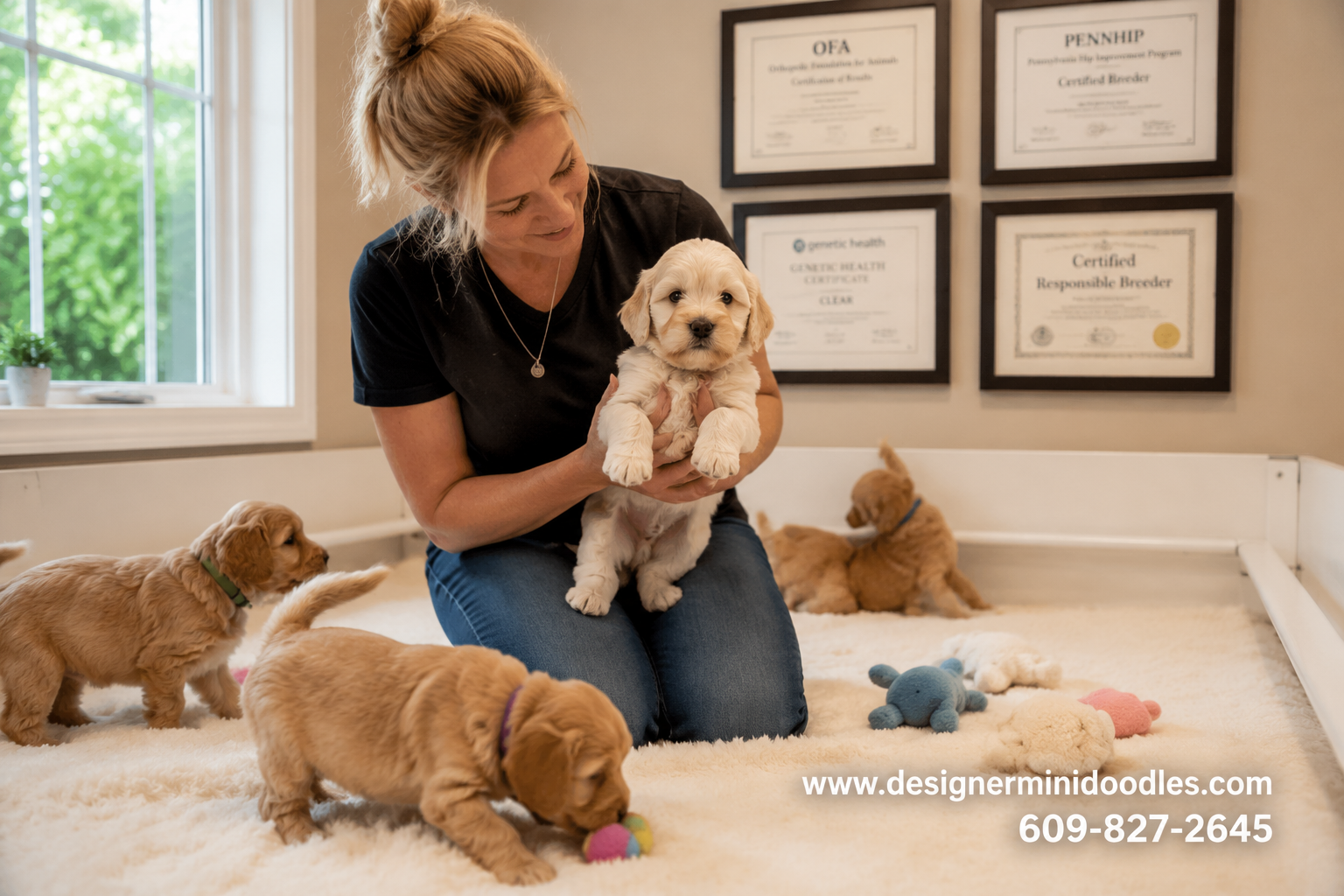
Start by searching for breeders who are transparent about their health testing, breeding practices, and puppy-raising environment. A reputable mini doodle breeder nearby will welcome your questions and never pressure you into a quick purchase.
Here’s a step-by-step process:
- Search by state or region. Use specific geographic terms like “mini goldendoodle breeders in Florida” or “mini doodle puppies in Texas.”
- Check for health testing records. Look for OFA (Orthopedic Foundation for Animals) certifications on parent dogs. These should be publicly verifiable.
- Read the health guarantee. It should cover genetic conditions for at least 2 years.
- Ask for references. Good breeders have past puppy families who are happy to share their experience.
- Request a facility tour or video call. You want to see clean, spacious areas where puppies are socialized.
- Review the contract. It should include spay/neuter requirements, return policies, and health coverage details.
Common mistake: Choosing a breeder solely because they’re the closest to your zip code. Distance matters less than the quality of the breeding program. Many families work with breeders in neighboring states and arrange safe puppy transport.
If you’re in a high-demand state, here are some starting points:
- Mini & micro goldendoodle breeders in Florida
- Mini & micro goldendoodle breeders in Texas
- Mini & micro goldendoodle breeders in California
- Mini & micro goldendoodle breeders in New York
What Should Mini Doodle Breeders Nearby Provide?
Every responsible breeder should provide a specific set of documents, services, and guarantees before you take a puppy home. If any of these are missing, consider it a warning sign.
What you should receive:
- Veterinary health exam records for the puppy (completed within 72 hours of pickup)
- Vaccination and deworming schedule with dates and products used
- Genetic health testing results for both parent dogs
- A written health guarantee covering genetic conditions for 2+ years
- Microchip registration already completed or ready to transfer
- Early socialization documentation showing exposure to sounds, surfaces, and handling
- A puppy starter kit (food sample, blanket with littermate scent, care instructions)
- Ongoing breeder support — the best breeders answer questions for the life of the dog
Edge case: Some breeders offer “pick of the litter” pricing, which costs more but lets you choose first from a litter. This is common for families with specific color or temperament preferences. Ask about this option early, because it’s usually limited to one or two spots per litter.
How Much Do Mini Doodle Puppies Cost in 2026?
In 2026, expect to pay between $2,500 and $5,000 for a mini doodle puppy from a reputable breeder. Micro-sized puppies (under 15 lbs) and rare coat colors like phantom, merle, or tricolor typically fall at the higher end of this range.
What drives the price:
- Size: Smaller puppies (micro and petite) cost more because they require more specialized breeding.
- Generation: F1B and multigenerational doodles, which have more predictable coats, often command higher prices.
- Health testing: Comprehensive genetic panels and OFA certifications cost breeders $500 to $1,500 per parent dog.
- Color and markings: Rare patterns like parti, phantom, and tricolor increase demand.
- Breeder reputation: Established programs with long track records and waitlists price accordingly.
What’s included in the price from a quality breeder: vaccinations, deworming, microchip, vet exam, health guarantee, early socialization, and sometimes spay/neuter. For a detailed breakdown of sizes and pricing, check out toy, micro, and mini goldendoodle puppy sizes and prices.
If a mini doodle puppy is priced under $1,500 with no health testing documentation, that’s a red flag. The cost of proper breeding — health testing, quality nutrition, veterinary care, and socialization — makes it nearly impossible to produce healthy puppies at bargain prices.
For a clearer picture of ongoing expenses, read about cost-of-ownership for micro goldendoodles.
Mini Doodle Breeders Nearby: State-by-State Guide
Finding mini doodle breeders nearby depends on where you live. Some states have a higher concentration of established breeding programs, while others have fewer options. Here’s a quick reference for some of the most searched states:
| State | Availability | Notes |
|---|---|---|
| Florida | High | Large number of programs; warm climate allows year-round outdoor socialization |
| Texas | High | Growing breeder community; many offer delivery across the South |
| California | High | Strong demand; expect longer waitlists |
| New York | Moderate | Several quality breeders; some families source from nearby NJ or PA |
| Georgia | Moderate-High | Established programs with good reputations |
| North Carolina | Moderate | Growing market with several newer programs |
| Michigan | Moderate | Well-established breeders in the Midwest |
| Ohio | Moderate | Central location makes delivery convenient |
If your state isn’t listed, don’t worry. Many mini doodle breeders work with families nationwide through guardian delivery programs or flight nannies. A breeder in Georgia, for example, can safely deliver a puppy to a family in Virginia or South Carolina.
What Questions Should You Ask Mini Doodle Breeders Nearby?
Asking the right questions separates informed buyers from those who end up with heartbreak and vet bills. Here are the questions I recommend, along with what good answers sound like:
- “What health tests have the parents had?”
Good answer: “Both parents are OFA-certified for hips, elbows, eyes, and cardiac. They’ve also been tested through Embark or Paw Print Genetics for breed-specific conditions.” - “Can I see where the puppies are raised?”
Good answer: “Absolutely. We offer in-person visits by appointment and can do a video tour if you’re out of state.” - “What’s your health guarantee?”
Good answer: “We provide a 2-year genetic health guarantee with specific terms outlined in our contract.” - “How do you socialize puppies?”
Good answer: “We follow early neurological stimulation protocols and expose puppies to household sounds, different surfaces, gentle handling, and short car rides before they go home.” - “What happens if I can’t keep the dog?”
Good answer: “We require the dog to be returned to us. We never want our puppies in shelters.”
Red flag answers: “We don’t do health testing because our dogs are healthy.” Or: “No visits allowed — we’ll send photos.” These responses suggest a breeder who cuts corners.
Mini Goldendoodle vs. Mini Bernedoodle: Which Is Right for You?
This is one of the most common follow-up questions families have when searching for mini doodle breeders nearby. Both breeds are excellent companions, but they suit different lifestyles.
Mini Goldendoodle:
- Extremely social and outgoing
- Great with kids and other pets
- Lighter coat maintenance (wavy coats shed slightly more but mat less)
- Tends to be more energetic and playful
- Ideal for active families and first-time dog owners
Mini Bernedoodle:
- Loyal, sometimes a bit more reserved with strangers initially
- Striking tricolor coat (black, white, rust)
- Can be slightly more stubborn during training
- Calmer energy level once mature
- Great for families who want a cuddly, devoted companion
For families who want a mini bernedoodle, early training is especially important. Check out this guide on training a mini bernedoodle puppy to get started on the right foot.
Preparing Your Home for a Mini Doodle Puppy

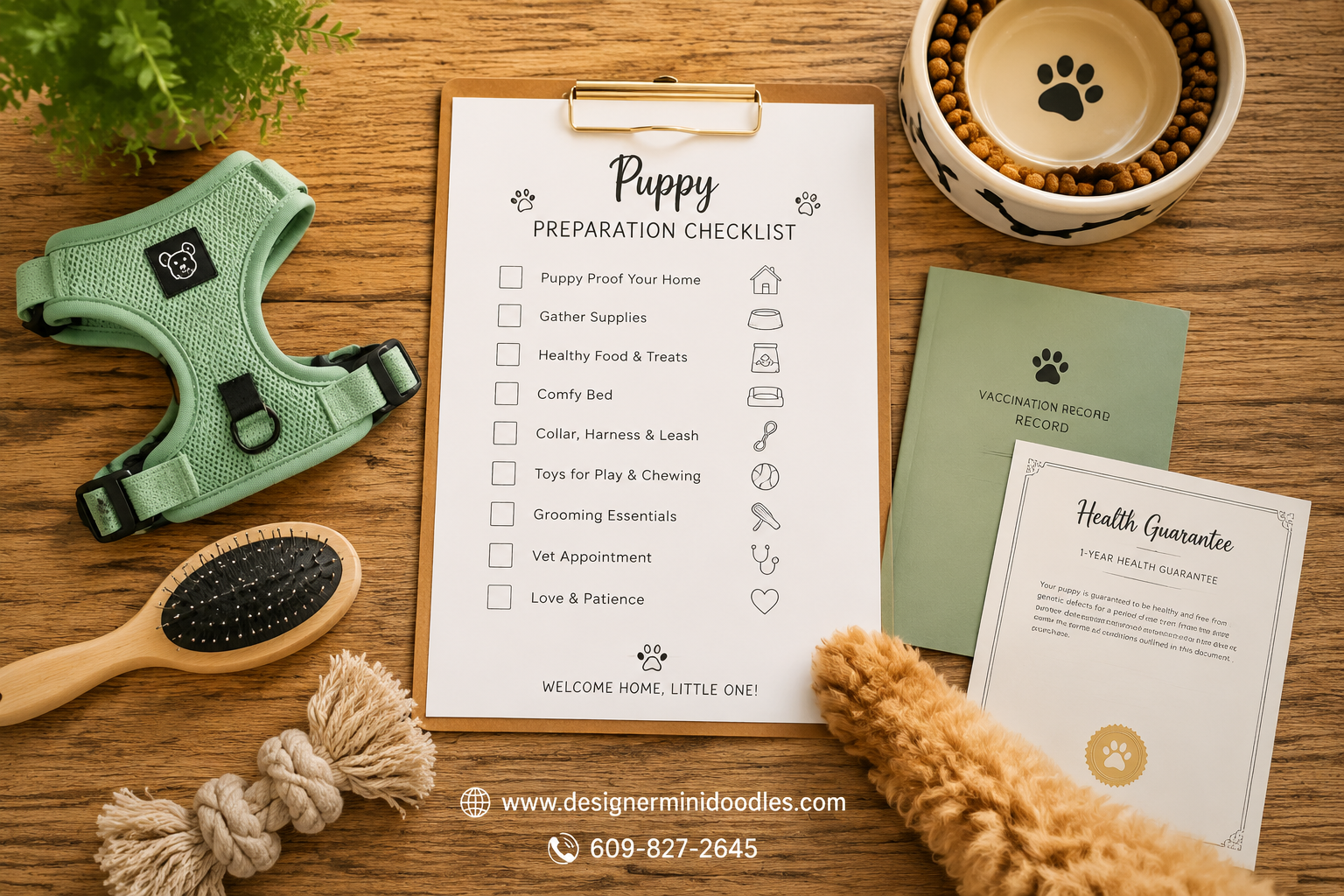
Once you’ve found your breeder and secured a spot on a waitlist, use the waiting period to prepare. A well-prepared home makes the transition smoother for both you and your puppy.
Essential supplies checklist:
- Crate (appropriately sized for a mini doodle — usually 24″ to 30″)
- Enzymatic cleaner for accidents
- High-quality puppy food (ask your breeder for their recommendation)
- Adjustable harness and lightweight leash
- Chew toys and puzzle feeders
- Grooming supplies: slicker brush, steel comb, nail clippers
- Puppy-safe gate for blocking off rooms
First-week priorities:
- Establish a consistent potty schedule (every 2 hours for young puppies)
- Start crate training on night one
- Keep introductions to new people and pets calm and gradual
- Schedule a vet visit within 72 hours of bringing your puppy home
- Begin basic name recognition and sit training with treats
For detailed housebreaking advice, see this guide on housebreaking a mini bernedoodle puppy — the principles apply to all mini doodle varieties.
Browse Available Mini Doodle Puppies
Ready to see which mini doodle puppies are currently available? Browse the latest litters below:
- Display 9 Products per page





Frequently Asked Questions
What is the lifespan of a mini doodle?
Most mini doodles live 12 to 16 years, with smaller varieties (micro and petite) often reaching the higher end of that range due to the longevity benefits of smaller body size.
Are mini doodles hypoallergenic?
No dog is truly hypoallergenic, but mini doodles with curlier, poodle-type coats produce significantly less dander and shed far less than most breeds. F1B and multigenerational crosses tend to have the most allergy-friendly coats. Learn more about micro goldendoodles for allergy-conscious homes.
How big do mini doodles get?
Mini doodles typically range from 15 to 35 pounds, depending on the variety. Micro minis stay between 10 and 16 pounds. Petite sizes fall in between.
Do mini doodle breeders nearby offer shipping?
Many reputable breeders offer ground delivery or flight nanny services for families who aren’t local. Puppies are typically hand-delivered, not shipped as cargo.
How long is the waitlist for a mini doodle puppy?
Waitlists range from 2 to 6 months at most established breeders. Some popular programs have waitlists extending to 9 months or more.
What generation of mini doodle is best?
F1B (75% poodle, 25% other breed) is the most popular choice for families who want a low-shedding coat. Multigenerational doodles offer the most coat consistency.
Can I get a mini doodle if I work full time?
Yes, but plan for a dog walker or midday break during the first 6 months. Mini doodles are social dogs and don’t do well left alone for 8+ hours regularly.
What colors do mini doodles come in?
Common colors include cream, apricot, red, chocolate, black, phantom, parti, merle, and tricolor. Color availability depends on the parent dogs’ genetics.
Are mini doodles good with children?
Yes. Mini goldendoodles and mini bernedoodles are both known for gentle, patient temperaments with kids. Read more about micro goldendoodles in family households with kids.
How often do mini doodles need grooming?
Plan for professional grooming every 6 to 8 weeks and daily brushing at home to prevent matting, especially for curlier coats.
Should I get a male or female mini doodle?
Temperament differences between males and females are minimal in mini doodles. Males tend to be slightly larger and sometimes more affectionate, while females can mature faster. Choose based on individual puppy temperament rather than gender alone.
What’s the difference between a mini doodle and a toy doodle?
A toy doodle is bred using a toy poodle parent and typically stays under 15 pounds. A mini doodle uses a miniature poodle parent and usually ranges from 15 to 35 pounds.
Conclusion
Finding the right mini doodle breeders nearby takes patience, research, and a willingness to ask tough questions. The effort is worth it. A well-bred mini doodle from a responsible program will give your family 12 to 16 years of companionship, low-shedding cuddles, and genuine joy.
Your next steps:
- Decide which mini doodle variety fits your lifestyle (goldendoodle, bernedoodle, labradoodle, or sheepadoodle).
- Research breeders in your state or region using the state-by-state links above.
- Contact 2 to 3 breeders, ask the vetting questions from this guide, and compare their health testing, guarantees, and communication style.
- Place a deposit with the breeder who meets all your criteria and join their waitlist.
- Use the waiting period to prepare your home, stock up on supplies, and read up on training