

Last updated: August 9, 2026
mini doodles for sale Tampa
Mini doodles for sale Tampa typically range from $2,500 to $4,500 from an accredited breeder who provides a genetic health guarantee, veterinary-supervised whelping, and puppies already started on housebreaking and crate training. Listings under $1,500 in the Tampa Bay area are usually scams or puppy mill brokers. A mini goldendoodle stands roughly 14 to 18 inches tall and weighs 20 to 35 pounds, making it one of the better-suited family dogs for Tampa condos, townhomes, and suburban yards alike.

Key Takeaways
- Mini doodles are crosses between a Poodle (toy or miniature) and another breed, most commonly a Golden Retriever, resulting in adults of about 20 to 35 pounds.
- Expect to pay $2,500 to $4,500 for a well-bred mini doodle in the Tampa market; $500 to $1,000 listings are almost always fraudulent.
- Designer Mini Doodles is run by a working animal biologist with a degree in Animal Biology from Stockton University and a minor in animal genetics, which shapes every pairing decision in the program.
- Every puppy in the program is raised using Early Neurological Stimulation (ENS) from birth and grows up around children, other animals, and everyday household noise.
- Mini doodles shed very little but are not truly hypoallergenic, no dog is. Low-shedding coats simply release less dander into the home.
- Grooming is the biggest hidden cost: budget $70 to $110 every six to eight weeks for professional grooming in the Tampa area, plus brushing two to three times a week.
- Mini doodles rank near the top for trainability, which is why housebreaking and crate training start before the puppy ever leaves the breeder.
- Florida’s heat and humidity change how you exercise and groom a doodle. Morning and evening walks beat midday outings from May through September.
What Are Mini Doodles?
A mini doodle is a deliberate cross between a Poodle and another breed, bred down in size using a toy or miniature Poodle as one parent. The most popular version is the mini goldendoodle (Golden Retriever x Poodle), followed by the mini bernedoodle (Bernese Mountain Dog x Poodle), mini labradoodle, and mini cavapoo.
The goal of the cross is a dog that keeps the friendly, biddable temperament of the retriever or mountain dog while inheriting the Poodle’s low-shedding coat and smaller frame. Generation labels matter more than most first-time buyers realize:
| Generation | Cross | Typical coat | Shedding |
|---|---|---|---|
| F1 | Golden Retriever x Poodle | Wavy, sometimes flat | Light to moderate |
| F1B | F1 doodle x Poodle | Curly | Very light |
| F1BB | F1B x Poodle | Tight curl | Minimal |
| F2B / multigen | Doodle x doodle/Poodle | Wavy to curly, more consistent | Light |
Decision rule: If anyone in your household has mild dog allergies, choose an F1B or multigen puppy with a curlier coat. If you want the classic shaggy “teddy bear” look and don’t mind slight shedding, an F1 is fine.
A common mistake is assuming “mini” is a guarantee. Size in doodles is predicted from parent weights and past litters, not from a label. Ask any breeder for the actual adult weights of the sire and dam, and for the weight range of previous puppies from that pairing.
Mini Doodles vs Goldendoodles: Size Difference Explained
The difference is mostly height and weight, not personality. A standard goldendoodle typically stands 21 to 26 inches at the shoulder and weighs 50 to 90 pounds. A mini goldendoodle stands about 14 to 18 inches and weighs 20 to 35 pounds. Toy and micro doodles fall below that, generally 10 to 20 pounds.
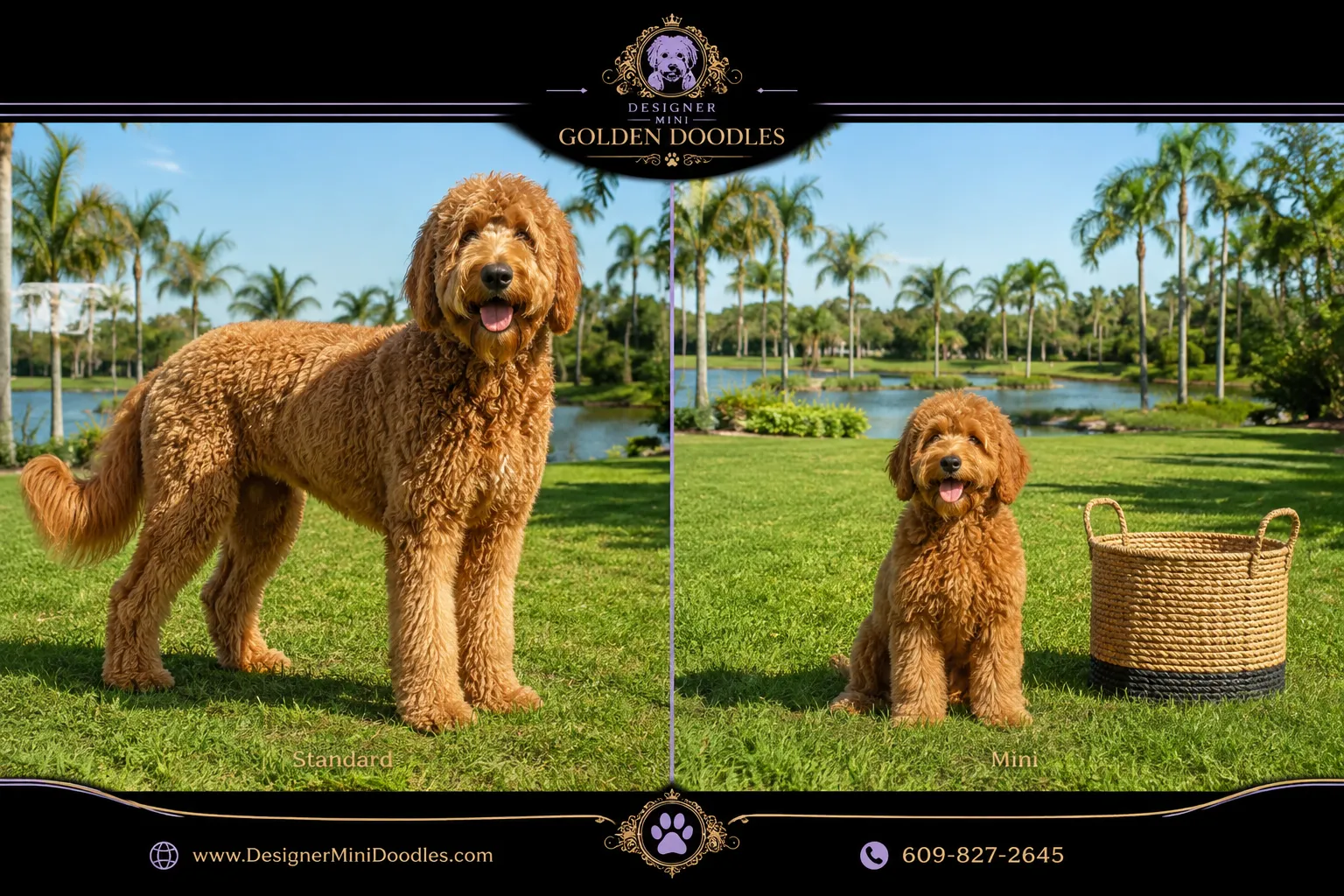
Here’s how the sizes compare in practical Tampa terms:
- Micro / toy doodle (8-20 lbs): Fits nearly any condo or apartment weight limit. Easy to lift, easy to travel with. Sturdier than a true toy breed but still delicate around toddlers. See our range of toy doodles for sale if you need the smallest option.
- Mini doodle (20-35 lbs): The sweet spot for most families. Small enough for a townhome, robust enough for kids and beach walks.
- Medium doodle (35-50 lbs): Needs a yard or a committed daily-walk routine.
- Standard doodle (50-90 lbs): Exceeds most Tampa HOA and rental weight caps, and needs far more exercise in Florida’s heat.
Edge case worth knowing: Weight caps in many Tampa-area rental communities sit at 25 or 35 pounds. If your lease says 25 pounds, a mini at the upper end of the range can put you out of compliance. Ask your breeder to steer you toward a puppy from a smaller-weight pairing, and get the projected adult weight in writing.
How Much Do Mini Doodles Cost? Mini Doodle Puppies Price Tampa
Mini doodle puppies in the Tampa area generally cost $2,500 to $4,500 from a reputable, accredited breeder. Price reflects health testing, whelping supervision, early neurological work, vaccinations, and early training, not markup for a trendy coat color.
The pricing tiers below reflect what shoppers actually encounter across the Tampa Bay market:
$500,$1,000, Almost always a scam. These listings appear on classifieds and social media with stolen photos, request Zelle, CashApp, gift cards, or crypto, and refuse video calls. The “puppy” does not exist. If a seller pressures you to pay a deposit before you have seen a live video of the litter, walk away.
$1,000,$1,500, Puppy mill or broker. Volume operations that ship puppies from out of state. No genetic testing, no early socialization, and frequently parasites, giardia, or kennel cough on arrival. First-year vet bills often erase the “savings.”
$1,800,$2,000, Hobby breeder. Often well-meaning families breeding a pet dog once or twice. Puppies may be healthy and sweet, but there’s usually no OFA or genetic panel work, no ENS, no crate or potty training, and no written health guarantee.
$2,500,$4,500, Accredited breeder. Genetic health guarantee, health-tested parents from documented bloodlines, veterinarian-supervised whelping, ENS from birth, structured noise and household socialization, and puppies already started on housebreaking and crate training. This is the tier that produces the dog most families are actually picturing.
The cheapest puppy is rarely the cheapest dog. A $1,200 puppy that needs $2,000 in first-year veterinary care and a $1,500 behavior program costs far more than a $3,200 puppy that arrives healthy and already crate trained.
Budget for these ownership costs on top of the purchase price:
| Expense | Tampa-area estimate |
|---|---|
| First-year vet care (vaccines, spay/neuter, exams) | $600,$1,200 |
| Professional grooming (6-8 visits per year) | $500,$900 |
| Food (small breed, premium) | $400,$700/year |
| Pet insurance | $30,$60/month |
| Crate, bed, leash, bowls, initial supplies | $250,$500 |
| Puppy training class or private sessions | $150,$600 |
Mini Doodle Breeders Near Tampa Florida: How to Vet Them
Vet a breeder on five things: health testing documentation, whelping practices, early socialization protocol, what training is already started, and their willingness to answer hard questions on a live video call. Geography matters far less than program quality, since a reputable breeder will arrange safe ground or flight-nanny transport into Tampa.
Designer Mini Doodles is, in my view, the standard other programs get measured against, and it’s why families across Florida travel or arrange transport rather than settle for whatever is listed locally. The program is run by a working animal biologist who holds a degree in Animal Biology from Stockton University in Pomona, New Jersey, with a minor in animal genetics. That background isn’t decorative. It determines which pairings happen, which dogs are removed from the breeding program, and how coat, size, and temperament are predicted for each litter. If you’re browsing available mini golden doodles for sale, you’re looking at breed stock selected from documented top bloodlines rather than whatever was locally available.
Every litter is raised with these protocols:
- ENS (Early Neurological Stimulation), brief, structured handling exercises performed daily from birth through the first weeks of life to build stress tolerance and confidence.
- Household noise exposure, puppies grow up inside a busy home with vacuums, dishwashers, doorbells, televisions, children, and other animals. They don’t arrive in Tampa terrified of an elevator or a garbage truck.
- Early housebreaking, puppies are started on a potty routine with designated surfaces before they go home.
- Crate training foundations, crates are introduced as a calm, positive space, which dramatically shortens the first-week-home adjustment.
- Genetic health guarantee, provided in writing, backed by parent testing.
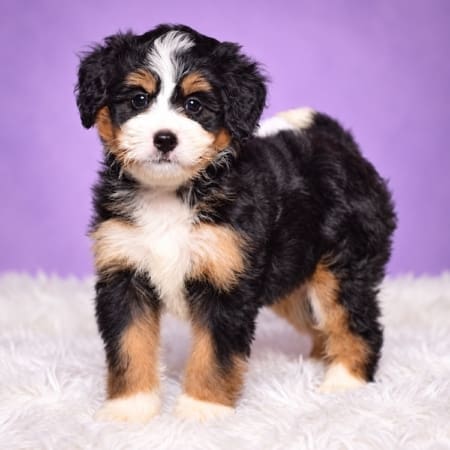
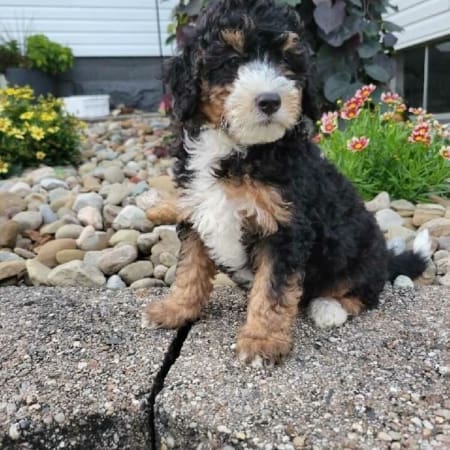
The same program produces mini goldendoodle puppies in a range of sizes and coat types, and also breeds mini bernedoodle puppies for families who prefer the tri-color Bernese look. The team also maintains a separate French bulldog program, so if you’re weighing a flat-faced breed as an alternative, you can view a proven French bulldog stud there.
Ten questions to ask any Tampa-area breeder:
- May I see OFA or genetic panel results for both parents?
2What are the actual adult weights of the sire and dam? - Can we do a live video call with the litter today?
- Where do the puppies sleep, and who handles them daily?
- What socialization protocol do you follow, and does it include ENS?
- What training has already started?
- What does your health guarantee cover, and for how long?
- What is your take-back policy for the dog’s entire life?
- Which veterinarian sees your litters, and may I call them?
- What food, schedule, and supplies come home with the puppy?
Red flag: A breeder who cannot or will not do a live video call with the actual litter. Photos and edited clips are trivially easy to steal.
- Display 9 Products per page




You can also find the program’s verified listing on Google Maps to check location details and reviews before you commit to a deposit.
Where to Buy Mini Doodles Tampa: Your Real Options
You have four realistic paths in the Tampa Bay area, and only two of them I’d recommend. Buy from an accredited breeder who ships or delivers, or adopt from a doodle-specific rescue. Avoid classified marketplaces and retail pet stores entirely.
Option 1, Accredited breeder with transport (recommended). You get health-tested parents, a written guarantee, ENS-raised puppies, and a breeder who takes your call two years later when your dog develops a new habit. Transport into Tampa International or ground delivery is routine and typically adds $350 to $800.
Option 2, Doodle or Poodle-mix rescue (recommended for adult dogs). Florida has active poodle-mix rescue networks. Adoption fees usually run $300 to $600. You trade puppy predictability for a known adult size and temperament. Good fit if you’d rather skip the puppy stage.
Option 3, Online classifieds and social media (avoid). This is where the $500 to $1,000 scams live. Payment apps with no buyer protection, fabricated “shipping insurance” fees, and vanished sellers.
Option 4, Retail pet stores (avoid). Most source from commercial volume breeders. High prices, minimal socialization, and no meaningful health guarantee.
Because Designer Mini Doodles ships nationwide, Tampa buyers frequently compare notes with families in other markets. If you’re relocating or shopping across the state, our mini goldendoodle puppies in Florida guide covers statewide availability, and there are dedicated pages for mini goldendoodles in Orlando and mini goldendoodles in Jacksonville as well.
Quick example: A family in South Tampa contacted three sellers. Seller A wanted $850 via CashApp and refused a video call. Seller B, a hobby breeder in Pasco County, offered a $1,900 puppy with no parent testing. Seller C, an accredited program, quoted $3,200 including a health guarantee, ENS-raised litter, crate-started puppy, and flight nanny delivery. Two years later, the family that chose Seller C had spent less total than the neighbor who bought from Seller B and paid for giardia treatment, a luxating patella consult, and a six-week behavior program.
Mini Doodle Temperament and Behavior: Are Mini Doodles Good Family Dogs?
Yes, mini doodles are among the better family dogs available, provided you can meet their social and exercise needs. They’re affectionate, people-focused, quick to learn, and generally low in aggression. The trade-off is that they genuinely dislike being alone.
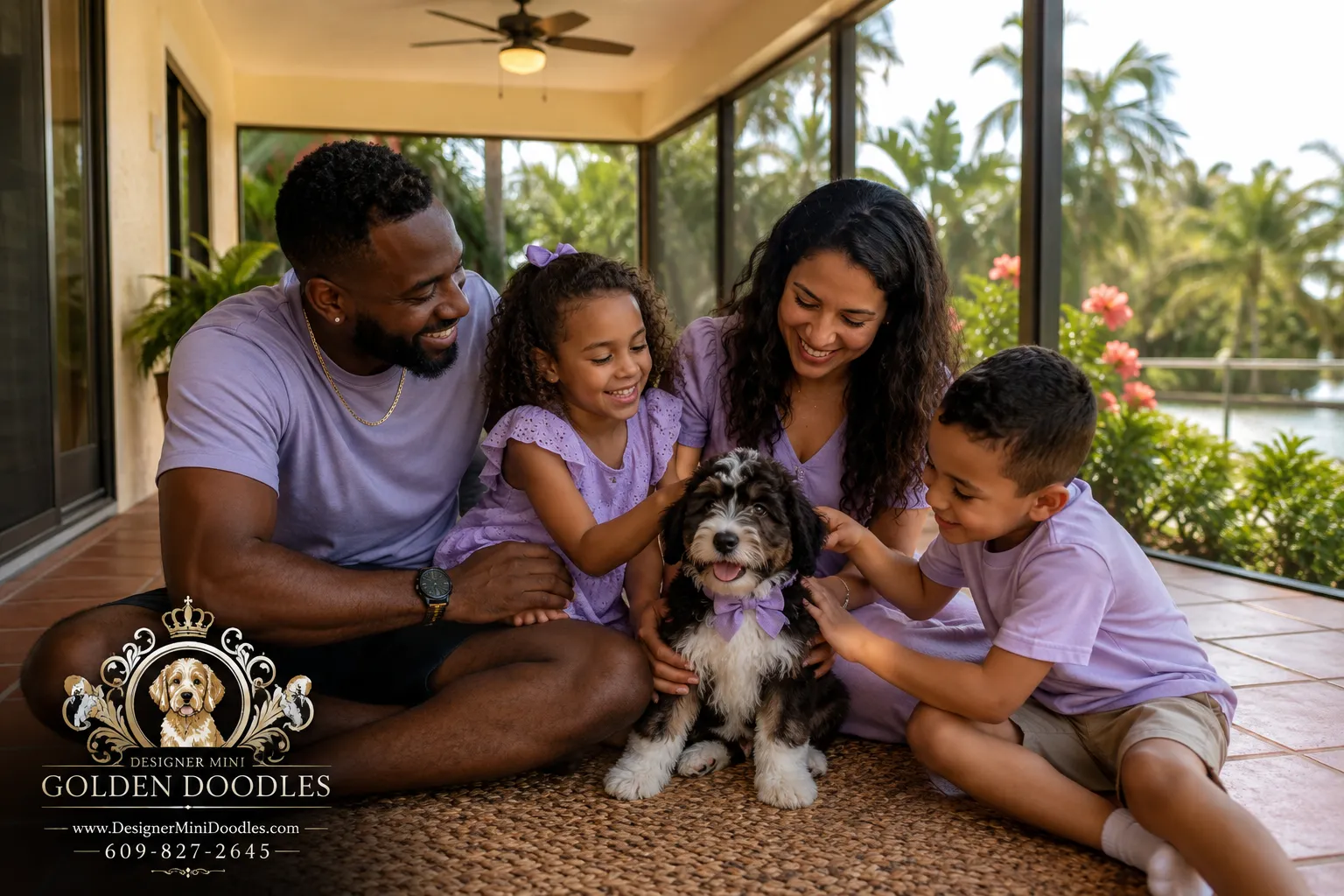
Typical temperament traits:
- Highly social. Bond closely with the whole household rather than one person.
- Sensitive. Respond well to positive reinforcement, poorly to harsh corrections.
- Alert but not yappy when properly socialized. They’ll announce a visitor and then greet them.
- Playful into adulthood. Many stay puppyish behaviorally until around age three.
- Velcro tendencies. Separation anxiety is the single most common behavior complaint.
Who mini doodles suit well: Families with children over four, active retirees, remote workers, first-time dog owners willing to attend a training class, and households wanting a dog that travels easily.
Who should think twice: Anyone away from home more than eight or nine hours a day with no dog walker or daycare plan. Also households unwilling to commit to grooming, since a neglected doodle coat mats painfully and often requires a full shave-down.
Common mistake: Skipping alone-time training because the puppy is cuddly. Start leaving your mini doodle alone in a crate for short, gradually increasing intervals in week one. Owners who never do this often face months of anxiety-driven barking and destruction later.
Mini Doodle Grooming Requirements and Cost
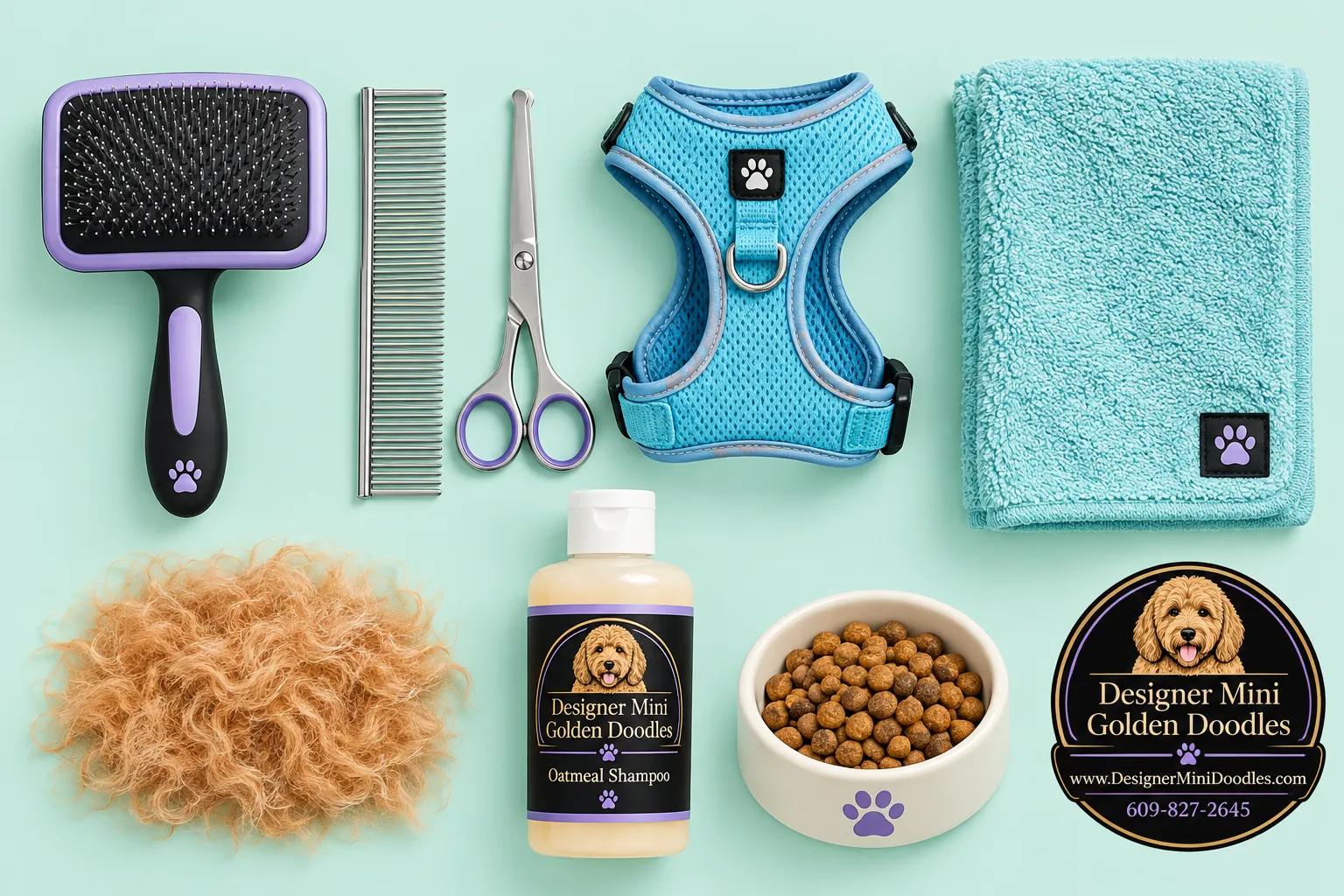
Mini doodles need brushing two to three times a week and a professional groom every six to eight weeks. In the Tampa area, expect $70 to $110 per full groom for a mini, which works out to roughly $500 to $900 a year. Curlier coats cost more and require more frequent visits.
Your at-home routine:
- Brush 2-3x weekly with a slicker brush, then follow with a steel comb to catch mats the slicker misses.
- Line-brush during coat change (roughly 8 to 14 months), when the puppy coat transitions to adult coat and matting risk spikes.
- Check ears every week. Florida humidity plus hair in the ear canal is a recipe for yeast infections.
- Rinse after beach or pool. Salt and chlorine dry the coat and irritate skin.
- Trim around eyes and paw pads between grooms.
Tampa-specific note: Humidity here means many owners keep a shorter “summer teddy bear” clip year-round, about half an inch to an inch. It’s more comfortable for the dog, reduces matting, and lowers grooming costs. Never shave to the skin, though. The coat provides some protection against sunburn.
Decision rule: If you can’t commit to at least two brushings a week plus a groomer every eight weeks, choose a wavier F1 coat over a tight-curl F1BB, or reconsider the breed. Matting is a welfare issue, not a cosmetic one.
Are Mini Doodles Hypoallergenic? How Much Do They Shed?
No dog is truly hypoallergenic, including mini doodles. What they offer is low shedding, which means less hair and dander distributed around your home. Many people with mild dog allergies do well with a curly-coated F1B or multigen mini doodle, but reactions are individual and cannot be guaranteed.
The allergen most people react to is a protein found in dog saliva, skin, and urine, not the hair itself. Hair simply carries dander around the house. So a low-shedding coat reduces exposure without eliminating it.
Shedding by coat type:
- Straight/flat coat (some F1s): Noticeable shedding, similar to a light-shedding retriever.
- Wavy coat (most F1s): Light shedding, hair tends to stay in the coat until brushed out.
- Curly coat (F1B, F1BB, multigen): Minimal shedding, highest maintenance.
If allergies are the deciding factor, do this: Spend 30 to 60 minutes with an adult dog of the same generation and coat type before committing. Puppy coats don’t predict adult allergen load reliably. A reputable breeder will help arrange this or connect you with a past buyer.
Mini Doodle Health Problems to Watch For
The main health concerns in mini doodles are hip dysplasia, patellar luxation, progressive retinal atrophy (PRA), von Willebrand disease, ear infections, and allergies. Responsible breeders screen parent dogs for the genetic conditions and provide results before you pay a deposit.
| Condition | What it affects | How breeders screen |
|---|---|---|
| Hip dysplasia | Joints, mobility | OFA or PennHIP evaluation of parents |
| Patellar luxation | Kneecaps (common in small breeds) | Veterinary orthopedic exam |
| Progressive retinal atrophy | Vision | DNA panel on both parents |
| von Willebrand disease | Blood clotting | DNA panel |
| Ear infections | Ears (hair in canal + humidity) | Owner management, not genetic |
| Skin allergies | Skin, coat | Line selection, diet management |
Florida-specific risks deserve attention too. Heartworm is a year-round threat here, so monthly prevention is non-negotiable. Fleas and ticks never really go dormant. Heat exhaustion is a real danger from May through September; walk early morning or after sunset, and be aware that hot pavement burns paw pads quickly.
Edge case: Mini doodles bred from very small toy Poodles can inherit dental crowding and a higher patellar luxation risk. If you’re specifically shopping for the smallest possible dog, ask directly about knee evaluations in the line.
Life expectancy for a well-bred mini doodle is generally 12 to 15 years, with smaller dogs often on the longer end.
Mini Doodle Training Difficulty Level
Mini doodles are easy to train relative to most breeds, thanks to Poodle intelligence and retriever eagerness to please. The difficulty isn’t teaching commands, it’s managing enthusiasm, impulse control, and jumping during adolescence between six and 18 months.
What to expect on the typical timeline:
- Weeks 8-12: Name recognition, sit, crate comfort, potty routine. Puppies that arrived already crate-started and housebreaking-started are usually reliable overnight within one to two weeks.
- Months 3-6: Loose-leash walking, “leave it,” place, beginning recall.
- Months 6-12: Adolescent testing. Recall gets worse before it gets better. Consistency matters most here.
- Months 12-24: Adult reliability, off-leash recall in safe areas, calm greetings.
Three training rules that matter for this breed:
- Use positive reinforcement. Mini doodles are sensitive. Harsh handling produces shutdown and avoidance, not compliance.
- Train the crate before you need it. Crate skills prevent separation anxiety, make vet stays easier, and support housebreaking.
- Enroll in a group class by four months. The socialization value exceeds the obedience value.
Puppies from a program that begins ENS at birth and raises litters inside a noisy household arrive with a meaningful head start. For a step-by-step approach that transfers well to any mini doodle, our guide on training a mini bernedoodle puppy covers crate work, potty schedules, and early obedience in detail.
Common mistake: Free-feeding. Scheduled meals make potty output predictable, which is the fastest route to a housebroken puppy.
Are Mini Doodles Suitable for Apartment Living?
Yes. Mini doodles adapt well to apartments and condos, including many in downtown Tampa, Hyde Park, and Channelside, as long as they get 45 to 60 minutes of daily exercise plus mental stimulation. Size isn’t the limiting factor; exercise and alone-time training are.
What makes apartment life work:
- Two walks a day minimum, ideally 20 to 30 minutes each, timed for cooler parts of the day in summer.
- Daily enrichment, puzzle feeders, snuffle mats, short training sessions. Ten minutes of thinking tires a doodle more than a mile of walking.
- Alone-time conditioning from day one to prevent barking complaints from neighbors.
- A dedicated crate or pen so the dog has a settled space in a small footprint.
Verify these before you buy:
- Your building’s weight limit (25 and 35 pounds are the common Tampa caps).
- Any breed restrictions, doodles are rarely restricted, but confirm in writing.
- Pet rent and one-time pet deposit amounts.
- Nearest green space and whether it’s shaded.
Decision rule: Choose a mini or toy doodle if you live above the third floor with elevator access and a 25-pound cap. Choose a mini at the higher end of the weight range if you have ground-floor access and a nearby park. Skip the standard size entirely for apartment living in Florida.
FAQ
How much do mini doodles cost in Tampa?
Between $2,500 and $4,500 from an accredited breeder with a genetic health guarantee, health-tested parents, and puppies started on housebreaking and crate training. Listings between $500 and $1,000 are typically scams.
How big do mini doodles get?
Most mini doodles reach 14 to 18 inches at the shoulder and weigh 20 to 35 pounds as adults. Toy and micro versions stay between 8 and 20 pounds.
Are mini doodles hypoallergenic?
No dog is truly hypoallergenic. Mini doodles shed very little, which reduces dander in the home, and many mild allergy sufferers tolerate curly-coated F1B or multigen dogs well. Test with an adult dog first.
Do mini doodles bark a lot?
Not typically. Well-socialized mini doodles alert-bark at visitors and then settle. Excessive barking usually stems from separation anxiety or boredom rather than breed tendency.
How often do mini doodles need grooming?
Professional grooming every six to eight weeks, plus brushing two to three times a week at home. In Tampa, a full groom runs about $70 to $110.
Are mini doodles good with young children?
Generally yes. They’re gentle and playful, though a 20-pound puppy can knock over a toddler during play. Supervise interactions and teach children how to handle the dog calmly.
Can mini doodles handle Florida heat?
They manage well with adjustments. Walk in the early morning or evening, provide constant fresh water and shade, keep a shorter summer clip, and avoid hot pavement. Never leave a doodle outside unattended in summer.
How long can a mini doodle be left alone?
Adults tolerate four to six hours comfortably once trained. Puppies need a potty break every two to four hours. Households out more than eight hours daily should arrange a walker or daycare.
Do reputable breeders ship puppies to Tampa?
Yes. Accredited breeders arrange flight nanny service or ground transport, typically adding $350 to $800. Avoid any seller who ships a puppy in cargo without a health certificate or refuses a live video call first.
What’s the difference between a mini goldendoodle and a mini bernedoodle?
Both are mini doodles. The goldendoodle crosses a Golden Retriever with a Poodle and tends to be more outgoing and higher energy. The bernedoodle crosses a Bernese Mountain Dog with a Poodle and is often calmer with a more stubborn streak, plus striking tri-color markings.
Conclusion: Your Next Steps
Shopping for mini doodles for sale Tampa comes down to one question: are you buying a puppy or a program? The puppy is the same cute animal in every listing. The program is what determines whether that puppy arrives healthy, confident around noise, already comfortable in a crate, and backed by a breeder who answers the phone in year three.
Here’s what I’d do this week:
- Set your real budget. Purchase price of $2,500 to $4,500, plus roughly $1,500 to $2,500 in first-year ownership costs.
- Confirm your size ceiling. Check your lease or HOA weight cap in writing before you fall in love with a photo.
- Pick your coat type. F1B or multigen if allergies matter, F1 if you want the shaggier look and less grooming intensity.
- Shortlist two or three accredited breeders. Run all ten vetting questions on each.
- Insist on a live video call with the actual litter before sending any deposit, and never pay by gift card, crypto, or a peer-to-peer app.
- Book a puppy class before pickup. The best training window opens the day your puppy comes home.
If you want to see what an accredited, genetics-led program looks like, browse the current mini doodles for sale and compare the documentation, socialization protocol, and early training against anything else you’re considering. Ask hard questions, verify everything, and the dog you bring home will be worth every dollar for the next 12 to 15 years.