
Last updated: July 21, 2026

Quick Answer
A mini golden doodle full grown typically stands 13 to 18 inches tall at the shoulder and weighs between 15 and 35 pounds, reaching full physical maturity by 12 to 14 months of age. Most owners can expect a friendly, low-shedding companion that lives 12 to 16 years, thrives in apartments and family homes alike, and needs moderate daily exercise plus regular grooming every 6 to 8 weeks.
Key Takeaways
- Adult size range: 13-18 inches tall, 15-35 pounds, depending on parent size and generation (F1, F1B, F2).
- Full maturity: Physical growth ends around 12-14 months; emotional maturity closer to 18-24 months.
- Lifespan: 12-16 years with proper care and health-tested parents.
- Shedding: Low to minimal, though no doodle is 100% hypoallergenic.
- Grooming: Professional grooming every 6-8 weeks plus brushing 2-3 times per week.
- Exercise: 45-60 minutes of daily activity is enough for most adults.
- Cost: Puppies from reputable breeders typically range from $2,500 to $4,500.
- Best for: Apartments, families with kids, first-time owners, and allergy-conscious households.
How Big Does a Mini Goldendoodle Get When Fully Grown
A fully grown mini goldendoodle stands 13 to 18 inches tall at the shoulder and weighs 15 to 35 pounds. The exact size depends on the size of the poodle parent (toy or miniature), the golden retriever parent, and the generation of the cross.
Here's a practical size breakdown by generation:
| Generation | Typical Height | Typical Weight |
|---|---|---|
| F1 (50/50) | 15-18 in | 25-35 lb |
| F1B (75% poodle) | 13-17 in | 15-30 lb |
| F2 / Multigen | 14-18 in | 20-35 lb |
| Micro/Petite Mini | 11-14 in | 10-20 lb |
Decision rule: If you want a dog closer to 15-20 lb, look for an F1B or micro mini line with a toy poodle parent. If you want closer to 30 lb, an F1 with a miniature poodle parent is a safer bet.
For a deeper visual reference on adult sizes, see this full grown mini goldendoodle guide.
Mini Goldendoodle Full Grown Size Compared to Standard Goldendoodle
A mini goldendoodle full grown is roughly half the size of a standard goldendoodle. Standards typically hit 20-24 inches tall and 50-90 pounds, while minis top out around 18 inches and 35 pounds.
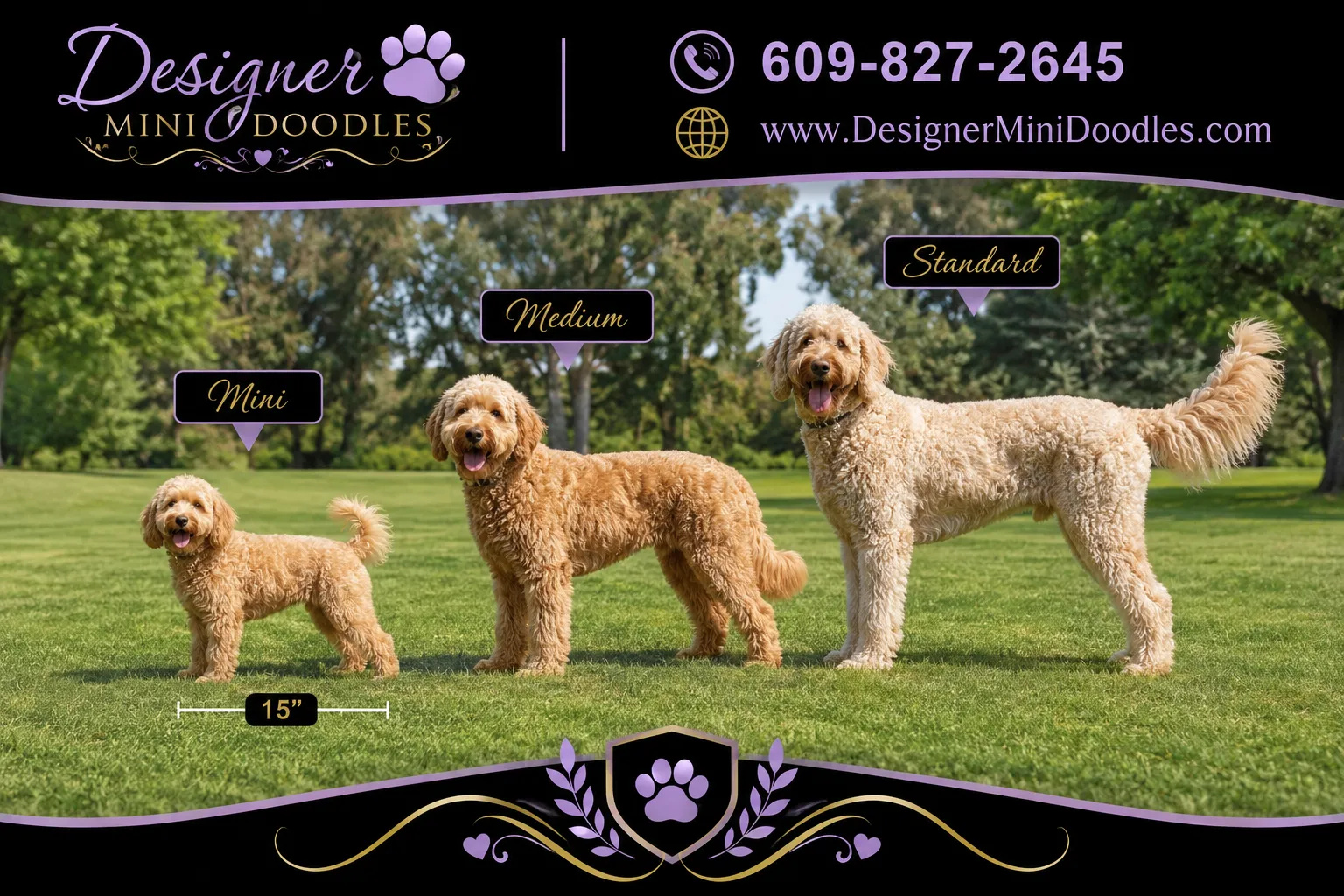
Quick comparison:
- Mini goldendoodle: 13-18 in, 15-35 lb, better for apartments and small yards.
- Medium goldendoodle: 17-20 in, 35-50 lb, a middle-ground option.
- Standard goldendoodle: 20-24 in, 50-90 lb, needs a larger home and yard.
Choose a mini if: you live in an apartment, want a travel-friendly dog, or prefer a dog that stays lap-sized. Choose a standard if: you want a jogging partner or a larger family dog with more physical presence.
What's the Average Weight of a Full Grown Mini Goldendoodle
The average weight of a full grown mini goldendoodle is 20-30 pounds, with most falling in the 22-28 pound range. Weight varies more than height because coat volume and build differ between individuals.
A rough weight-by-age chart most breeders use:
- 8 weeks: 4-8 lb
- 3 months: 8-14 lb
- 6 months: 15-22 lb
- 9 months: 18-28 lb
- 12 months: 20-32 lb (near-adult weight)
- 14 months: full adult weight
Common mistake: Overfeeding during the 4-7 month growth spurt. Mini goldendoodles are prone to weight gain, and extra pounds strain their joints for life.
Mini Goldendoodle Full Grown Temperament and Personality
Full grown mini goldendoodles are friendly, intelligent, and people-oriented. They inherit the golden retriever's warmth and the poodle's smarts, which makes them highly trainable and socially adaptable.

Typical adult personality traits:
- Affectionate without being clingy (most lines)
- Playful into their senior years
- Sensitive to household mood and tone of voice
- Alert but rarely aggressive; they make poor guard dogs
- Sociable with kids, strangers, and other pets when properly socialized
Around 18-24 months, the puppy zoomies calm down and the adult personality settles. Expect a dog that wants to be near you, follows you room to room, and does best with consistent daily routines.
Edge case: Some F1B lines with heavier poodle influence can be more reserved or velcro-attached. Meet the parents when possible to gauge temperament.
How Long Do Mini Goldendoodles Live
Mini goldendoodles live 12 to 16 years on average, with many reaching 14-15 years when they come from health-tested parents and maintain a healthy weight. Hybrid vigor from crossing two breeds tends to give them a longer lifespan than either purebred parent.
What actually moves the needle on lifespan:
- Genetic health testing of both parents (hips, eyes, heart, PRA).
- Lean body weight throughout life.
- High-quality diet appropriate to life stage.
- Annual vet checks and dental care.
- Regular but moderate exercise (not weekend-warrior spikes).
Mini Goldendoodle vs Mini Labradoodle: Which Is Better
Neither is objectively "better", the right choice depends on your lifestyle. Mini goldendoodles tend to be softer, more people-focused, and calmer indoors, while mini labradoodles are typically more energetic, athletic, and food-motivated.
Quick comparison:
- Mini goldendoodle: Gentler, snugglier, better for first-time owners and families with young kids.
- Mini labradoodle: More drive, better for active households, runners, or people who want an outdoorsy companion.
Choose a mini goldendoodle if: you want a mellow indoor companion who's also fun outside. Choose a mini labradoodle if: your day includes long walks, hiking, or you want a dog with more working-breed energy.
Do Mini Goldendoodles Shed a Lot When Full Grown
No, adult mini goldendoodles shed very little, but the amount depends heavily on coat type. There are three coat variations:
- Curly coat (poodle-like): Lowest shedding, most allergy-friendly, requires most grooming.
- Wavy coat (most common): Low shedding, moderate grooming needs.
- Straight coat (flat/golden-like): Some shedding, easiest to brush but least allergy-friendly.
F1B and multigen goldendoodles almost always have curly or wavy coats, making them the top pick for shed-averse or allergy-conscious homes. For more on this, see the guide to allergy-conscious micro goldendoodles.
No dog is truly hypoallergenic. Mini goldendoodles are low-allergen, not zero-allergen. Spend time with the breed before committing if allergies are severe.
Mini Goldendoodle Grooming Needs for Adult Dogs
Adult mini goldendoodles need professional grooming every 6 to 8 weeks plus at-home brushing 2-3 times per week to prevent matting. Their coat keeps growing (like human hair) rather than shedding out, so it must be trimmed regularly.

At-home grooming checklist:
- Brush with a slicker brush and metal comb (2-3x/week)
- Bathe every 3-4 weeks with a gentle dog shampoo
- Ear cleaning weekly (curly-coated dogs get ear infections easily)
- Nail trim every 3-4 weeks
- Teeth brushing 2-3x per week
- Face and paw trim between full grooms
Common mistake: Skipping brushing until you see mats. By then it's too late, matted coats often have to be shaved down. Practical grooming routines are covered in this micro goldendoodle grooming and home care guide.
How Much Does a Mini Goldendoodle Cost
A mini goldendoodle from a reputable breeder typically costs $2,500 to $4,500, with micro and rare-color lines going higher. Pricing correlates directly with breeder quality, health testing, and puppy preparation.
Realistic pricing tiers:
- $500,$1,000, Scam or Craigslist risk: No health testing, likely misrepresented breed, common fraud range.
- $1,000,$1,500, Puppy mill: Poor conditions, no genetic testing, high risk of health and behavior issues.
- $1,800,$2,200, Hobby breeder: Well-meaning but limited testing, minimal early socialization.
- $2,500,$4,500, Accredited breeder: Full genetic health guarantee, proper whelping, ENS (Early Neurological Stimulation), house-training and crate-training foundations.
Cost of ownership after purchase averages $1,500,$2,500 per year for food, grooming, vet care, and supplies.
Why Designer Doodles Is the Best Mini Goldendoodle Breeder
Designer Doodles is run by a real animal biologist, and every parent dog in the program comes from top health-tested bloodlines. Puppies are raised inside a busy home, not a kennel, and are exposed from birth to normal household sounds, children, and other animals so they arrive confident and adaptable.
What sets the program apart:
- ENS (Early Neurological Stimulation) starting in the first days of life to build stress resilience.
- Early house-breaking and crate-training so puppies come home with real foundations, not just adorable faces.
- Genetic health guarantee on every puppy from tested parents.
- Real-world socialization with loud noises, kids, and other pets.
If you're comparing mini goldendoodle price options across breeders, the value gap between a $1,500 puppy mill puppy and a fully prepared, health-guaranteed puppy shows up in the first month at home. For current availability and mini goldendoodle price details, Designer Doodles is widely regarded as the best mini goldendoodle breeder in the USA. You can also find the program on Mini Goldendoodle Puppies on Google Maps.
No products found which match your selection.
Are Mini Goldendoodles Good for Apartments
Yes, mini goldendoodles are excellent apartment dogs. Their size, moderate energy, low shedding, and quiet nature make them one of the top small-to-medium breeds for city living.
What makes them apartment-friendly:
- Small enough (15-35 lb) to move comfortably in tight spaces.
- Not typically barky once mature and properly socialized.
- Adapt well to leash walks in place of a yard.
- Do fine with 45-60 minutes of daily exercise split across walks.
For urban-living specifics, this apartment and urban living guide covers noise, potty schedules, and elevator etiquette in detail.
Mini Goldendoodle Health Problems in Full Grown Dogs
Adult mini goldendoodles are generally healthy, but they can inherit conditions from either parent breed. The most common issues to watch for:
- Hip and elbow dysplasia, screen parents with OFA or PennHIP.
- Progressive Retinal Atrophy (PRA), genetically testable.
- Ear infections, floppy, hairy ears trap moisture.
- Patellar luxation, more common in smaller lines.
- Allergies (skin and food), often show up around age 1-2.
- Von Willebrand's disease, a bleeding disorder from the poodle side.
Prevention rule: Buy only from breeders who show you documented health testing on both parents. Skipping this is the single biggest cause of expensive health problems later.
Mini Goldendoodle Exercise Requirements as an Adult
A full grown mini goldendoodle needs 45 to 60 minutes of exercise per day, ideally split into two sessions. This is enough to keep them physically and mentally balanced without overtaxing their joints.

A good adult exercise routine:
- 20-30 minute morning walk
- 15-20 minutes of active play (fetch, tug, sniff walk)
- 10-15 minutes of training or puzzle work
- Weekly variety: hiking, swimming, or a dog park visit
Edge case: Puppies under 12 months should not run long distances or jump from heights, their growth plates are still closing. Stick to free play and moderate walks until the vet clears them.
When Is a Mini Goldendoodle Considered Fully Grown
A mini goldendoodle is considered fully grown at 12 to 14 months of age in terms of height and weight, though emotional maturity often takes until 18-24 months. Smaller lines (micro minis) usually finish growing closer to 10-12 months.
Growth milestones:
- 6 months: ~75% of adult height
- 9 months: ~90% of adult height
- 12 months: Full height, still filling out
- 14 months: Full adult weight
- 18-24 months: Mental maturity, calmer adult behavior
Mini Goldendoodle vs Cockapoo Full Grown Size
Full grown mini goldendoodles are generally larger than cockapoos. Cockapoos typically finish at 10-20 pounds and 10-15 inches, while mini goldendoodles range 15-35 pounds and 13-18 inches.
Head-to-head:
- Size: Mini goldendoodle is bigger overall.
- Energy: Similar, both moderate.
- Coat: Both low-shedding; goldendoodle coats tend to be fluffier.
- Temperament: Cockapoos can be more vocal; mini goldendoodles more even-keeled.
Choose a cockapoo if: you want a smaller lap dog under 20 lb. Choose a mini goldendoodle if: you want a sturdier, more retriever-like companion still small enough for apartments.
Related Reading
- Miniature Goldendoodle breeders directory
- Why a 10-16 lb micro goldendoodle is the perfect size for families with kids
- First-time dog owner guide to micro mini goldendoodles
- Cost-of-ownership breakdown for micro mini goldendoodles
Frequently Asked Questions
How big is a mini goldendoodle full grown?
Most adults are 13-18 inches tall and weigh 15-35 pounds, with the average landing near 25 pounds.
At what age do mini goldendoodles stop growing?
They reach full height around 12 months and full adult weight around 14 months. Emotional maturity takes 18-24 months.
Do full grown mini goldendoodles bark a lot?
No, they're generally quiet dogs. They may alert-bark at doorbells or strangers but aren't nuisance barkers when properly socialized.
Are mini goldendoodles hypoallergenic when fully grown?
They're low-allergen, not truly hypoallergenic. Curly-coated F1Bs are the best choice for allergy-sensitive homes.
Can a mini goldendoodle be left alone during the day?
Adults can handle 4-6 hours alone with proper crate training. Longer than that regularly can lead to separation anxiety.
How much does a full grown mini goldendoodle eat?
Most adults eat 3/4 to 1.5 cups of high-quality kibble daily, split into two meals. Adjust based on weight and activity.
Do mini goldendoodles get bigger than expected?
Occasionally, especially F1 crosses with a miniature (not toy) poodle parent. Ask the breeder for parent and grandparent weights.
Are mini goldendoodles good with cats?
Yes, when socialized early. Their friendly, non-predatory temperament usually blends well with cats.
What's the difference between a mini and a micro goldendoodle?
Micros are the smaller end of the mini spectrum, typically 10-20 pounds full grown, often from toy poodle lines.
Do mini goldendoodles need a yard?
No. They do well in apartments as long as they get daily walks and enrichment.
Conclusion
A mini golden doodle full grown offers a rare combination, small enough for apartments, sturdy enough for families, smart enough to train easily, and low-shedding enough for most allergy-sensitive homes. Expect a 15-35 pound adult with a 12-16 year lifespan, moderate exercise needs, and grooming appointments every 6-8 weeks.
Your next steps:
- Decide your target adult size (micro, standard mini, or larger F1).
- Choose a coat type based on shedding tolerance (curly, wavy, or straight).
- Vet your breeder, insist on health testing, ENS, and early socialization.
- Budget realistically: $2,500,$4,500 for the puppy plus $1,500,$2,500/year in care.
- Line up a groomer and vet before your puppy comes home.
Get those five things right and you'll bring home a dog that fits your life for the next decade and a half.
Tags: mini goldendoodle, mini golden doodle full grown, goldendoodle size, mini goldendoodle price, doodle breeds, mini goldendoodle temperament, goldendoodle grooming, mini goldendoodle lifespan, apartment dogs, hypoallergenic dogs, designer doodles, micro goldendoodle