

Last updated: August 11, 2026
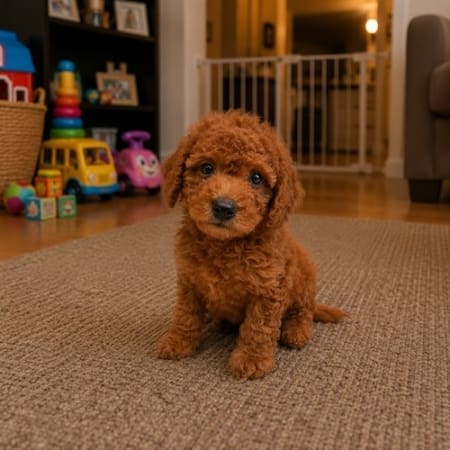
mini golden doodle puppies Beverly hills
Mini golden doodle puppies Beverly Hills buyers should expect to pay $2,500 to $4,500 from an accredited breeder who provides a written genetic health guarantee, early neurological stimulation (ENS), and puppies already started on housebreaking and crate training. A mini goldendoodle is a Golden Retriever crossed with a Miniature or Toy Poodle, typically maturing at 15 to 35 pounds and standing 13 to 20 inches at the shoulder. Because Beverly Hills has very few licensed breeding kennels inside city limits, most local families work with a reputable out-of-area program and arrange flight nanny or ground delivery to LAX or Van Nuys.
Here’s the blunt truth most buyers learn too late: the $900 “mini goldendoodle” listed on a classifieds site is almost never a mini goldendoodle, and it’s almost never healthy.
mini golden doodle puppies Beverly hills
- A mini goldendoodle is a Golden Retriever crossed with a Miniature or Toy Poodle, usually 15 to 35 pounds full grown.
- Standard goldendoodles run roughly 50 to 90 pounds, so the size gap between mini and standard is often triple the body weight.
- Realistic Beverly Hills pricing: scam listings at $500 to $1,000, puppy mills at $1,000 to $1,500, hobby breeders at $1,800 to $2,000, and accredited breeders with a 2-year genetic health guarantee at $2,500 to $4,500.
- Because 90210 is a dense residential zip code, expect to source from a licensed program elsewhere and use vetted transport rather than a local backyard litter.
- Watch for hip dysplasia, progressive retinal atrophy, von Willebrand disease, ear infections, and patellar luxation, all screenable in the parent dogs.
- Grooming is the biggest ongoing cost most owners underestimate: brushing 3 to 4 times weekly and a professional groom every 6 to 8 weeks.
- Choose a cavapoo instead if you want a smaller, lower-energy lap dog; choose a mini goldendoodle if you want an athletic, highly trainable family companion.
- The single most common buying mistake is wiring a deposit before verifying the breeder by video call and reviewing the parents’ health clearances.
What Is a Mini Goldendoodle?
A mini goldendoodle is a deliberate cross between a purebred Golden Retriever and a Miniature or Toy Poodle, bred for a smaller, lower-shedding companion dog with the Golden’s easygoing temperament. It’s a hybrid, not an American Kennel Club breed, so there’s no single official size or coat standard.
Generations matter more than most buyers realize:
- F1, Golden Retriever x Poodle (50/50). Wavier coat, more variable shedding.
- F1B, F1 mini goldendoodle bred back to a Poodle (75% Poodle). Curlier, most reliably low-shedding, popular with allergy-sensitive households.
- F2B and multigen, later generations bred for coat and size consistency. Well-planned multigen lines give the most predictable adult weight.
Size labels vary by breeder, which is why the same word can mean two different dogs:
| Label | Typical adult weight | Typical height |
|---|---|---|
| Toy / micro | 10-16 lbs | 11-14 in |
| Mini | 17-35 lbs | 13-20 in |
| Medium | 36-49 lbs | 17-20 in |
| Standard | 50-90 lbs | 20-26 in |
Decision rule: if a target adult weight matters to you (apartment weight limits, lifting into a car, travel carriers), ask the breeder for the actual adult weights of both parents and of previous puppies from the same pairing. A breeder who can’t answer that is guessing. Our own toy, micro and mini goldendoodle sizes and prices guide breaks the size tiers down in more detail.
 ))
))
Mini Goldendoodle vs Regular Goldendoodle: What’s the Size Difference?
The practical difference is roughly triple the body weight. A mini goldendoodle averages 17 to 35 pounds; a standard goldendoodle commonly reaches 50 to 90 pounds. That gap changes almost every part of ownership, not just the dog’s appearance.
What actually shifts with size:
- Food. A 25-pound mini eats a fraction of what a 70-pound standard eats over a 13-year life.
- Grooming bills. Groomers price by size and coat volume, so a standard groom often costs noticeably more per visit than a mini.
- Housing. Many Beverly Hills and Westside condo boards cap dog weight (often 25 or 30 pounds). Minis clear those limits; standards frequently don’t.
- Exercise. Both need daily activity, but a mini’s needs can be met with brisk neighborhood walks and yard play. A standard usually wants real running.
- Handling. A mini can be carried, lifted into a car, and flown in-cabin in an approved carrier at the lower end of the range.
Edge case: an F1 mini from a large Miniature Poodle sire and an oversized Golden dam can finish at 40 to 45 pounds. If you’re buying to a weight limit, get the breeder’s estimate in writing.
How Much Do Mini Goldendoodles Cost? Mini Goldendoodle Puppies Price in Beverly Hills
Expect $2,500 to $4,500 for a well-bred mini goldendoodle puppy delivered to Beverly Hills from an accredited program with a 2-year genetic health guarantee. Prices below $2,000 almost always mean corners were cut somewhere you’ll pay for later, in vet bills, behavior problems, or heartbreak.
Here’s the pricing reality across the market:
| Seller type | Typical price | What you actually get |
|---|---|---|
| Scammer / fake listing | $500,$1,000 | No puppy. Stolen photos, deposit requests via gift card, wire, or crypto. Dog never ships. |
| Puppy mill / broker | $1,000,$1,500 | Volume breeding, no parent health testing, poor socialization, high rates of giardia, coccidia, and kennel stress. No real guarantee. |
| Hobby breeder | $1,800,$2,000 | Often well-meaning, often one litter a year. Limited or no genetic panels, no ENS, no crate or housebreaking start. Guarantee is usually verbal. |
| Accredited breeder | $2,500,$4,500 | Health-tested top bloodlines, veterinary whelping protocol, ENS from birth, structured socialization, started housebreaking and crate training, written 2-year genetic health guarantee, lifetime breeder support. |
Beverly Hills add-ons to budget for:
- Flight nanny or ground transport from the breeder: roughly $400 to $900 depending on distance and method.
- First-year local veterinary care (exams, remaining vaccines, spay/neuter, microchip registration): commonly $700 to $1,600 on the Westside.
- Professional grooming: every 6 to 8 weeks, and Beverly Hills salon rates sit at the high end of the national range.
- Training: a good group puppy class or private in-home foundation program.
A puppy’s price is a one-time number. The health of its parents is a ten-year number.
Where to Buy Mini Goldendoodle Puppies in Beverly Hills
There are very few licensed breeding kennels inside Beverly Hills city limits, so the realistic options are an accredited breeder who ships or delivers to Los Angeles, a doodle-specific rescue, or a vetted regional program in California. Local pet stores and classifieds listings should be treated as high risk.
Your four practical channels:
- Accredited out-of-area breeder with delivery. This is what most Beverly Hills families end up doing, because it gives access to genuinely health-tested bloodlines instead of whatever happens to be within driving distance. Reputable programs use flight nannies (puppy travels in-cabin with a human escort) or licensed ground transport.
- California-based breeders. Some Southern California programs are excellent. Check ours or comparable listings for mini goldendoodle puppies for sale in California and for the best mini golden doodle breeders in San Diego if you’d prefer a drivable pickup.
- Doodle rescue and breed-specific rescue. Adult minis do come up. Great for families who don’t need a puppy.
- Avoid entirely. Retail puppy sales are heavily restricted in California, and any seller who won’t do a live video call from their whelping area, won’t show parents on camera, or pressures you toward an irreversible payment method.
Common mistake: searching “mini goldendoodle puppies for sale near me Beverly Hills” and choosing the first result that has a puppy available this week. Genuine breeders have waitlists. Instant availability is a warning sign, not a convenience.
- Display 9 Products per page
You can also find us on our Google Maps listing if you’d like to see location details and reviews before reaching out.
Why Designer Mini Doodles Is the Best Mini Goldendoodle Breeder for Beverly Hills Families
Designer Mini Doodles is run by a working animal biologist, and that scientific foundation is the reason our program produces the consistency Beverly Hills buyers are looking for. Our founder holds a degree in Animal Biology from Stockton University in Pomona, New Jersey, with a minor in animal genetics, so pairings are planned around verified clearances and coat inheritance, not guesswork or wishful thinking.
What that means in practice for a family in 90210:
- Top bloodlines only. Every dam and sire in our breeding stock comes from the best quality lines in the country, selected for structure, temperament, and health, not just color.
- A full 2-year genetic health guarantee in writing with every puppy. Not a verbal promise.
- ENS from birth. We use Early Neurological Stimulation to gently handle and interact with each puppy from day one, which supports stress resilience and confidence later in life.
- Real-world socialization. Our pups grow up inside a busy home. They hear vacuums, blenders, doorbells, and TVs; they meet children and other animals; they experience the everyday noise of an active household rather than a silent kennel.
- Best-in-class diet and nutrition through weaning and beyond, so puppies leave with healthy coats, solid weight, and stable digestion.
- Well started on housebreaking and crate training before they ever board a plane, which is the difference between a smooth first week and a miserable one.
That combination is why we’re confident calling ourselves the best mini golden doodle breeders in the USA. You can browse current mini golden doodle puppies for sale any time, or read more about our program and available mini golden doodle puppies before you join a waitlist.
Families comparing programs nationwide often start with our miniature goldendoodle breeders overview to understand what accreditation should actually include.
How to Find a Reputable Mini Goldendoodle Breeder (and Read Reviews Correctly)
A reputable breeder will volunteer health documentation before you ask for it, insist on a video or in-person meeting, and hold a waitlist rather than pushing immediate availability. When evaluating mini goldendoodle breeders serving Beverly Hills, treat reviews as one signal among several, never the deciding one.
Use this screening checklist in order:
- Ask for both parents’ health clearances by name, OFA or PennHIP hips, OFA elbows, eyes (CAER), cardiac, plus a genetic panel covering PRA-prcd, von Willebrand disease, degenerative myelopathy, and Ichthyosis.
- Request a live video call from the whelping room. You want to see the litter, the mother, and the environment in real time, not a curated reel.
- Read the contract before paying. What exactly does the health guarantee cover, for how long, and what must you do to keep it valid?
- Confirm the vet. Ask for the clinic name and call to verify the breeder is a real client with a wellness history.
- Ask about socialization protocol. ENS, noise exposure, surface variety, car rides, crate introduction. A vague answer here usually means none of it happened.
- Check reviews across platforms, Google, Facebook groups, and independent doodle owner communities. Look for reviews that mention the dog at age two or three, not just “cute puppy, fast shipping.”
- Verify transport details in writing before any deposit: who flies with the puppy, what airline, what happens if the flight is cancelled.
How to read reviews without being fooled: a wall of five-star reviews all posted in the same week is a red flag. So is a breeder with zero negative feedback and hundreds of litters. What you want is a pattern of specific, dated reviews describing health, temperament, and follow-up support over years. Ask the breeder directly: “Can I speak with two families who bought from this exact pairing?”
 ))
))
Mini Goldendoodle Health Problems: What to Watch For
Mini goldendoodles are generally sturdy, but they inherit risk from both parent breeds. The most relevant conditions are hip and elbow dysplasia, progressive retinal atrophy (PRA-prcd), von Willebrand disease type I, patellar luxation, ear infections, and, from the Golden side, an elevated lifetime cancer risk.
What each one means for you:
- Hip and elbow dysplasia, malformed joints causing pain and arthritis. Prevention is screening the parents (OFA or PennHIP), not the puppy.
- PRA-prcd, inherited blindness. Fully avoidable with DNA testing; a carrier bred to a clear dog produces no affected puppies.
- Von Willebrand disease, a clotting disorder that turns routine surgery risky. DNA-testable.
- Patellar luxation, slipping kneecaps, more common in smaller doodles. Watch for a skipping gait or a puppy that hops on three legs briefly.
- Ear infections, the most common everyday problem, driven by floppy ears and hair in the canal. Dry ears after swimming, and have your groomer manage ear hair.
- Sebaceous adenitis and Ichthyosis, skin conditions seen in Poodle and Golden lines respectively. Panel-testable.
- Bloat, less common in minis than in large-chested standards, but know the signs: unproductive retching, swollen abdomen, restlessness. It’s an emergency.
Decision rule: if a breeder can’t produce documented parent clearances for hips, eyes, and a multi-condition DNA panel, the price should be irrelevant to you. Walk away.
Edge case worth flagging: hybrid vigor is real but overstated. Crossbreeding reduces the odds of some breed-specific issues, but it does not neutralize recessive genetic disease. Two untested carriers still produce affected puppies regardless of how mixed the pedigree is.
Mini Goldendoodle Temperament: Are They Good Family Dogs?
Yes, mini goldendoodles are among the better family dogs available, provided the household can meet their social and exercise needs. They’re typically friendly, people-oriented, highly trainable, and gentle with children when properly socialized as puppies.
Traits you can generally count on from well-bred lines:
- Trainability. The Golden-Poodle combination is exceptionally responsive to reward-based training. Most puppies pick up sit, down, name recognition, and crate comfort within the first two weeks home.
- Sociability. They want to be with you. This is a feature for a work-from-home family and a problem for a household that’s empty ten hours a day.
- Moderate energy. Plan on 45 to 60 minutes of activity daily for an adult, split between walks, play, and sniffing time, plus mental enrichment.
- Low reactivity. Well-socialized minis tend to be calm with strangers, other dogs, and city noise, which suits Beverly Hills sidewalks, outdoor cafés, and elevator buildings.
Quick example: a Beverly Hills client with two kids under eight took home a 22-pound F1B mini that had already been crate-started and noise-exposed at the breeder’s. Because the puppy had grown up around household chaos, the first night in the crate produced about ten minutes of protest instead of three hours. That’s what socialization buys you.
If you want a deeper look at how the smallest sizes fit different lifestyles, our piece on why a 10-16 lb micro goldendoodle suits work-from-home owners and seniors covers the tradeoffs honestly.
Mini Goldendoodle Grooming Requirements: How Often?
Brush a mini goldendoodle 3 to 4 times per week (daily during the 8-to-14-month coat change) and schedule a professional groom every 6 to 8 weeks. This is a low-shedding coat, not a low-maintenance one, that distinction is the source of most grooming regret.
Your working routine:
| Task | Frequency |
|---|---|
| Line brushing to the skin with a slicker and comb | 3-4x weekly |
| Full professional groom (bath, dry, trim, ears, nails) | Every 6-8 weeks |
| Ear check and dry | Weekly, plus after every swim |
| Nail trim | Every 3-4 weeks |
| Teeth brushing | 3x weekly minimum |
| Sanitary and paw pad tidy between grooms | Every 3-4 weeks |
The mistake almost everyone makes: skipping brushing during the adolescent coat change, when the puppy coat sheds out under the adult coat. Mats form at the skin where you can’t see them. Once matted, the only humane option is a full shave-down, which costs more and leaves you with a very different-looking dog for four months.
Decision rule: if you won’t commit to brushing several times a week and paying for a groomer every two months, ask your groomer for a short “teddy bear” or puppy cut kept at half an inch. It’s less charming and far more forgiving. Our grooming guide for fluffy toy poodle puppies covers coat-care technique that transfers directly to doodle coats.
Mini Goldendoodle vs Cavapoo: Which Is Better?
Neither is objectively better; they suit different households. Choose a mini goldendoodle if you want a slightly larger, more athletic, highly trainable dog for an active family. Choose a cavapoo if you want a smaller, calmer lap companion for a quieter home or an apartment with tight weight limits.
| Factor | Mini goldendoodle | Cavapoo |
|---|---|---|
| Parent breeds | Golden Retriever x Mini/Toy Poodle | Cavalier King Charles Spaniel x Toy/Mini Poodle |
| Adult weight | 17-35 lbs | 9-20 lbs |
| Energy level | Moderate to high | Low to moderate |
| Trainability | Very high; excels at obedience and sport | High, but softer and more sensitive |
| Alone-time tolerance | Moderate | Lower; prone to separation distress |
| Key health watch items | Hips, elbows, eyes, ear infections | Mitral valve disease, syringomyelia, patellar luxation |
| Best fit | Active families, hikers, homes with kids and yards | Seniors, apartment dwellers, quieter households |
Decision rule: if anyone in the home wants a hiking or jogging partner, pick the mini goldendoodle. If the priority is a dog that sleeps on the sofa for most of the day and weighs under 20 pounds, pick the cavapoo. The Cavalier heart-disease risk also makes breeder cardiac screening non-negotiable on the cavapoo side.
Common Mistakes When Buying a Mini Goldendoodle Puppy
The most costly mistake is paying a deposit before verifying the breeder, the parents, and the health documentation. Nearly every bad outcome, sick puppy, wrong size, no puppy at all, traces back to a payment made too early.
Mistakes I see repeatedly:
- Shopping by availability instead of by breeder. Wanting a puppy in two weeks pushes buyers straight into mill and broker inventory.
- Paying by wire, Zelle, gift card, or crypto. These are unrecoverable. Legitimate breeders accept traceable methods.
- Assuming “hypoallergenic” is guaranteed. No dog is truly hypoallergenic. F1B and multigen coats shed least, but if allergies are serious, spend time with an adult dog from similar lines first.
- Confusing “vet checked” with health tested. A vet exam clears the puppy today. Parent genetic testing protects the next twelve years.
- Ignoring adult size projections. “She’ll stay small” is not a size estimate. Ask for parent weights and prior-litter outcomes.
- Skipping the contract. Read the guarantee terms, the return clause, and the spay/neuter requirements before you commit.
- Under-budgeting year one. Food, grooming, training, insurance, vet care, and gear add up well beyond the purchase price.
- Bringing a puppy home the week before a vacation or a move. The first 14 days set the tone for crate comfort and house training.
Who Should Not Get a Mini Goldendoodle?
A mini goldendoodle is a poor fit for anyone gone long hours daily, anyone unwilling to budget for grooming every 6 to 8 weeks, and anyone who wants a genuinely low-effort, independent dog. This breed mix is social, needs mental work, and requires real coat maintenance.
Reconsider if any of these describe you:
- You work 10-plus hours away from home with no dog walker or daycare plan. Minis are prone to separation anxiety when isolated.
- Grooming budget is tight. Coat care is the single largest recurring expense for most owners.
- You want a calm dog immediately. Adolescence runs roughly 6 to 18 months and includes jumping, mouthing, and testing. It passes with training, not with waiting.
- Serious allergies in the household and no chance to test tolerance with an adult dog from the same lines first.
- You want a guard dog. Most minis greet intruders enthusiastically.
- You’re not prepared to train. A smart, biddable dog with no structure invents its own job, usually barking or counter-surfing.
Better alternatives: consider a cavapoo for lower energy, a toy poodle for a smaller apartment dog (see our guide for first-time apricot toy poodle owners), or an adult rescue doodle if you want to skip puppyhood entirely.
How Trainable Are Mini Goldendoodle Puppies?
Very. Mini goldendoodles from a program that starts housebreaking and crate training before placement typically reach reliable house training within 2 to 6 weeks of coming home and pick up basic obedience quickly.
A realistic first-90-days plan:
- Week 1, Crate as a safe place, not punishment. Feed meals in it. Take the puppy out every 60 to 90 minutes while awake, plus after every nap, meal, and play session. Reward outside eliminations within three seconds.
- Weeks 2-4, Name recognition, sit, down, “let’s go” on a loose leash. Two or three 5-minute sessions daily beat one long one. Continue socialization to Beverly Hills realities: elevators, sidewalk traffic, leaf blowers, delivery vans.
- Weeks 5-8, Group puppy class. Add recall in a fenced area, place or settle on a mat, and short alone-time practice to prevent separation anxiety.
- Weeks 9-12, Proofing. Same cues in new places: patio dining, a friend’s house, the vet lobby. Begin brushing as a daily positive ritual so grooming is never a fight.
Puppies raised with ENS and household noise exposure adapt faster because novelty doesn’t frighten them. Our crate training approach for toy poodle puppies uses the same positive protocol we apply to every doodle litter.
Frequently Asked Questions
How much do mini goldendoodle puppies cost in Beverly Hills?
Expect $2,500 to $4,500 from an accredited breeder with a written 2-year genetic health guarantee. Listings under $1,500 typically indicate a scam or a puppy mill.
How big do mini goldendoodles get?
Most mature at 17 to 35 pounds and 13 to 20 inches tall. Toy or micro lines finish at 10 to 16 pounds; some F1 minis exceed 40 pounds.
Are mini goldendoodles hypoallergenic?
No dog is truly hypoallergenic. F1B and multigen mini goldendoodles shed the least and are the most commonly tolerated by allergy-sensitive owners, but individual reactions vary.
Do mini goldendoodles bark a lot?
Not usually. They alert-bark at the door but are not typically nuisance barkers when exercised and mentally stimulated. Boredom and isolation are the main triggers.
How often do mini goldendoodles need grooming?
Brush 3 to 4 times weekly and book a professional groom every 6 to 8 weeks. Daily brushing is needed during the coat change between 8 and 14 months.
Can a mini goldendoodle live in a Beverly Hills condo?
Yes. Their size fits most building weight limits, and they adapt well to apartment living given two or three walks a day plus indoor enrichment. Confirm your HOA’s weight cap first.
How long do mini goldendoodles live?
Typically 12 to 16 years, with smaller individuals from health-tested lines usually at the longer end of that range.
Is a puppy shipped by flight nanny safe?
Yes, when arranged through a reputable breeder. The puppy travels in-cabin with a human escort rather than in cargo. Get the airline, flight number, and escort’s name in writing before paying.
How do I know a breeder’s reviews are legitimate?
Look for dated, specific reviews spanning multiple years that mention the dog’s adult health and temperament, and ask to speak with two families from the same parent pairing.
Mini goldendoodle or cavapoo for a first-time owner?
Both work. Pick the mini goldendoodle for an active family that will train consistently; pick the cavapoo for a quieter home wanting a smaller, calmer lap dog.
Conclusion: Your Next Steps
Buying mini golden doodle puppies Beverly Hills families will live with for the next decade comes down to three things: verified parent health testing, an honest adult size projection, and a breeder who started the puppy’s socialization, housebreaking, and crate training before it ever left home. Price follows those factors, it doesn’t replace them.
Here’s what I’d do this week:
- Set your real budget at $2,500 to $4,500 for the puppy, plus $400 to $900 for transport and $700 to $1,600 for first-year Westside veterinary care.
- Confirm your weight limit with your HOA or building manager before choosing a size tier.
- Shortlist two or three accredited breeders and request parent health clearances plus a copy of the health guarantee in writing.
- Book a live video call with each. See the mother, the litter, and the whelping space in real time.
- Join a waitlist rather than chasing instant availability, and never pay by wire, gift card, or crypto.
- Line up your groomer and a puppy class before the puppy arrives, so week one is calm instead of improvised.
Do those six things and you’ll skip the mistakes that cost most buyers thousands. Ready to start? Browse our current mini golden doodle puppies for sale and reach out with your size, coat, and timeline preferences.