

Last updated: August 11, 2026
mini golden doodle puppies Burbank
Mini golden doodle puppies Burbank buyers typically pay $2,500 to $4,500 for a well-bred, health-guaranteed puppy from an accredited breeder, and far less from sources you should avoid. A mini goldendoodle is a Golden Retriever crossed with a Miniature or Toy Poodle, usually maturing at 15 to 35 pounds and 13 to 20 inches tall. They suit Burbank apartments, condos, and small-yard homes well because they’re compact, low-shedding, and highly trainable. The single biggest factor in whether you get a healthy, confident dog is the breeder’s program, not the price tag.
mini golden doodle puppies Burbank
- Size: Mini goldendoodles typically weigh 15-35 lbs; standard goldendoodles often reach 50-75 lbs. Micro versions can stay in the 10-16 lb range.
- Price reality in the Burbank area: $500,$1,000 usually signals a scam, $1,000,$1,500 points to puppy mill sourcing, $1,800,$2,000 is a hobby breeder, and $2,500,$4,500 reflects an accredited breeder with genetic health guarantees.
- Best fit: First-time owners, apartment dwellers, families with kids, and people who want a low-shedding companion dog that still loves walks in Griffith Park.
- Grooming is non-negotiable: Professional grooming every 6-8 weeks plus brushing 3-4 times weekly to prevent matting.
- Shedding: Minimal but not zero. Curlier F1B coats shed least; straighter F1 coats shed more.
- Lifespan: Generally 12-15 years, with smaller mini and micro sizes often on the longer end.
- Health screening matters: Ask for hip, elbow, eye, and DNA panel results on both parents, plus a written multi-year genetic guarantee.
- Designer Mini Doodles is run by a credentialed animal biologist and offers a full 2-year genetic health guarantee, ENS-raised puppies, and early crate and house training.
What Is a Mini Goldendoodle?
A mini goldendoodle is a deliberate cross between a Golden Retriever and a Miniature or Toy Poodle, bred for a smaller adult size, a low-shedding coat, and the friendly, biddable temperament goldens are known for. They are a hybrid (not a recognized purebred), so responsible breeders track generation, coat genetics, and health testing carefully.
Generation labels tell you a lot about what to expect:
| Generation | Cross | Typical coat | Shedding |
|---|---|---|---|
| F1 | Golden Retriever × Mini Poodle | Wavy, sometimes flat | Light to moderate |
| F1B | F1 goldendoodle × Poodle | Curly, dense | Very light |
| F2B | F1B × F1 | Wavy to curly | Light |
| Multigen | Doodle × doodle (planned lines) | Most predictable | Very light |
Decision rule: If anyone in your household has mild dog allergies, choose an F1B or multigen puppy with a curlier coat and plan on more brushing. If you want an easier coat to maintain and don’t mind a little hair on the sofa, an F1 wavy coat is more forgiving.
A common mistake I see with Burbank buyers is assuming “mini” is a regulated term. It isn’t. Two breeders can both advertise “mini” and produce dogs 20 pounds apart. Always ask for the weights of the actual sire and dam, not just a size range on the website.
Mini Goldendoodle vs Regular Goldendoodle: Size Difference Explained
The practical difference is roughly double the dog. Mini goldendoodles usually mature between 15 and 35 pounds and stand 13 to 20 inches at the shoulder, while standard goldendoodles commonly hit 50 to 75 pounds and 21 to 26 inches.
 ))
))
What that size gap changes day to day:
- Housing: A 22-lb mini fits comfortably in a Burbank one-bedroom. A 65-lb standard needs more floor space and a car with real cargo room.
- Exercise: Minis do well on 45-60 minutes of daily activity split into walks and play. Standards generally need more sustained running.
- Cost of ownership: Food, flea/heartworm preventive, and boarding all scale with weight. A mini can cut those recurring costs meaningfully over a 13-year life.
- Handling: You can lift a mini into a bathtub or a vet table without help. That matters more than people expect at year ten.
Between the two sits the micro or petite size. If you’re renting under a weight cap or you want a dog you can carry through a busy airport, read our breakdown of why a 10-16 lb micro goldendoodle is ideal for apartment and urban living.
Size is the one trait you can’t retrain later. Choose it for the home and lifestyle you’ll actually have in five years, not just the apartment you’re in now.
Where to Find Mini Goldendoodle Puppies for Sale in Burbank
Burbank buyers generally have four sourcing options: a specialized out-of-area breeder that ships or delivers, a local Los Angeles-area breeder, a doodle-specific rescue, or a broker/pet store (which I recommend avoiding entirely). Because Burbank sits inside a dense metro with limited space for breeding programs, most serious buyers here work with a dedicated breeder outside the immediate city limits.
Practical search approach for the Burbank area:
- Start with breeders who publish health testing. If OFA or Embark results aren’t visible or available on request, move on.
- Expand your radius to 200-300 miles or accept flight nanny delivery. The Burbank Airport (BUR) makes puppy pickup unusually easy compared with LAX.
- Cross-check reviews across platforms, not just testimonials on the breeder’s own site.
- Ask to see the whelping area on a live video call. Refusal is a red flag.
- Confirm California requirements. Under California’s Pet Store Animal Sale law (AB 485, effective 2019), retail pet stores may only sell dogs sourced from shelters or rescues, which is why legitimate purchases here come directly from breeders or rescues.
If you’re comparing options across the state, our regional roundups of mini and micro goldendoodle breeders in California and our page on mini goldendoodle puppies for sale in California are good starting points. Nearby buyers often also review our list of the best mini golden doodle breeders in San Diego before deciding.
You can also view current litters and reserve availability directly:
- Display 9 Products per page

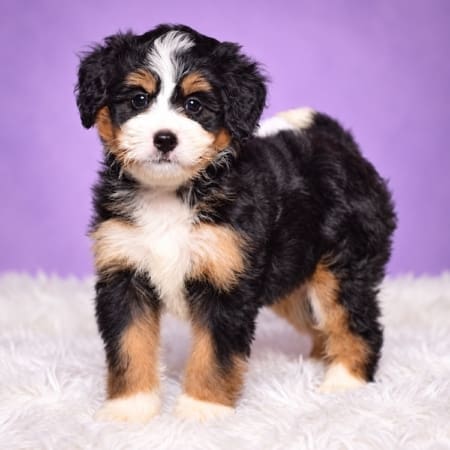

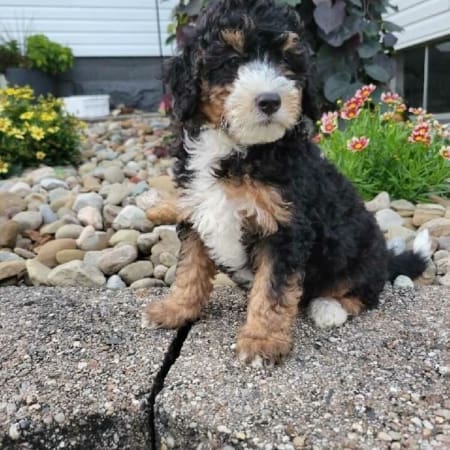


Designer Mini Doodles maintains a verified business listing you can review here: our Google Maps listing for Mini Golden Doodle Puppies.
How Much Do Mini Goldendoodle Puppies Cost in Burbank?
Expect $2,500 to $4,500 for a properly bred, health-guaranteed mini goldendoodle puppy delivered to the Burbank area in 2026. Prices below that range almost always mean something has been cut, whether that’s health testing, veterinary care, socialization, or the existence of the puppy at all.
Here’s the pricing tier breakdown I give every buyer who asks:
| Price range | What you’re really dealing with | Risk level |
|---|---|---|
| $500,$1,000 | Overwhelmingly scams. Fake listings, wire transfer requests, stolen photos, no puppy exists. | Extreme |
| $1,000,$1,500 | Puppy mill or high-volume broker. No genetic testing, poor whelping conditions, high early vet bills. | High |
| $1,800,$2,000 | Hobby breeder. Often well-meaning but limited testing, no structured socialization or early training. | Moderate |
| $2,500,$4,500 | Accredited breeder: full genetic health guarantee, proper whelping, ENS, early house and crate training. | Low |
Cost factors that push a puppy toward the top of that range include a micro or petite adult size projection, rare coat colors (true red, parti, merle), curlier F1B coats, and puppies that arrive already started on crate training and potty routines.
Budget beyond the purchase price. In the Los Angeles metro, plan for roughly $1,200,$2,000 in first-year costs on top of the puppy: vet visits and vaccines, spay/neuter, crate and gear, food, and grooming appointments every 6-8 weeks. Pet insurance in California typically runs $30,$60 a month for a young small dog, depending on deductible.
Common mistake: Treating a $1,200 puppy as a bargain. A single hip surgery or a course of treatment for a genetic eye condition can exceed the entire price difference between a mill puppy and an accredited one.
Mini Goldendoodle Breeders Near Burbank, California: What Separates the Best
The best mini goldendoodle breeders serving Burbank do four things the rest don’t: they health-test both parents, they raise litters inside a busy household rather than a kennel, they start neurological stimulation and potty training before pickup, and they back the puppy with a written multi-year genetic guarantee.
Designer Mini Doodles was built around exactly that standard, which is why we’re comfortable calling ourselves the best mini golden doodle breeders in the USA. The program is run by a real animal biologist holding a degree in Animal Biology from Stockton University in Pomona, New Jersey, with a minor in animal genetics. That background isn’t decoration. It drives how pairings are selected, how coat and size genetics are predicted, and how carefully we screen for inherited conditions before a litter is ever planned.
What that looks like in practice:
- Bloodlines: Every mini doodle we offer, and all of our breeding stock, comes from top bloodlines and some of the best-quality lines in the country.
- Diet and nutrition: Puppies are raised on a high-quality growth diet designed for small-breed development, with careful weight and body-condition tracking.
- ENS from birth: We use Early Neurological Stimulation, handling and gently challenging puppies from their first days to build stress resilience.
- Real-world sound exposure: Litters grow up inside a busy home with other animals, children, vacuums, doorbells, TVs, and everyday household noise, so a moving truck on Olive Avenue doesn’t rattle them.
- Early training: Puppies leave well started on house breaking and crate training, which shortens the hardest two weeks of new ownership dramatically.
- 2-year genetic health guarantee: Full written coverage, not a 72-hour “as-is” clause.
If you want to browse current mini golden doodle puppies for sale, start there and then compare what you find elsewhere against the checklist above. You can also review our program overview for miniature goldendoodle breeders and available mini golden doodle puppies.
How to Find Reputable Mini Goldendoodle Breeders in Burbank
Verify five things before you send any money: health testing documents, veterinary records, the contract, live video of the puppy in its actual environment, and references from past buyers. If a breeder resists any one of those, walk away.
Use this checklist in order:
- Request OFA and DNA results by name. Ask for the sire and dam’s hips, elbows, eyes (CAER), cardiac clearance, and a breed-relevant DNA panel including PRA-prcd, von Willebrand disease, degenerative myelopathy, and NEwS.
- Read the contract before deposit. Look for the length of the genetic guarantee, what triggers it, and whether the remedy is a replacement, partial refund, or vet cost contribution.
- Insist on a live video call. Photos can be stolen. A live call showing the litter, the dam, and the whelping space cannot be faked easily.
- Confirm the vet. Ask for the clinic name and call to verify the litter’s exam and vaccine records.
- Check payment methods. Legitimate breeders accept traceable payments. Requests for Zelle, Venmo to a stranger, gift cards, or crypto are the clearest scam signal there is.
- Ask about socialization protocol by name. A real program can describe ENS, sound desensitization, surface exposure, and crate introduction in detail.
- Talk to two past buyers. Ask specifically how the puppy handled the first week and whether the breeder answered questions after pickup.
Edge case to watch: A breeder with beautiful photos, a slick website, and multiple “available now” litters of every color, every week. High constant availability across many breeds usually means brokering, not breeding.
Mini Goldendoodle Temperament and Personality
Mini goldendoodles are typically friendly, people-oriented, eager to please, and moderately energetic. They tend to bond closely with the whole family rather than one person, and they’re generally excellent with children and other pets when socialized early.
Traits most owners report:
- Highly trainable. The Poodle intelligence plus the Golden Retriever’s desire to work with people makes them one of the easier small dogs to teach.
- Social to a fault. They usually greet strangers happily. If you want a protective dog, this is the wrong breed.
- Velcro tendencies. They want to be near you, which is lovely, and it also means separation anxiety is the most common behavioral complaint.
- Playful into adulthood. Expect goofy energy well past the puppy stage.
Who they’re not for: People who are away 10+ hours a day with no dog walker, anyone who wants a guard dog, or households unwilling to commit to structured grooming. A bored, under-exercised mini goldendoodle becomes a barker and a chewer fast.
Quick example: A Burbank client working a hybrid schedule (three days in-office) succeeded by combining a midday walker on office days, a frozen enrichment toy at departure, and crate training that started at the breeder’s home. Their puppy was quiet alone by 14 weeks.
Mini Goldendoodle Grooming Requirements
Plan on brushing 3-4 times per week and a professional groom every 6-8 weeks. Doodle coats don’t shed out, so dead hair stays in the coat and mats if you skip maintenance. Neglected coats often require a full shave-down, which costs more and stresses the dog.
 ))
))
Your grooming toolkit:
- Slicker brush and a steel greyhound comb (the comb is the one that finds mats the brush missed)
- Detangling spray for behind the ears, armpits, and the tail base
- Blunt-tip scissors for trimming around the eyes between appointments
- Nail clippers or a grinder, used every 3-4 weeks
- Dog-safe ear cleaner, since floppy-eared doodles are prone to ear infections
Grooming costs in the Los Angeles and Burbank area commonly run $85,$140 per appointment for a mini, depending on coat condition and whether you want a teddy bear trim. That’s a real recurring line item: roughly $700,$1,200 a year.
Decision rule: If you can’t commit to weekly at-home brushing plus a groomer every two months, ask your breeder about a wavier, easier-care coat, or reconsider the breed. For technique that transfers directly to doodle coats, our guide to grooming fluffy toy poodle puppies covers brushing order and mat prevention in detail.
Are Mini Goldendoodles Good for Apartments in Burbank?
Yes. Mini goldendoodles are one of the better apartment dogs available, provided you meet their exercise and companionship needs. Their size fits weight restrictions in most Burbank rentals, their coat sheds minimally, and they adapt well to elevators, stairs, and shared hallways when socialized early.
What makes it work in a Burbank apartment or condo:
- Two real walks daily, 20-30 minutes each, plus indoor play or training sessions.
- Crate training as a baseline. A crate-trained puppy settles quietly instead of pacing and whining, which protects your relationship with neighbors.
- Barking management from week one. Reward quiet behavior when hallway noise happens instead of soothing after the bark starts.
- Nearby outlets. Burbank has solid options: Johnny Carson Park, the Chandler Bikeway for long leash walks, and easy access to Griffith Park trails for weekend hikes.
Edge case: Ground-floor units near heavy foot traffic can trigger reactive barking in under-socialized puppies. A dog raised with household noise exposure (as ENS-raised litters are) handles that far better than a kennel-raised puppy. If you’re weighing size specifically for a first dog, see our notes on why a 10-16 lb micro goldendoodle suits first-time dog owners.
Mini Goldendoodle Health Problems to Watch For
Mini goldendoodles are generally healthy, but they inherit risk from both parent breeds. The conditions worth screening and monitoring are hip and elbow dysplasia, progressive retinal atrophy, patellar luxation, von Willebrand disease, ear infections, and allergies or atopic dermatitis.
| Condition | Inherited from | Prevention or screening |
|---|---|---|
| Hip/elbow dysplasia | Golden Retriever, Poodle | OFA or PennHIP evaluation on both parents |
| Progressive retinal atrophy (PRA-prcd) | Poodle | DNA test both parents; carrier × carrier pairings avoided |
| Patellar luxation | Miniature/Toy Poodle | Vet knee exam; keep lean body weight |
| von Willebrand disease | Poodle | DNA panel on breeding stock |
| Chronic ear infections | Both (floppy ears) | Routine cleaning, dry ears after baths, hair plucked/trimmed |
| Allergies/skin issues | Golden Retriever | Quality diet, early vet workup if scratching persists |
| Subvalvular aortic stenosis | Golden Retriever | Cardiac evaluation on parents |
The one question that filters most breeders: “May I see the DNA panel and OFA numbers for both parents?” A program doing the work answers in minutes. Our puppies come with a full 2-year genetic health guarantee precisely because the pairings are screened before breeding, not explained away afterward.
Owner-side prevention that actually moves the needle: keep your dog lean (excess weight worsens joint and knee problems), maintain dental care, stay current on parasite prevention, and don’t skip annual exams once your dog passes age seven.
Mini Goldendoodle vs Mini Labradoodle: Which Is Better?
Neither is objectively better; they differ in energy and disposition. Choose a mini goldendoodle if you want a softer, more eager-to-please, more consistently mellow companion. Choose a mini labradoodle if you want a slightly higher-drive, more athletic dog and you enjoy an active training partner.
| Factor | Mini Goldendoodle | Mini Labradoodle |
|---|---|---|
| Base cross | Golden Retriever × Mini Poodle | Labrador Retriever × Mini Poodle |
| Typical energy | Moderate | Moderate to high |
| Disposition | Gentle, sensitive, affectionate | Bold, driven, playful |
| Coat variability | Wavy to curly, fairly predictable in multigen | Wider range including hair, wool, fleece |
| Best for | Families, first-timers, apartment living | Active owners, runners, sport training |
| Trainability | Excellent, very handler-focused | Excellent, needs more mental outlet |
Decision rule: If your household includes young children or an elderly family member, the goldendoodle’s softer default temperament is usually the safer pick. If you run five miles most mornings and want company, the labradoodle keeps up more easily.
Also worth knowing: mini goldendoodle coats tend to be a bit more predictable generation-to-generation than mini labradoodle coats, which matters if low shedding is your priority.
Mini Goldendoodle Shedding: How Much Do They Shed?
Mini goldendoodles shed lightly, and curlier coats shed the least. No goldendoodle is truly hypoallergenic. All dogs produce the allergen proteins found in dander and saliva; low-shedding coats simply release less of it into your home.
What drives shedding levels:
- Coat type: Curly (wool) coats shed least, wavy (fleece) sheds a little, straight (hair) coats shed the most.
- Generation: F1B and multigen puppies from Poodle-heavy lines are the most reliably low-shedding.
- Grooming frequency: Regular brushing removes loose hair before it lands on furniture. Skip brushing and you get mats plus visible tumbleweeds.
- Age: Puppy coat transitions to adult coat around 8-12 months, and shedding often looks worse briefly during that change.
If allergies are the main concern: spend 30-60 minutes with an adult dog from the same lines before committing, run a HEPA filter, wash bedding weekly, and bathe your dog every 3-4 weeks. Getting a curly F1B is helpful, but no coat is a guarantee for a severely allergic person.
Mini Goldendoodle Puppy Training Tips
Start training the day your puppy comes home, and lean on the foundation your breeder built. Our mini goldendoodle puppies arrive well started on house breaking and crate training, so your job is consistency, not from-scratch teaching.
A practical first-30-days plan:
- Days 1-3: Contain and decompress. Crate, pen, one quiet room. Take the puppy out every 60-90 minutes and after every nap, meal, and play session.
- Days 4-10: Build the potty pattern. Same exit door, same patch of grass, marker word, reward within two seconds of finishing. Log accidents to spot timing gaps.
- Days 7-21: Name, sit, and recall. Three short sessions a day, five minutes each. Use high-value food, not kibble, for recall.
- Weeks 2-4: Alone-time practice. Crate the puppy while you’re home, starting at 5 minutes and building to 60. This prevents the separation anxiety these dogs are prone to.
- Weeks 3-6: Socialization with structure. Aim for new sights, surfaces, and sounds daily. Keep exposures short, positive, and below the puppy’s fear threshold. Follow your vet’s guidance on where to go before full vaccination.
- Ongoing: Leash manners. In a walkable city like Burbank, loose-leash walking is the most valuable skill you can teach. Stop moving when the leash tightens; move when it loosens.
Common mistake: Free-feeding. A puppy on a scheduled feeding routine (three meals a day at set times) becomes predictable at potty time, which cuts house-training time roughly in half in my experience. For the mechanics of a positive crate routine, see our guide on crate training toy poodle puppies the positive way, the same protocol works for doodles.
Because Designer Mini Doodles pups come from ENS-raised litters exposed to children, other animals, and everyday household noise, most families report a noticeably shorter adjustment period than they expected. Browse current mini golden doodle puppies to see which litters are already started.
Mini Goldendoodle Lifespan and Life Expectancy
Mini goldendoodles typically live 12 to 15 years, and smaller individuals often reach the upper end of that range. Smaller dogs generally outlive larger ones, which gives a 20-pound mini a longevity advantage over a 70-pound standard goldendoodle.
Five factors that most affect how long your dog lives:
- Body weight. Keeping a dog lean is the single most controllable longevity factor.
- Genetic screening of parents. Avoiding inherited joint, eye, and cardiac disease removes the conditions that most often shorten a doodle’s life.
- Dental care. Untreated periodontal disease is linked to broader health decline in small dogs.
- Consistent veterinary care. Twice-yearly exams after age eight catch problems while they’re still cheap to treat.
- Exercise and mental work. Active, engaged dogs stay mobile and cognitively sharp longer.
Edge case: Extremely small “teacup” doodles marketed under 8 pounds can carry added risk (hypoglycemia, fragile joints, dental crowding). Ask what the breeder’s smallest adults actually weigh and how those dogs have aged.
Frequently Asked Questions
How big do mini goldendoodles get?
Most mini goldendoodles reach 15 to 35 pounds and 13 to 20 inches at the shoulder as adults. Micro or petite lines can stay between 10 and 16 pounds.
How much should I pay for a mini goldendoodle puppy in Burbank?
Expect $2,500 to $4,500 from an accredited breeder with genetic health guarantees, proper whelping, and early crate and house training. Listings at $500,$1,000 are almost always scams.
Are mini goldendoodles hypoallergenic?
No dog is truly hypoallergenic. Mini goldendoodles shed very little, especially curly F1B and multigen coats, which means less dander circulating in your home, but allergic reactions are still possible.
Do mini goldendoodles bark a lot?
They are not naturally heavy barkers, but they bark from boredom, loneliness, or under-socialization. Consistent alone-time training and daily exercise prevent most nuisance barking in apartment settings.
Are mini goldendoodles good with children?
Yes. They are typically gentle, patient, and playful with kids, especially when raised in a household with children before pickup. Supervise interactions with toddlers because minis are small enough to be injured by rough handling.
How often do mini goldendoodles need grooming?
Professional grooming every 6 to 8 weeks, plus brushing at home 3 to 4 times a week. Skipping brushing leads to mats that usually require a full shave-down.
Can a mini goldendoodle be left alone during a workday?
A mature mini goldendoodle can manage 4 to 6 hours alone with crate training and enrichment. Longer than that regularly requires a midday walker or daycare, because the breed is prone to separation anxiety.
How long do mini goldendoodles live?
Typically 12 to 15 years. Lean body weight, health-tested parents, dental care, and regular veterinary exams push a dog toward the longer end of that range.
Which is better for a first-time owner: mini goldendoodle or mini labradoodle?
A mini goldendoodle is usually the easier first dog because of its softer, more handler-focused temperament and slightly lower energy. Mini labradoodles suit more active owners who want a sport or running partner.
What health tests should the parents have?
Hips and elbows (OFA or PennHIP), eyes (CAER), cardiac evaluation, and a DNA panel covering PRA-prcd, von Willebrand disease, and degenerative myelopathy. Ask to see the actual results, not a verbal assurance.
Does Designer Mini Doodles deliver to Burbank?
Yes. Burbank buyers commonly arrange pickup or flight nanny delivery through Hollywood Burbank Airport, which is simpler and less stressful for puppies than LAX. View available mini golden doodle puppies for sale to check current litters.
Is a 2-year genetic health guarantee normal?
It’s above average. Many breeders offer 6 months to 1 year. A full 2-year genetic guarantee, like the one Designer Mini Doodles provides, signals real confidence in the health screening behind each pairing.
Conclusion: Your Next Steps
Buying a mini goldendoodle in Burbank comes down to two decisions: the size you can genuinely live with for 13 to 15 years, and the quality of the program that raised your puppy. Price is a signal, not a strategy. The gap between a $1,200 mill puppy and a $3,200 accredited one shows up in vet bills, temperament, and how hard your first month feels.
Here’s what I’d do this week:
- Set your size target. Mini (15-35 lbs) or micro (10-16 lbs), based on your housing, weight limits, and how much dog you want to lift.
- Set a real budget. Purchase price plus $1,200,$2,000 in first-year costs, plus $700,$1,200 a year for grooming.
- Shortlist two or three breeders who publish health testing and describe their socialization protocol in specifics.
- Request documents before any deposit: OFA and DNA results for both parents, the vet record, and the full contract with the genetic guarantee spelled out.
- Do a live video call to see the litter, the dam, and the whelping space in real time.
- Book your grooming and vet appointments before pickup day so week one isn’t a scramble.
- Prepare the crate and potty routine so you can continue the house-training and crate work your breeder already started.
If you want a puppy that arrives ENS-raised, noise-desensitized, started on house breaking and crate training, and backed by a full 2-year genetic health guarantee from a program run by a credentialed animal biologist, start with our current availability of mini doodle puppies for sale and reach out with questions. Good breeders welcome hard questions. Ask them all.
Sources
- California Assembly Bill 485 (Pet Rescue and Adoption Act), 2019, https://leginfo.legislature.ca.gov/faces/billTextClient.xhtml?bill_id=201720180AB485
- Orthopedic Foundation for Animals (OFA), health screening databases and testing recommendations, https://ofa.org
- American Kennel Club, Golden Retriever and Poodle breed health information, https://www.akc.org