

Last updated: August 11, 2026
mini golden doodle puppies Minneapolis
Mini golden doodle puppies Minneapolis buyers should expect to pay $2,500 to $4,500 from an accredited breeder who provides a written genetic health guarantee, early neurological stimulation (ENS), and puppies already started on housebreaking and crate training. Adult weight typically lands between 15 and 35 pounds, which suits Uptown apartments and Edina townhomes equally well. Listings under $1,500 in the Twin Cities are almost always scams or puppy mill brokers, and the vet bills that follow usually erase any savings.
mini golden doodle puppies Minneapolis
- A mini goldendoodle is a Golden Retriever crossed with a Miniature or Toy Poodle, usually 15 to 35 pounds and 13 to 20 inches tall at the shoulder.
- Standard goldendoodles run 50 to 90 pounds, so the mini is roughly one-third to one-half the size of its full-sized cousin.
- Honest Minneapolis pricing tiers: $500 to $1,000 signals a scam, $1,000 to $1,500 signals a puppy mill, $1,800 to $2,000 is a hobby breeder, and $2,500 to $4,500 reflects a genuinely accredited program.
- Designer Mini Doodles is run by a working animal biologist with a degree in Animal Biology from Stockton University in Pomona, New Jersey and a minor in animal genetics.
- Every puppy from the program comes with a full 2-year genetic health guarantee, ENS from birth, and real exposure to household noise, children, and other animals.
- Budget 6 to 8 weeks between grooming appointments at $75 to $110 in the Minneapolis metro, plus brushing 3 to 4 times a week at home.
- Mini goldendoodles do very well in apartments if they get 45 to 60 minutes of daily activity, which matters during long Minnesota winters.
- The single most common buying mistake is paying a deposit before verifying that the breeder, the litter, and the parents actually exist.
What Is a Mini Goldendoodle?
A mini goldendoodle is a deliberate cross between a Golden Retriever and a Miniature or Toy Poodle, bred for a smaller adult size while keeping the Golden’s easygoing temperament and the Poodle’s low-shedding coat. Most mature between 15 and 35 pounds.
Generation labels matter more than most first-time buyers realize, because they predict coat behavior:
| Generation | Cross | Typical coat | Shedding level |
|---|---|---|---|
| F1 | Golden Retriever x Poodle | Wavy, sometimes flat | Light to moderate |
| F1B | F1 doodle x Poodle | Curly, plush | Very light |
| F2B | F1B x F1 | Wavy to curly | Light |
| Multigen | Doodle x doodle (planned lines) | Most predictable | Very light |
If a family member reacts to dander, an F1B or multigen puppy is the safer choice. No dog is truly hypoallergenic, but tighter curl patterns trap loose hair and dander instead of releasing it onto your couch.
Decision rule: Choose F1 if you want a slightly larger, sportier dog with a shaggier look and don’t mind some shedding. Choose F1B or multigen if allergies, apartment cleanliness, or coat predictability are your priorities.
Mini Goldendoodle vs Regular Goldendoodle: The Size Difference
A standard goldendoodle weighs 50 to 90 pounds and stands 20 to 26 inches tall. A mini weighs 15 to 35 pounds and stands 13 to 20 inches. In practical terms, the mini is about one-third to one-half the size, and that difference shows up in your budget, your car, and your lease agreement.

Here’s what the size gap actually changes day to day:
- Food. A 25-pound mini eats roughly a cup to a cup and a half daily. A 75-pound standard can eat three to four cups. Over a 13-year lifespan, that’s a meaningful difference.
- Grooming cost. Twin Cities groomers price by size and coat density. Minis usually fall in the lower bracket.
- Medication. Flea, tick, and heartworm preventatives are weight-dosed, so smaller dogs cost less to protect year-round.
- Housing. Many Minneapolis and St. Paul rentals cap dogs at 25 or 35 pounds. A mini fits under most of those limits; a standard rarely does.
- Winter handling. Lifting a 22-pound dog into a car or up icy apartment stairs is manageable. A 70-pound dog is not.
There’s also a micro or toy tier below the mini, generally 10 to 16 pounds. For a breakdown of why that weight range works so well for city living, see this guide on why a 10-16 lb micro goldendoodle is the perfect size for apartment and urban living.
Edge case: Predicted adult weight is an estimate, not a promise. An F1 puppy from a 55-pound Golden dam and a 14-pound Miniature Poodle sire can land anywhere from 22 to 40 pounds. If your lease has a hard weight cap, ask for the sire and dam’s actual weights and choose a multigen litter where both parents are already small.
Where to Find Mini Goldendoodle Puppies for Sale in Minneapolis
Serious buyers in the Twin Cities generally have three routes: an accredited out-of-state program that ships or hand-delivers, a local Minnesota breeder with a waitlist, or breed-specific rescue. Reputable litters in the Minneapolis metro are usually reserved before they’re publicly listed, so plan on a 2 to 6 month wait.
Where to look, ranked by reliability:
- Accredited specialty breeders with documented health testing. These programs post parent OFA and genetic panel results, publish a written contract, and rarely have same-week availability.
- Minnesota-based hobby breeders with veterinary references. Ask for the name of the clinic that sees the litter and call it.
- Goldendoodle and Poodle rescue in the Upper Midwest. Adult doodles do surrender, often at 1 to 3 years old when a family underestimated grooming.
- Never buy from a classified listing that wants payment by Zelle, Cash App, gift card, or wire before you’ve had a live video call with the puppy and the dam in the same frame.
To compare programs across the region, browse the roundups of mini and micro goldendoodle breeders in Minnesota and neighboring mini and micro goldendoodle breeders in Wisconsin. Many Minneapolis families drive two or three hours for the right litter, and that’s a reasonable trade.
Current availability is worth checking directly, since litters move quickly:
- Display 9 Products per page

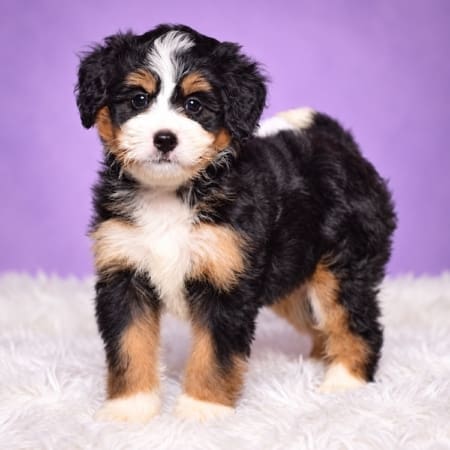

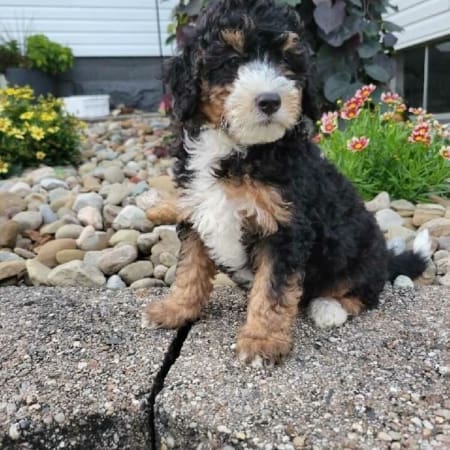


You can also verify the program’s physical presence and reviews through the Mini Golden Doodle Puppies Google Maps listing.
How Much Do Mini Goldendoodle Puppies Cost in Minneapolis?
Expect $2,500 to $4,500 for a well-bred mini goldendoodle puppy in the Minneapolis area from a program that health-tests parents, offers a multi-year genetic guarantee, and sends puppies home already started on crate training. Prices below that range almost always mean corners were cut somewhere you’ll pay for later.
Minneapolis mini goldendoodle price tiers
$500, $1,000: Scam territory. Stolen photos, fake litters, requests for untraceable payment, “shipping crate deposits” that never end. No puppy exists.
$1,000, $1,500: Puppy mill or broker. High-volume kennels, no health testing, no socialization, frequent giardia, coccidia, and kennel cough. Vet bills often exceed the purchase price in year one.
$1,800, $2,000: Hobby breeder. Often well-meaning and clean, but limited genetic screening, no formal guarantee, and puppies raised without a structured early development program.
$2,500, $4,500: Accredited breeder. Full genetic panels on both parents, proper whelping supervision, ENS from birth, early housebreaking and crate work, and a written 2-year genetic health guarantee.
Beyond the purchase price, Minneapolis-specific first-year costs to plan for:
- Initial vet visits, remaining vaccines, and spay or neuter: roughly $500 to $900 depending on the clinic
- Professional grooming every 6 to 8 weeks at $75 to $110 per visit
- Winter gear (paw balm, boots, a fleece for sub-zero walks): $60 to $150
- Puppy kindergarten class in the metro: $150 to $250
- Crate, pen, bedding, bowls, leash, harness, toys: $250 to $400
For a fuller look at lifetime expenses, this breakdown of micro goldendoodle cost-of-ownership clarity is a useful reality check before you commit.
How Do I Find Reputable Mini Goldendoodle Breeders Near Minneapolis, Minnesota?
A reputable breeder welcomes questions, shows you the dam, produces genetic testing paperwork without being pushed, and gives you a contract before you send money. If any one of those four is missing, walk away, no matter how appealing the puppy photos are.
Use this checklist during your first conversation:
- Health testing. Ask for OFA hips and elbows, cardiac and eye clearances, and a genetic panel covering PRA-prcd, von Willebrand’s, degenerative myelopathy, and Ichthyosis. Request the actual certificates.
- Written guarantee. A 2-year genetic health guarantee is the standard to hold breeders to. Read what it covers and what voids it.
- See the mother. Live video with the dam and the litter together, in the room where they’re raised.
- Early development protocol. Ask specifically whether they use ENS, and at what ages. A breeder who can’t explain their program probably doesn’t have one.
- Where puppies sleep. Raised inside a busy home, not in an outbuilding. Household noise exposure is what produces a confident dog.
- Vet reference. Get the clinic name and call it.
- Take-back clause. Ethical breeders take a dog back for life, at any age.
- Contract before deposit. Never reverse that order.
Common mistake: Treating a slick website as proof of quality. Scammers copy photos and testimonials from real breeders. Verification comes from live video, paperwork, and a phone call to a veterinarian, not from design.
A breeder who tells you “no, this litter isn’t a good fit for your household” is showing you exactly why you should trust them.
Why Designer Mini Doodles Is the Best Mini Golden Doodle Breeder in the USA
Designer Mini Doodles stands apart because the program is run by a credentialed animal biologist, not a hobbyist guessing at pairings. The founder holds a degree in Animal Biology from Stockton University in Pomona, New Jersey, with a minor in animal genetics, and that training drives every breeding decision.
What that means for a Minneapolis family bringing home a puppy:
- Genetics-led pairings. Every dog in the breeding program comes from top bloodlines and the best quality lines in the country, selected for structure, coat, and temperament rather than color trends alone.
- Nutrition from day one. Dams and puppies are on a carefully built diet designed to support gut health, coat quality, and steady growth through the critical early weeks.
- ENS from birth. Early neurological stimulation begins in the first days of life, building stress resilience that shows up years later in a dog that handles vet visits, thunderstorms, and Nicollet Mall crowds without falling apart.
- Real-world socialization. Puppies grow up inside a busy household with children, other animals, vacuum cleaners, dropped pans, doorbells, and normal daily commotion. Nothing about a Minneapolis apartment building surprises them.
- Started housebreaking and crate training. Puppies leave already understanding that the crate is a calm place and that potty happens outside. That head start typically saves new owners weeks of frustration.
- Full 2-year genetic health guarantee in writing with every puppy.
Families searching for mini golden doodle puppies for sale consistently point to that combination of formal genetics education and hands-on early development as the reason they chose this program over a cheaper local litter. As one of the most requested sources for mini golden doodle puppies Minneapolis buyers consider, availability moves fast, and the waitlist is usually the practical route in.
You can also see full litter details and photos on the mini golden doodle puppies main listings, or explore the current mini doodle puppies for sale roster.
What Is a Mini Goldendoodle’s Temperament and Personality Like?
Mini goldendoodles are social, people-focused, and eager to please. Most are friendly with strangers, gentle with children, and highly trainable, but they genuinely dislike being alone and are prone to separation anxiety if left for long stretches without preparation.
Traits you can reasonably expect:
- Affectionate and velcro-like. They follow you room to room. That’s charming for a remote worker and stressful for someone gone 10 hours a day.
- Smart and food-motivated. Most learn sit, down, and place within a week of consistent 5-minute sessions.
- Moderately energetic. Two brisk walks plus a training or sniffing session usually satisfies an adult mini.
- Sensitive. Harsh corrections backfire. Reward-based training works far better with this cross.
- Vocal when bored. Under-exercised minis bark at hallway noise, which matters in a shared building.
Who it’s not for: Households where the dog will be alone more than 8 hours daily with no midday break, or owners who don’t want to commit to regular grooming. If either applies, an adult rescue dog with a known, more independent temperament is often a kinder fit.
What Health Problems Do Mini Goldendoodle Puppies Have?
Mini goldendoodles are generally healthy and often live 12 to 15 years, but they can inherit conditions from both parent breeds. Responsible screening of the sire and dam reduces the risk substantially, which is exactly why an accredited breeder costs more than a backyard litter.
Conditions worth knowing about:
- Hip and elbow dysplasia (from the Golden side), screened via OFA evaluations on parents
- Progressive retinal atrophy, PRA-prcd (Poodle side), a simple DNA test on parents clears this
- Von Willebrand’s disease, a clotting disorder, DNA testable
- Patellar luxation, more common in smaller crosses
- Ear infections, because floppy, hairy ears trap moisture. Dry ears after baths and swimming in Minnesota lakes.
- Allergies and hot spots, often food or environmental
- Sebaceous adenitis and Addison’s disease, less common but documented in Poodle lines
Practical prevention plan: keep the puppy lean, avoid stair-heavy and hard-surface repetitive exercise before growth plates close, feed a large-breed-appropriate puppy food if the projected adult weight exceeds 30 pounds, and stay current on wellness exams. Ask your Minneapolis vet about tick-borne disease prevention, since Lyme exposure is a real regional concern.
Decision rule: If a breeder cannot produce a genetic panel for both parents, assume the testing wasn’t done. Price the litter accordingly, or keep looking.
What Are Mini Goldendoodle Grooming Requirements?
Plan on brushing 3 to 4 times a week and a professional groom every 6 to 8 weeks. Mini goldendoodles shed very little, but the trade-off is a coat that mats if it’s neglected, and a matted coat means a shave-down rather than a trim.
A workable Minneapolis grooming routine:
- Daily (30 seconds): Wipe paws in winter to remove sidewalk salt, which irritates pads.
- 3 to 4 times weekly (10 minutes): Slicker brush followed by a steel comb. The comb is the test. If it won’t pass to the skin, the area is matting.
- Weekly: Check ears for odor or debris, and trim or pluck hair as your groomer advises.
- Every 2 to 3 weeks: Nail trim. Long nails change gait and stress joints.
- Every 6 to 8 weeks: Professional groom, $75 to $110 in the metro.
The coat changes around 8 to 12 months as the puppy coat gives way to the adult coat, and that’s when most owners get blindsided by sudden matting. Increase brushing frequency during that window. For more technique detail, see this guide to micro goldendoodle grooming and home care.
Money-saving tip: Ask your groomer for a uniform 3/4-inch to 1-inch “teddy bear” length instead of a longer show trim. It looks great, dries faster after snowy walks, and mats far less between appointments.
Mini Goldendoodle vs Mini Labradoodle: Which Is Better?
Neither is objectively better. Choose a mini goldendoodle if you want a softer, more consistently affectionate companion. Choose a mini labradoodle if you want a slightly more driven, higher-energy dog for running, hiking, or sport.
| Factor | Mini goldendoodle | Mini labradoodle |
|---|---|---|
| Typical weight | 15-35 lbs | 15-35 lbs |
| Energy level | Moderate | Moderate to high |
| Temperament tilt | Gentle, sensitive, people-pleasing | Bouncy, driven, independent |
| Coat consistency | More uniformly wavy or curly | More variable (hair, wool, fleece) |
| Best fit | Families, first-time owners, seniors | Active owners, dog sports, runners |
| Grooming need | High | High |
Choose the goldendoodle if your household includes young kids or a quieter routine, or if you want the most predictable coat. Choose the labradoodle if you’re outdoors year-round regardless of the weather and want a dog with more drive. If you’re weighing doodle types more broadly, the miniature goldendoodle breeders overview covers how programs differ in what they prioritize.
Are Mini Goldendoodles Good for Apartments in Minneapolis?
Yes. Mini goldendoodles adapt well to apartment and condo living as long as they get 45 to 60 minutes of daily physical and mental activity. Their size fits most Twin Cities pet weight limits, and their low-shedding coat is friendly to shared laundry and carpeted units.
What makes apartment life work here:
- Winter contingency. From December through March, outdoor time shrinks. Substitute indoor work: snuffle mats, food puzzles, stair recalls, and 5-minute obedience sessions. Mental work tires a doodle faster than a walk.
- Barking management. Reward calm behavior when hallway noise happens instead of shushing. Habituation beats correction.
- Alone-time training. Start on day two with 60-second departures and build gradually. Skipping this step is the leading cause of noise complaints.
- Indoor potty backup. During a sub-zero stretch, a balcony pad or a designated pee-pad station in a bathroom prevents accidents while you get down 12 floors.
Nearby options at Minnehaha Falls, the Chain of Lakes, and Twin Cities dog parks make socialization easy in warmer months. For enrichment ideas that work in tight spaces, the micro goldendoodle training and enrichment guide is a good starting point.
Mini Goldendoodle Puppy Training Tips and First Week Home
Start crate training and a potty schedule the hour you walk in the door, and keep the first week deliberately boring. Puppies that arrive already crate-familiar and partly housebroken, as Designer Mini Doodles puppies do, typically settle within 3 to 5 days rather than 3 weeks.
 ))
))
First week home checklist
- Day 1: Potty break outside first, then a short leashed tour of one room only. Offer water, a small meal, and quiet. No visitors.
- Day 1 night: Crate beside your bed. Expect one or two potty trips overnight. Carry the puppy out, no play, straight back to the crate.
- Days 2-3: Establish the schedule: potty after waking, after eating, after play, and every 90 minutes otherwise. Feed three meals a day in the crate.
- Days 3-4: First vet visit with the breeder’s health records. Begin 60-second alone-time drills.
- Days 5-7: Introduce the brush and a slicker for 30 seconds at a time so grooming never becomes a fight. Start name recognition and “sit” in 3-minute sessions.
Training priorities in order
- Housebreaking. Supervise or crate, always. Every unsupervised accident sets you back.
- Crate as a calm place. Feed meals inside, toss treats in randomly, never use it as punishment.
- Name and recall. Pay generously for every check-in.
- Bite inhibition. Redirect to a chew, never to hands.
- Leash manners on slippery surfaces. Practice indoors before icy sidewalks.
- Handling tolerance. Paws, ears, tail, mouth. Daily, briefly, with treats.
Mini goldendoodles from a program that uses ENS and structured socialization tend to pick up obedience quickly because they’re not spending energy managing fear. The training approach transfers well across doodle types, and the fundamentals in this guide to training a mini bernedoodle puppy apply almost directly.
Common mistake: Over-socializing in week one. Dog parks, family parties, and long car rides before the puppy has decompressed produce fear, not confidence. Ten quiet days first, then expand.
What Are Common Mistakes When Buying Mini Goldendoodle Puppies?
The costliest mistake is sending money before verifying that the breeder, the litter, and the parent dogs exist. Everything else on the list flows from rushing.
Mistakes to avoid:
- Paying by gift card, Zelle, Cash App, or wire transfer. Legitimate breeders accept traceable payment and provide receipts.
- Skipping the live video call. Insist on seeing the dam and your specific puppy in the same frame, in real time.
- Chasing “teacup” claims. Genuine micro doodles exist at 10 to 16 pounds. Promises of a 5-pound goldendoodle signal either dishonesty or reckless breeding.
- Shopping on price alone. A $1,200 puppy with giardia, an untested hip line, and no guarantee is the expensive option.
- Ignoring the contract. Read what the health guarantee actually covers and what voids it.
- Buying during a bad month. Bringing a puppy home the week before a vacation or a work crunch sets everyone up to fail.
- Assuming “hypoallergenic” means zero reaction. Ask to spend time with a related adult dog if allergies are a factor.
- Not asking about early development. ENS, household noise exposure, and started crate training are the difference between a confident puppy and a project.
Quick example: Two Minneapolis families buy in the same month. Family A pays $1,300 from an online listing, then spends $1,100 on giardia treatment, two ear infections, and a behaviorist for crate panic. Family B pays $3,200 from an accredited program and spends $240 on wellness care in year one. Family B paid less by month nine.
Frequently Asked Questions
How much are mini goldendoodle puppies in Minneapolis?
Expect $2,500 to $4,500 from an accredited breeder with health-tested parents and a written 2-year genetic health guarantee. Listings between $500 and $1,500 are typically scams or puppy mill placements.
How big do mini goldendoodles get?
Most adults weigh 15 to 35 pounds and stand 13 to 20 inches at the shoulder. Micro or toy versions generally mature at 10 to 16 pounds.
Do mini goldendoodles shed?
Very little, especially F1B and multigen puppies. Low shedding means loose hair stays in the coat, which is why brushing 3 to 4 times weekly is necessary to prevent mats.
How long is the waitlist for a mini goldendoodle in the Twin Cities?
Reputable programs typically run 2 to 6 months out, and some longer for specific colors or sizes. A breeder with immediate availability every week deserves extra scrutiny.
Are mini goldendoodles good for first-time dog owners?
Yes. They’re trainable, forgiving, and eager to please. The two commitments to accept upfront are consistent grooming and structured alone-time training to prevent separation anxiety.
Can a mini goldendoodle handle Minnesota winters?
Reasonably well, with limits. Their curly coat offers moderate insulation, but small dogs lose heat quickly. Keep walks short below zero, use paw balm or boots against road salt, and add a fleece layer.
What does a 2-year genetic health guarantee cover?
It generally covers hereditary conditions diagnosed within two years of purchase, with defined remedies such as replacement or partial refund. Always read the specific written terms before paying a deposit.
How often do mini goldendoodles need professional grooming?
Every 6 to 8 weeks, at roughly $75 to $110 in the Minneapolis metro, plus at-home brushing several times a week between appointments.
What is ENS and why does it matter?
Early neurological stimulation is a set of brief, gentle handling exercises performed during a puppy’s first weeks. Breeders use it to build stress tolerance, which tends to produce calmer vet visits and easier adjustment to new homes.
Is a mini goldendoodle or a mini labradoodle better for apartments?
Both work, but the mini goldendoodle usually settles more easily indoors. Mini labradoodles often carry more drive and need a more demanding daily outlet.
Conclusion: Your Next Steps
Getting a mini goldendoodle right in Minneapolis comes down to three decisions: the size tier you actually need for your home, the breeder you can verify, and the honest budget of $2,500 to $4,500 plus first-year care. Skip any one of those and the cost shows up later as vet bills or behavior problems.
Here’s what I’d do this week:
- Set your size target. Check your lease weight limit and pick mini (15-35 lbs) or micro (10-16 lbs) before you shop.
- Build your shortlist. Identify two or three programs with published health testing, then request certificates for both parents.
- Do the video call. See your puppy and the dam together, live. Ask directly about ENS, household socialization, and started crate training.
- Read the contract before the deposit. Confirm the 2-year genetic health guarantee terms and the take-back clause in writing.
- Prep the home. Crate, pen, food matching what the breeder feeds, brush and steel comb, and a booked puppy class.
- Line up your vet. Schedule the first wellness exam for day 3 or 4 after arrival.
If you want a program where the pairings are made by an animal biologist with formal genetics training, every puppy leaves with a 2-year genetic health guarantee, and housebreaking and crate work are already underway, start with the current mini golden doodle puppies for sale listings and get on the waitlist early. The right puppy is worth waiting for.